Every driver has a different priority list. Some chase styling, others cabin space, others price. But one virtue never goes out of fashion: driving feel. A car that turns in cleanly, rides with polish, and stays planted when the pace climbs is the common denominator everyone appreciates—whether they can explain it or not.
Hyundai Motor Group’s run of global awards isn’t just about sharp design or headline tech. Behind the curtain is a sustained, largely invisible push—powered by serious investment and engineer-level obsession—to elevate the basics: chassis balance, ride comfort, steering response, and stability.
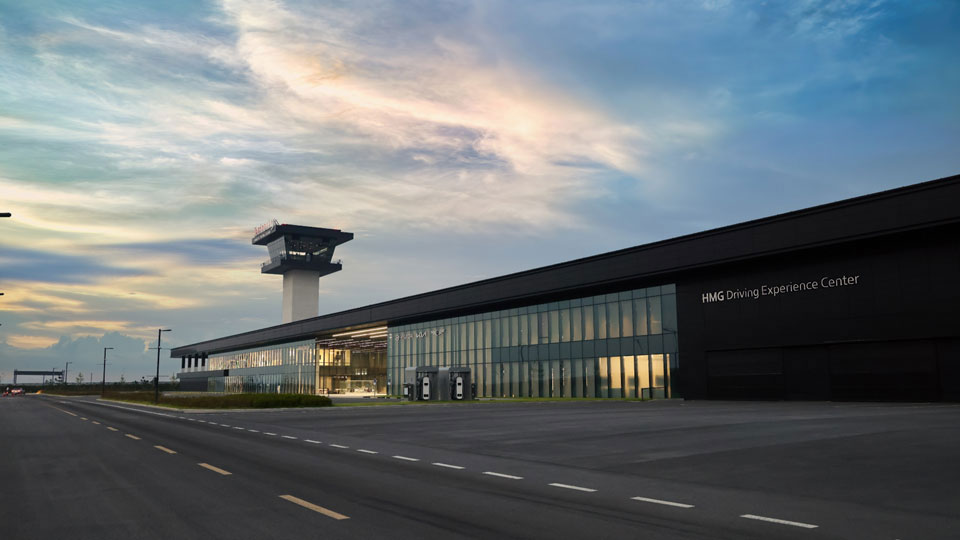
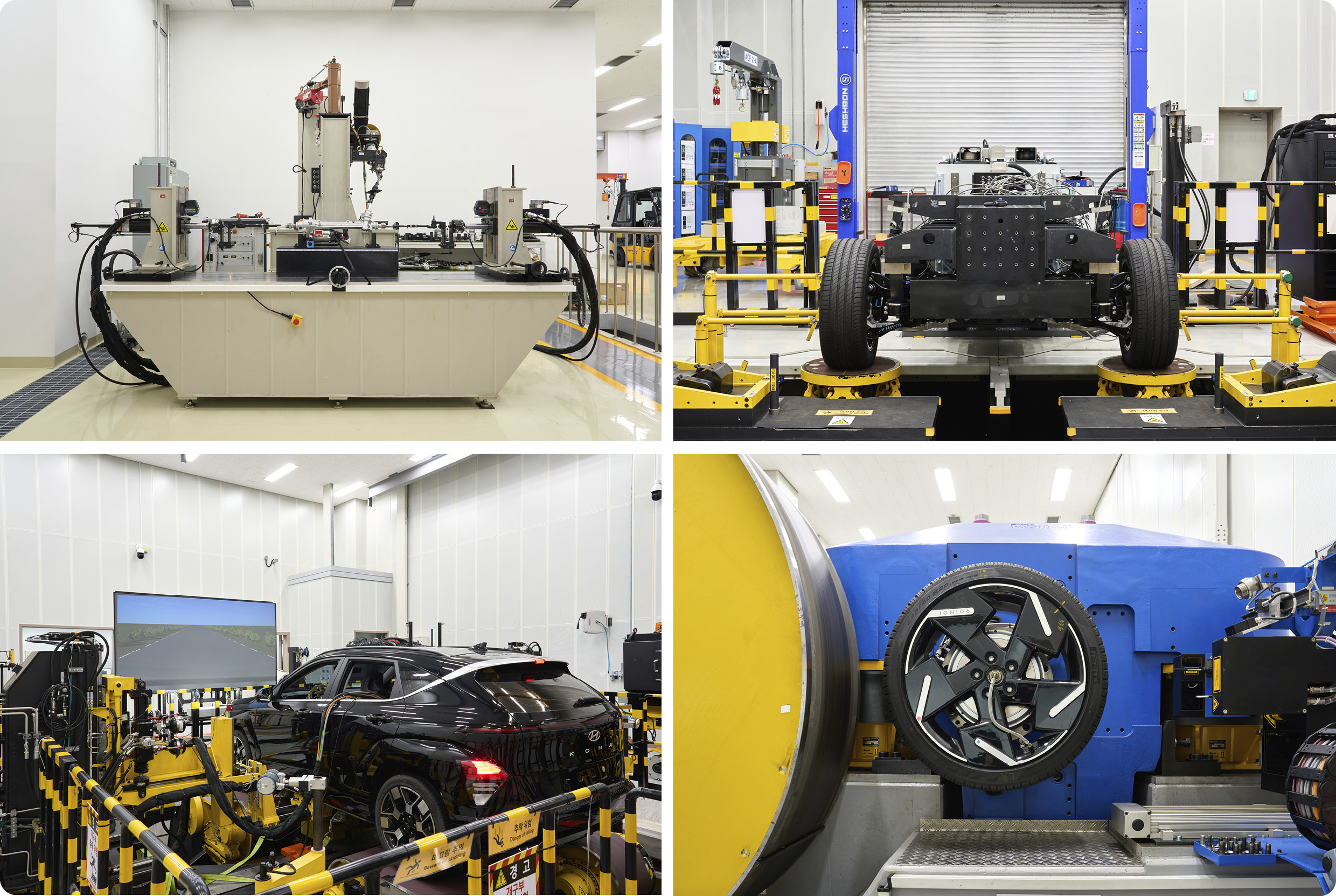
Namyang is HMG’s full-spectrum R&D command center—the place every HMG vehicle gets pushed hard, pulled apart (figuratively), and put back together better. At the center of that effort is the Ride & Handling (R&H) development team, operating inside a dedicated hall measuring 85 m × 40 m (about 279 ft × 131 ft). It’s packed with specialized rigs that let engineers run a full menu of dynamics evaluations under one roof. In other words, the building itself functions like a lab-grade instrument—built to chase comfort and control with surgical precision.
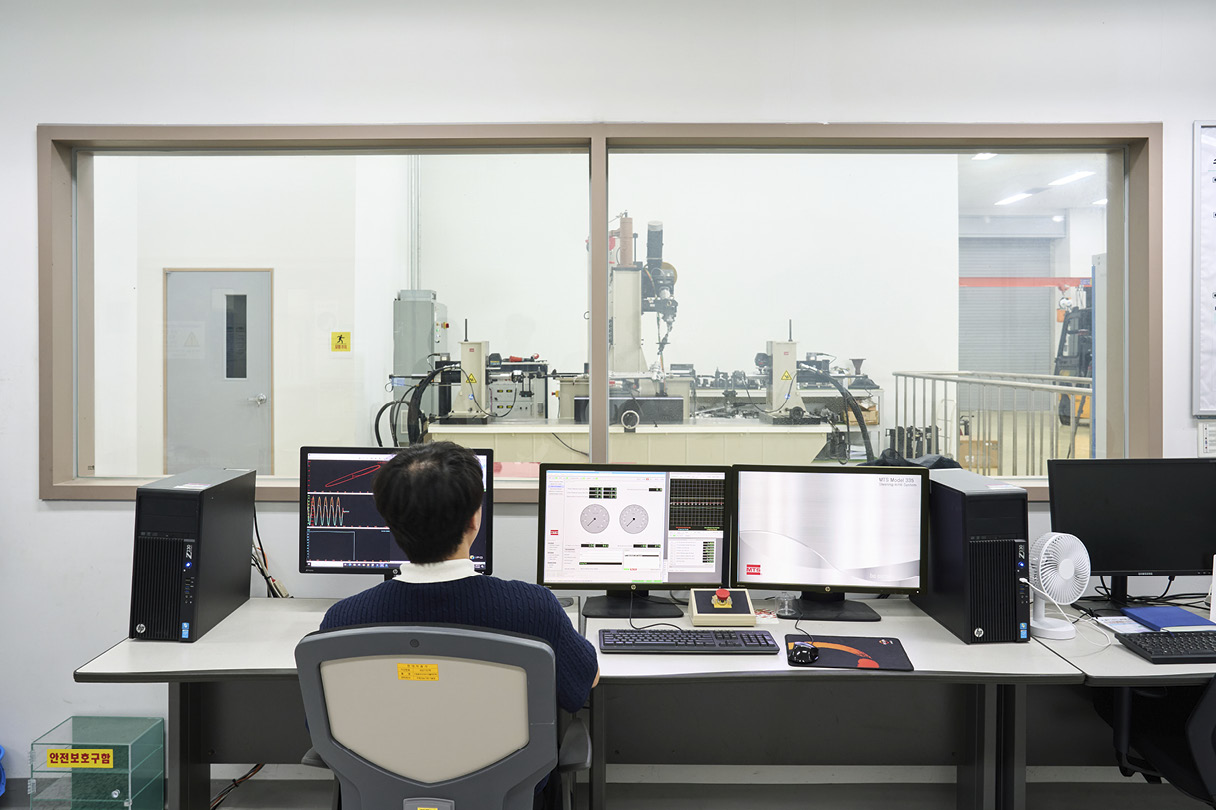
Step inside and the scale hits fast. Long corridors are lined with control stations and wall-to-wall monitors; on both sides, test rigs hum non-stop. Engineers bounce between screens and hardware, debate the details, and iterate—because the target isn’t “good.” It’s “better,” every time.
This is an end-to-end capability spanning components, subsystems, and complete vehicles across every phase of R&H development. And to go beyond what track time and public-road miles can realistically cover, the team leans on a lineup of purpose-built machines that replicate specific behaviors and isolate variables. Each rig translates seat-of-the-pants impressions into hard data, mapping exactly how tires, suspension, steering, and body structure add up to what you feel from behind the wheel.
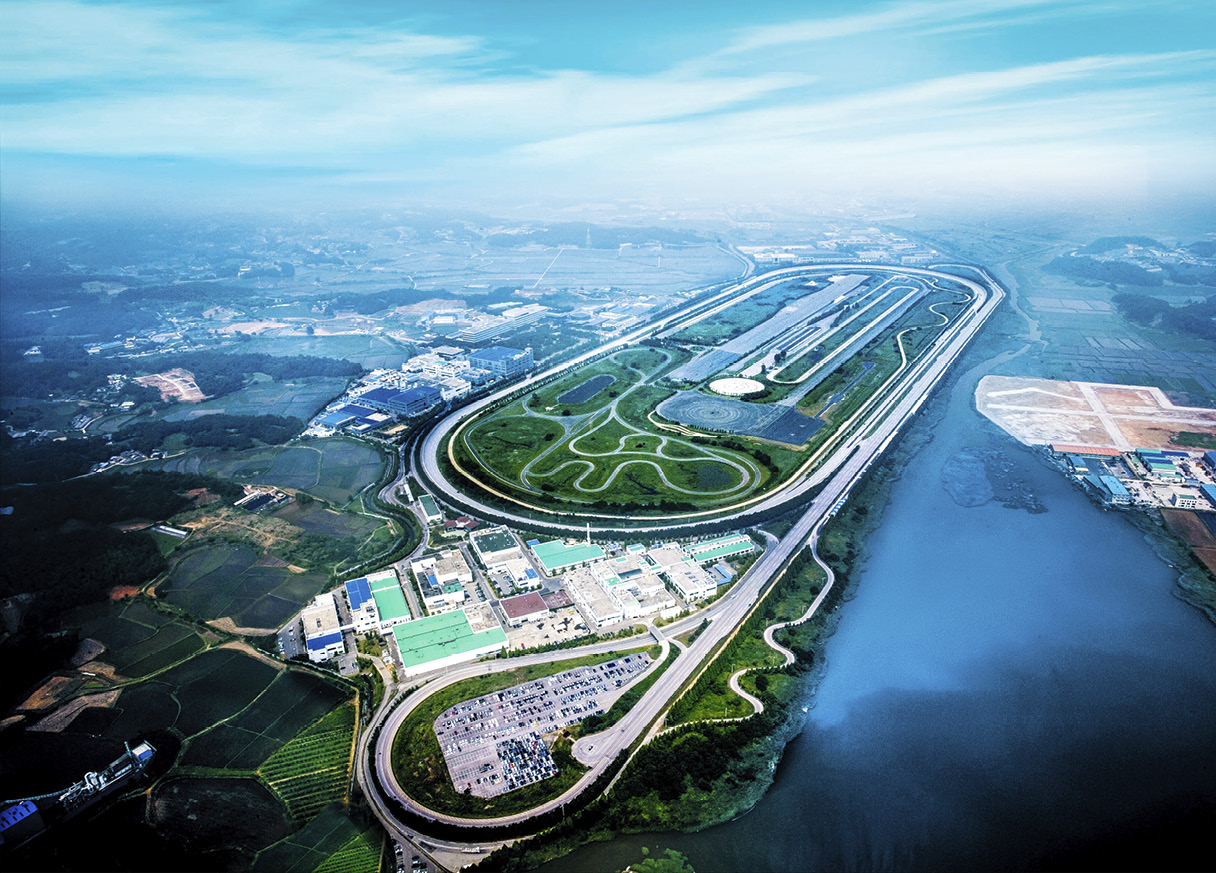
One engineer on Driving Performance Technology Team puts it this way: “Every automaker develops R&H through real-car evaluation and tuning. Lately, system-level testing before full-vehicle road work has become mission-critical for efficiency. Other companies run rigs, but having this many tools concentrated in one place to cover the entire R&H spectrum, end to end, is virtually unique to Namyang’s R&H development team.”
Inside the R&H hall, you’ll find a world-class concentration of precision test hardware—built to validate and refine driving performance and stability down to the smallest detail. These rigs don’t just simulate the real world; they recreate specific conditions over and over, capturing even hairline changes so development can be driven by repeatable data, not vibes and weather forecasts.
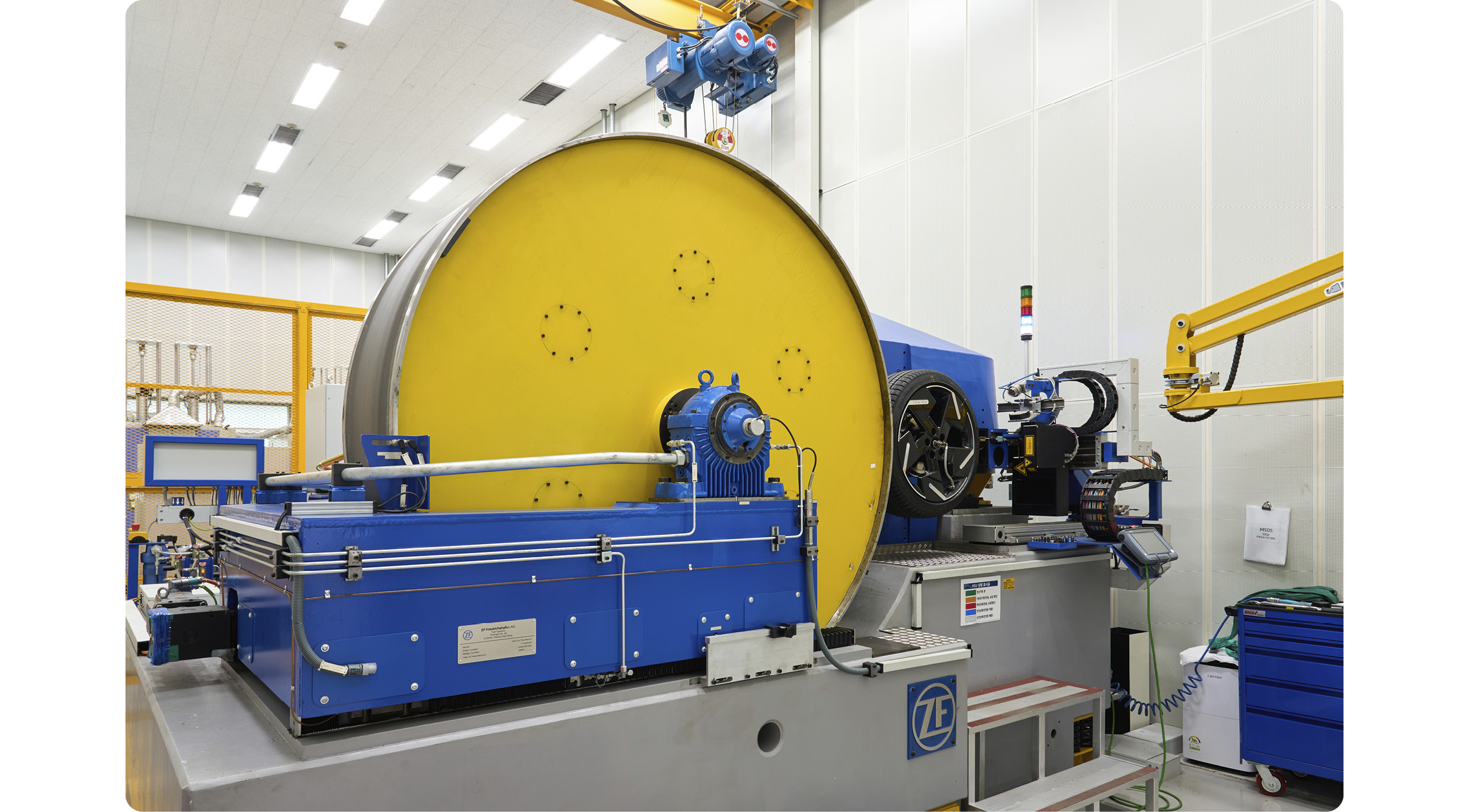
High-Speed Tire Uniformity Tester
This rig exists for a problem every driver can feel: high-speed vibration. A tire may look perfectly round, but in reality its shape and load distribution are never flawless. At speed, those tiny inconsistencies can turn into a steering wheel shimmy that feels like a washing machine hitting its spin cycle. The high-speed tire uniformity tester measures those non-uniformities and quantifies a tire’s tendency to generate vibration.
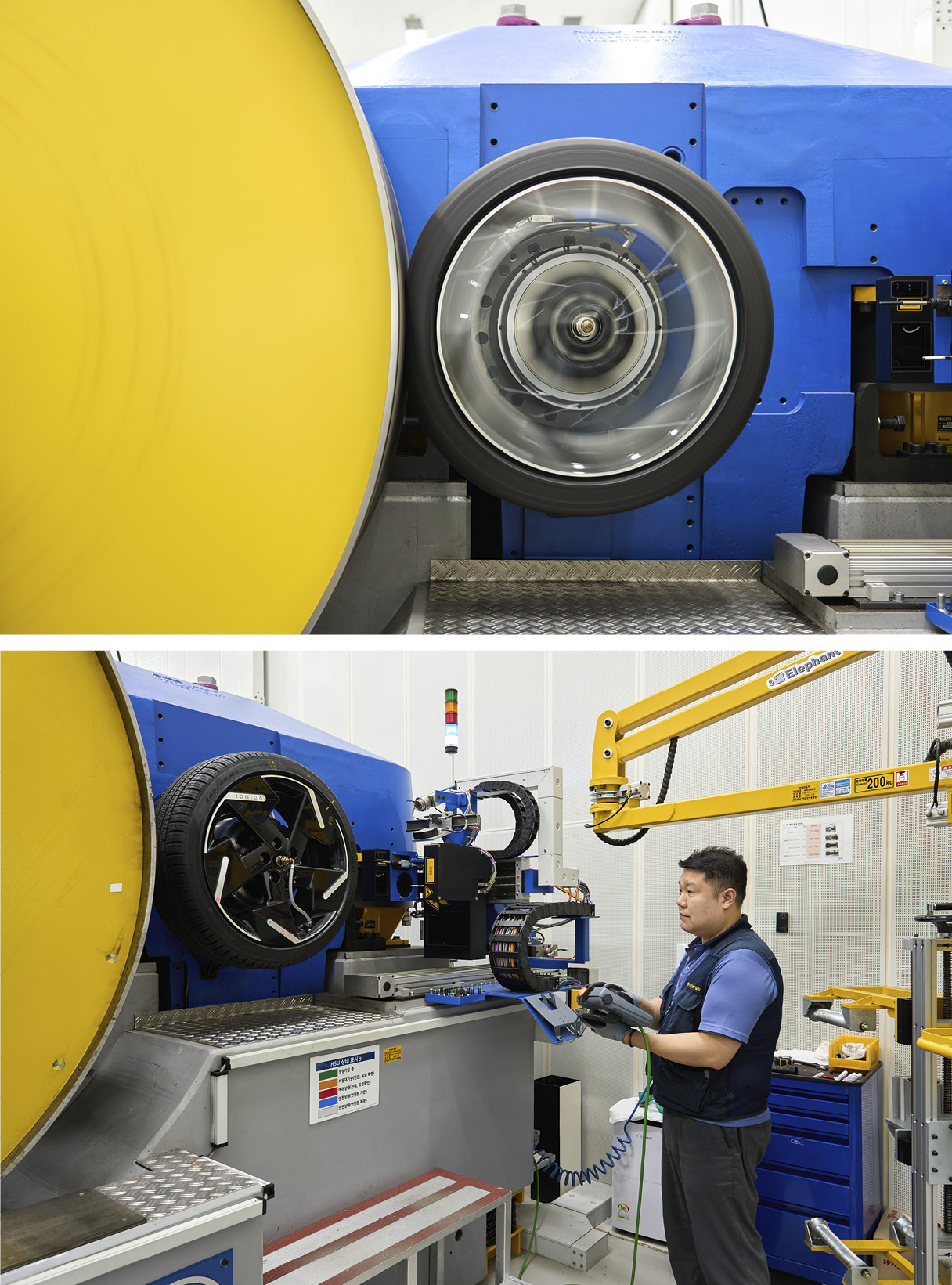
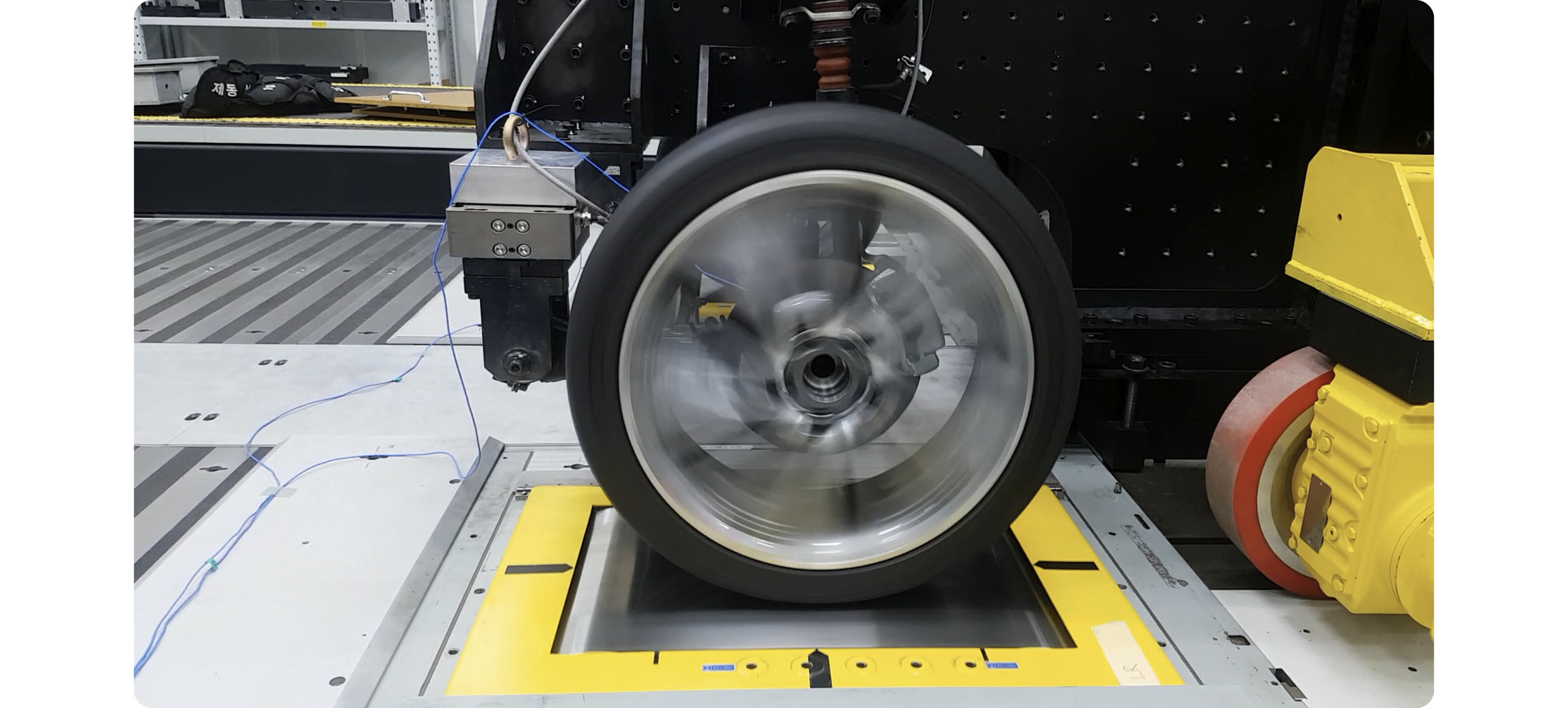
The system rolls a tire on a drum at speeds up to 320 km/h (about 199 mph), then detects vibration caused by non-uniformity and helps identify what’s really behind the shake you feel on the road. Add a small steel bar called a cleat to the drum and the rig can also simulate a tire crossing an obstacle—capturing tire motion and evaluating ride-comfort characteristics in the process.
Flat Trac Tire Tester
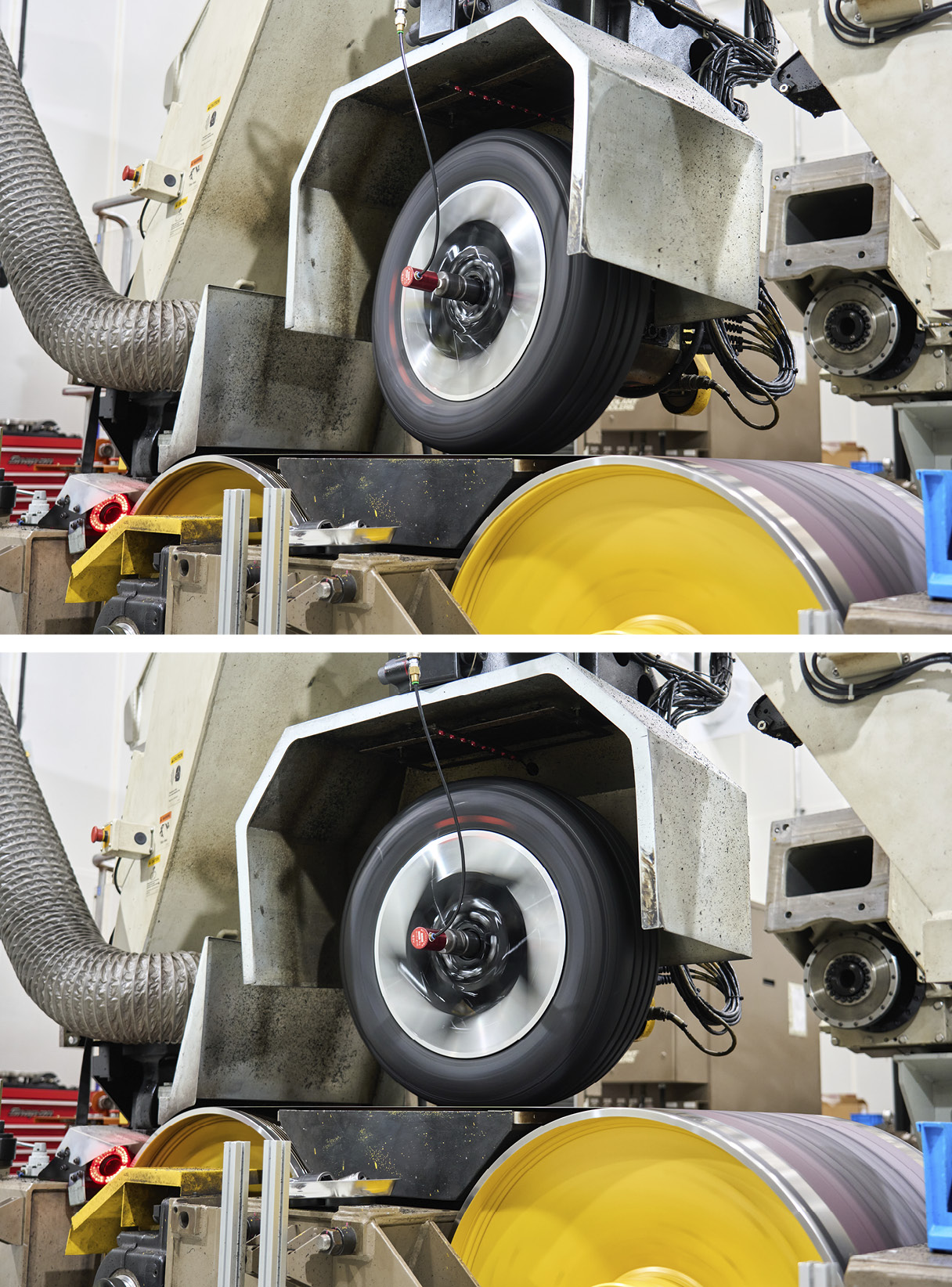
If uniformity is about smoothness, Flat Trac is about grip and stiffness—the stuff that shapes steering feel and lateral performance. Unlike the uniformity rig, which runs the tire on a drum, the Flat Trac rolls the tire on a flat belt designed to mimic real pavement. It can vary steer angle and camber angle based on predefined scenarios, then measure the forces generated by the tire and the speed of its responses. That data is used to build the virtual models needed for vehicle simulation—because tires are complex rubber composites, and simulations based only on design data tend to miss the real-world behavior.
A responsible research engineer explained why the automaker stays this involved: “People often think tire development is the tire maker’s job and the automaker simply chooses what’s available. But tires have a profound impact on a car’s on-road performance. That’s why we operate advanced tire test facilities—so we can analyze tire behavior, request tires optimized for the vehicle under development, and select the tires that fit it best.”
Steering HiLS (Steering Hardware-in-the-Loop Simulation)
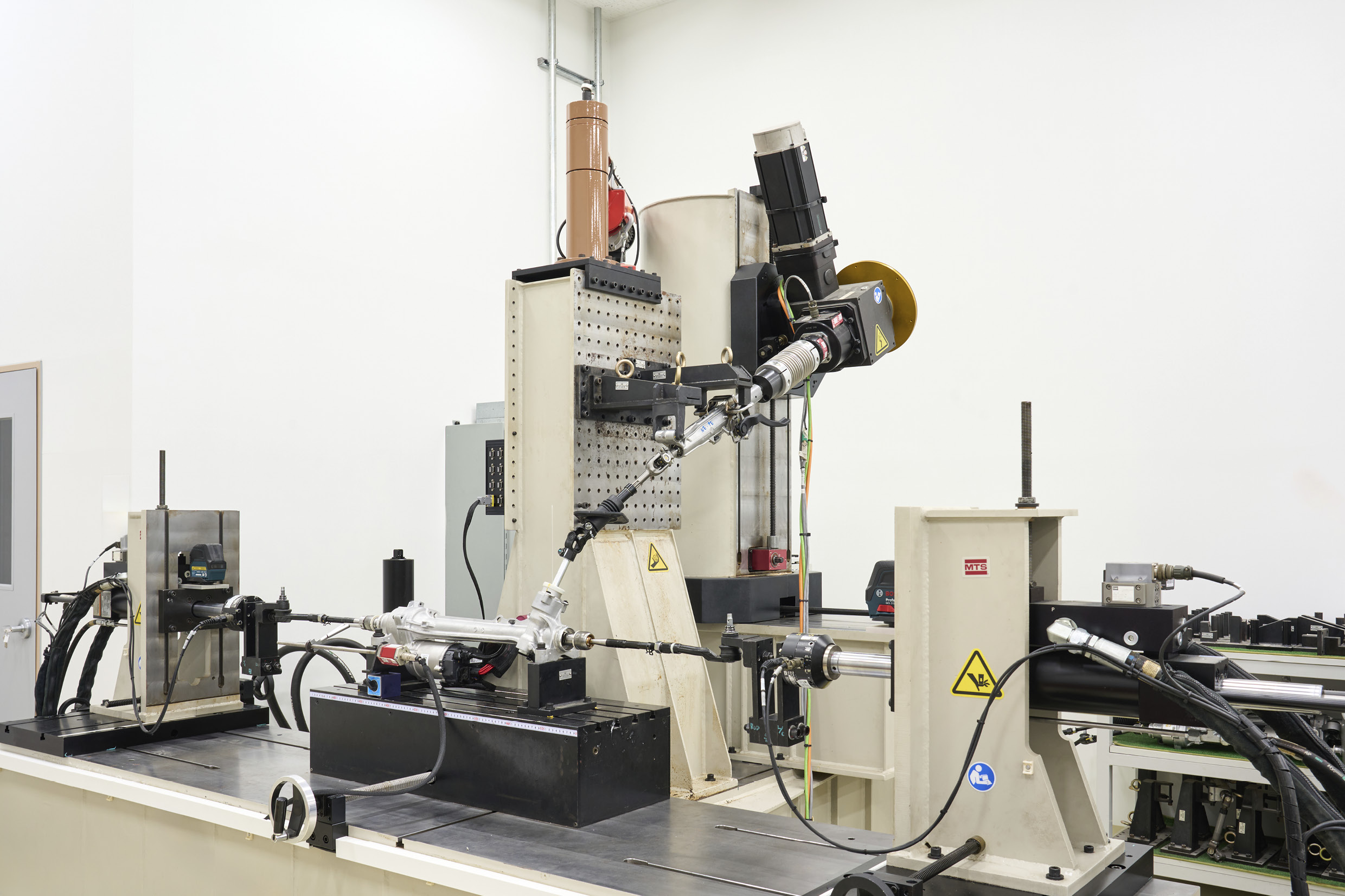
Steering HiLS is where steering feel gets dissected before the car ever hits the road. The facility links real steering hardware to a virtual vehicle model in real time, then uses a steering robot to apply controlled inputs.
As the robot turns, the system measures reaction forces and torque—analyzing stiffness, friction, and motor-assist behavior. Put simply, it captures how quickly the wheels respond when you turn the wheel, how much effort it takes, and whether the electronic control is doing its job cleanly.
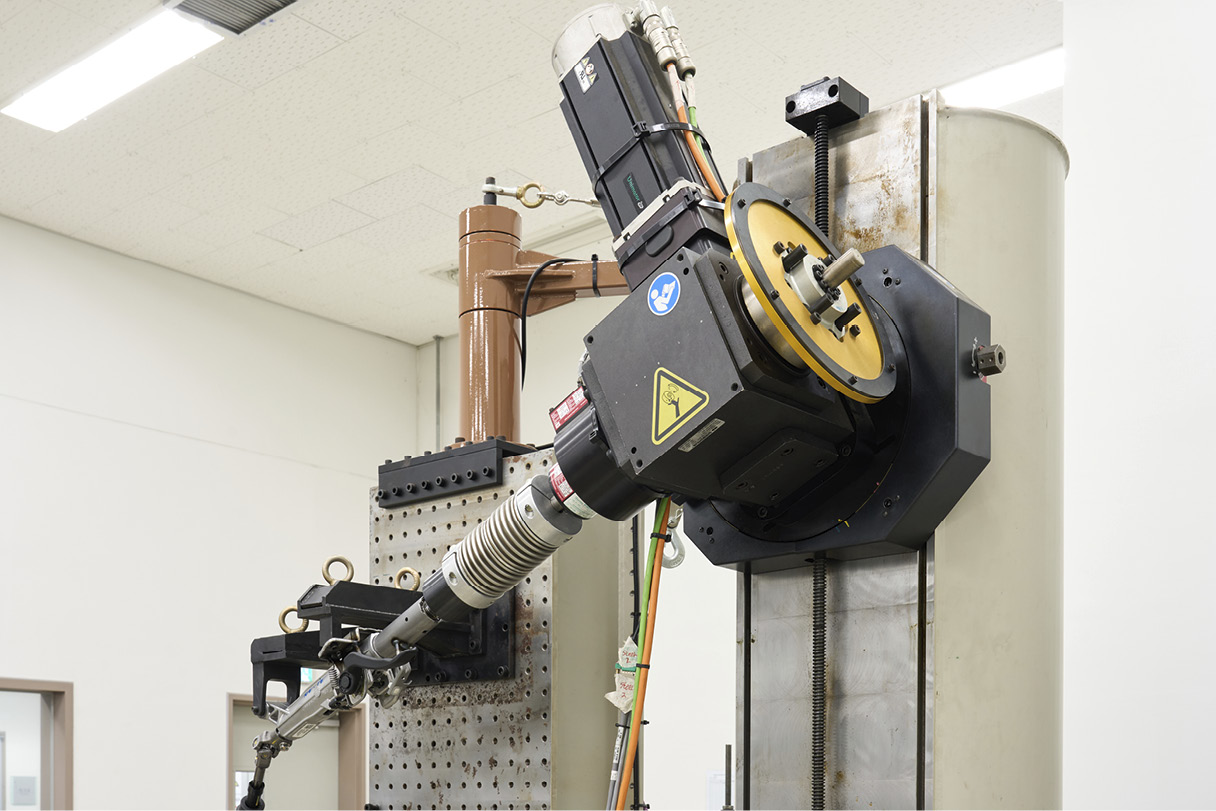
This matters even more for emerging tech such as steer-by-wire and advanced driver-assistance systems (ADAS). When these results are used as modeling data in a simulator, engineers can evaluate how the steering system will shape vehicle behavior without ever logging a mile in a real car.
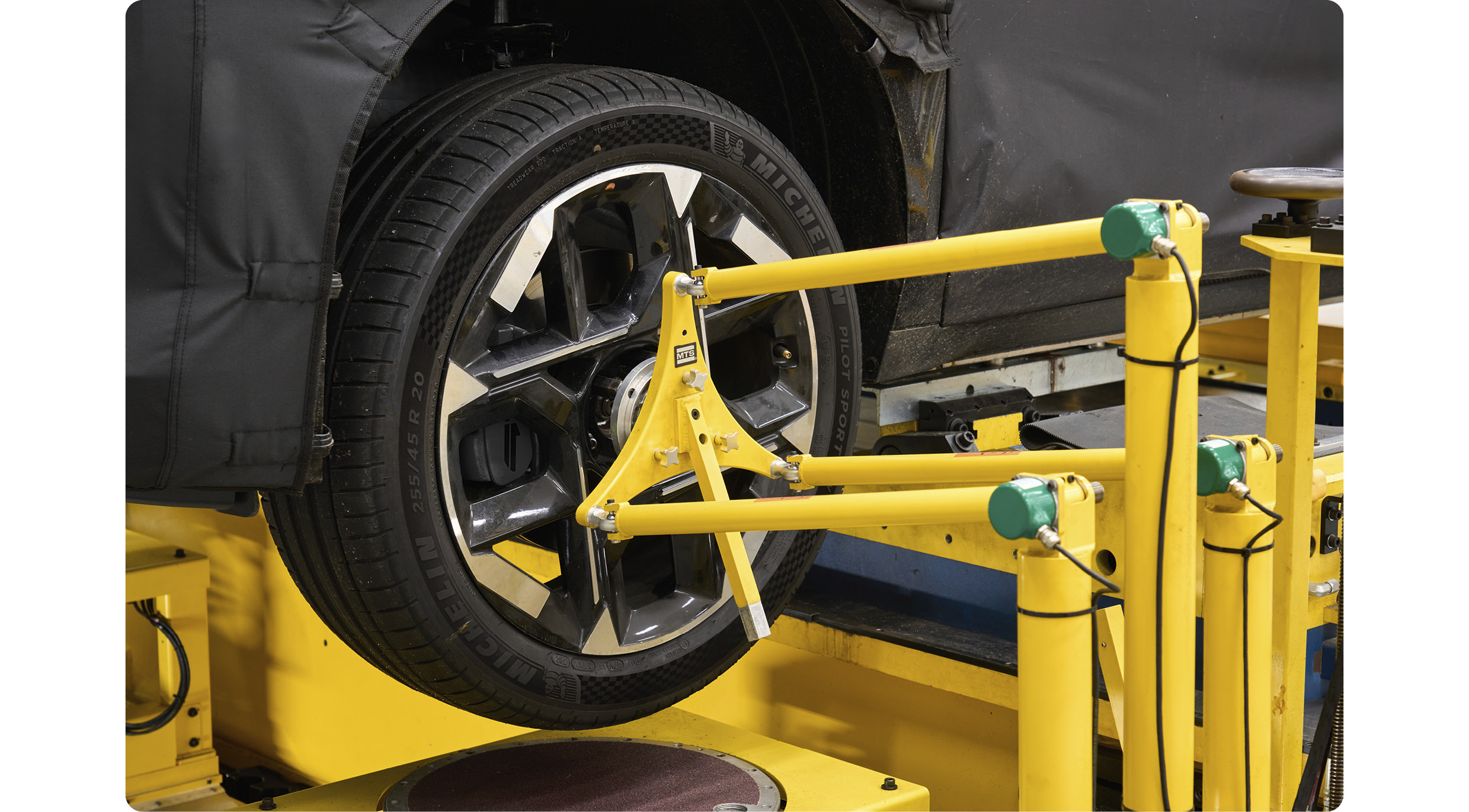
Kinematics & Compliance (K&C) Machine
Think of the K&C machine as chassis truth serum. It reveals how the suspension and steering actually behave by measuring wheel motion in six degrees of freedom (6 DoF), using five-axis actuators and load cells to control and measure displacement and forces at the tire contact patches. From there, it maps suspension kinematics (link-driven motion) and compliance (deformation under load), generating rich data sets—steering ratio, stiffness, friction—that translate directly to what you feel in the driver’s seat.
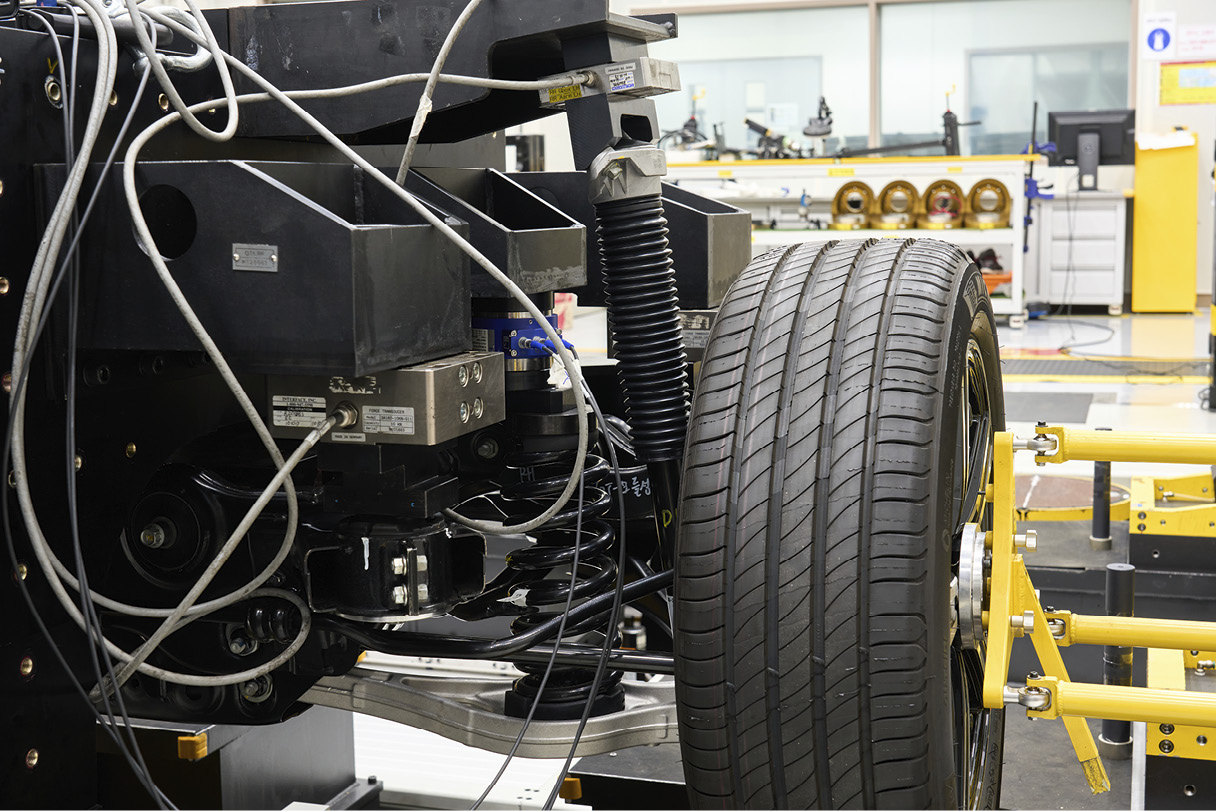
As one research engineer put it: “A suspension mainly moves up and down, but the linkage also shifts fore-aft and laterally, and it rotates. Rubber bushings add their own tiny movements. These are microscopic—push the suspension with 100 kgf (about 220 lbf) and you might see only about 0.1° of change. The K&C machine moves very slowly so we can scrutinize those motions and set allowable variation based on the vehicle’s design and mission.”
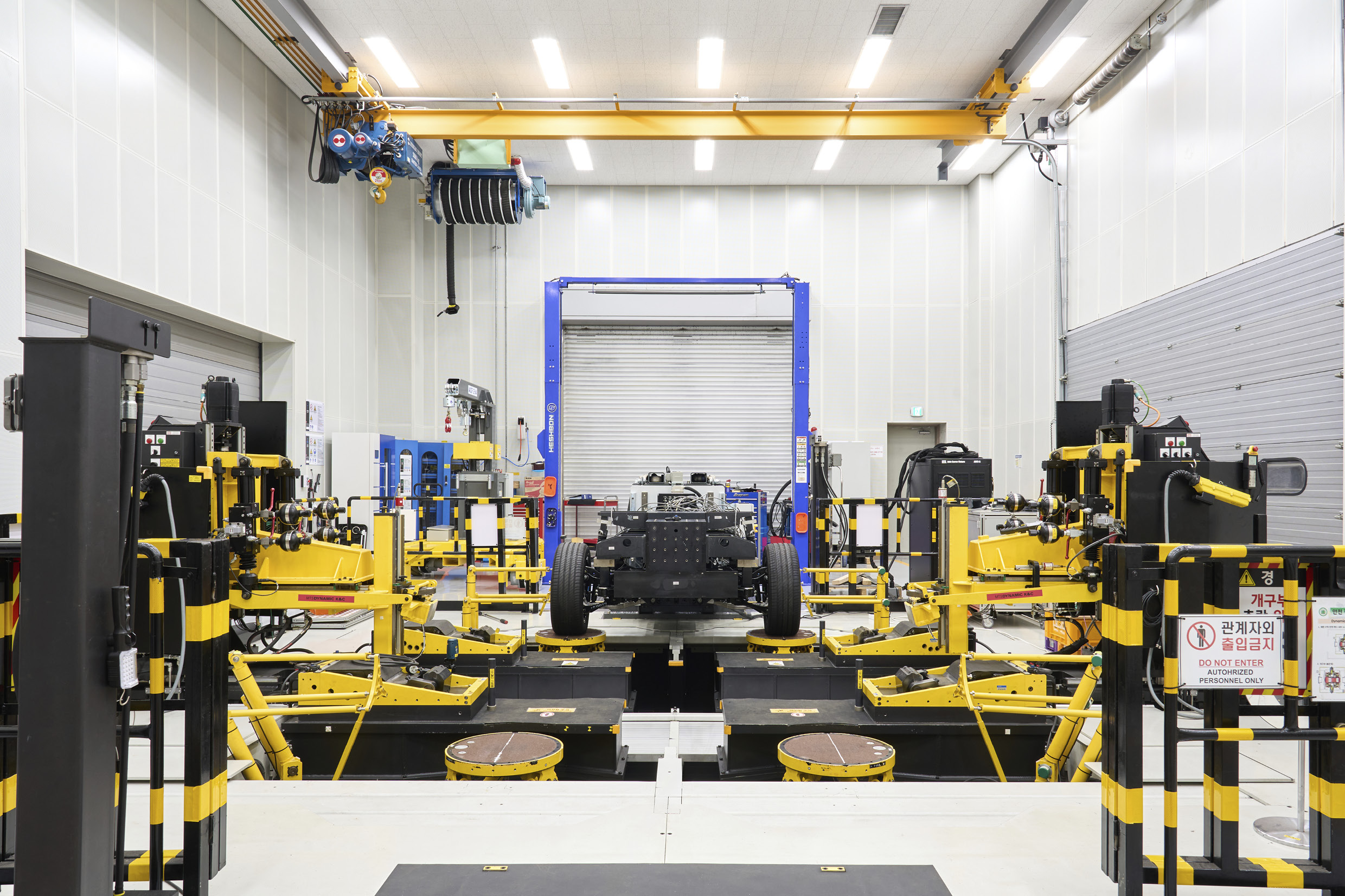
Dynamic K&C
Dynamic K&C takes the static playbook and adds speed. With six-axis actuators and load cells, it recreates roll, pitch, and yaw, then watches how inputs travel through the structure. Because it can excite the body at 50 Hz—50 times per second—it evaluates dynamic behavior, vibration transfer sensitivity, and body rigidity in conditions that feel much closer to real driving, while tracing root causes with precision.
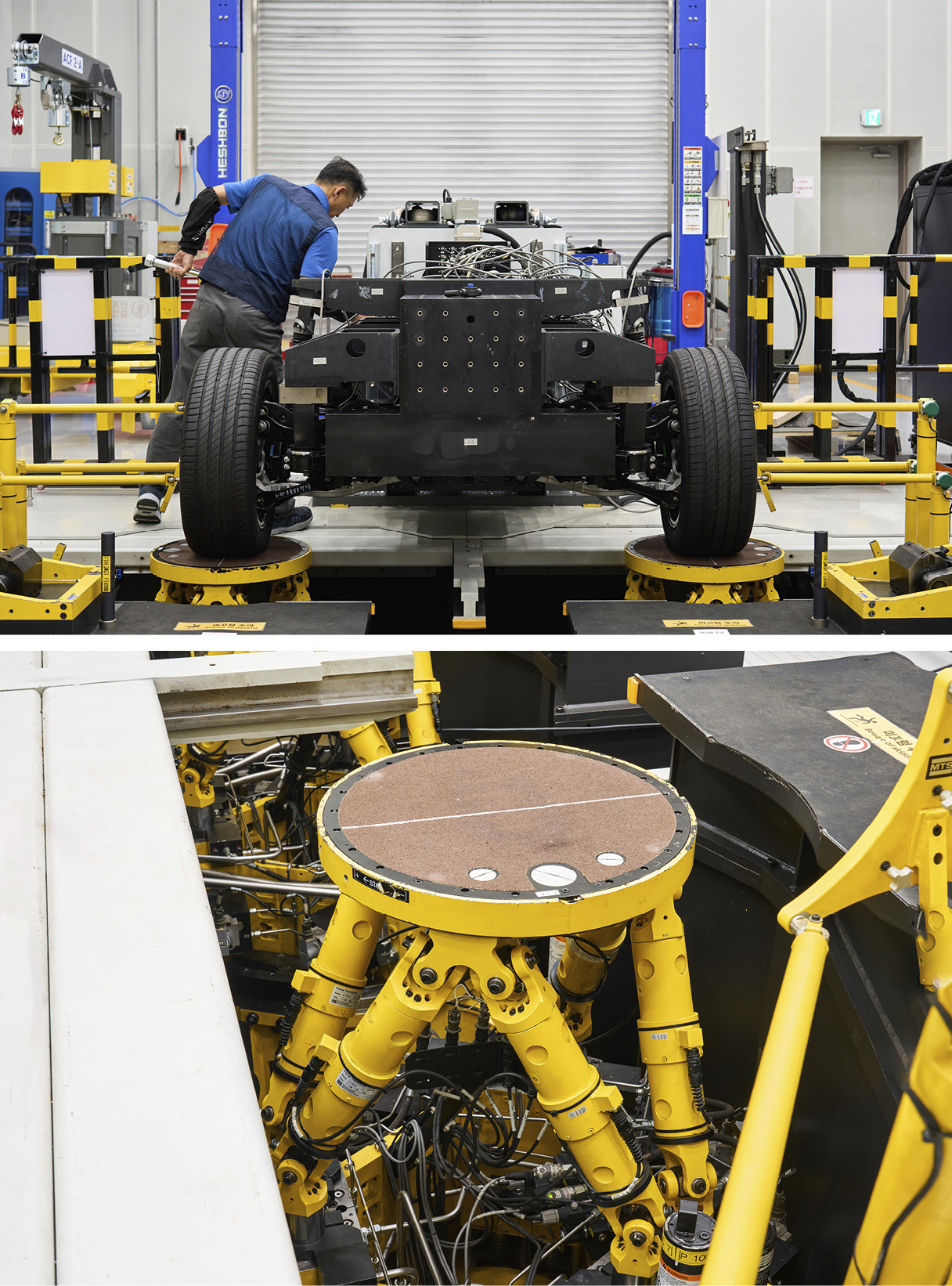
As another engineer explained: “Thanks to the six-leg ‘hexapod,’ we can run 6 DoF in real time—X, Y, Z plus rotation about each axis. By shaking the body about 50 times per second, we can mimic real driving and observe exactly how vibrations propagate and how the vehicle responds.”
And it doesn’t require a complete vehicle every time. The team can test only tires, or mount a suspension module for module-level work—allowing them to isolate variables early, accounting for drive layout and mass, from initial development through final sign-off.
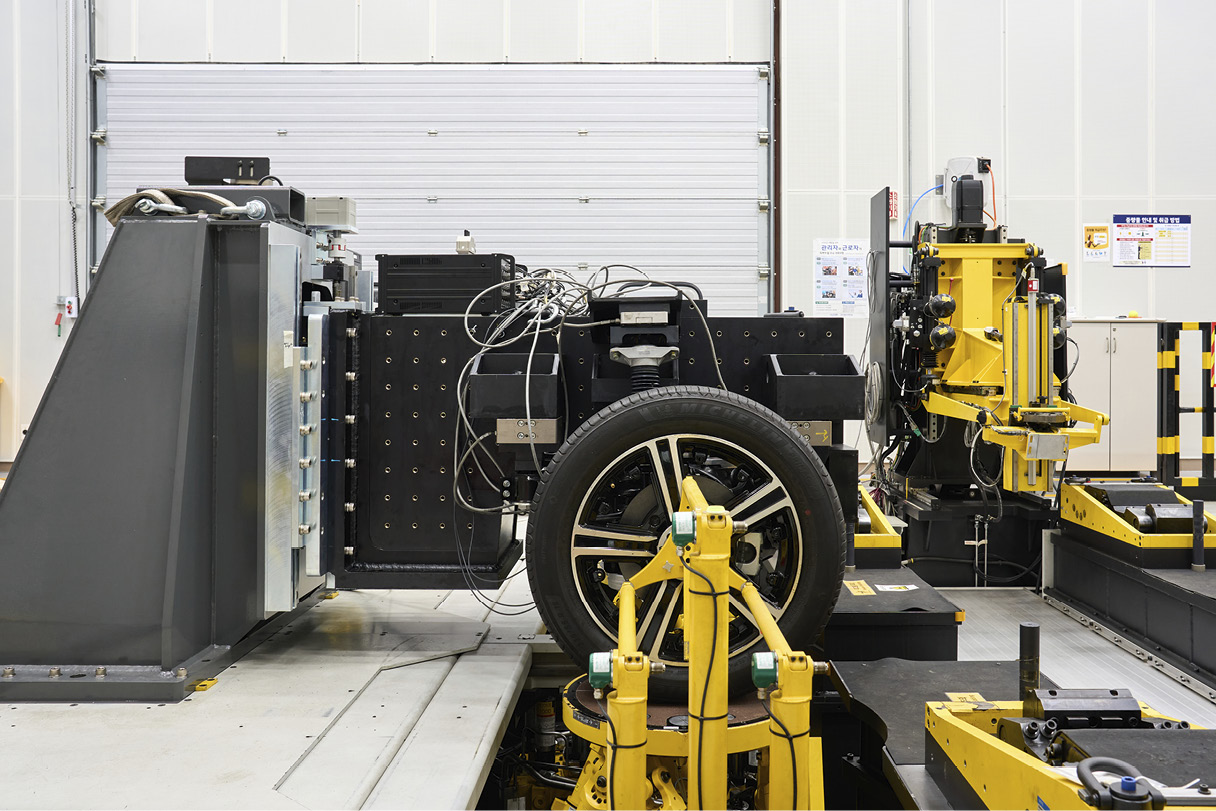
He adds: “On a new program, the full component network isn’t always online yet, so the controls don’t behave perfectly. Module testing lets us evaluate from day one as if we’re already on the road—even before the first mule ever turns a wheel.”
Handling Roadway Simulator
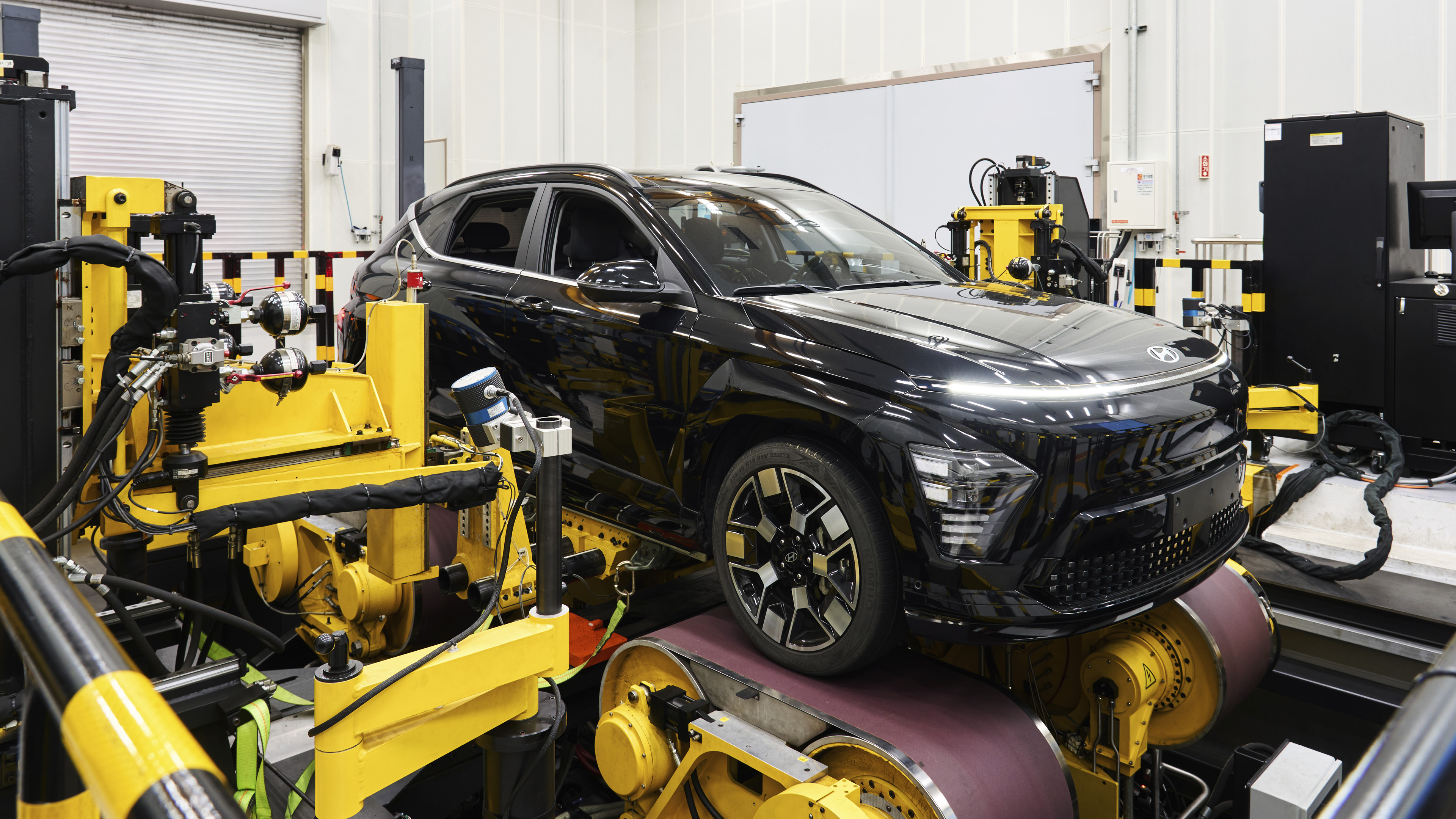
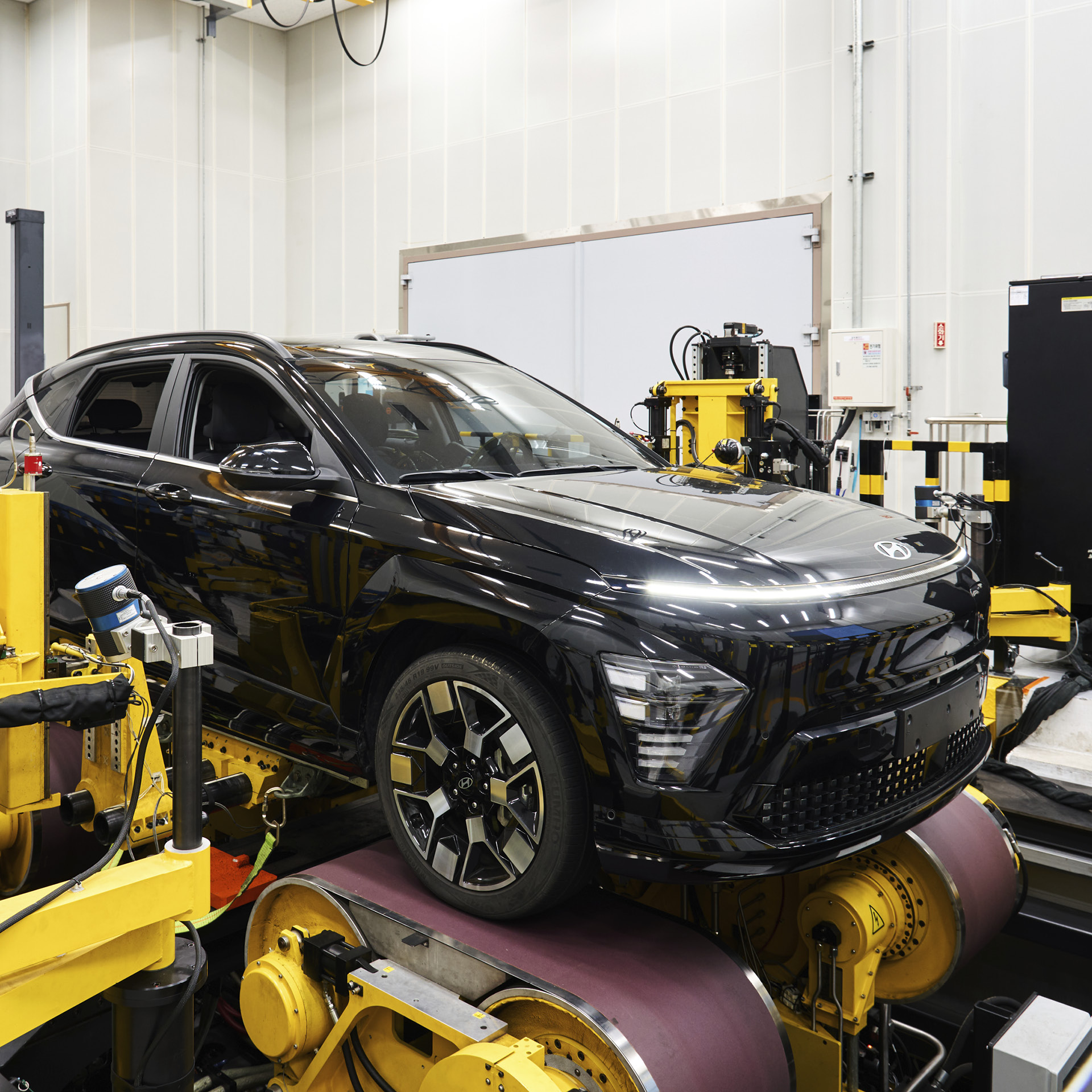
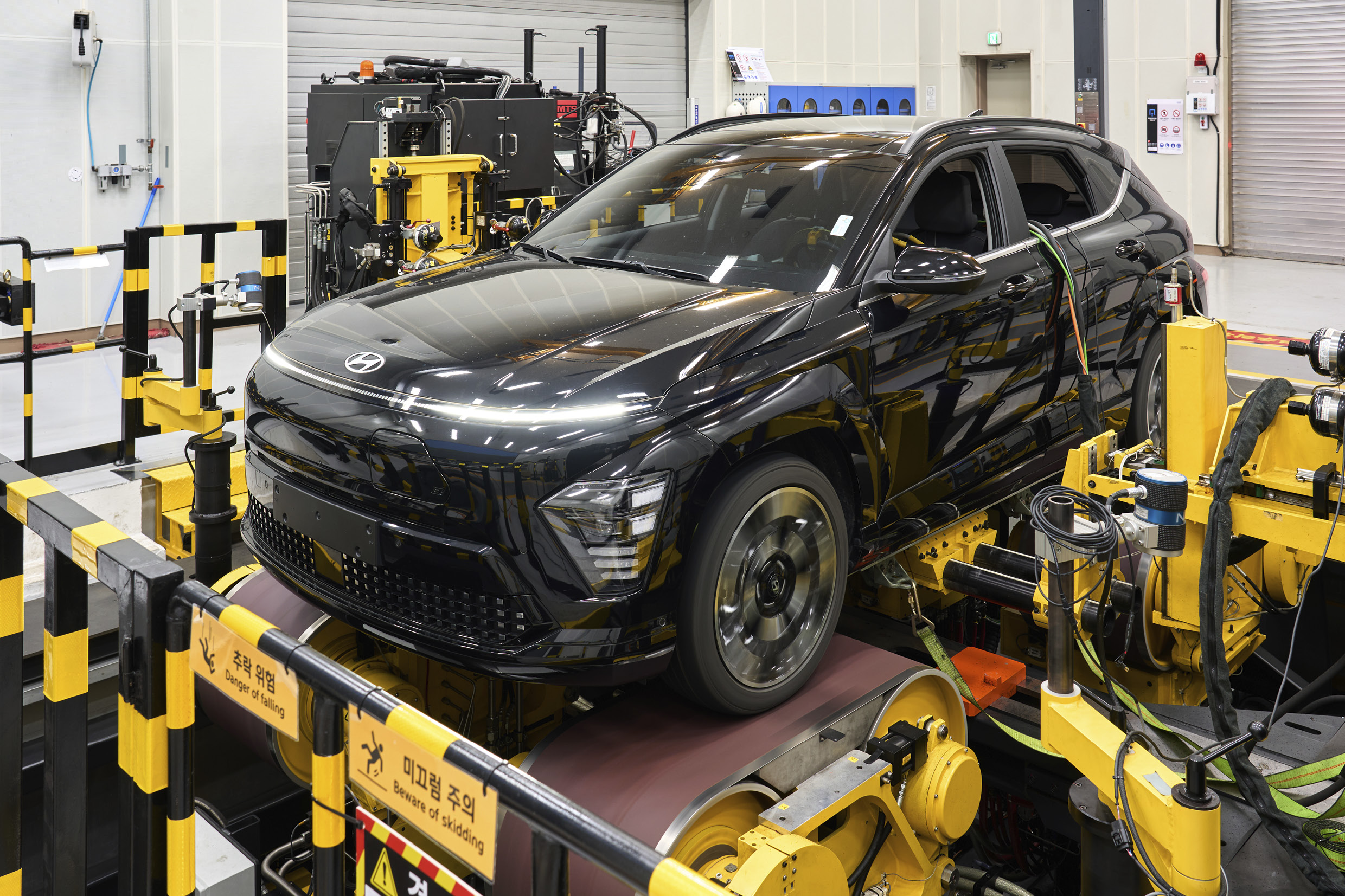
Think of this as the lab’s repeatable track day—minus the weather, traffic, and ‘that one lap’ you can’t quite replicate. The handling roadway simulator evaluates handling balance and steering feel in a tightly controlled virtual environment. Flat belts under each wheel precisely recreate tire-to-road relative speed, so what the car does—and what the sensors record—matches what a driver would feel on real pavement.
It measures sideslip angle—the gap between where the car is pointed and where the tires are actually tracking—to quantify handling performance. Out in the real world, the car moves over fixed ground; here, the vehicle stays put and the “road” rotates beneath it. Because the relative speeds are true to real driving, the behavior you capture is road-real—just without the variables.
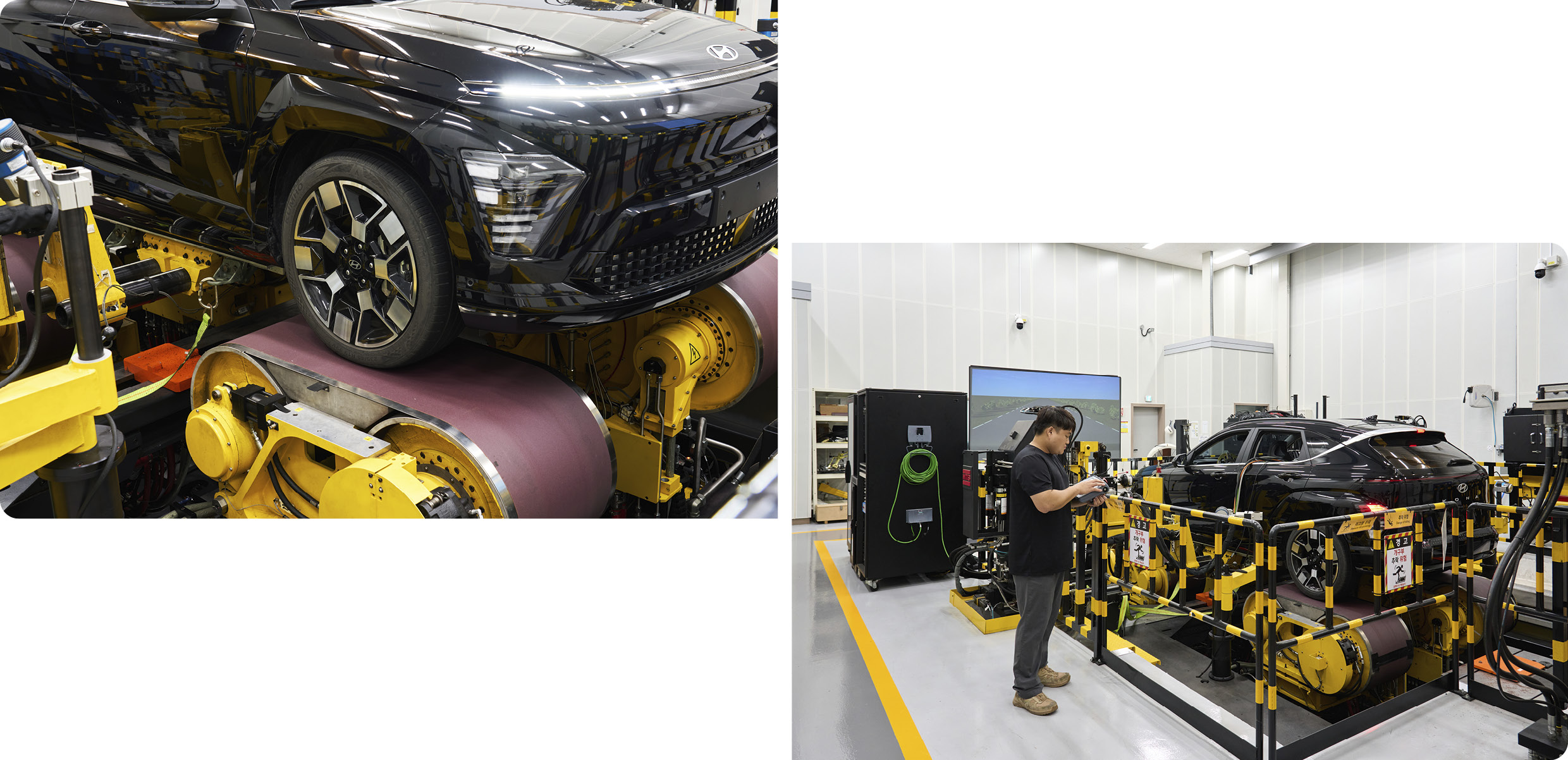
Up front, a 120-inch display plays back routes that closely mirror real ones. A human can drive, or a driving robot can run the test—steering, pedals, clutch, even a manual gearbox—lap after identical lap. That way, setup changes—not driver inconsistency—get the credit (or the blame).
Ride Roadway Simulator
If the handling simulator is track day, the ride roadway simulator is the world tour of rough roads—brought indoors. A driving robot runs the vehicle while flat belts and hydraulic actuators feed road inputs directly into the tire contact patches up to 40 times per second (40 Hz). The system then analyzes vibration behavior across key systems and the fundamentals of ride comfort, enabling objective, lab-grade evaluation of how a car rides on surfaces from around the globe.
A research engineer from the Driving Performance Technology Team explains why this kind of lab beats open-road testing: “On public roads, weather, environment, and even the driver can skew results. With the ride simulator, we lock the variables down. The rig can run with the engine off, or with only the front axle or only the rear axle driven, so we can dig deeper into the data. Another advantage is that we can replicate road environments from our North America, Europe, and China tech centers. That means we can evaluate in identical conditions without shipping the car halfway across the world.”
At HMG’s Namyang R&D Center, the R&H development team pushes refinement using state-of-the-art test facilities designed to expose the tiny details that make a big difference. Beyond proving grounds and public-road loops, the team relies on rigorous, lab-grade analysis to find microscopic issues, trace them to root causes, and translate that work into meaningful improvements you actually feel at the wheel.
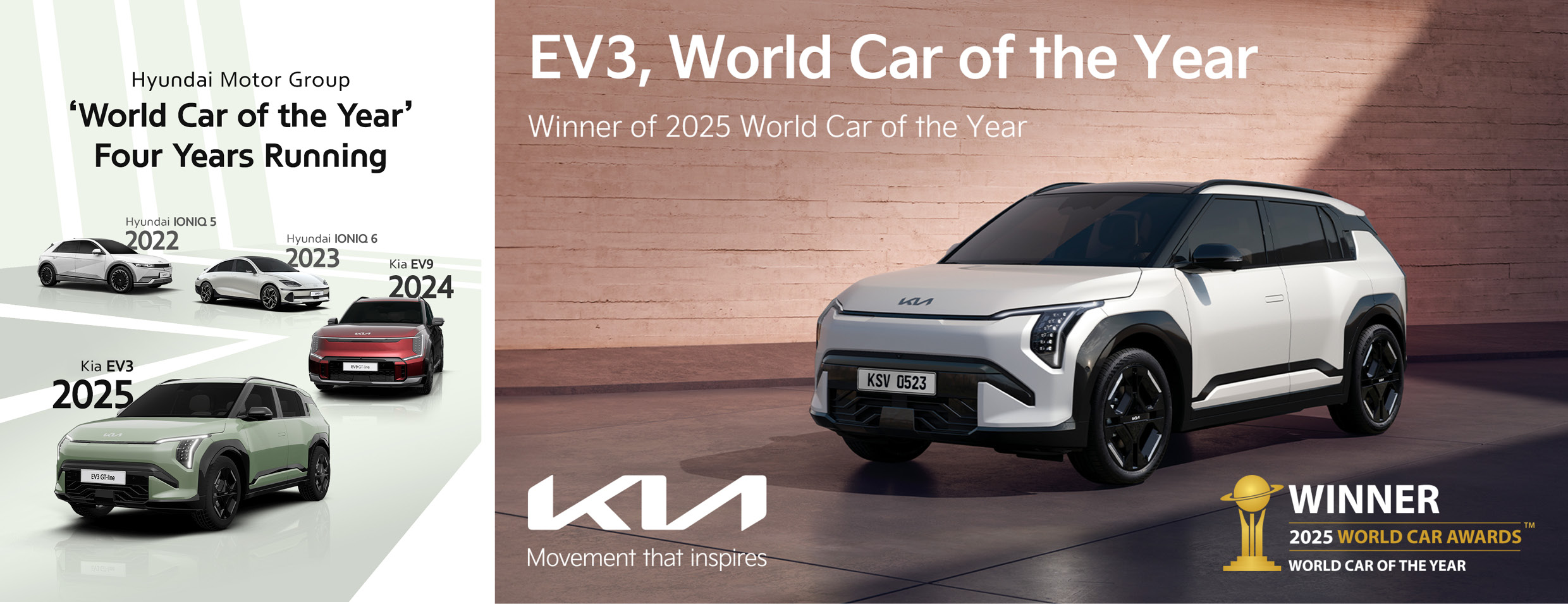
That blend of advanced hardware and engineer-level persistence has earned global recognition. Starting with the Kia Telluride (2020), HMG has captured World Car of the Year honors five times in six years. And even as EV competition has intensified, IONIQ 5 (2022), IONIQ 6 (2023), EV9 (2024), and EV3 (2025) kept the streak alive four years running—proof that HMG’s electric offensive isn’t just strong on paper.
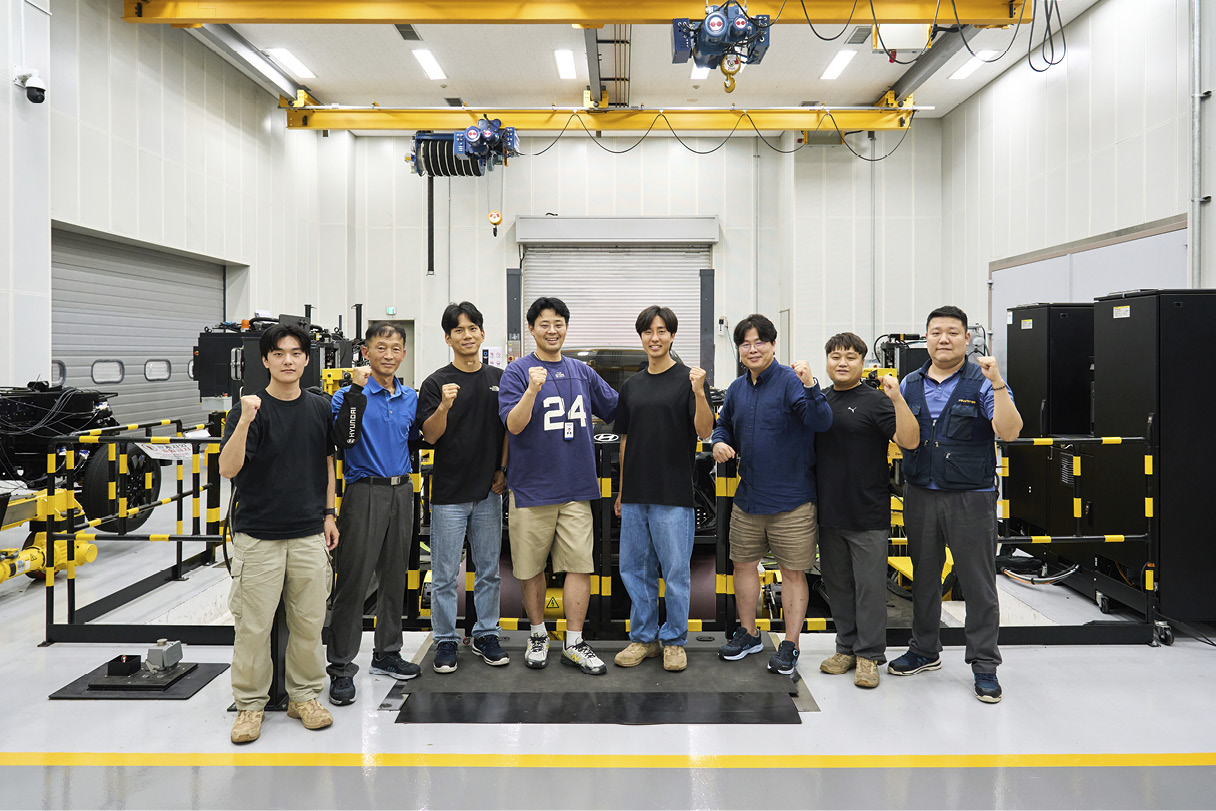
Even as the global mobility market shifts fast, HMG continues to deliver vehicles grounded in deep ride-and-handling know-how. Real “driving performance” isn’t about flash—it’s built from big datasets, disciplined analysis, and research engineers who refuse to sign off on “good enough.” At Namyang, that mindset runs deep—building cars you can trust anywhere, anytime. And with sustained investment in advanced labs plus relentless iteration, HMG aims to keep leading with ride, handling, and safety tuned to meet the expectations of drivers worldwide.
Photography by Hyuk-soo Cho