There has never been a time in human history marked by change as profound as today. It took thousands of years for writing and printed materials to become part of everyday life, and even the spread of electricity after the Industrial Revolution unfolded gradually over several generations. Yet it took less than two decades for half of the world’s population to adopt smartphones as a daily tool. Even before a single generation has fully turned over, smartphones are reshaping how people work, learn, conduct business, and connect with one another. As smartphones themselves have become fully mainstream, the focus of innovation has shifted toward differentiation in design, usability, and functionality. After mass adoption, any technology ultimately comes down to how naturally it integrates into life, how seamlessly it operates, and what distinctive value it offers.
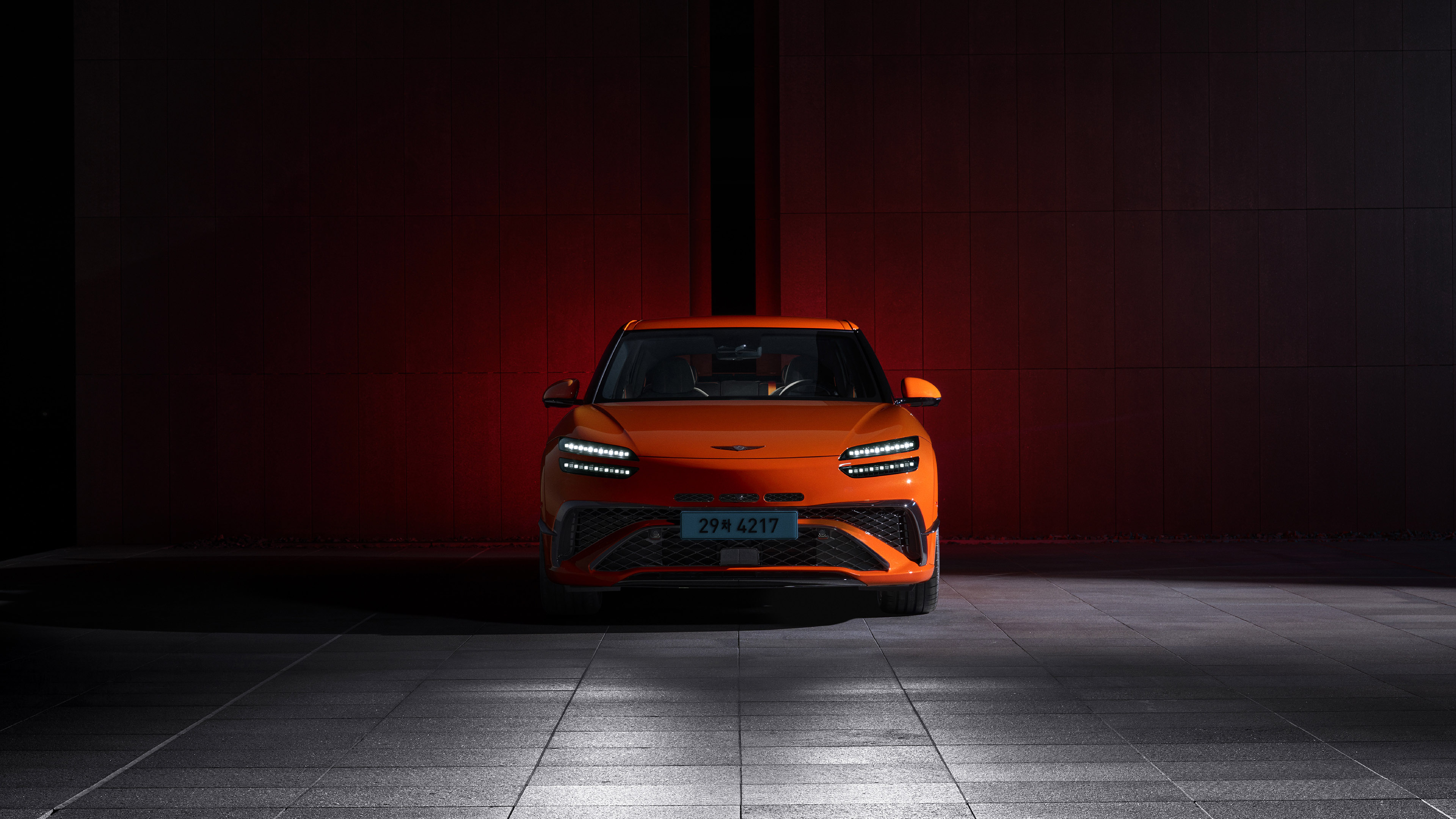
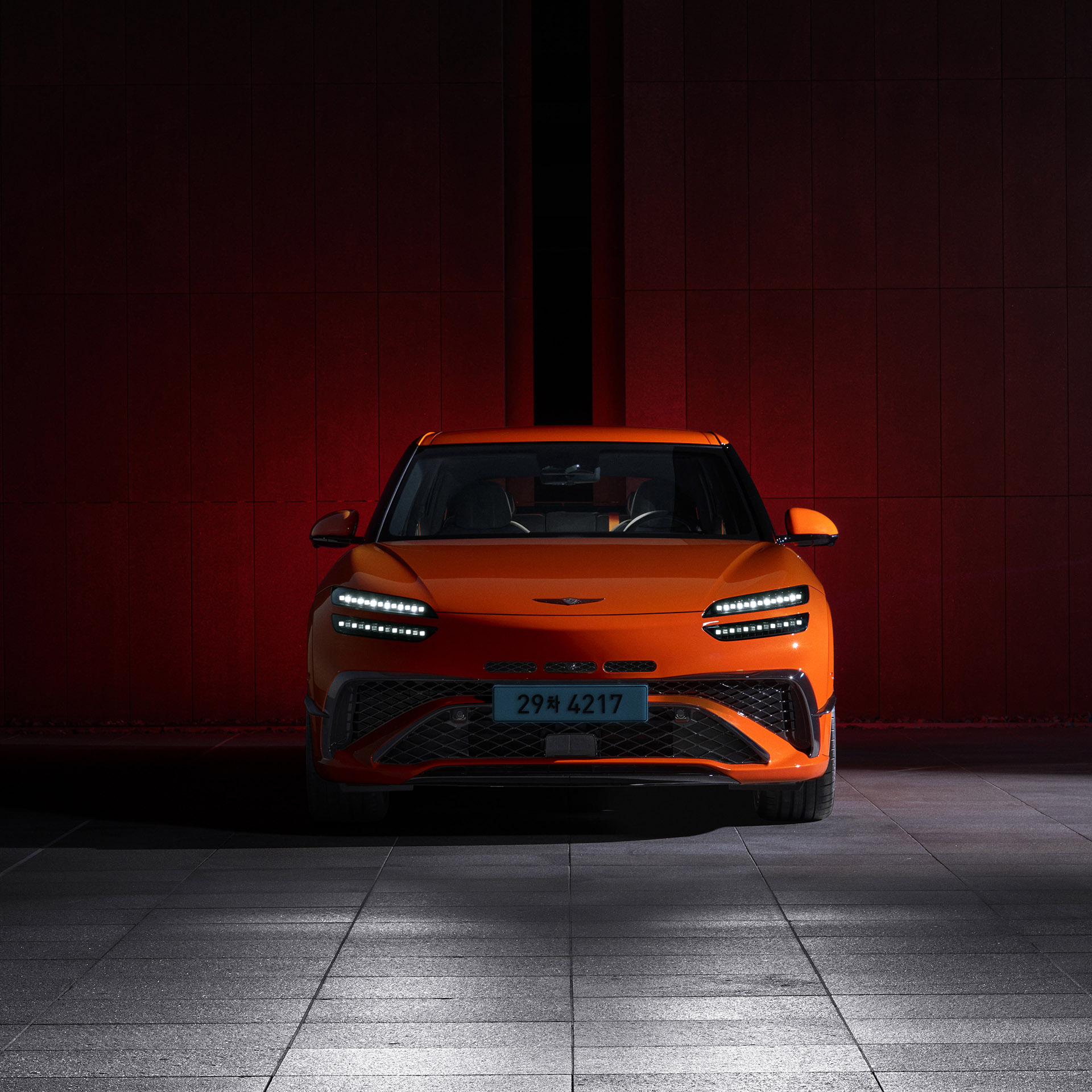
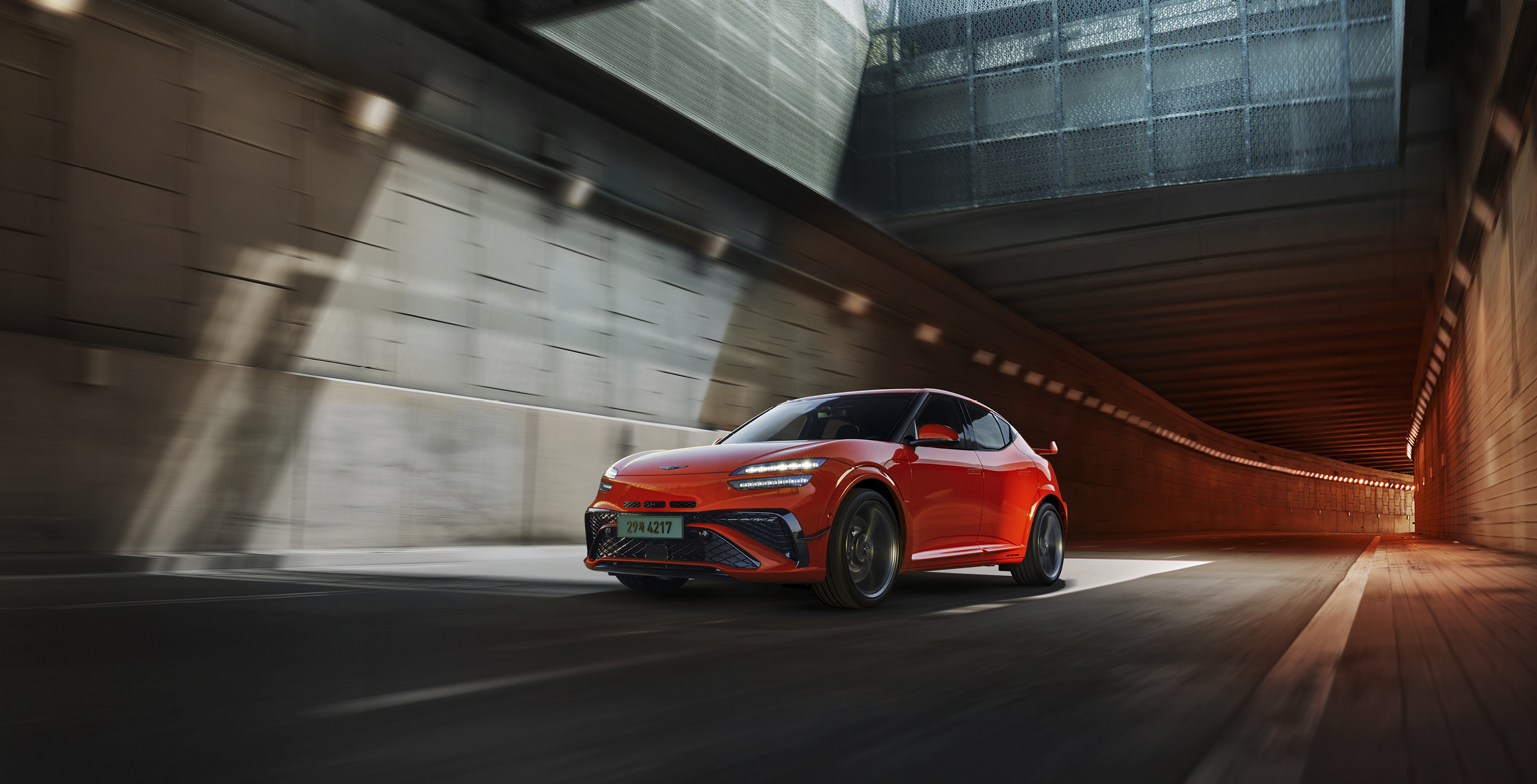
The GV60 Magma, Genesis’s first high-performance electric vehicle, reflects the brand development philosophy
The shift from internal combustion engine vehicles to electric vehicles mirrors this same process. The definition of a high-performance car, in particular, can be clearly divided into periods before and after the widespread adoption of electric vehicles. Performance figures that were once achievable only by a select few high-performance internal combustion models, such as sub-five-second acceleration from 0 to 100 km/h or top speeds exceeding 200 km/h, are now readily attainable across most electric vehicles.
As nearly every automaker now offers a high-performance electric vehicle, more refined criteria have begun to take shape. The key question is no longer who can deliver the highest numbers, but who can create a more complete product that feels natural and comfortable while maximizing the inherent strengths of electric motors and batteries. Beyond this, such a vehicle must clearly reflect the brand development philosophy and present a clear vision for the future. How does the GV60 Magma, Genesis's first high-performance electric vehicle, respond to these expectations?
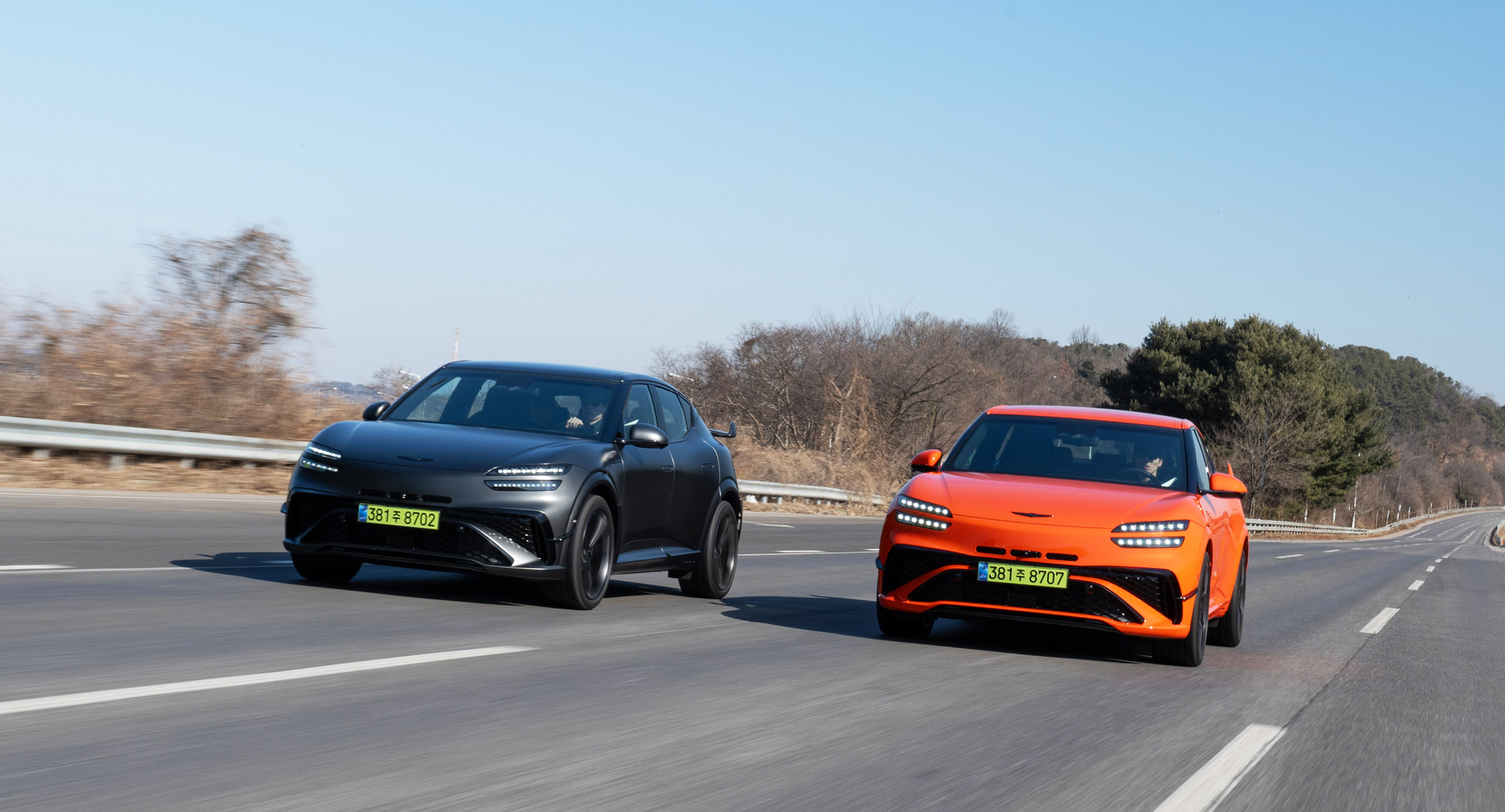
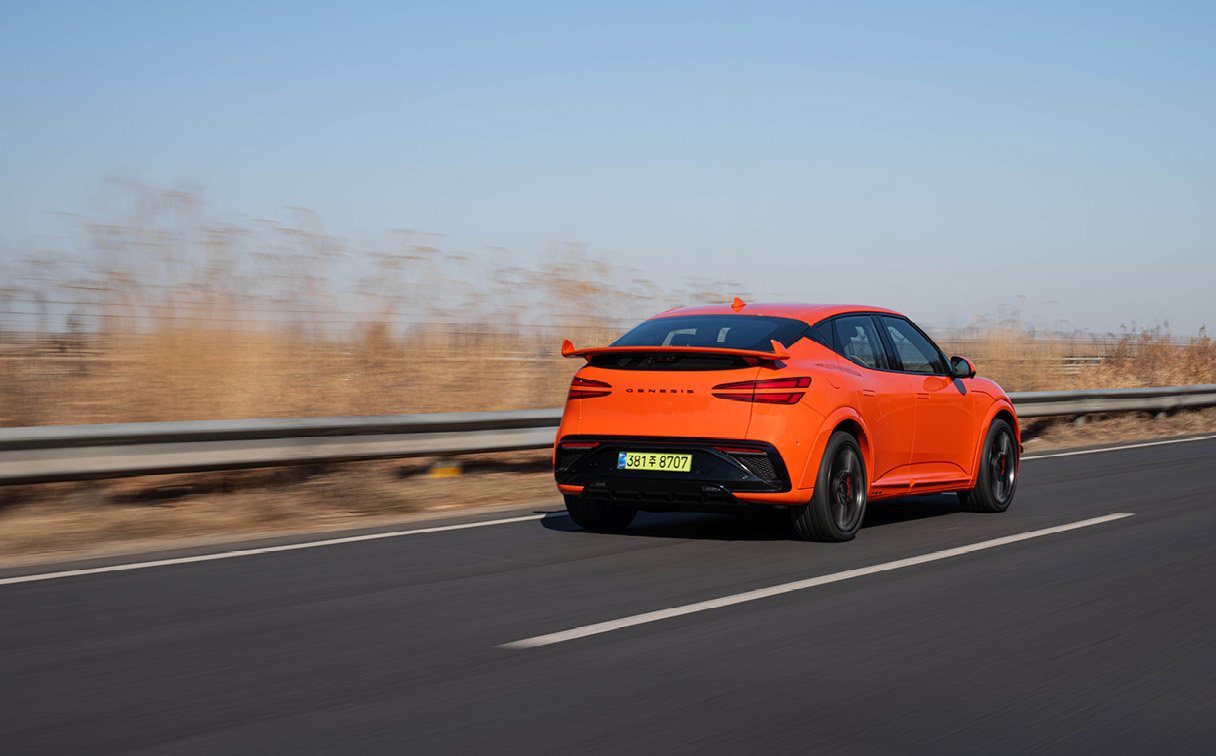
The GV60 Magma media test drive began at Genesis Suji. The drive course began at the Genesis Suji showroom and followed an approximately 50-kilometer one-way route via the Suwon Northern Ring Road, the Gwacheon–Bongdam Urban Expressway, and the Bibong–Maesong Urban Expressway, leading to the Korea Automobile Testing and Research Institute (KATRI) in Hwaseong, Gyeonggi Province. Incorporating national roads, urban expressways, and highways, the course was well suited to assessing the GV60 Magma’s capabilities as a grand tourer optimized for long-distance, high-speed driving.
Track performance is often seen as the most critical factor in evaluating a high-performance car. A circuit does allow a vehicle’s capabilities to be fully explored through sporty driving. However, most tracks are located far from where people live, making ride comfort and cabin quietness on the journey to and from the circuit essential in reducing fatigue before and after a track session. Considering that high-performance cars are driven primarily in everyday conditions rather than on the track, a pleasant and comfortable driving experience remains an essential part of the equation.
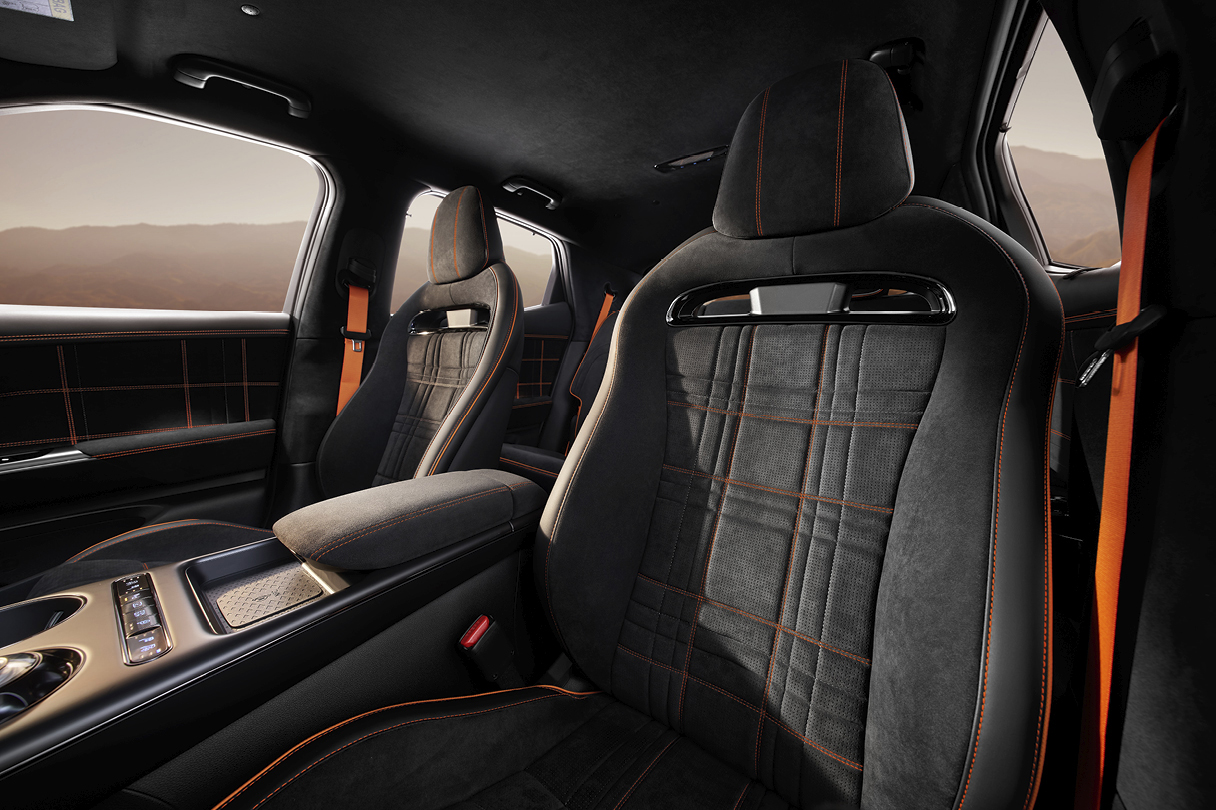
Upon entering the vehicle, the first impression was the functionality and comfort of the Magma-exclusive bucket seats. They remained comfortable even after extended driving. Seats function as a vital communication interface during track driving, conveying the car’s behavior as the body is subjected to strong lateral forces, while on public roads they play a key role in delivering ride comfort and supporting a relaxed journey.
Built on a functional design that firmly supports the body, the GV60 Magma is equipped with 10-way bucket seats engineered for greater precision and comfort. Electric adjustment allows for both easy and finely tuned positioning, while the effectiveness of the seat bolsters in securely supporting the legs is best understood through experience. This detail clearly reflects Genesis careful consideration of both sporty driving and everyday use.
Once on the move in the GV60 Magma, the inherent quietness of an electric vehicle is immediately noticeable. This is particularly striking considering the vehicle is fitted with ultra-high-performance tires measuring 275 mm in width with a 35 percent aspect ratio. While a wider contact patch improves grip, it also tends to increase road noise as the tires interact with the surface. In electric vehicles, where there is no engine or transmission noise to mask these sounds, road noise is often more pronounced. Even so, the GV60 Magma remains exceptionally quiet for a high-performance electric vehicle.
This level of quietness is achieved through the combined use of additional sound-absorbing and sound-insulating materials throughout the body, along with motor control tuning that smooths electric motor harmonic noise while reducing gear-related sounds. Most impressive is the effectiveness of the standard Active Road Noise Control (ANC-R) system. Using data from accelerometers mounted at all four suspension corners, the system detects low-frequency road noise at its source and emits sound waves of the opposite phase through the speakers to cancel it out. Microphones inside the cabin continuously monitor the level of noise reduction, allowing the control logic to be constantly adjusted to maintain a consistently comfortable interior environment.
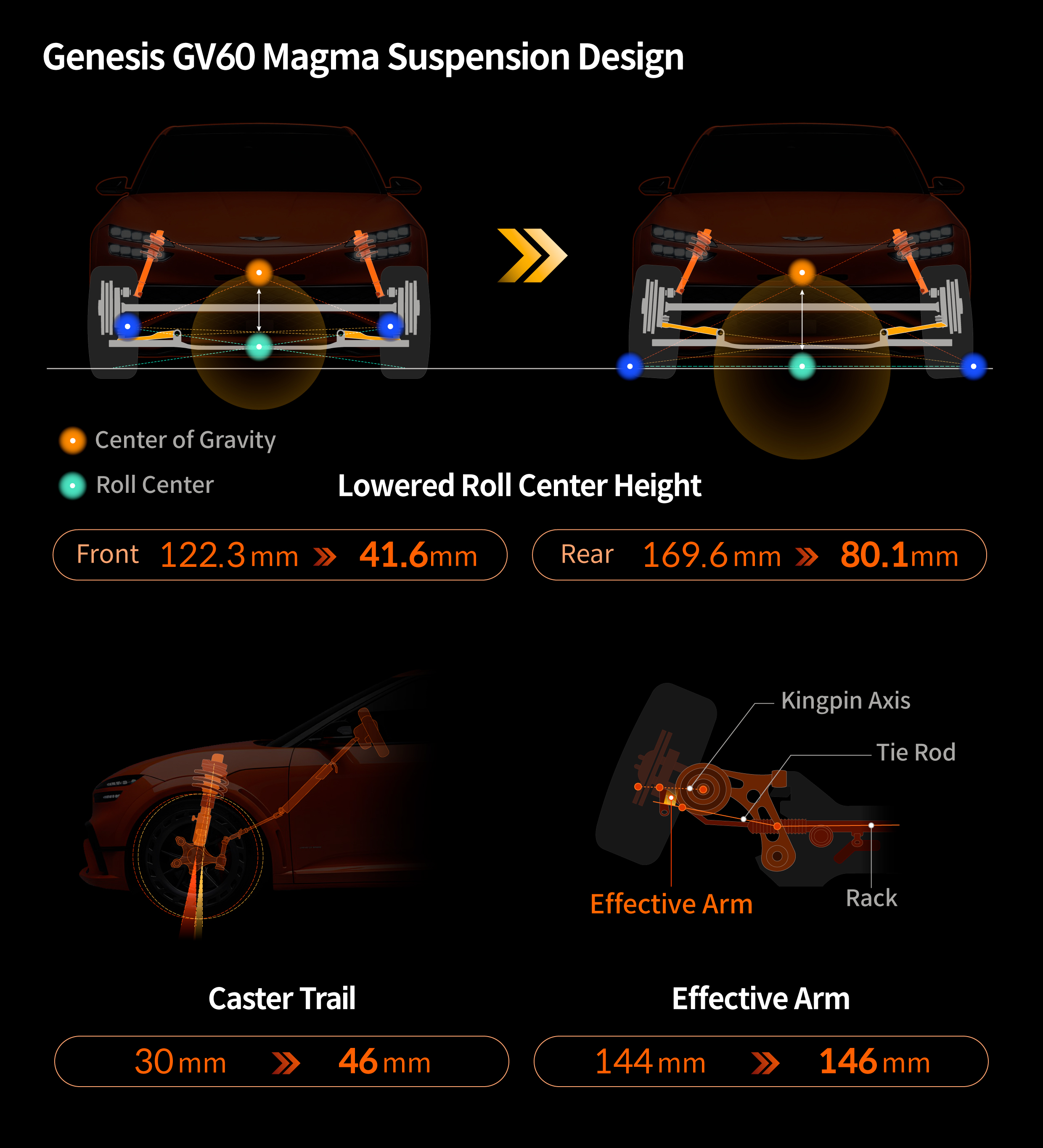
One of the key elements behind the comfortable driving experience is the newly engineered chassis. The GV60 Magma features significant changes to the steering system and front suspension structure, resulting in newly refined ride and handling characteristics. Electric vehicles typically have longer wheelbases and larger turning radii, often leading manufacturers to adopt variable steering gear ratios that increase wheel angle as steering input grows. While this improves ease of parking and U-turns, it can make it difficult to achieve the consistent steering response expected of a high-performance car. The GV60 Magma addresses this by employing a larger fixed steering gear ratio than the standard GV60, delivering sharper and more consistent steering response.
In addition, caster trail—the distance between the tire contact patch and the kingpin contact point where the wheel is mounted to the suspension—has been increased by 16 mm compared to the standard model. The effective length of the lateral control arms has also been extended, enhancing both high-speed stability and steering stability in response to road-induced impacts.
Another major update comes from lowering the roll center by revising the suspension hard points. This approach helps maintain consistent tire contact even during abrupt vehicle movements, resulting in a notable improvement in overall stability. Conventional sports cars often accept a certain level of discomfort as a trade-off for performance. As a luxury brand, however, Genesis rejects this approach, carefully refining even the finer aspects of the driving experience through a range of thoughtful solutions.
The effects of these design choices become apparent as soon as the vehicle takes to the road. The drive began in Comfort mode while navigating city streets, prioritizing smoothness and ease in most everyday driving conditions. The ride quality was impressive enough to make one forget the tires have a 35 percent aspect ratio. With ambient temperatures still low and the tires relatively stiff at the start of the drive, the suspension effectively absorbed small vibrations and impacts from cracked, winter-damaged urban roads, delivering a convincing sense of premium refinement. Switching the drive mode dial to Range mode, which optimizes efficiency, softened throttle response in line with the extended driving range.
In typical driving situations—whether in urban areas or along arterial roads—Comfort and Range modes alone provide more than enough ease to keep pace with traffic. This is made possible by the most powerful Power Electric (PE) system ever fitted to a Genesis production model, delivering ample output whenever required. The front motor produces 175 kW and 370 Nm, while the rear motor delivers 303 kW and 420 Nm; in Boost mode, combined output reaches up to 478 kW (approximately 650 PS) and 790 Nm (approximately 80.6 kgf·m) of torque. While these figures may seem modest at first glance compared with the specifications of today’s high-performance electric vehicles, the true essence of the GV60 Magma engineering lies beyond the numbers.
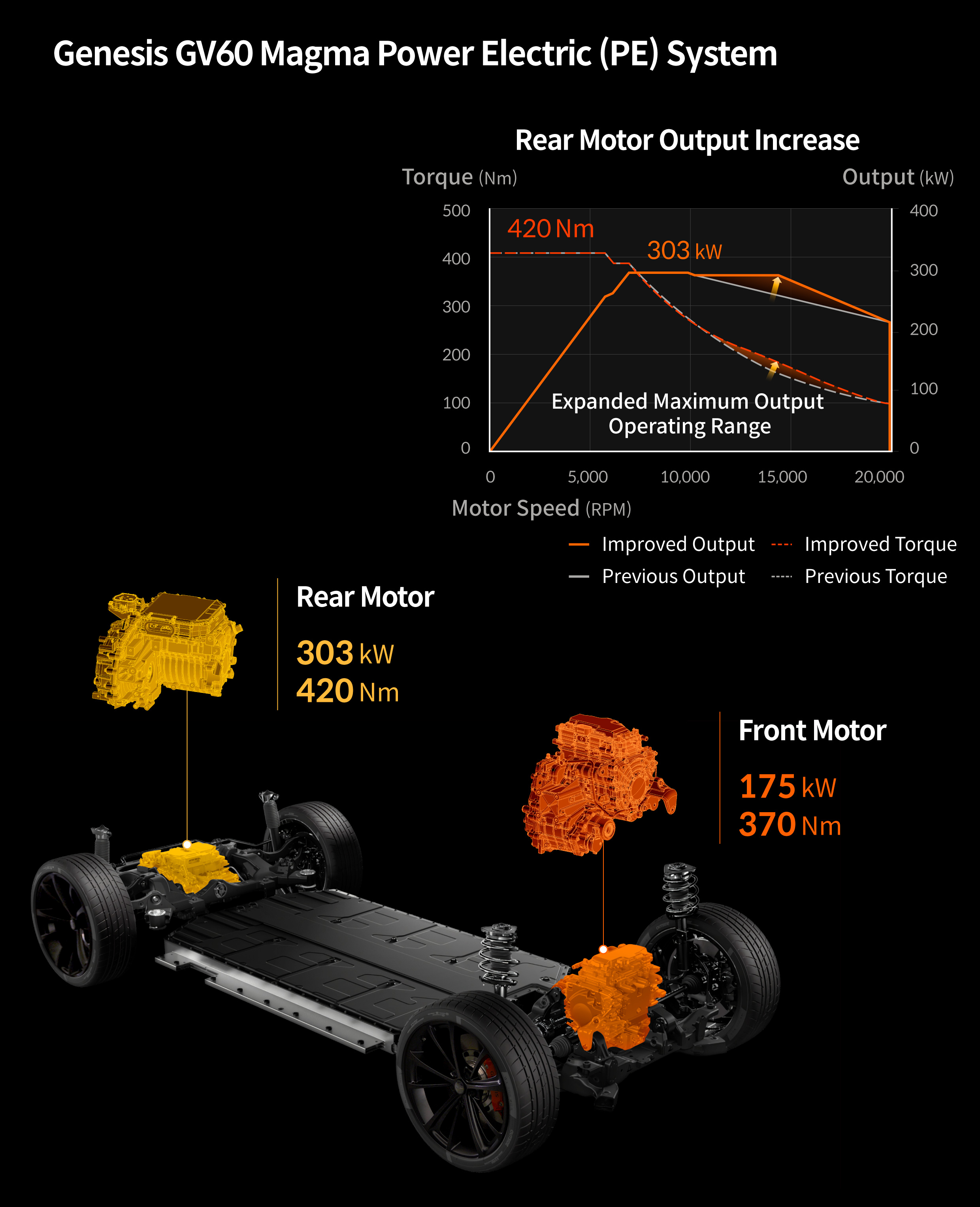
The high-performance motor of the GV60 Magma has been refined through enhanced cooling performance and improvements to the rotor core and ball bearings, enabling ultra-high rotational speeds of up to 20,920 rpm. The motor, reduction gear, and inverter housing have been integrated into a single unit, simplifying packaging while improving efficiency. In addition, the magnetic strength of the motor’s permanent magnets has been increased to support sustained circuit driving and extended high-speed operation. At the rear, a two-stage AC–DC inverter integrated with the reduction gear adjusts power delivery to the motor according to driving conditions, optimizing performance whether prioritizing efficiency or high output.
The 84 kWh NCM battery is paired with an uprated battery heater to enable more proactive thermal management, whether during sporty driving or ahead of rapid charging. Notably, the system leverages the motor and inverter to step up the 400 V input from DC fast chargers to 800 V for ultra-fast charging, eliminating the need for a dedicated voltage booster converter and reducing overall weight in the process. As a result, the GV60 Magma achieves a rare balance among today’s high-performance electric vehicles, delivering sustained performance during track driving while maintaining efficiency in long-distance, high-speed travel.
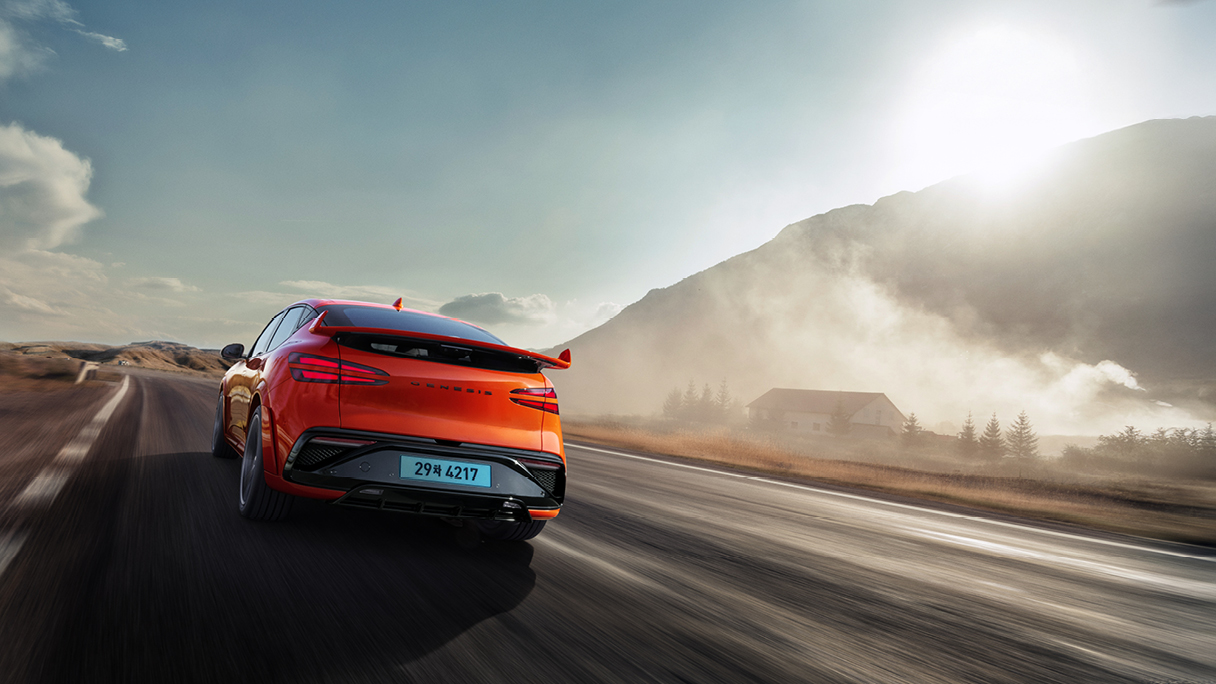
While the motors provide enough power that Comfort mode never feels underwhelming, the GV60 Magma truly comes into its own when the Magma-colored drive mode button is pressed to engage GT and Sprint modes. In particular, GT mode delivers clear benefits in everyday driving environments such as urban expressways and highways, where it is most frequently used.
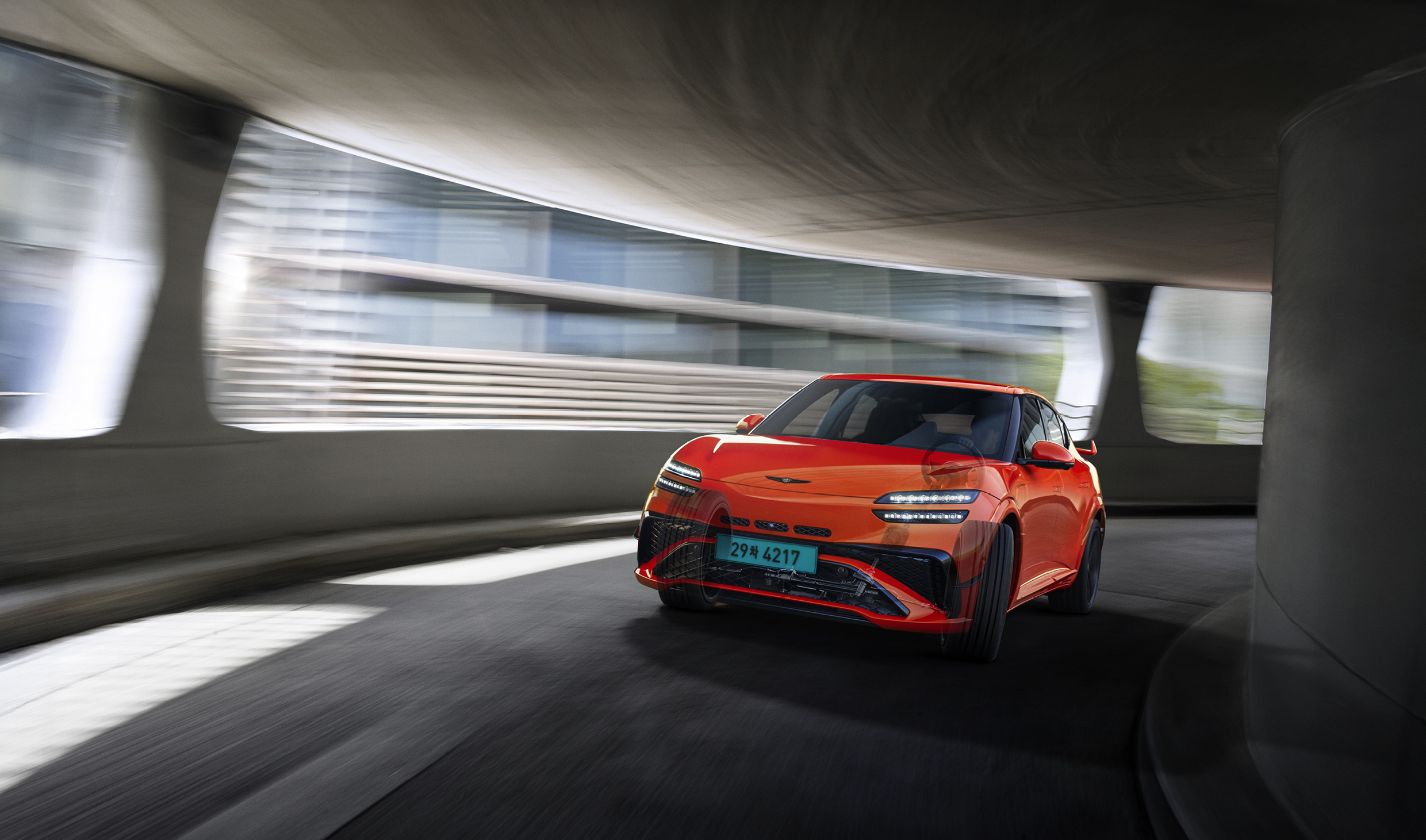
The GV60 Magma offers a wide range of variation in its electronically controlled suspension across different drive modes. After departing from Genesis Suji and passing through a brief stretch of traffic, switching to GT mode transformed the suspension character into one that clearly enhances driving enjoyment. Road surface information is conveyed far more clearly through the steering wheel, and the ad-ded weight of the steering alone makes it easy to rediscover the pleasure of driving.
Many production vehicles highlight performance by intentionally stiffening the suspension as sport-oriented drive modes are selected, mimicking the approach of race cars built for the track. The GV60 Magma, however, strikes a careful balance, filtering out unnecessary harshness without losing composure. It is an ideal setup that never loses sight of the fact that the car is being driven on public roads.
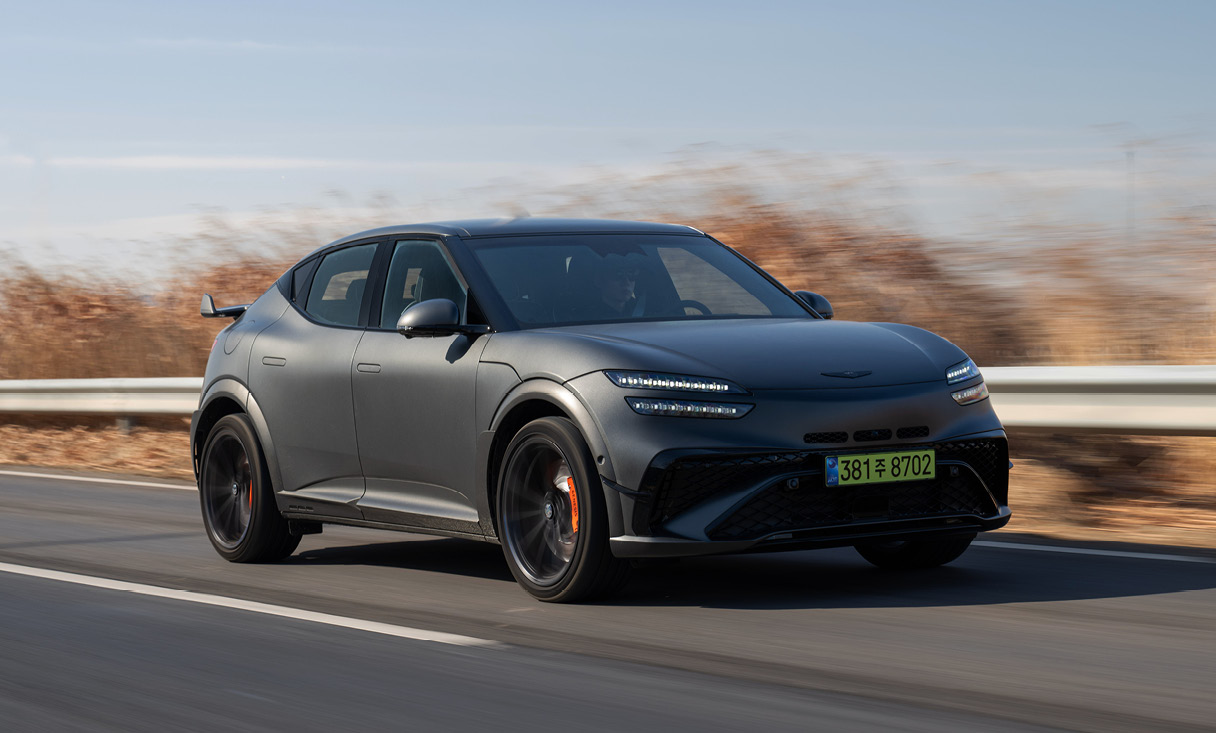
The variable electronically controlled dampers play a key role by preserving ride comfort without excessive stiffness. Through the gently sweeping curves of arterial roads around Yongin and Suwon, the body leans to a measured degree—never excessive and never unsettled. Enhanced front and rear stabilizer bars compared to the standard model provide a stable foundation, while ANC-R suppresses resonance noise when crossing expansion joints on elevated roads. Even during large vertical suspension movements, the dampers absorb impacts smoothly at the limits of their travel.
As a result, GT mode lives up to its “GT” designation, combining ample output with strong high-speed stability to deliver swift yet composed cruising on automotive-only roads. Advanced driver assistance systems such as Highway Driving Assist 2 (HDA 2) further enhance comfort, allowing for a quieter and more relaxed journey with seamless vehicle support.
Another reason GT mode suits long-distance travel lies in how it manages power distribution, allowing the vehicle to operate on the rear motor alone even at relatively high speeds. In all-wheel-drive electric vehicles, the front and rear motors are controlled independently, and as speed increases, a certain level of current is often sent to the front motor to enhance high-speed stability and synchronize rotational speed. This helps reduce shock and ensure stable acceleration when sud-den high output is demanded. However, because this function serves stability rather than propulsion, it can compromise efficiency. The GV60 Magma mitigates this trade-off through refined motor control technology.
As a result, whether accelerating along long, open stretches of lightly trafficked national roads and urban expressways or overtaking at speed, GT mode delivers a solid, weighty surge reminiscent of a large rear-wheel-drive vehicle. As pressure increases on the accelerator, the body settles confidently, reinforcing stability under acceleration. Throttle response and the rate of acceleration feel slightly smoother than in Sport mode, reflecting the GT’s emphasis on sustained long-distance driving rather than sharp, aggressive reactions. The calibration prioritizes composure while still allowing speed to build swiftly when required. During steady high-speed cruising, rear-motor-only operation improves efficiency, naturally contributing to better overall energy performance. This is why GT mode proves particularly well suited to long-distance travel.
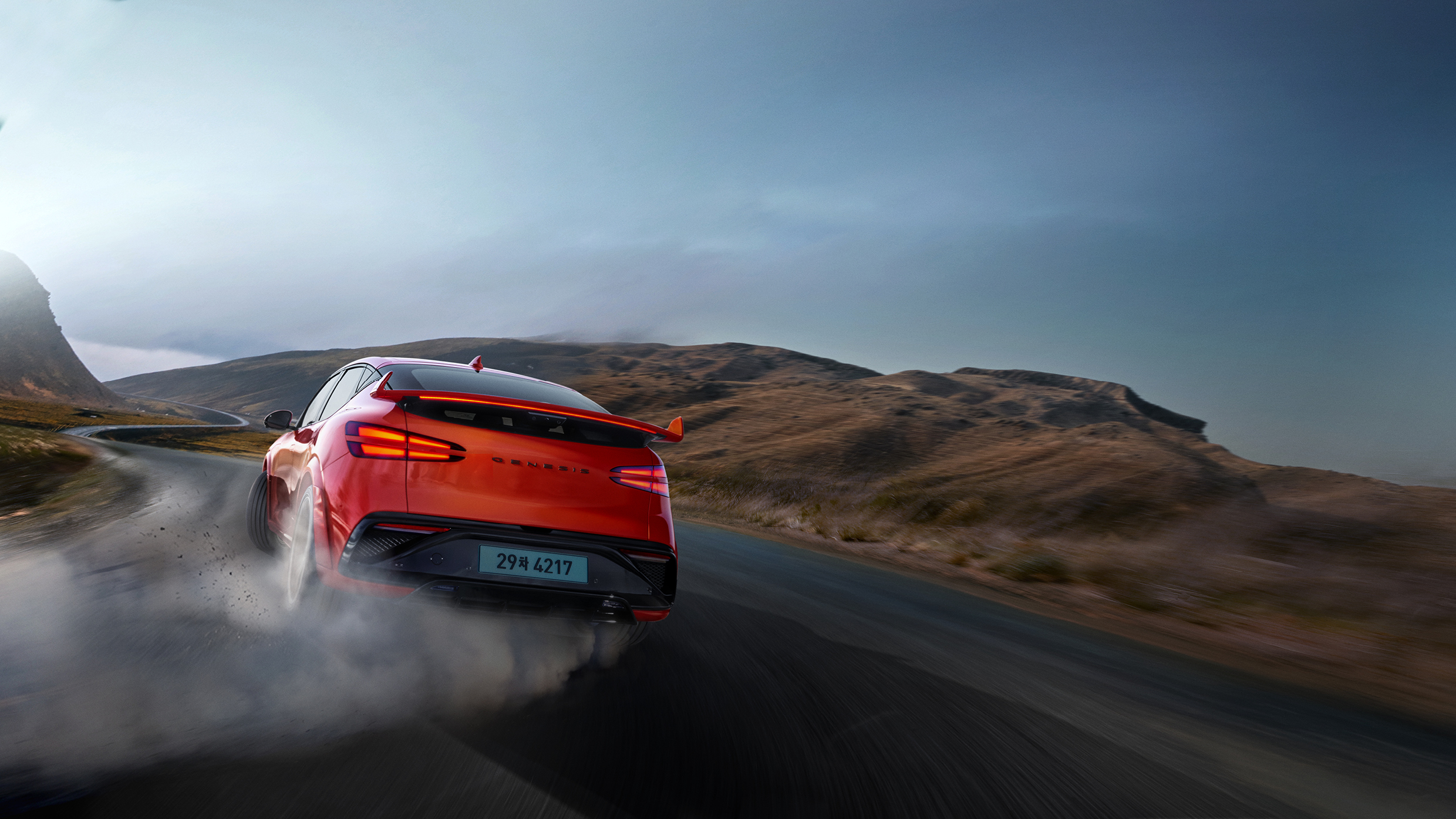
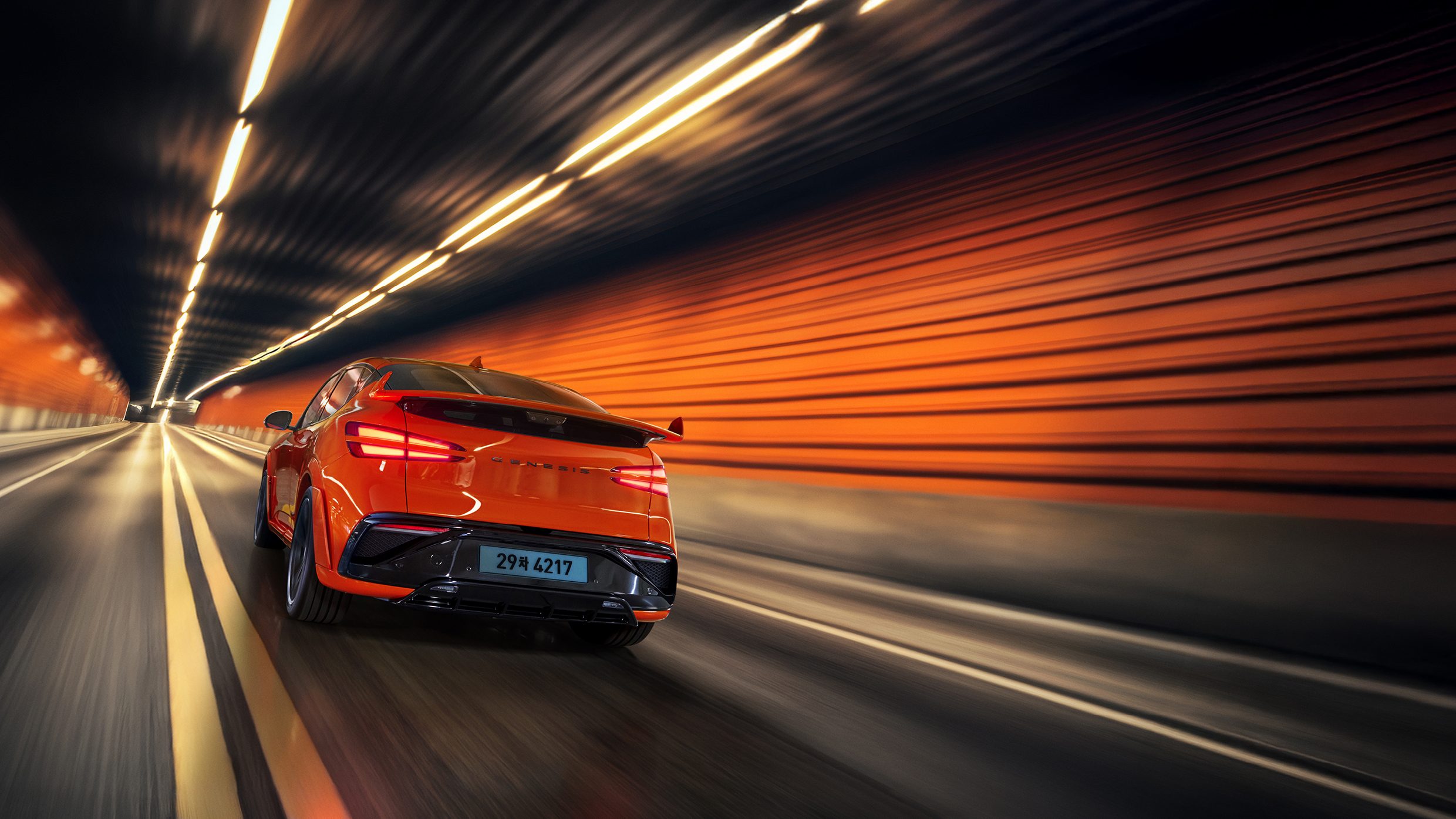
After merging onto the Bibong–Maesong Urban Expressway, pressing the Magma mode button once again activated Sprint mode. In this setting, the motors, steering, suspension, and the electronically controlled limited-slip differential (e-LSD) responsible for rear torque distribution all operate in their highest-performance Sport Plus configuration. The setup is designed for drivers who wish to approach the GV60 Magma’s limits within the intervention range of Electronic Stability Control (ESC).
Pressing the accelerator past 95 percent automatically triggers a 15-second Boost mode, delivering explosive acceleration. The fact that there is no need to manually engage a Boost button during overtaking adds meaningful convenience to the driving experience.

Adding to the sense of enjoyment is the suspension, tuned with remarkable flexibility and precision. Dampers that respond with smooth, flowing composure in Range or Comfort mode become noticeably firmer in Sprint mode. Yet they do not turn rigid in an attempt to overpower the 650 PS output, nor do they resemble the stiffness of a race car. Instead, they absorb impacts from uneven surfaces while maintaining confident tire contact with the road. Through sweeping highway bends, body roll remains appropriately restrained, allowing lateral forces to build progressively with speed and creating a natural driving rhythm.
Of course, this setup may feel ideal to some drivers, while others may wonder whether an even better configuration is possible. The My Mode function addresses this directly, enabling drivers to tailor the vehicle to their individual preferences. Personally, adjusting only the steering to Sport or Comfort for a slightly lighter feel felt more natural. The reduced steering weight allowed for more fluid control as lateral forces built through corners.
Experiencing the difference between Sprint mode and various My Mode configurations to find the most suitable setup is, in itself, one of the pleasures of driving. Luxury high performance does not need to be complicated. By fully embracing the optimized setup the brand has carefully engineered and immersing oneself in it, a distinctly differentiated experience naturally emerges.
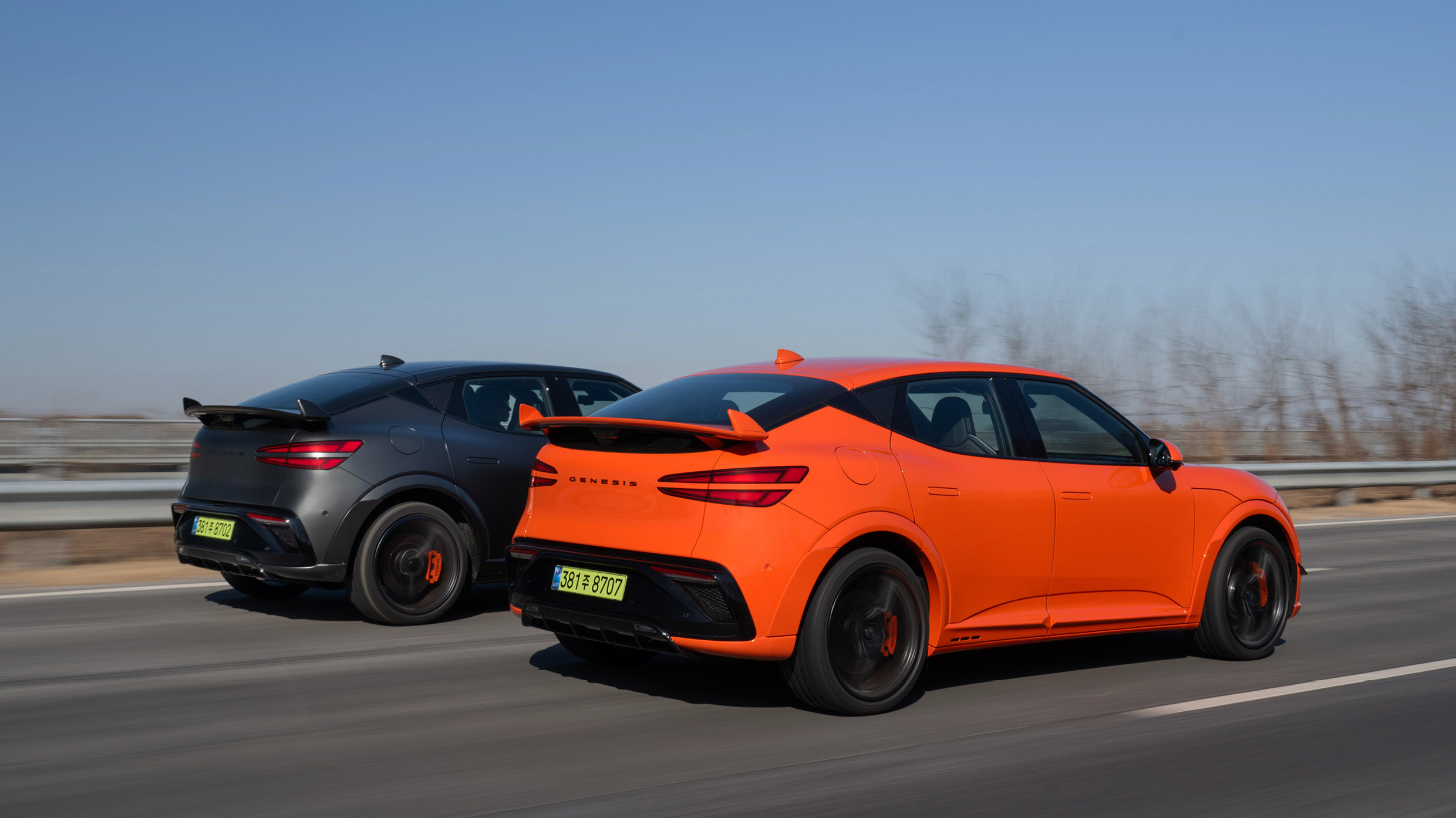
In reality, it is difficult to fully explore the limits of Sprint mode on public roads. The forceful acceleration requires the driver to lift off the throttle well before the GV60 Magma’s full capabilities can be realized. While winding roads with successive corners may offer a glimpse of Sprint mode’s intensity, fully experiencing its abundant output calls for an expansive open space or a controlled track environment. That is precisely why the GV60 Magma was brought to the Korea Automobile Testing and Research Institute, where access is strictly regulated. Here today, a drag run over a set distance will provide the opportunity to experience the GV60 Magma’s explosive acceleration in a safe and controlled setting.
Even as high-performance electric vehicles have become more common, an acceleration time of 3.4 seconds from standstill to 100 km/h remains far from ordinary. The GV60 Magma goes further, reaching 200 km/h in just 10.9 seconds. This demonstrates its ability to sustain strong acceleration even in higher speed ranges. Launch Control and Boost mode, both automatically activated in Sprint mode, make this capability easy to verify. The 15-second Boost phase maintains ample reserve even beyond 200 km/h, deep into ultra-high-speed territory. Anyone present here can clearly recognize that the GV60 Magma’s top speed of 264 km/h is not a nominal figure, but a fully attainable reality.
The Boost mode, activated automatically once the accelerator is pressed beyond 95 percent, also proves especially advantageous in a drag run. Entering a long straight on track without needing to locate and press an additional button allows the driver to remain fully focused on acceleration. The same philosophy applies to features such as Drift Mode, which can be engaged with a single press. The goal is simple: to enable concentration through straightforward choices rather than complex procedures. This is the approach to luxury performance that Genesis proposes.
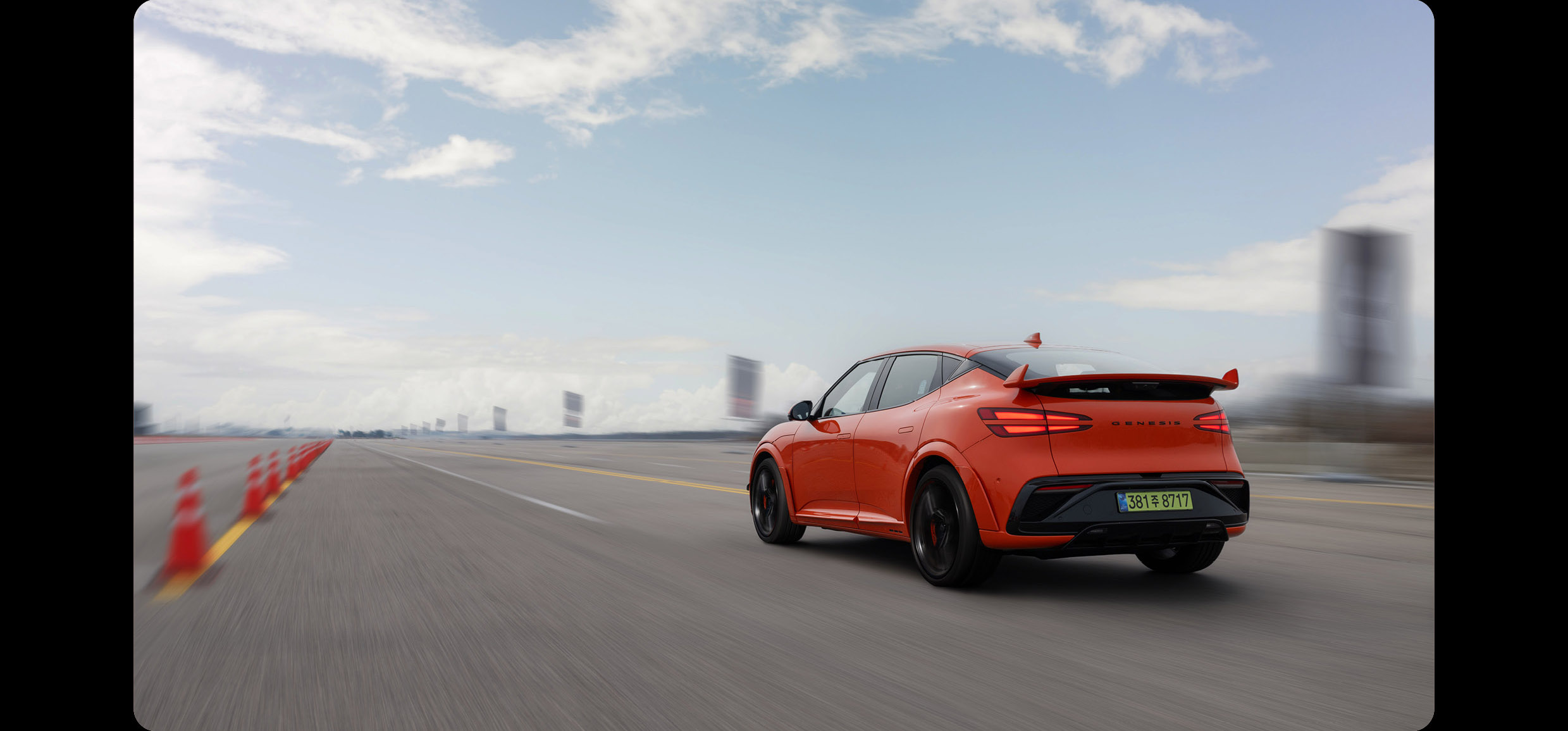
Following a short break upon arrival at the Korea Automobile Testing and Research Institute, the drag run began. From the starting line to a point 300 meters ahead, acceleration in Sprint mode made full use of Launch Control and Boost mode, followed immediately by an opportunity to experience the vehicle’s powerful braking performance. From launch, the GV60 Magma accelerates with force that feels compressed and then sud-denly released, surging forward with striking immediacy.
Braking performance leaves a strong impression as well. After aggressive acceleration, when the brake pedal is applied firmly and the dampers compress as the front end settles under load, the GV60 Magma maintains reassuring stability. Large-diameter brakes, working in harmony with a naturally calibrated regenerative braking system, bring the 2,250 kg vehicle to a composed stop even from speeds exceeding 200 km/h. It represents a near-magical resolution of the inherent weight disadvantage of electric vehicles compared with internal combustion models, achieved through a highly refined suspension and braking system.
The Virtual Gear Shift (VGS) system also contributes significantly to deepening the acceleration experience. By modulating motor torque, it recreates the direct, connected shift feel of an eight-speed dual-clutch transmission, adding a layer of mechanical engagement to an electric drivetrain. On everyday roads, the pleasure of manually operating the paddle shifters can be combined with E-Active Sound Design Plus, which generates the character of a high-revving naturally aspirated V6 engine. Yet the appeal of the simulated shifts and dynamic sound is amplified most vividly during a drag run, when shifting at full throttle brings the experience to its peak.
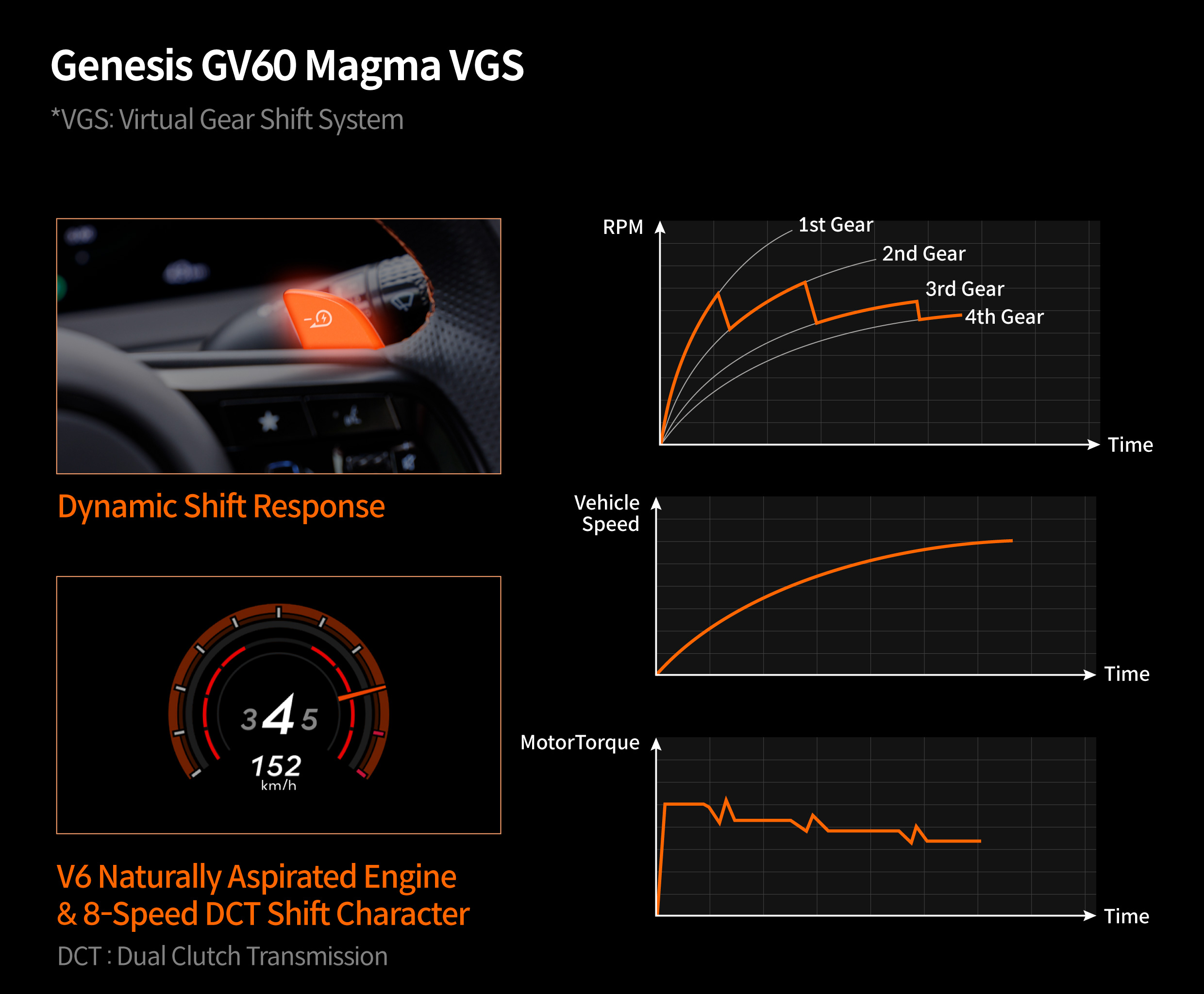
The effectiveness of the Virtual Gear Shift system is equally evident during track driving. The more experience one has driving internal combustion vehicles on circuit, the more challenging it can feel to push an electric vehicle at speed without engine sound. On a familiar track, drivers remember not only their speed at each corner but also the appropriate gear and engine speed, reacting almost instinctively to auditory cues as they transition between braking, shifting, steering, and acceleration. In a conventional electric vehicle without engine or shift sound, that reference point is absent, often making inputs feel less intuitive. In the GV60 Magma, however, the simulated shift feedback and engine sound restore that sensory rhythm, allowing the driver to focus fully on the track and even feel the heart rate rise in sync with the building sound.
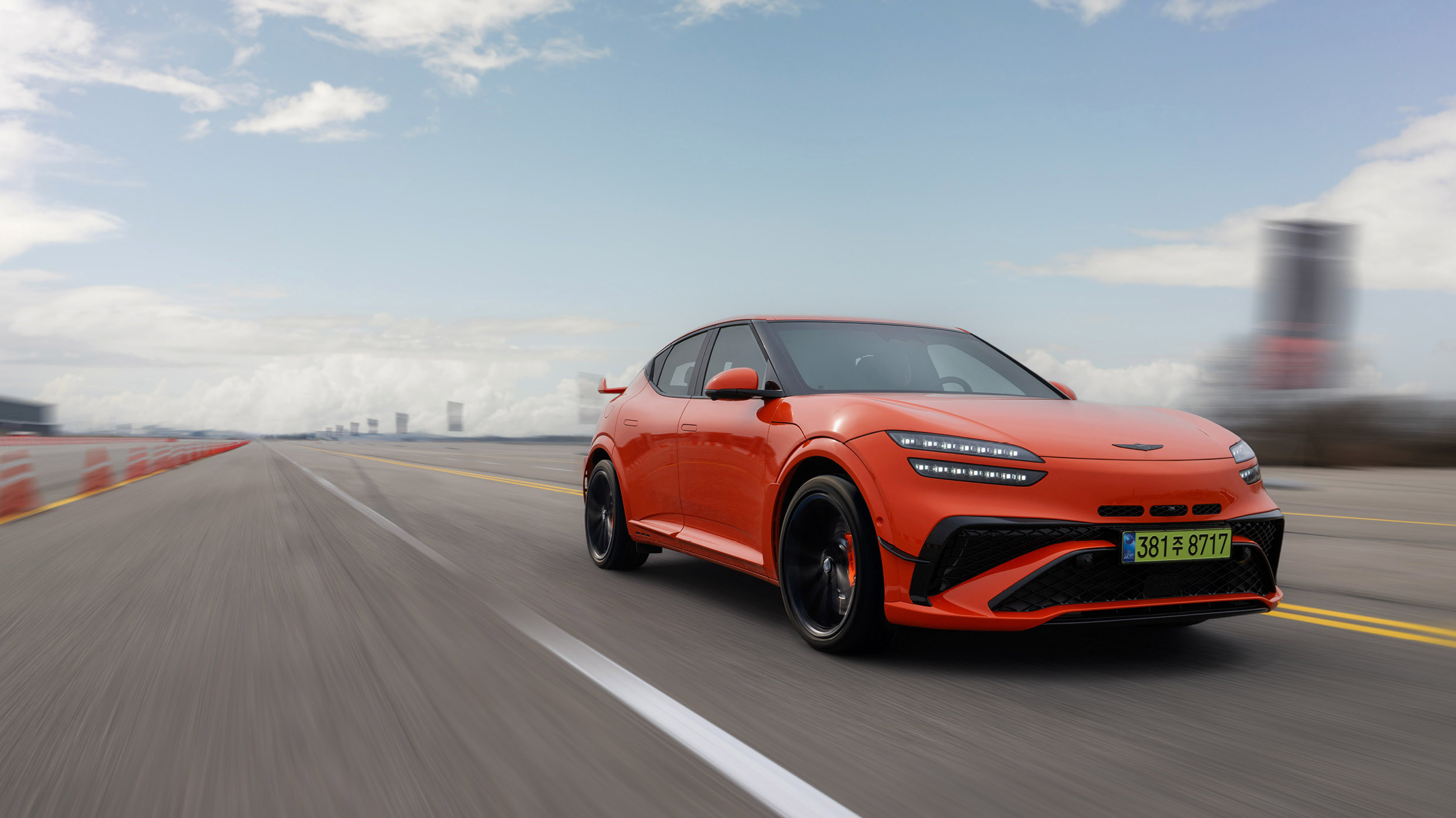
To truly enjoy any sport requires a disciplined approach. One must first understand the theory, secure appropriate equipment, and learn from a qualified coach, then commit to sustained practice to refine both physical conditioning and technique. In competition, one competes fairly within the rules, accepts the outcome, and works to address shortcomings. The essence lies in embracing the process itself—advancing step by step and finding satisfaction in steady improvement.
Motorsport is the automotive expression of that same pursuit. Even without entering formal competition, track driving follows established rules and serves as a means of refining skill and progressing to a higher level. From the perspective of an enthusiast, having a car like the GV60 Magma—one that allows complete focus on driving rather than mechanical limitations—is a deeply rewarding proposition.
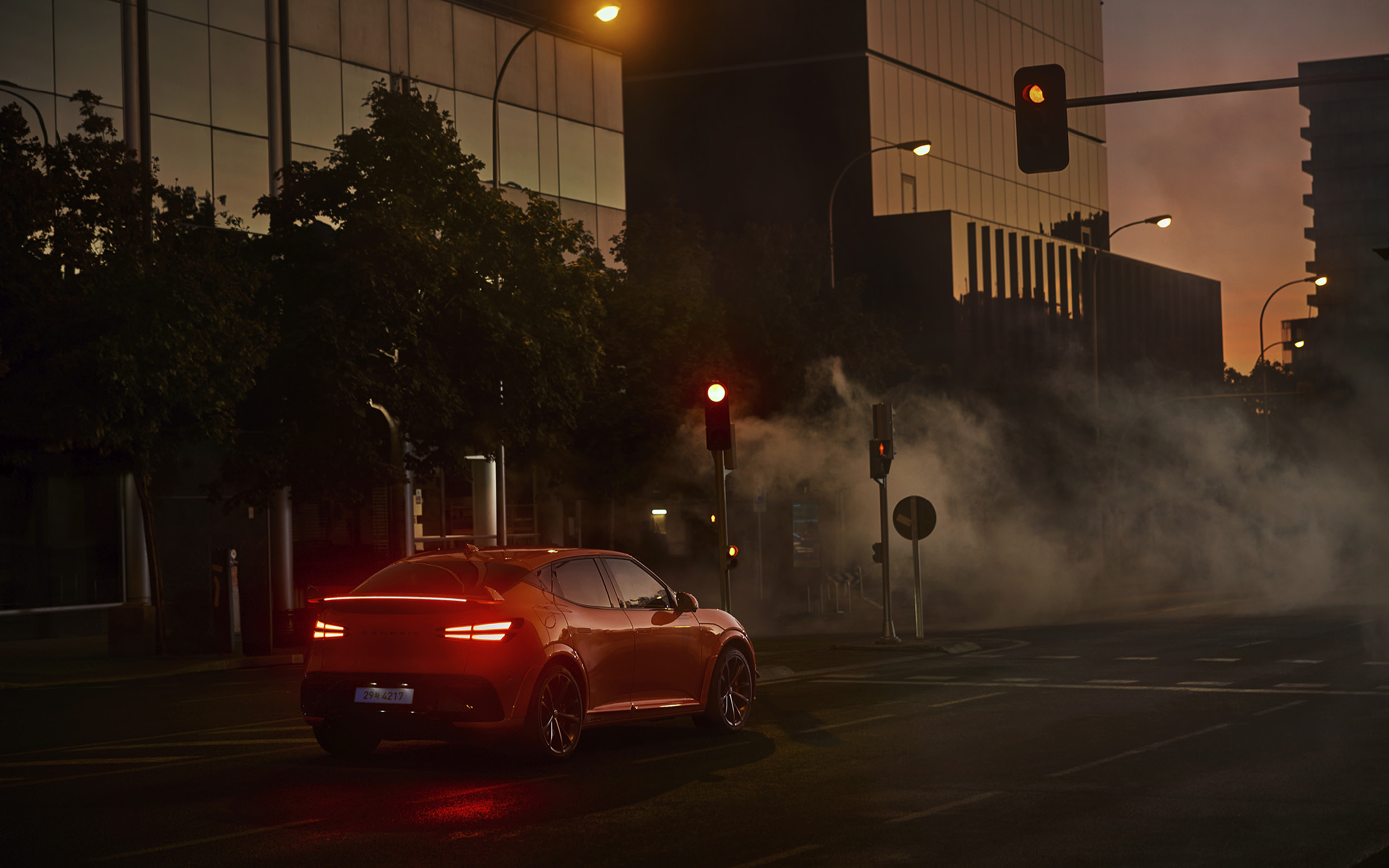
Moreover, satisfaction extends beyond the track itself to the roads that lead to and from it, as well as to everyday driving across city streets, national roads, and highways, which account for the majority of time spent behind the wheel. Comfort mode delivers smooth and relaxed composure, while GT mode makes long-distance highway travel genuinely enjoyable. The latest ADAS features and advanced noise-cancellation technology further enhance cabin refinement. By fulfilling the core expectations of a luxury brand, the GV60 Magma delivers a well-rounded and deeply satisfying travel experience.
As high-performance electric vehicles continue to flood the market, the GV60 Magma stands clearly apart. It offers more than what is typically expected of the latest high-performance EVs while removing unnecessary complexity. More importantly, it restores—and elevates—the visceral pleasure of driving once reserved for internal combustion engines. Like magma that appears calm while holding immense energy beneath the surface, it is bold without excess and composed with quiet intensity. This is the Genesis GV60 Magma.
By Donghee Lee (Automotive Columnist and Consultant)
Lee began his career as an automotive journalist at the automotive magazine