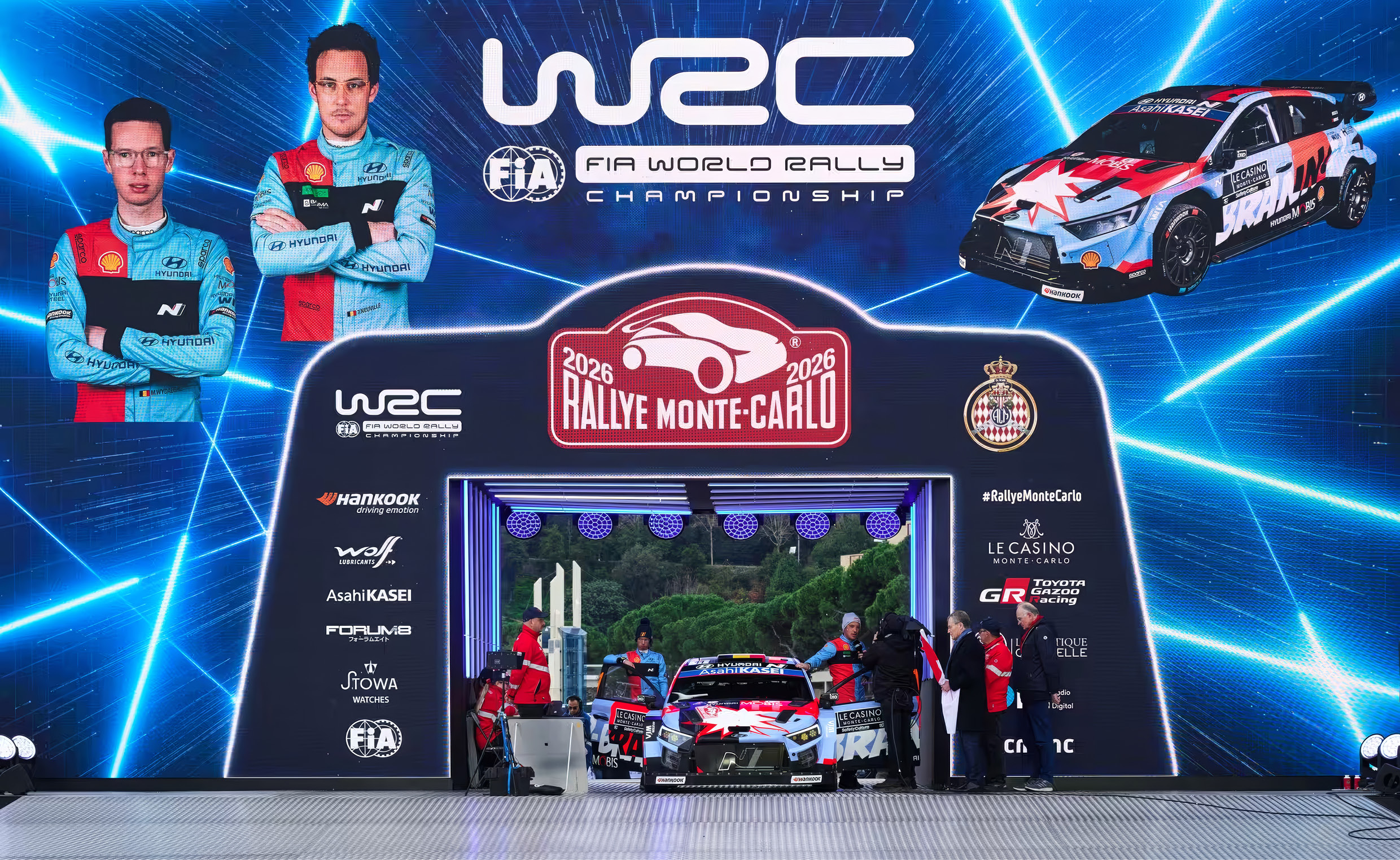
On the fourth weekend of January 2026, Rallye Monte-Carlo—set against the Southern Alps of France—raised the curtain on the WRC 2026 season. Since its founding in 1911, Monte has been loved as one of rallying’s crown jewels, and it’s famous for the kind of fickle surface conditions that push drivers to their limits. With the scenic Alpes-Maritimes and the Hautes-Alpes—often called the heart of the Alps—as its backdrop, the twisting mountain passes carved into the hillsides have become synonymous with the WRC season opener for generations of fans.
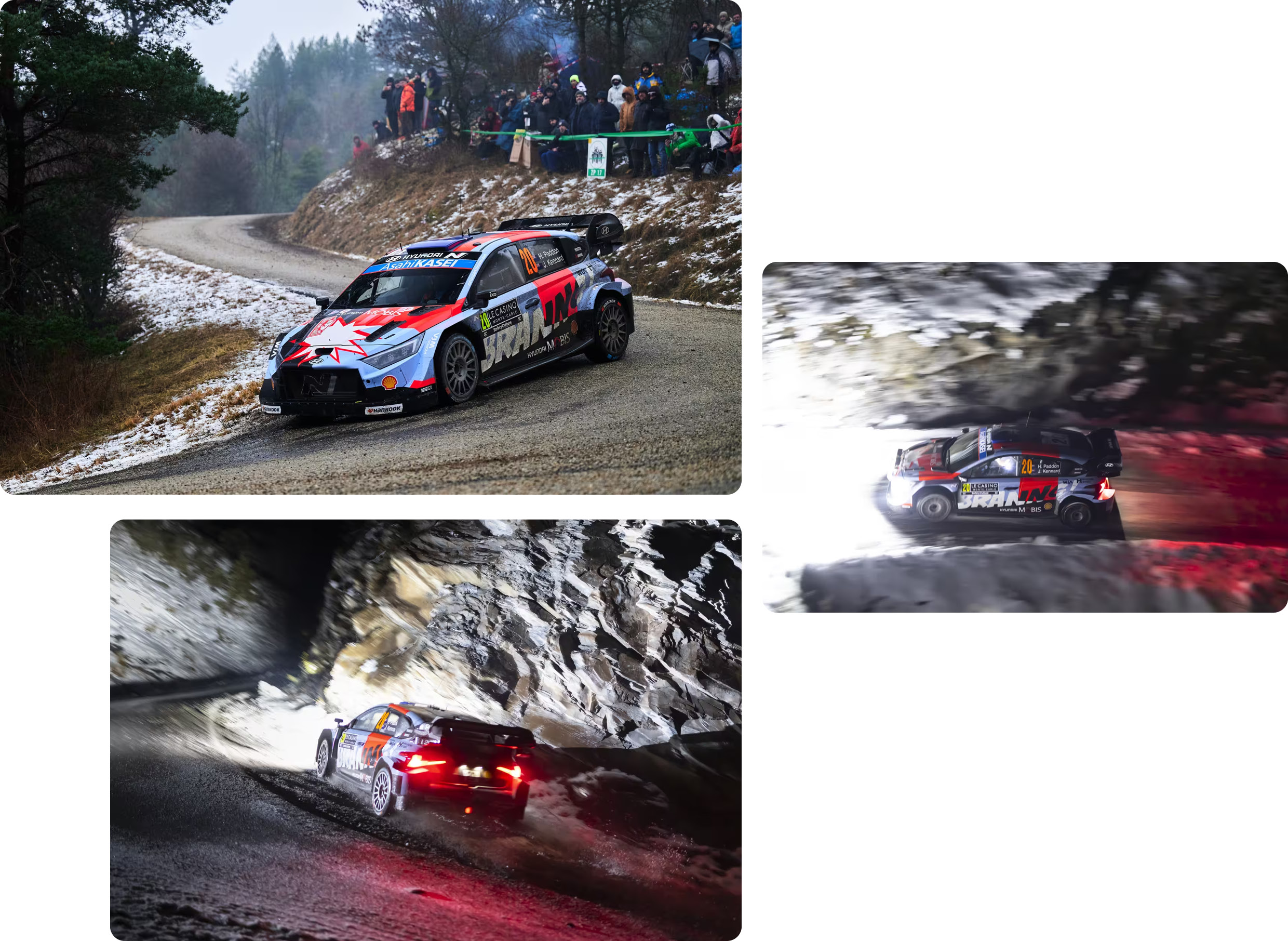
Monte’s stages are mostly tarmac, but in January up in the mountains you’re always hunting for the next patch of snow or black ice. That’s why teams get four tire plays: super soft, soft, studless snow, and stud-ded snow. With mixed conditions often packed into a single stage, tire choice becomes the whole game. You cash in where your tire works, and you survive where it doesn’t. To stack the deck, teams send scouts out ahead of time to read the road, then funnel that intel into tire calls and last-minute tweaks to the pace notes.
On the Rally1 side, the rulebook is largely unchanged on the technical front. What’s new is headroom: manufacturers get two extra “jokers”—basically upgrade tokens—to chase the last bit of performance. The sporting regs shift, too, with mandatory rest now baked in: at least 10 hours per day, and total rest time has to exceed total stage time. And there’s a big procedural change on engines: teams can swap an engine after the rally has started, but it’s a nuclear option—60 minutes ad-ded and zero points for that event. Before, an engine change was only allowed pre-start, and the penalty was just five minutes.
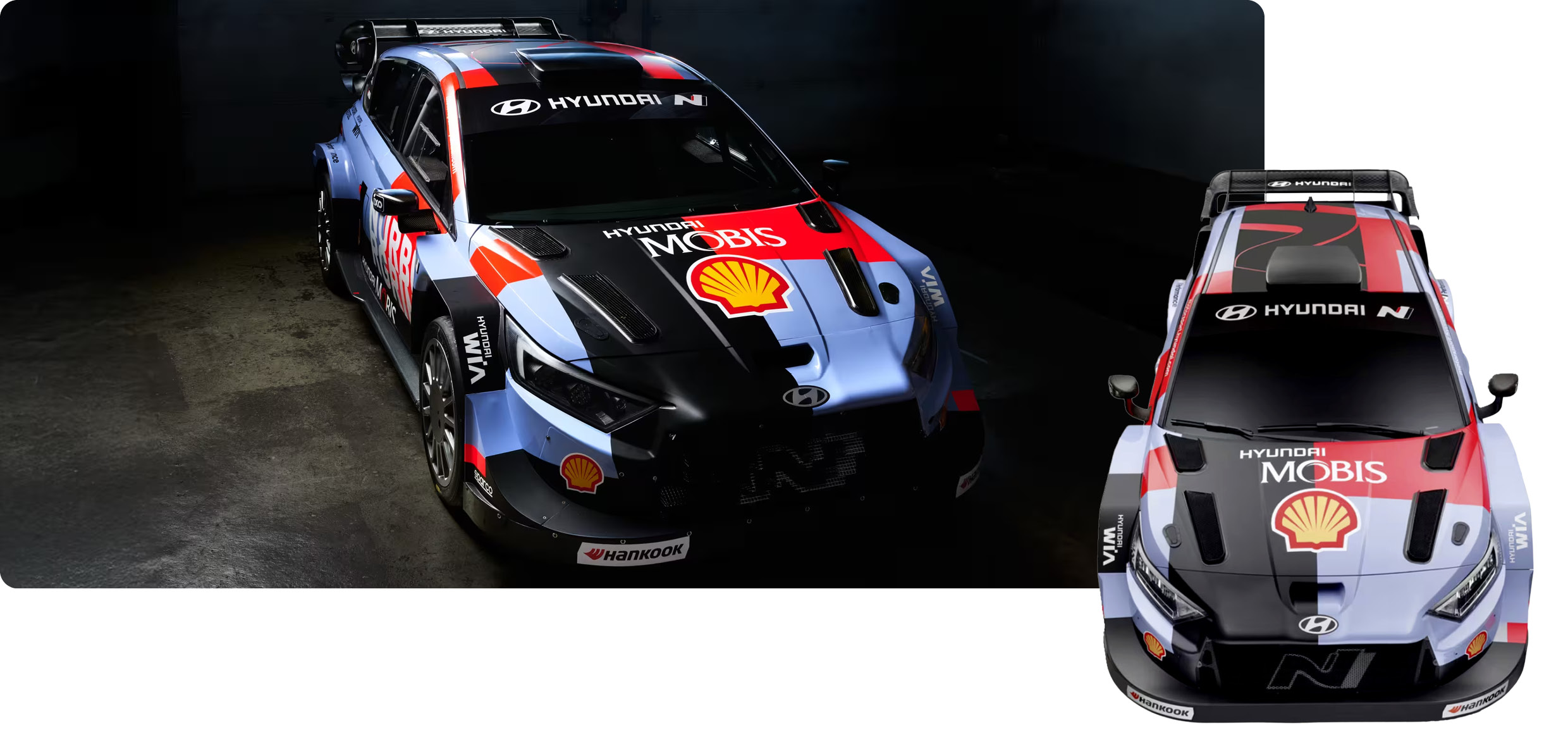
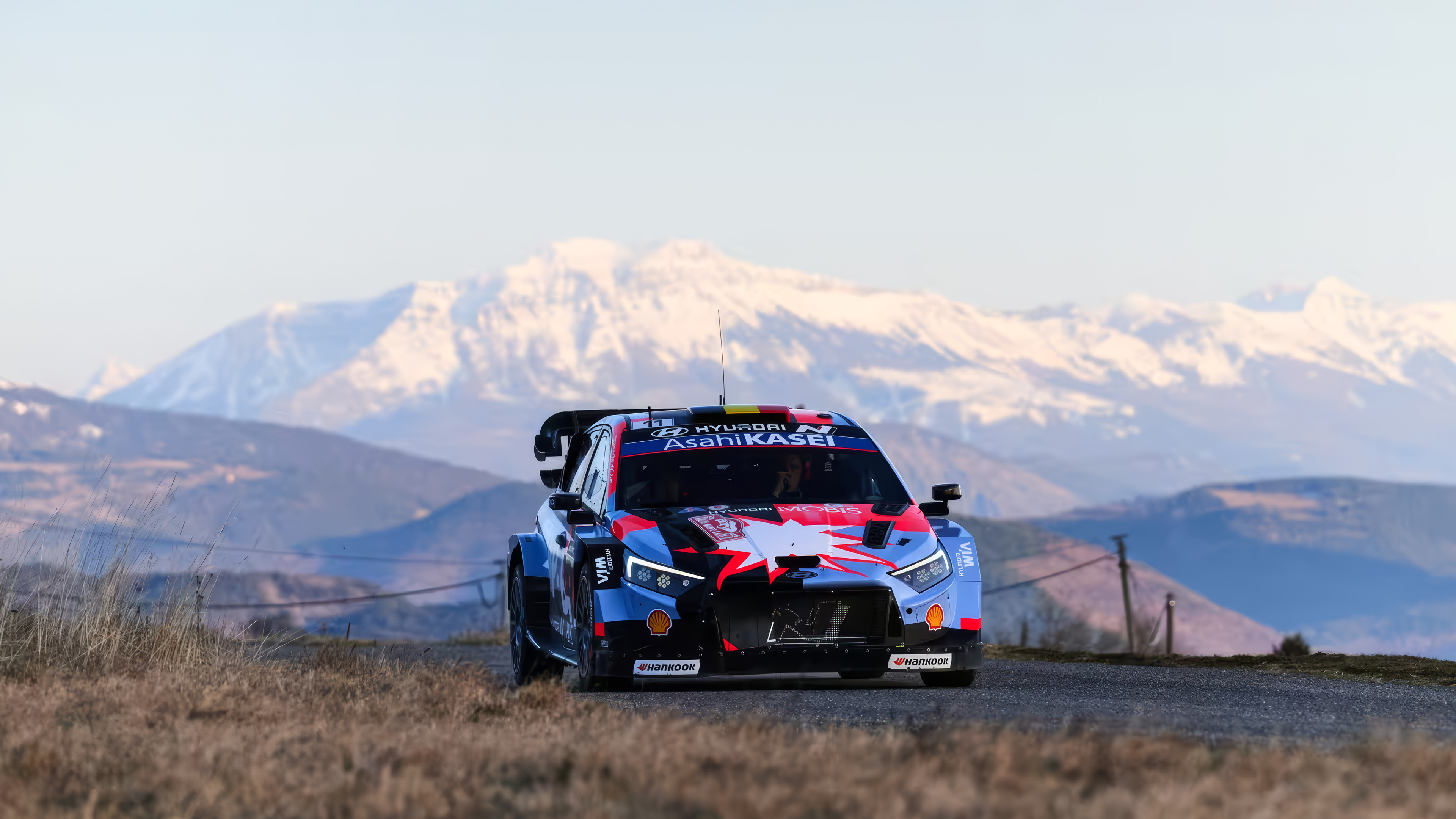
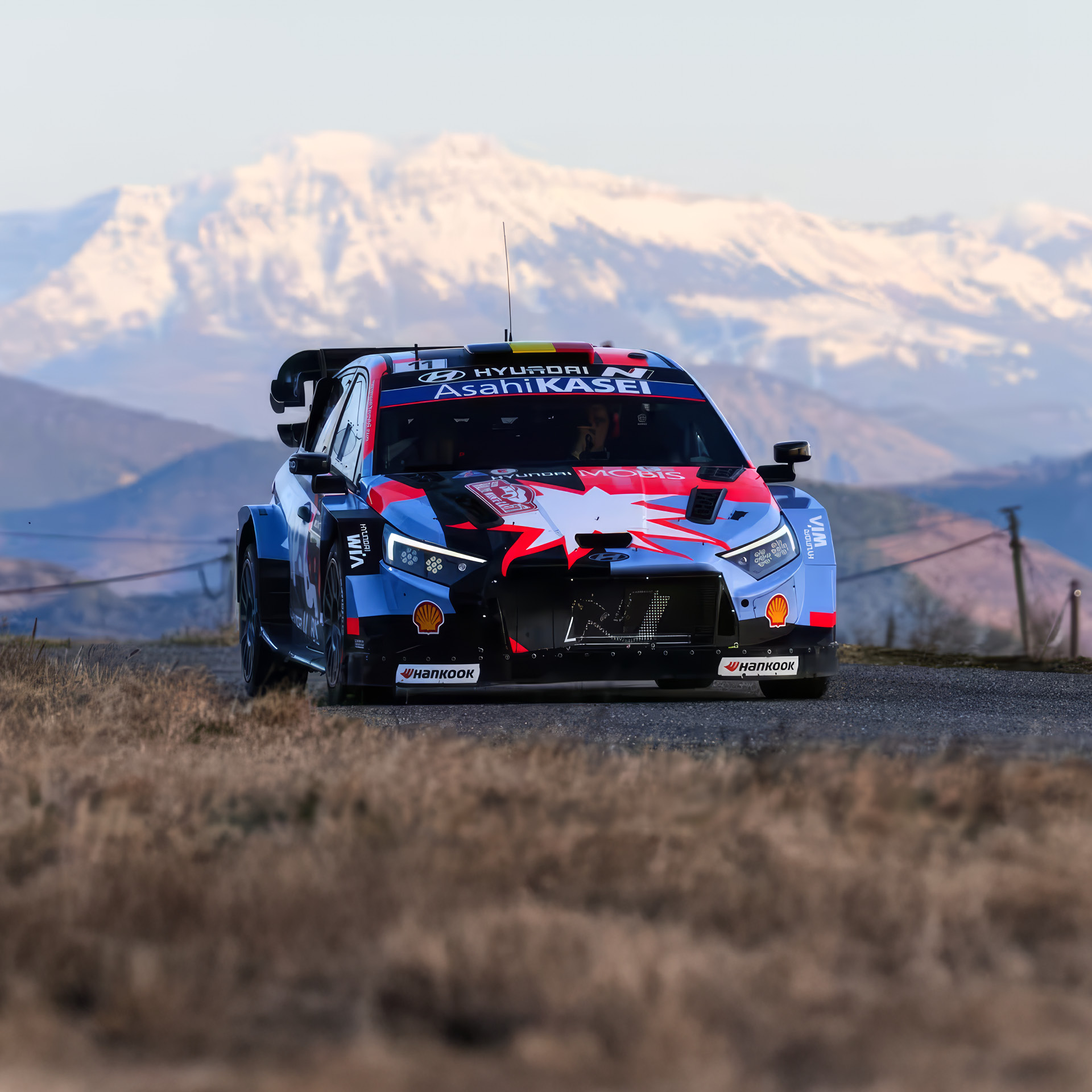
Hyundai Motorsport pulled the covers off its 2026 livery on January 22, and the palette stays on-brand: Performance Blue, Performance Red, and a heavy hit of Dark Gray. Early photos made the intent crystal clear—both doors wore big, bold “Namyang” and “Nürburgring” lettering, a direct nod to the two pillars behind Hyundai’s N program. But when the cars actually showed up for Monte Carlo, the message changed. In place of the origin-story shoutout, Hyundai went full pop-art—door graphics that read like they were lifted from a comic panel: “BRAANG,” “BRAP-BRAP.”
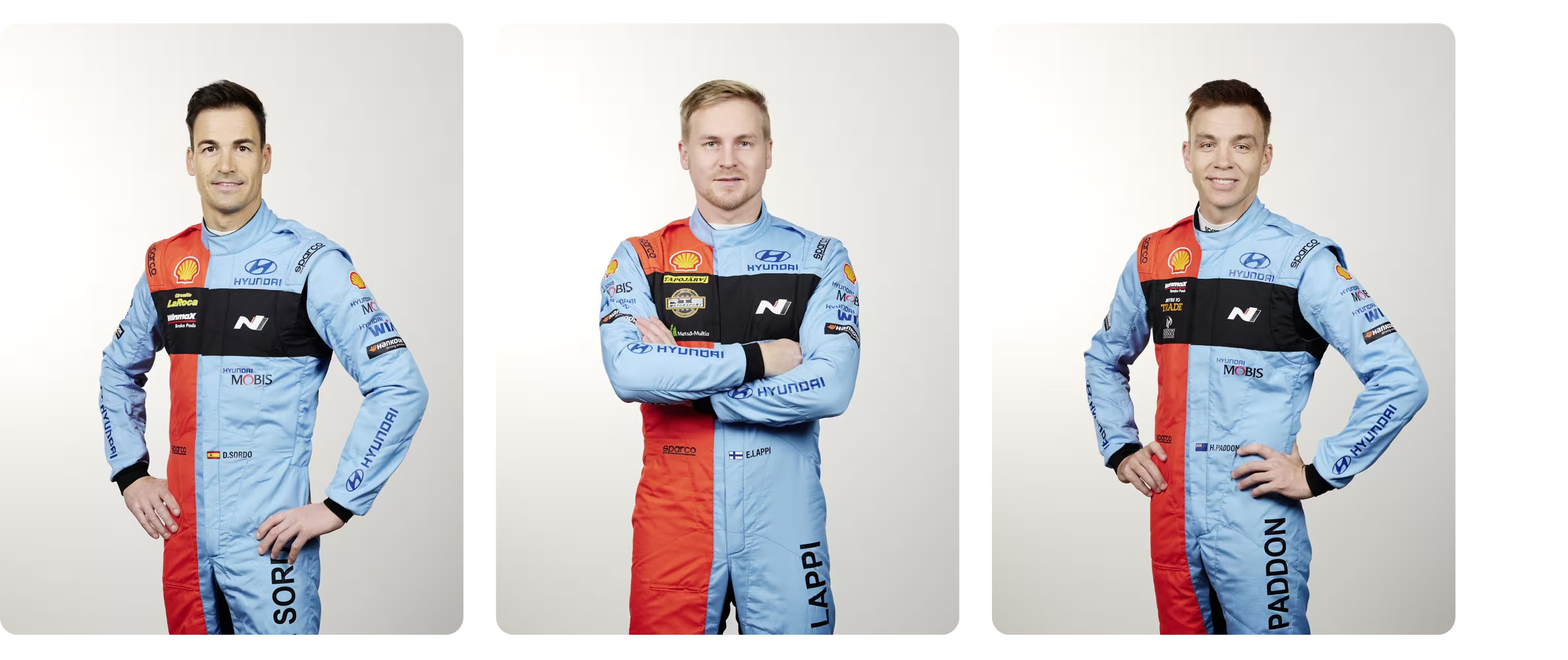
Hyundai also hits 2026 with a reshuffled roster. This is the team’s 13th WRC season since its 2014 return, and with Ott Tänak stepping away after last year, Hyundai filled the opening with experience instead of a rookie roll of the dice. The solution: three familiar, battle-tested names on part-time duty—Dani Sordo, Esapekka Lappi, and Hayden Paddon.
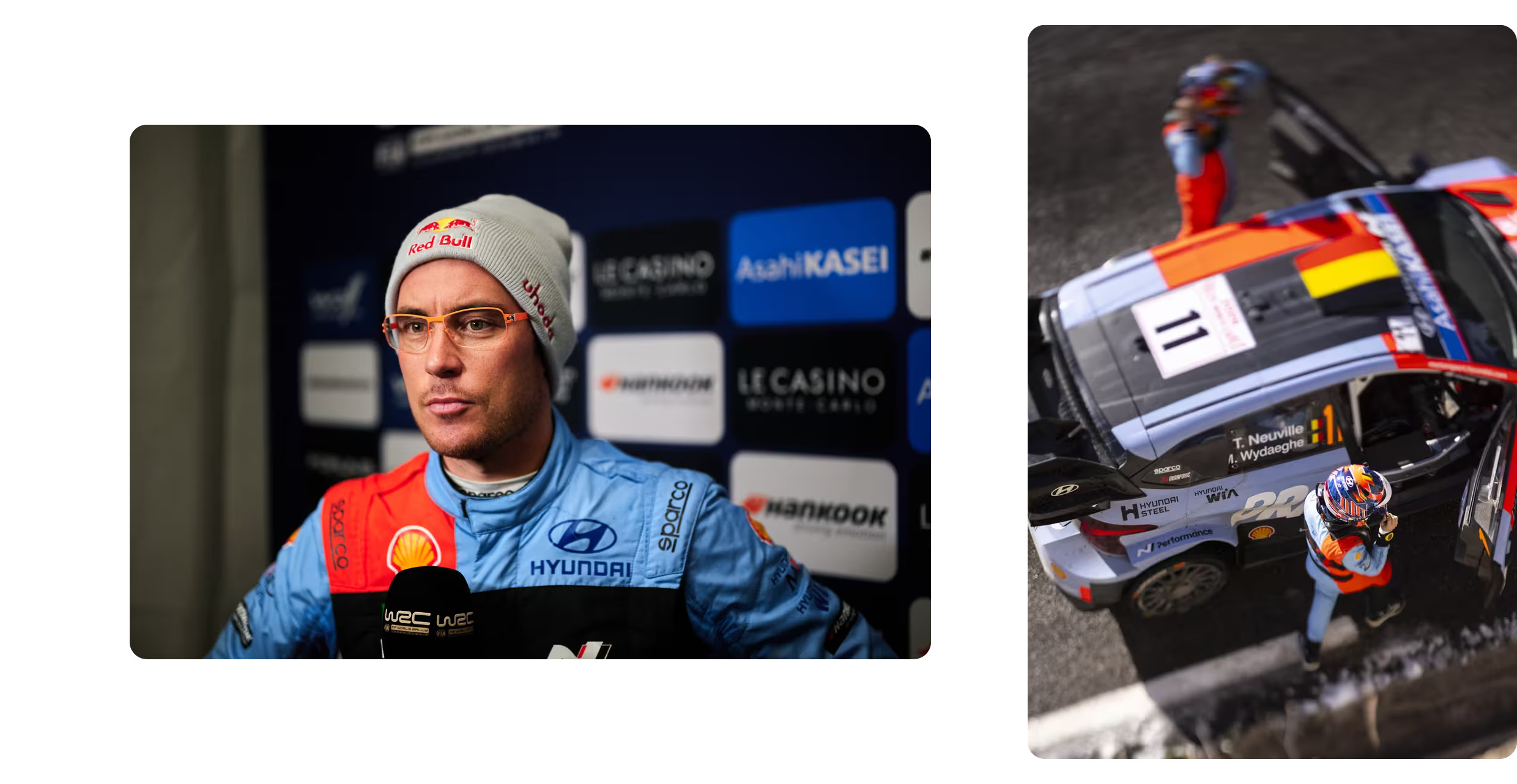
Thierry Neuville and Adrien Fourmaux stay on the full-time program again this year. For Neuville, that makes 2026 his 13th season with Hyundai. He’s also coming in with momentum after winning last year’s finale, and he’s made it clear he wants to carry that energy straight into the opener. Monte Carlo has been good to him before, too: wins in 2020 and 2024 prove he knows exactly how to play this rally.
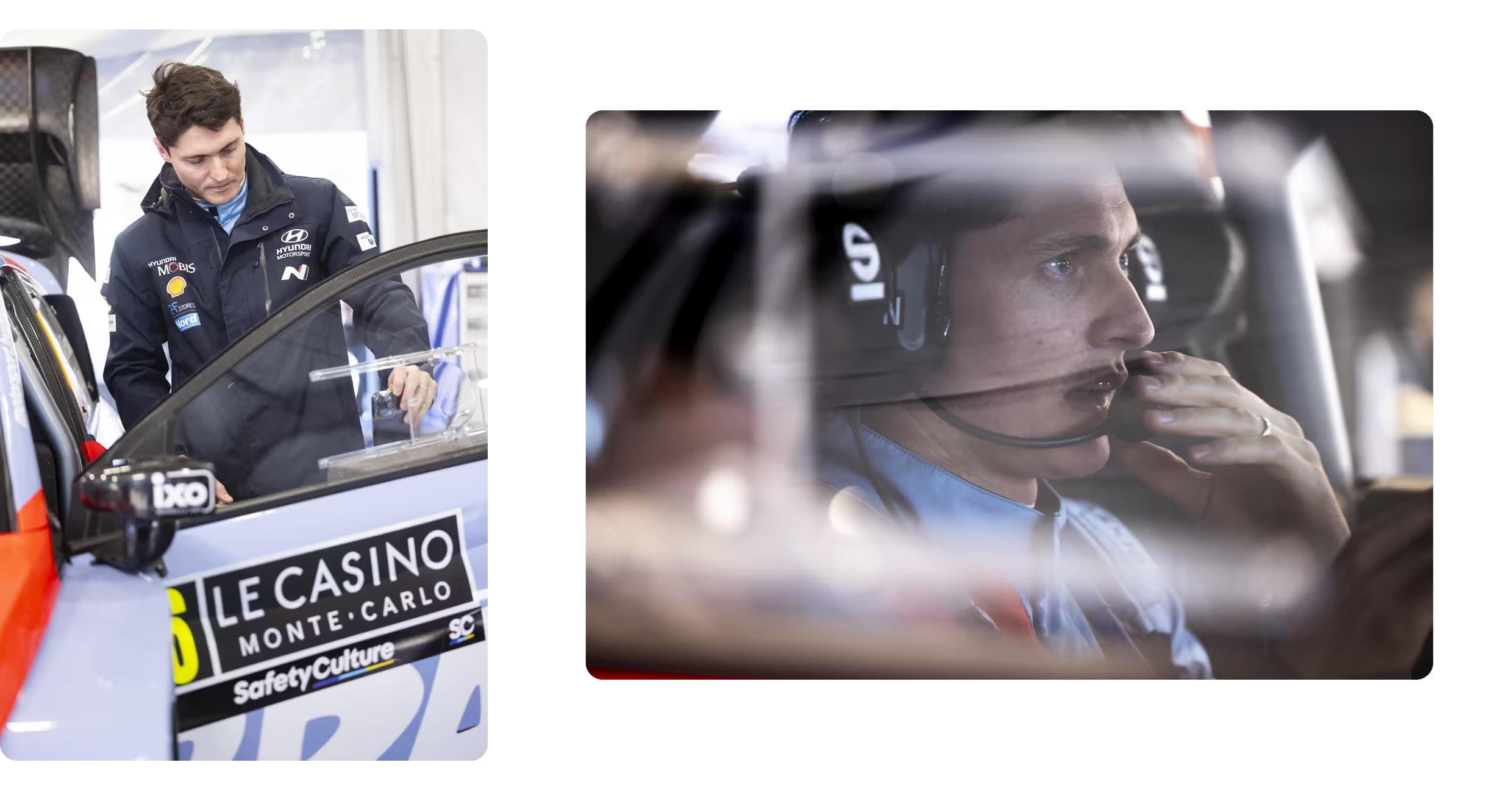
Fourmaux, meanwhile, enters season two in Hyundai colors after a breakout debut year. He didn’t just settle in—he immediately became a core part of the team’s firepower, logging four podium finishes, including second place in the season finale. He said: "I’m looking forward to staying with Hyundai Motorsport in 2026, and it would mean a lot to claim my first victory with them this season. Looking back at my path from my medicine training to becoming a professional rally driver, to win with Hyundai would be fantastic. The goal this year is to fight for the championship, and to do that we need to score the maximum number of points at every event. The fight will be tight, so we need keep developing the car and work closely as a team to start getting those results from the start of the year. I’m pleased to see that our teammates sharing the third car are also motivated to score as many points as possible, as well as support Thierry and myself in our efforts. We’ll work well together as a team, and I can’t wait to get started in Monte Carlo."
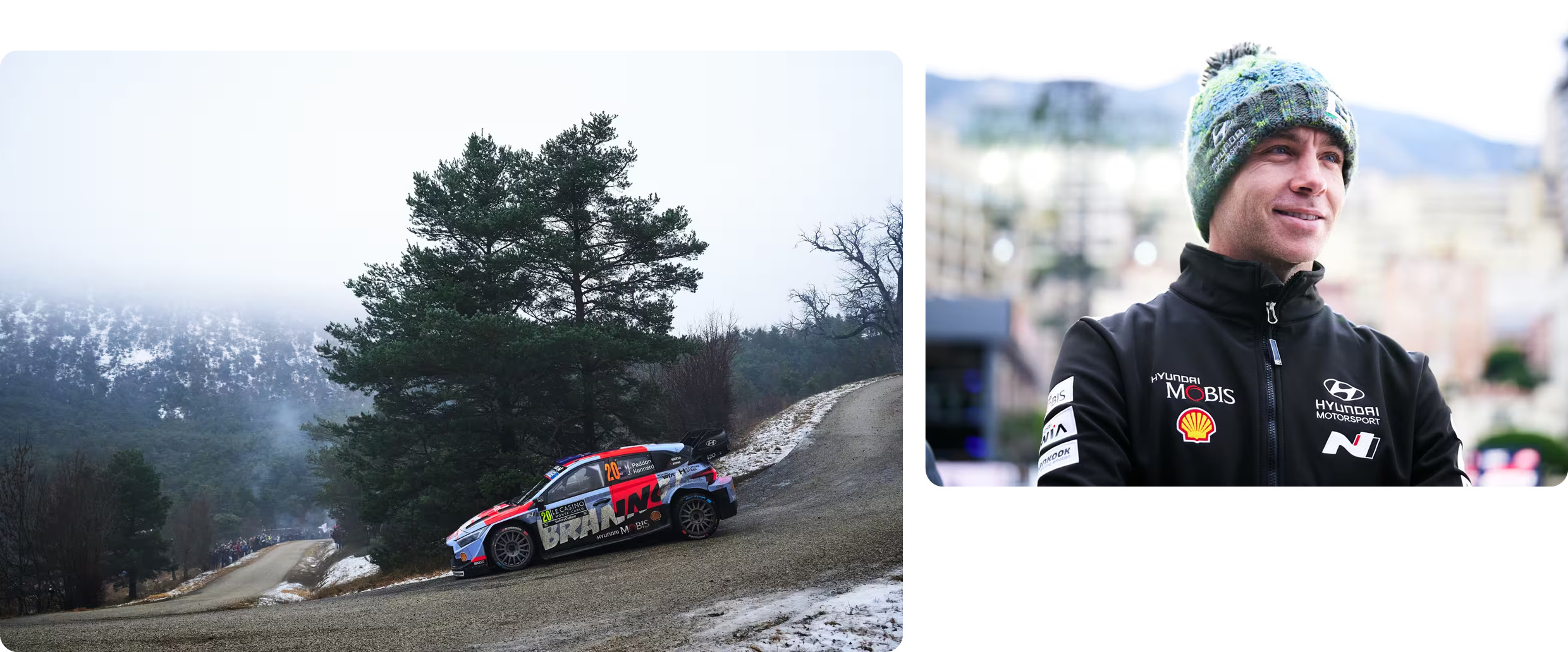
The first driver tapped to run Hyundai’s third i20 N Rally1 is Hayden Paddon, back in Rally1 for the first time in eight years. The New Zealander is no stranger to the squad: he joined Hyundai in 2014, scored a breakthrough win at Rally Argentina in 2016, and racked up eight podiums during his original stint. Paddon summed up the comeback: "I didn’t expect to be returning to the top WRC category. I’m nervous about the prospect but obviously very excited – this is the perfect example of never giving up... We’re jumping straight in the deep end with a new car and environment, so it’s a challenge. We’re primarily here to help the team as much as possible when it comes to car development and scoring invaluable points on event."
Hyundai needs that kind of experienced hand because the updated i20 N Rally1 didn’t consistently have an answer for Toyota’s pace last year. Over the short offseason, the team leaned on its jokers—the limited upgrade allowances—to sharpen performance. Visually, the car doesn’t look radically different, but the work has been ongoing: in early December, Hyundai used the Rallye National Hivernal du Devoluy in the Southern Alps as a real-world shakedown, doubling as preseason acclimation ahead of Monte Carlo. Sporting Director Andrew Whitley put his finger on why Monte is still the ultimate opener: “Honestly if the conditions are consistent, it won’t be problem to make a decision (on tires), but it is not going to be, and I think Thursday night is going to be a good example. But when there are challenges, there are opportunities... I think it will a proper Monte. I heard Seb Ogier say the other day that you only need one icy corner to make Monte Carlo, and the whole rally can turn on one corner, but here we are going to have more corners that will be difficult.”
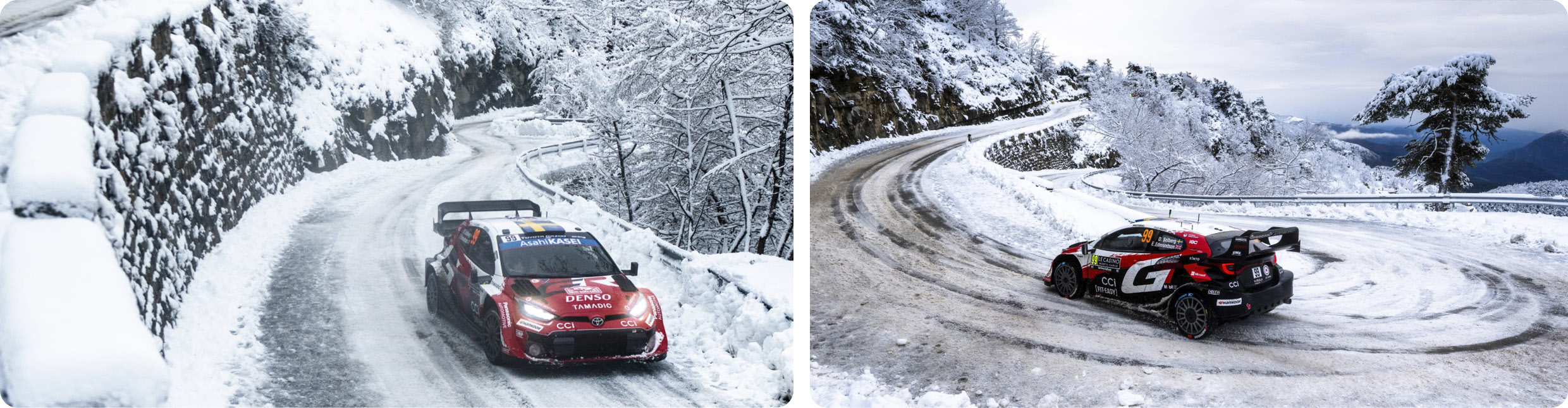
On the other side of the garage door, Toyota arrives as the team to beat again. They did lose Kalle Rovanperä, who announced his retirement from rallying, leaving a hole in the lineup—but Sébastien Ogier remains very much present after securing his ninth championship title last year. And Monte Carlo is practically Ogier’s private property: he’s won the event 10 times.
Toyota’s core stays intact beyond Ogier, too: Elfyn Evans, Takamoto Katsuta, and Sami Pajari all return. Evans, who fought Ogier deep into last season, is back for another run at shedding the “perennial runner-up” label. Rovanperä’s vacant seat goes to Oliver Solberg, who forced his way back into Rally1 after a statement-making performance last year—winning outright in Estonia in a GR Yaris Rally1 he was driving for the first time. At Monte Carlo, Solberg joins Ogier and Evans as Toyota’s points-scoring trio for the manufacturers’ championship.
The GR Yaris Rally1 also shows up looking different. Toyota ditches last year’s all-black look for a bolder white-and-red livery, and it’s not just paint: joker-enabled updates include a revised rear wing, plus new suspension components designed to open up the setup window.
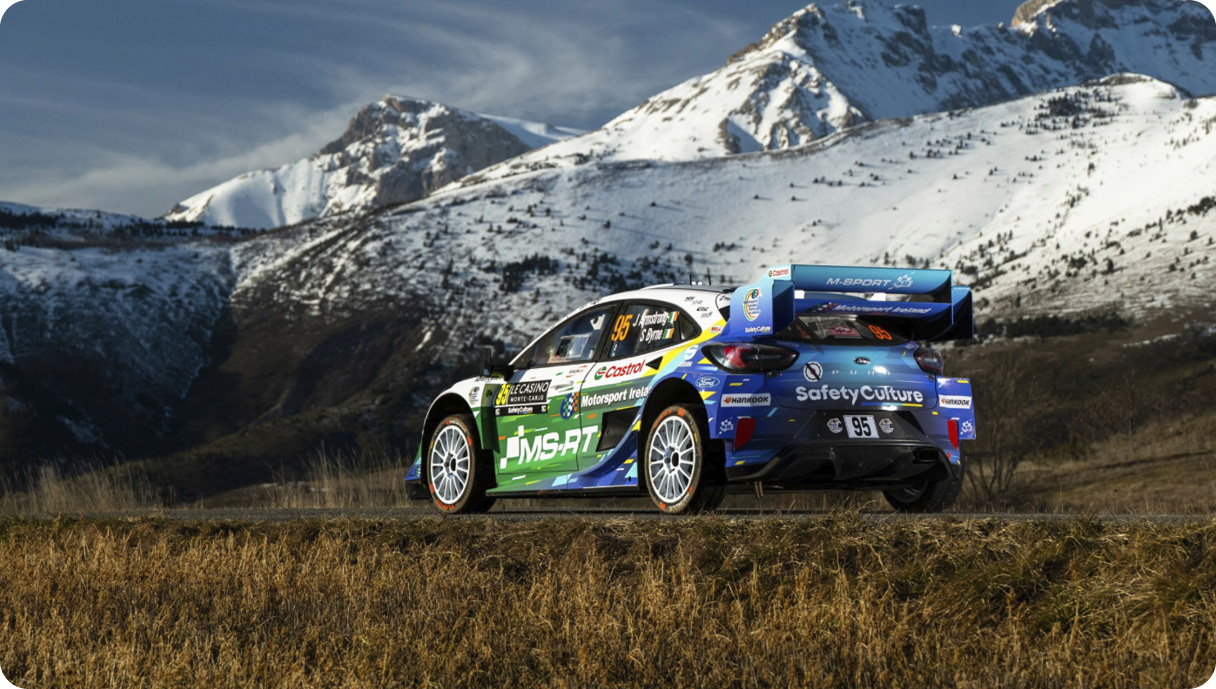
M-Sport Ford rolled into Monte Carlo with a totally fresh look after a sponsor change—new colors, new identity, the whole deal. The driver lineup also got a shake-up. Josh McErlean stays on, but the team adds rookie Jon Armstrong. Latvian standout Mārtiņš Sesks won’t run the opener, but he’s slated for roughly seven events as a part-time entry.
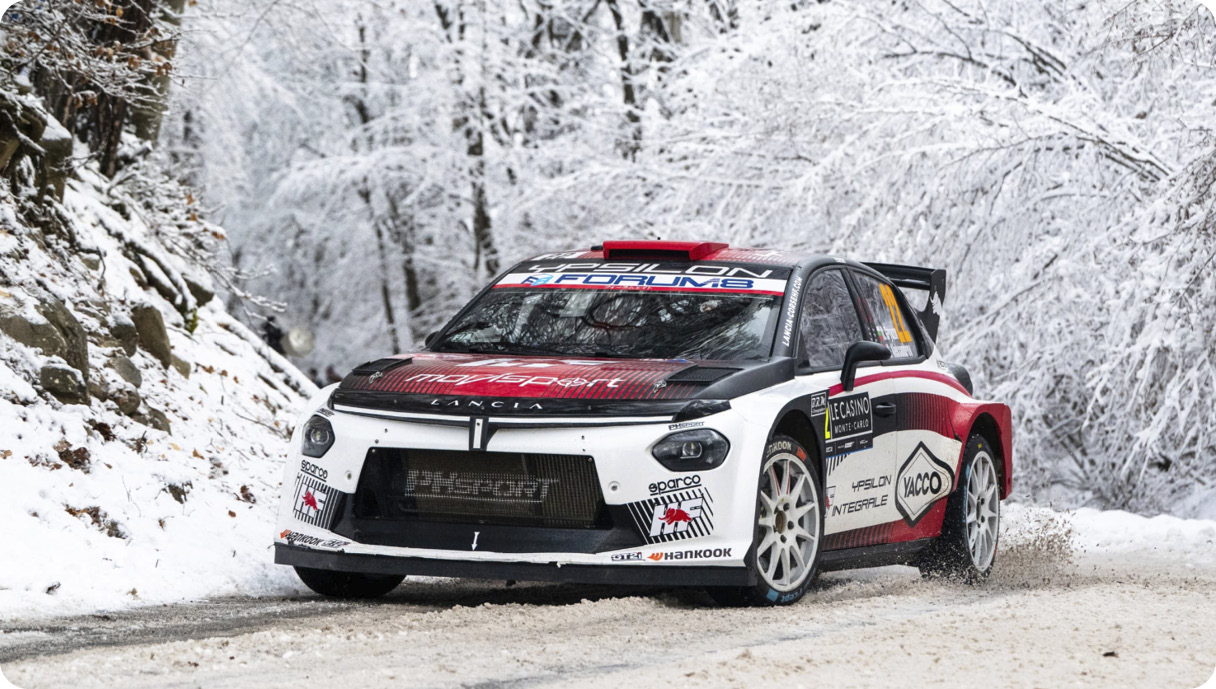
If there was one name that stole the oxygen in Monte Carlo, it was Lancia. No, it’s not back in Rally1 yet—it’s running a Rally2 car in WRC2—but that’s exactly why the timing matters. With the 2027 rule reset poised to put Rally2-based machinery at the center of the show, Lancia’s return lands like a flare. This is a brand that wrote chunks of WRC history: the Stratos in the ’70s, the 037 and Delta S4 in the Group B era, and the Delta Integrale in Group A—plus a résumé that includes 10 manufacturers’ titles.
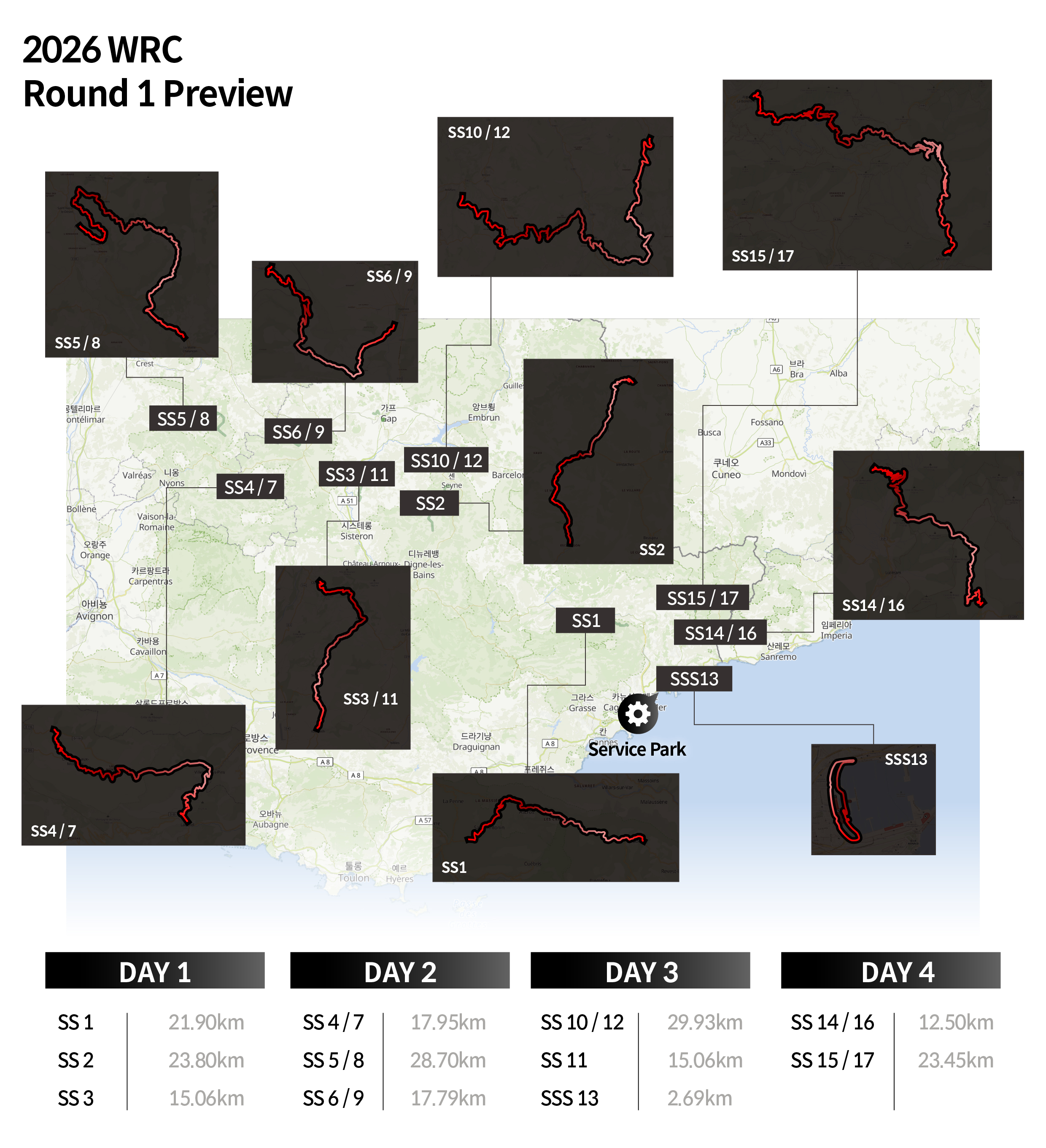
This year’s Rallye Monte Carlo also hit reset in a big way, with a batch of redesigned stages. The headline act was the return of the Monaco harbor-front stage, back on the itinerary for the first time in 18 years. From Thursday night, January 22, through Sunday, January 25, the event packed 17 stages totaling 339.15 km.
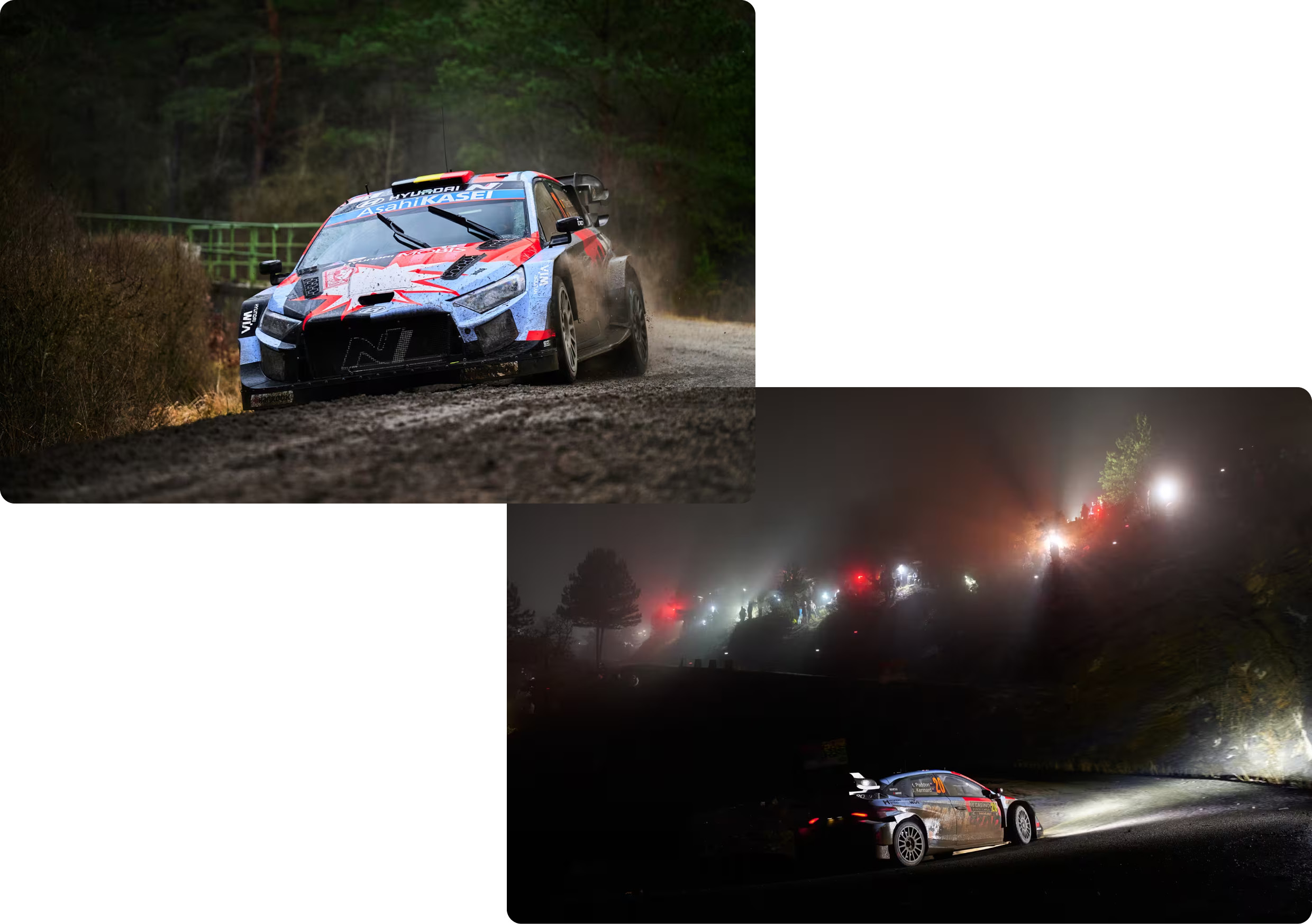
Thursday afternoon sent the field toward the Gap region for three stages. The clock started at 4:00 p.m. with SS1 Toudon–Saint-Antonin (21.9 km), followed by the day’s longest test, SS2 Esclangon–Seyne-les-Alpes (23.8 km), before closing with SS3 Vaumeilh–Claret (15.06 km). Total distance for the day: 60.76 km. The road was slick, the mountains were blacked out, and thick fog piled on—exactly the kind of Monte cocktail that turns small mistakes into big consequences.
SS1 was tight and technical, with wet pavement making the opening handshake anything but friendly. Elfyn Evans was quickest, running a mixed super-soft setup. Solberg and Ogier followed, with Fourmaux fourth. Lancia’s comeback took an immediate hit when Yohan Rossel clipped a stone wall and retired. On the bright side for M-Sport, Jon Armstrong opened his WRC top-class story with an eye-catching sixth, right behind Katsuta.
Adrien Fourmaux lost pace on the slippery surface
By SS2, it was full night—pitch black—and this stage carried extra bite. Back on the schedule for the first time since 2016, it’s rough, lined with stone walls, and punishes even minor over-commitment with real damage. Solberg dropped the hammer for the stage win and vaulted into the overall lead. Neuville went fourth-fastest, a step toward stabilizing his rhythm. Armstrong kept turning heads too, running quicker than Neuville and climbing to third overall behind Solberg and Evans. Fourmaux lost about 10 seconds after dropping into a ditch, and both Pajari and McErlean went out with car damage
In pitch darkness—and with fog on top of it—finding real speed was almost impossible
SS3 brought a different kind of challenge: constant elevation changes and a heavy dose of hairpins. It starts fast, but once the route threads through villages, the technical sections tighten the screws. Dense fog delayed the start by five minutes, and most crews complained about a lack of bite from the stud-ded tires. Ogier was in his element, taking the stage by at least seven seconds. Solberg, Neuville, and Evans followed.
By Thursday night, Solberg was the story—charging hard enough to remind everyone of the punch he showed in Estonia last year. He led Evans by 44.2 seconds, with Ogier a further 1 minute 8 seconds back. Neuville held fourth overall, while Armstrong and Fourmaux were split by just 10 seconds in fifth and sixth.
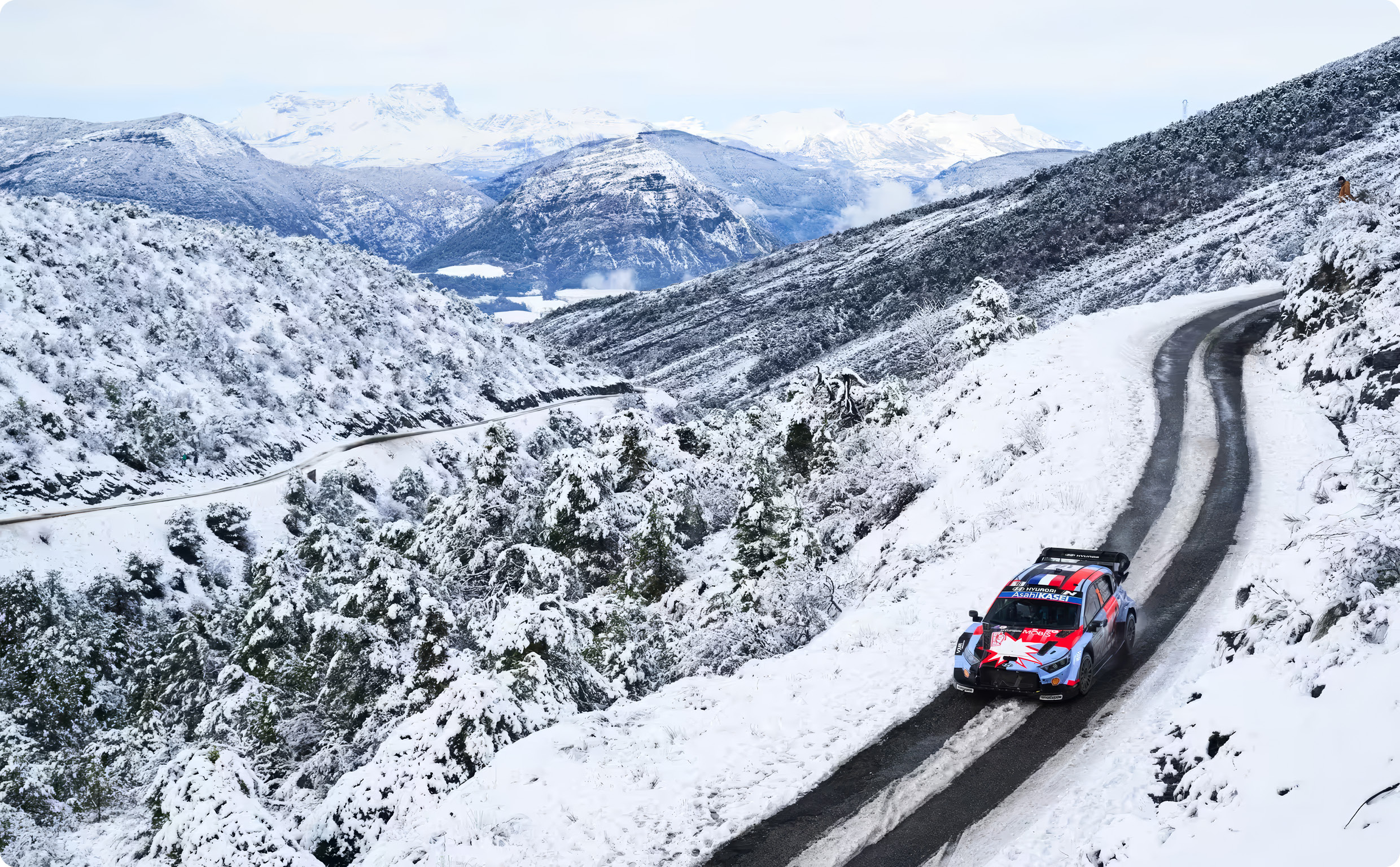
Friday moved the rally west of Gap, into a zone where the road surface can flip on you corner-to-corner—and where the wrong tire call can turn into a time-loss you’ll feel all day. Stages SS4 through SS9 totaled 128.88 km, and the weather made sure nobody had it easy: heavy rain mixing with snow
SS4 Laborel–Chauvac-Laux-Montaux belonged to Solberg again. After Thursday’s headline grab, he backed it up with a statement drive—13:48.5—and he was 19 seconds quicker than the second-fastest time set by Neuville.
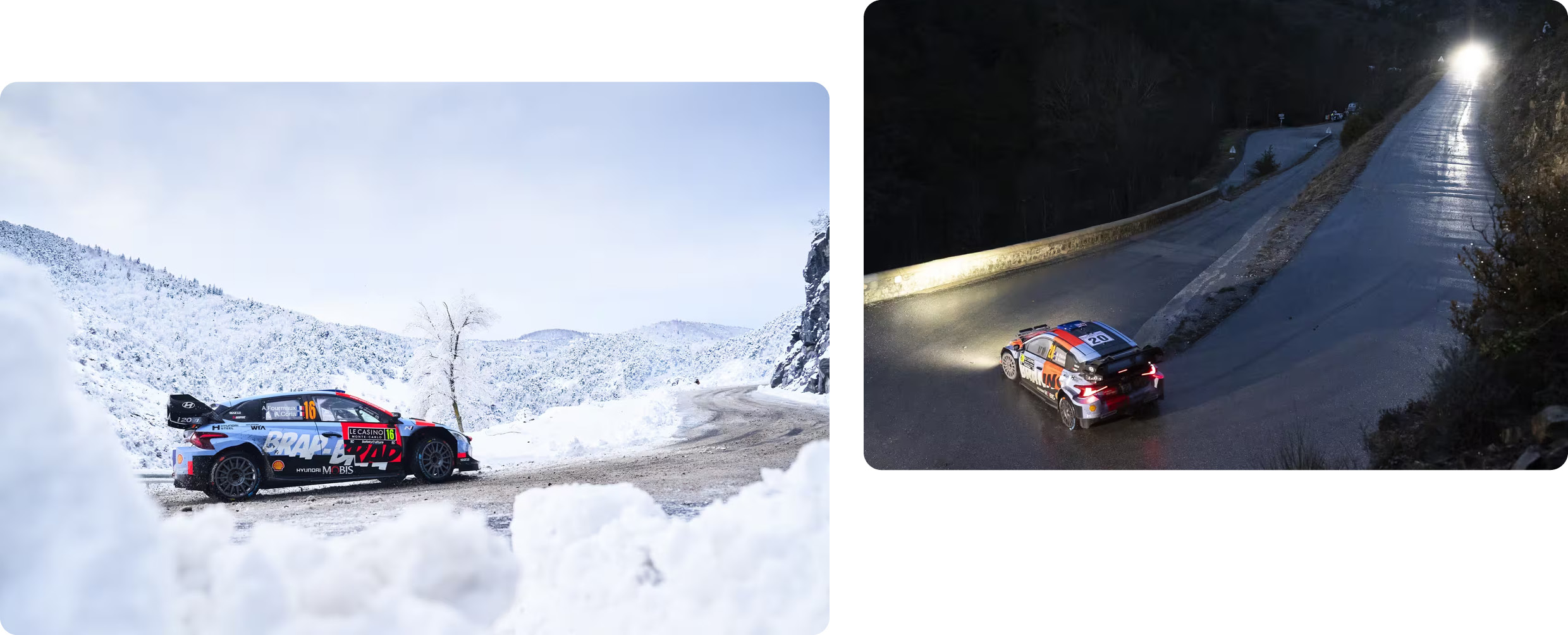
SS5 St-Nazaire-le-Désert–La Motte-Chalancon was Friday’s longest stage at 28.7 km, starting with a winding climb before settling into a rhythm of fast corners and tight hairpins. Evans nailed it for the stage win, with Ogier and Fourmaux close behind. Solberg’s pace was there, but a late tire-pressure issue shoved him down to fourth on the test. Overall, it still read Solberg from Evans, Ogier, and Neuville, while Fourmaux jumped Armstrong to move into fifth.
Even though it was paved, snow and ice covered the road in places, making it hard to read the grip.
SS6 La-Bâtie-des-Fonts–Aspremont looked ugly from the start—snow and ice stacked on the early uphill sections—and it delivered. With a fresh tire choice, Solberg went back to controlling the pace, with Neuville and Fourmaux next in line. Fourmaux summed up the feel right after: "It was very snowy at the beginning with a lot of slush. I tried to optimise my chance for a good time in there. In the fast bits I was too careful and the car was like a boat."
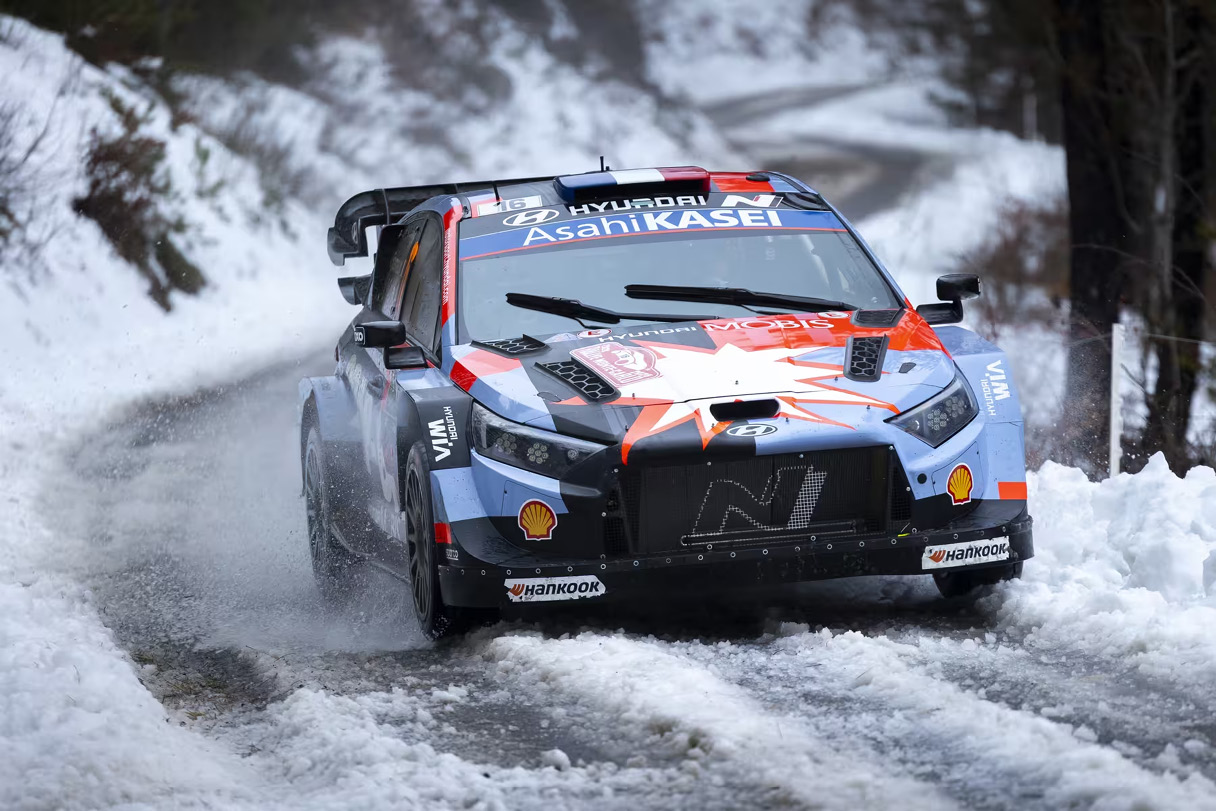
The afternoon rerun didn’t let up. Toyota kept the pressure on: Solberg grabbed another stage win on SS7, and Ogier took SS8 and SS9. Hyundai’s day twisted hard late when Neuville slid into a ditch on SS9 and bled roughly three minutes, which bumped Fourmaux up to fourth overall. Fourmaux wasn’t exactly running clean either: "Since we left the service we had a lot of electronic issue with fuel pump and handbrake. I have no handbrake and nothing to save me if I need it. It was tricky loop for us and was quite challenging. We are now a bit in no man's land."
By Friday night, Solberg still was the fastest —1:08.4 over Evans. Ogier sat third, another ~1:15 back. Then came Fourmaux, Neuville, Armstrong, and Paddon.
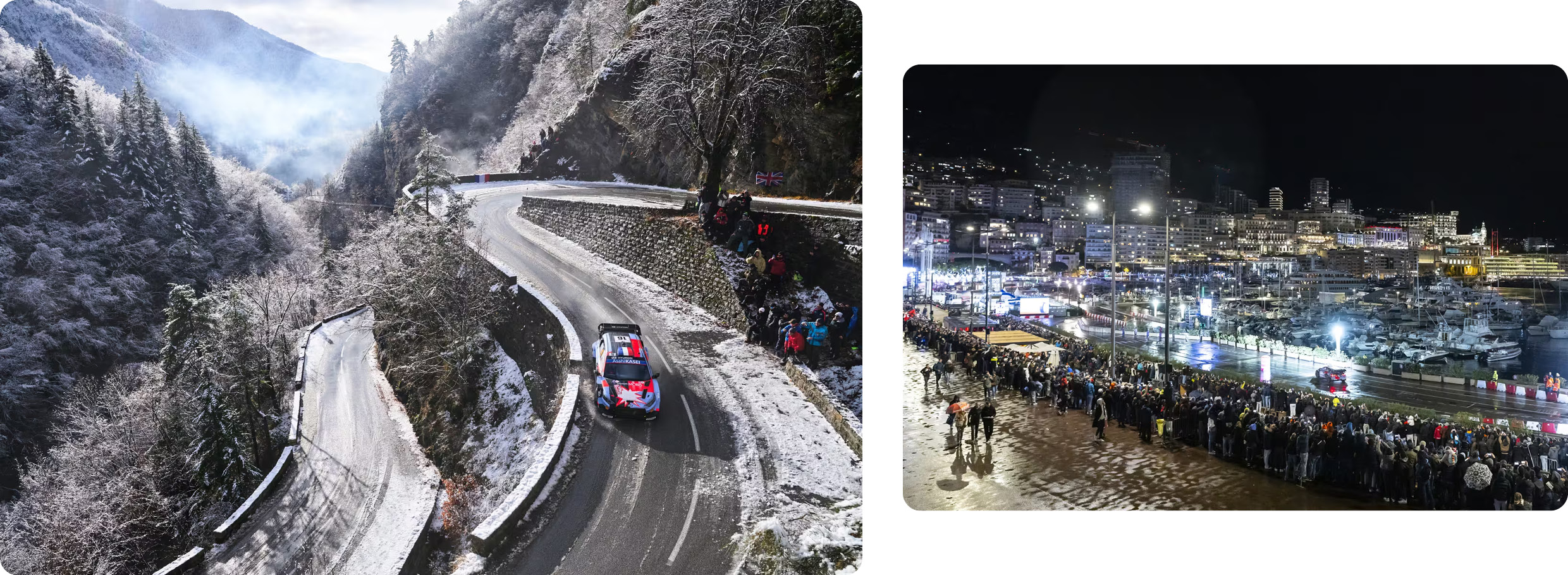
Saturday served the classic Monte split: mountains in daylight, then a return to Monaco for a bright, showpiece city run in front of the harbor. The schedule centered on the rally’s longest stage, SS10 La Bréole–Bellaffaire (29.93 km), run twice—morning and afternoon—plus a daytime pass of Vaumeilh–Claret from Day 1, and then the short Monaco blast to close.
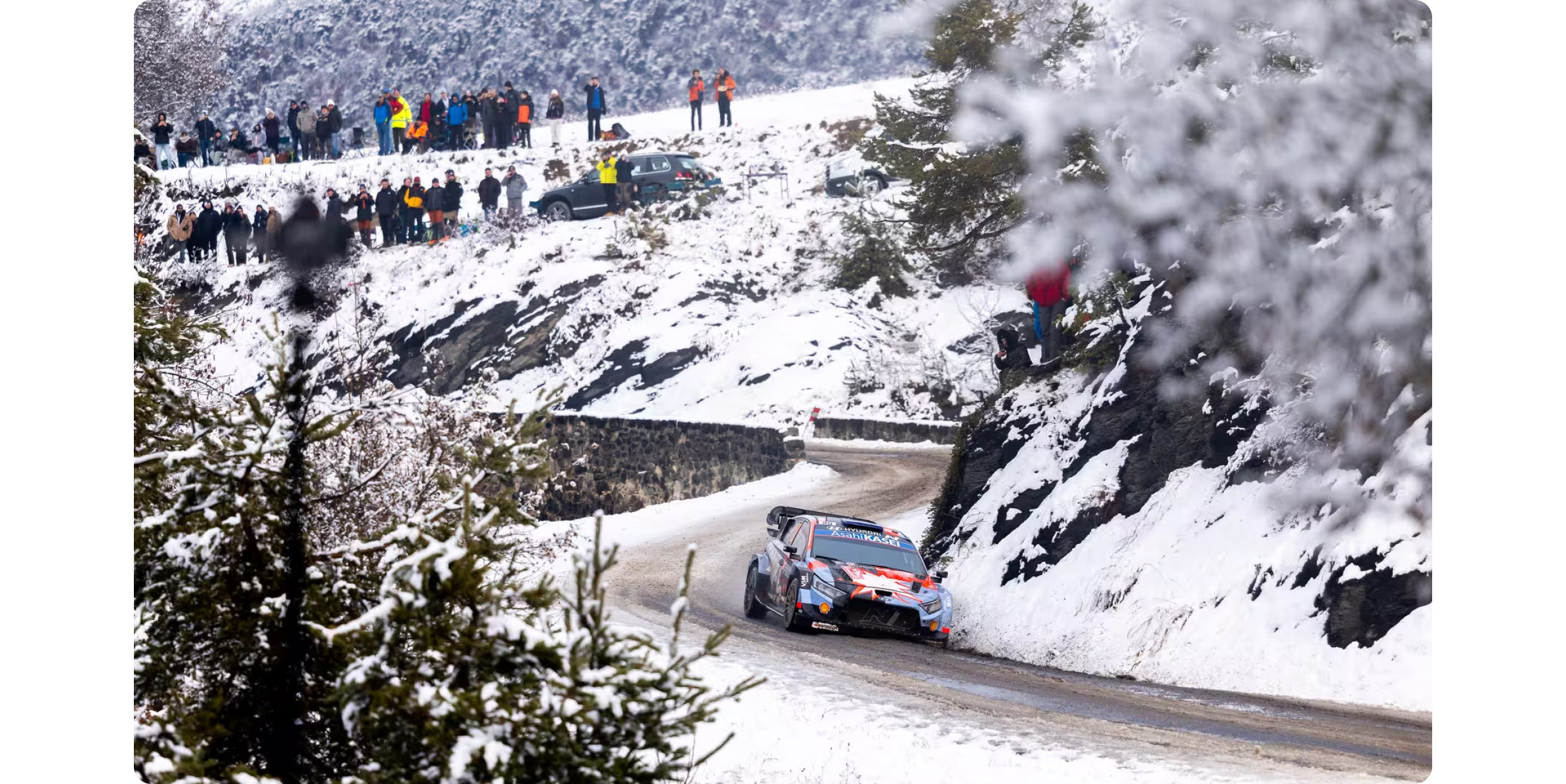
SS10 was buried in snow enough to feel like Sweden. Ogier went quickest and trimmed the gap to Evans to just three seconds. Paddon, meanwhile, bled 1:53 to Ogier and didn’t hide the struggle: "I've never seen conditions like this, I have no idea how to drive it. Absolutely no feeling if you're doing good or not. We are here, not much more to say to that."
Adrien Fourmaux showed his pace in tricky conditions and was Hyundai’s fastest driver.
SS11 revisited Vaumeilh–Claret, but in daylight. Visibility improved—traction didn’t. Melting snow and ice turned into mud, and grip was basically a moving target. Solberg stretched his advantage over Evans back out to more than a minute. Hyundai’s quickest man again was Fourmaux, who called it as it was: “To be fair it is very tricky conditions with a mix of tarmac slush and ice. It is proper M Monte Carlo conditions. The previous stage felt like we were in Sweden, not Monte Carlo, it was fantastic to drive in those conditions."
Paddon went off, but spectators rushed in and helped him get back on course.
Solberg stayed on the attack in SS12, essentially the opening stage rerun, and still nailed another top time—despite a brief off—beating Evans by 1.9 seconds. Paddon’s moment was bigger: he went well off-line at 5.7 km, and only got back into the rally with help from nearby fans. Running at a slower pace after that, he pulled aside to avoid holding up the faster Neuville behind.
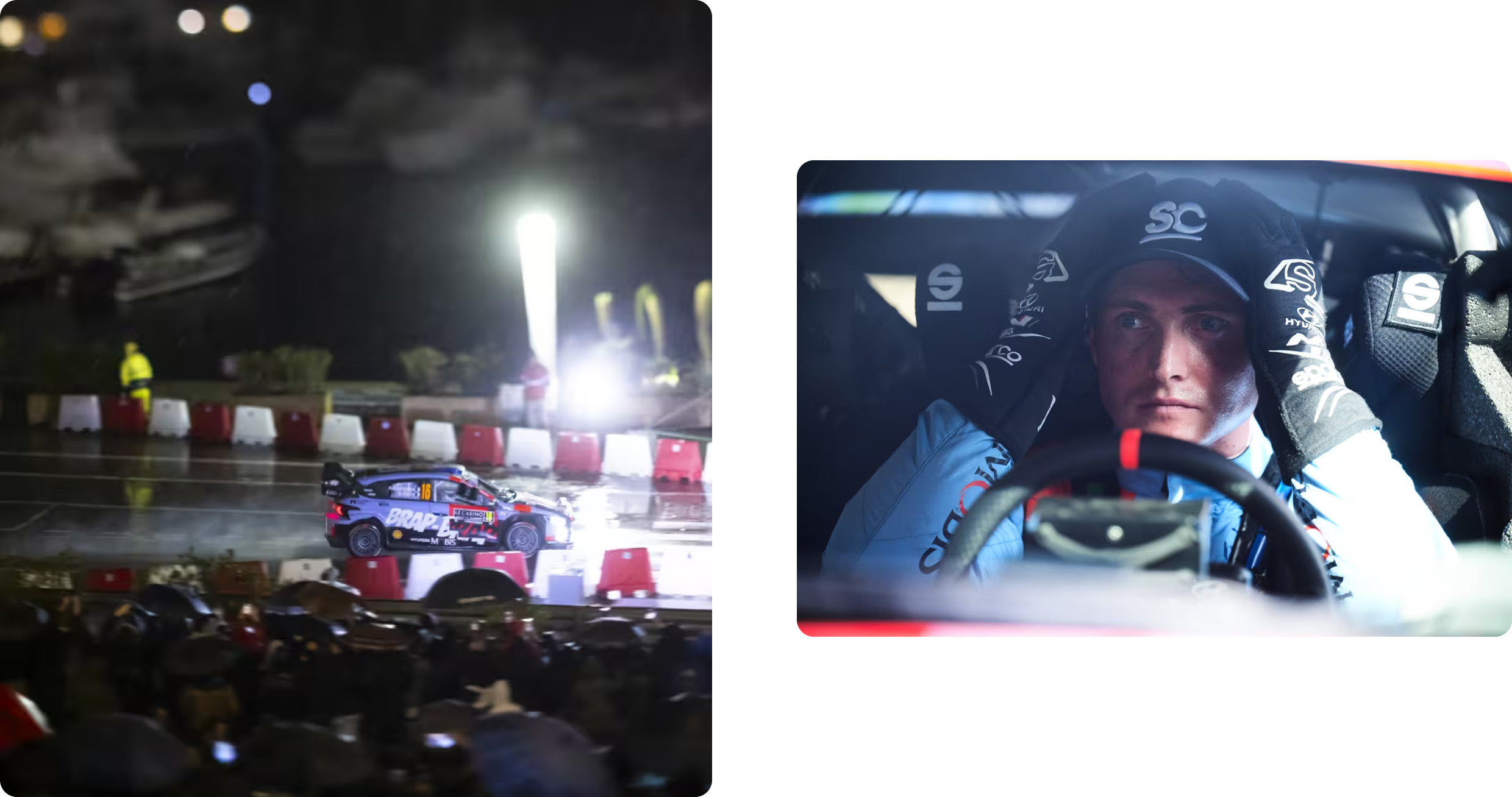
Then came SS13, the Monaco street stage—back for the first time in 18 years. The layout echoed 2008, but ad-ded consecutive hairpins by the swimming pool and a donut section built for spectators. With steady rain falling, Fourmaux ripped his first stage win of the season. "It's nice to finish also today on a Super Special in Monaco. First time for me, and I'm really enjoying it, so that's a great idea," he said.
Saturday night, Solberg still had 59.3 seconds in hand over Evans. If nothing weird happened, he was on track to become the youngest Monte Carlo winner in rally history. Ogier sat 26 seconds behind Evans in third. Fourmaux was fourth, 4:37 back, followed by Neuville and Armstrong. Paddon’s off dropped him to 13th overall.
Sunday ran a tight loop: Col de Braus–La Cabanette and the famous Col de Turini section as part of La Bollène-Vésubie–Moulinet, repeated for four stages totaling 71.9 km to finish the rally.
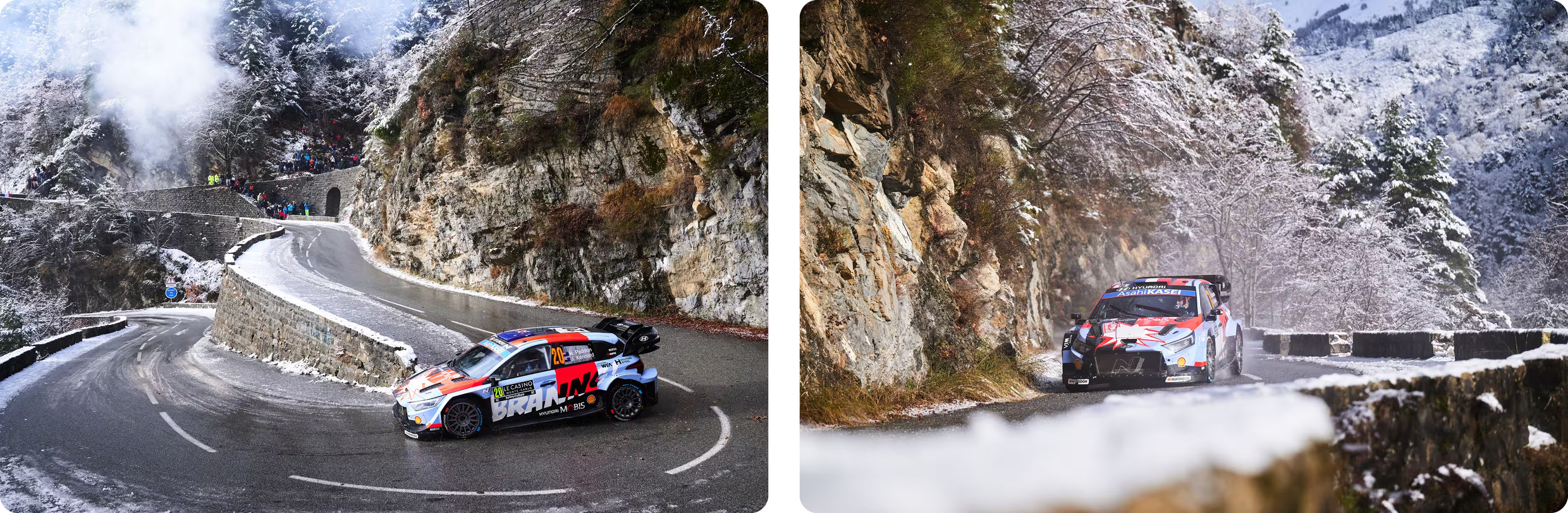
SS14 hits you immediately with a chain of hairpins—tight road, rock walls, guardrails, and no room to breathe. Precision and concentration are everything. Fourmaux opened with the stage win, putting himself in a strong spot for Super Sunday points. The Toyota trio, with the podium essentially in sight, dialed back and drove it clean. Fourmaux said: "There was much less slush and snow at the beginning than what we had from route note crew. I tried to be efficient but we have no grip on any hairpins. I'm looking for traction all the time."
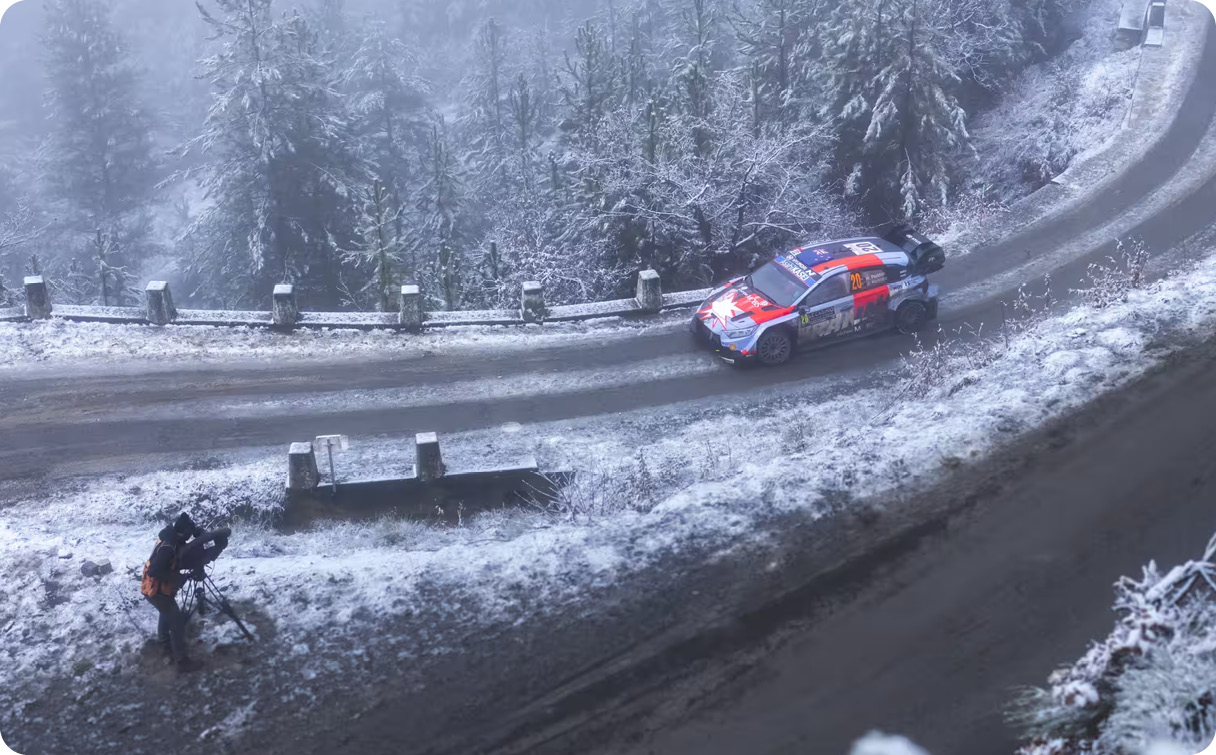
SS15 is the Turini showcase, back in a more traditional format for the first time since 2002, starting from Moulinet and stretched to 23.45 km with a revised second half. Unlike the old mostly-uphill rhythm, this version crests at 1,609 m mid-stage, then drops into a downhill chain of hairpins.
As the surface cleaned up, a WRC2 entry—M. Fontana—set the overall stage best. In Rally1, Evans was fastest, with Fourmaux right behind. Neuville got hit with a puncture and lost more than two minutes changing the tire.
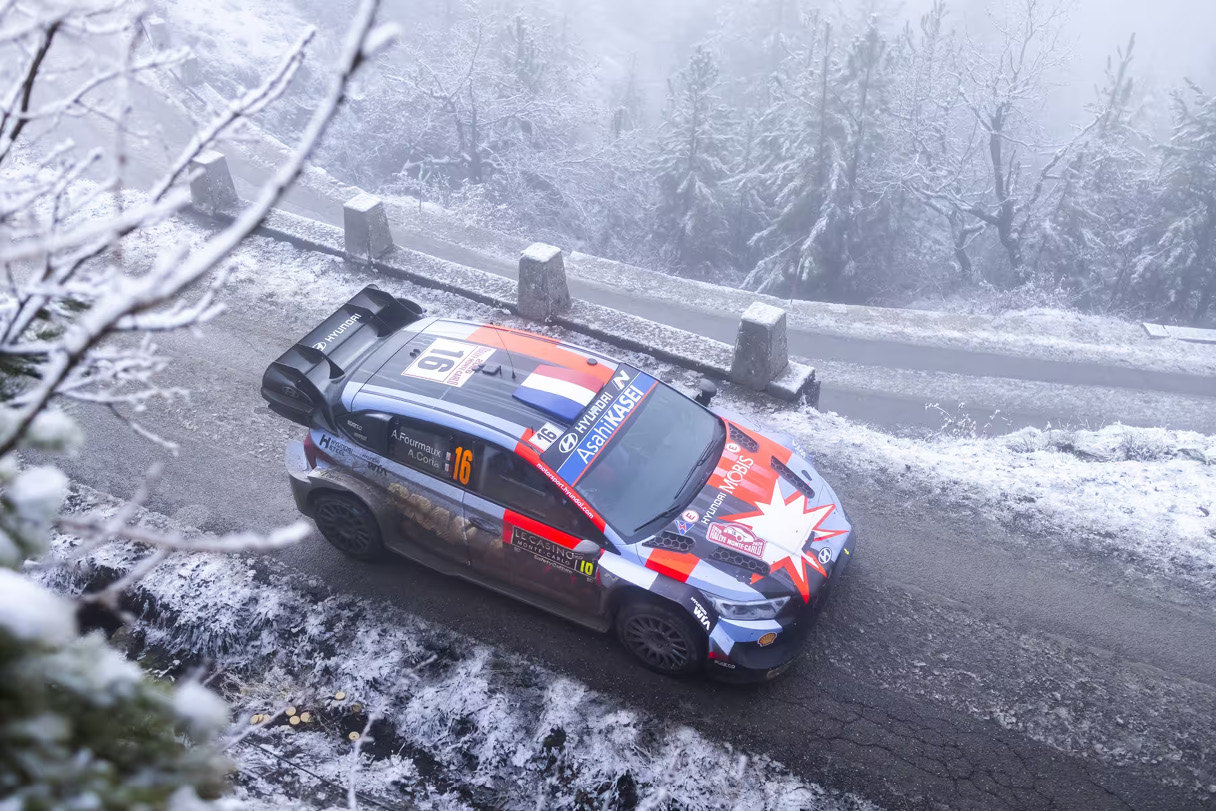
On SS16, Fourmaux ran a mixed tire setup and grabbed another stage win, which pushed him to the top of the Super Sunday classification for bonus points. Neuville, short on fresh rubber, bolted on the best he had left and managed the pace. That left only the Power Stage, SS17, back on La Bollène-Vésubie–Moulinet.
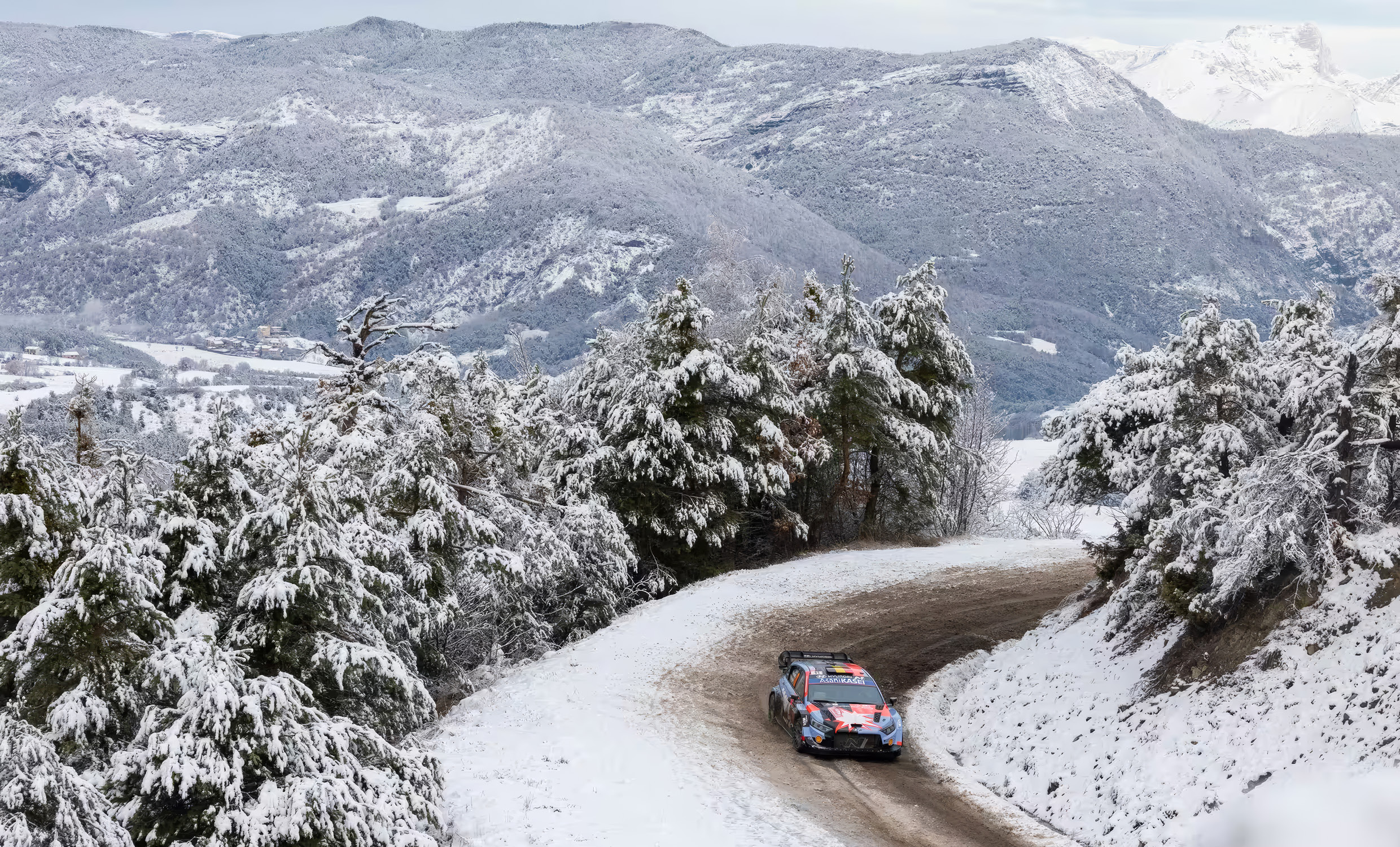
SS17 still had snow lingering on the high sections. Solberg sealed his second career win—and became the youngest winner in Monte Carlo Rally history. Evans finished second overall, but maximized the final-day haul with SS17 fastest time and strong Super Sunday points. Ogier took the last podium spot, completing a Toyota sweep. Fourmaux finished fourth, Neuville came home fifth, and Paddon recovered to ninth—inside the points.
WRC2 delivered a late twist: Eric Camilli, running second, was handed a 3:20 penalty, which bumped Arthur Pelamourgues—in a Hyundai i20 N Rally2—onto the podium. The French rookie, promoted from WRC3 to WRC2 last year, could barely contain the emotion. Léo Rossel won WRC2, with Roberto Daprà second. Lancia’s heavily watched return ended with Nikolay Gryazin in sixth—a tough opening, but a finish.
Next up is Round 2 in Sweden, running February 12–15—a true all-snow rally. Hyundai is set to roll out Finnish standout Esapekka Lappi. Toyota’s part-timer Sébastien Ogier will sit this one out, with his seat handed to Lorenzo Bertelli—the Prada Group heir stepping into Rally1 duty. M-Sport Ford is expected to slot Mārtiņš Sesks into its third car.
By Soo-jin Lee
In 1991, Lee’s passion for cars led him to enthusiastically write letters to the newly launched Korean car magazine