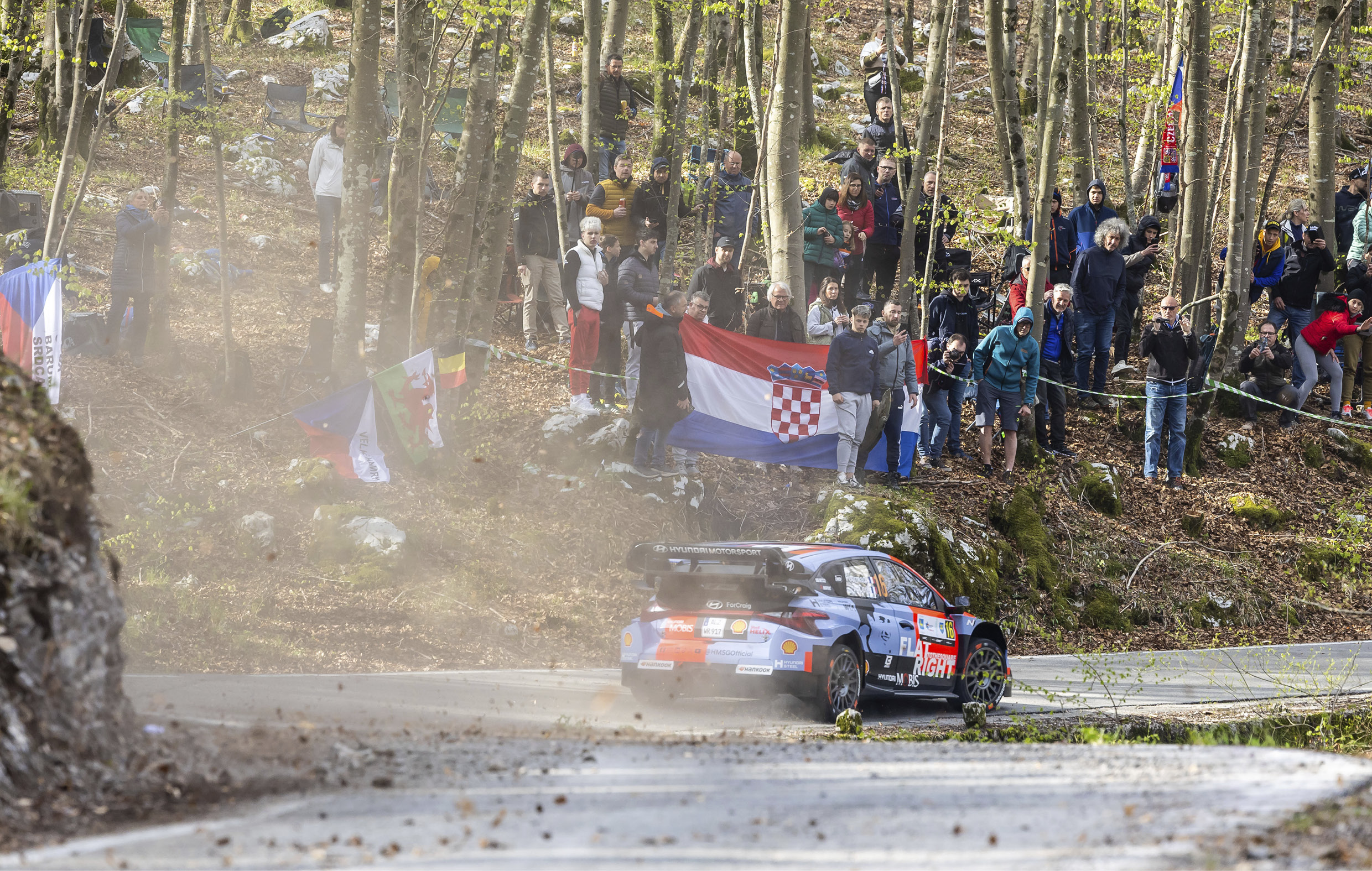
Fresh off Safari’s mud-and-mayhem, the WRC caravan headed back to Europe for Round 4 in Croatia. After sitting out last year’s calendar, Rally Croatia returned with a major change: the event moved from the capital, Zagreb, to the coastal hub of Rijeka. The service park was set up at Autodrom Grobnik near Rijeka—a circuit that hosted the Yugoslavian Motorcycle Grand Prix (MotoGP) from 1978 through 1990.
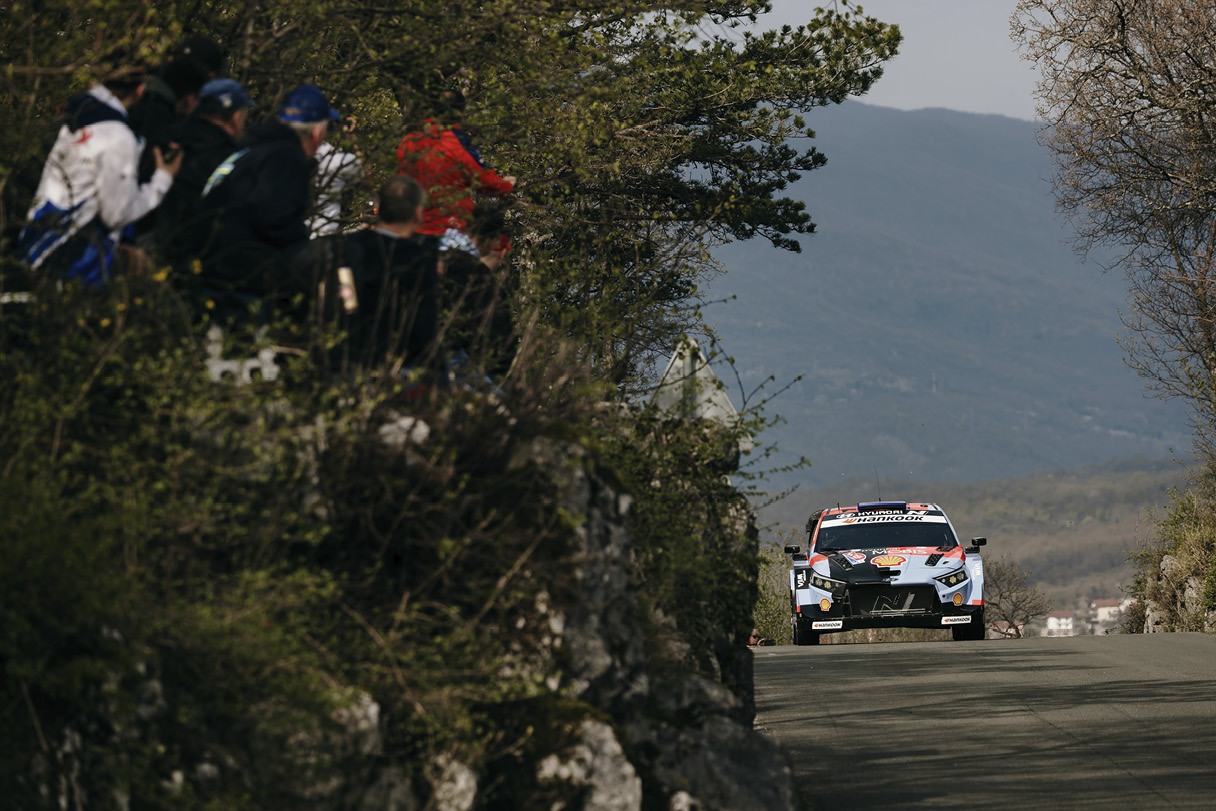
Rally Croatia’s roots run deeper than most people realize. Back in the 1970s, Croatia—then a key republic within socialist Yugoslavia—had a relatively open cultural and sporting atmosphere, and in that context the “Delta TLX Rally” was launched in 1974. What began as a regional rally steadily grew into a national-level championship event, earned FIA recognition in 1986, joined the European Rally Championship (ERC) in 2007, and finally became a full WRC round in 2021. The name evolved along the way—from Delta Rally, to Croatia Delta Rally, and ultimately, from its ERC era onward, today’s Rally Croatia.
As the 34th country to host a WRC round, Croatia ran the event through 2024, but funding issues pulled it off the calendar in 2025. This year, with Central European Rally gone and the budget situation stabilized, Croatia made its comeback.
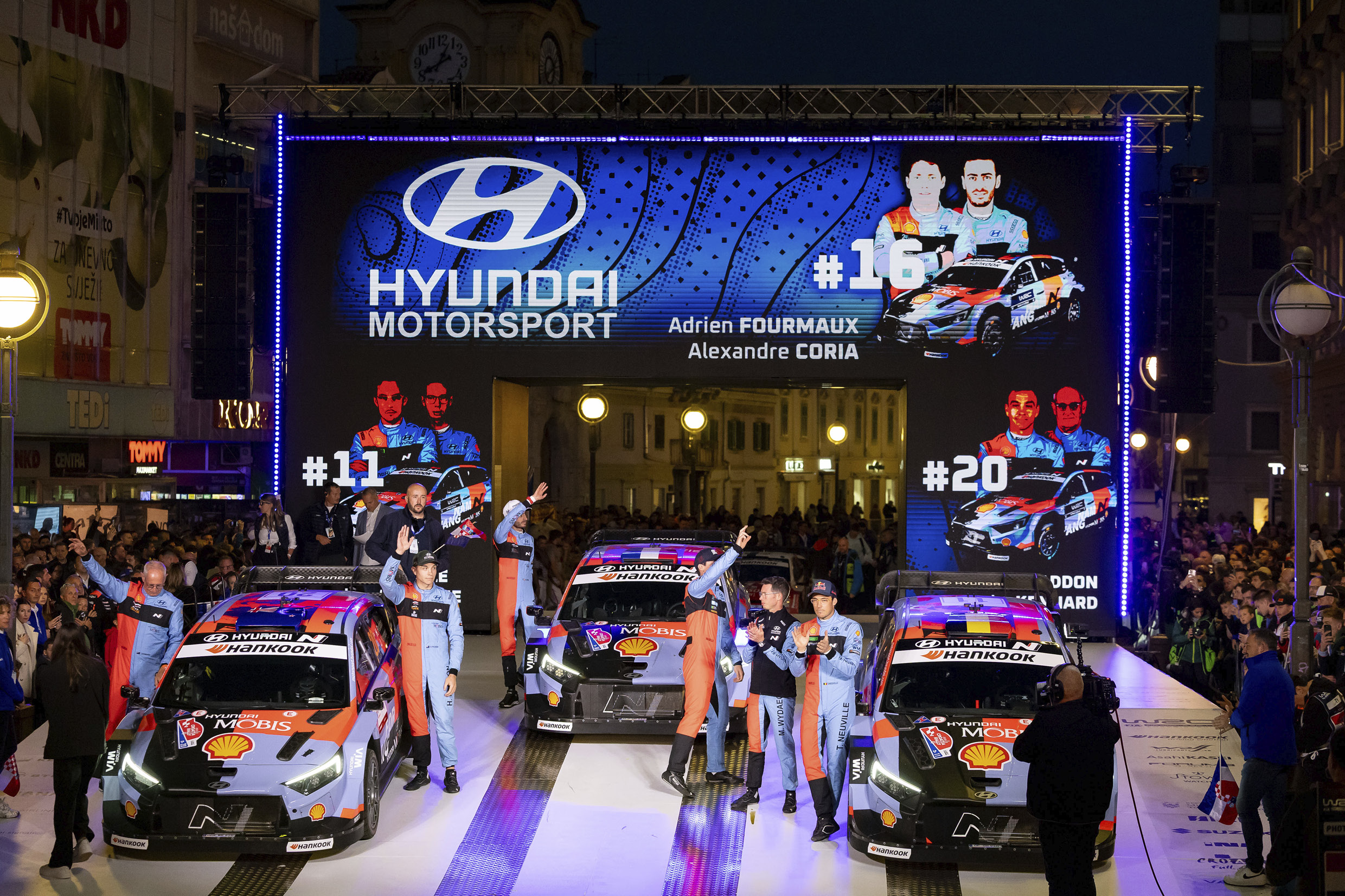
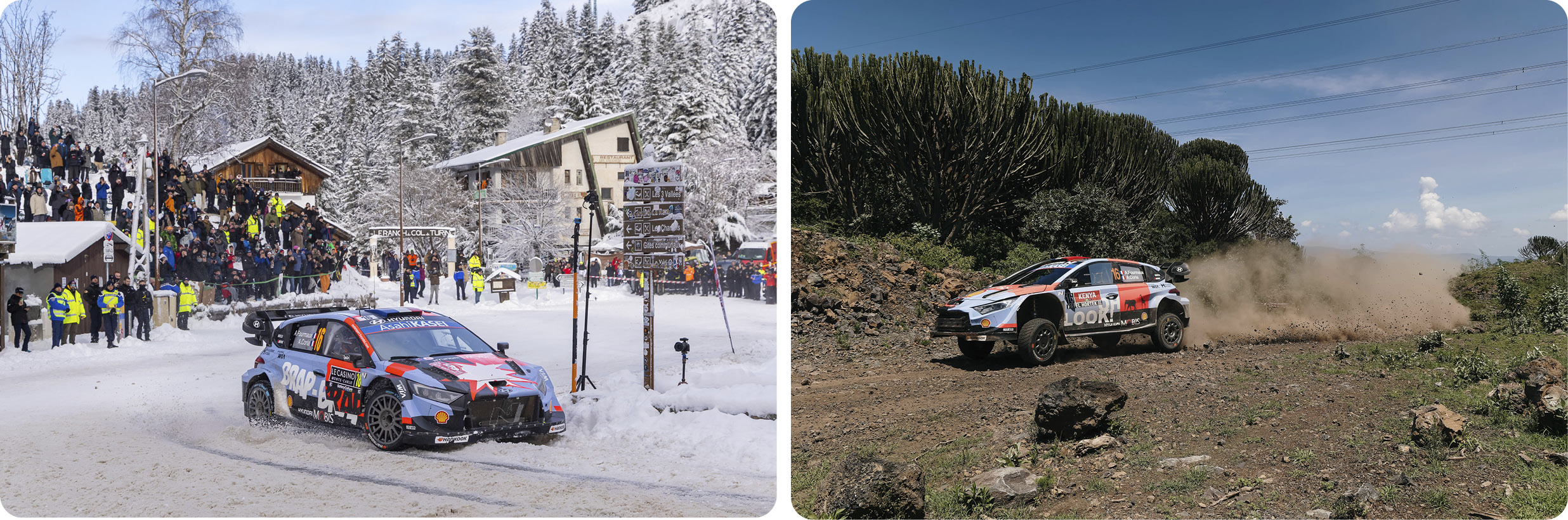
For Hyundai Shell Mobis World Rally Team, Croatia has been a stubborn one. Since the rally joined WRC in 2021, Hyundai still hasn’t taken a win here. For 2026, Hyundai entered Thierry Neuville and Adrien Fourmaux, and brought back Hayden Paddon in the third car—returning him after his appearance at the season opener. Fourmaux, coming off a second-place finish at Safari that delivered Hyundai’s first podium of the year, framed Croatia the way drivers do when they know it can bite: “Croatia Rally is one of the most difficult tarmac rallies, because you have many different profiles – sometimes five or six different types in one section – so you are unsure how much grip you will have going into it. The stages vary greatly depending on what area of the country we are in.”
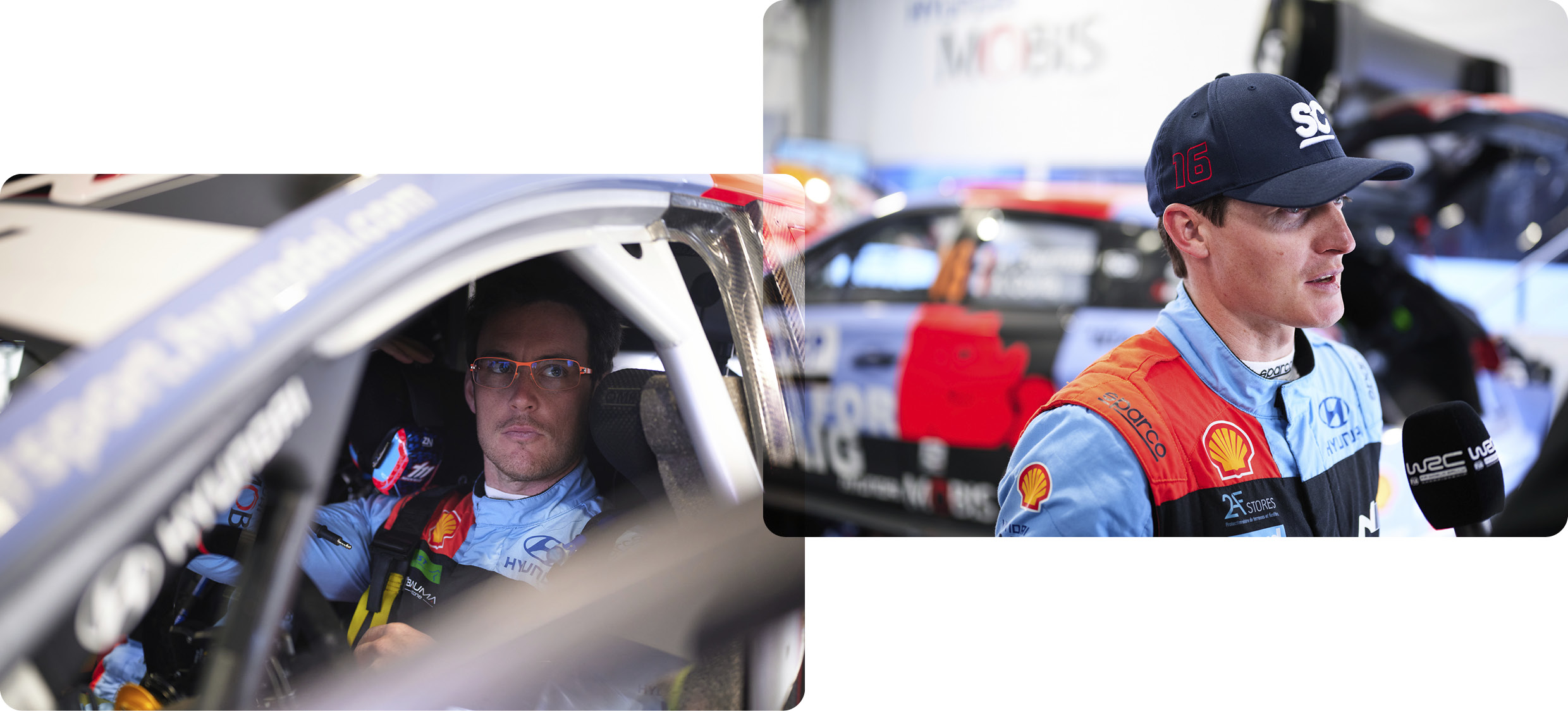
Neuville, still grinding through a tough stretch, described his mindset heading in: “....the location has changed this year, and it seems like the roads are quite different from what we’ve faced before. New tarmac roads are always an extra element for us to learn, especially with changing weather conditions, but generally I enjoy new stages and the challenges they bring. Generally, the grip is low and there’s a lot of *(corner) cutting, so you always need to manage your speed to ensure you make your corner if the conditions are worse than expected.”
*Corner cutting: Using the road edge—and sometimes beyond it—to straighten a corner and carry speed. Overdo it and you risk penalties or damage, especially when the cut drags mud, leaves, and gravel back onto the racing line.
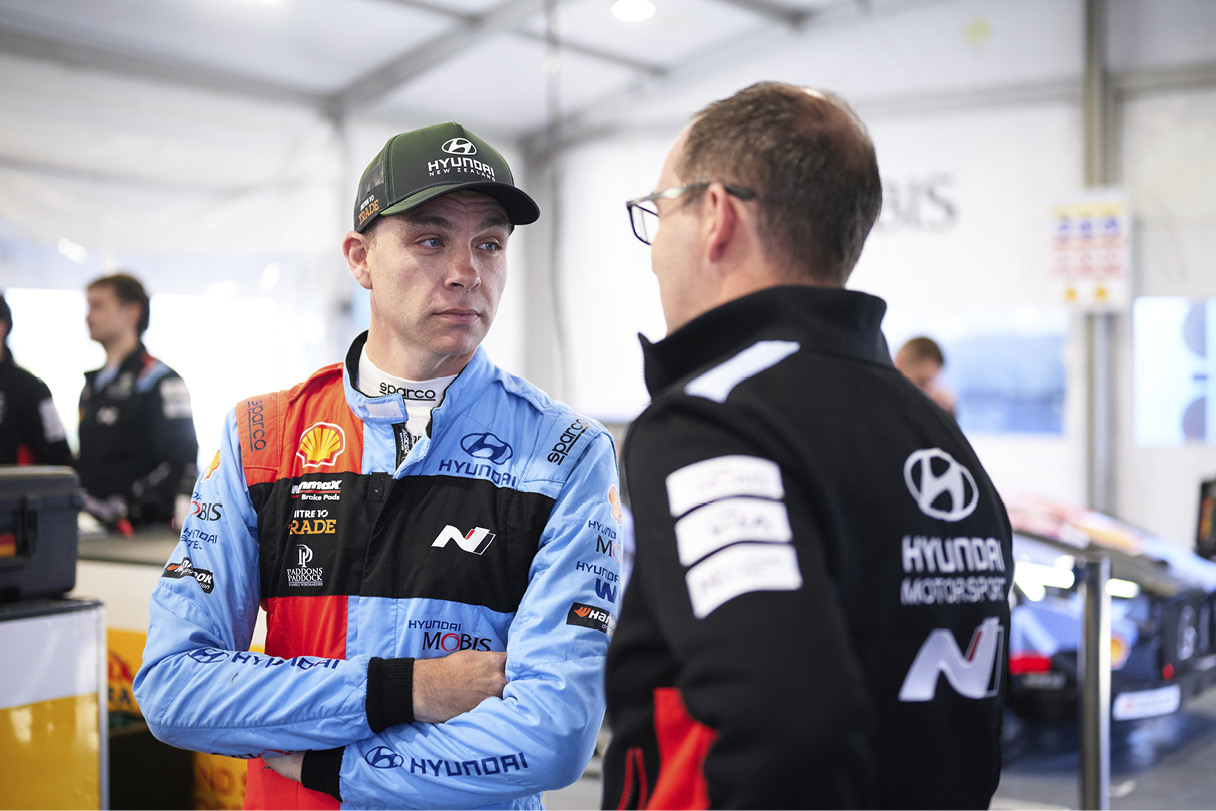
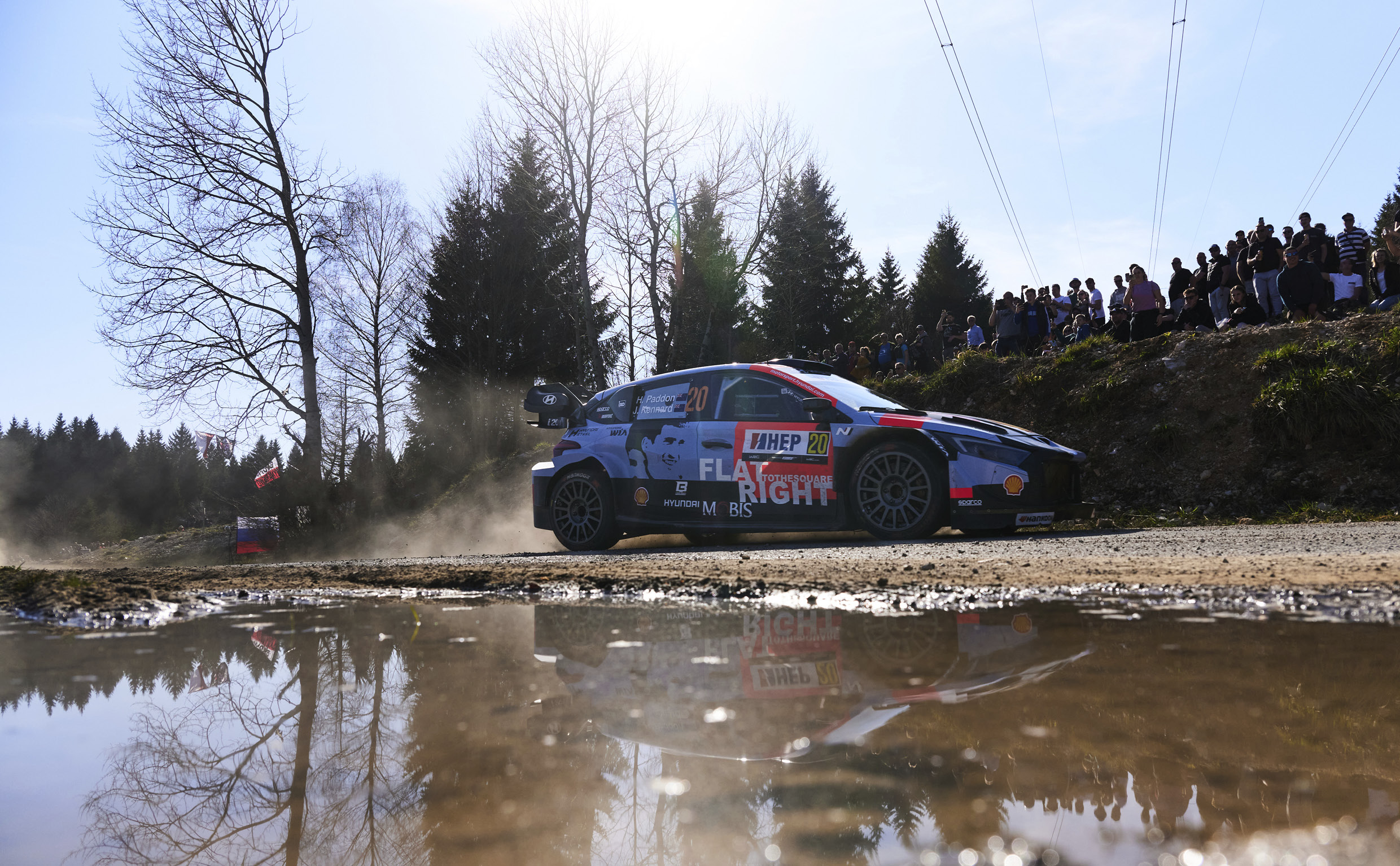
Paddon’s Croatia start was his second entry of the season. The New Zealander has long been tagged as a “gravel specialist,” but he’s spent years sanding down that label—building a reputation for noticeably improved tarmac stability and discipline. He said: “This will be our first time entering Croatia Rally, but the stages look great; it’s a more traditional tarmac rally, and it looks like a big challenge with a lot of cutting and pollution. Things will be harder for us on day one because of our road position, but we have targets for the rally that we will stay focussed on.”
That “road position” comment is all about how the surface evolves. On gravel, early cars sweep loose dirt and effectively “clean” the road—so starting farther back can be an advantage. On tarmac, it flips: the early runners drag dirt, leaves, and gravel onto the racing line, meaning later cars can be the ones dealing with a progressively messier surface.
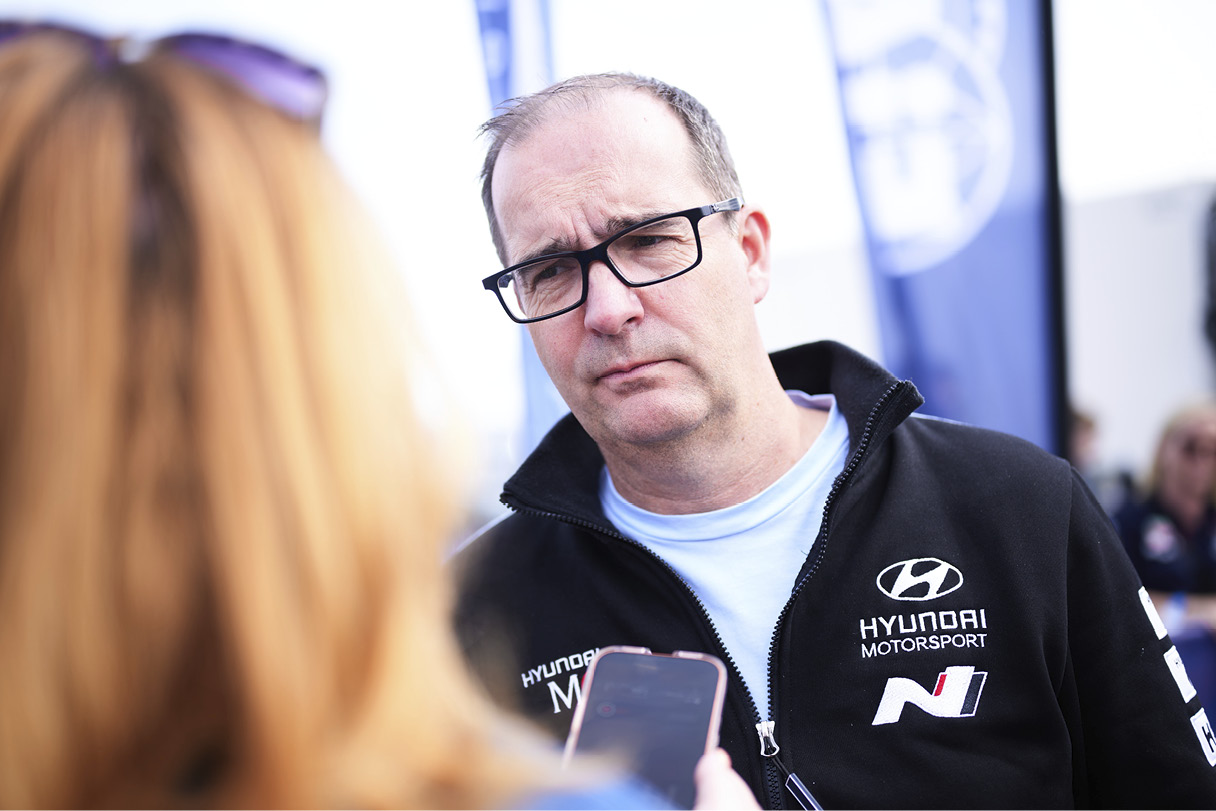
Hyundai team principal Andrew Wheatley set the tone in the pre-event interview: “Croatia Rally is potentially the first event of the season where pure performance will be a key factor. The team has been working hard on the setup of the car to improve the drivability when the surface grip changes. While we have made positive steps, we won’t have all of the revisions in place to demonstrate our full potential – it will be a step-by-step process over the coming events.” He then ad-ded, “Croatia is a rally that has always been won or lost by a matter of seconds, and the high-speed nature of the stages means that the battle is not normally over until the final stage. I think we can expect the same in 2026 – split seconds will make the difference."
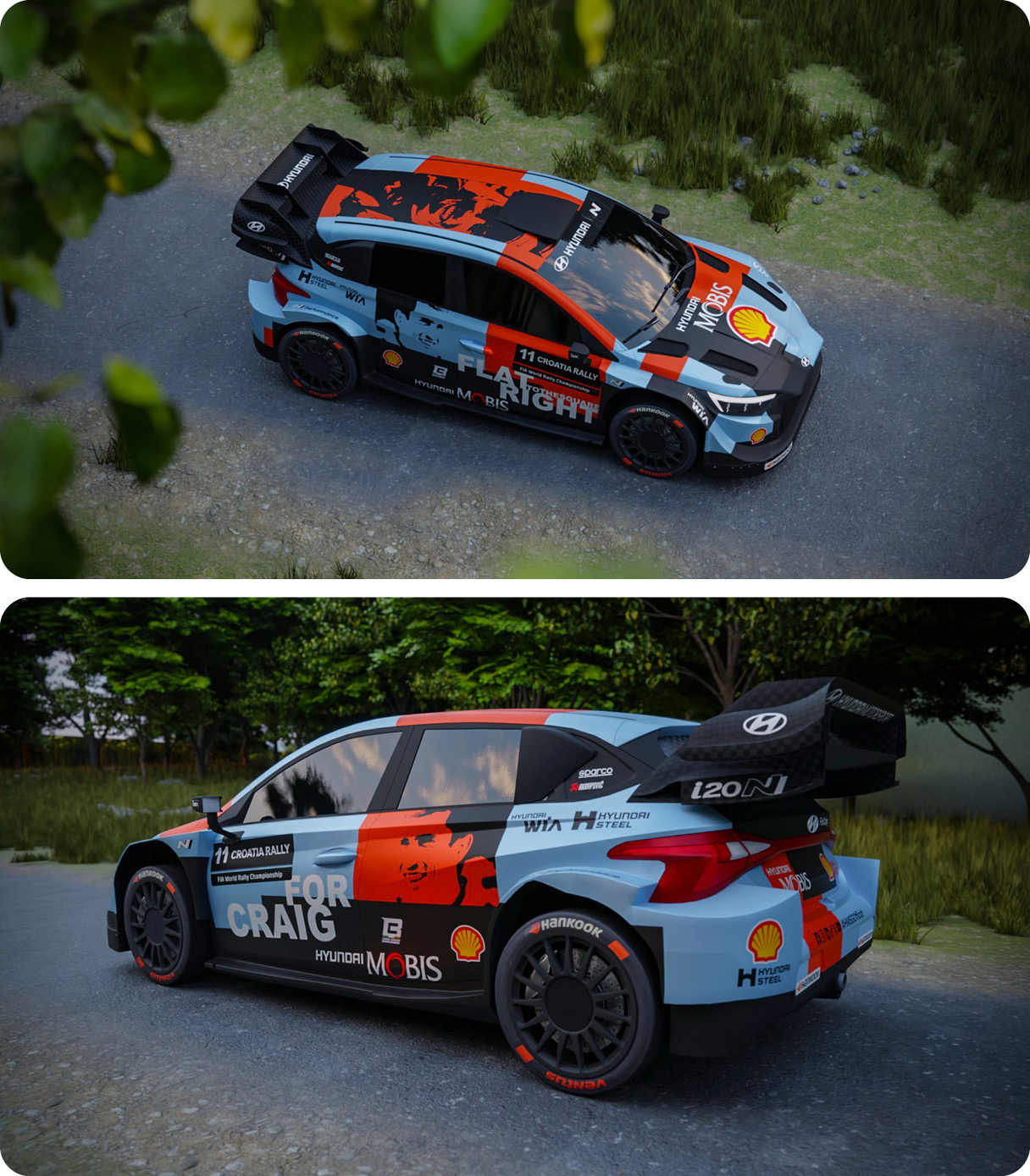
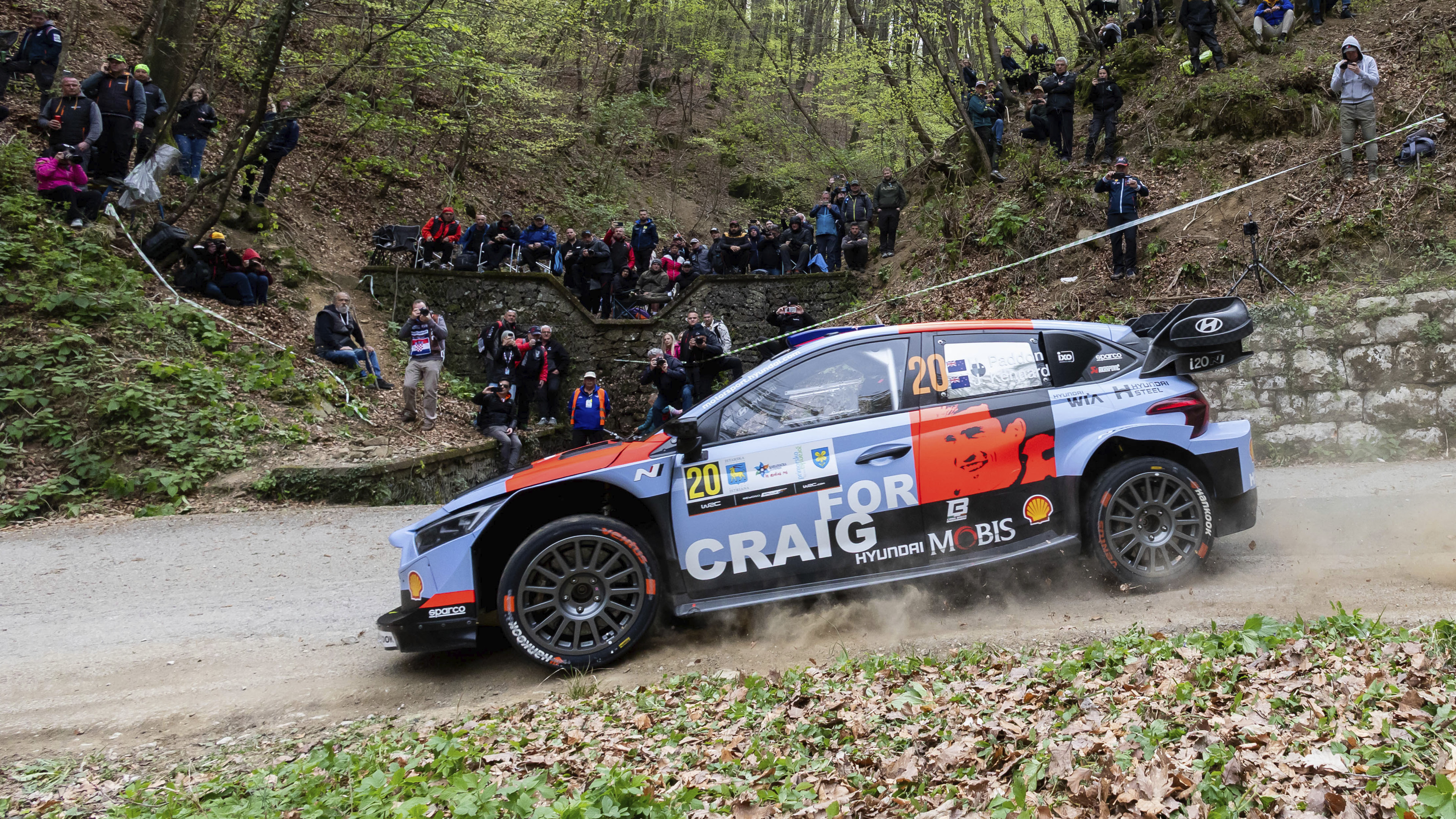
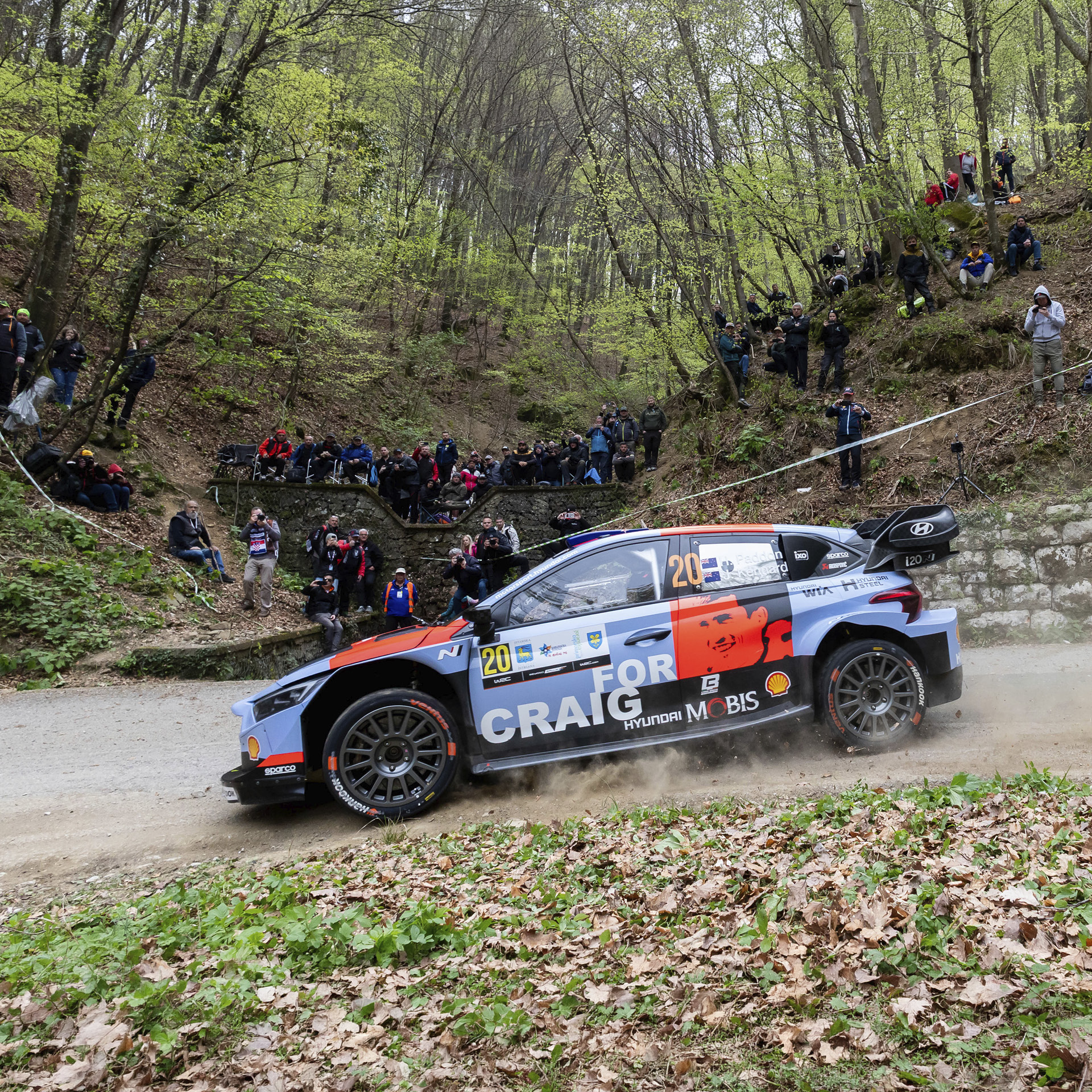
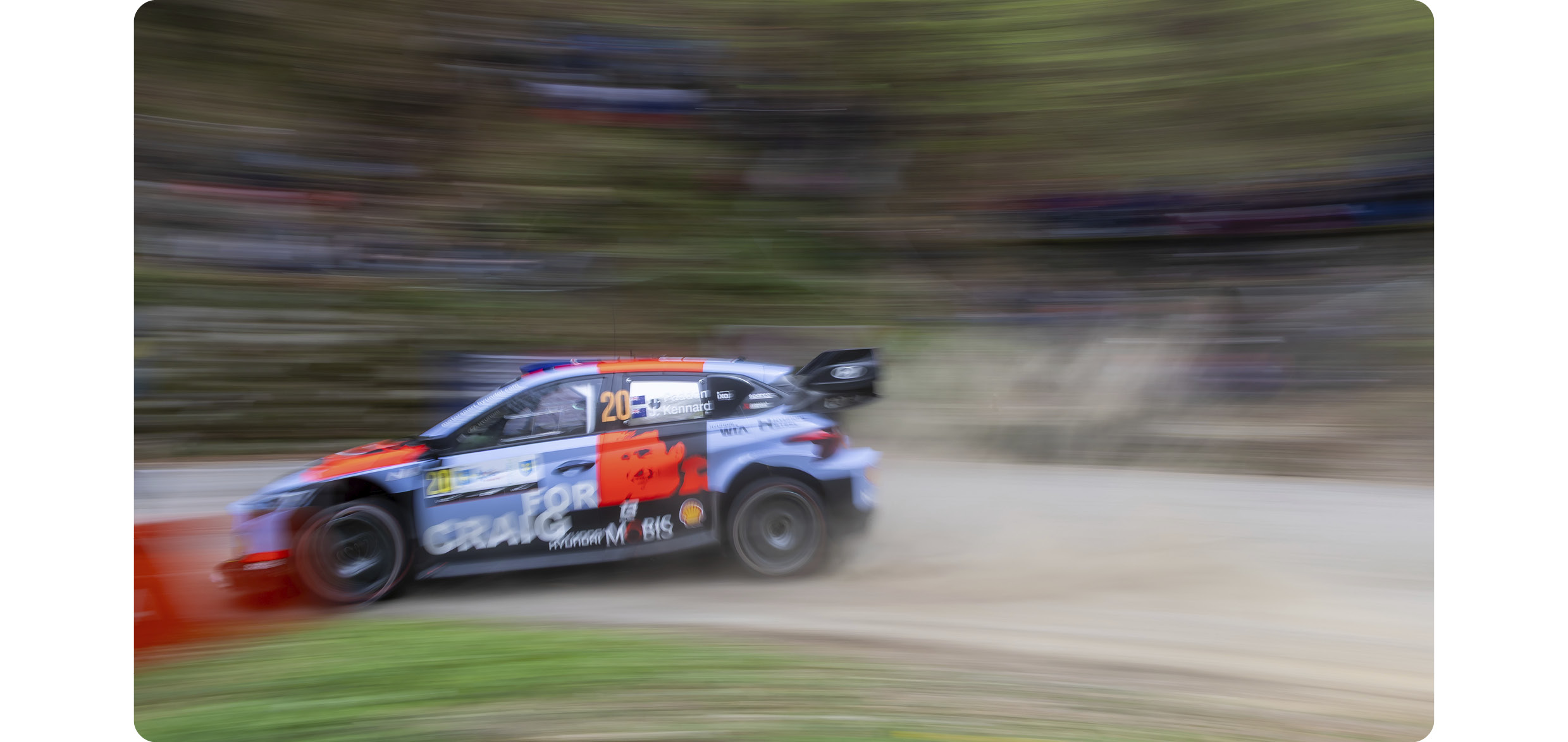
Hyundai has been rotating liveries throughout the season, and for Croatia the team brought a tribute design honoring Craig Breen. In 2023, while preparing for Rally Croatia with Hyundai, Breen was killed in a tragic accident during a pre-event test. The tribute livery features Breen’s bright, smiling face and one of his most famous lines: “Flat to the square right.”
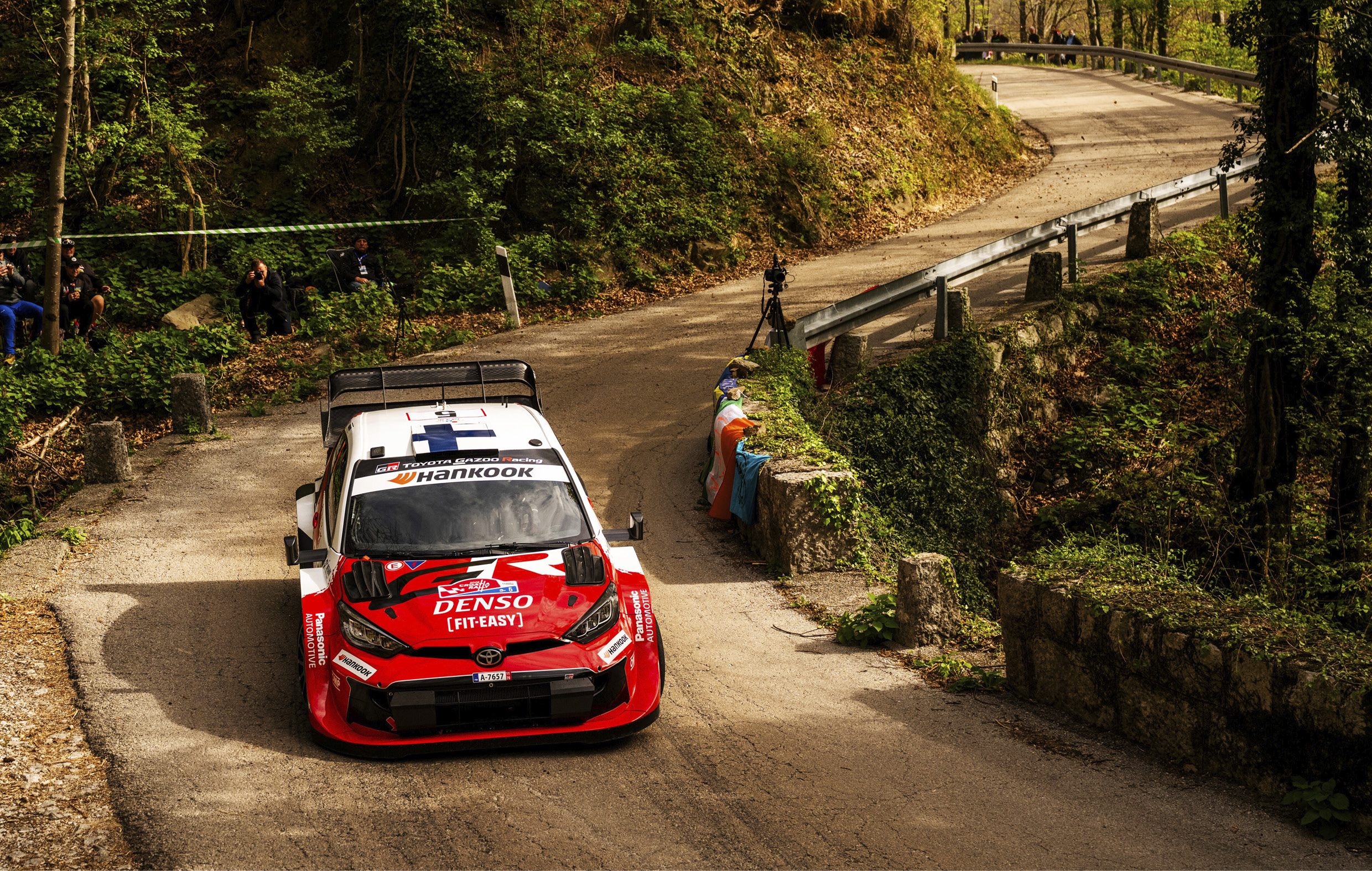
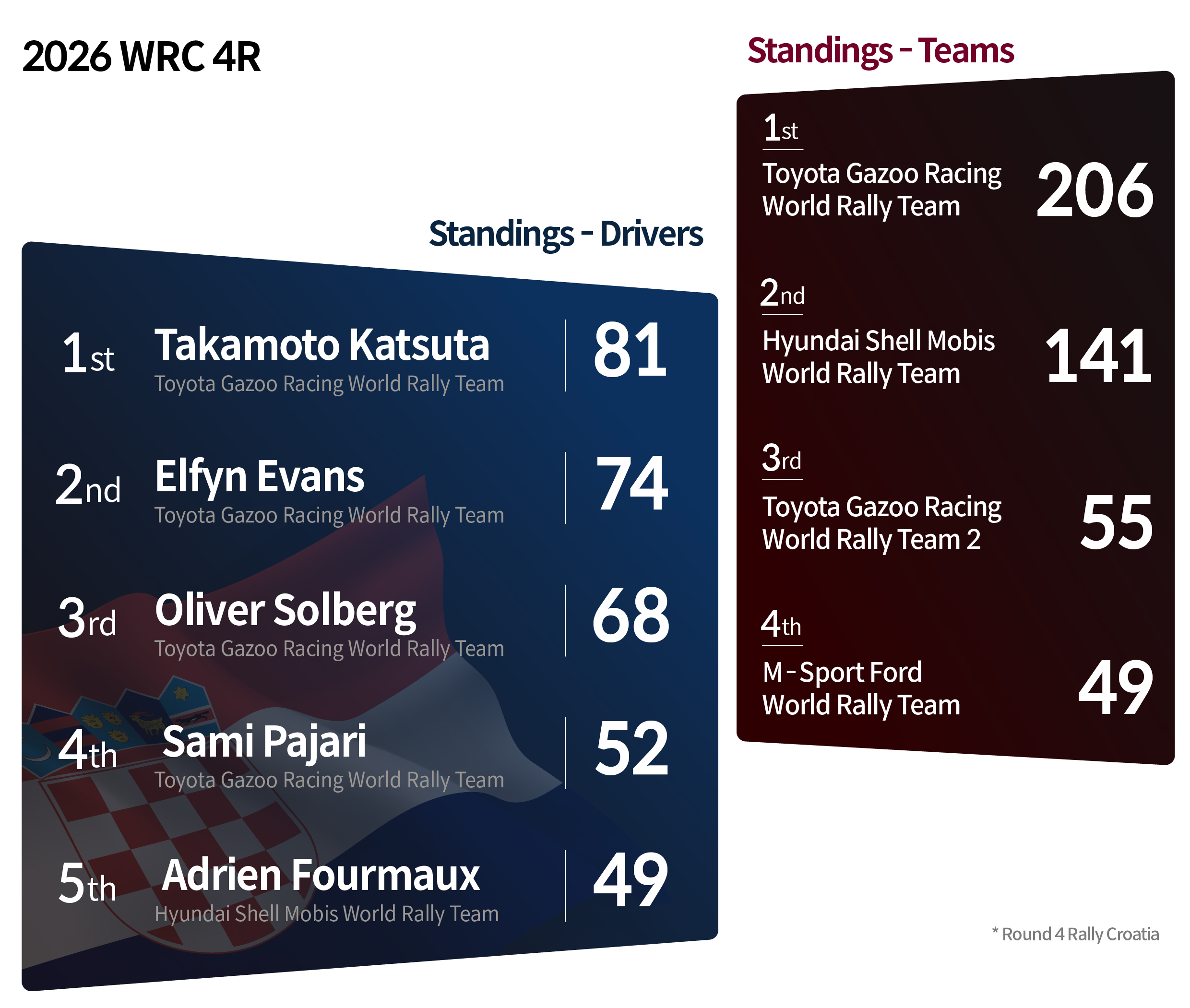
Toyota had been hoovering up points early in the season with multiple full-podium finishes, but stumbled at Safari after all three of its nominated manufacturers’ points scorers retired. In Croatia, Toyota leaned on drivers’ championship leader Elfyn Evans—also the 2023 Rally Croatia winner—along with Oliver Solberg, Takamoto Katsuta, and Sami Pajari entered under a second team. The four-car lineup was trimmed versus the previous round, but Toyota still fielded more Rally1 entries than most rivals.
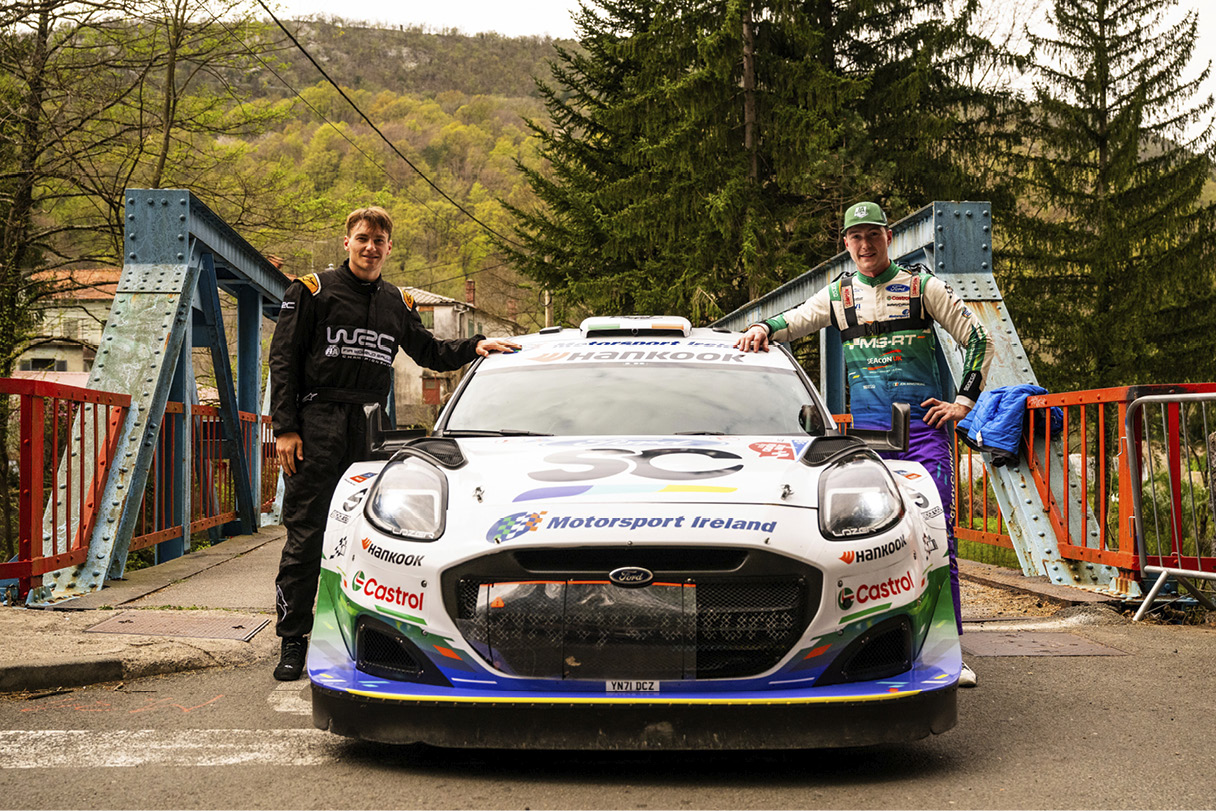
M-Sport Ford entered Josh McErlean and Jon Armstrong. It was McErlean’s first start in Croatia, while Armstrong has real history here: he scored his first career win at this event back in his 2021 Junior WRC days, and last year—when the rally ran as an ERC round—he took the overall victory.
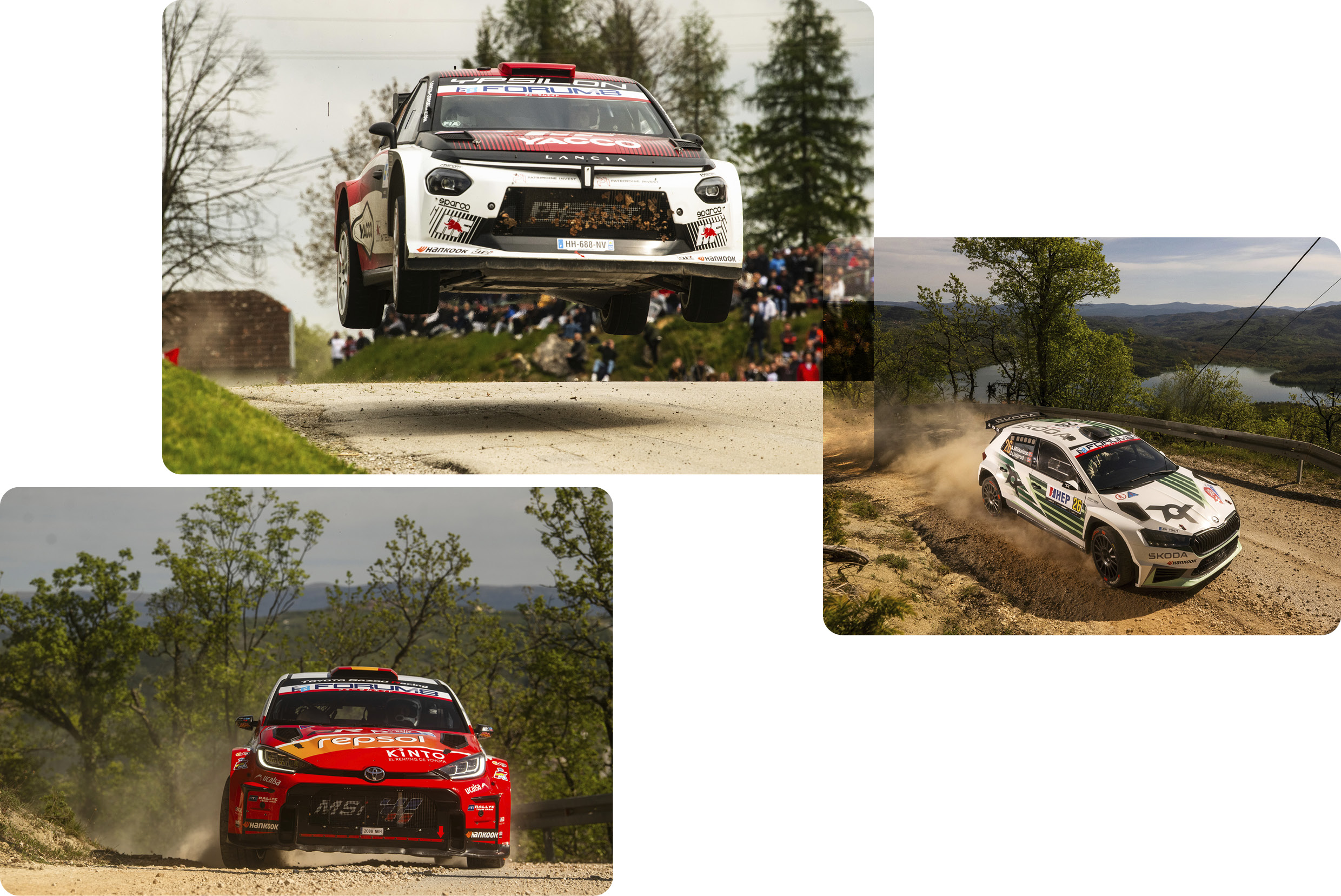
WRC2 drew plenty of attention as well. After skipping Sweden and Kenya, Lancia returned to the mix, with expectations high for tarmac specialist Yohan Rossel. He was joined by veteran Andreas Mikkelsen (Tok Sport), Alejandro Cachón of Toyota España, and Finnish up-and-comer Roope Korhonen—all looking to grab early leverage in the season’s WRC2 title race.
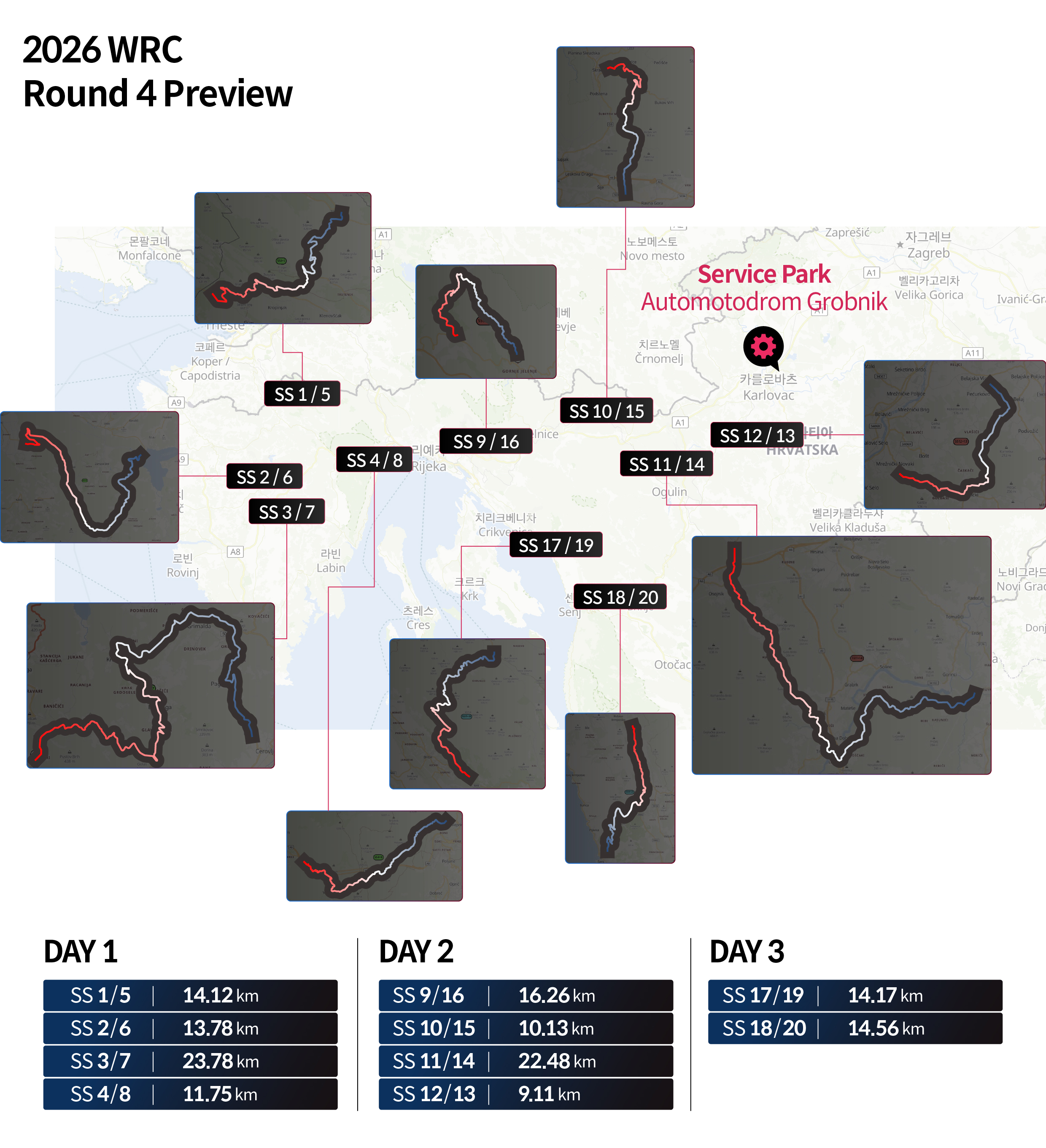
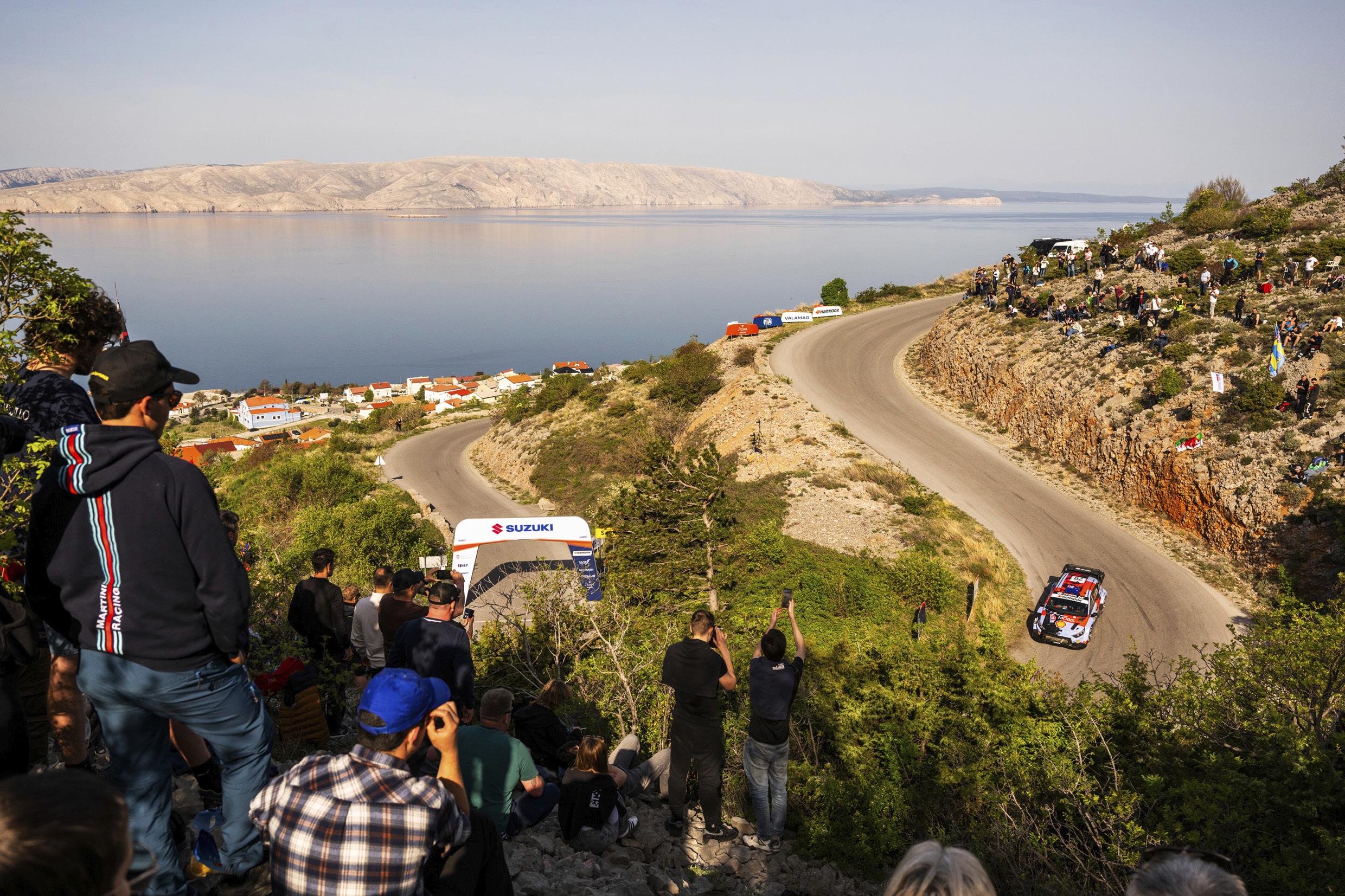
With the exception of three stages, the route was completely reworked compared to the previous running. Organizers built the rally around scenic Adriatic coastal roads and demanding mountain sections, aiming to showcase Croatia’s tourism assets during the April off-season while delivering striking broadcast visuals.
Under the Zagreb-based format, Croatia was known for narrow, winding, bumpy tarmac. Around Rijeka, the character broadened and diversified: the stages cut through the “Croatian Alps”—the Gorski Kotar and Učka mountain regions—climbing and dropping around 1,000 meters in elevation.
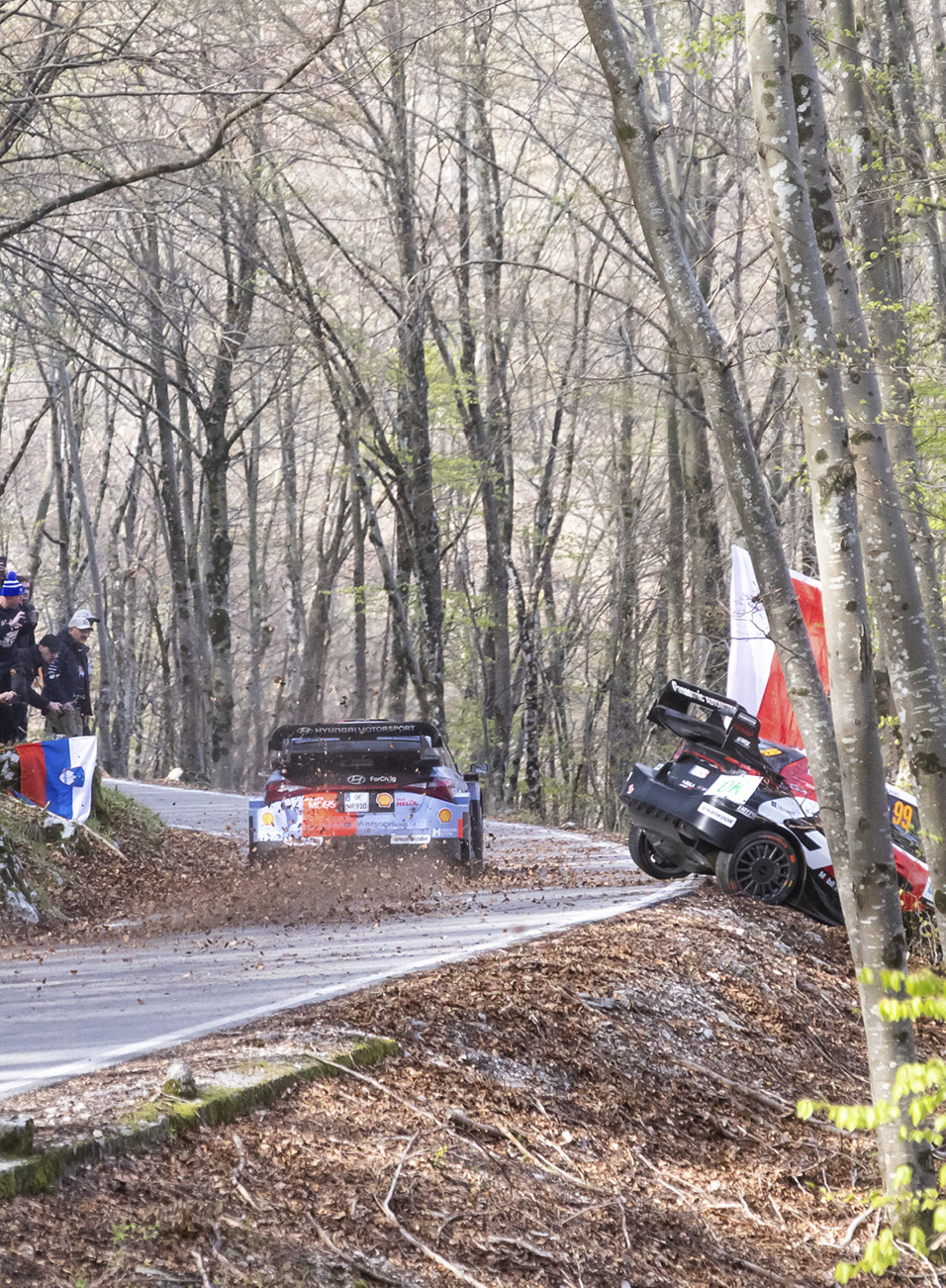
The surface story became even more varied. Sheer cliffs and twisting mountain roads create true blind corners where you’re committing before you can see the exit. The overall climate is relatively mild, but the mountains are moody and hard to read. This year, heavy snow hit the mountain stages and temperatures stayed low enough that teams prepared an extra set of snow tires (non-stud-ded) in addition to soft, hard, and wet tires.
This rally was also technically linked to the next round, Rally Islas Canarias (Spain). Without special permission, teams weren’t allowed to change differential settings between the two events—meaning they had to find a compromise setup that could survive Croatia while not boxing them in for Spain.
Day 1 (Friday, April 10) was the rally’s biggest mileage haul—and it didn’t take long for Croatia’s new Rijeka-based route to show its teeth. The crews ran four stages in the morning and repeated them in the afternoon for SS1–SS8, totaling 126.86 km. Tire strategy split the field immediately. Neuville went with a cross-mixing setup—three hards and two softs—while Pajari, Evans, and Solberg committed to five hards. Fourmaux and Paddon chose four hards plus a single soft.
*Cross-mixing: running different tire compounds in alternating combinations to manage changing grip and temperature.
The opener, Vodice–Brest, was a brand-new addition for the first time since 2013. It starts on a wide, bumpy downhill where the cars can really stretch their legs, flips to an uphill climb around the 4 km mark, cuts through the forest, and then finishes with a wide, high-speed final section. Evans set the early benchmark, with Pajari and Armstrong close behind. Then came the first big twist: Solberg clipped the rock wall on the left, went off, and got stuck. Spectators tried to shove the car back onto the road, but it wasn’t happening—an instant retirement that unexpectedly opened up the weekend for everyone else.
Hyundai’s opening read: Fourmaux fourth, 10.8 seconds off Evans, with Neuville sixth and Paddon seventh. Fourmaux summed up the mood after SS1: “The grip was really tricky. There was places when it was good but there is a lot of changing grip. It is getting pollutted very quickly.”
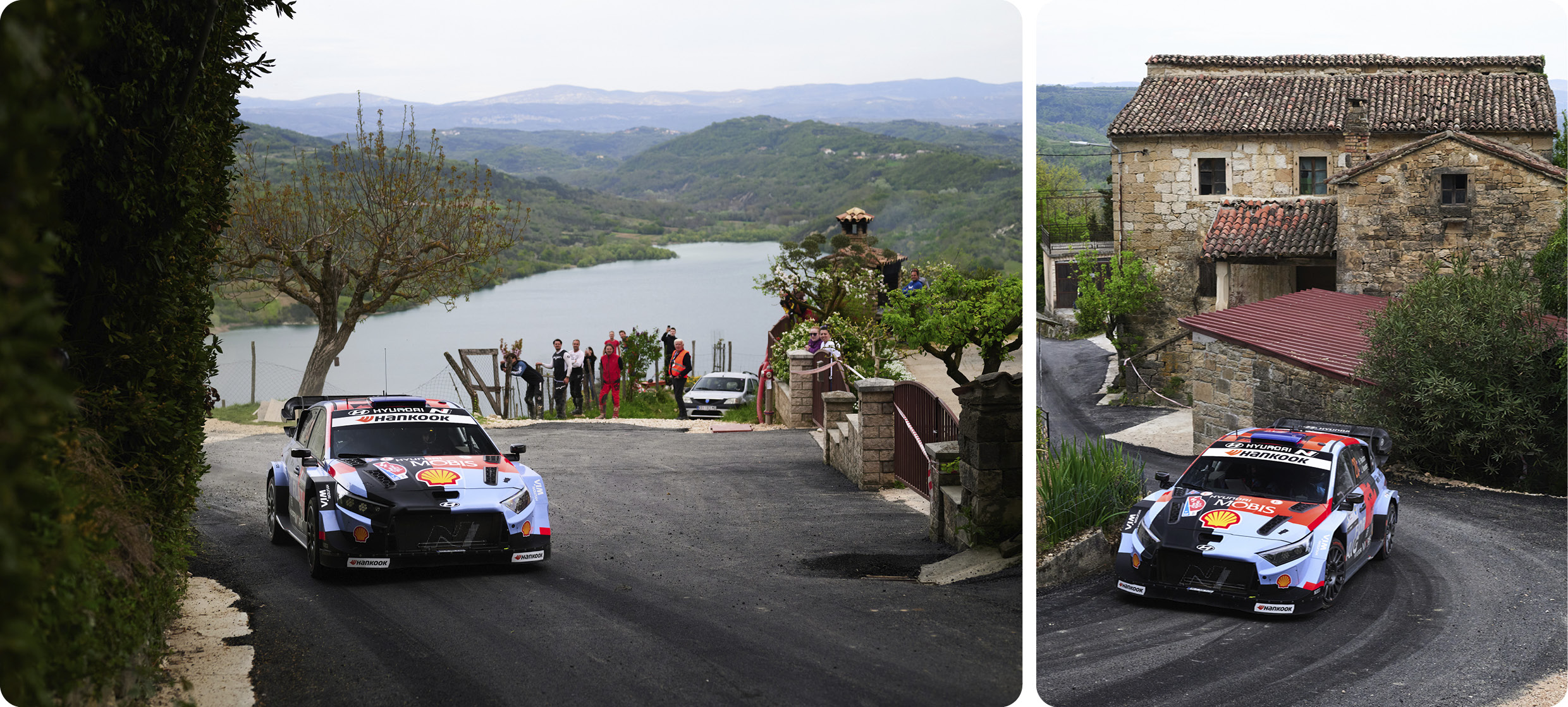
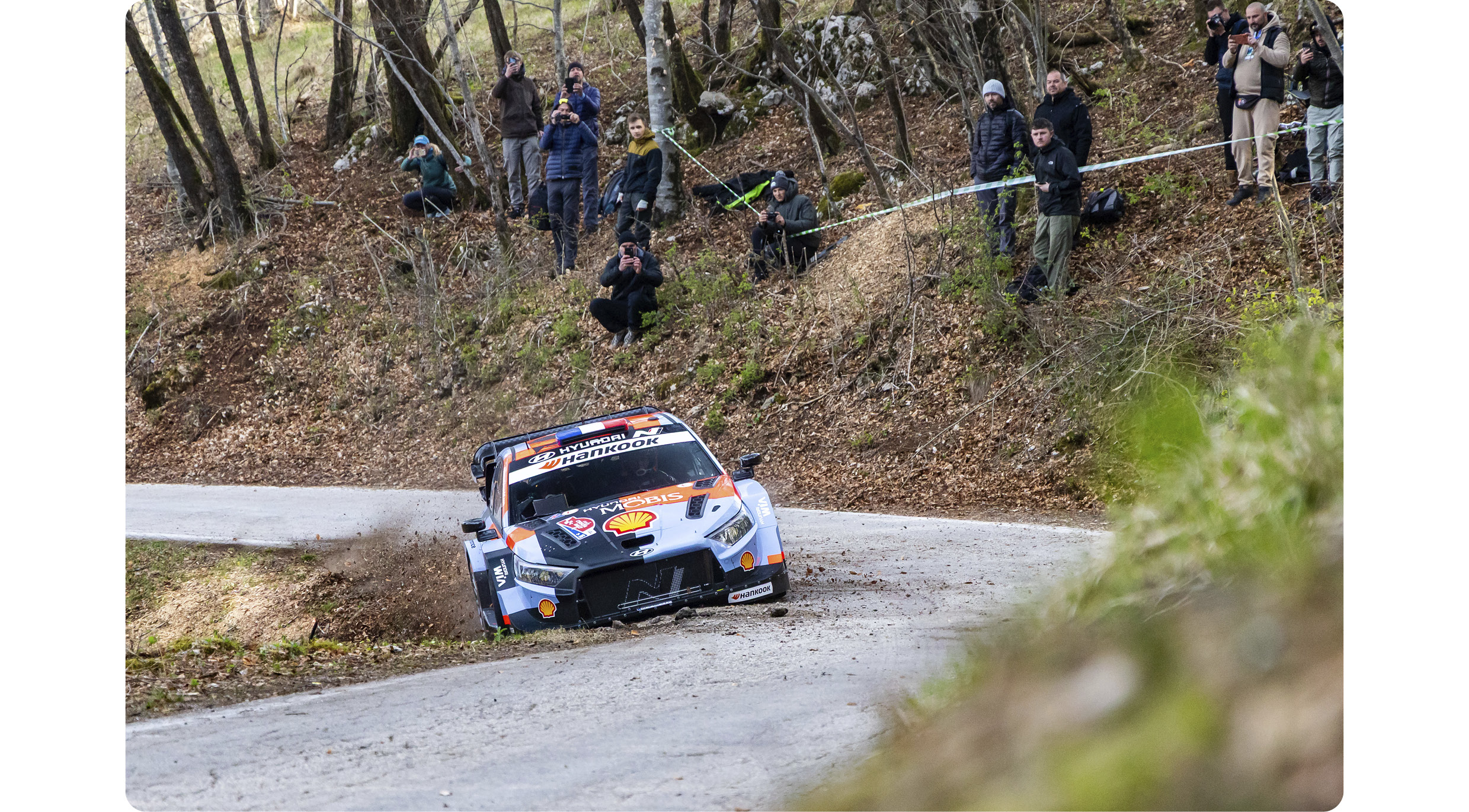
SS2, Lake Butoniga–Motovun, starts near Lake Butoniga, climbs, then drops back down toward the medieval hilltop town of Motovun. This year it used a route last run roughly a decade ago, but in the opposite direction. It’s a classic “Croatia grip test”: big elevation changes and fast sections, with old asphalt and freshly laid pavement alternating—meaning the level of grip never sits still.
Constantly changing grip and a surface that wouldn’t let drivers lean on speed made life difficult. Video: WRC (http://www.wrc.com)
Evans went fastest again. Fourmaux, however, lost time with a puncture, while Neuville found more rhythm and clocked the third-best time. Neuville said afterward: “I started to enjoy it a bit more, but the stage is very dirty. The grip is very low. I tried to find a good rhythm, keep a good speed. The balance of the car improved, but I made the car so hard that it's getting nervous." Meanwhile, warning lights started popping up: Pajari, Fourmaux, and Armstrong all saw tire a-lerts. Pajari held his pace, but Fourmaux and Armstrong took a hit.
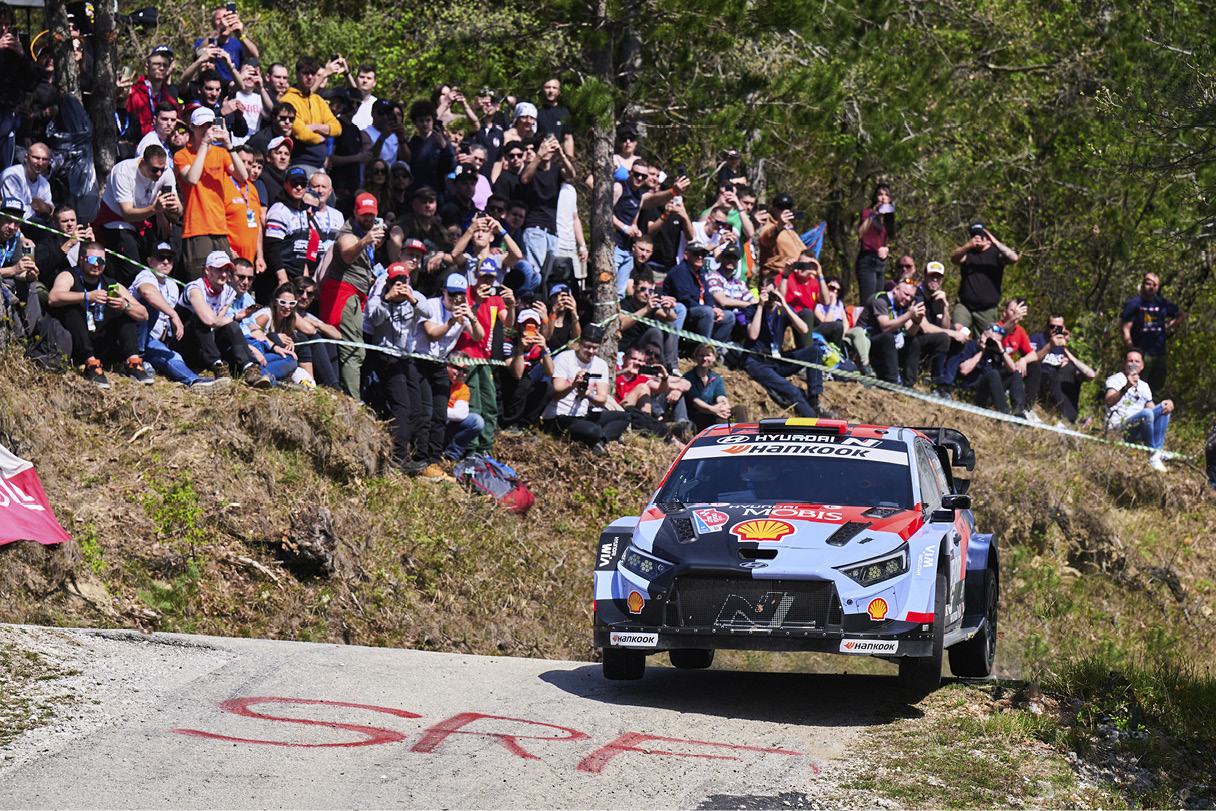
SS3, Beram–Cerovlje, was the rally’s longest single stage at 23.78 km. With elevation swings, hairpins, and technical sections baked in, tire management mattered as much as raw pace. Then the rally blew open: around 13 km into the stage, Evans crashed out. A misheard pace note sent him wide on a right-hander and into the bushes—instant retirement.
Neuville pounced, setting the stage’s fastest time. He also took a moment for Evans and co-driver Scott Martin: “I hope Elfyn and Scott are fine. I saw them on the road, but I didn't see any braking lines. For me, balance wise, medium. The car is still nervous and I'm fighting a bit to keep it straight. The grip is super low, so makes it very difficult to read the grip and find the confidence. Not easy to find the good rhythm. It's still very early in the rally and a lot of opponents already out. We need to have a clean rally, it's still very long.”
With Evans out, Pajari took over the overall lead and Neuville moved up to second. Paddon sat fifth, and Fourmaux—after losing roughly 1 minute 30 seconds to a puncture on SS3—clawed back to 10th overall.
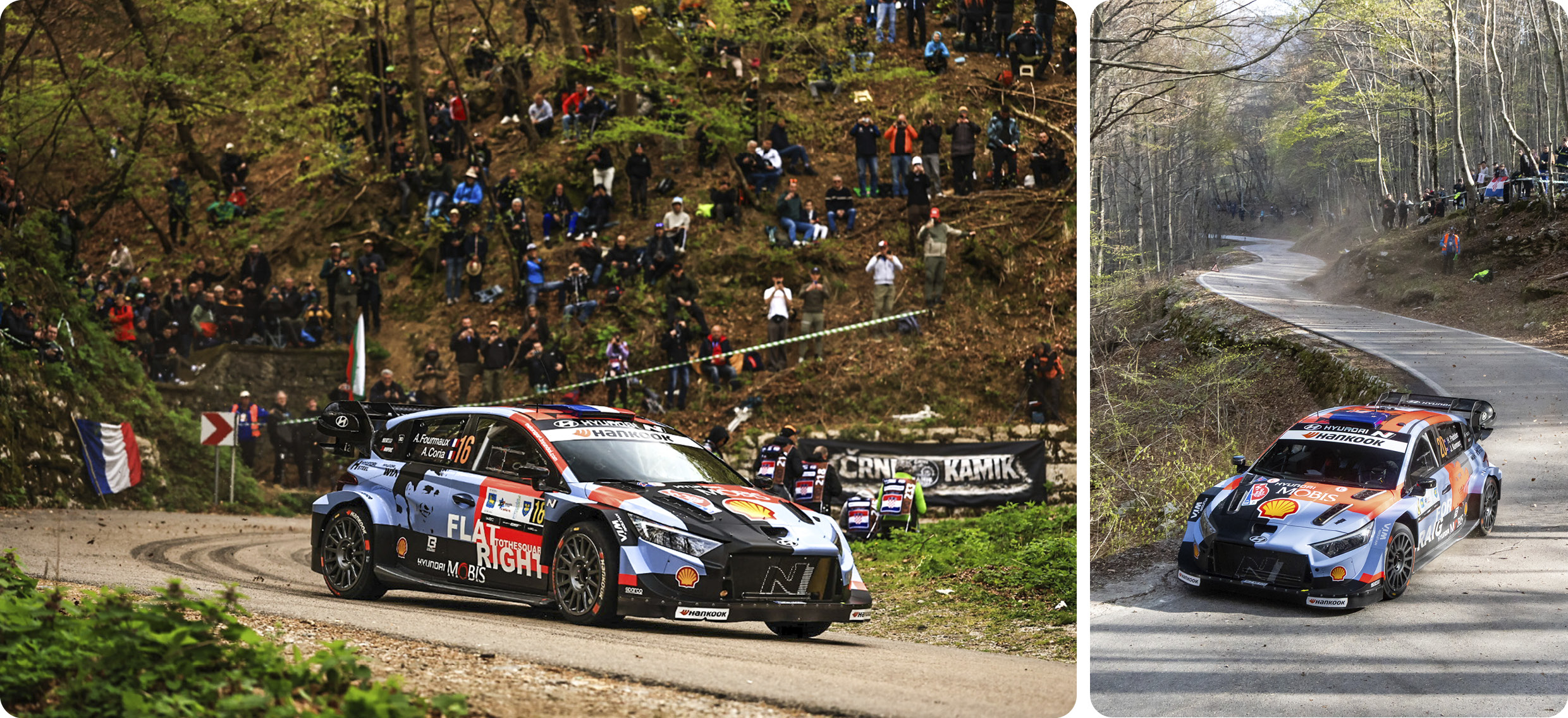
SS4 Učka is exactly what it sounds like: a stage that cuts through the Učka mountain range, with Adriatic views that look incredible on broadcast. For the drivers, it’s a different story. It starts on a wide two-lane road in the forest, then strings together twisting sections and fast blasts where commitment comes with consequences. Pajari was quickest, followed by Katsuta, Fourmaux, Neuville, and Paddon. Overall, Pajari, Katsuta, Neuville, and Paddon formed the top four. Armstrong—who had shown strong speed—was sidelined by suspension damage.
Fourmaux survived the morning loop and climbed to sixth overall. With no spare tire on board, he admitted there was relief at the end of the stage: “I'm happy to be at the end of the loop as we didn't have any spare wheels. We had to manage pace and risk. I'm happy how we managed it. The rally is still long. I had a clean stage and I was trying to be efficient. It seems to be working.”
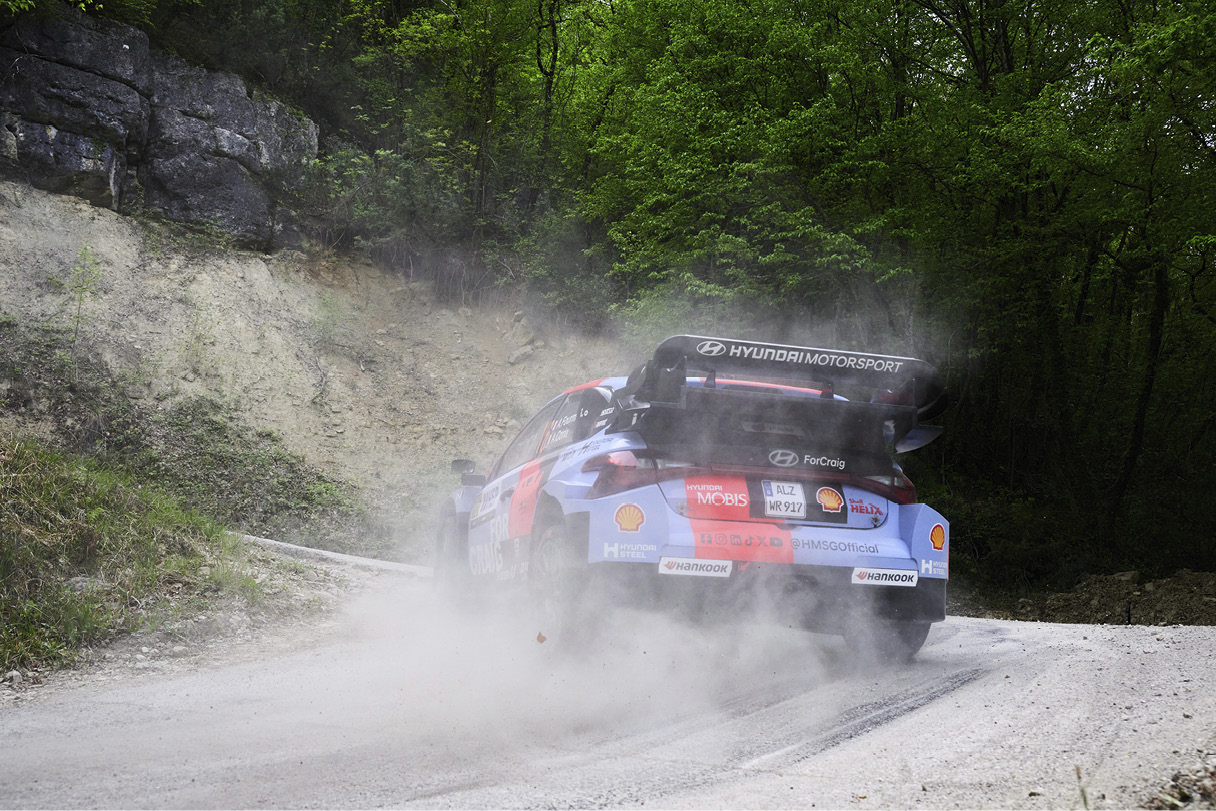
After service, the crews repeated the morning loop. On SS5 Vodice–Brest, Pajari went fastest again to keep the overall lead. The fight behind him tightened: Katsuta and Neuville traded punches for second, with Katsuta slightly ahead—just 1.9 seconds separated them.
Neuville built momentum and moved up to second overall. Video: WRC (http://www.wrc.com)
On SS6, Neuville struck back with his second stage win of the rally and climbed into second overall. With confidence returning, he said: “That's nice. I said to Martjin that it was a good stage when we crossed the finish line because I felt like I was not struggling with the balance. A couple of places we could go faster. We're working in the right way. Not exactly where we want to be, but progress is important. Changes? Springs in the front, changed the diff. We did some clicks now. I'm trying to be clean, but when the car doesn't turn, it doesn't work.”
On SS7—the second run of Beram–Cerovlje—Neuville made it back-to-back fastest times. The gap to Pajari shrank to 6.3 seconds. Paddon, gradually settling in, held on to fourth, and Fourmaux kept grinding forward—up to fifth overall.
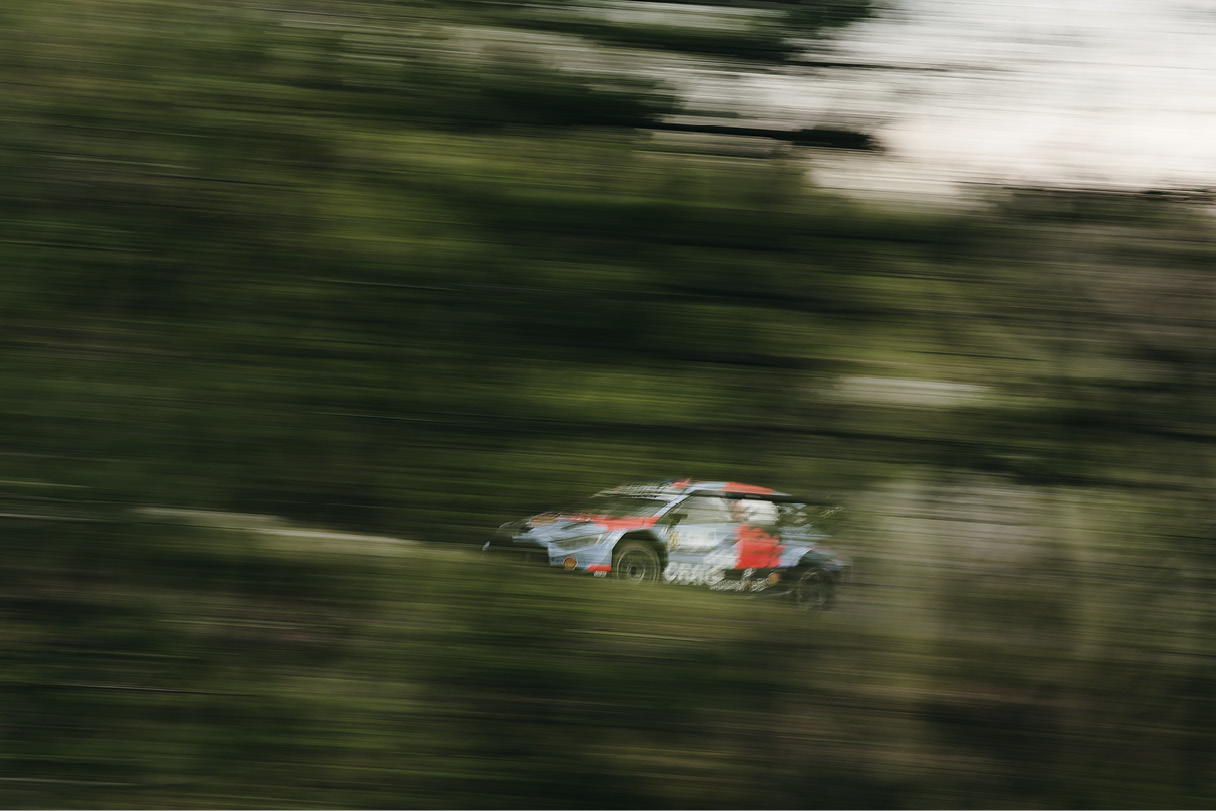
SS8 Učka closed Friday, and Pajari answered with another fastest time to maintain the overall lead. Neuville was second overall at 13.7 seconds back, and Katsuta was right on Neuville’s bumper—just 0.9 second behind. Paddon ran fourth about a minute back, while Fourmaux sat fifth, roughly 40 seconds behind Paddon.
The other big storyline: Rally1 attrition opened the door for WRC2 runners to climb the order. Lancia’s Rossel and Nikolay Gryazin held sixth and seventh overall, with Cachón, Léo Rossel, and Korhonen also sitting inside the top 10.
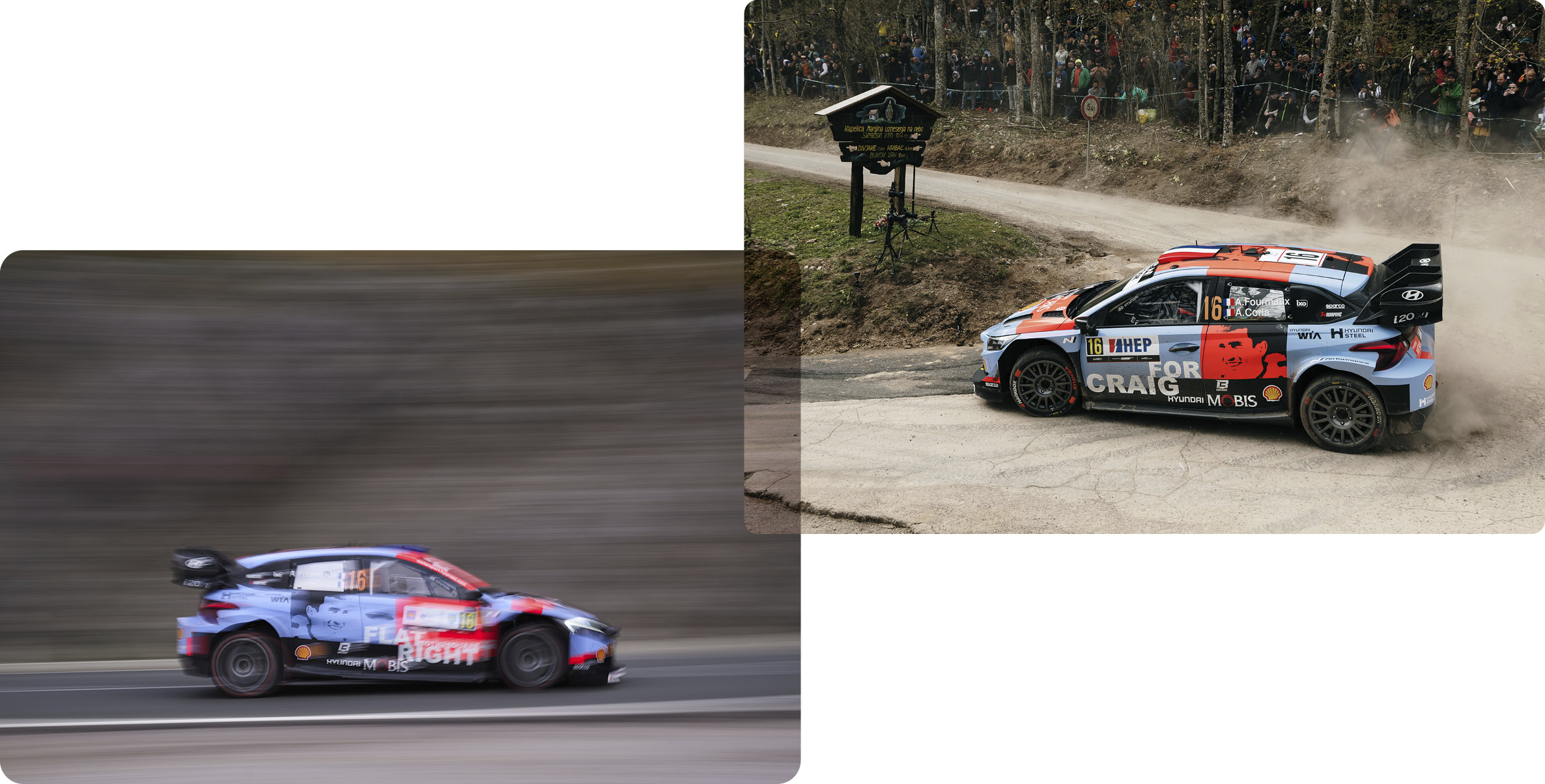
Saturday, April 11 moved the rally into the mountains—Gorski Kotar and the Karlovac region, often nicknamed the “Green Heart” or even the “Heart of Europe.” The roads up here are classic Croatia: pretty to look at, unforgiving to drive. The loop started with the 16.26 km Platak stage, ran four stages in the morning, then reversed the order in the afternoon. SS9–SS16 totaled 115.96 km—shorter than Friday, but with one important twist: no midday service. Most of the front-runners leaned on a similar tire plan, typically four softs and two hards, trying to cover everything from cold, damp shade to warmer, faster sections.
SS9 Platak is one of Croatia’s legacy stages, set in a ski-resort area where altitude and microclimates can mess with both grip and confidence. It was also used in 2024 when the rally was still based around Zagreb. The stage climbs immediately after the forest start, crests, then drops back down. Up in a parking area above 1,000 meters, organizers ad-ded a donut-turn section for the crowd. There was still a trace of snow along the roadside, but conditions were stable.
Solberg set the pace with a split setup—hard tires up front, softs at the rear. Among the main contenders, Pajari was quickest, but he barely nudged the gap to Neuville—just 0.1 second. Running fourth overall, Paddon noted the problem drivers would keep repeating all day: fallen leaves across the road made it hard to read grip corner to corner.
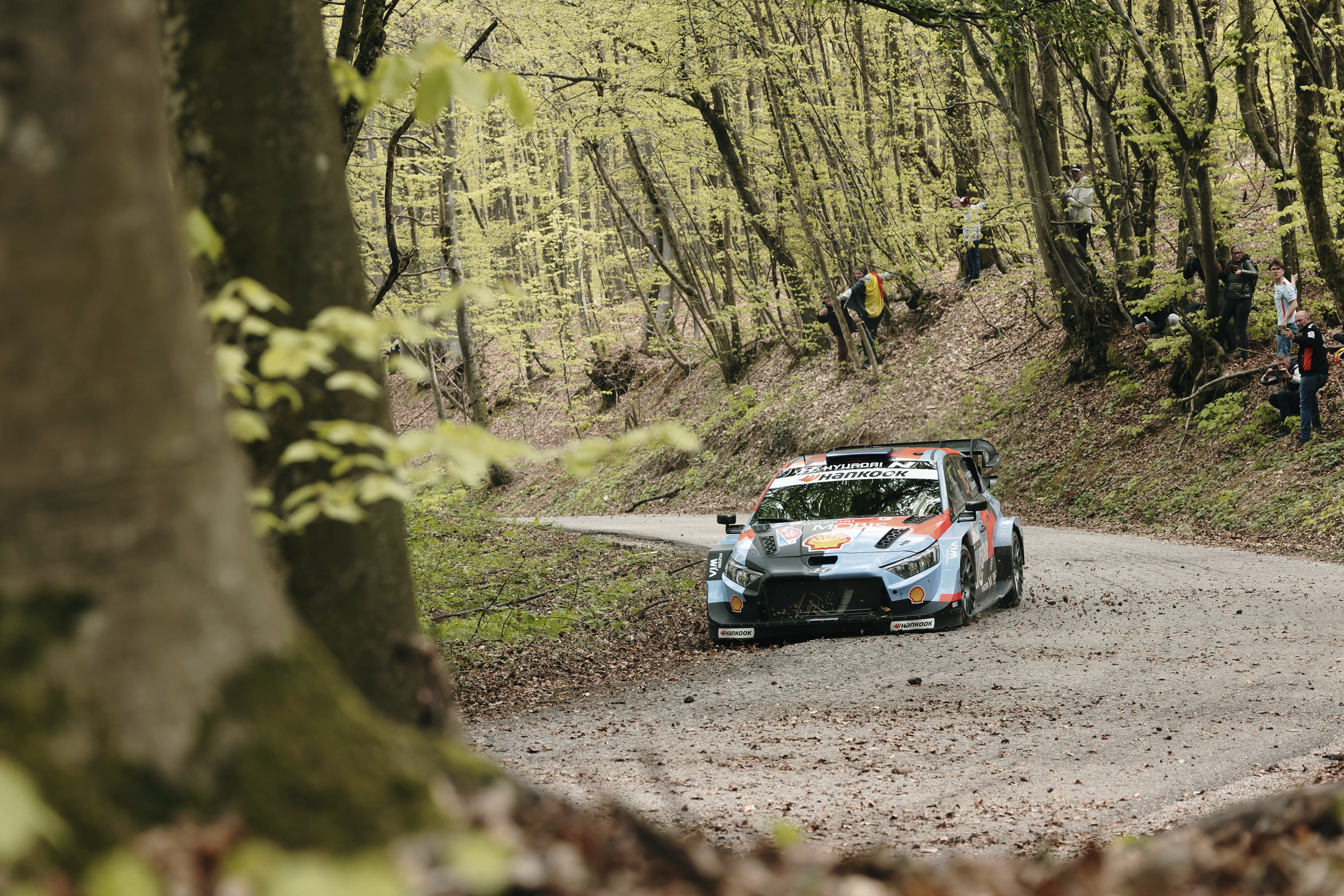
SS10 Ravna Gora–Skrad cuts through dense forest, mixing wide-open high-speed stretches with tighter technical sections through woods and villages. With heavy leaf fall and high humidity, grip kept changing in ways that punished overconfidence.
Solberg made it two straight fastest times, and Katsuta stepped up—jumping ahead of Neuville into second on the stage by 1.2 seconds. Neuville wasn’t shy about what he saw: the road was too dirty, and he suggested Katsuta must have taken on serious risk to extract that time. Elsewhere, McErlean had a scare when a fire broke out in the engine bay. He avoided retirement, but the damage was done in time lost.
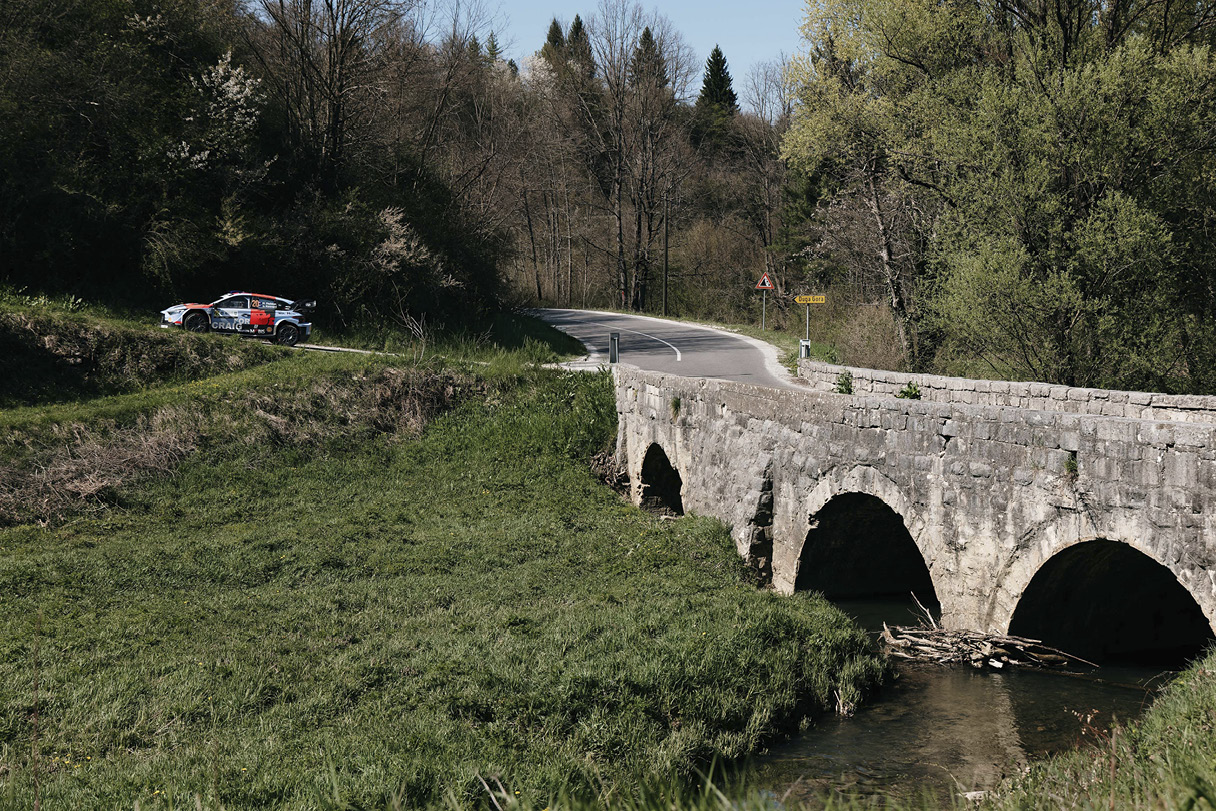
SS11 Generalski Stol–Zdihovo was one of the rally’s new additions, following river roads through the Karlovac area. It’s fast and jumpy, but the surface is brutally rough—one of those stages where “tarmac rally” starts feeling like the wrong label. At 22.48 km, it was Saturday’s longest test.
Solberg went three-for-three on stage wins—but it didn’t help his position, because his SS1 retirement meant a heavy time penalty under the restart rules. When you go out early, you pay for it all weekend, and Solberg’s bill was massive. Neuville, meanwhile, lit the stage up—beating Katsuta by a staggering 44.3 seconds to reclaim second overall and cut Pajari’s lead to 11.8 seconds.
Fourmaux retired after sliding under braking and hitting the barrier on SS12. Video: WRC (http://www.wrc.com)
SS12 Pećurkovo Brdo–Mrežnički Novaki is a familiar 9.11 km sprint—short, sharp, and packed with jump sections plus a technical forest section that can catch you out if you’re sloppy. Solberg was fastest again, with Katsuta and Evans behind. Then Hyundai’s day took a hit: Fourmaux, who had been closing on Paddon, went out after a crash. On a slick section under braking, he got bounced by a bump, slid, and hit the barrier. With Fourmaux out, WRC2 runner Yohan Rossel jumped up to fourth overall.
For the afternoon, most teams stuck with the four-soft/two-hard plan, but Katsuta went more aggressive—five softs and one hard. On SS13, the second run of Pećurkovo Brdo–Mrežnički Novaki, Katsuta set the fastest time and ramped up pressure on Neuville, trimming the gap between them to 8.4 seconds. Solberg—who had been quickest all day—finally got clipped by Croatia, puncturing late in the stage after hitting a rock. McErlean also reported a puncture, saying he didn’t even know where the damage happened.
Pajari struggled with a puncture, and Neuville moved into the overall lead. Video: WRC (http://www.wrc.com)
Then the rally turned. On SS14 Generalski Stol–Zdihovo, Pajari—who had been leading overall—lost around two minutes to a puncture, and Neuville surged into the overall lead. Pajari wasn’t alone: Paddon, the two Fords, Katsuta—plenty of crews were wrestling tire issues as the road kept getting dirtier and more unpredictable. Neuville’s reaction was equal parts relief and realism: “What a stage. This is a hell of a stage. I was enjoying it and had a good run. Very satisfied with the run. Seems like we're in the lead now. A long way to go, we have to take it safe.”
The final two stages of the day went to Solberg and Evans for fastest times, but the bigger takeaway was the reshuffled order. Neuville closed Saturday on top and, after a rough start to the season, finally had breathing room: he ended the day 1 minute 14.5 seconds ahead of Katsuta.
Behind them, Katsuta and Pajari were now fighting over second, separated by 31 seconds. Paddon—running a conservative, survival-first approach—took a puncture late on SS15 and still made it through, holding fourth overall, 1 minute 41 seconds behind Pajari. In WRC2, the Rossel brothers—Yohan (Lancia) and Léo (Citroën)—ran 1–2, followed by Korhonen, Gryazin, and Cachón.
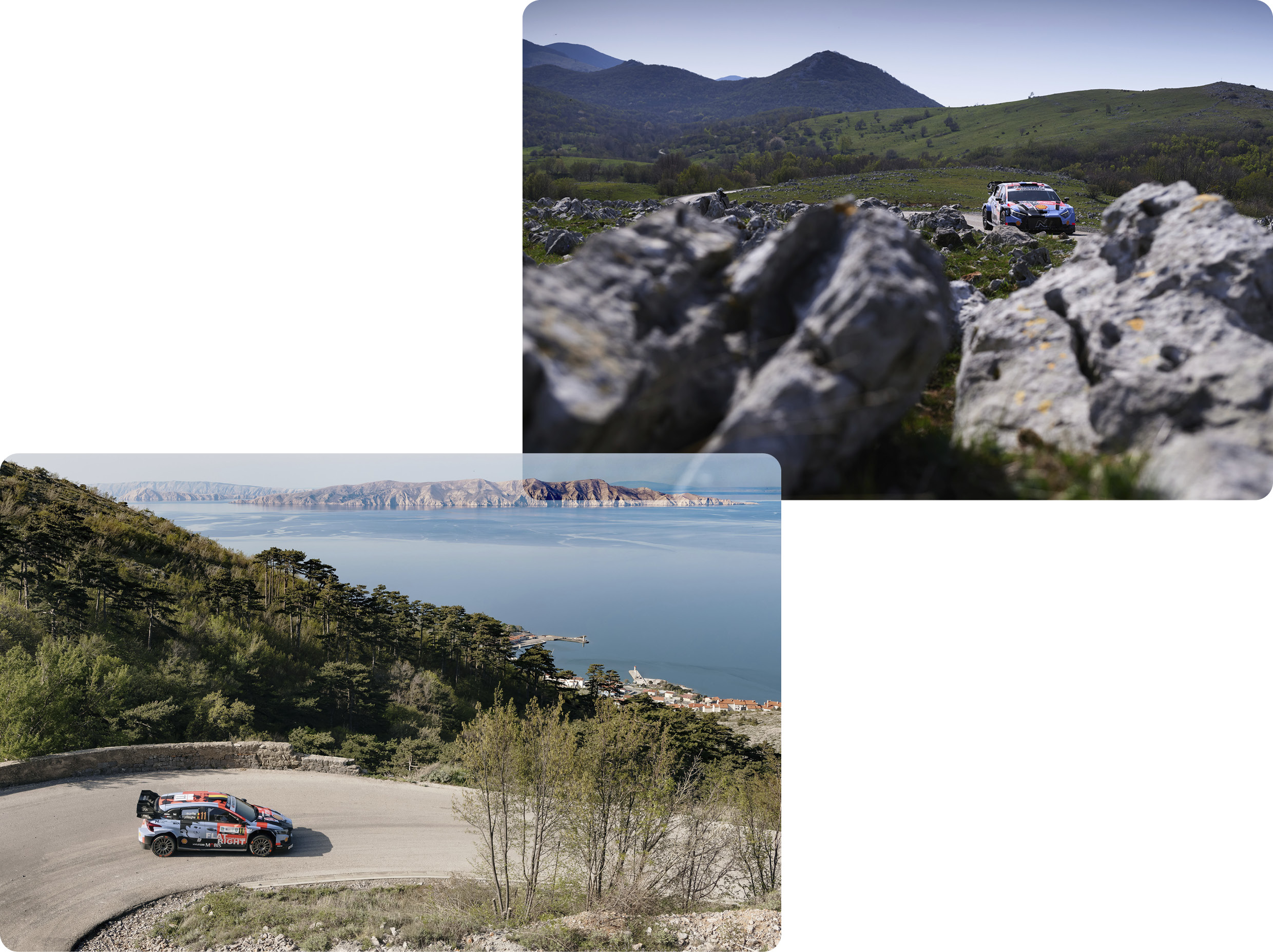
Sunday, April 12 was supposed to be a clean, controlled run to the finish. Instead, Croatia did what Croatia does—waited until the very end to flip the table. The final day repeated two mid-length Adriatic-adjacent stages in the 14–15 km range. SS17 through SS20 ad-ded up to 57.46 km, but with Super Sunday points and the Power Stage in play, it was more than enough road to turn certainty into heartbreak.
SS17 Bribir–Novi Vinodolski was a brand-new addition to Rally Croatia. At 14.1 km, it’s an open, fast stage that drops your sightline toward the sea—high-speed and high-confidence, with better grip than much of what the crews had battled earlier in the weekend.
Paddon looked relaxed—driving clean, but clearly enjoying himself. Video: WRC (http://www.wrc.com)
With their overall result already compromised by earlier retirements, Solberg and Evans went all-in for Super Sunday points. Solberg set the fastest time, with Evans right behind. At the front of the rally, the approach was the opposite: overall leader Neuville, along with Katsuta and Pajari—both sitting in strong podium positions—kept it tidy and focused on getting to the end without drama. Running fourth overall, Paddon was candid about his mindset: "We know what the goal is today, enjoying it though. We're trying a lot of things. We're using it as a test session as well," he said, sounding like a driver who knew the smartest move was to keep the car clean and the data flowing.
Fourmaux couldn’t find his pace notes—so co-driver Alexandre Coria ended up guiding him with a smartphone. Video: WRC (http://www.wrc.com)
SS18 Alan–Senj doubles as the Power Stage venue, finishing near the historic Nehaj Fortress. The s-cript stayed the same: Solberg fastest again, Evans second, and the overall top three staying well inside the margin. Neuville still held a 1:12 lead over Katsuta. After the stage, Neuville made it clear he was not playing hero: “There's no performance, I'm not pushing at all. Just trying to get through. Honestly, it's a big gift we can take home from here, so we have absolutely no reason to take any risk or try anything, because anyhow we wouldn't have the pace today, so we need to bring home a victory, it will be a big boost of motivation for myself, but also for every single team member.” Fourmaux had his own moment of chaos: he couldn’t locate his pace notes, and Coria ended up calling the road off a smartphone screen—one of those only in rallying scenes you can’t s-cript.
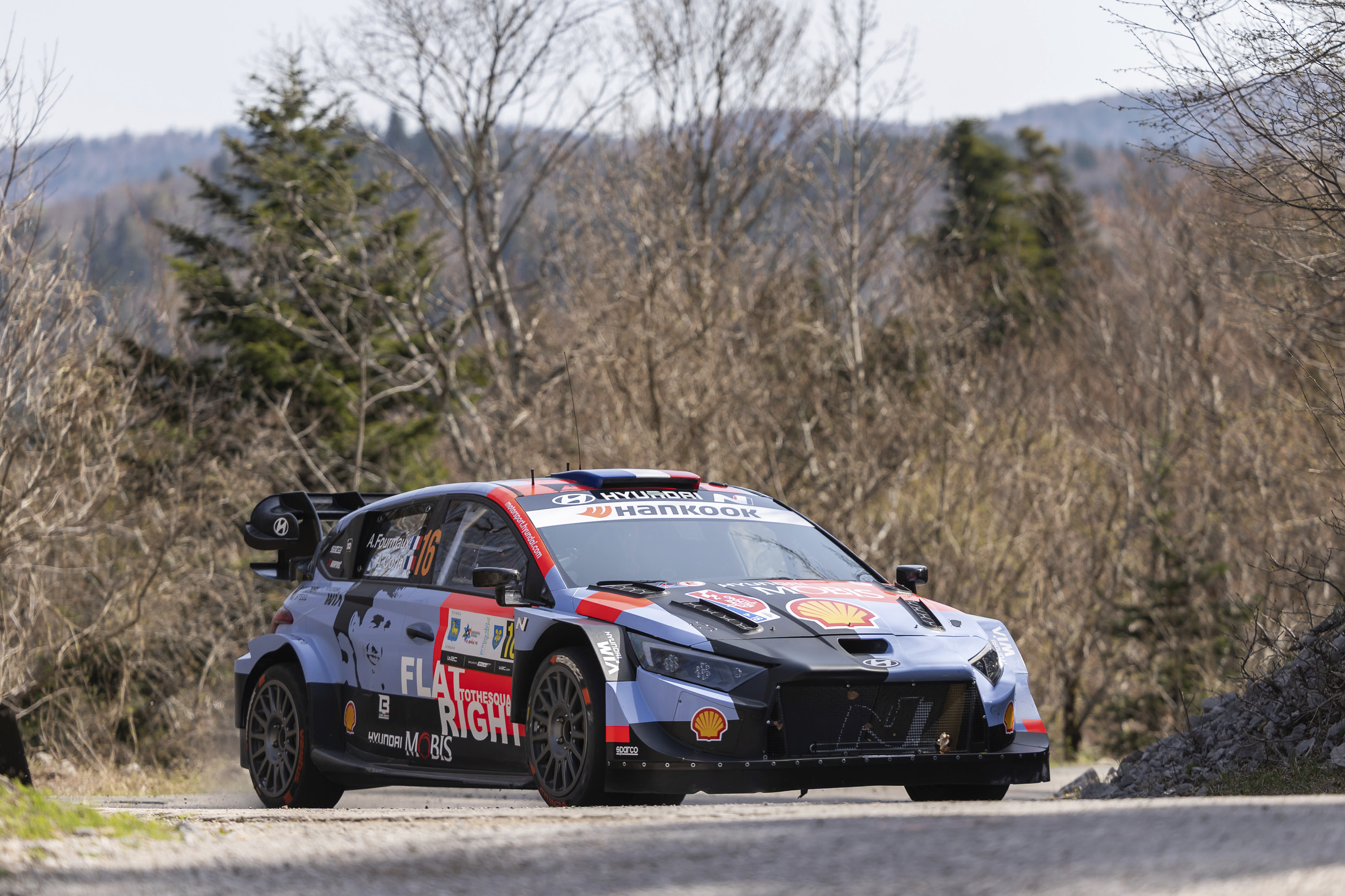
SS19 followed the same pattern. Neuville’s gap to Katsuta hovered around 1:15, while Katsuta’s margin over Pajari tightened to 20.9 seconds. Fourmaux had his notes back in hand and got away clean, but he ended up 1.4 seconds behind Armstrong in the Super Sunday classification, dropping to fourth on that points table. All that remained was one more run of Alan–Senj for SS20—the rally’s final stage and the Power Stage.
Neuville hit a concrete barrier hard, heavily damaging the car. Video: WRC (http://www.wrc.com)
At 1:15 p.m., the WRC2 cars rolled in first, followed by the Rally1 field led by Solberg. Then came the gut punch. Neuville—last to start—clipped the concrete barrier on the right and was spat off to the left. He managed to turn the car around and rejoin, but the damage to the right-front was severe, and the i20 N Rally1 couldn’t be driven at anything like full pace. The win that had looked locked sud-denly evaporated—leaving Neuville, the team, and fans stunned.
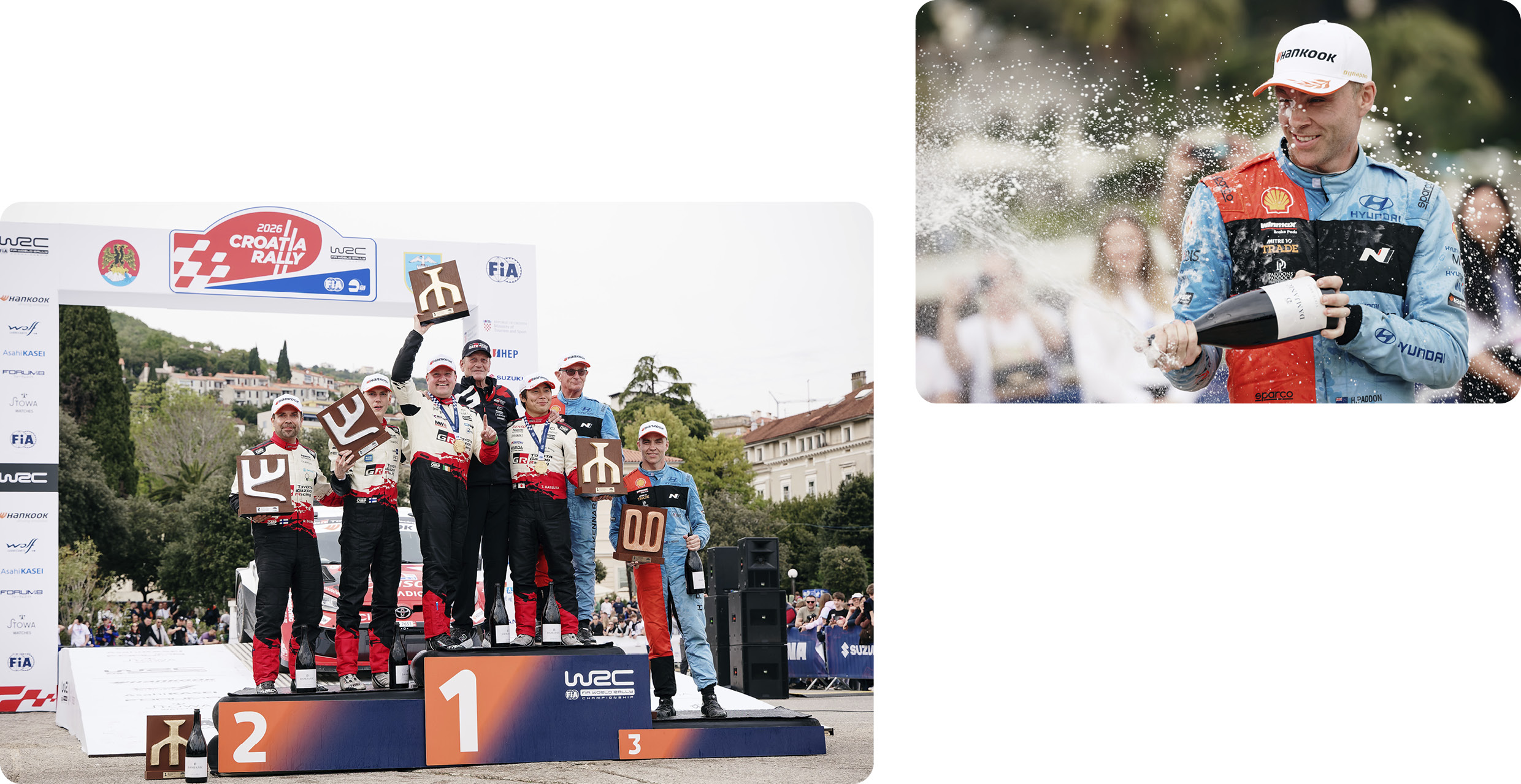
When the dust settled, Katsuta took the victory, with Pajari promoted to second. Paddon held on to claim the final step on the podium in third—his best result in eight years, since finishing second at the 2018 season finale in Australia. Fourmaux, chasing extra points, couldn’t fully commit late after a left-front puncture. In WRC2, Lancia’s Yohan Rossel took the win, with his brother Léo finishing second—an ultra-rare “family 1–2” result by WRC standards. The result also pushed Lancia into the overall top five for the first time since 1993—ending a 33-year wait.
Rally Croatia ended as an extreme survival run right to the final kilometer. Next up is another tarmac round in two weeks, this time on Spanish soil in the Canary Islands off northwest Africa. Rally Islas Canarias—new to the WRC calendar last year—celebrates its 50th anniversary in 2026 and will mark the milestone with a Super Special Stage inside Gran Canaria Stadium in Las Palmas. However, a storm-triggered landslide a month ago forced major revisions to Friday’s stages.
By Su-jin Lee
In 1991, Lee’s passion for cars led him to enthusiastically write letters to the newly launched Korean car magazine