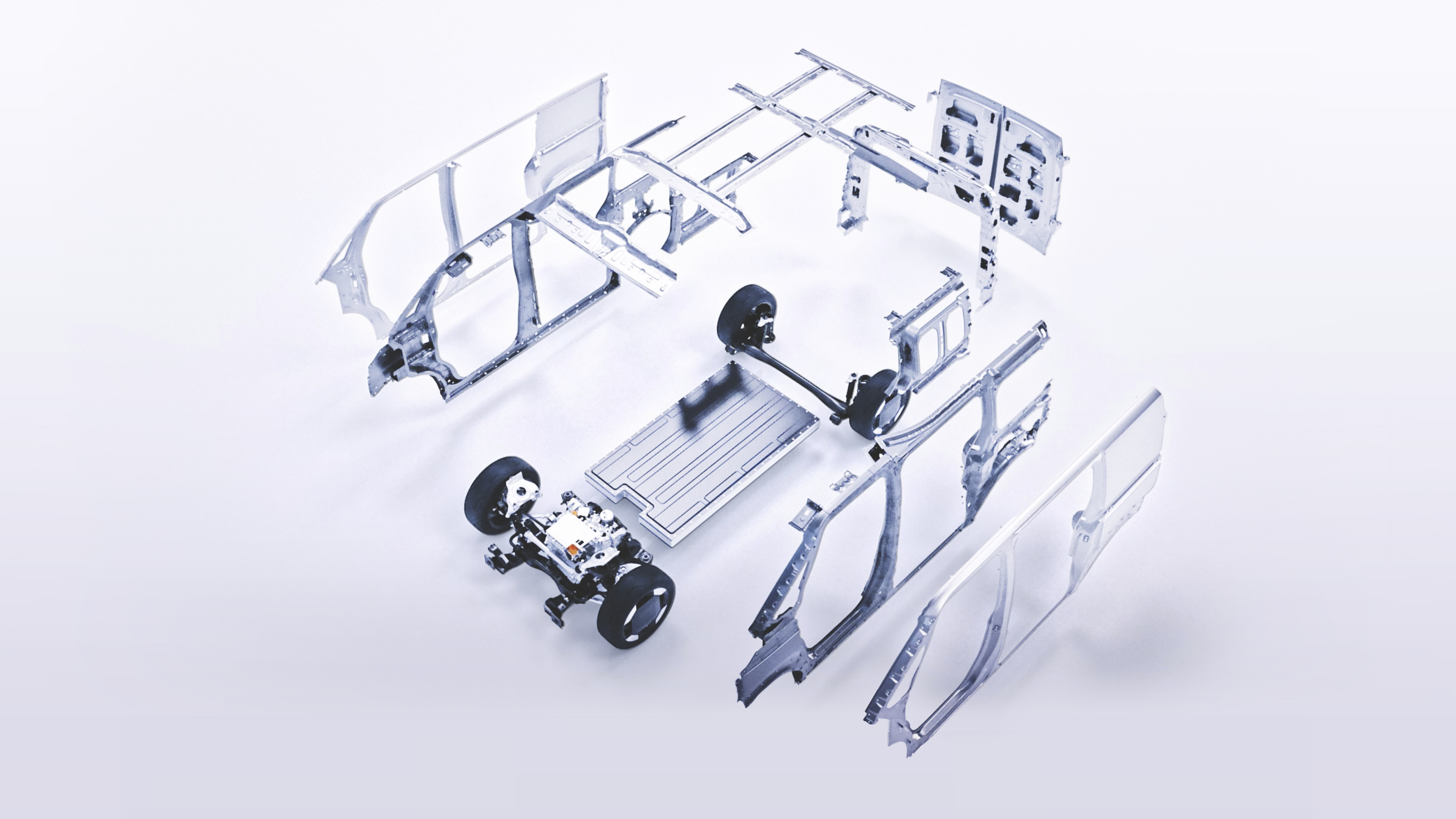
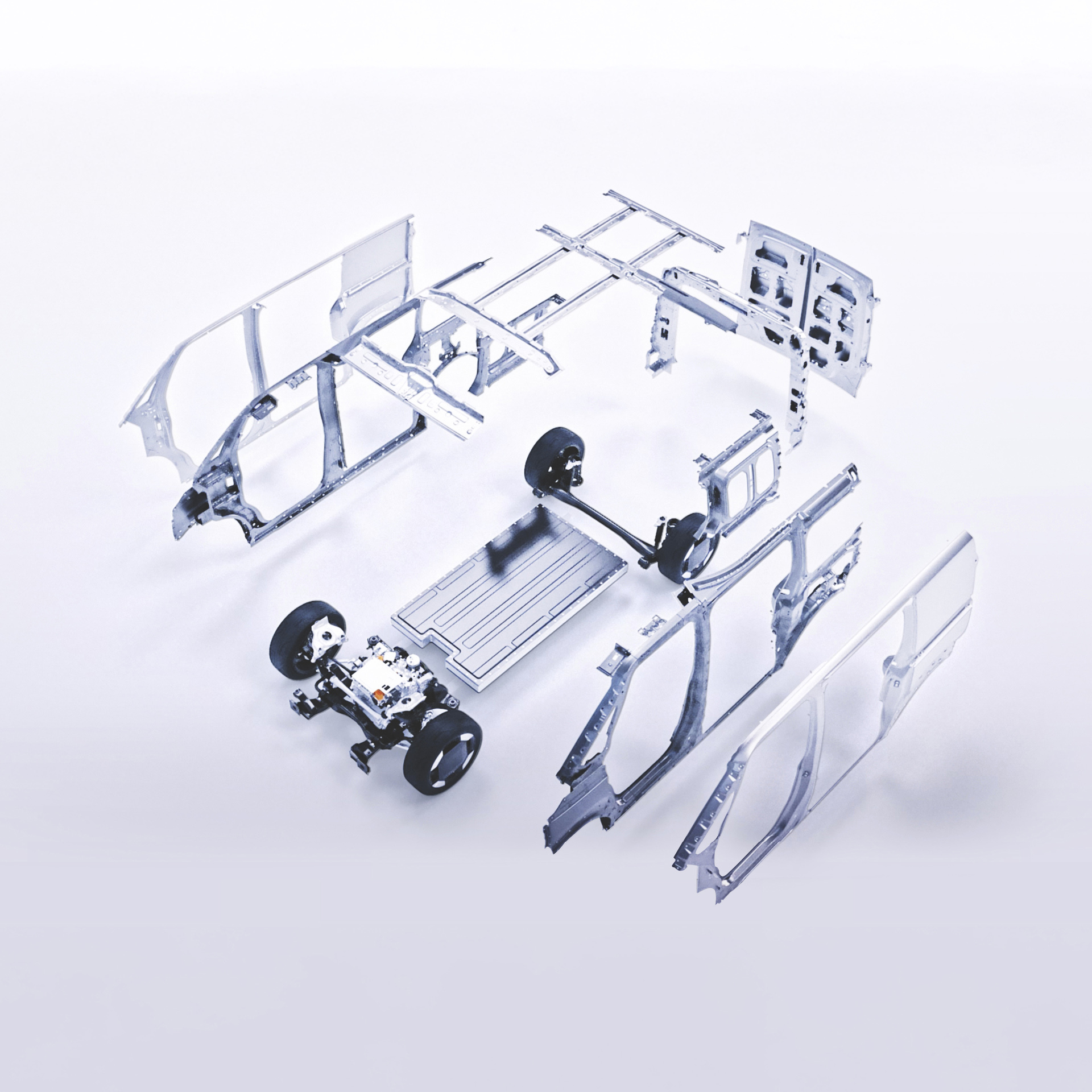
HMG introduced the Flexible Body System alongside Kia’s first dedicated PBV (Platform Beyond Vehicle), and it’s a genuine shift in how these vehicles are designed and built. Think of it as a puzzle-piece approach to the body-in-white: modular components mate to a standardized structure so multiple formats can be created efficiently. For a PBV lineup—where use cases can range from ride-hailing to logistics to specialized mobility—that kind of modularity is the difference between “limited choices” and “built for your business.”
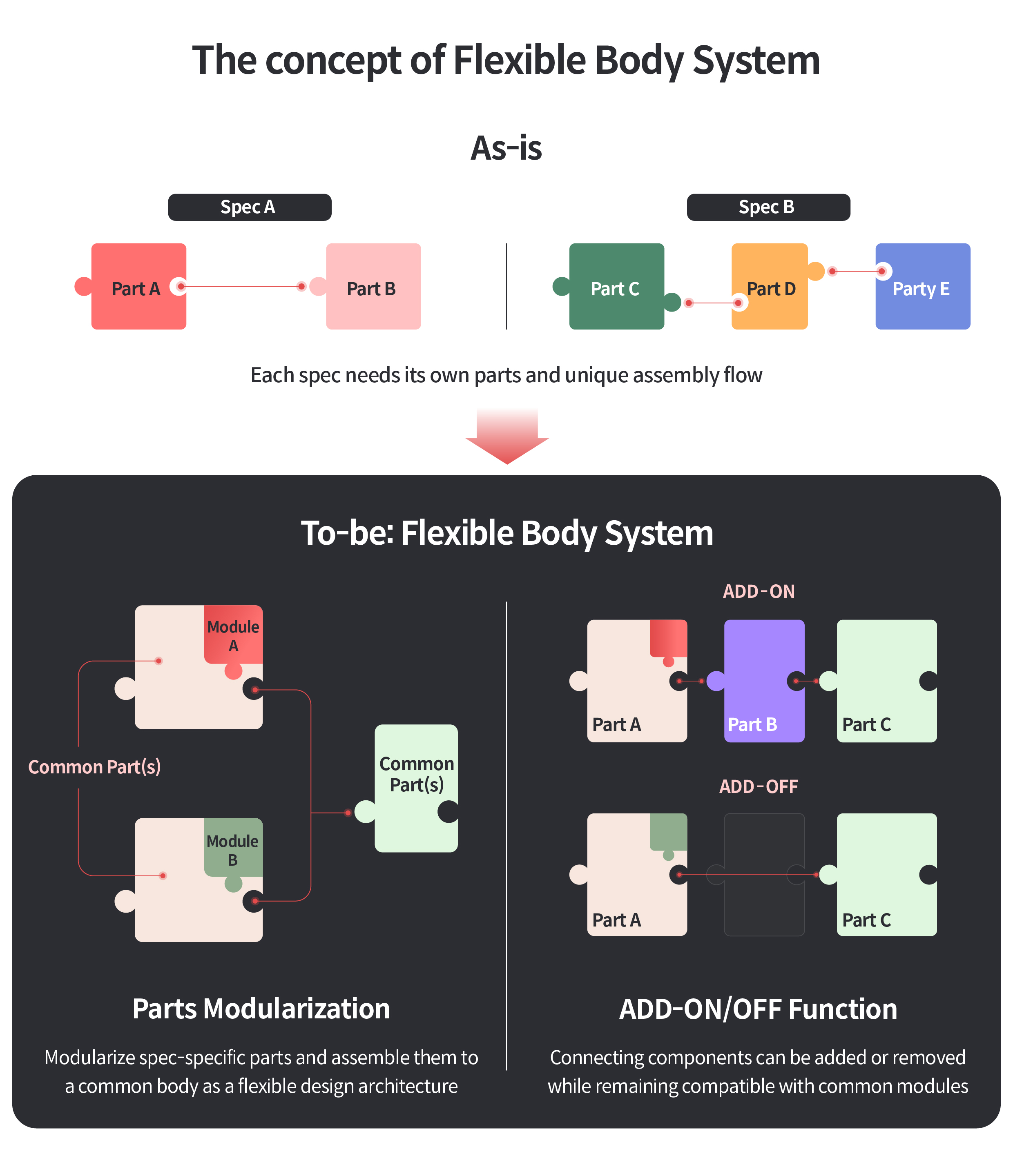
Because PBVs are meant to be truly versatile, customers need flexibility in the big variables: overall length, overall height, and the rear compartment (everything behind the driver). That’s where FBS comes in. At its core, it’s an engineering concept that lets HMG hit the required spec by assembling modular body structures and components—think LEGO blocks with a shared joining architecture, but executed at production scale.
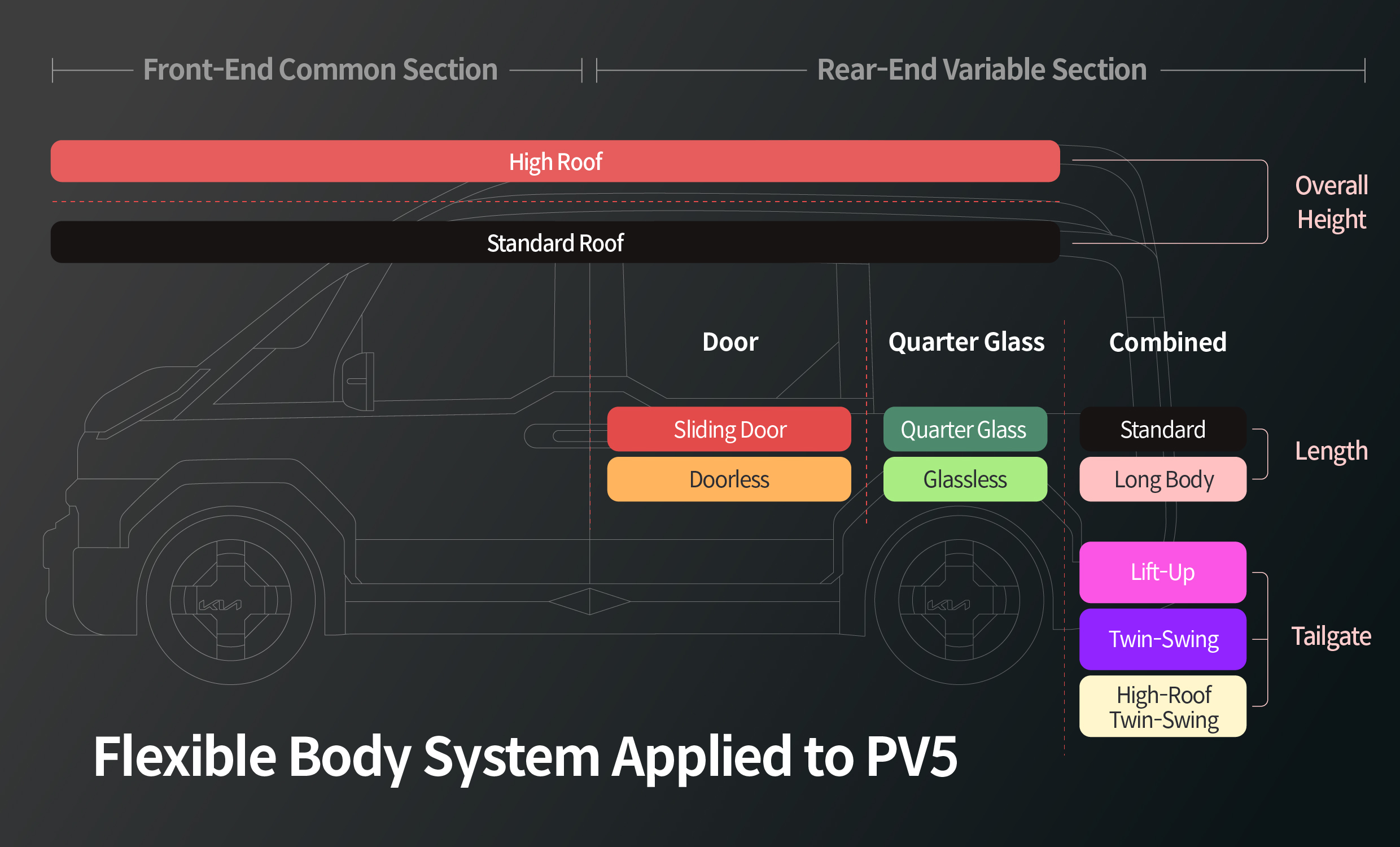
The newly revealed Flexible Body System keeps the front cabin—the driver’s environment—consistent, while applying a modular strategy to the rear of the vehicle so different body types can be combined. Customers can tailor the rear area for passenger or cargo duty depending on mission.
As shown in the concept, the modular “menu” includes:
- Roofs: standard, high-roof
- Doors: with or without sliding door
- Quarter glass: with or without glass
- Rear overhang: standard, long-body
- Tailgates: lift-up, twin-swing, high-roof twin-swing
For ride-hailing operators focused on passenger flow, sliding doors and quarter glass make entry/exit easier and improve the overall cabin experience. Delivery operators, on the other hand, can opt for a cargo-oriented high-roof configuration with a tall overall height and twin-swing tailgate to load bulky goods quickly. Cargo variants can also delete side doors and quarter glass—simplifying the body and helping reduce maintenance and repair costs. The Kia PV5, the first HMG model to apply FBS, will be mass-produced in seven body types by combining these modules.
So what’s happening under the skin? First, FBS modularizes the outer body panels so the vehicle can flex in overall length and height without requiring entirely new tooling for every variant. Traditionally, a side outer panel spanning the first through third row is produced as one large piece and bonded to the inner skeletal structure. Under that legacy approach, producing all seven PV5 body types would typically require seven separate panel dies. With FBS pushing modularity further, the PV5 can get by with just two side outers, with variable sections handled through modular inserts.
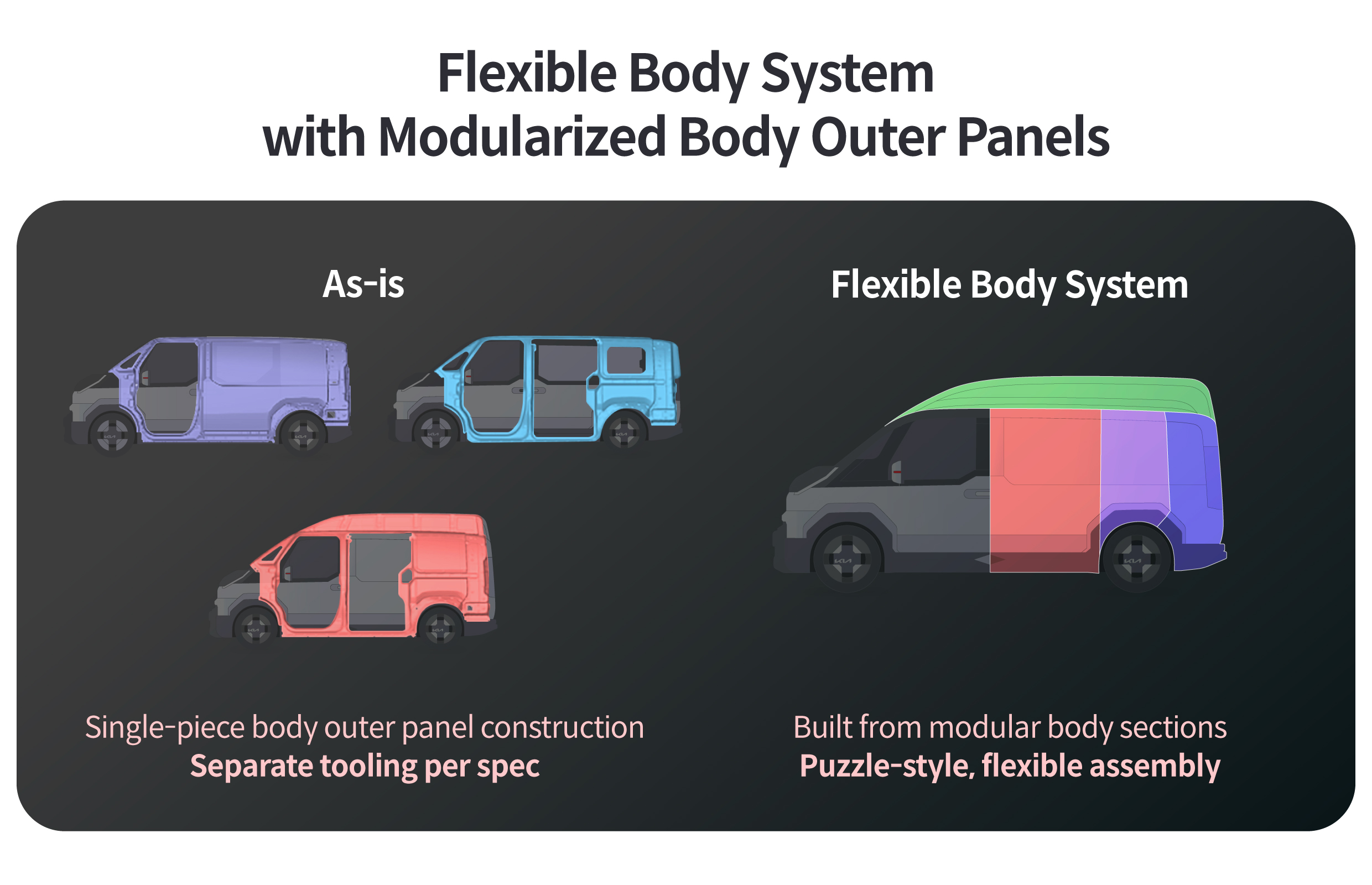
Picture two vehicles built side-by-side: a passenger long-body with a sliding door for rear-seat access, and a short-body cargo model with no rear door. Traditionally, those differences would demand separate dies—long vs. short, swing vs. sliding, and so on. With FBS, modularization dramatically reduces the need for new dies. You build tooling only for the sections that change, then mate them to a common body structure.
The roof follows the same logic. A master roof panel is developed for all specs, and add-on panels are connected depending on roof type. That’s a particularly smart fit for the PBV business model, where many variants and lower volumes must still support a wide range of customer configurations.
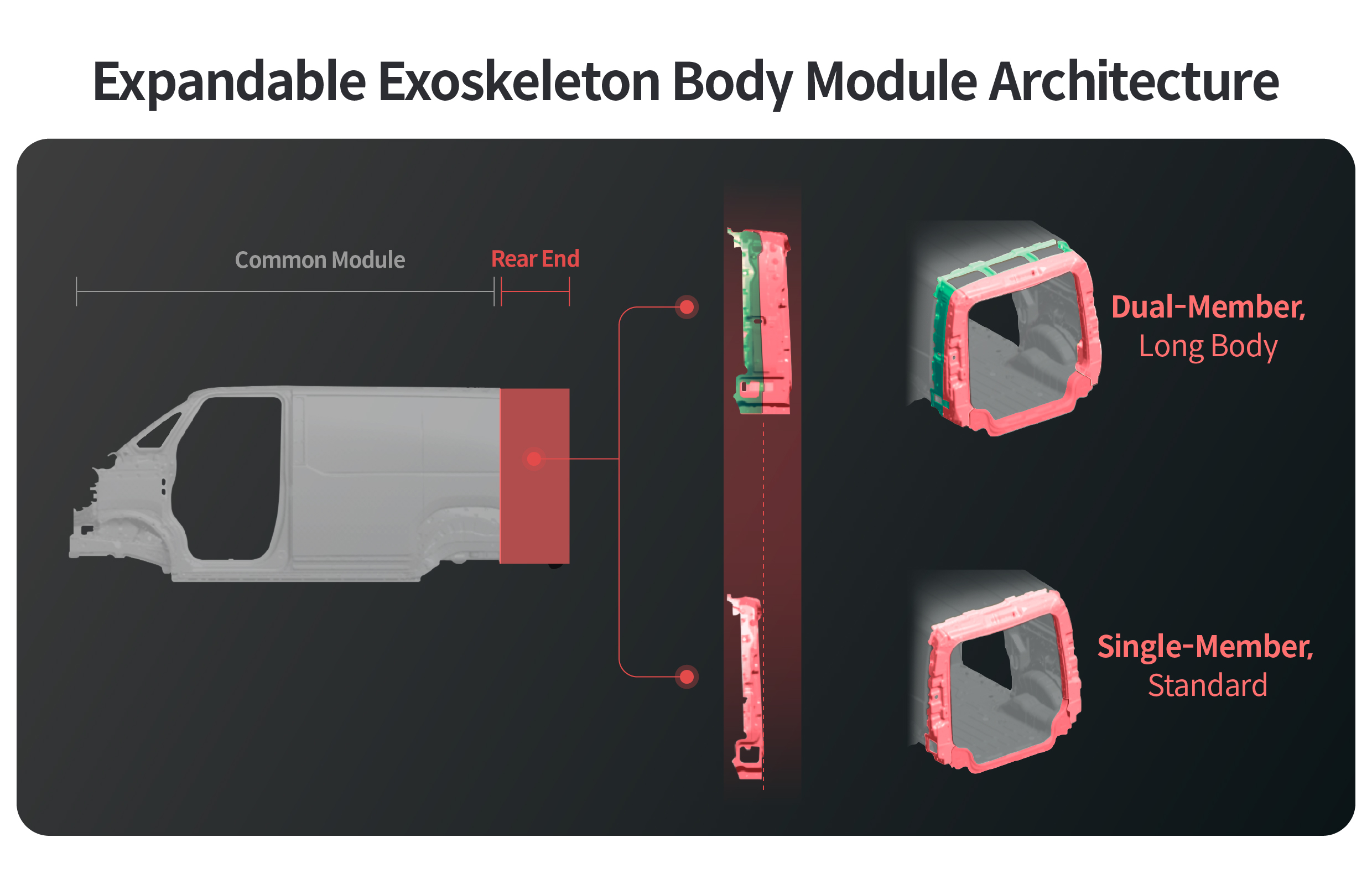
At the rear, FBS applies an exoskeletal structure with arched members to secure body stiffness. Because the outer panels contribute structurally in an exoskeleton layout, the body can better resist crash loads—and additional support members can be reduced, which helps lower weight and improve manufacturing efficiency. Long-body models add a second arched member to maintain rigidity over the extended length. Bottom line: standardize the modules, swap only the parts tied to spec changes, and you can build multiple configurations without redesigning the whole vehicle.
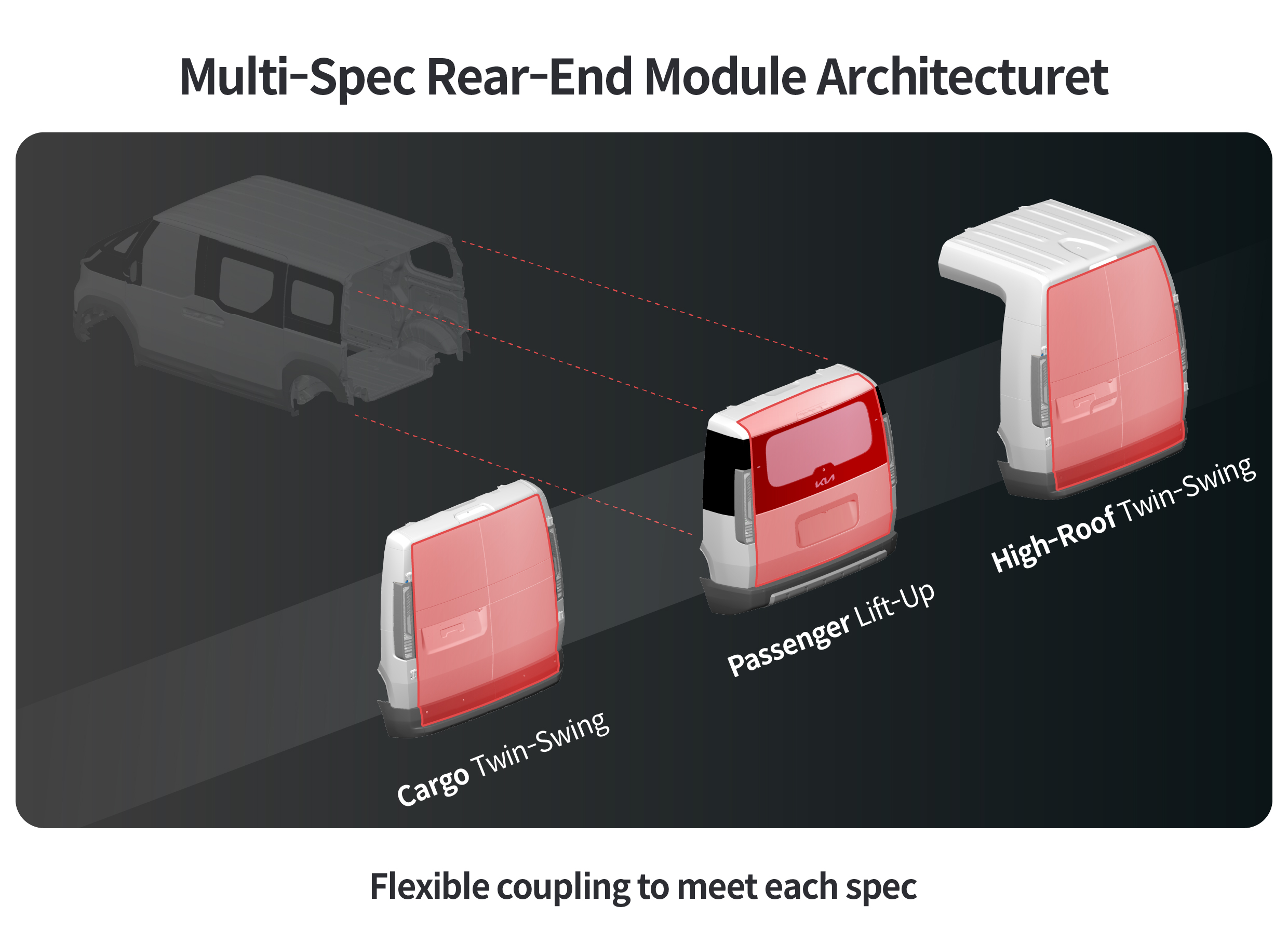
Hyundai Motor Group also developed a multi-spec rear-end structure to respond quickly to different PBV body requirements. Here, “rear end” refers to the rear quarters and the structure around the cargo/trunk opening. The PV5 with FBS will offer three rear-end specs, each with different tailgate designs depending on vehicle use.
In the past, changing tailgate type often meant reworking the entire body structure—limiting you to essentially one configuration. With PV5 engineered for delivery, ride-hailing, and other services, the multi-spec rear-end structure allows flexible production of the tailgate that best fits each mission. Customers get to choose a PBV with the rear opening strategy that actually matches how they operate.
Because PBVs live a hard-working life—constant loading and unloading—the rear body is also more prone to damage. That’s why HMG adopted a rear-end garnish designed for easy replacement. Instead of expensive bodywork, operators can swap the affected garnish section, lowering repair cost and downtime in real-world use.
PBVs don’t just carry people. They carry jobs. That means heavy cargo tied down, partitions installed, and cabins reconfigured—often under harsher duty cycles than passenger cars. As a result, the upper body structure needs to be robust, not just the underbody. If it isn’t, durability suffers—and vibrations can turn into noise that chips away at comfort.
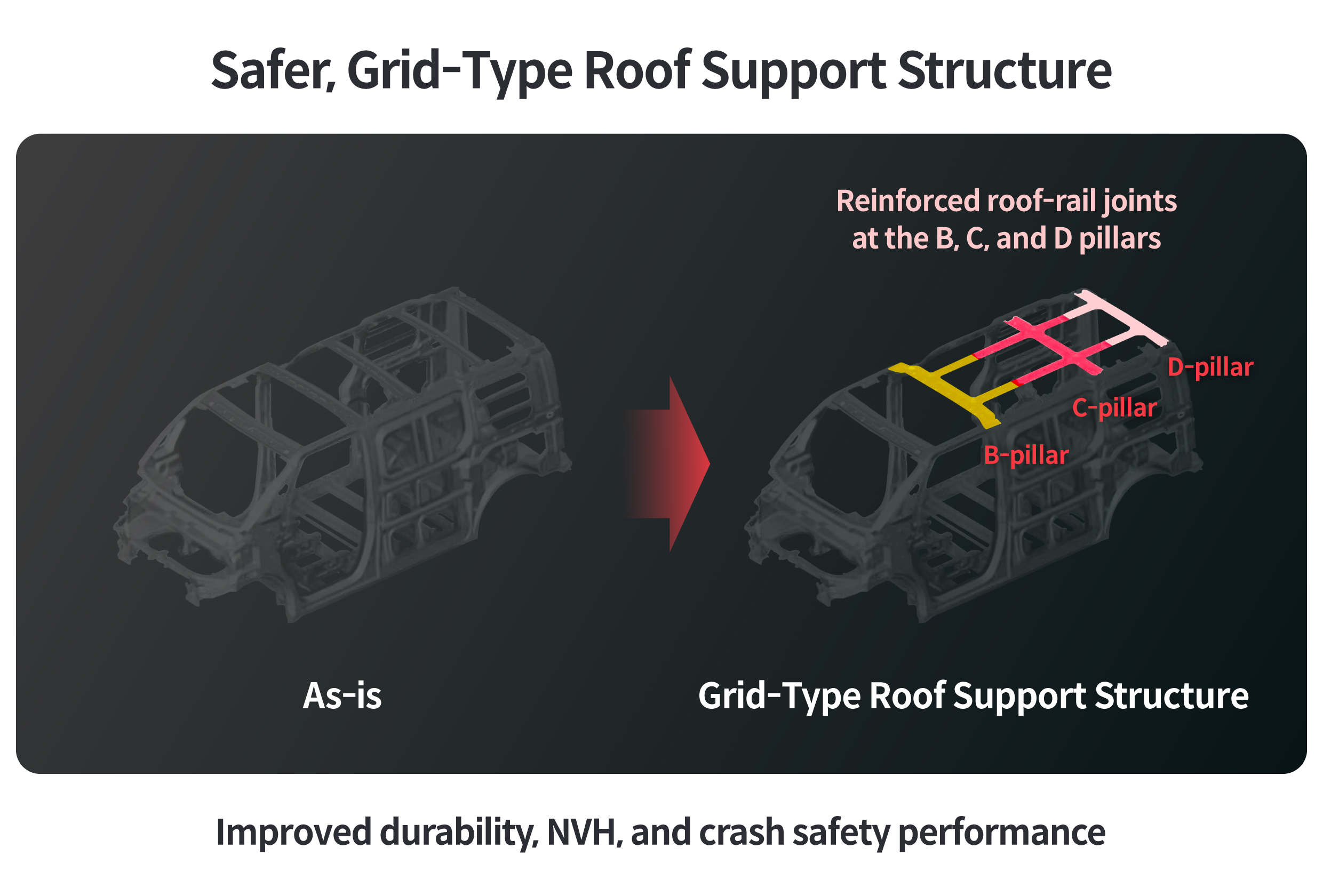
To address that, the Flexible Body System includes targeted structural reinforcement across the roof, sides, and joining architecture. Traditionally, roof structures were primarily tuned around side rigidity. PBVs add a grid-style structure to increase longitudinal (fore-aft) stiffness, and the joining areas around the B through D pillars are reinforced. The goal is a body that adapts to many use cases while keeping structural integrity—and safety performance—front and center.
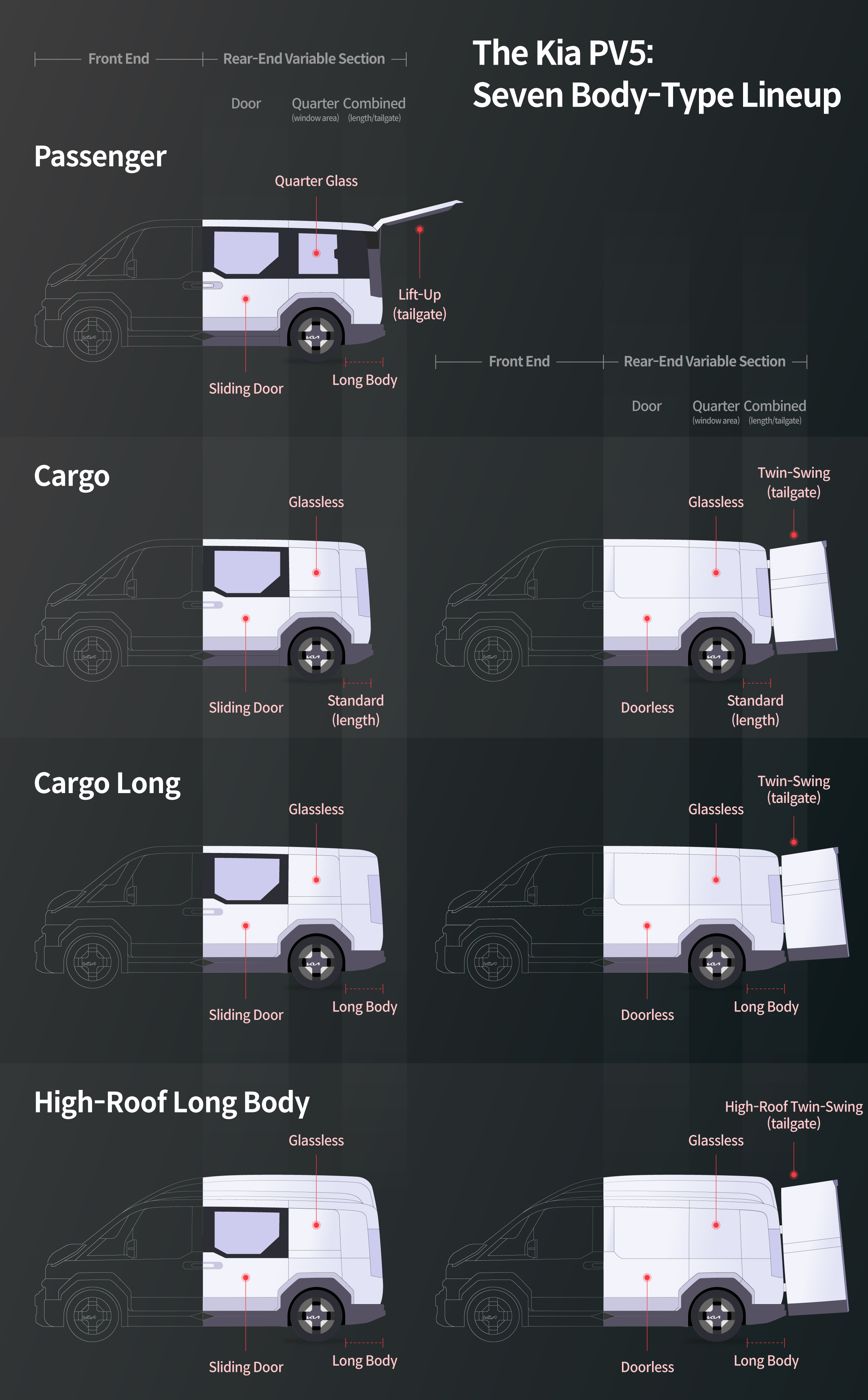
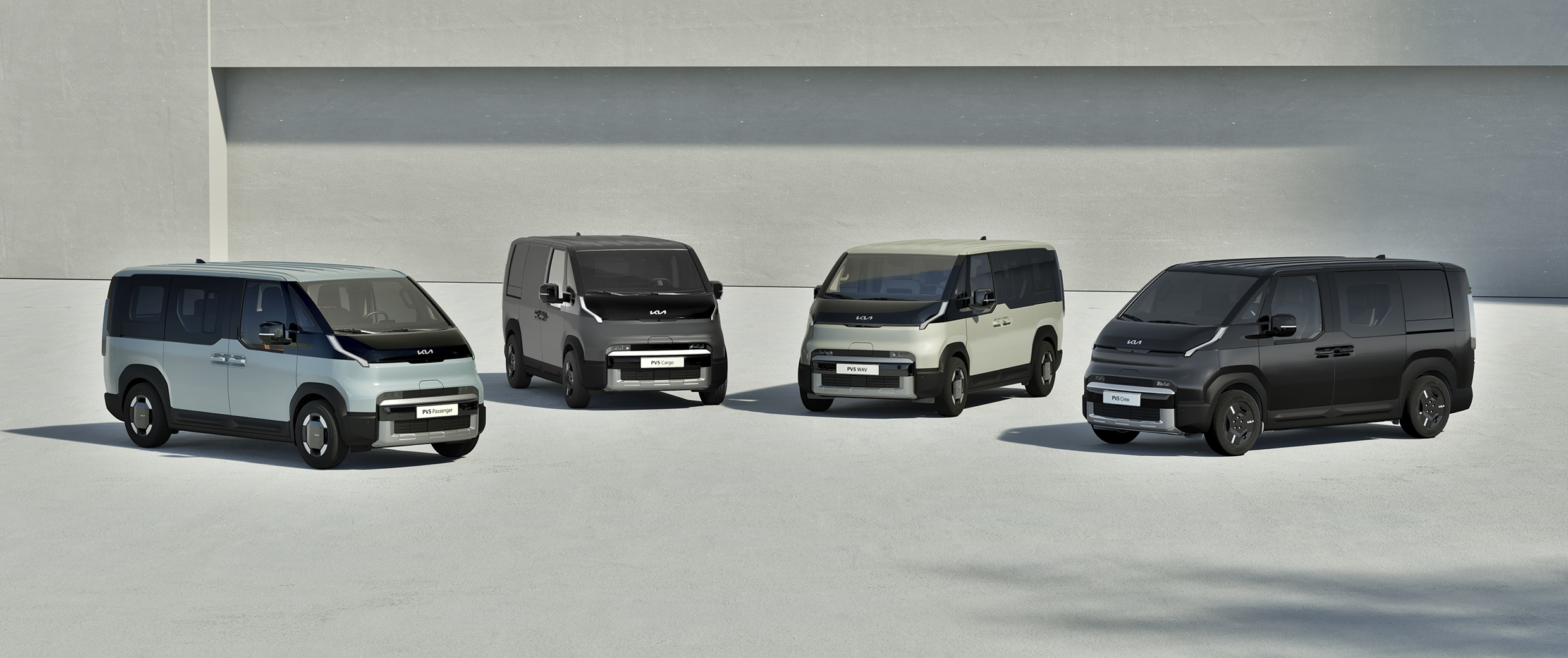
The Flexible Body System was designed to deliver PBVs in the many forms business customers actually demand. Even with PV5 alone, HMG plans seven body specs: a Passenger model optimized for ride-hailing, a PV5 WAV (Wheelchair Accessible Vehicle), and multiple Cargo variants with different payload capacities aimed at logistics and delivery. This is mobility that goes beyond simply moving from A to B—it’s designed around real operating missions.
The benefits also show up after purchase. Durability suited to harsh work environments and modular parts that make field repairs simpler—often replacing only the affected section—reduce the maintenance burden in ways fleet customers can measure. Given that business vehicles rack up more miles and more cycles than passenger cars, PBVs are especially sensitive to safety and durability—and FBS is engineered with that reality in mind.
From the manufacturer’s perspective, FBS is also a smart production play: it boosts development and manufacturing efficiency while responding quickly to a broad range of customer requirements. It lays the technical foundation for PBV-specialized mobility—meeting diverse missions while trimming development and production costs.
Looking ahead, FBS may grow beyond body modules. Autonomous vehicles and robotaxis will require a wide array of sensors—cameras, radar, lidar, and more—and a modular, swappable approach to sensors is an obvious next step. As more PBV types arrive, the value of the Flexible Body System is positioned to rise right alongside them.