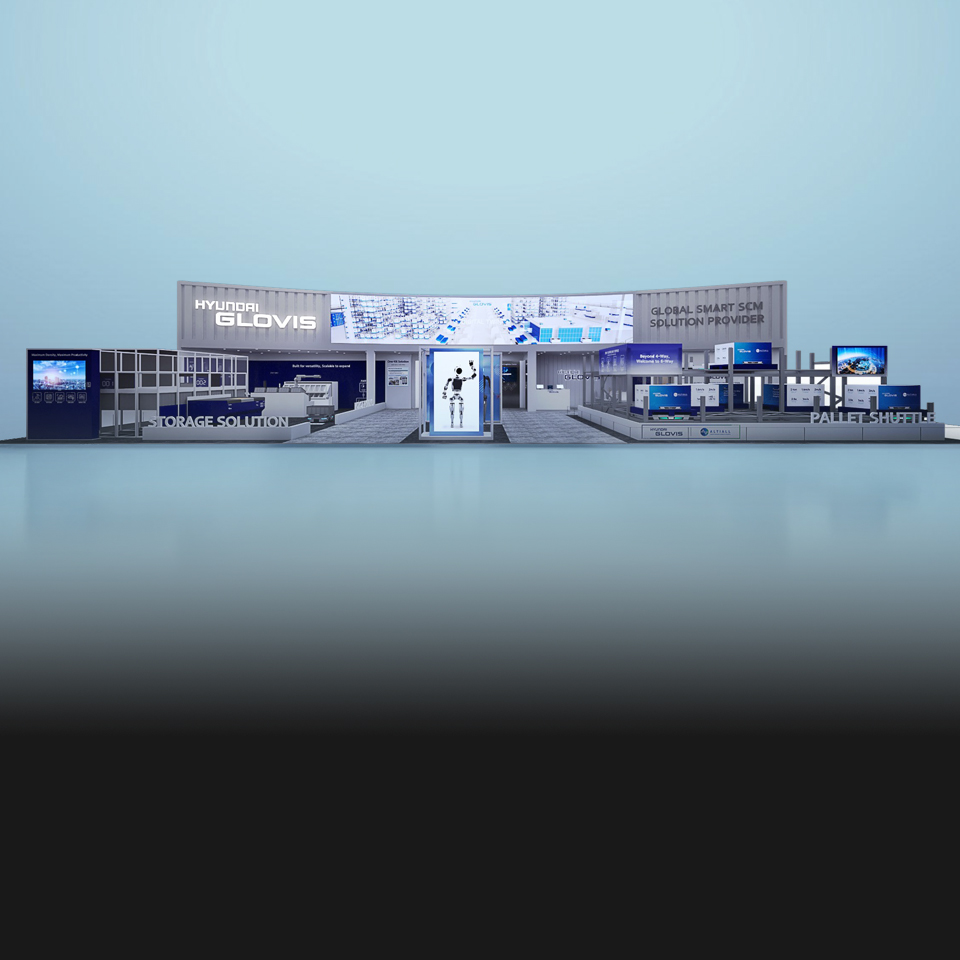
The ‘Smart Factory + Automation World 2026 (AW 2026),’ held at COEX in Seoul last March, showcased the latest production technologies and automation solutions from leading enterprises in manufacturing AX (AI Transformation). While manufacturing processes remained a central theme, logistics drew particularly significant interest, reflecting a shift in which manufacturing competitiveness is increasingly defined not only by the performance of individual processes, but by the operational capability to integrate production and logistics into a single operating flow.
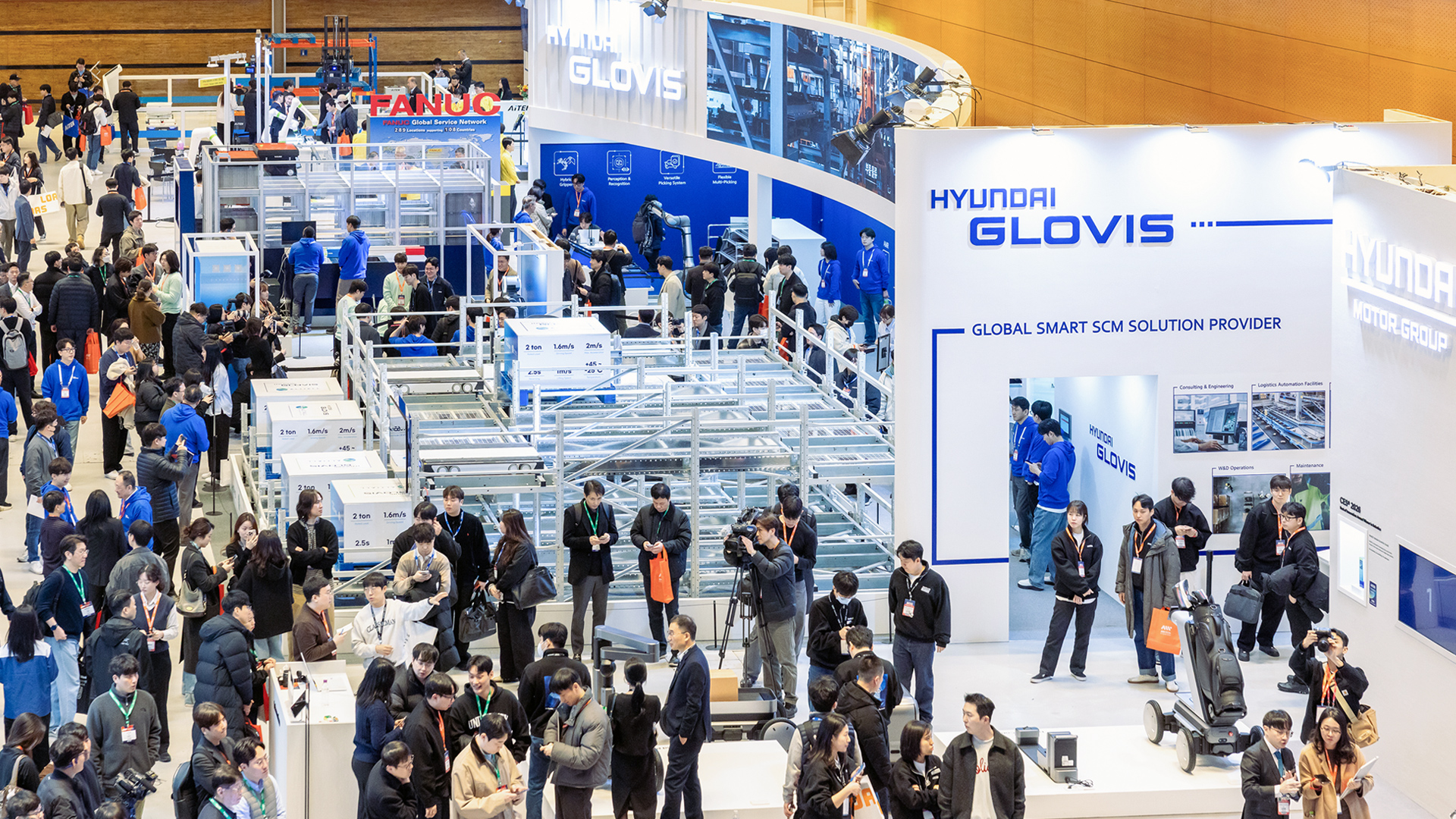
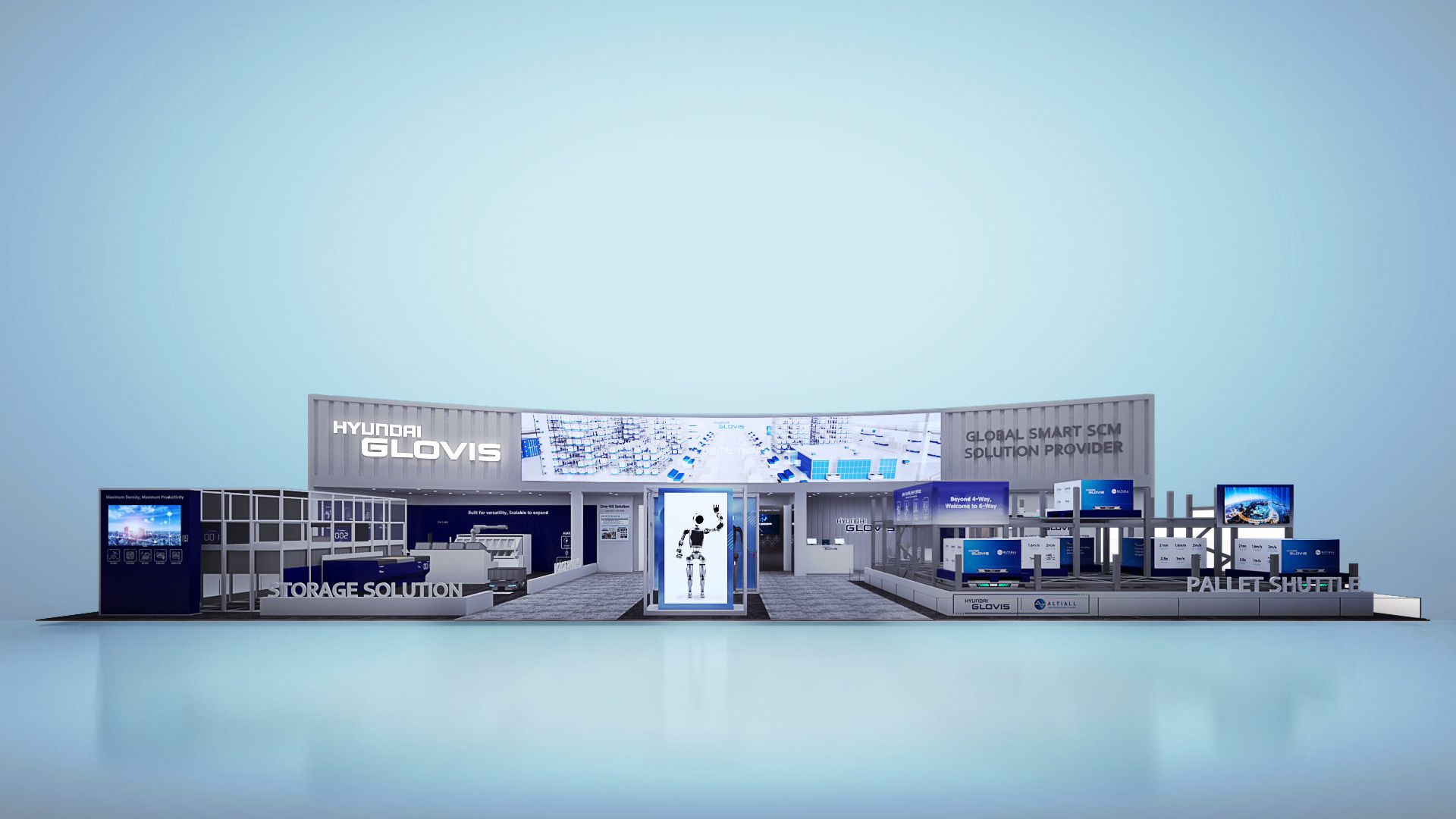
At the exhibition’s “Smart Logistics Special Pavilion,” Hyundai glovis presented a booth that recreated the full logistics cycle—from inbound receiving to storage and outbound shipping—as one integrated operation. The booth focused on how the systems are connected and coordinated across the site, rather than on the specifications of individual equipment.
This shift reflects the realities of today’s logistics environment. Logistics automation has steadily advanced since the 1980s, following the adoption of computer-based warehouse management systems (WMS). In recent years, global supply chains have become more volatile amid geopolitical uncertainty, demand fluctuations and climate-related disruptions. At the same time, the growth of e-commerce has increased the need to handle a wider range of small-batch orders. In this environment, improving the efficiency of individual steps—such as storage, transfer and picking—alone is not sufficient to raise overall productivity.
Many logistics centers in Korea and abroad already operate Automated Guided Vehicles (AGVs), Autonomous Mobile Robots (AMRs) and Automated Warehouses. Yet productivity and profitability do not always improve as expected. In many cases, the constraint is not equipment performance, but the fact that final decisions—such as responding to changing volumes or managing handoff zones between systems—still depend on people. While a manager assesses the conditions and issues instructions, operations can slow or pause. These delays can lead to additional staffing needs or expedited transport. The goal of logistics automation is not to add equipment, but to build a structure where the system can judge and execute autonomously even in variable operating environments.
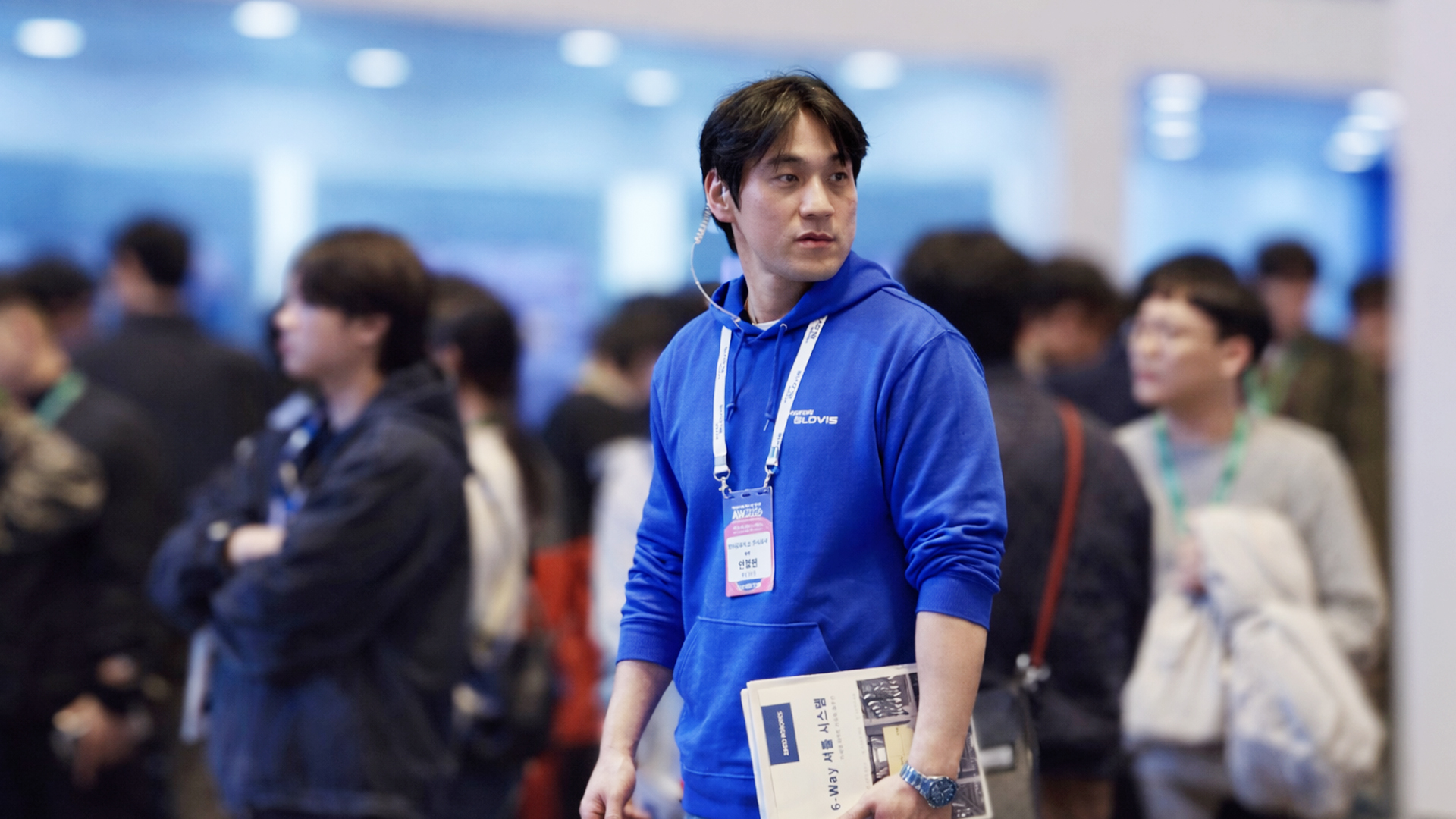
Ahn Jeonghun, Team Leader of Future Logistics Planning Team at Hyundai glovis and a key contributor to the AW 2026 exhibition planning, explains the shift: “As AI plays a larger role in logistics, technology is expanding beyond analysis and judgment to connect directly with on-site execution.” While traditional automation focused on data-driven planning and task support, Physical AI enables ‘intelligent execution’ that responds to on-site changes in real time through the integrated operation of robots, equipment and control systems.
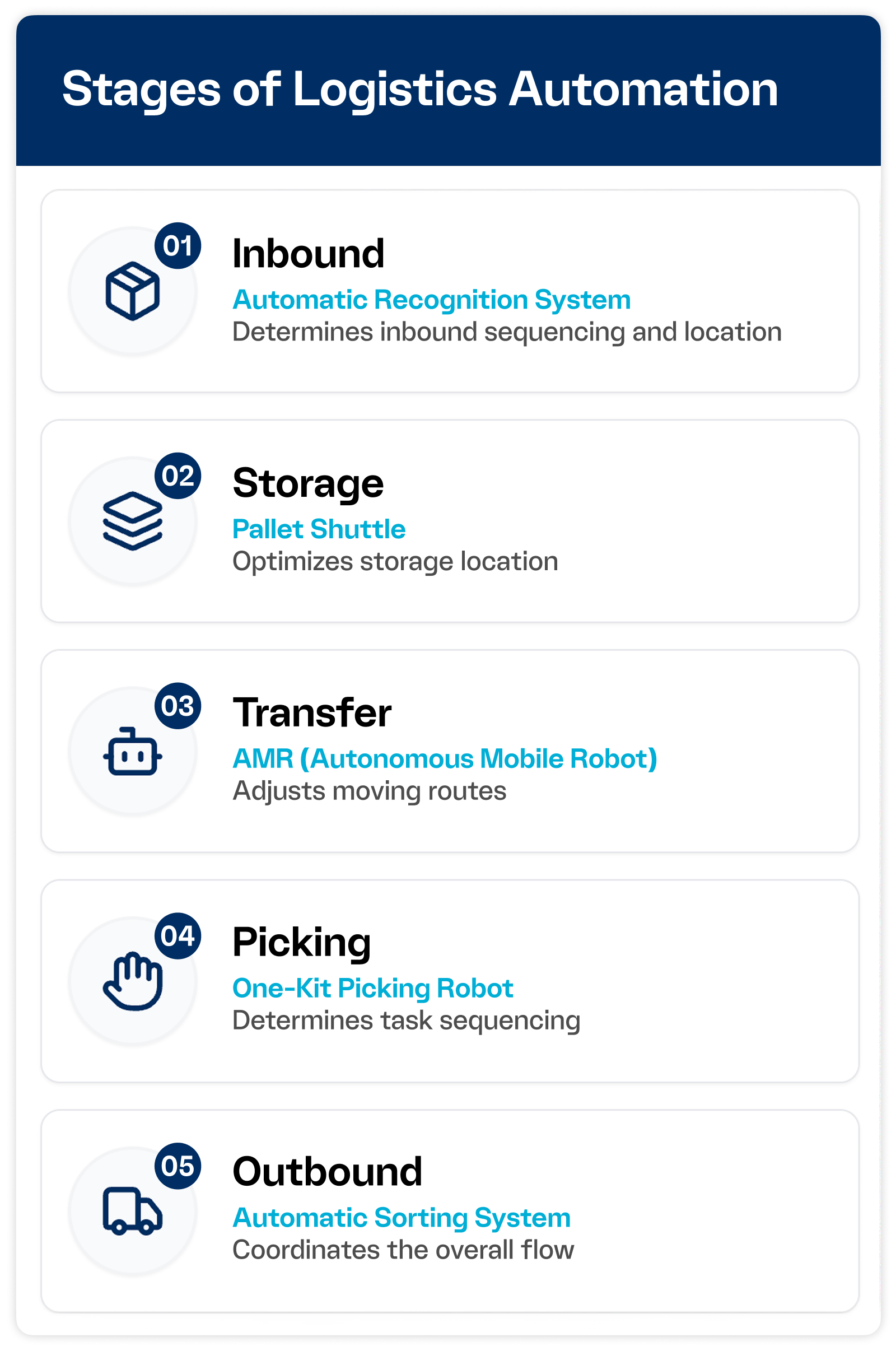
At AW 2026, Hyundai glovis presented its ‘End-to-End Logistics Automation through Physical AI’. The concept connects the entire process—Inbound, Storage, Transfer, Picking and Outbound—within a single logic and control framework. When parts arrive, a Pallet Shuttle automatically stores them in a high-density storage system. At the outbound stage, AMRs transport them to the work area. Then, a One-Kit Picking Robot accurately selects parts, assembles them into work units, and connects them to shipping and downstream processes. Each equipment operates as part of one coordinated flow. AI does not stop at recommending actions; it enables real-time execution through the equipment and robot movements, reducing bottlenecks and idle time. This is why Hyundai glovis emphasized ‘connected operations’ over the performance of individual equipment at the exhibition.
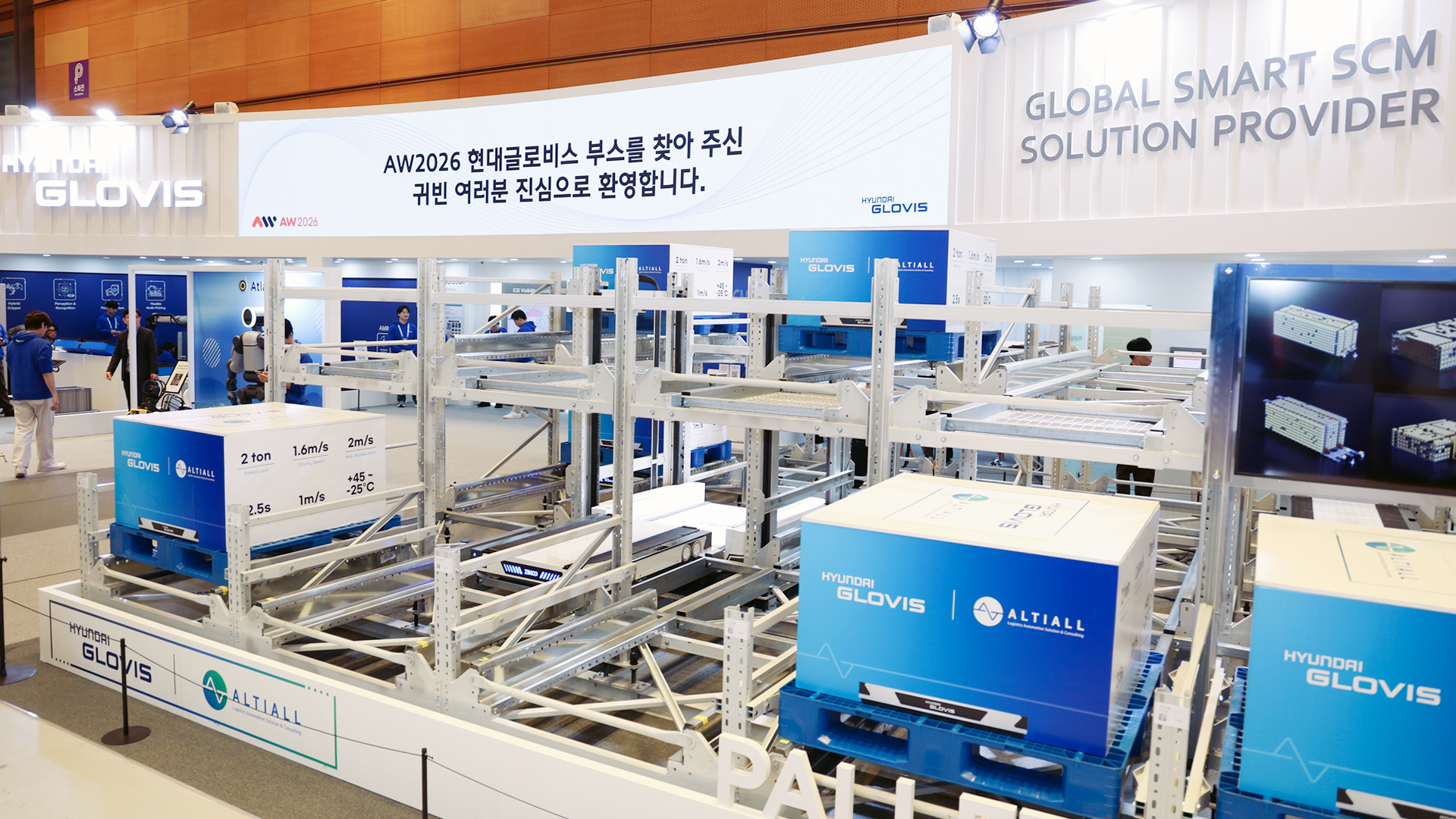
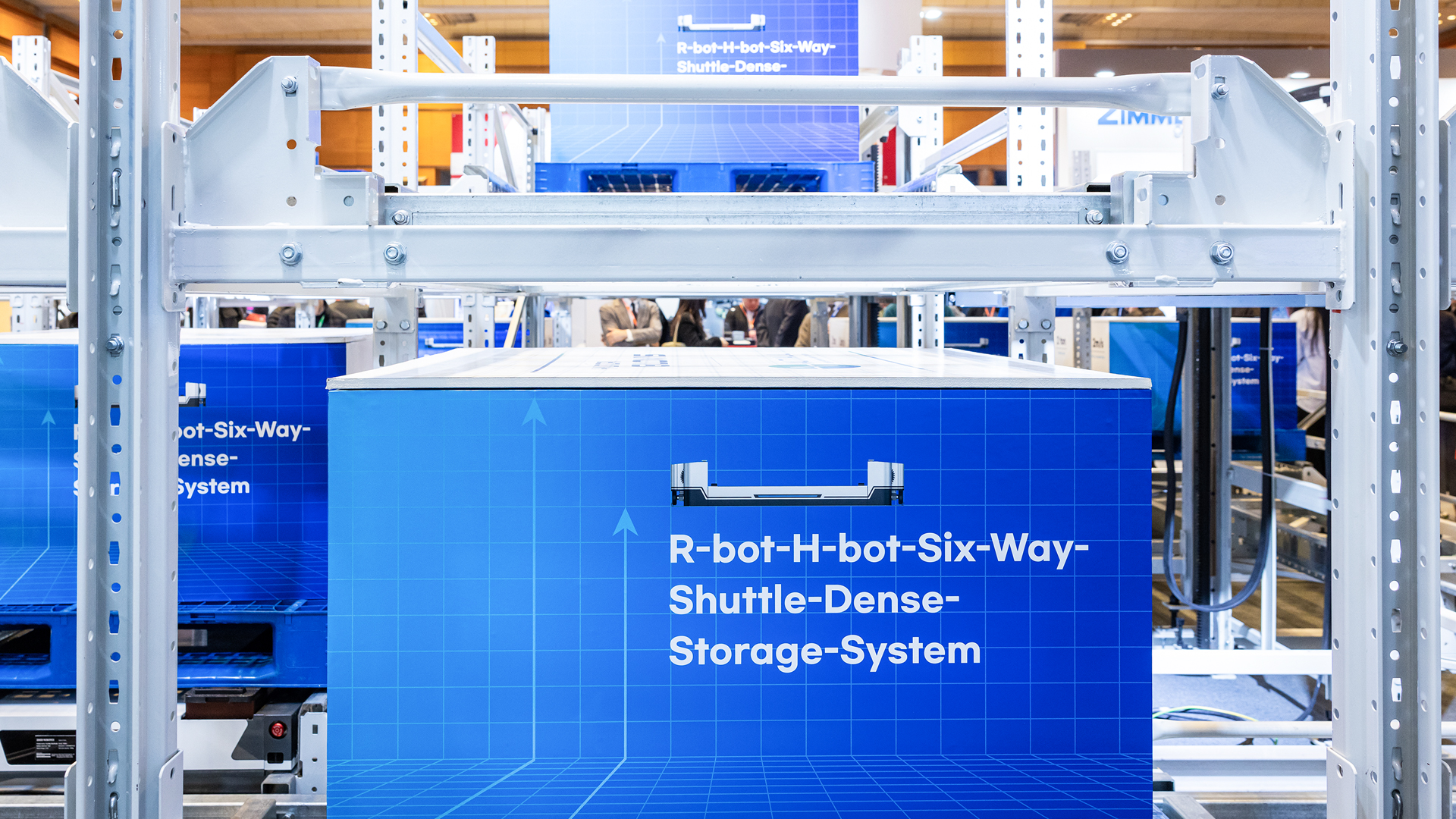
A key equipment in the storage stage is the 6-Way Pallet Shuttle. It automatically moves palletized goods along rails to perform storage and retrieval. Unlike conventional workflows in which workers move goods using forklifts, the shuttle travels within racks to load and unload them at designated locations.
The 6-Way Pallet Shuttle supports left-right, forward-backward and vertical movements, enabling three-dimensional use of rack space. This increases storage density and throughput within the same footprint. While the earlier 4-Way Pallet Shuttle focused on planar movements, the 6-Way design improves overall space utilization for high-density storage environments.
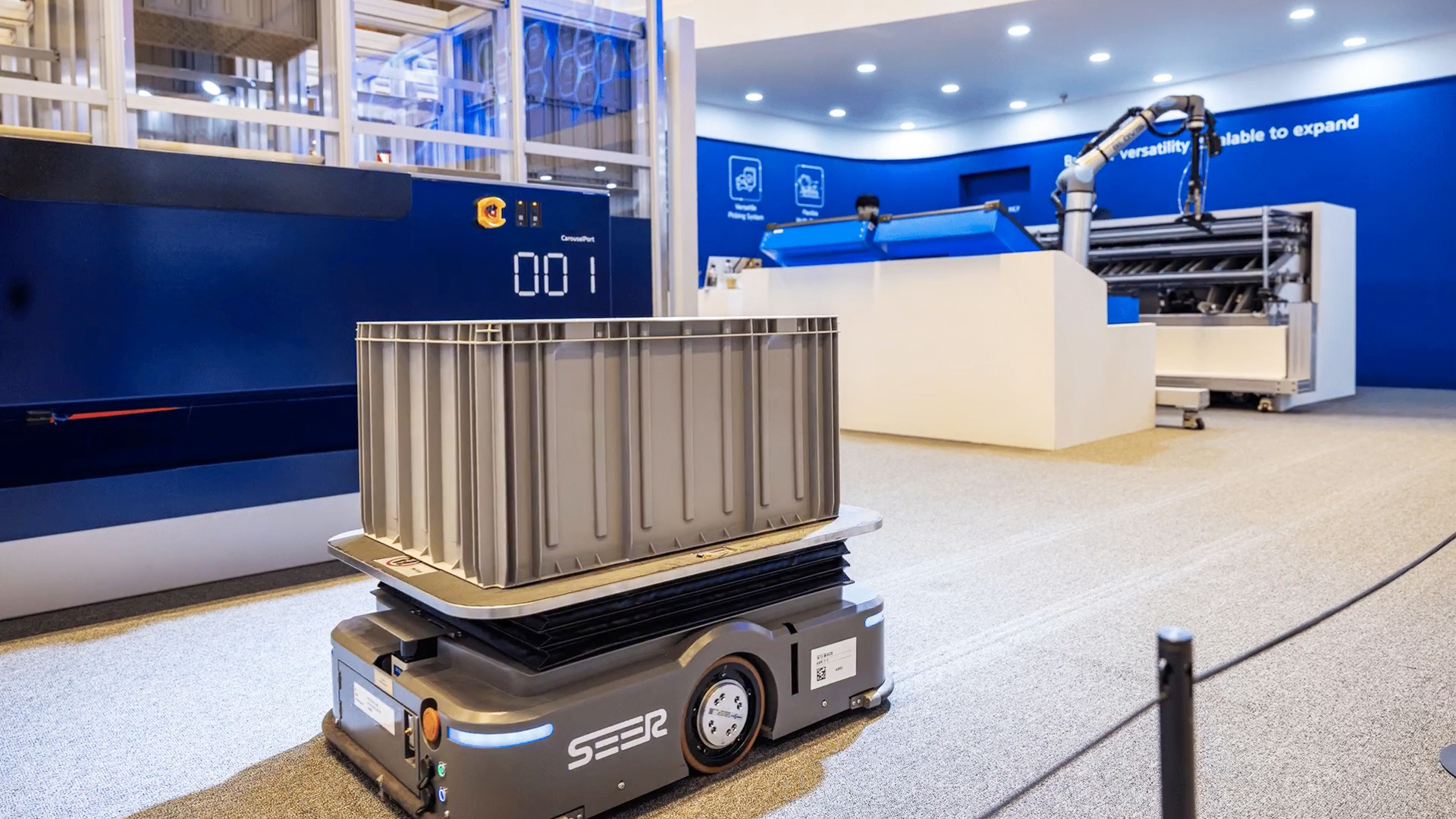
In the transfer stage, AMRs autonomously calculate routes based on surrounding conditions without fixed rails or predefined paths. When multiple units operate at the same time, they can adjust their routes dynamically. This supports flexible responses to changes in volume or site conditions. By connecting movement between systems without human intervention, AMRs also reduce wait time between processes and help maintain a steady operating pace.
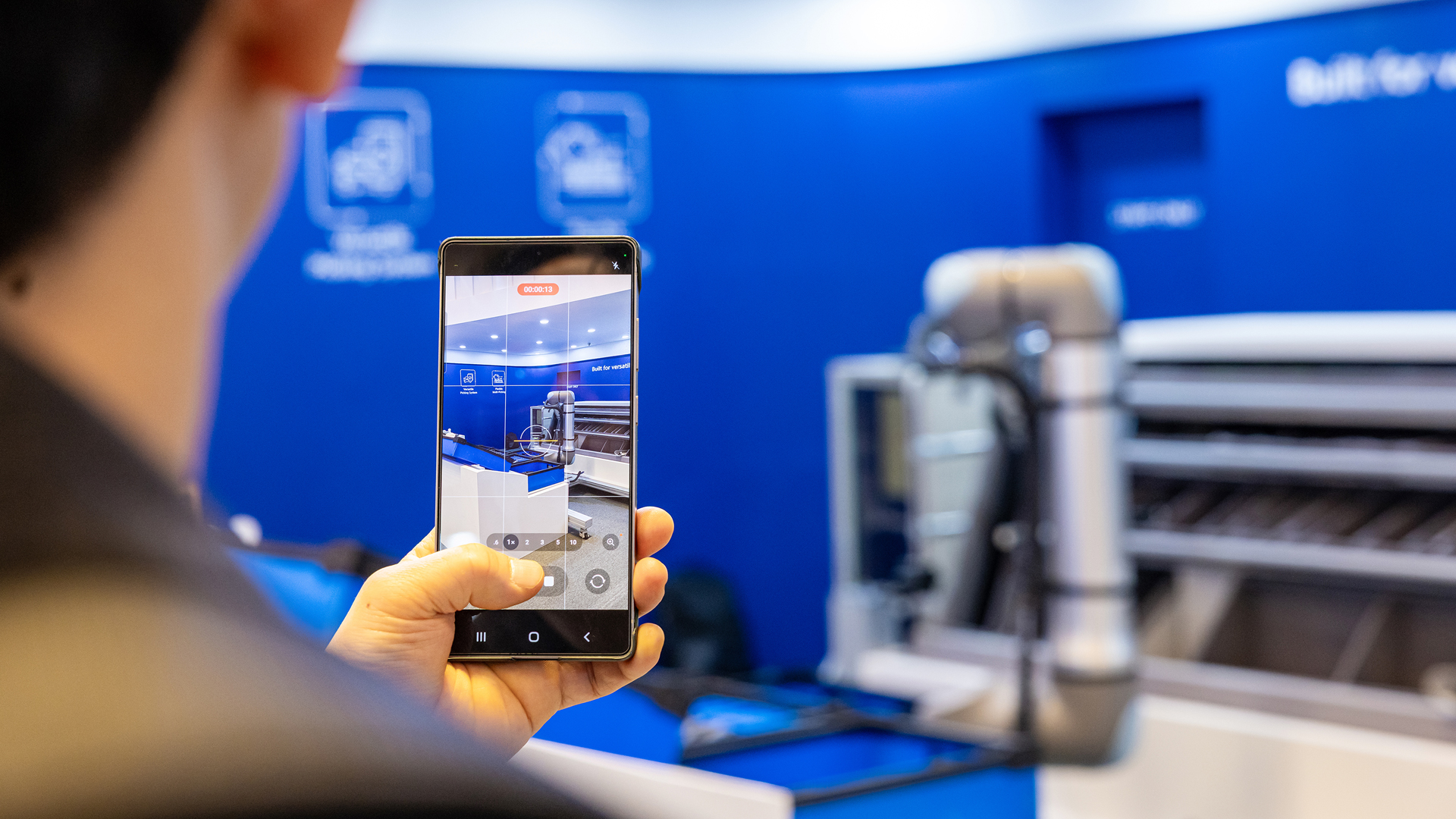
Picking remains one of the most difficult areas to automate because logistics sites handle items of varying shapes, sizes and materials. Ahn explains that Hyundai glovis addressed this challenge with One-Kit Picking Automation technology, which identifies parts, reliably grips them, and assembles them into a single work unit.
“The core lies in the gripper structure—which combines vacuum suction and gripping methods depending on the situation—and the vision technology that recognizes the position and characteristics of objects,” Ahn says. “Flat-surfaced parts are handled by suction, while irregularly shaped parts are handled by gripping. This reduces exceptions. Stable handling remains possible even when items are slightly twisted or out of position.”
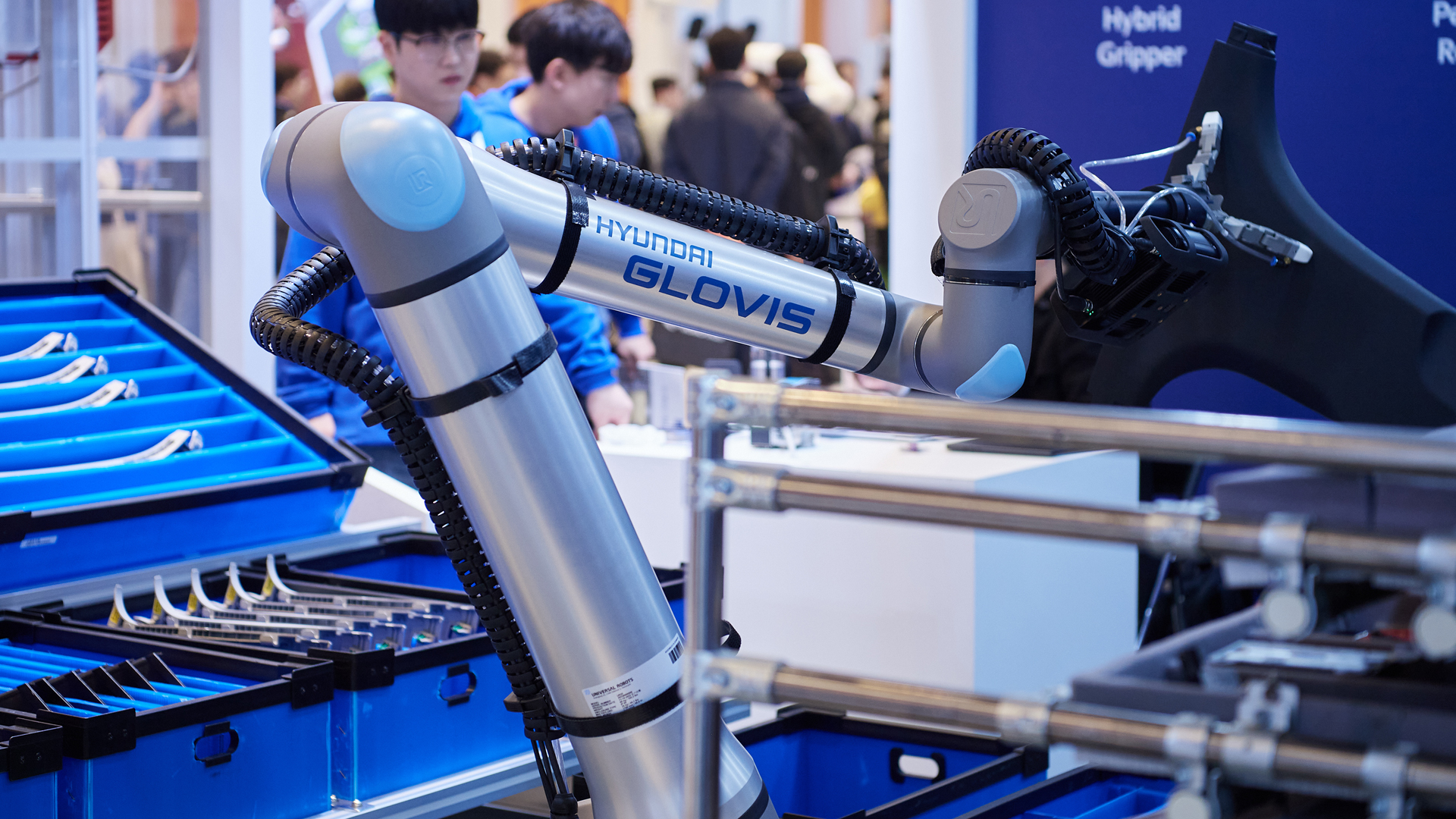
Logistics automation is moving beyond automating individual steps toward assembling work units required for downstream processes. At the center of Hyundai glovis’ approach is ORCA, a warehouse control system (WCS) platform jointly developed with ALTIALL, Hyundai glovis’ smart logistics solutions subsidiary.
In a logistics center, systems from different manufacturers—storage equipment, transfer equipment and picking robots—operate simultaneously. However, smooth operations cannot be ensured simply because each system works well independently. If the flow breaks in any section, bottlenecks emerge and overall efficiency declines.
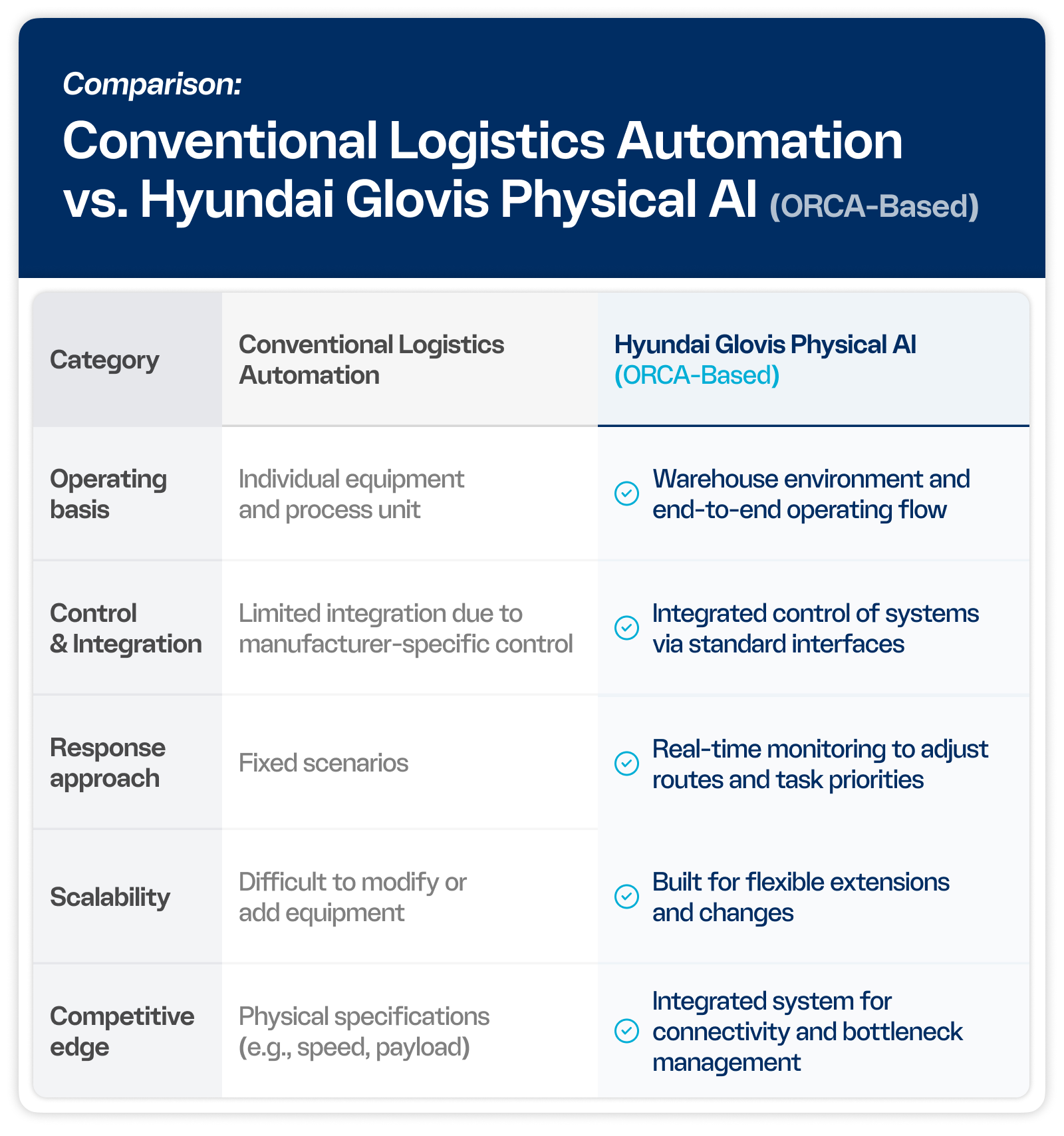
ORCA connects and coordinates these systems within a single structure. It builds work plans, converts them into executable tasks, and adjusts routes and task sequences in real time based on equipment status and priority. In particular, the adapter interface allows for managing various equipment types from different manufacturers to ensure seamless connectivity, enabling flexible changes or extensions. ORCA also supports rapid configuration. Using a drag-and-drop Canvas interface, this ecosystem can design optimal workflows and layouts without complex coding. Standard interfaces enable integrated control of systems for smart logistics innovation.

Ahn describes ORCA as a flow-centered approach: “It addresses logistics automation not from an equipment-centric perspective, but from the perspective of the warehouse environment and operational flow.” In practice, efficiency depends significantly on how well different equipment is coordinated, rather than on the speed of individual equipment. When work concentrates in one section, it can be redistributed and idle sections reduced, thereby increasing both throughput and space utilization within the same footprint.
Ultimately, Hyundai glovis’ strategy centers on designing flows tailored to each customer site and building a highly autonomous operating structure that can run reliably without interruption. “What we are prioritizing most right now is not equipment itself, but operational reliability,” Ahn says. Exceptional scenarios occur constantly in real operations. Performance depends on whether the system can keep running amid variability.
Hyundai glovis continues on-site demonstrations through its in-house R&D center, G-LAB, at its operational sites. It is also building group-level robotics capabilities, such as demonstrating cargo handling automation using Boston Dynamics’ depalletizing robot “Stretch” and reviewing “MobED”, a mobile robot platform designed to connect indoor and outdoor processes. The focus is on identifying operating conditions that create issues and improving response methods, so customers can experience stable automation in practice.
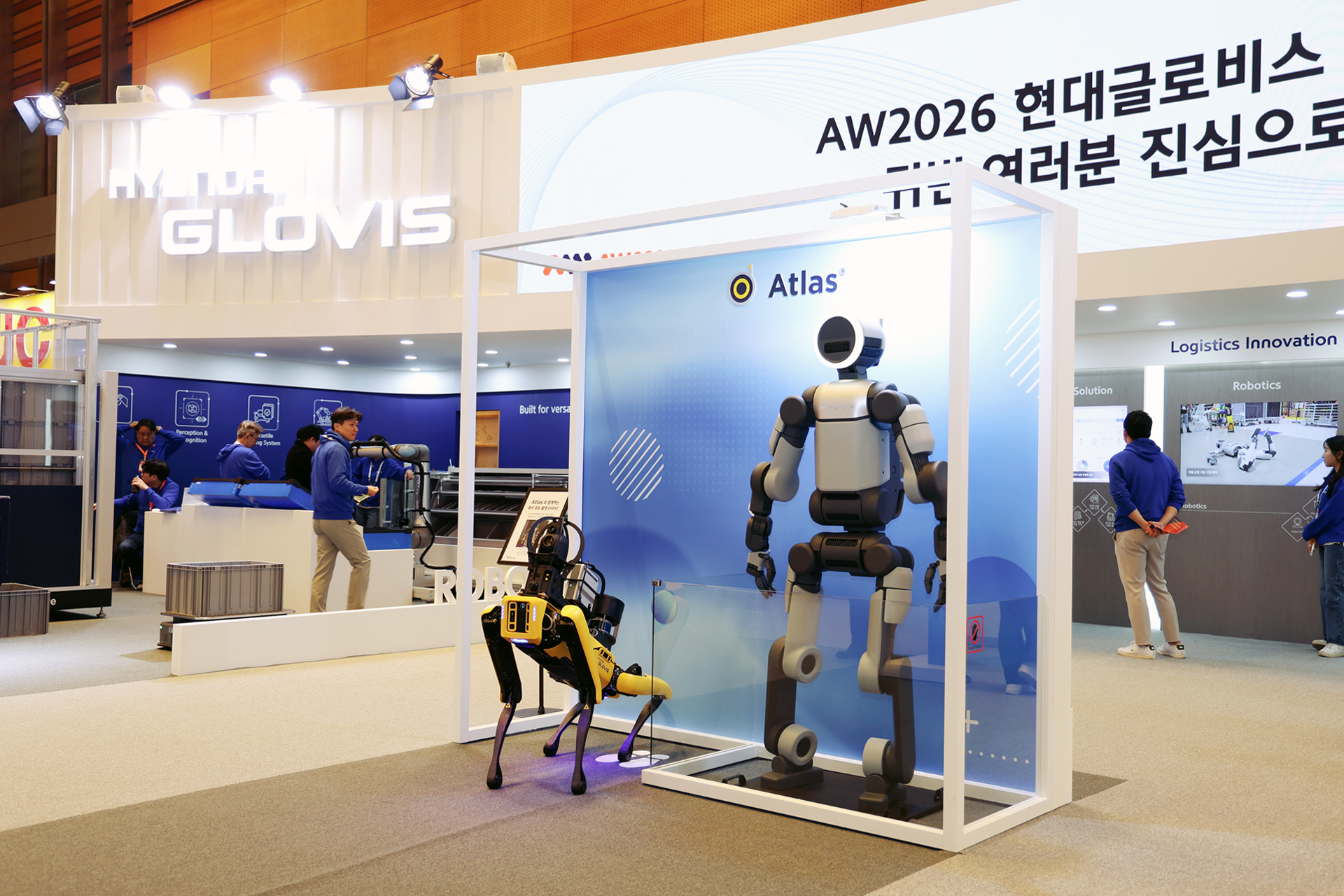
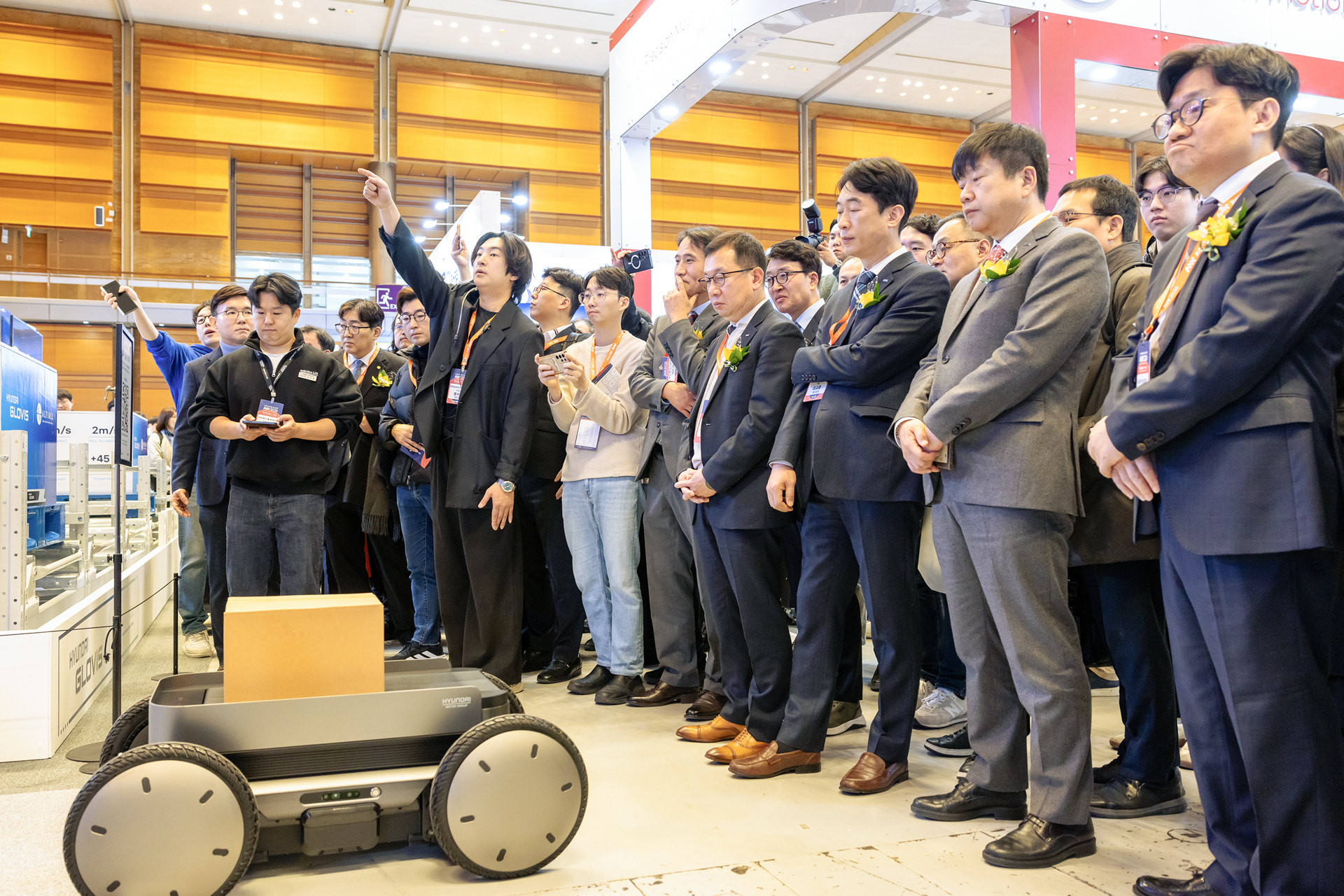
This direction aligns with Hyundai glovis’ broader roadmap. Beyond automation inside logistics centers, the company is accelerating digital transformation across the supply chain. At AW 2026, Hyundai glovis introduced the glovis Visibility Platform (GVIS). GVIS enables real-time monitoring of global finished-vehicle transport and supports alternative routing in response to disruptions such as climate events or geopolitical conflicts. By managing sea, air and inland transport in real time within a single system, the platform aims to improve predictability across the supply chain.
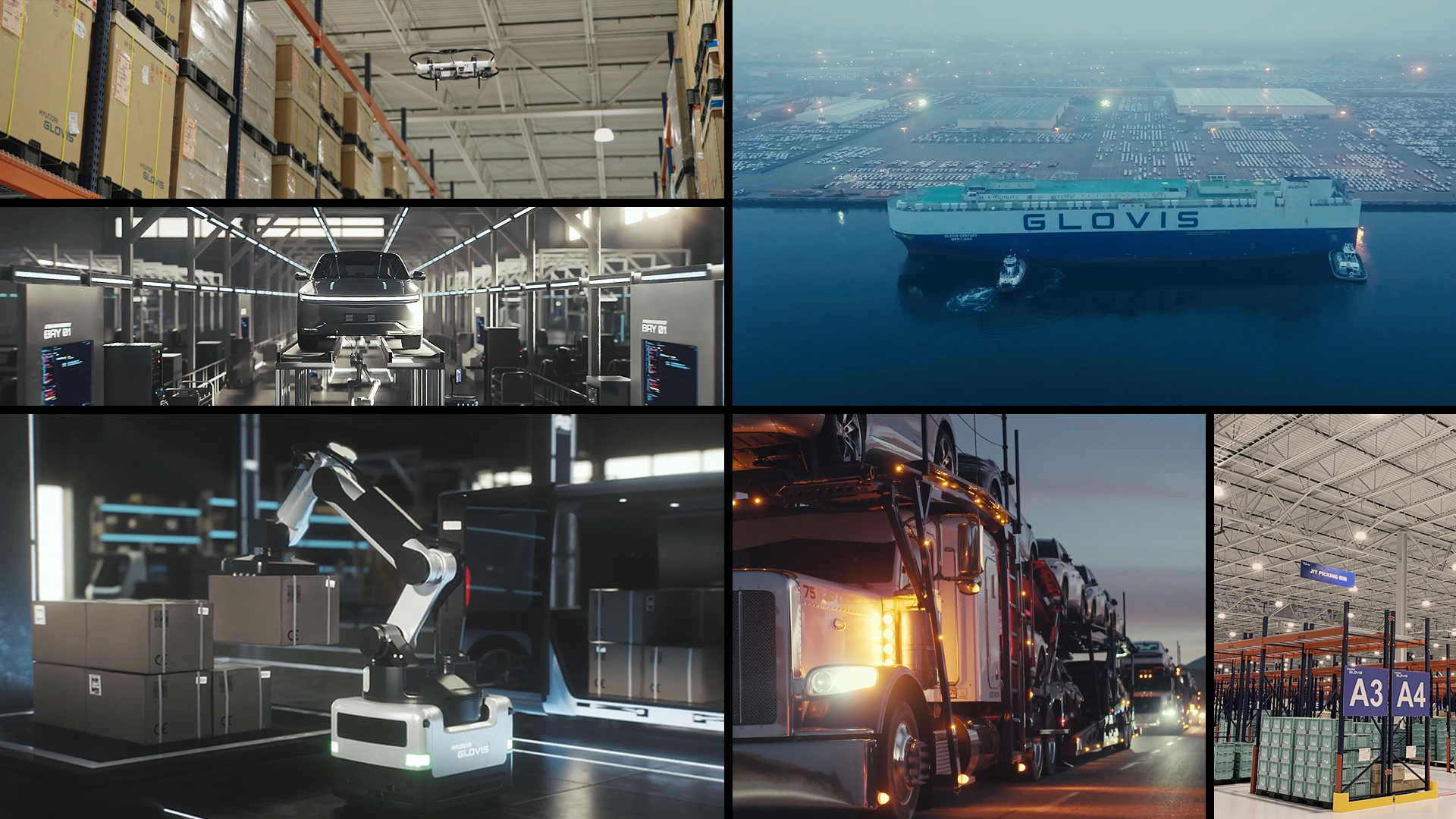
The next competitive edge in logistics will come from operational structures that are more tightly connected and more precisely coordinated. The Physical AI concept showcased by Hyundai glovis at AW 2026 reflects this shift: a structure in which the system can judge and execute in real time. In an industry shaped by variability, competitiveness will stem from a system that remains reliable amid change.