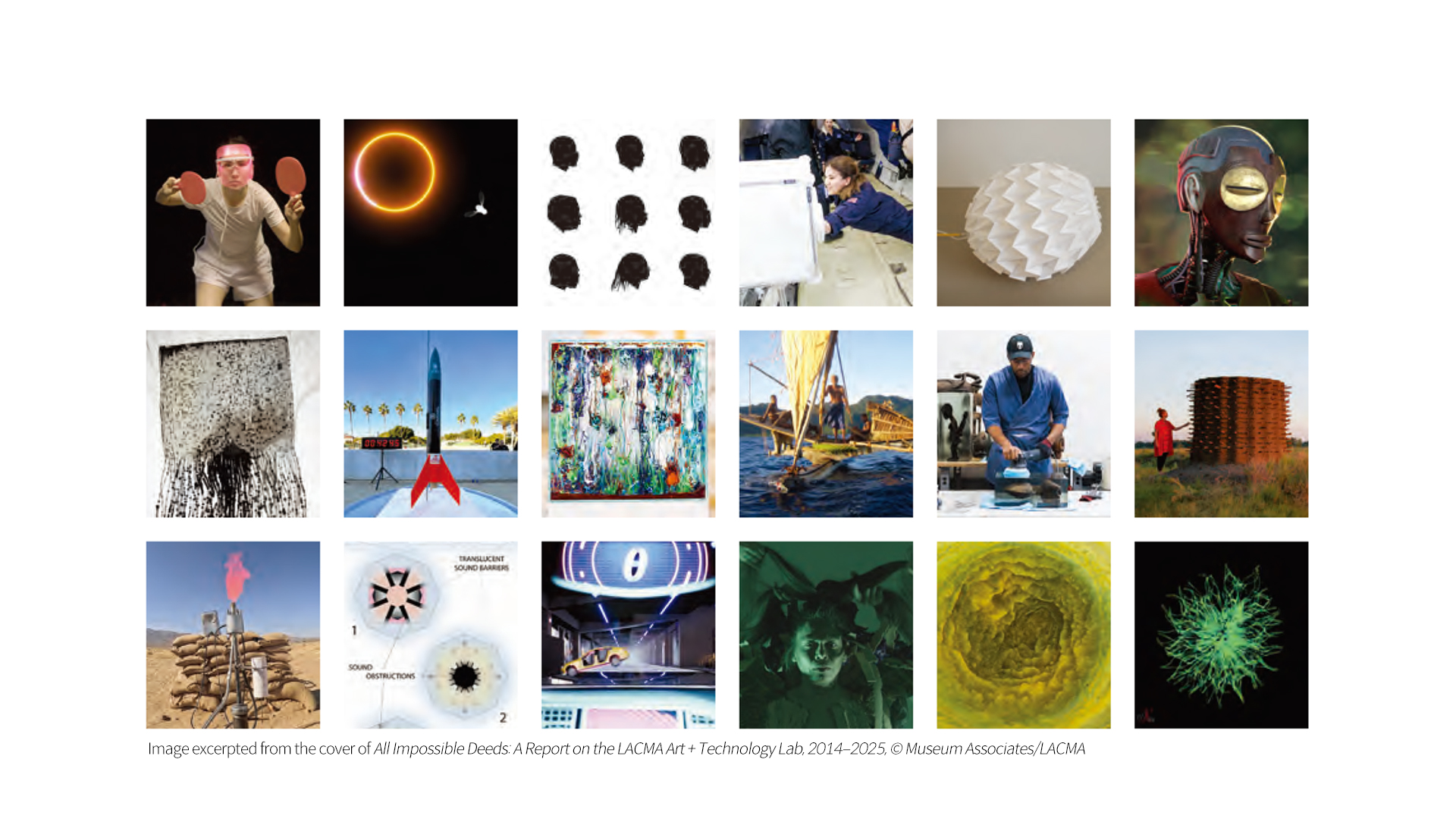
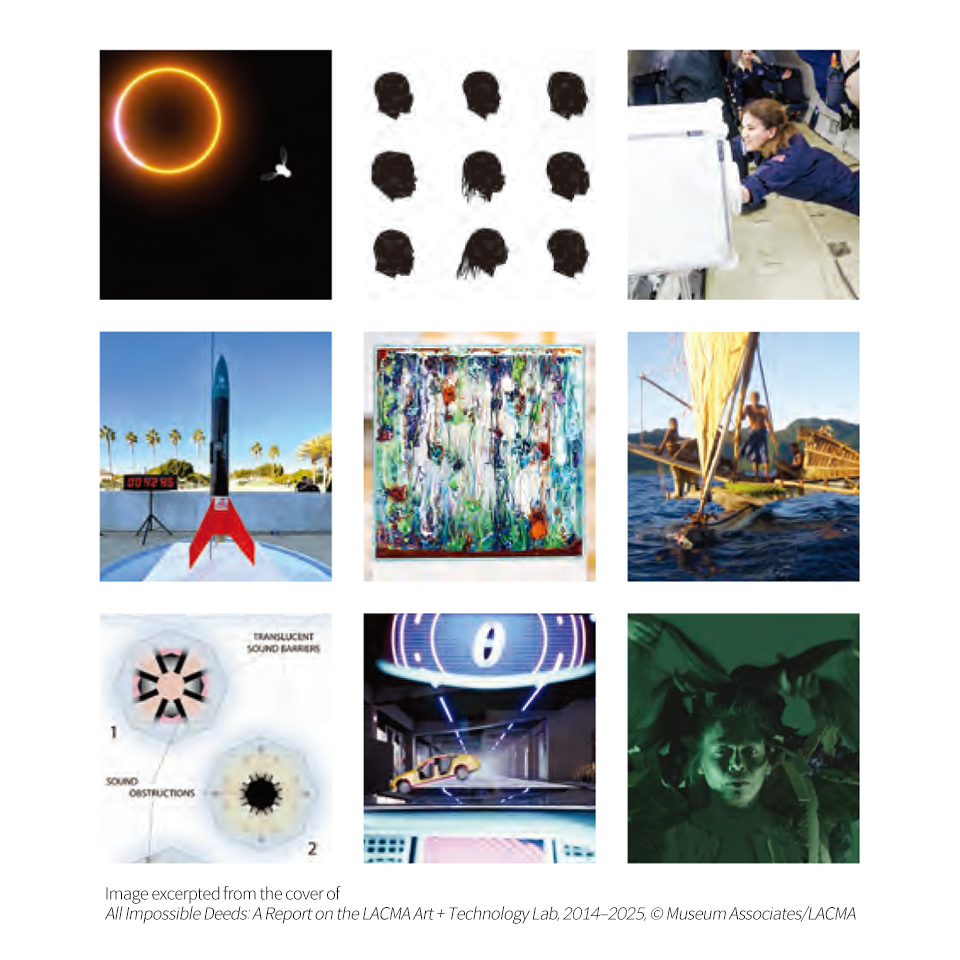
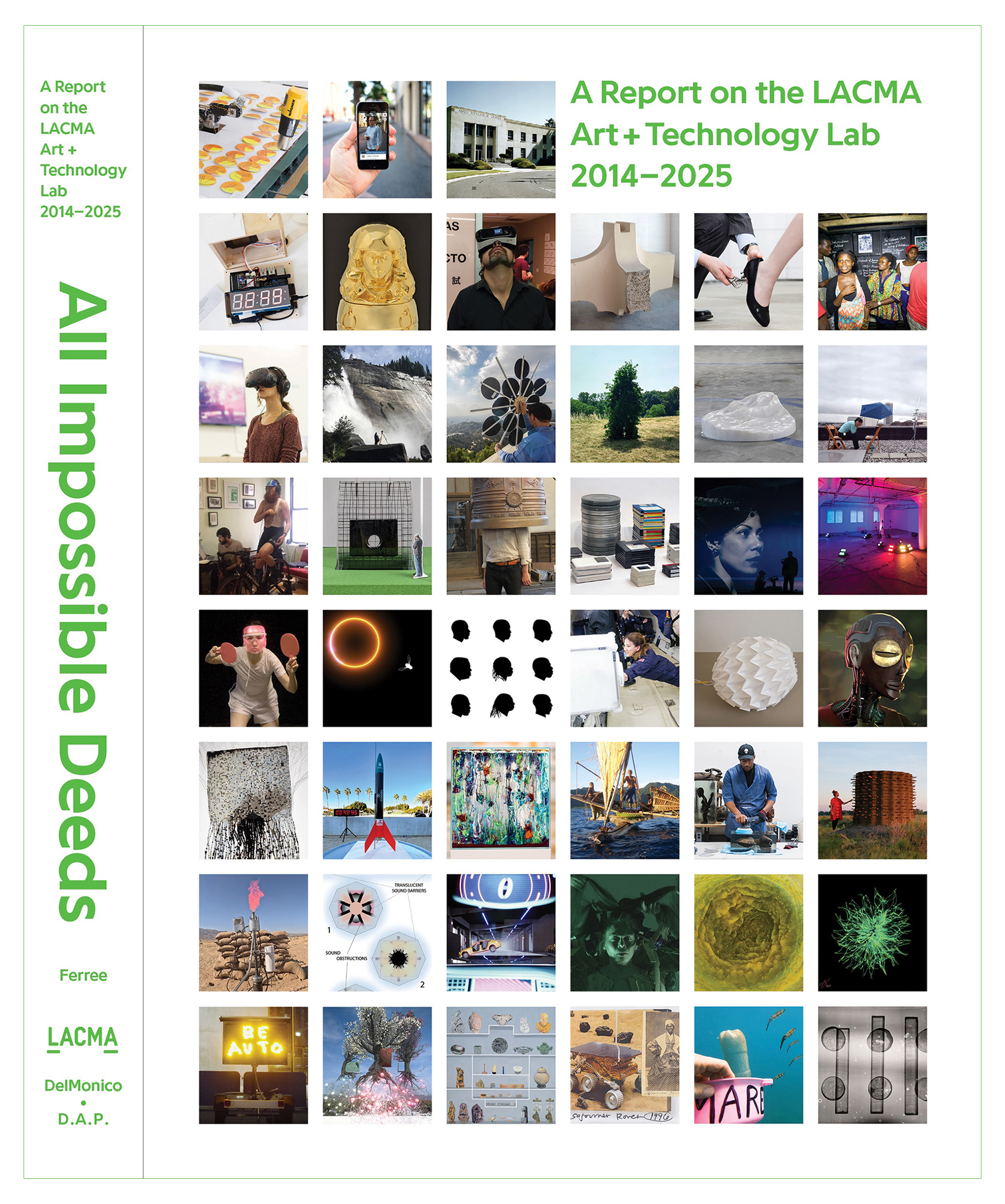
In 2015, Hyundai Motor Company and the Los Angeles County Museum of Art (LACMA) embarked on a shared journey to support artistic experimentation and innovation through the LACMA Art + Technology Lab. All Impossible Deeds: A Report on the LACMA Art + Technology Lab, 2014–2025 (2026), a 380-page publication, traces the Lab’s first decade, documenting collaborations that have enabled artists to work alongside engineers, scientists, and technologists to realize ideas that might not otherwise be possible.
To mark the publication’s release, we speak with Joel Ferree, Program Director of the LACMA Art + Technology Lab and editor of All Impossible Deeds, about the ideas, ambitions and experiments that have defined the Lab.
All Impossible Deeds originates from a quote by Ken Tyler, a master printer who worked with Claes Oldenburg on the animatronic Ice Bag sculpture as part of LACMA’s original Art and Technology program, which ran from 1967 to 1971.
“We are really performing in the greatest tradition of theatre, no time, no money, all impossible deeds, but somehow it gets across and some accomplishment comes from it.”
– Ken Tyler
Joel Ferree explains that “the sculpture’s fabrication was incredibly complex and was a heroic undertaking that is well documented in the report from the original program.”
“All Impossible Deeds emerged from a desire to capture this fearless spirit, this feeling one often experiences when working with artists in a pursuit that requires new technologies, unconventional collaborations, long timelines, and, most importantly, a tolerance for uncertainty. While the book serves as a record of all of the artist projects from the Lab’s first 10 years, it also celebrates this way of working. We wanted to create a publication that reflects the ambition, experimentation, and curiosity that define the projects and their participants,” he says.
This book is notable not only for what it documents but also for how it does so. Rather than following the format of a traditional exhibition catalogue, All Impossible Deeds adopts the structure of an analytical and practical “report.” As Ferree notes, it is “both a nod to the publication from LACMA’s original Art and Technology Program and a practical solution.”
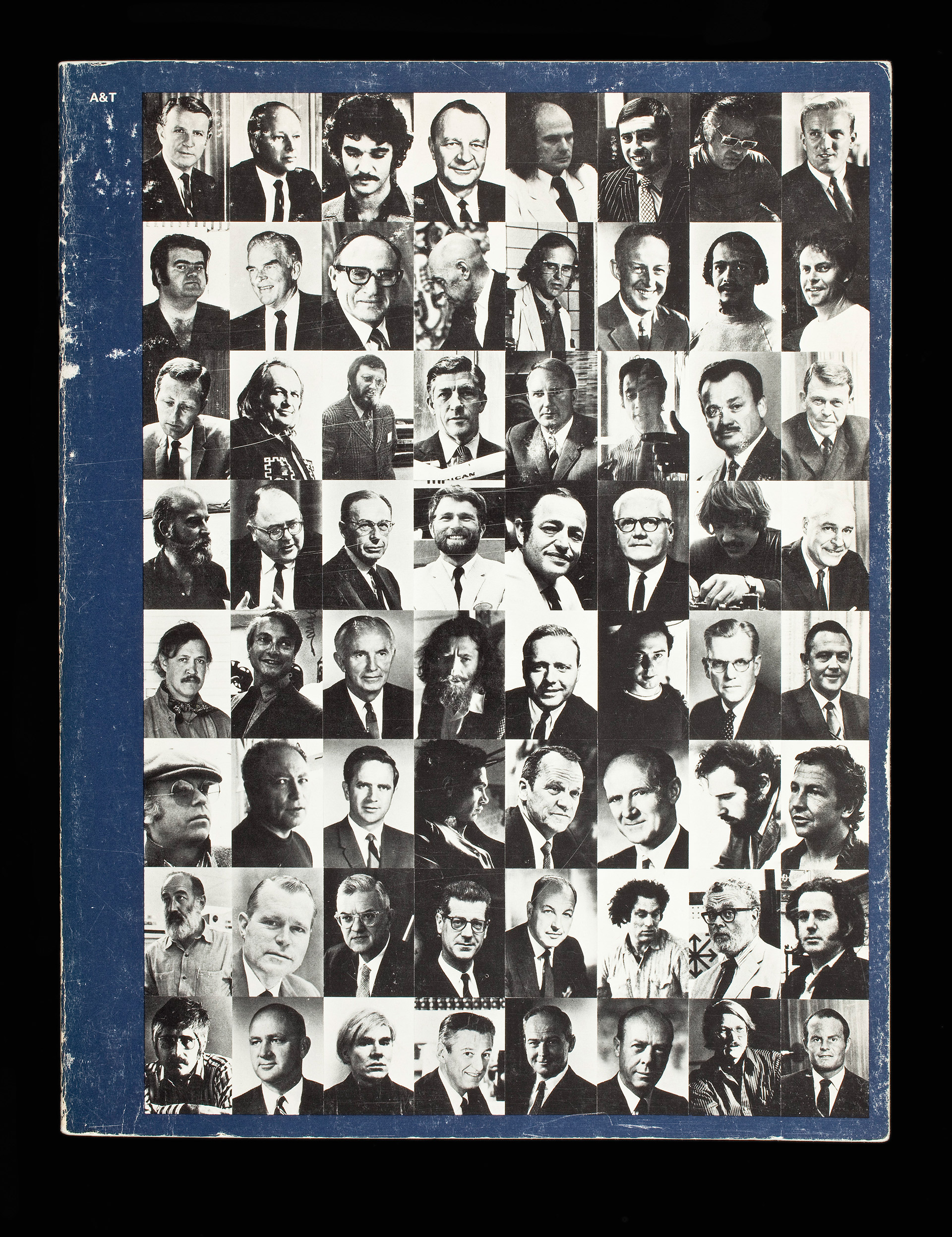
As its title suggests, the original publication served as a log, documenting not only the works but also the conversations, technical challenges, and setbacks that shaped them. All Impossible Deeds follows a similar approach. Its “focus is as much on the means as on the end,” as Ferree puts it, documenting the research and experimentation that took place behind the scenes. The book offers a thorough account of the development of projects over the past decade, underscoring that the work is defined as much by its evolution as by its final form.
Producing the publication presented its own challenges.
“Distilling a decade into a single publication was, in some ways, an impossible deed in itself. The biggest challenge was revisiting every project and deciding what should be included. While the Lab's projects are often amorphous and iterative, I found myself wrestling with the inherently linear nature of a book. That constraint ultimately became one of the publication's greatest strengths, forcing us to identify the essential ideas and stories that best reflected the Lab's first decade.”
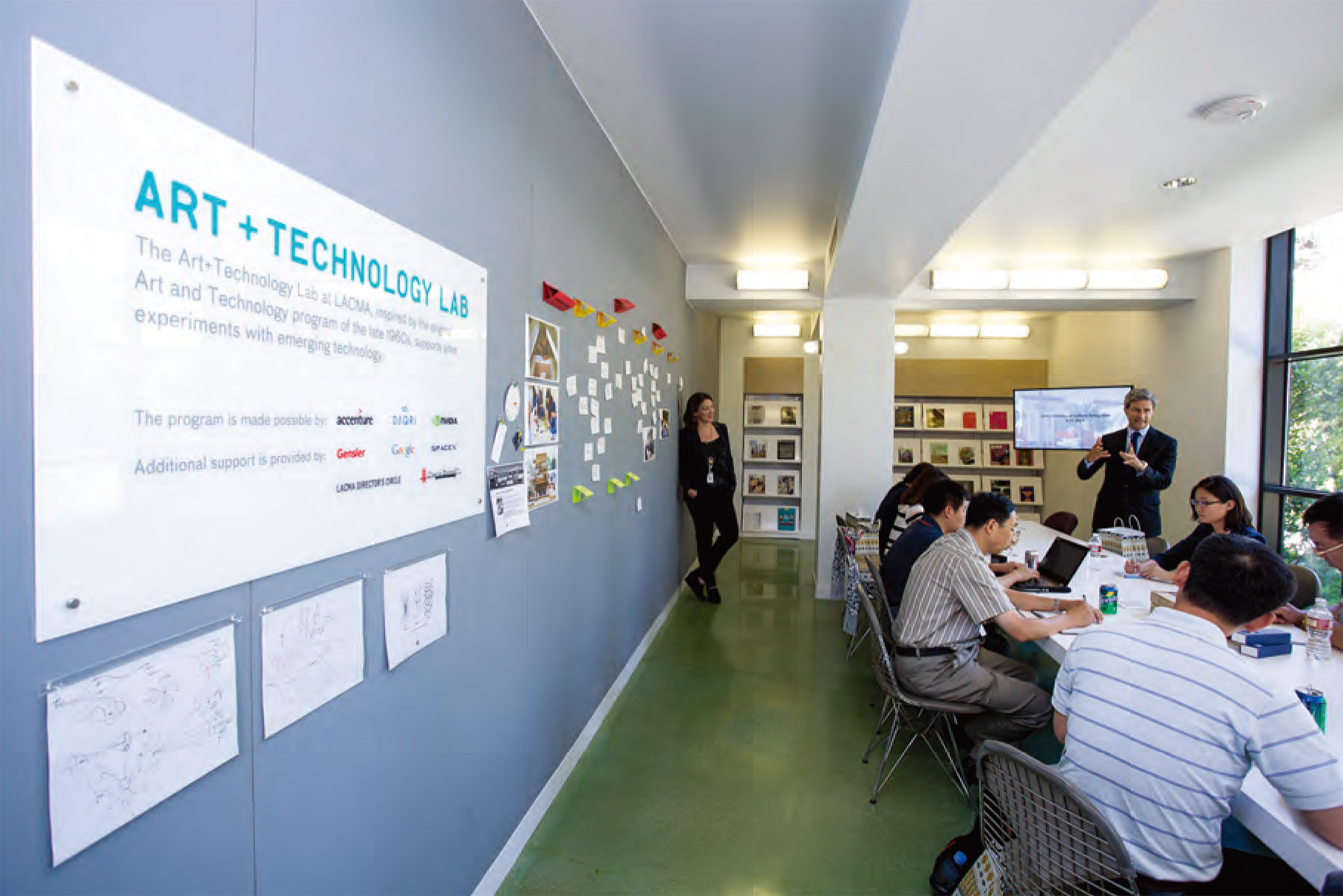
The Art + Technology Lab functions like an in-house R&D department, providing artists with space for inquiry, exploration, and prototyping.
Ferree emphasizes that this approach shifts the context of institutional engagement while retaining institutional support: “Typically, when an artist works with a museum, there is an expectation to produce a finished work, installation, or exhibition within a fixed timeframe. With the Lab, what matters most is the line of inquiry and the artist’s openness to experimentation and collaboration. Experimentation is not only permitted in this institutional context, it is actively encouraged. We can also draw upon our broader network to identify additional avenues of support. In this way, we are able to leverage the institution’s relationships and standing to connect artists with opportunities and expertise that might otherwise be out of reach.”
The Lab is also supported by a rigorous review process. Through an open call, proposals are reviewed and assessed according to criteria that include artistic merit, technological interest, public engagement, and experimentation. Recipients receive a range of support including opportunities to collaborate with the Lab’s partners, including technical consultation, hardware access, and specialized expertise.
Notably, artists are not limited to working with a single corporate partner. Ferree describes this as “a more flexible approach, allowing recipients to work with multiple advisors and partners as their projects evolve,” an approach that better reflects the exploratory nature of each project while broadening the range of expertise and resources available to artists.
Reflecting on how artists engage with technology today and in the Lab’s early years, Ferree observes that technological literacy among artists has increased significantly over the past decade.
“I believe technological, and specifically digital, literacy among artists has improved significantly since the Lab began. I would attribute this, first, to the fact that more MFA programs now incorporate digital practices into their core curricula. Second, these tools have simply become far more pervasive and accessible than they were in 2014. As a result, many more artists are engaging directly with these technologies. Third, I see more artists building a critique of the technologies they use into the work itself. I think this reflects a broader awareness of, and, in some cases, apprehension about the rapid pace of technological change. Rather than simply adopting new tools, many artists are also interrogating their cultural, social, and political implications.”
Drawing on more than a decade of the Lab, supported by the long-term partnership between Hyundai Motor and LACMA, Ferree points to three projects that best capture what this partnership has made possible.
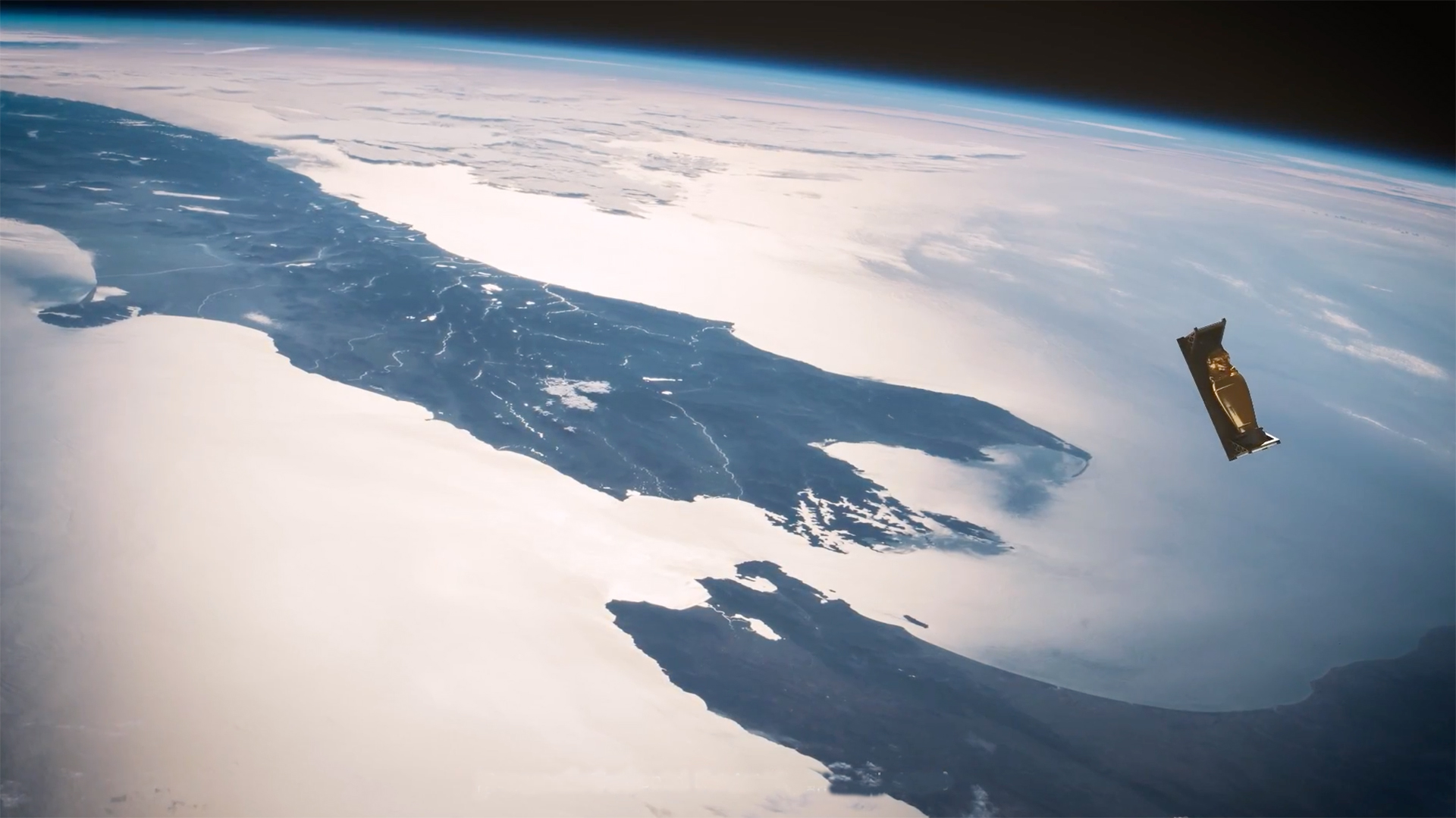
The first is ENOCH by Tavares Strachan. The project pays tribute to Robert Henry Lawrence Jr., the first African American selected as an astronaut for a national space program. Lawrence lost his life during a training exercise before he could fulfill his dream of spaceflight, and Strachan transformed that unrealized dream into a symbolic act of remembrance.
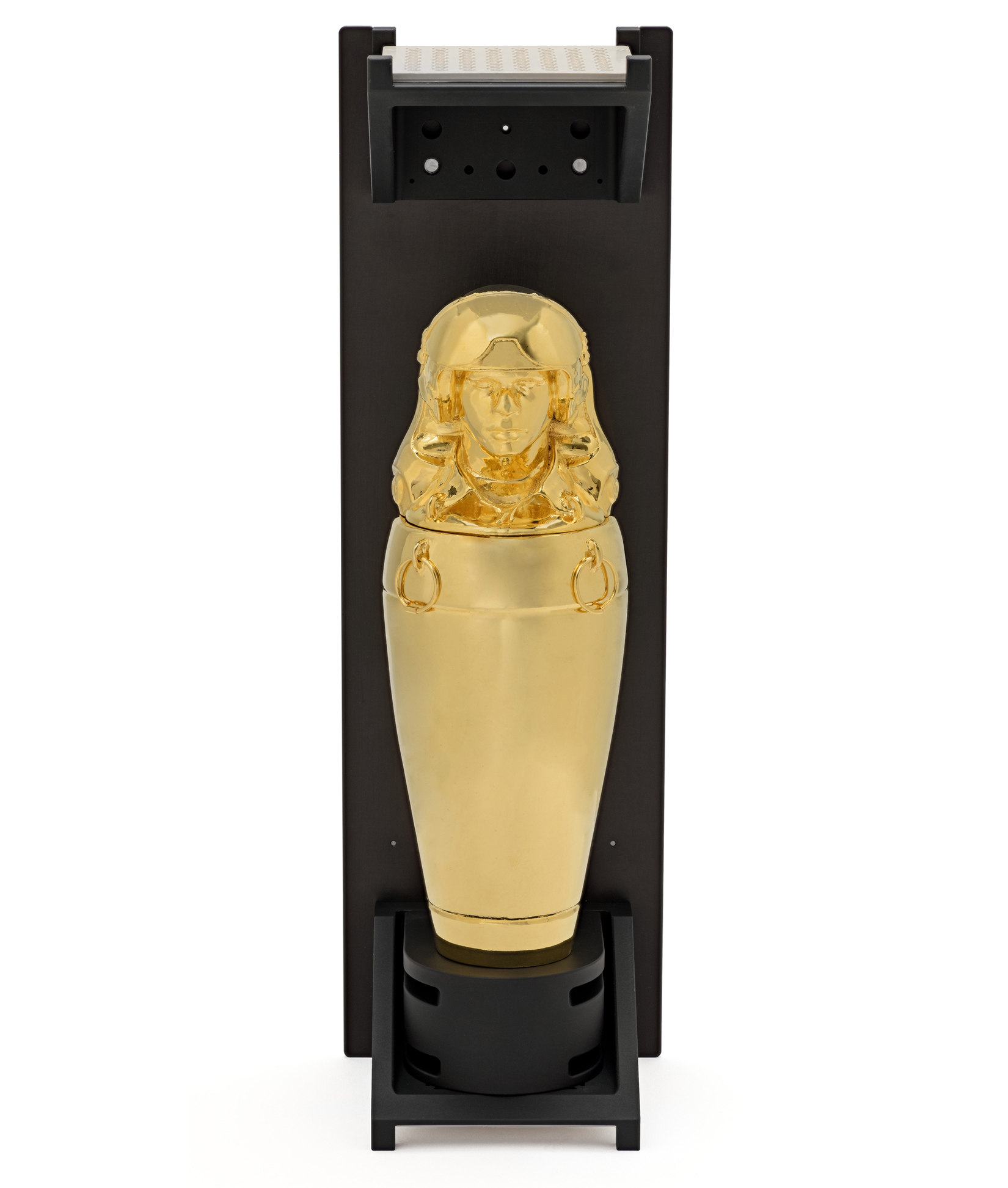
Strachan mounted a bust of Lawrence atop a replica of an ancient Egyptian canopic jar and launched the sculpture into orbit aboard a SpaceX Falcon 9 rocket in 2018. Following three years in orbit, the work completed a journey Lawrence himself never had the opportunity to make.
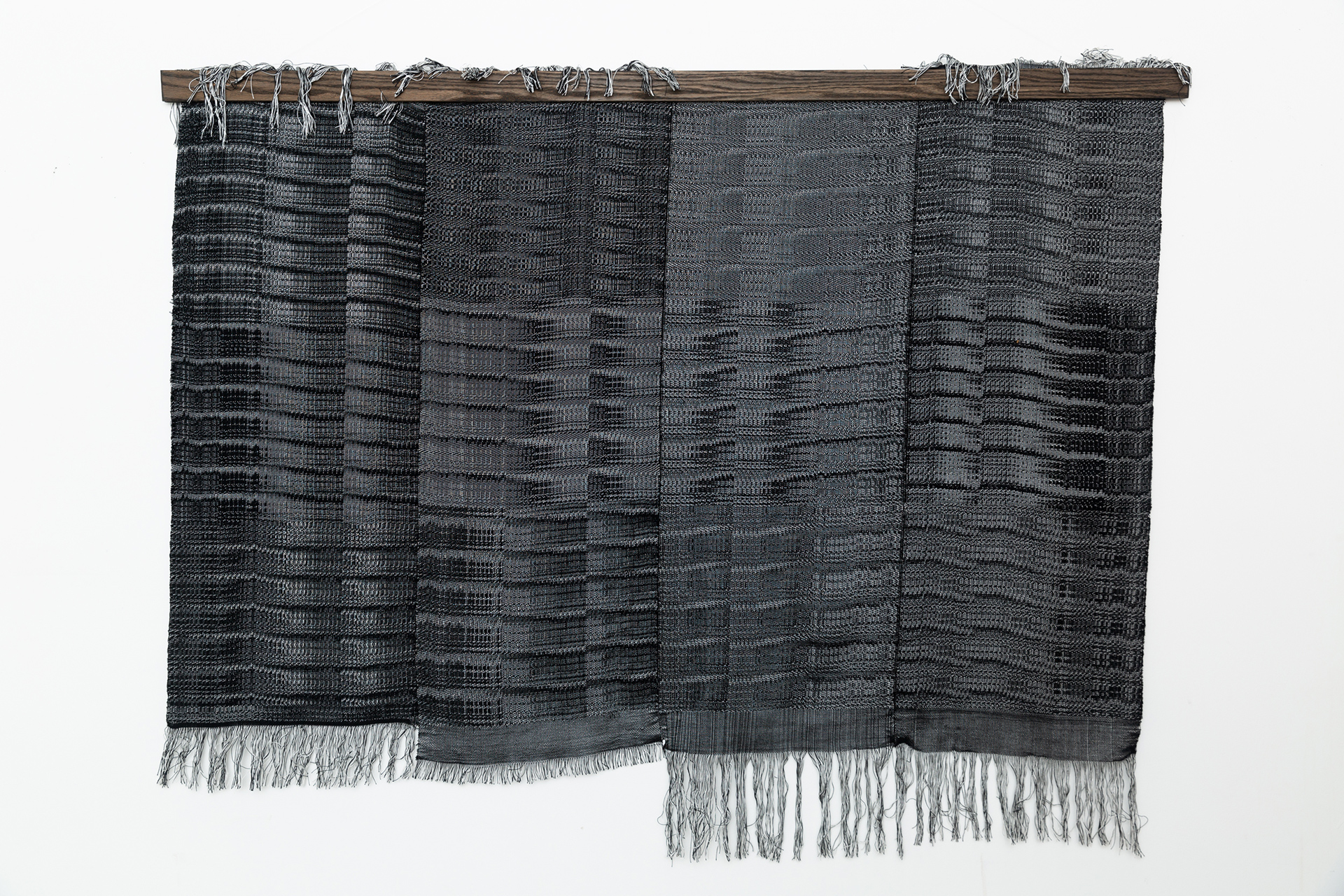
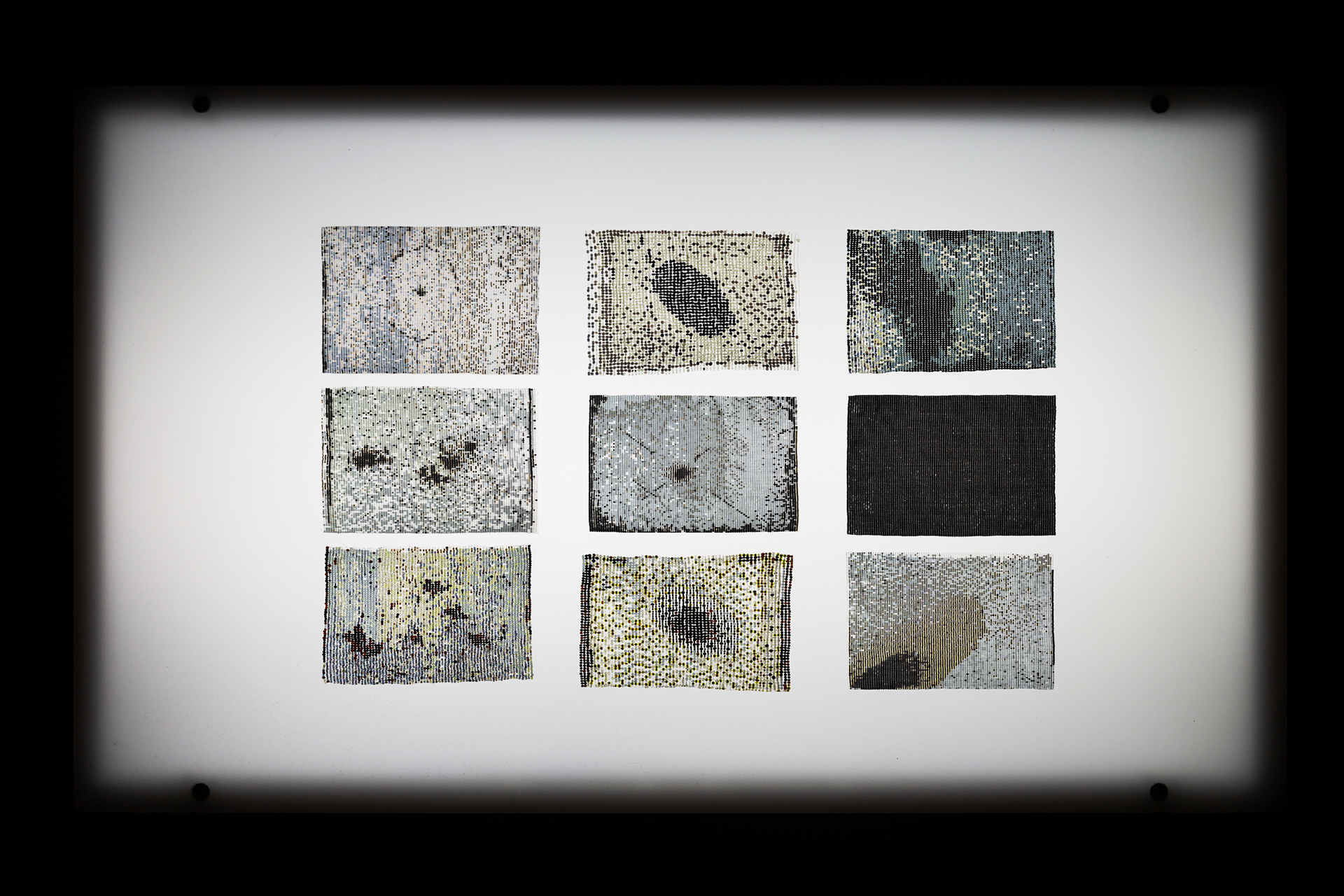
Another project highlighted by Ferree is Sarah Rosalena’s Standard Candle. Staged inside Mount Wilson Observatory’s Hooker 100-inch telescope, the exhibition shed light on forms of labor and knowledge production often overlooked in narratives of scientific progress.
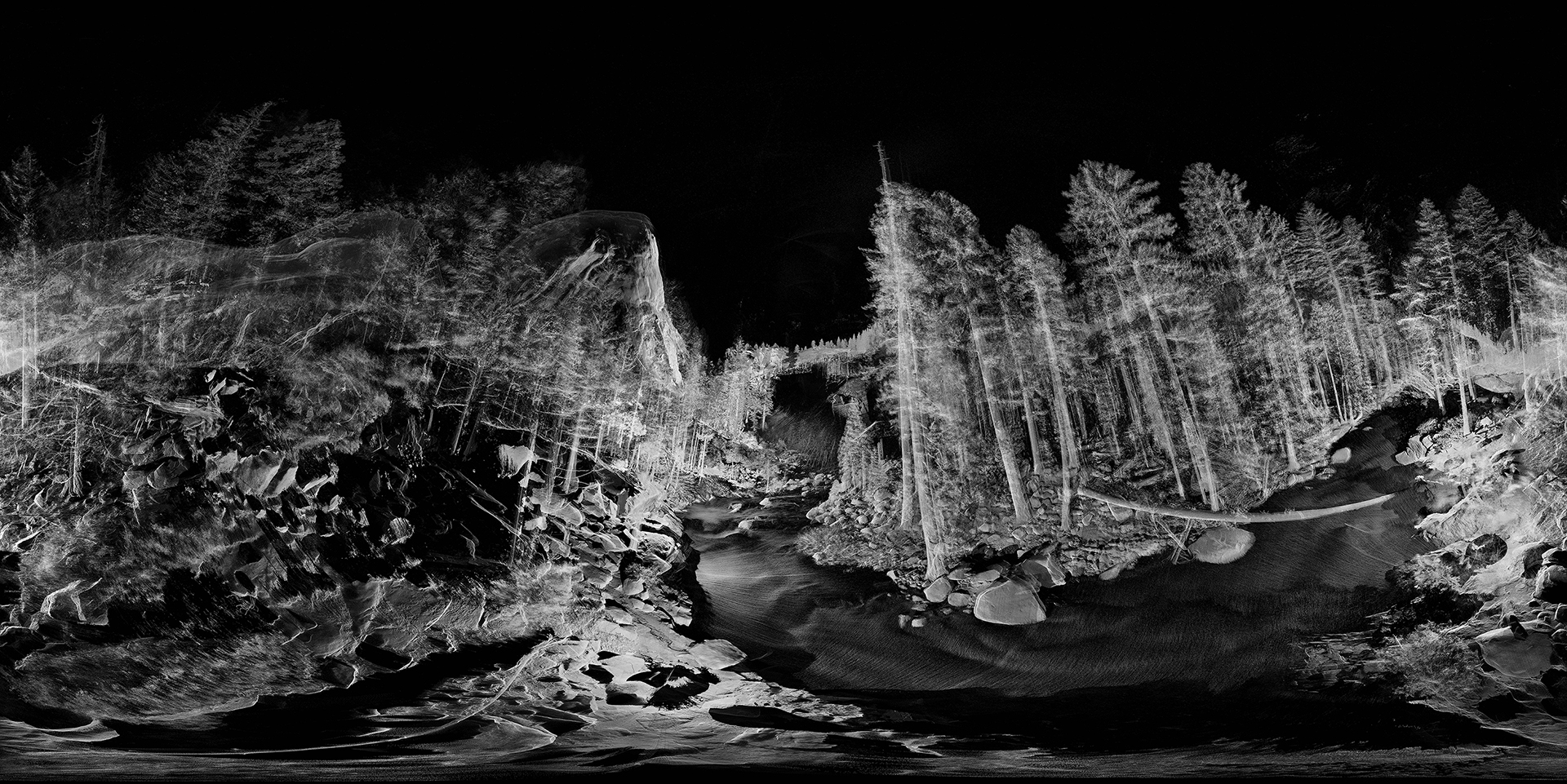
Rosalena translated astronomical data collected at the observatory into code, using traditional weaving techniques to transform this information into intricate depictions of the night sky. In doing so, the work foregrounded the contributions of women who once manually calculated and catalogued astronomical observations.
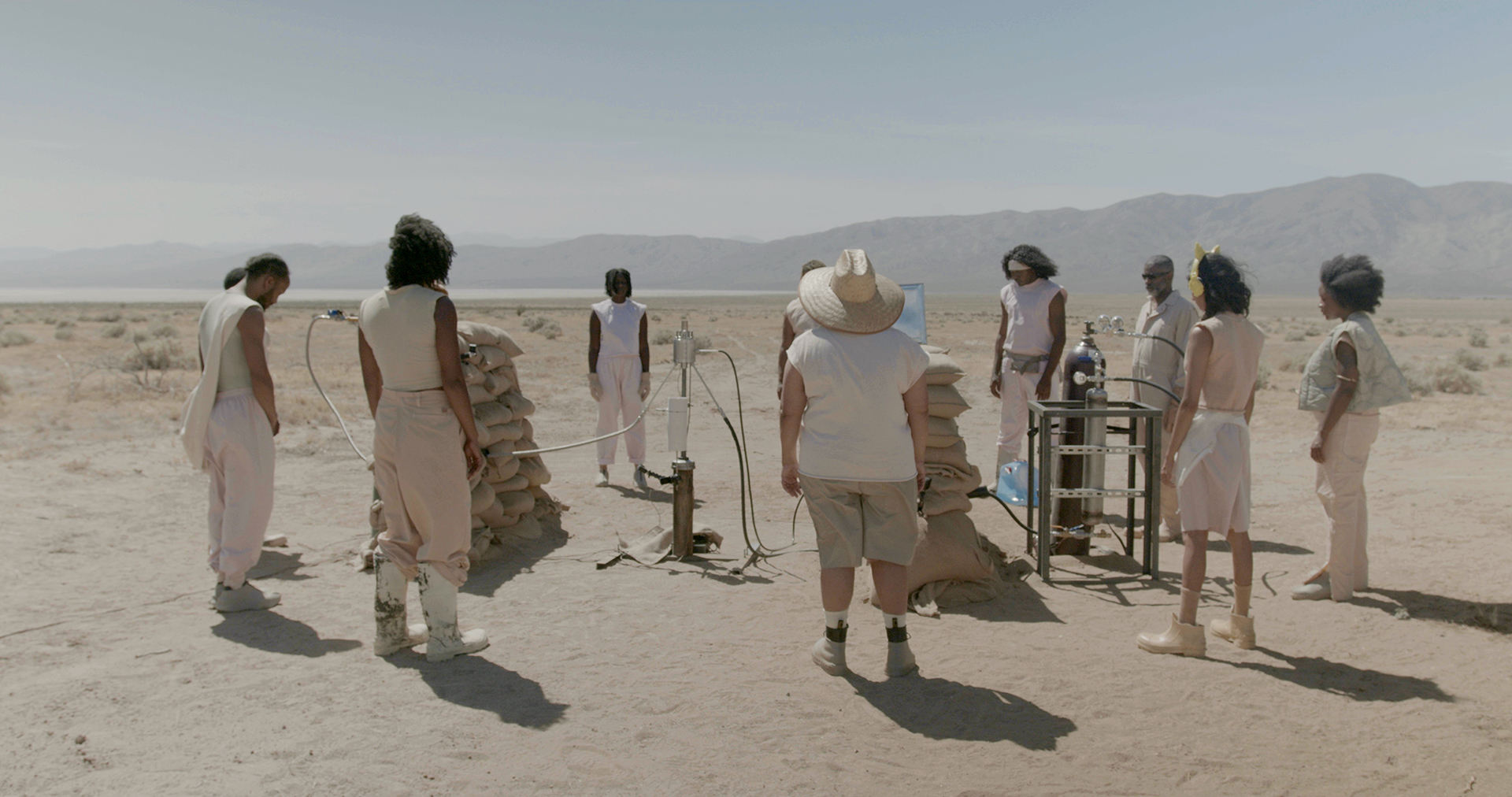
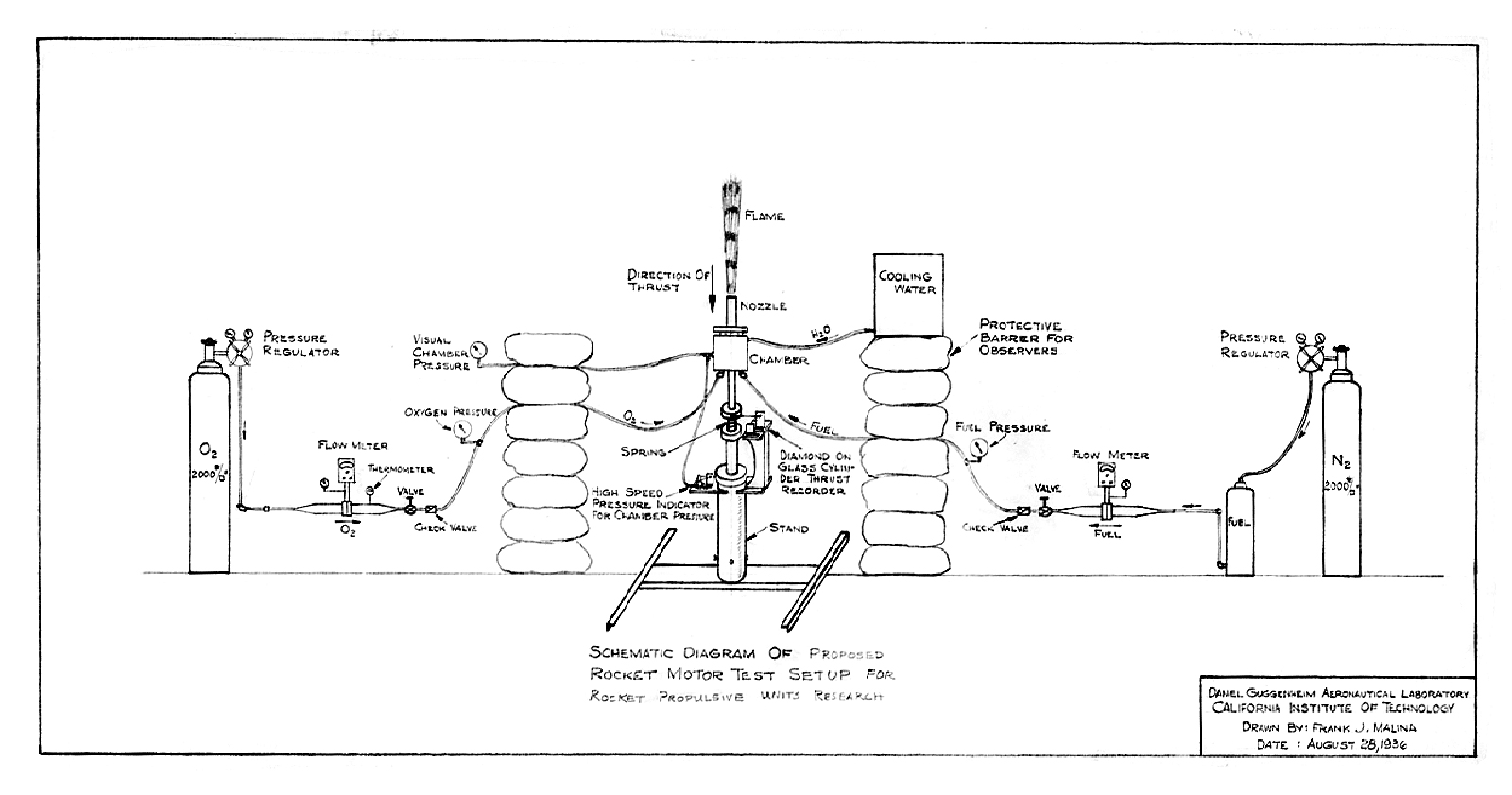
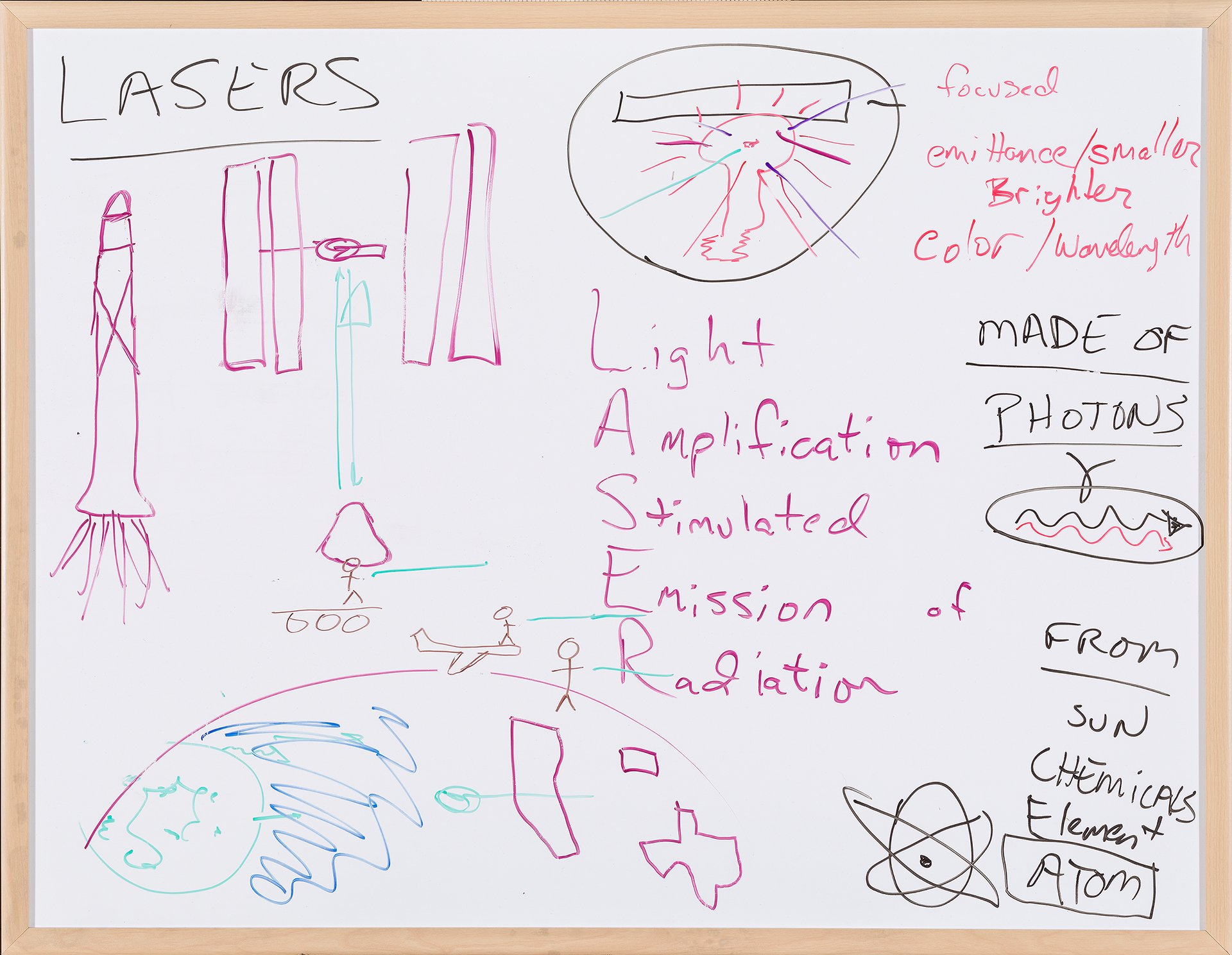
The third project is The Monophobic Response by American Artist. Inspired by Octavia E. Butler’s 1993 novel Parable of the Sower, the work reimagines a pivotal 1936 static rocket engine test that helped initiate the United States’ venture into space travel. Through performance, film, and installation, the project explores the histories embedded in technological progress, bringing Butler’s prescient visions into conversation with contemporary realities.
Addressing these projects, Ferree notes that “each of these was extraordinary in its own right, but what they share is that they took place in uncommon settings and under exceptional circumstances.”
Together, these projects demonstrate how artists use technology not simply as a tool, but as a means of exploring questions about history, memory, and the future. Behind each project is a commitment to experimentation, collaboration, and sustained inquiry.
Hyundai Motor has been the presenting partner of the Art + Technology Lab since 2015 and recently extended its commitment through 2037, offering continuity for a program built around long-term experimentation.
“That sustained partnership gives both the Lab and its recipients the time, stability, and confidence to pursue ambitious ideas that cannot be realized on a conventional project timeline,” Ferree says.
As Ferree emphasizes, projects supported by the Lab often require years of research, development, and planning. Hyundai Motor’s long-term commitment has provided the program and its recipients with the support needed to pursue ambitious ideas beyond the constraints of conventional timelines.
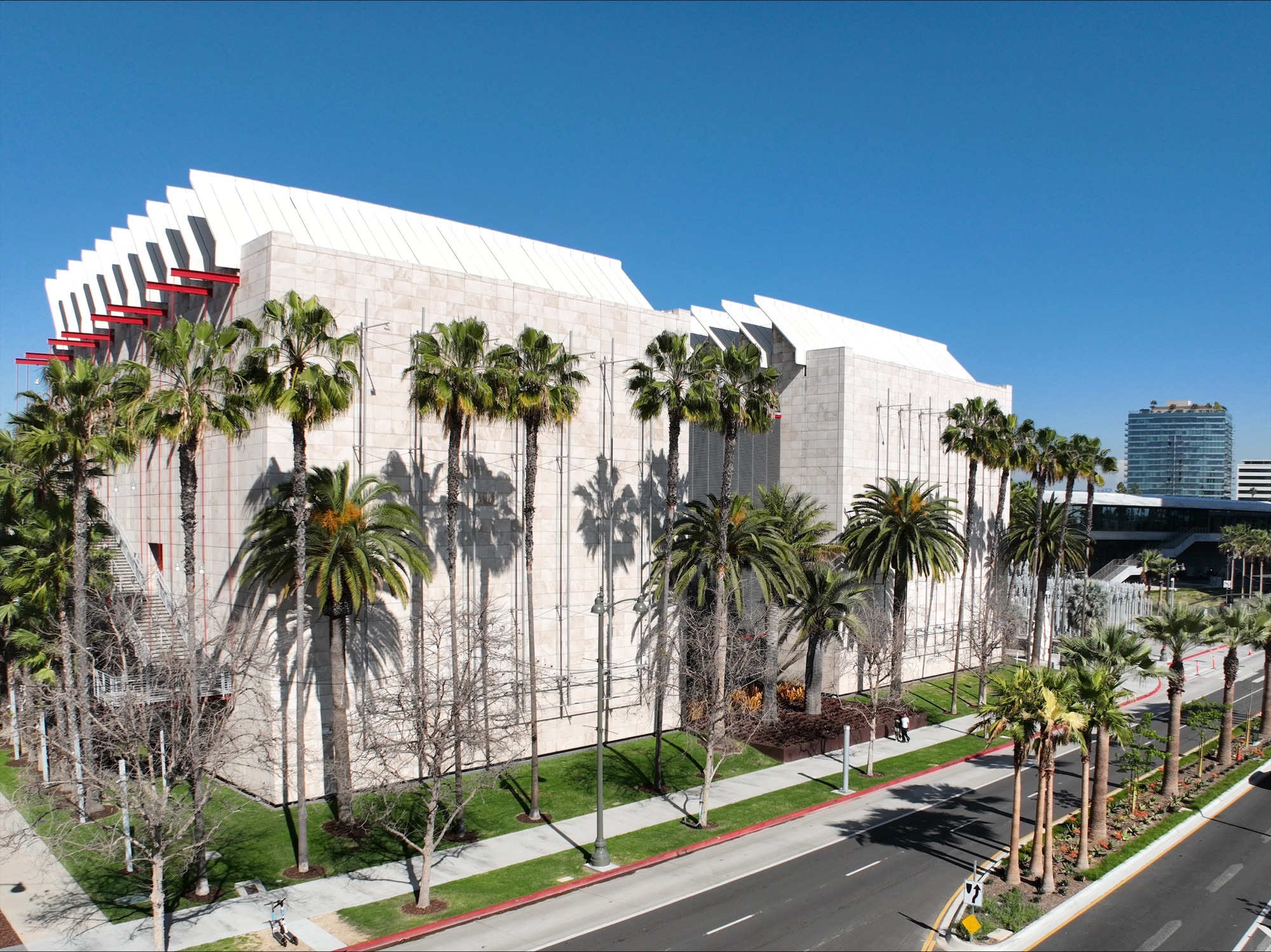
While the Art + Technology Lab remains a cornerstone of the partnership, Hyundai Motor’s support extends beyond the Lab itself. In 2028, the partnership will enter a new chapter with the launch of the Hyundai Project, a biennial exhibition series at LACMA that will spotlight artists with significant ties to Los Angeles and the Pan-Pacific region.
If All Impossible Deeds stands as a record of the past decade, it also points to the questions, discoveries, and possibilities ahead, as artists continue to expand the horizons of contemporary art.