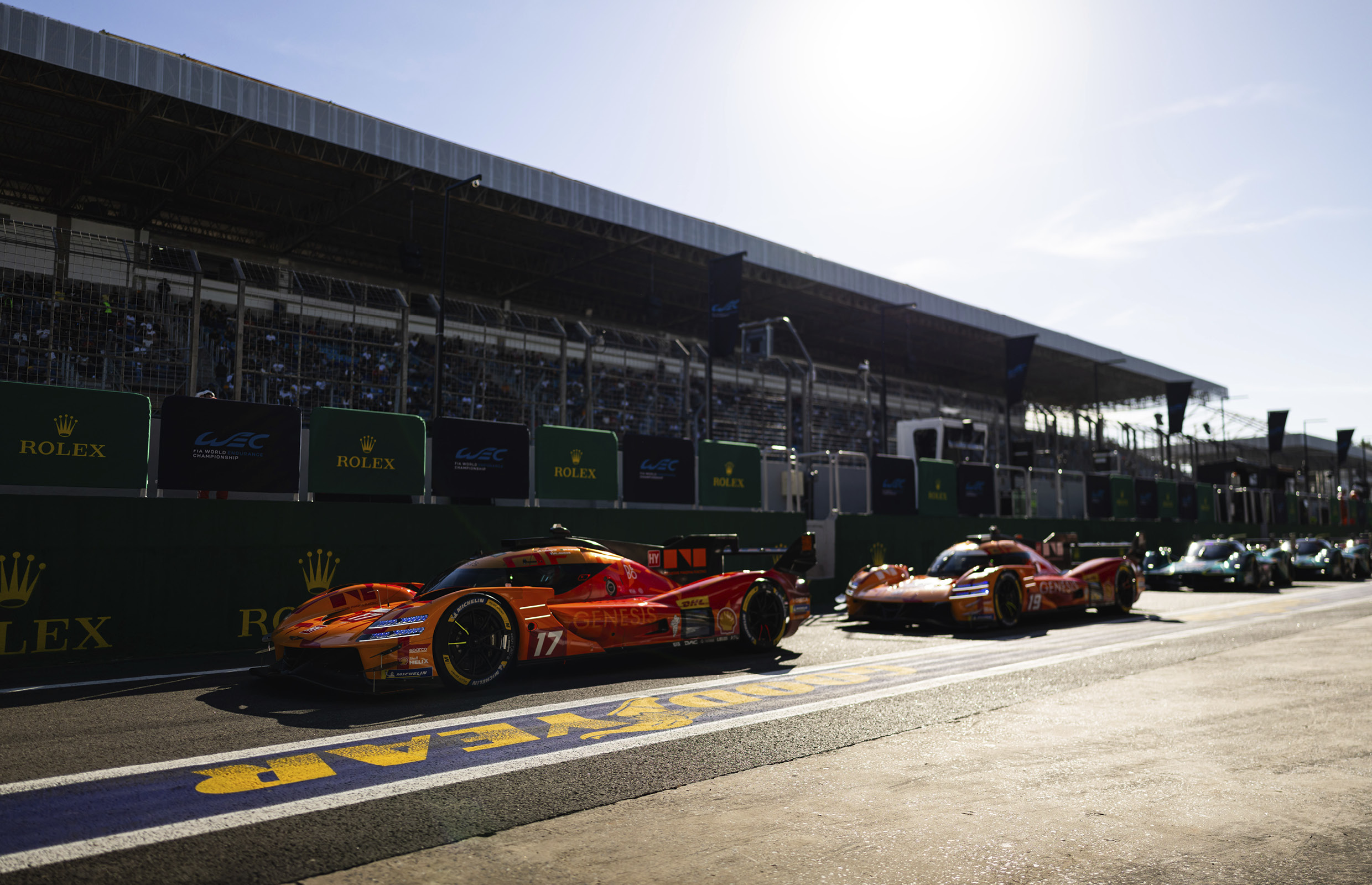
Surviving its first 24 Hours of Le Mans, Genesis Magma Racing headed out of Europe and into a very different kind of fight: six hours at Interlagos. The 6 Hours of São Paulo was part of the original WEC calendar when the championship launched in 2012, but disappeared from 2015 while the paddock facilities were upgraded. The race returned in 2024, and its current contract runs through 2028.
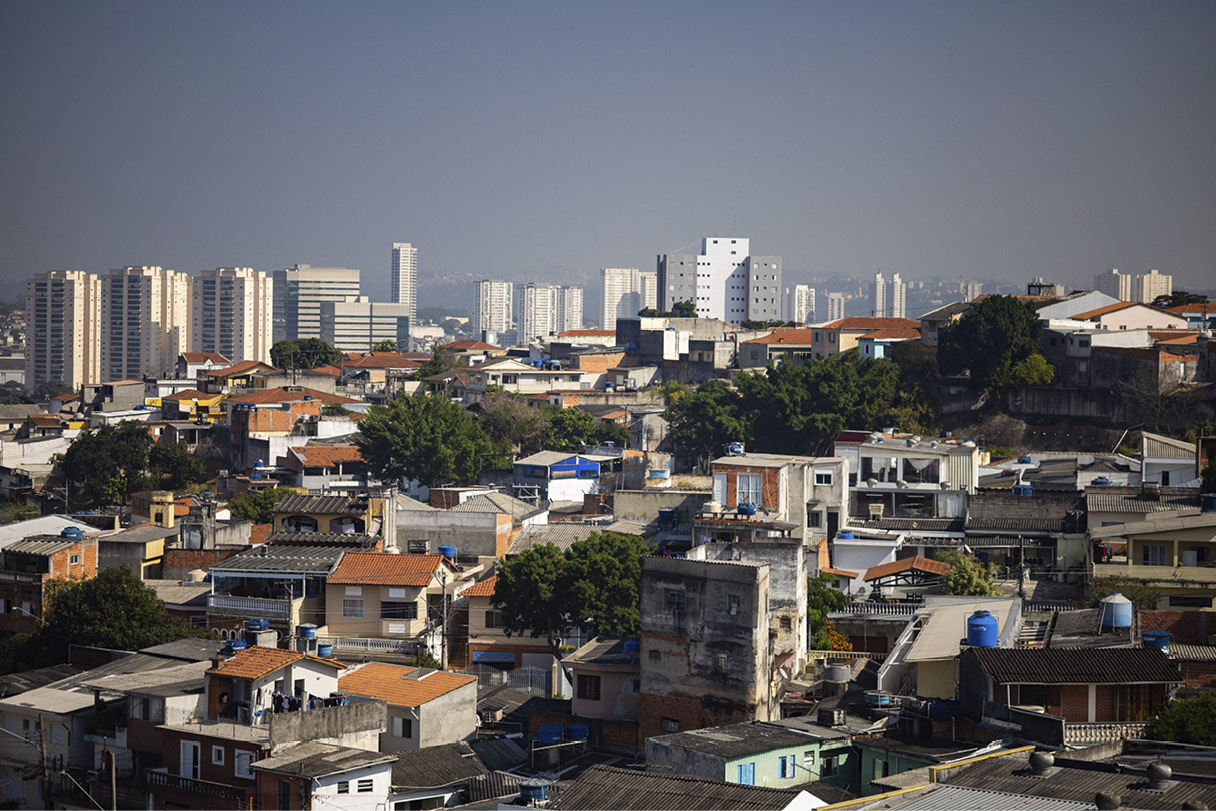
Interlagos does not make life easy. The circuit sits in São Paulo’s hilly terrain at roughly 800 meters above sea level, where thinner air cuts into power and downforce and makes cooling harder for engines and brakes. The drivers feel it, too. Heart rates climb, breathing gets heavier, and staying sharp becomes part of the race.
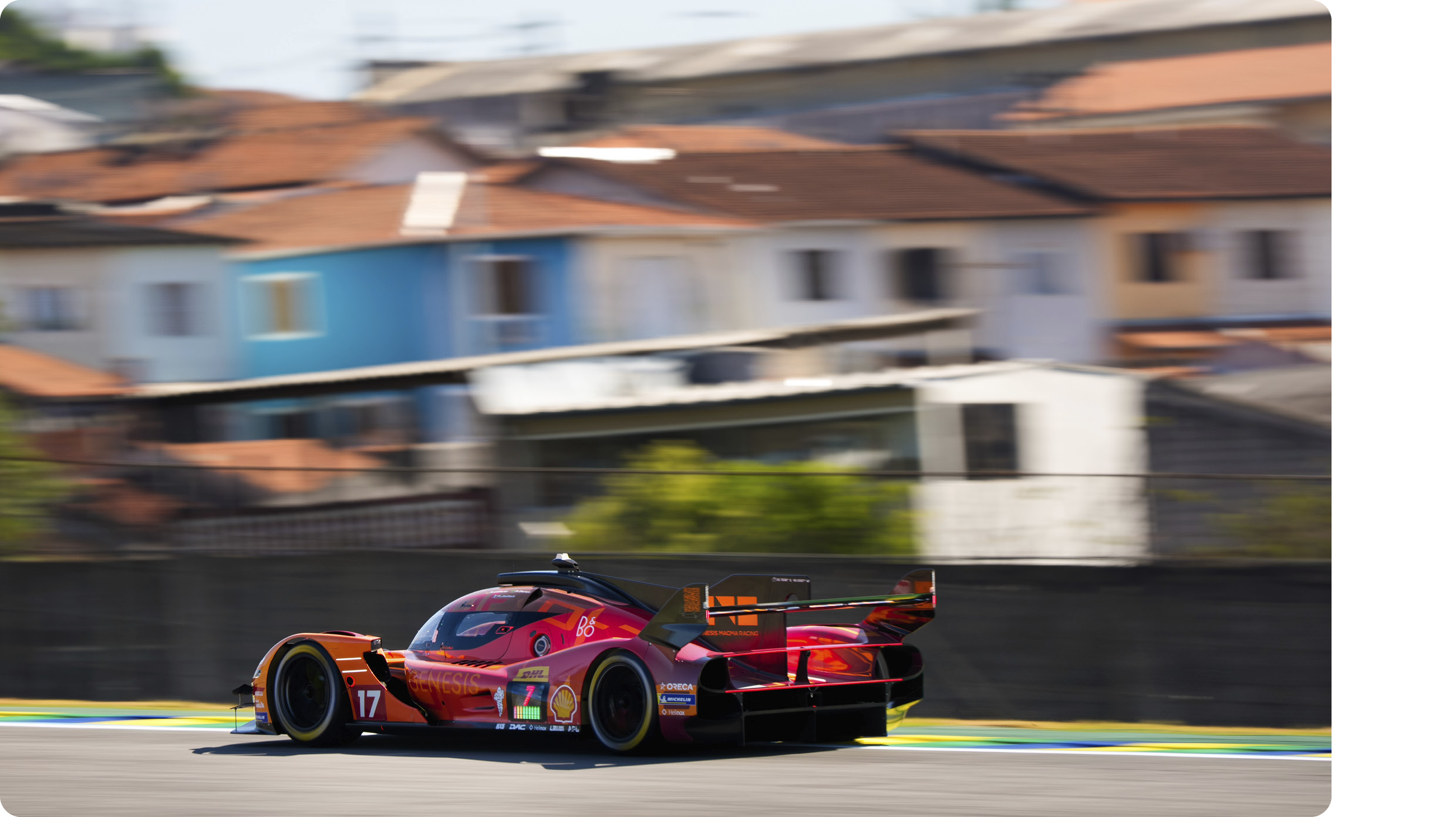
The other defining feature is the counterclockwise layout. Counterclockwise circuits are rare, accounting for only about 10 percent of tracks worldwide. Because drivers usually train and race more often on clockwise circuits, going the other way can feel awkward and physically punishing. Interlagos piles on the difficulty with major elevation changes, a bumpy surface, almost no true straights, and heavy lateral G loads. The right-rear tire takes the biggest hit here, so tire management has to be exact.
Weather is another wildcard. São Paulo sits at altitude and close enough to the ocean for clouds to roll in sud-denly and dump rain with little warning. When that happens, the timing of a tire change can swing the running order fast.
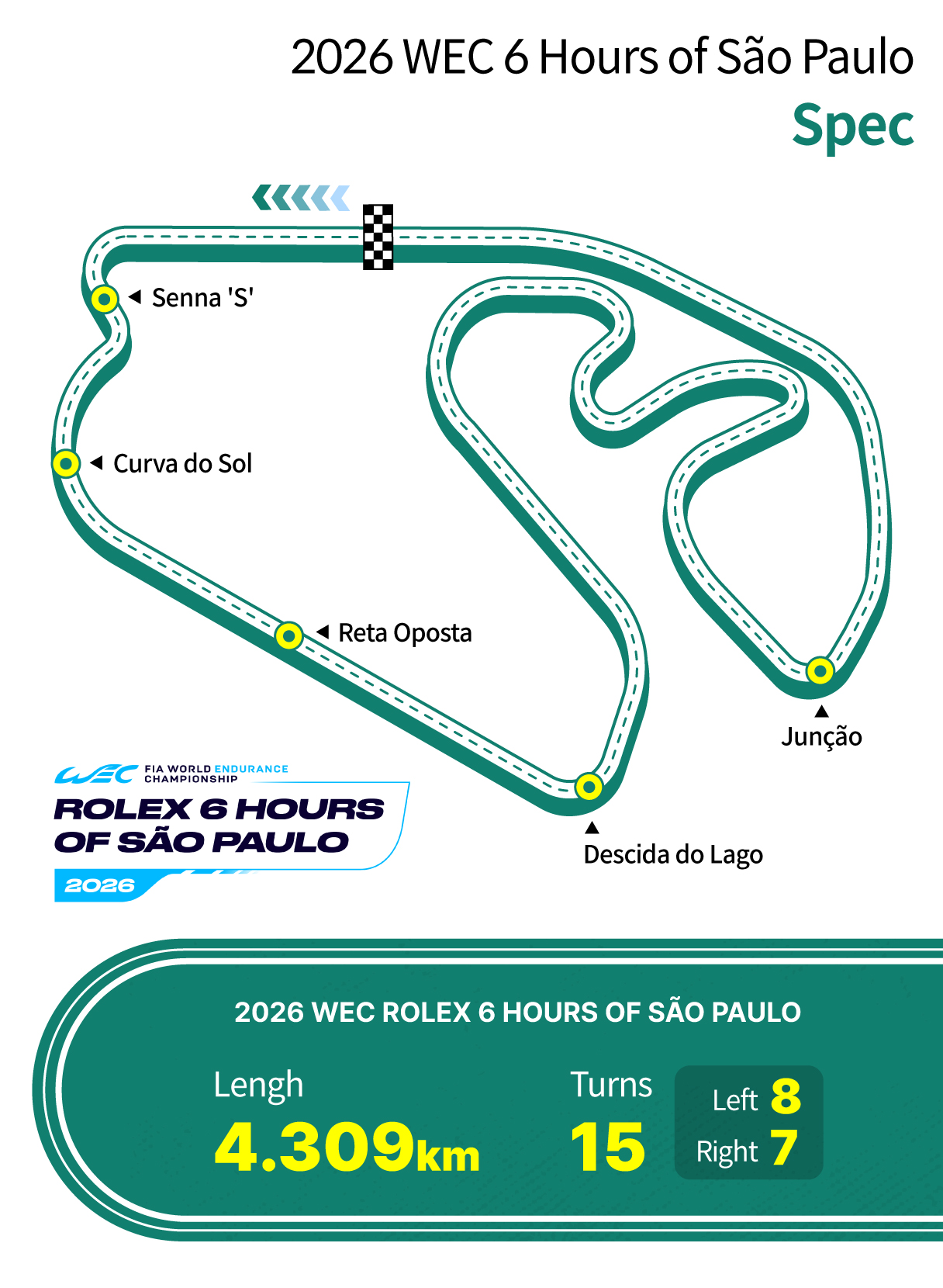
Better known as Interlagos, the circuit’s official name is Autódromo José Carlos Pace. Opened in 1940, it is one of South America’s great motorsport landmarks and was renamed in 1985 to honor Brazilian Formula 1 driver José Carlos Pace. It is the home of the Brazilian Grand Prix and the flagship circuit of South American motorsport. The name “Interlagos” means “between lakes” in Portuguese, a reference to the track’s location between two large artificial lakes.
The original layout was a monster, stretching roughly 8 km. Major renovations later cut out the complicated infield section and widened the track. As race cars became dramatically faster in the 2000s, the circuit’s notoriously rough surface was fully repaved. The pit-lane entry was widened, lighting was ad-ded for night running, and special grooves were cut into the pavement to help manage heavy rain.
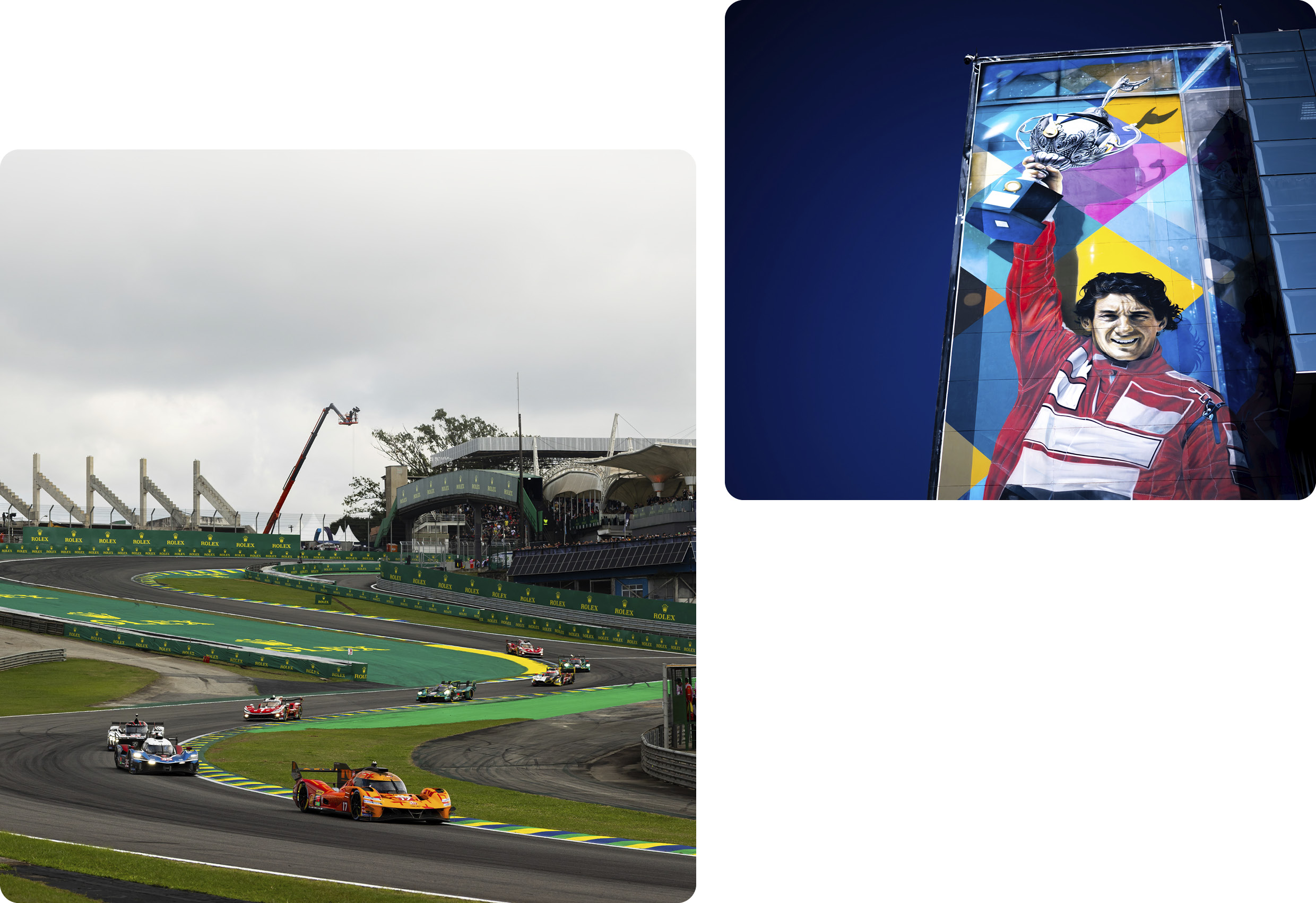
Right after the uphill start, the track drops into the Senna S, a downhill corner complex and the circuit’s prime passing zone. It took its name after Formula 1 legend Ayrton Senna helped design the section during the 1990 renovation. From there, drivers sweep left through Curva do Sol, or “Curve of the Sun,” where they face Brazil’s intense sunlight while loading the car hard through sustained lateral G.
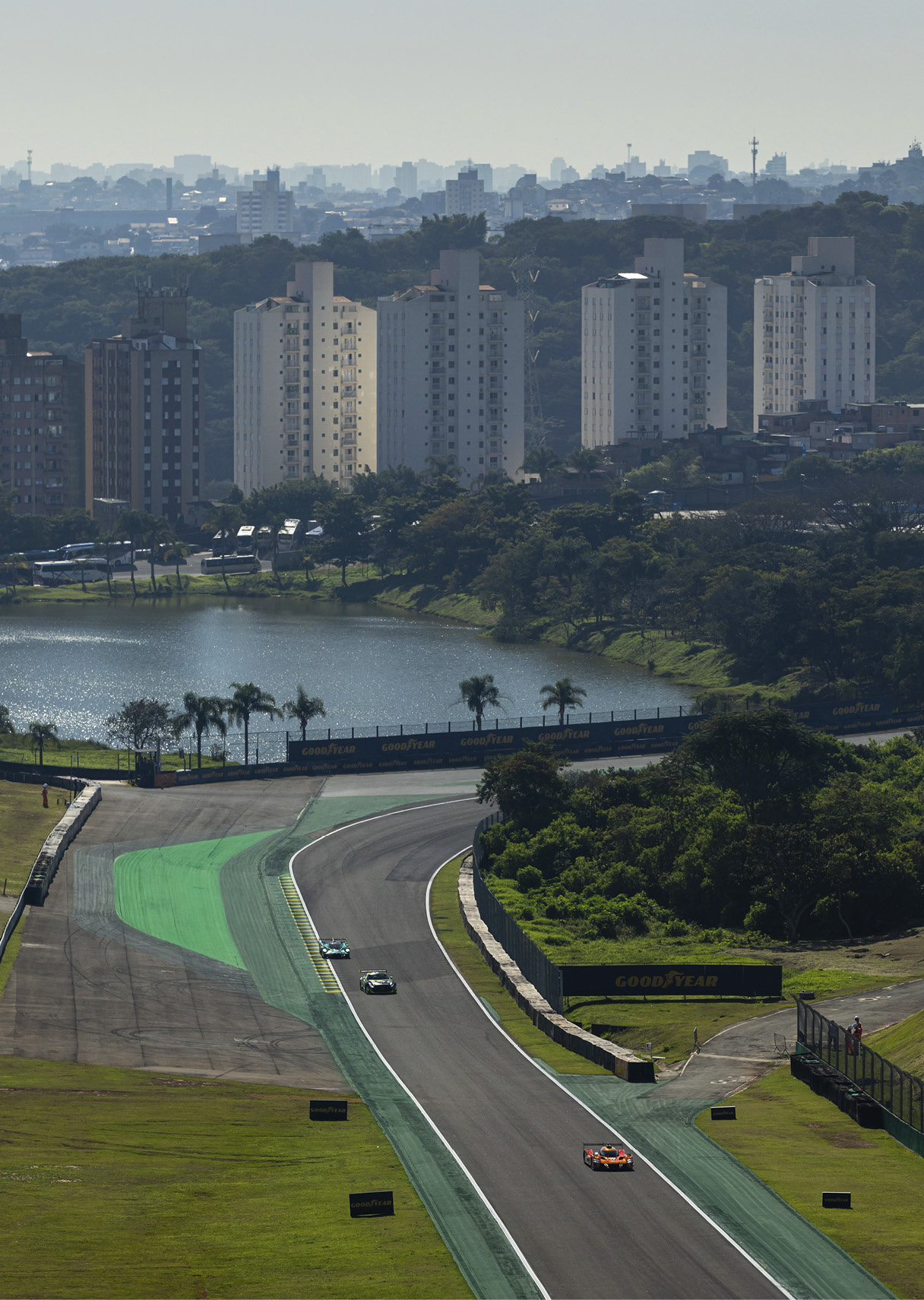
After Reta Oposta, the second-longest straight on the circuit, comes Descida do Lago, a two-part corner with different radii. From there, the infield section strings together a series of tight left-right corners. After Turn 12, Junção—meaning “junction”—drivers pass through three left-hand corners and climb back onto the main straight.
At Interlagos, grid position matters. A lot. At 4.309 km per lap, it is the shortest circuit on the WEC calendar, and passing is especially difficult because the track is short on long straights and heavy on technical corners. If a Hypercar catches a pack of LMGT3 cars in the twisty infield section, it can get messy fast. To cut lap time, the Hypercars have to clear LMGT3 traffic safely, get through Turn 12 cleanly, and build speed as quickly as possible on the gently curving uphill run.
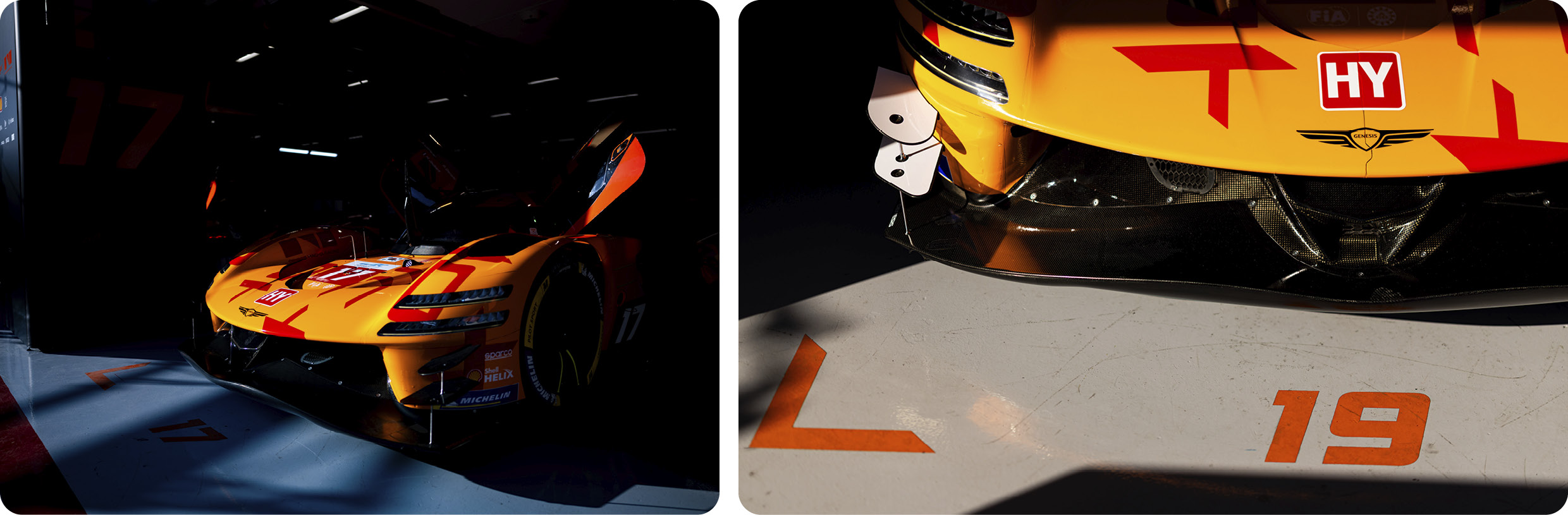
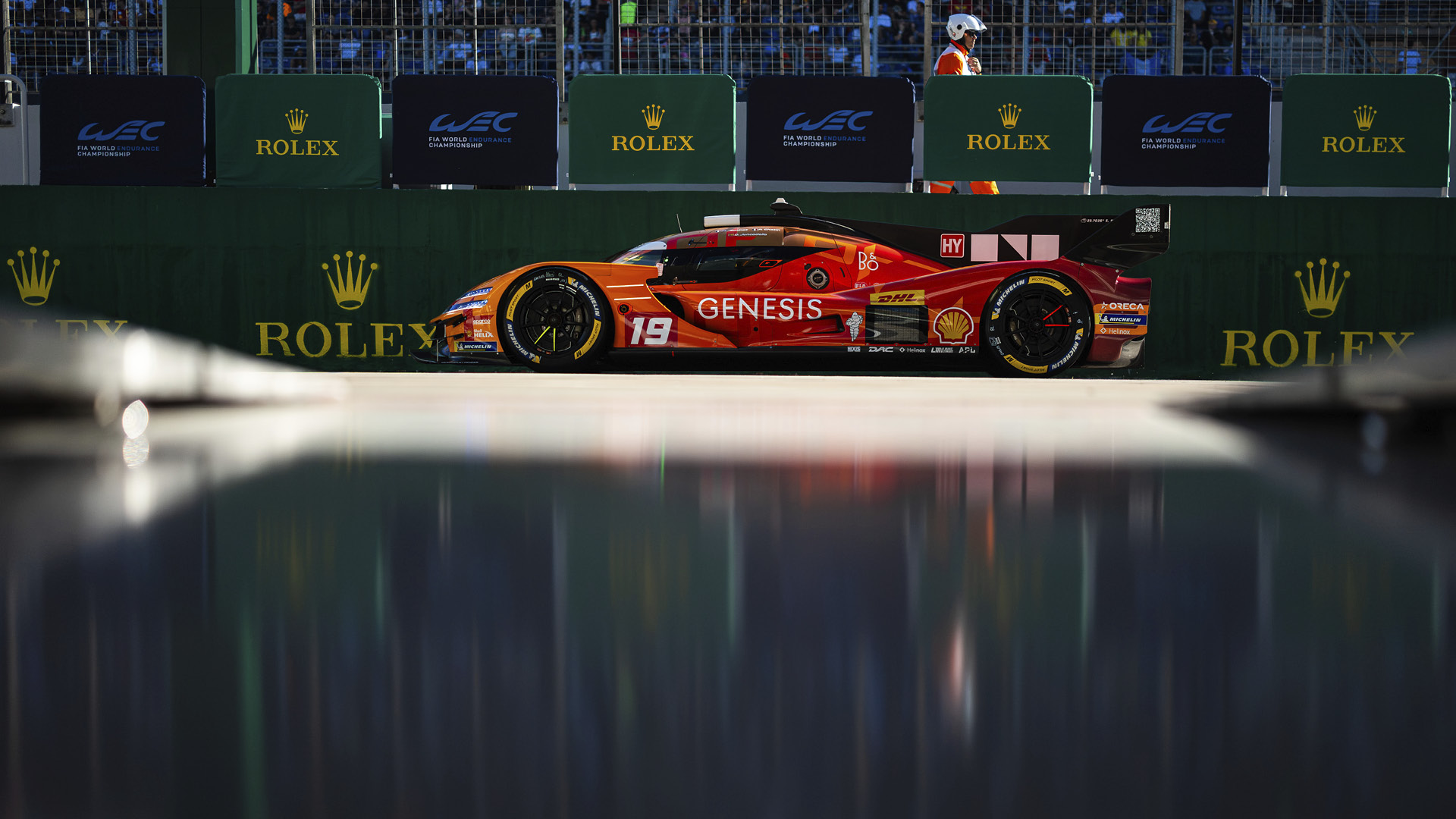
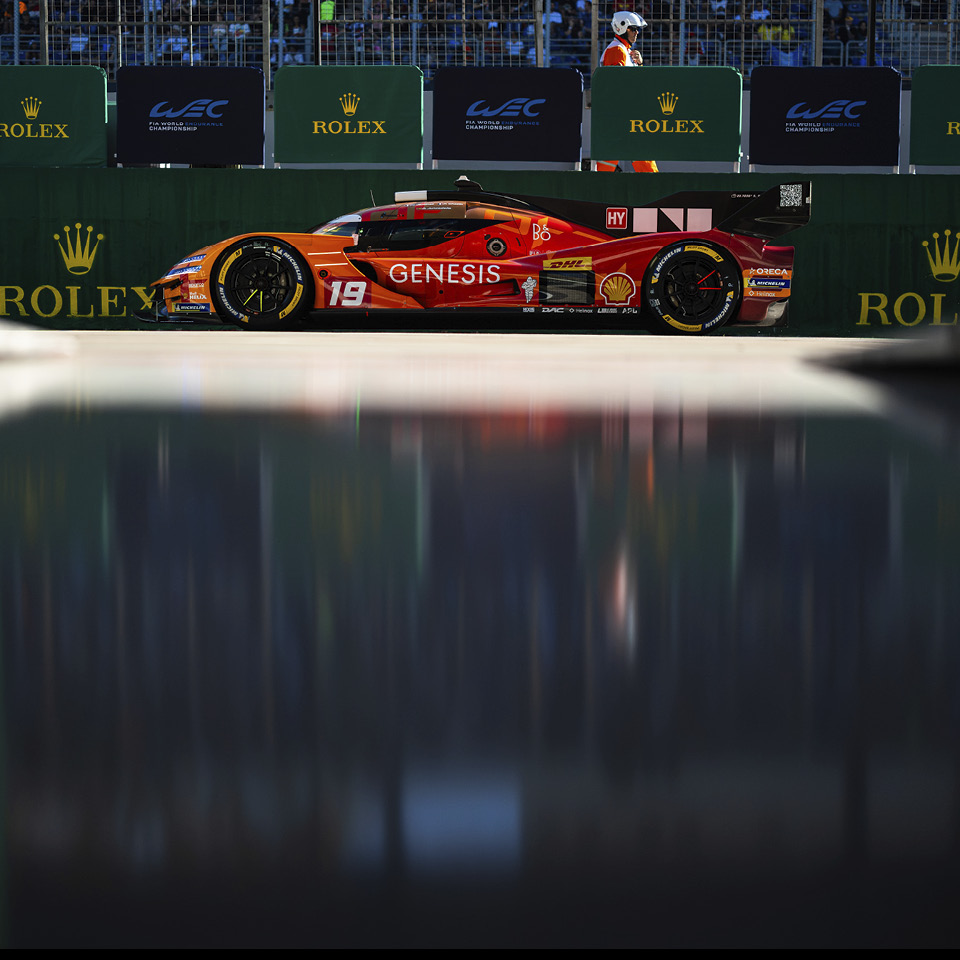
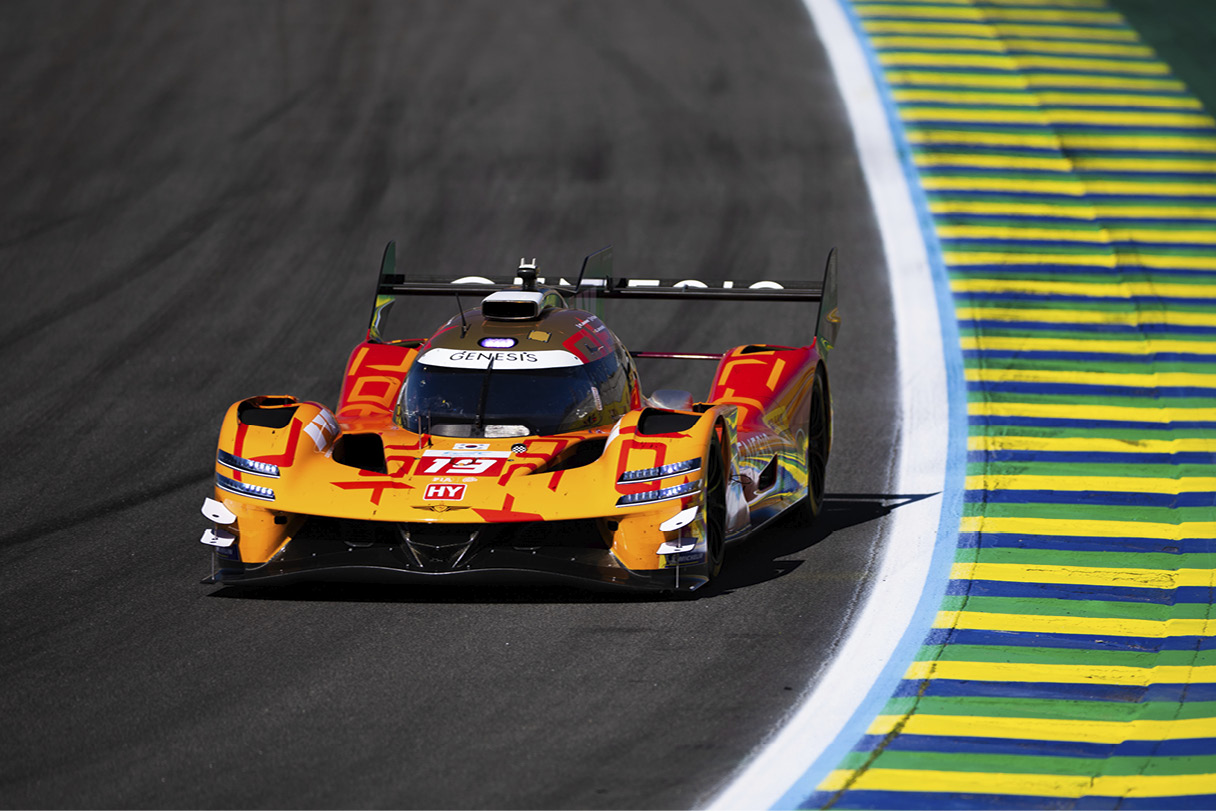
Genesis Magma Racing decided to keep the vivid orange livery it revealed at Le Mans for the rest of the season’s second half. Cyril Abiteboul, Genesis Magma Racing Team Principal, looked ahead to Brazil with a clear sense of the challenge. “The 6 Hours of São Paulo was quite a different race from the previous ones for us. The biggest positive was clearly the level of reliability. Getting both cars through the race without any technical issues was a main target coming here after all the data accumulated in Le Mans.”
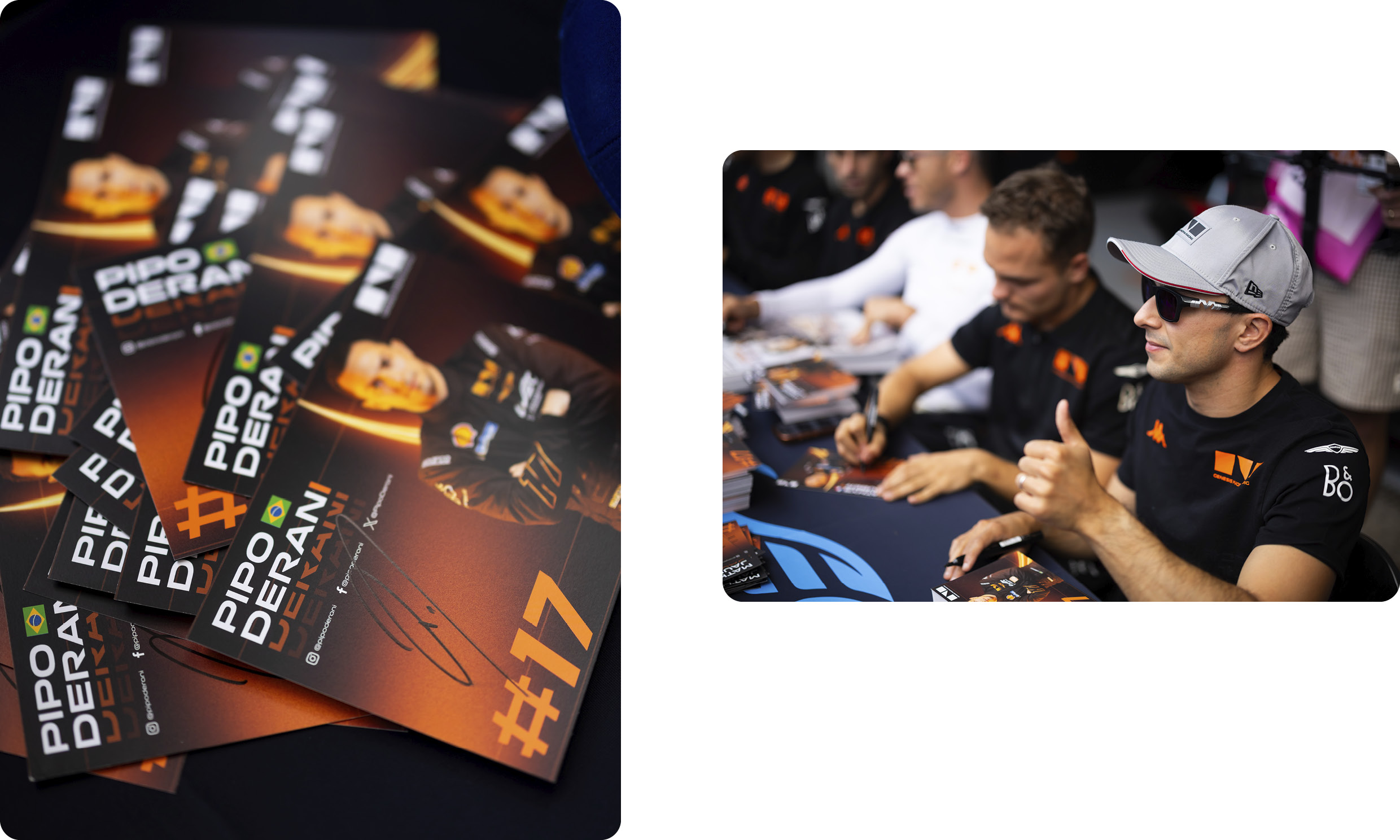
Among the six-driver lineup, the one with the deepest personal connection was Pipo Derani, the team’s Brazilian driver. Although he competes at the top level of endurance racing, Derani had surprisingly never raced in the 6 Hours of São Paulo. During his previous WEC years, from 2015 to 2022, Brazil was not on the calendar. After that, he moved his racing base to North America. That made this home appearance special.
Pipo Derani said: “It was nice to be back at home driving at Interlagos. It’s a privilege to drive in front of my home crowd. And the whole energy that the Brazilian people bring, it's amazing. Unfortunately, we couldn't give them a better result. We were a bit out of the race for my stints with everything that had happened up until then. Nevertheless, we were trying to bring the car home with no issues, which is a big step for the team, and I got to have fun in the last two stints. It was a good team effort. I'm looking forward to coming back here next year. We learned a lot this weekend. We showed some promise, but we have things to learn still. That's part of the game. And the positive is that I got to drive at home.”
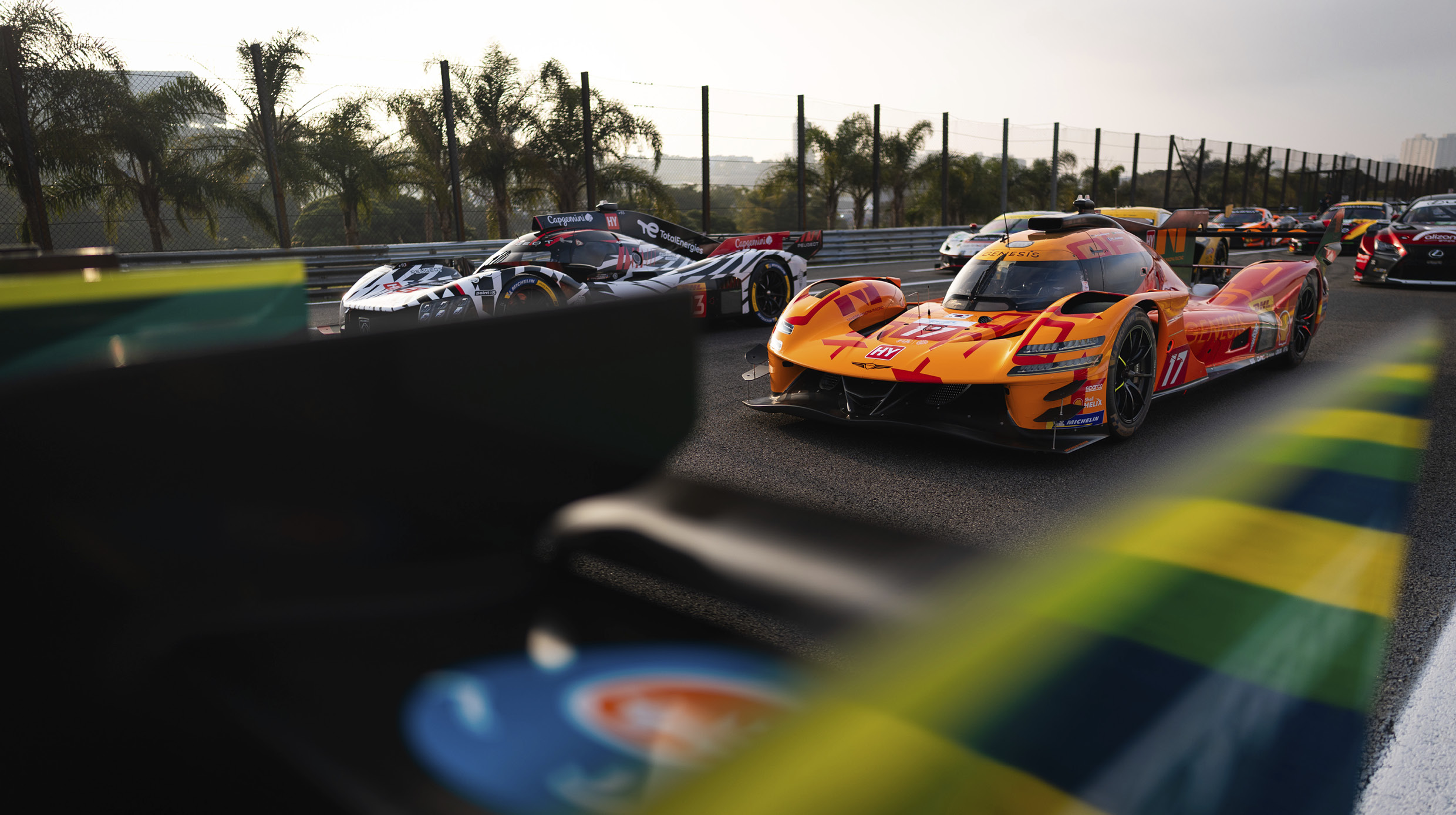
Most teams, including Genesis Magma Racing, kept three drivers in each car. Cadillac Hertz Team JOTA’s #12 car and both Aston Martin THOR Team entries went the other way, listing only two drivers each. Cadillac, last year’s São Paulo winner, chose to run only Norman Nato and Will Stevens after Alex Lynn opted for surgery to treat neck pain. Aston Martin had a different problem: limited driver resources split against a clashing IMSA program in the United States. That left Aston with just four drivers for two cars. In a 24-hour race like Le Mans, three drivers are mandatory, and teams often prepare reserve drivers as well. A six-hour race can be run with two drivers, but the workload gets much heavier. Fewer drivers means longer stints, less recovery time, and a bigger physical hit—especially at a place like Interlagos.
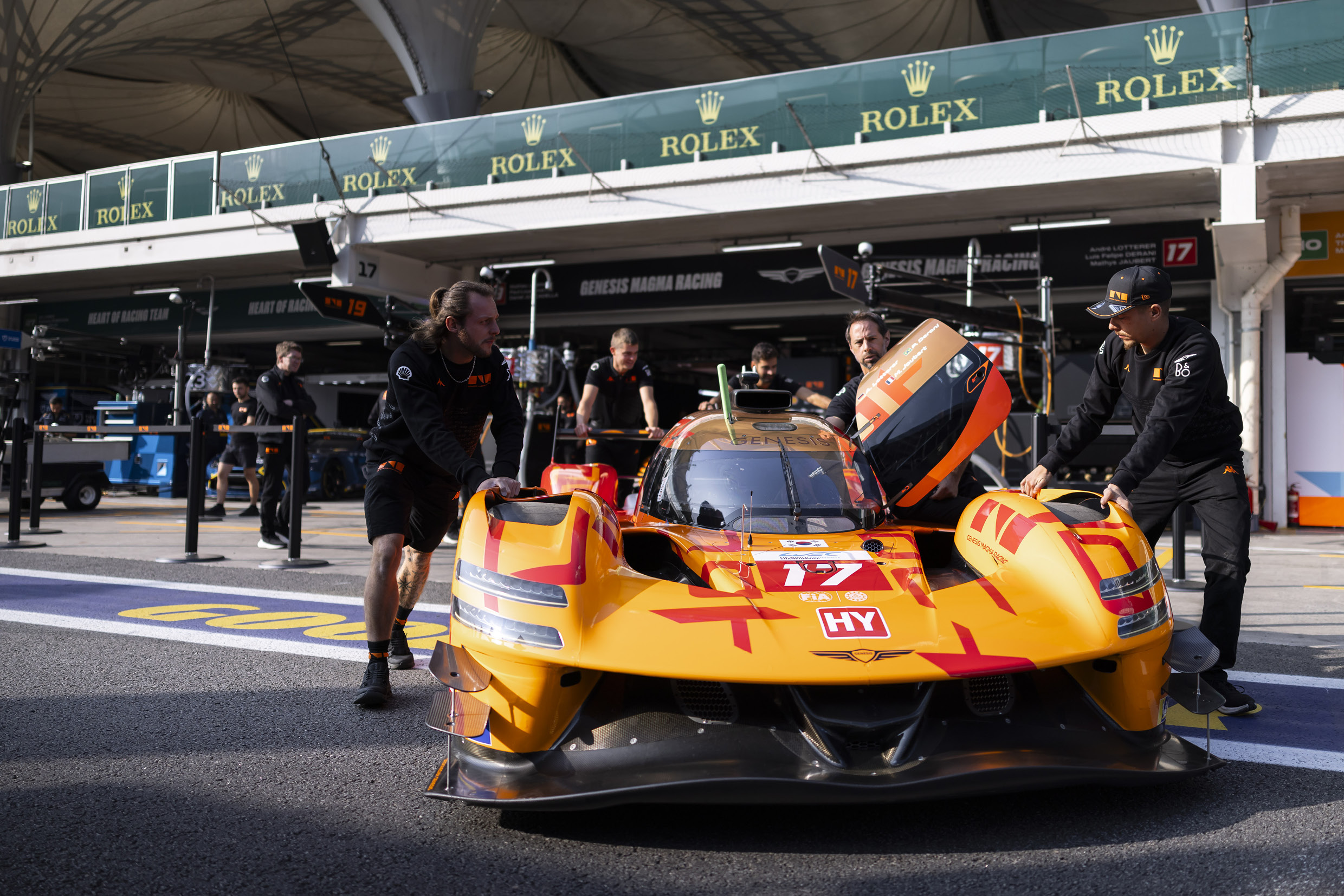
Free Practice 1 (FP1) began at 11 a.m. on Friday, July 10. The #007 Aston Martin topped the session, with three Ferraris lined up behind it. Genesis was right in the mix: the #19 car finished seventh, 0.545 second off the top time, while the #17 car ended the session ninth, 0.602 second back.
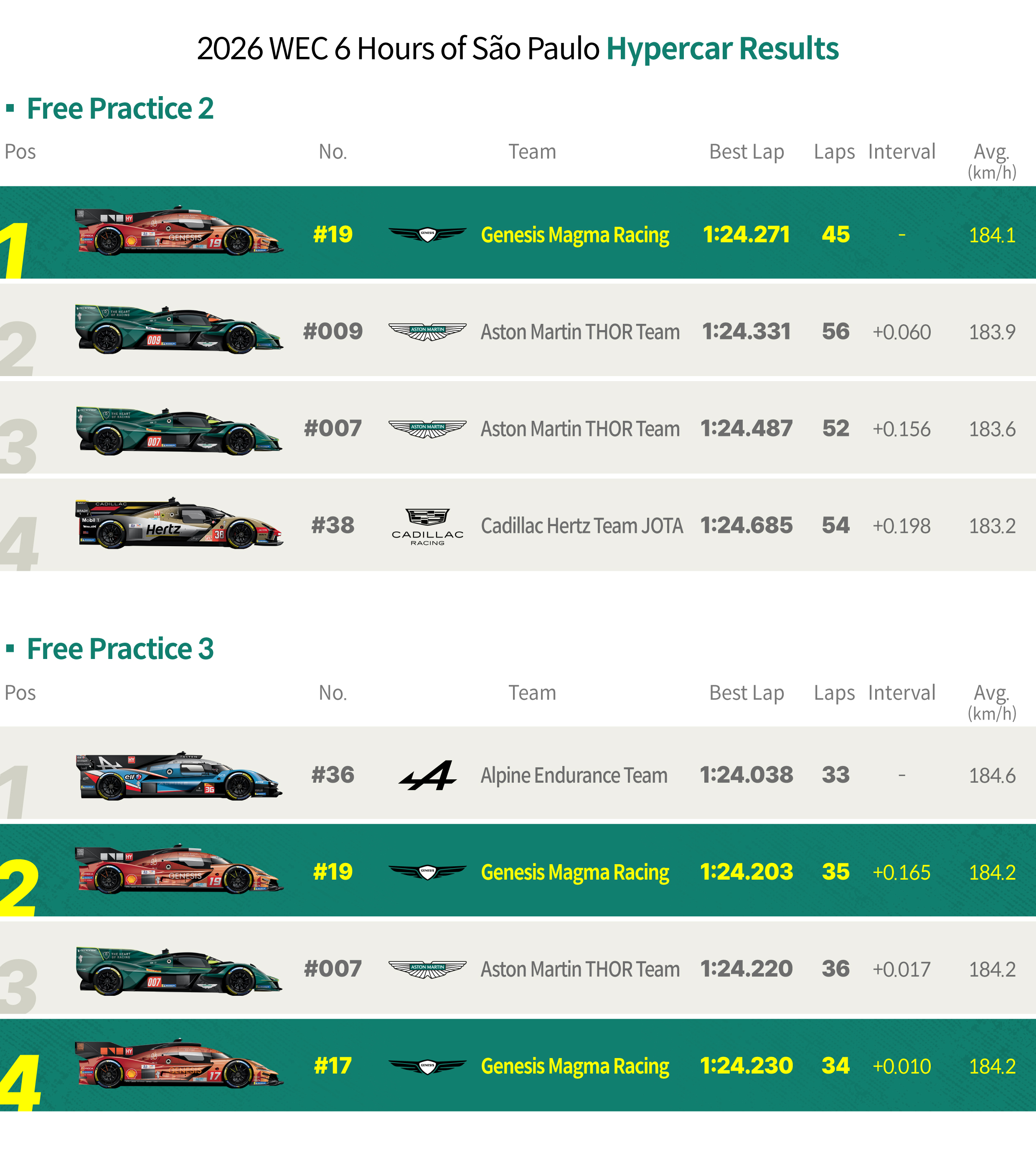
In FP2 that afternoon, Mathieu Jaminet stunned the paddock in the #19 Genesis. During a qualifying simulation, he set the fastest overall time of the session with a 1:24.271. Yes, it was only practice. But for a brand-new team in just its fourth race, it was the first session-topping result in Genesis Magma Racing history. The fact that Jaminet did it on his first visit to Interlagos made it even more impressive. The #17 car finished 13th, 0.777 second off its sister car. Genesis’ pace carried into FP3 on Saturday morning. Alpine set the fastest time, but the #19 Genesis finished second and the #17 car ended the session fourth.
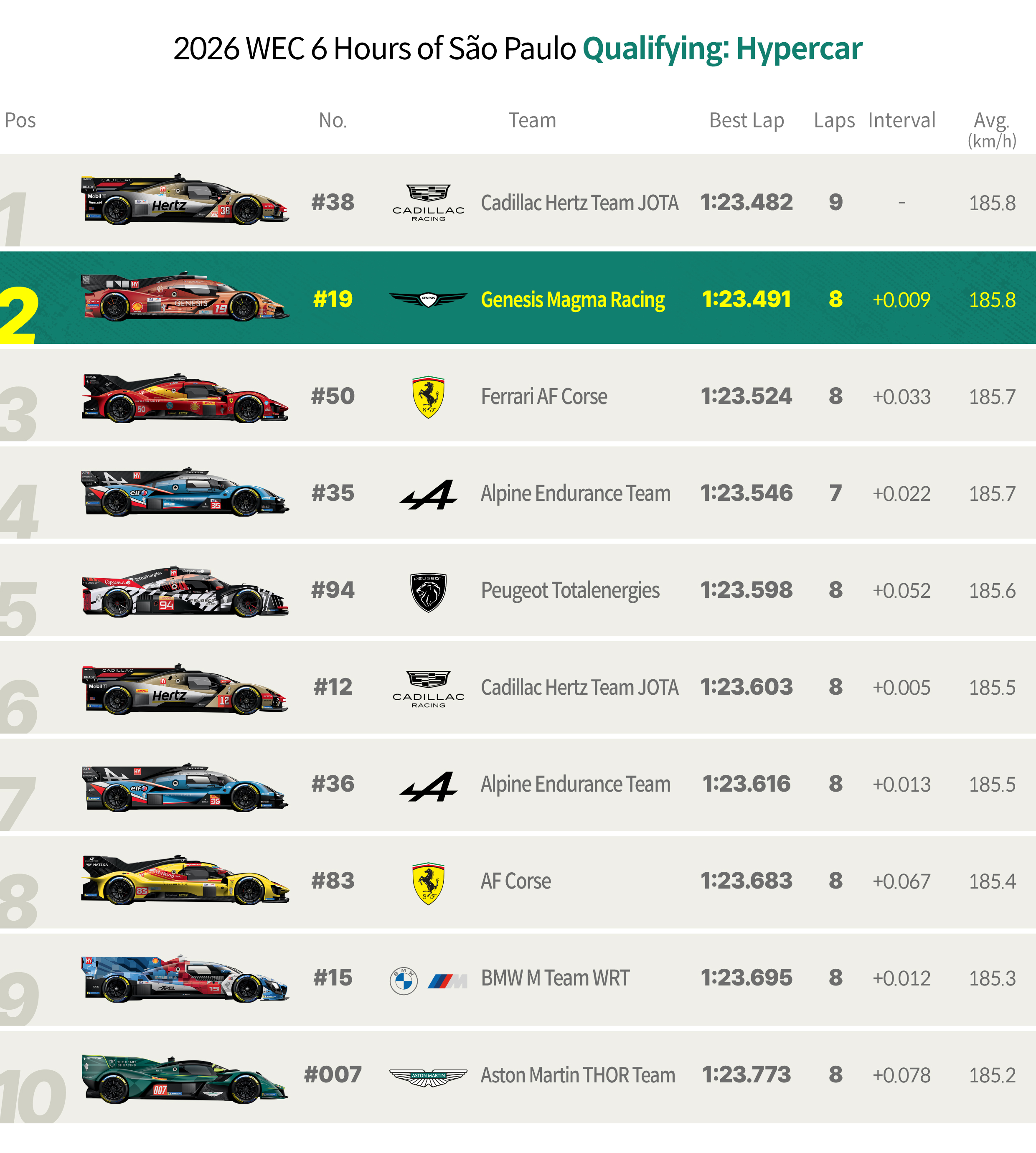
Qualifying began at 3:10 p.m. on Saturday. The first qualifying session set the lower grid positions outside the top 10. The second session, Hyperpole, decided the top 10 grid spots, including pole position. Genesis Magma Racing sent out Jaminet in the #19 car and home driver Derani in the #17.
Both Genesis Magma Racing cars were inside the top 10 when Derani jumped to provisional first with seven minutes left in the session. With 4 minutes and 30 seconds remaining, the #15 BMW moved to provisional P1 with a 1:23.766. That lit the fuse for a full-on time-attack shootout. With 2 minutes and 34 seconds left, Jaminet threw down a 1:23.491 and jumped to provisional first. Derani slipped to 10th, then dropped into the elimination zone.
The #38 Cadillac driven by Jack Aitken, also known in Korea as Han Se-yong, finished the session on top. Genesis Magma Racing’s #19 car ended up second, just 0.009 second behind. The #17 car, however, missed the cut in 12th. Toyota, fresh off its Le Mans win, had a rough session, with both cars knocked out. Ferrari, BMW, Aston Martin, and Peugeot also each lost one car. From first to 17th, the field was covered by less than 0.8 second.
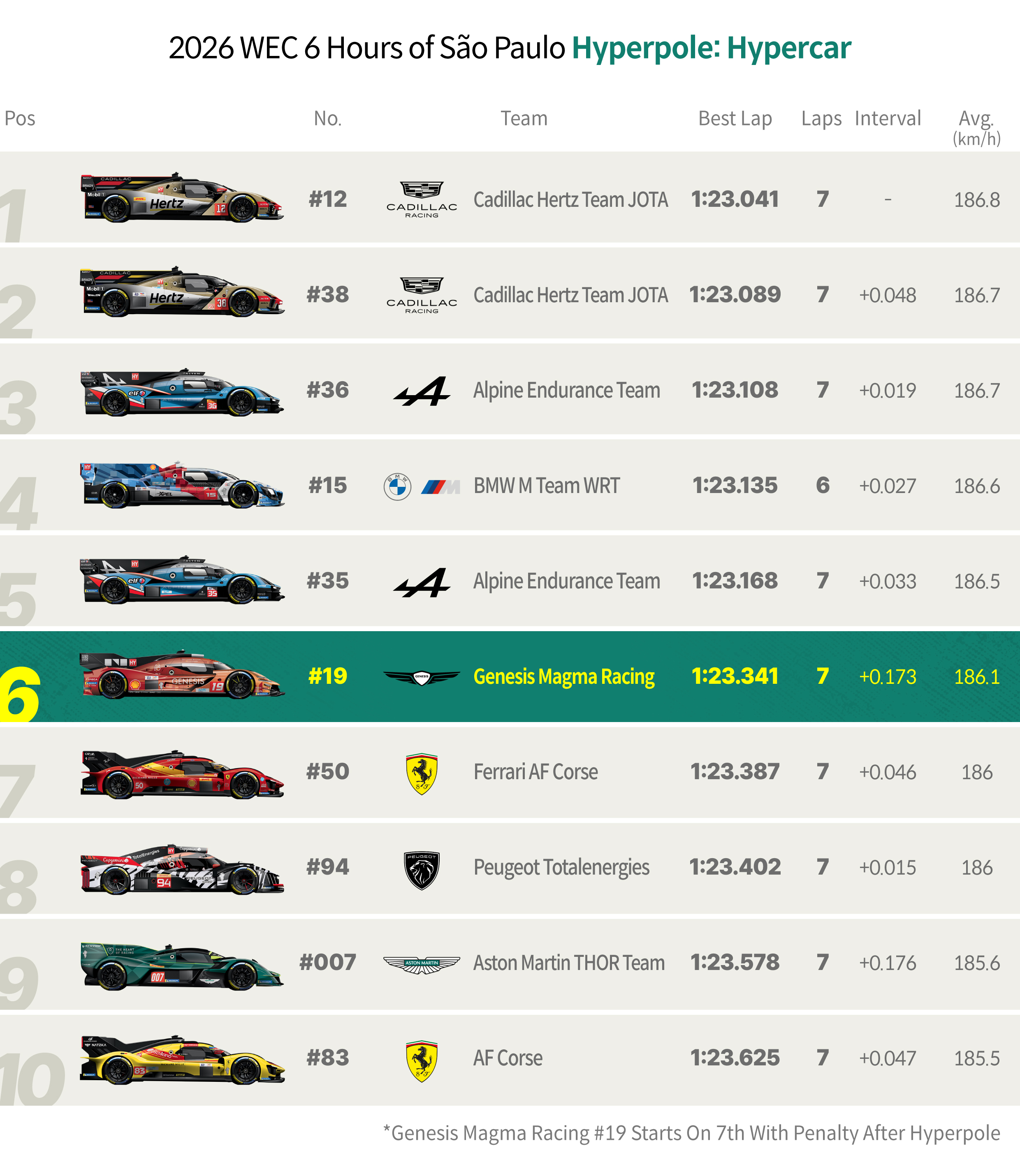
Then came Hyperpole, where the top 10 grid positions were decided. Early in the session, the #007 Aston Martin driven by Harry Tincknell moved onto provisional pole. With six minutes left, Jaminet climbed to second and joined the fight at the front. BMW and Alpine took their shots, but neither could beat Tincknell’s time. As Jaminet began sliding down the order, he found more time and climbed back to second. With 2 minutes and 20 seconds left, the #38 Cadillac took provisional pole. Then, in the final moments, the #12 Cadillac grabbed pole position, giving Cadillac a front-row lockout for the second year in a row.
The #19 Genesis Magma Racing car originally qualified sixth. But after receiving a penalty for impeding the #20 BMW during a flying lap in the first qualifying session, it was pushed back to seventh on the grid.
In LMGT3, the #23 Aston Martin driven by Kobe Pauwels took pole position. It was a meaningful result, achieved during his first career run at Interlagos. Iron Lynx’s Mercedes-AMG, Akkodis ASP’s Lexus, Team WRT’s BMW, and Proton Competition’s Ford followed, meaning the top five in class were filled by five different manufacturers.
Right after the start, the #19 Genesis Magma Racing car delivered an impressive run. Video: FIA WEC (https://www.fiawec.com)
Race day opened under cloudy skies, with showers in the forecast. After the previous day’s 27°C heat, temperatures dropped to around 20°C, humidity was high, and the track was slightly damp before the start. The start stayed clean. Will Stevens in the #12 Cadillac jumped into the lead, with the sister #38 Cadillac tucked in behind. Kevin Magnussen in the #15 BMW reported a lack of power, but the car recovered speed and moved past Alpine into third. Daniel Juncadella, driving the #19 Genesis Magma Racing car, briefly climbed to sixth before the #6 Ferrari got back by, leaving him seventh at the end of the opening lap.
The leading Cadillac hit trouble at the first pit stop. A right-front wheel nut on the #12 car refused to come loose, costing the team a precious 15 seconds and dropping it eight positions. But the comeback drive that followed was electric. The Cadillac picked off Toyota and two Ferraris in succession, and by the two-hour mark it was back up to second. The #83 Ferrari, despite receiving a five-second stop-and-go penalty for a start-procedure violation, climbed as high as third.
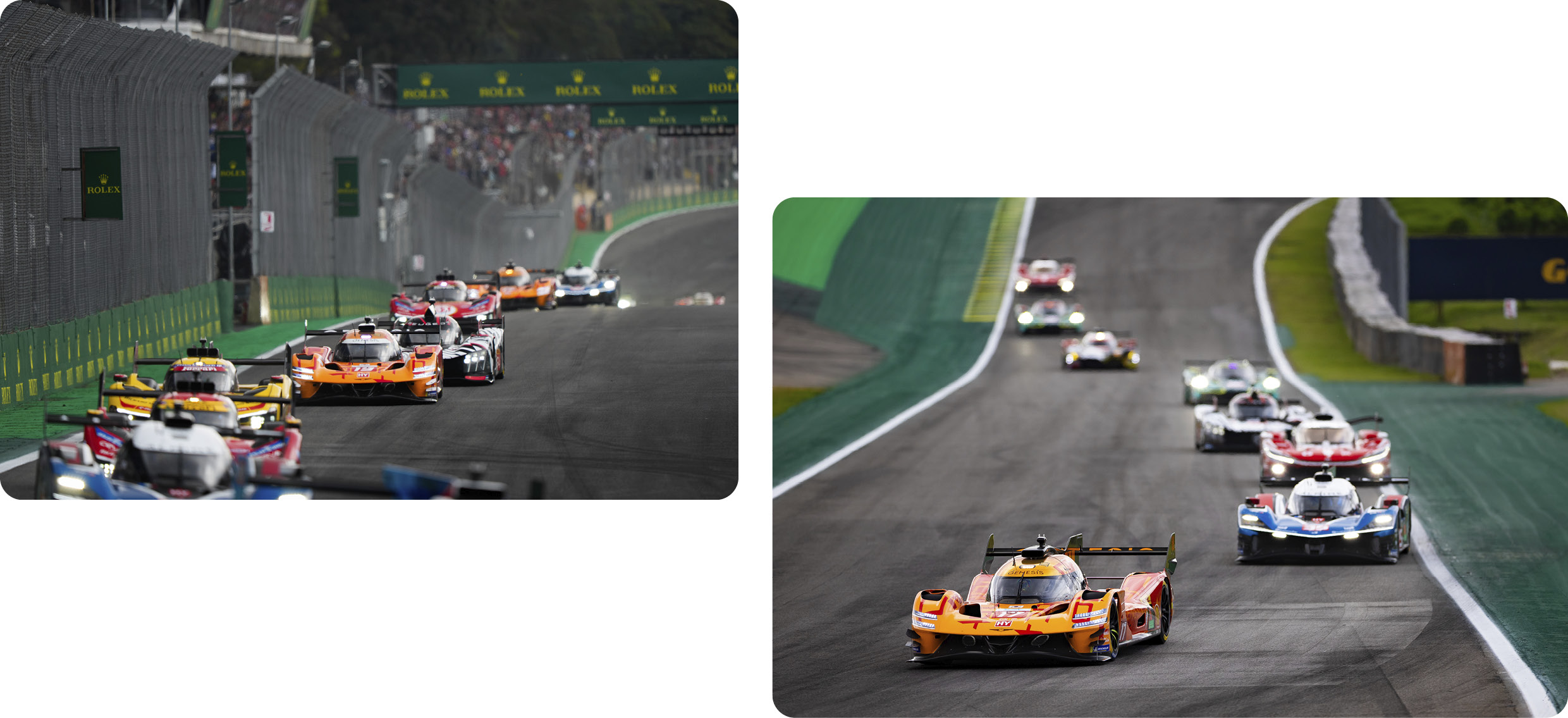
The Genesis Magma Racing pair also showed strong early pace. Two hours into the race, André Lotterer had the #17 car running sixth, with Juncadella’s #19 car in ninth. But the #17 was hit with a penalty after contact with a Toyota. Lotterer went for the inside, slid slightly, and made side contact. The #8 Toyota suffered a damaged front toe rod and had to go to the garage, eventually returning to the track 13 laps down. The #19 Genesis also lost time after contact with the #54 Ferrari GT3 sent it off course. That incident came 1 hour and 20 minutes into the race.
Around 2 hours and 10 minutes in, as other cars cycled through pit stops, the two Genesis Magma Racing cars briefly ran first and second. Aside from a short Full Course Yellow to clear debris, the opening phase stayed relatively calm—but Interlagos had already started taking bites out of the field.
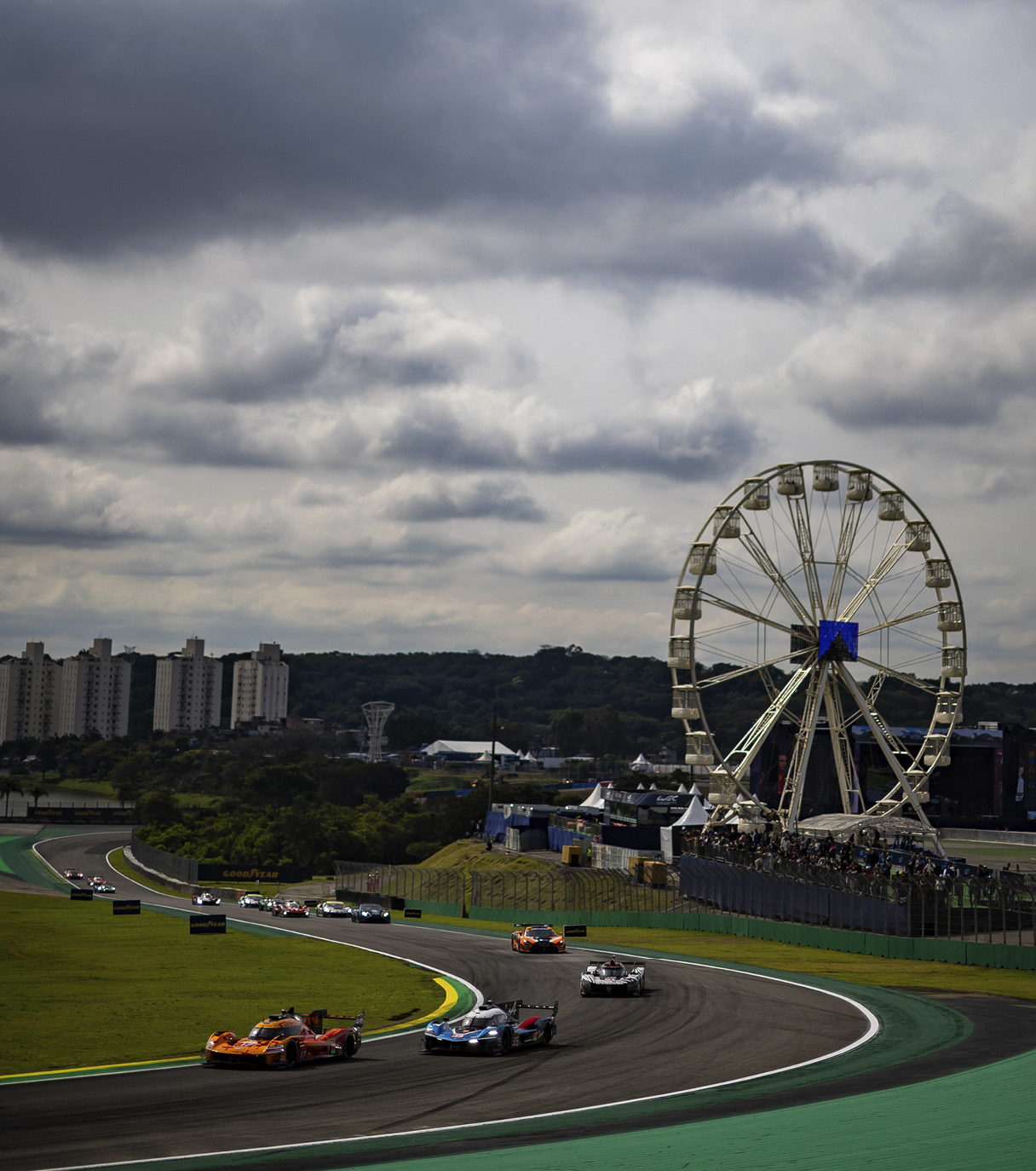
The middle stretch belonged to Alpine. António Félix da Costa in the #35 Alpine led for a long run and traded pressure with BMW at the front. That fight gave the #51 Ferrari a chance to close in, but Ferrari’s charge got messy after a pit stop. Rejoining the track, the car clipped the wall and had to run for a while with advertising-board debris stuck in its intake.
The #12 Cadillac was charging hard to get back to the lead, but Interlagos was not giving anyone free space. It made contact first with a Lexus GT3 car and then with the #83 Ferrari, earning a five-second penalty and losing significant time. On a short, crowded track like Interlagos, that kind of contact is always waiting to happen. The #83 Ferrari driven by Phil Hanson also received a 10-second penalty for contact with the #23 Aston Martin.
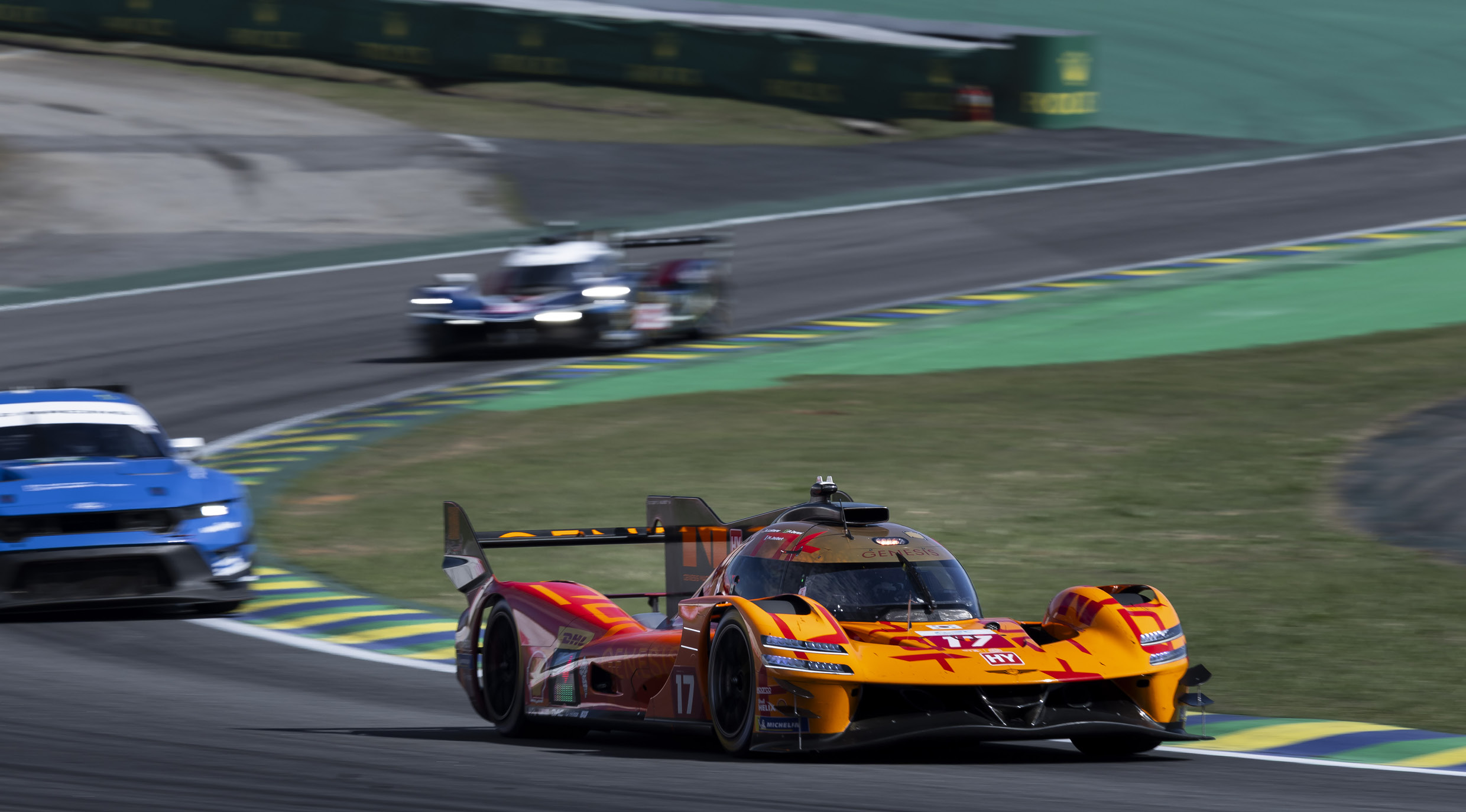
With two hours remaining, Raffaele Marciello led in the #15 BMW. Norman Nato chased in the #12 Cadillac, 16 seconds back. Genesis Magma Racing had Jaminet’s #19 car running eighth and Derani’s #17 car in 15th. In LMGT3, the Corvette run by Racing Team Turkey by TF led the class. Overhead, the sky had gone heavy and gray, with rain looking possible at any moment.
Late in the race, the clouds darkened and a light mist settled over the circuit. With 23 minutes remaining, race control instructed drivers to turn on their rain lights. Drops began to fall, but the track was still not wet enough for wet tires. Dries Vanthoor led in the #15 BMW, with James Calado’s #51 Ferrari chasing. The two Genesis Magma Racing cars were running 12th and 15th.
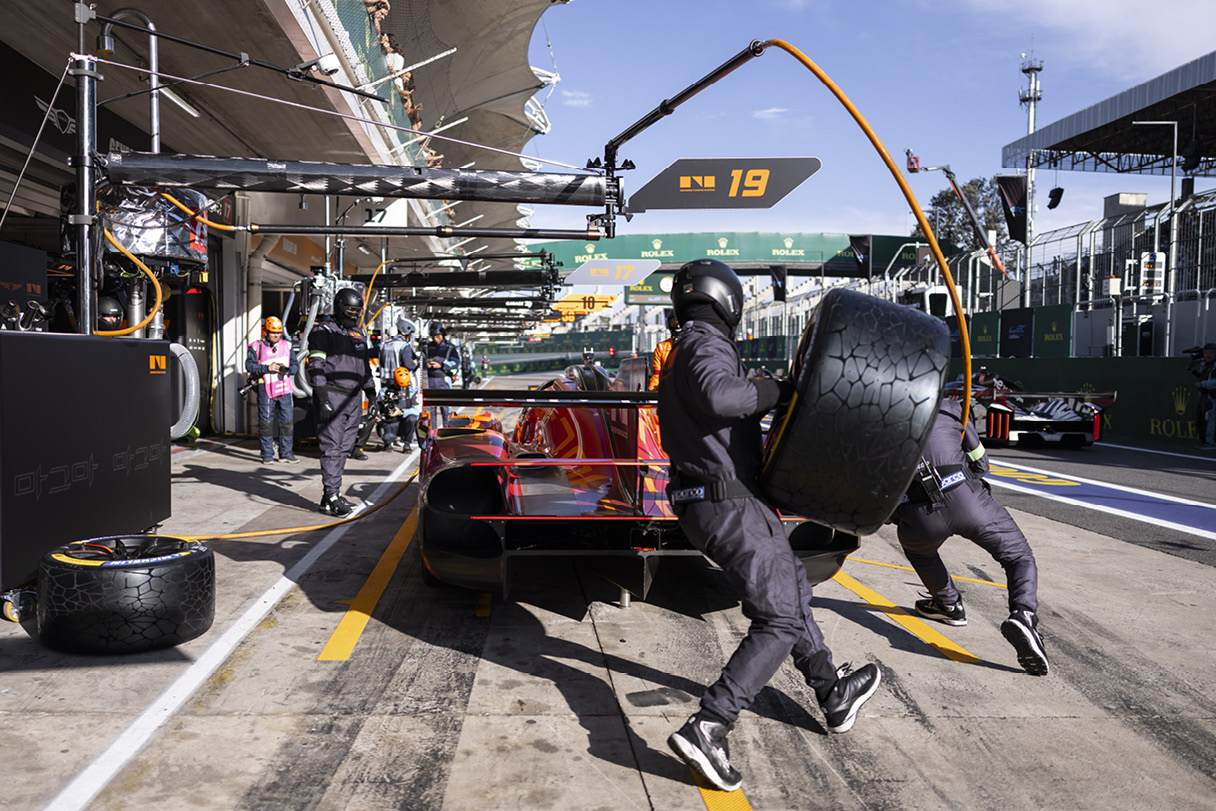
With 13 minutes left, Cadillac ordered its third- and fourth-place cars to swap positions. The thinking was clear: put the faster #12 car ahead and give it a shot at the chase. With less than 10 minutes to go, Antonio Fuoco in the #50 Ferrari spun after contact from Robin Frijns in the #20 BMW during an overtaking move. Paul-Loup Chatin, driving the #19 Genesis Magma Racing car, was then passed by Kamui Kobayashi in the #7 Toyota and dropped to 13th.
The #15 BMW held on to win the 6 Hours of São Paulo, taking its second victory of the season. The #51 Ferrari and #12 Cadillac completed the overall podium. In LMGT3, the Corvette run by Racing Team Turkey by TF took the class win, followed by Team WRT’s BMW M4 GT3 and Manthey’s Porsche 911.
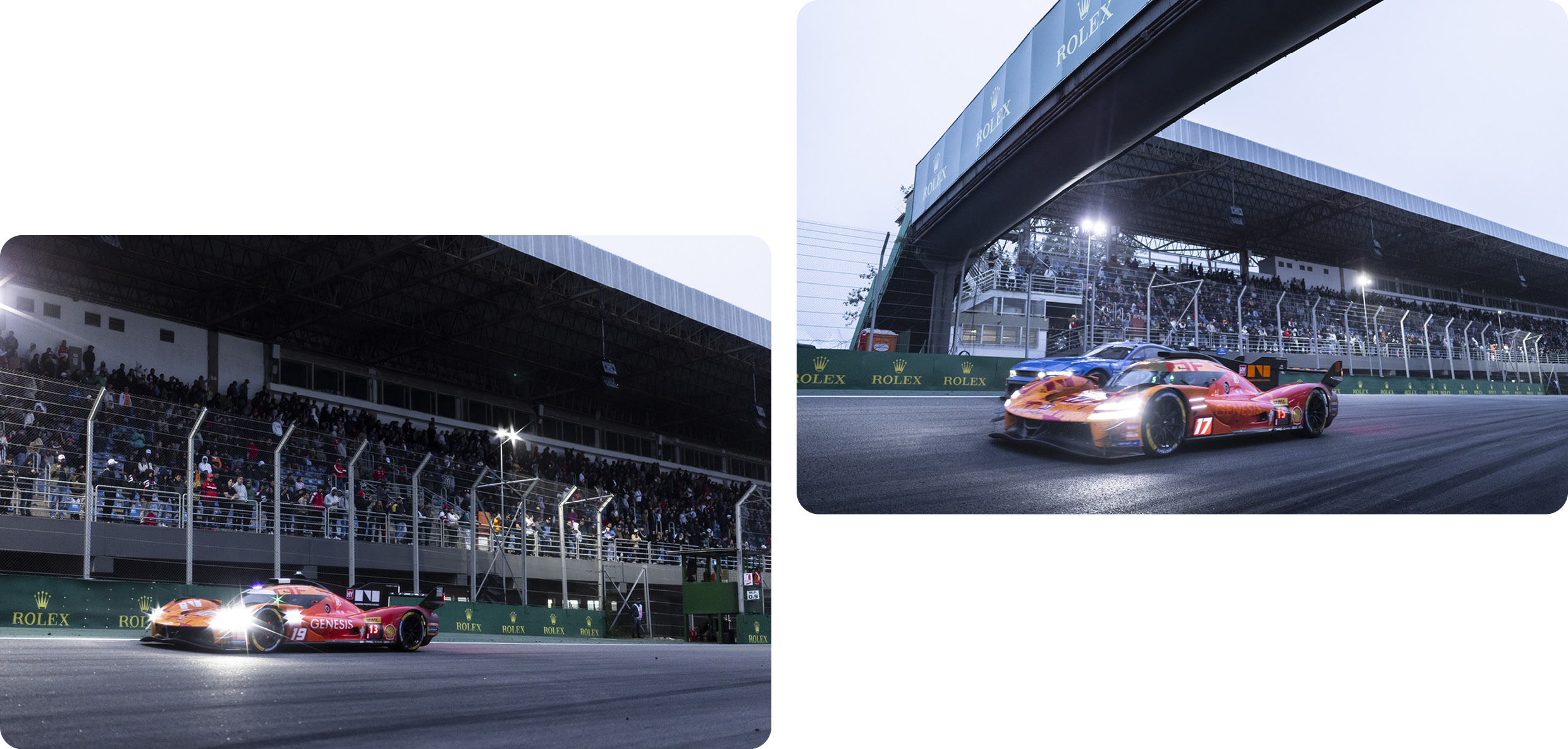
Genesis Magma Racing finished with the #19 car in 13th and the #17 car, with Derani handling the final stint, in 15th. For Derani, racing at home, the result was probably short of what he wanted. But for the team, there was real value in getting both cars to the checkered flag without technical trouble in its first South American flyaway race.
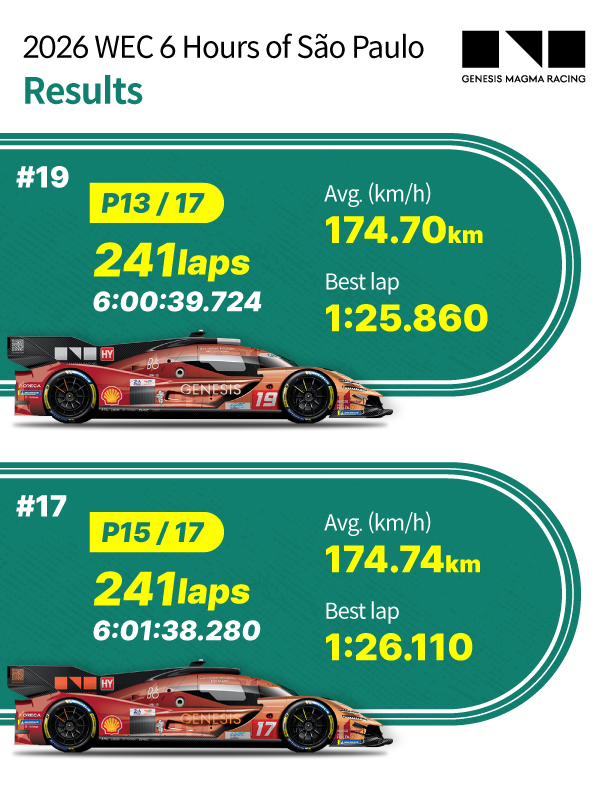
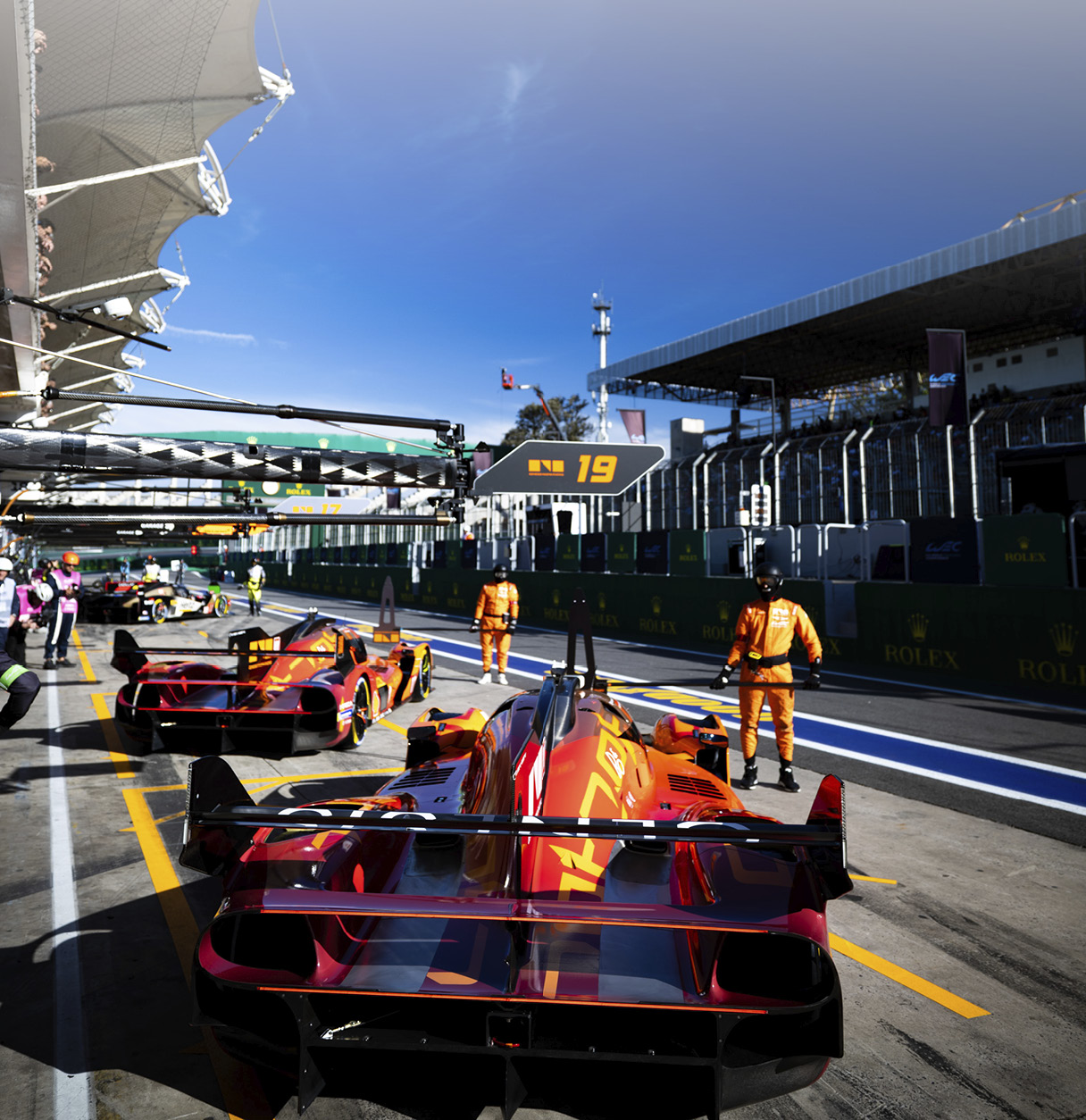
For Genesis Magma Racing, the 6 Hours of São Paulo was a meaningful step forward. It proved the team could show front-running potential even at a new circuit in unfamiliar conditions. In practice and qualifying, Genesis had the pace to fight with the established names. In the race, even with contact, penalties, tight traffic, and changing weather on a short, crowded track, both cars completed the full six hours without crashes or technical issues. That showed more than speed. It showed execution under pressure.
After São Paulo, the WEC heads into an eight-week summer break before moving to North America for Round 5, Lone Star Le Mans, at Circuit of The Americas in Austin, Texas. Genesis Magma Racing is still building its endurance-racing résumé the hard way, one tough race at a time. The question now is what the team can turn that experience into when the second half of the season begins.
Written by: Soo-jin Lee
In 1991, Lee’s passion for cars led him to enthusiastically write letters to the newly launched Korean car magazine Car Vision. This unexpected connection led him to start his career as an automotive journalist. He has served as editor and editorial board member for Car Vision and Car Life, and now works as an automotive critic. While eagerly covering the latest trends like electric vehicles, connected cars, and autonomous driving technology, he is also a car enthusiast who secretly hopes that the smell of gasoline engines will never disappear.