Thermal management isn’t a background detail—it’s the backbone. How a vehicle moves heat dictates HVAC (heating, ventilation, and air conditioning) performance, powertrain output, charging behavior, and overall efficiency. And with EVs now mainstream, the stakes are higher. Where ICE vehicles could develop powertrain cooling and cabin HVAC on separate tracks, EVs tie everything together: inverter, motor, and battery cooling are directly linked to cabin heating and A/C. Get the whole thermal ecosystem right, and you unlock better range, more consistent fast charging, and a cabin that stays comfortable without draining the pack.

That’s why modern EV thermal strategy is so tightly choreographed. In winter, heat pumps can scavenge waste heat from the battery and motor to warm the cabin without torching range. In summer, especially during fast charging, the A/C loop actively pulls battery temps down to keep charging speeds where they belong. Customers expect efficiency and comfort, and they notice when either one slips—so the engineering has to be airtight.
To meet that demand, Hyundai Motor Group operates the Thermal Energy Total Development Group, pulling research labs, analysis, design, and test teams under one roof for anything heat-energy related. This organization models, designs, and develops integrated thermal systems that manage vehicle heat holistically—covering ICE cooling and HVAC performance; EV and hybrid battery systems; hydrogen FCEV stacks; electronics; autonomous-driving controller circuits; and HVAC efficiency development.
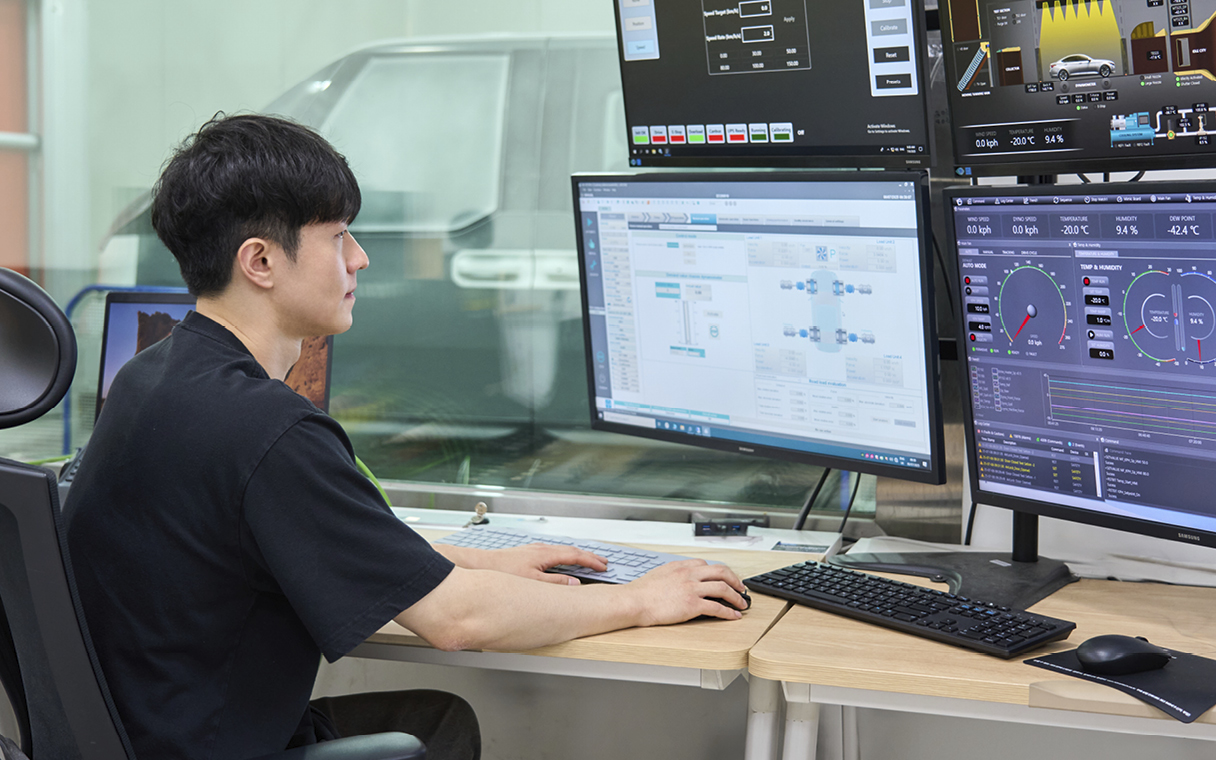
Inside the Environmental Test Complex, the test team evaluates every system tied to heat energy. Core work includes cooling performance for engines and motors, resistance to high-temperature thermal degradation, and defog/defrost performance that protects outward visibility. The data flows straight into real hardware decisions—battery thermal management, motor and inverter cooling, electric-compressor A/C systems, heat pumps, and PTC/immersion heaters.
The headline attraction is a trio of environmental wind tunnels that can replay real climates and real drive loads without the scheduling roulette of proving grounds. Each chamber controls temperature, humidity, wind speed, and solar intensity—and can dial in vehicle speed and load. Testing runs in high-temperature, low-temperature, and snow environments.
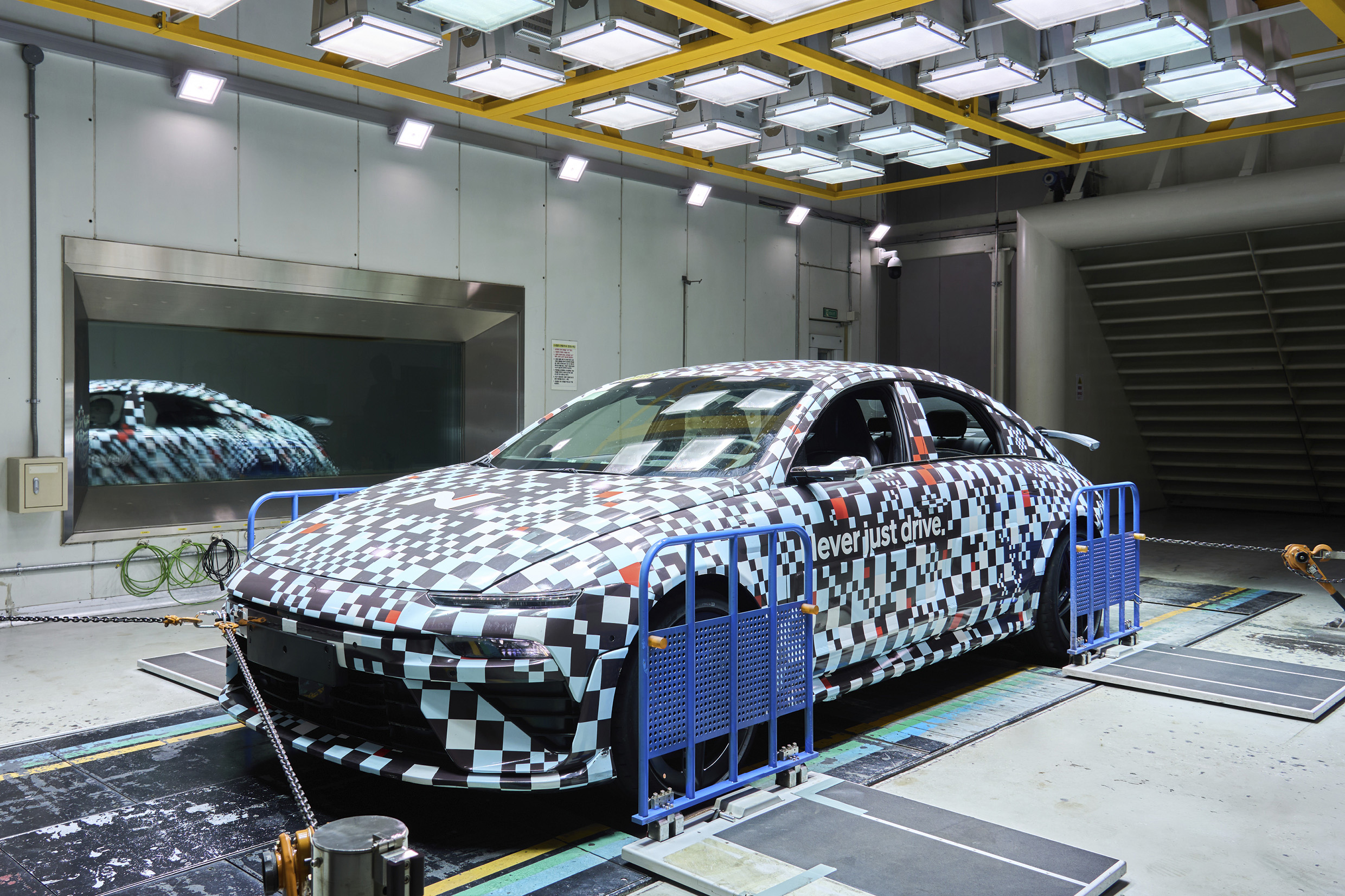
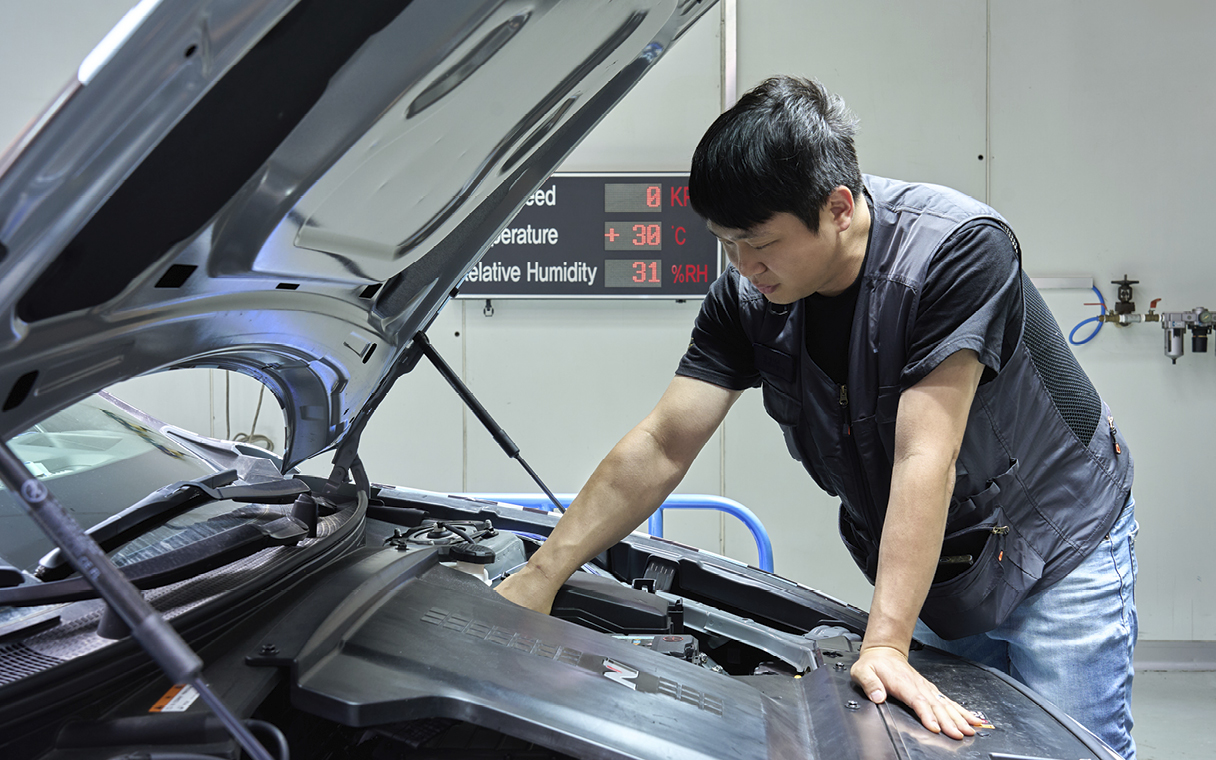
The high-temperature tunnel validates thermal management across a wide range of hot-weather scenarios. Engineers measure heat rejection and cooling performance for engines and transmissions, motors and inverters, batteries, hydrogen fuel-cell stacks, and autonomous-driving controllers. They also evaluate thermal durability of exhaust components and cabin cooling performance. The tunnel covers everything from typical spring/summer conditions to Middle Eastern extremes—Saudi Arabia and the UAE—where ambient temperature can hit 50°C (122°F).
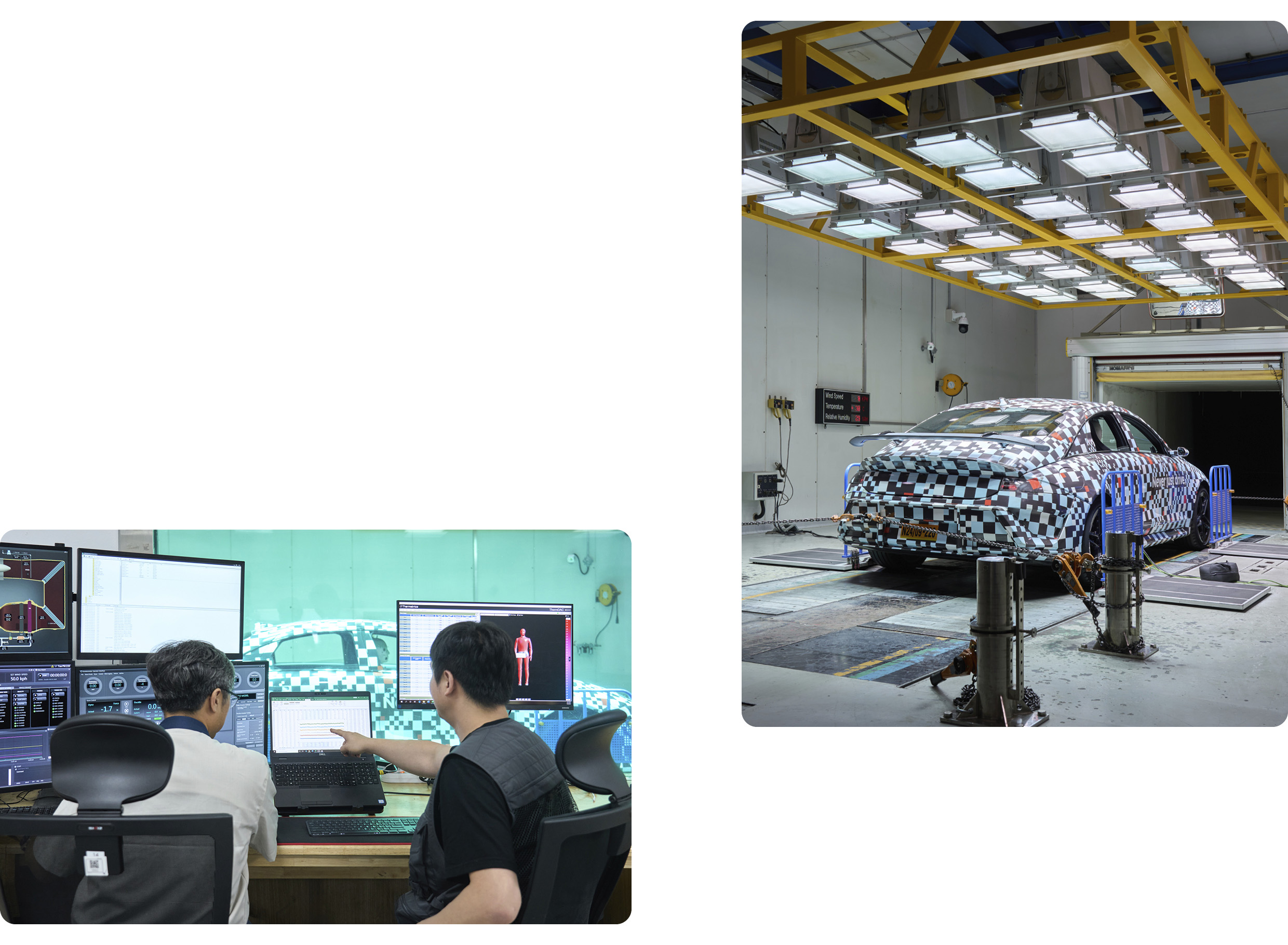
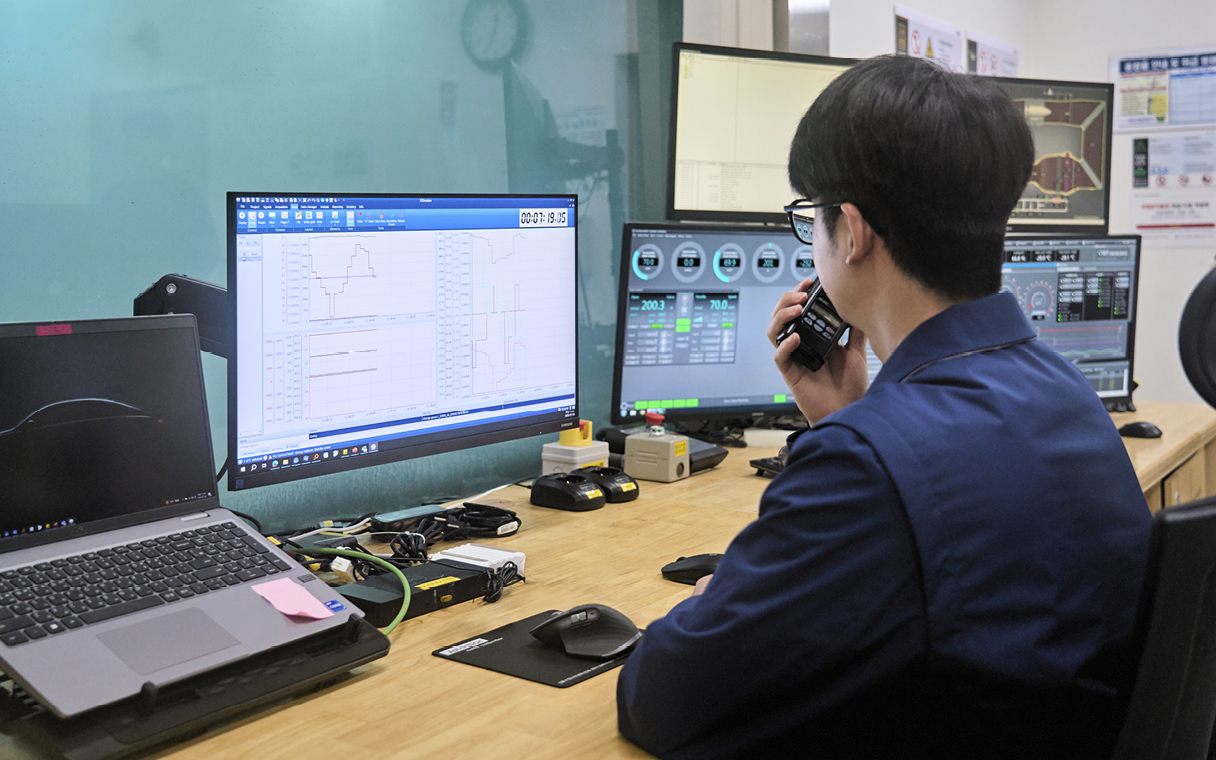
Inside the tunnel, the team stacks stressors like the real world does. Artificial solar lamps simulate brutal sun exposure with up to 1,200 W/m² (~111.5 W/ft²) of irradiance to impose realistic heat loads. A main fan generates oncoming airflow, and a chassis dynamometer simulates vehicle driving so engineers can stage specific scenarios and loads. From the control room, the tunnel is operated like a mission-control setup, with engineers monitoring temperature distribution across every major system under test.
Senior research engineer Daehyun Song of Thermal Energy Test Team 1 explains why the “sun” matters: “Even at the same temperature and humidity, perceived comfort changes depending on solar exposure. For example, a 30°C (86°F) day with heavy solar load can feel much hotter and more uncomfortable than 40°C (104°F) with little sun. Being able to compare thermal comfort immediately across those different conditions—without time or location limits—is the high-temperature tunnel’s advantage. The artificial solar lamps are a very important part of that.”
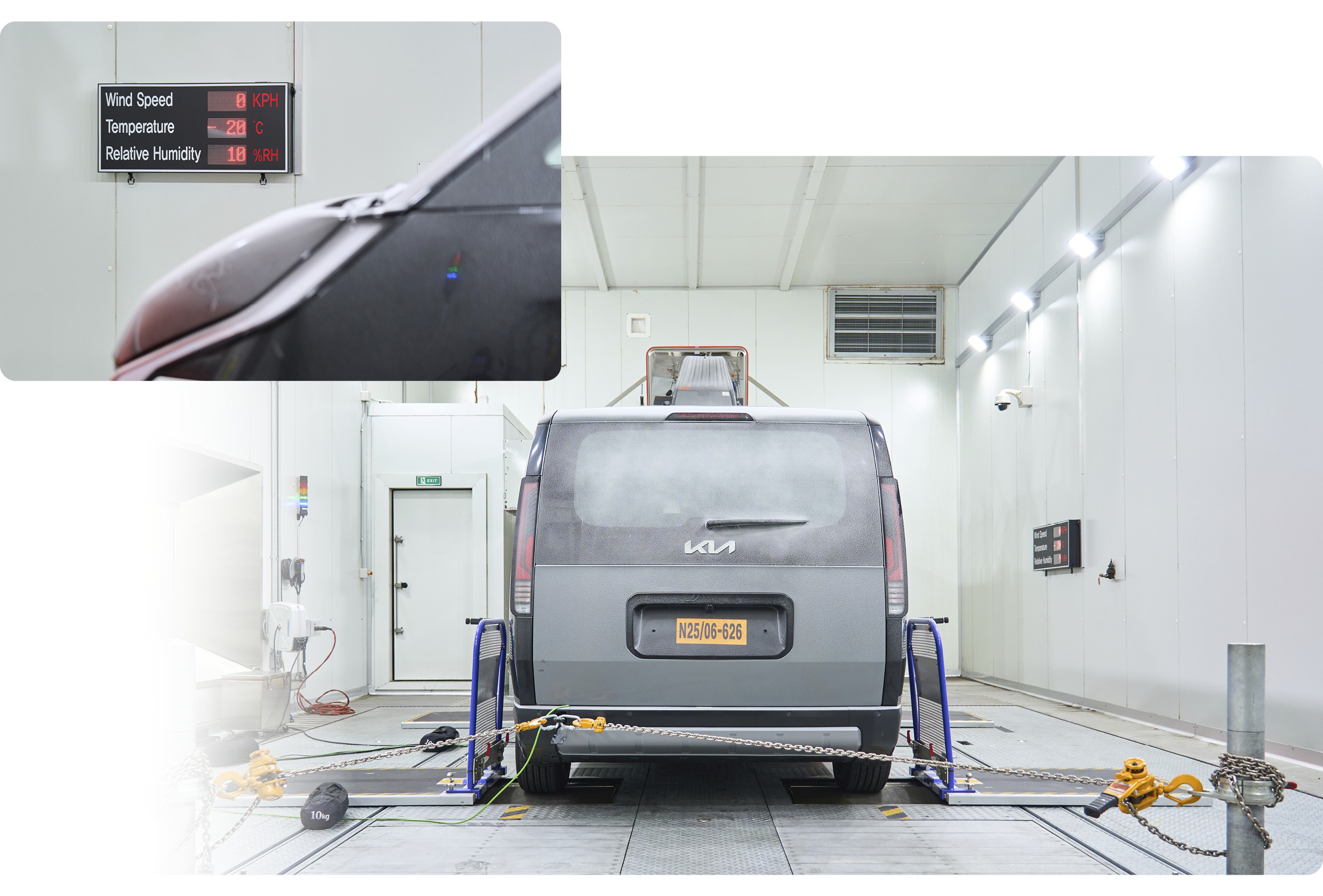
The low-temperature tunnel evaluates thermal performance from 10°C to –30°C (50°F to –22°F) and can reproduce environments like Northern Europe, Alaska, and Canada. Baseline work includes cabin-heating capability, cold-temperature control of motors and batteries, and winter visibility checks through defrost/defog testing.
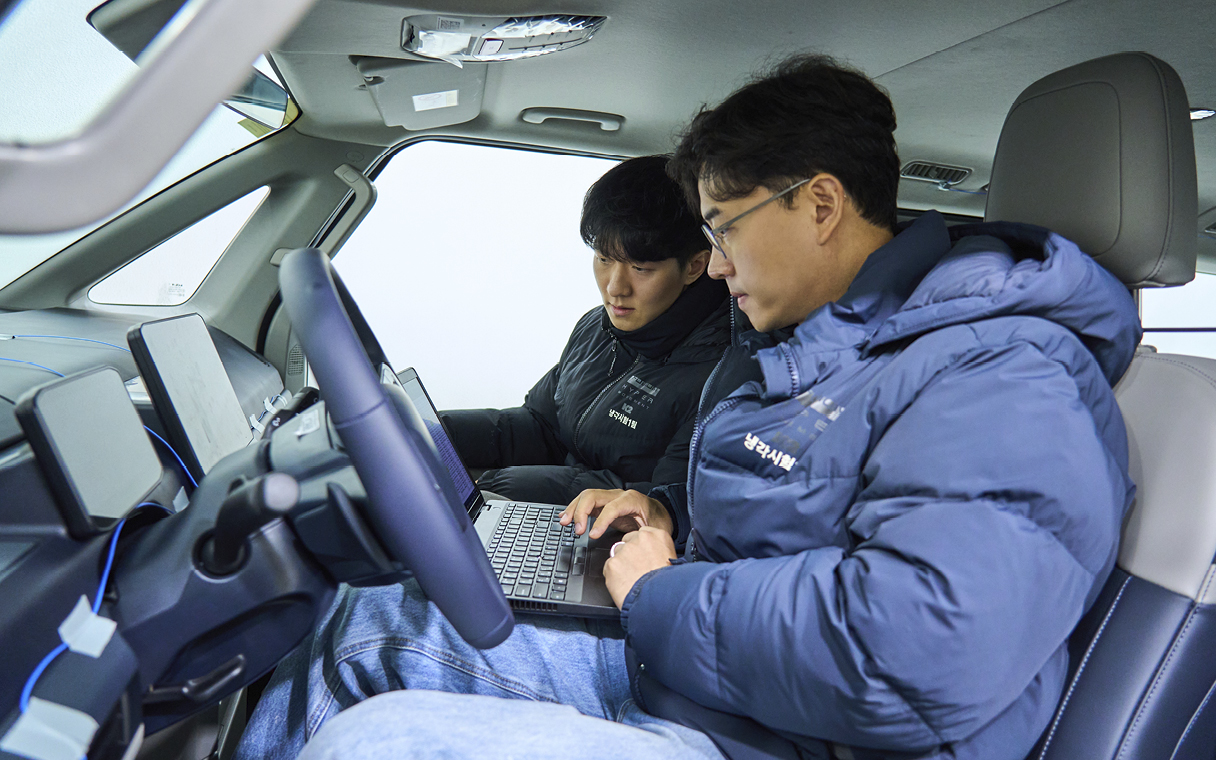
As EV adoption has climbed, winter efficiency has become a front-burner issue. Cold temperatures reduce battery and motor efficiency, while cabin heating draws power that directly cuts range. This is where high-efficiency heat-pump systems are tested and tuned to deliver strong heating performance with minimal energy use—improving winter efficiency and reducing range loss.
Senior research engineer Jaeyeon Moon of Thermal Energy Test Team 1 explains how EV development changes the approach: “With ICE vehicles, once you pass the tests in extreme conditions, the system largely performs as intended in the rest. EVs are different—the available performance changes with temperature. Because winter range and efficiency losses are so easy to feel, we run more tests across more temperature points to achieve the optimal balance of performance and efficiency.”

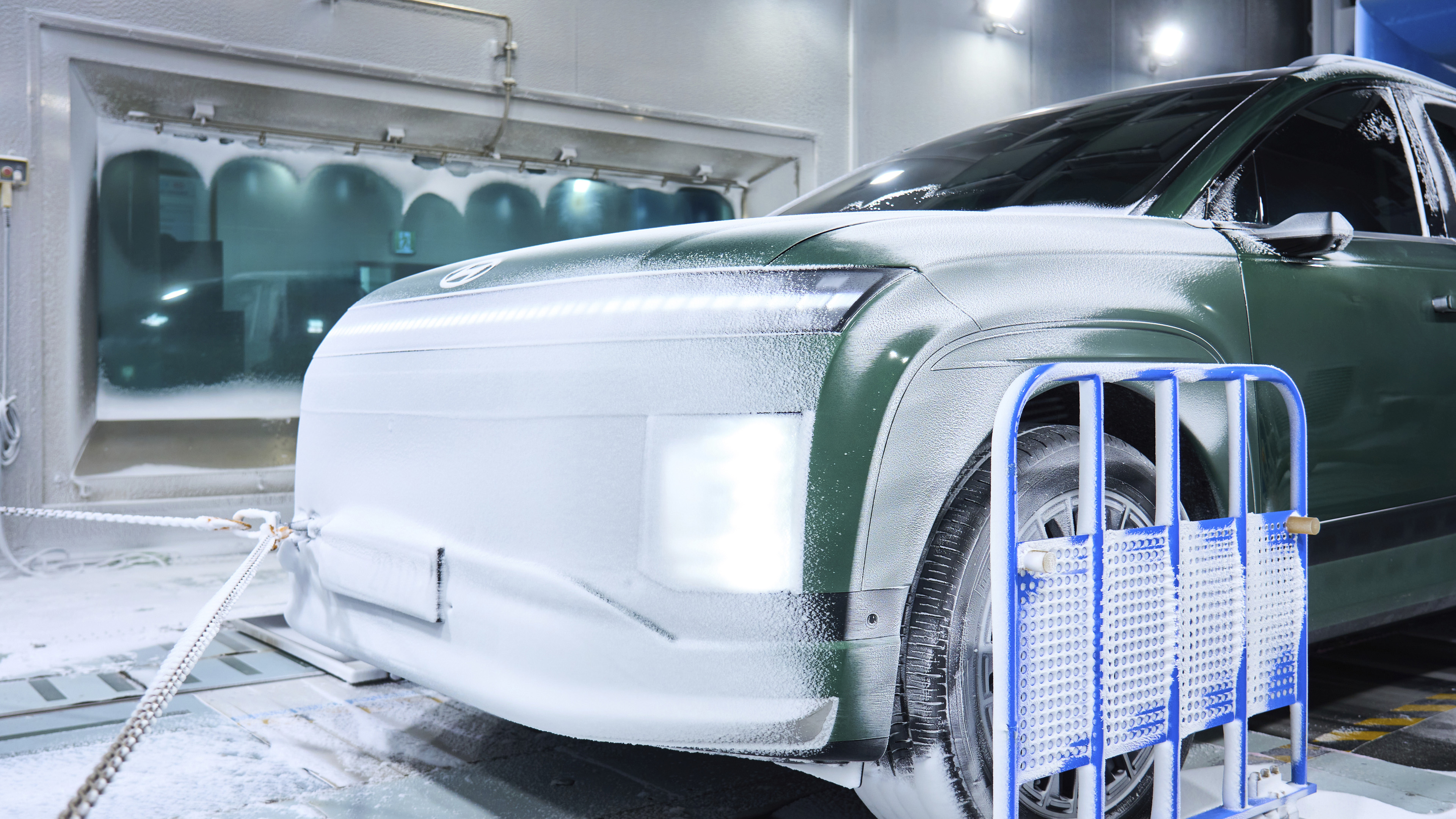
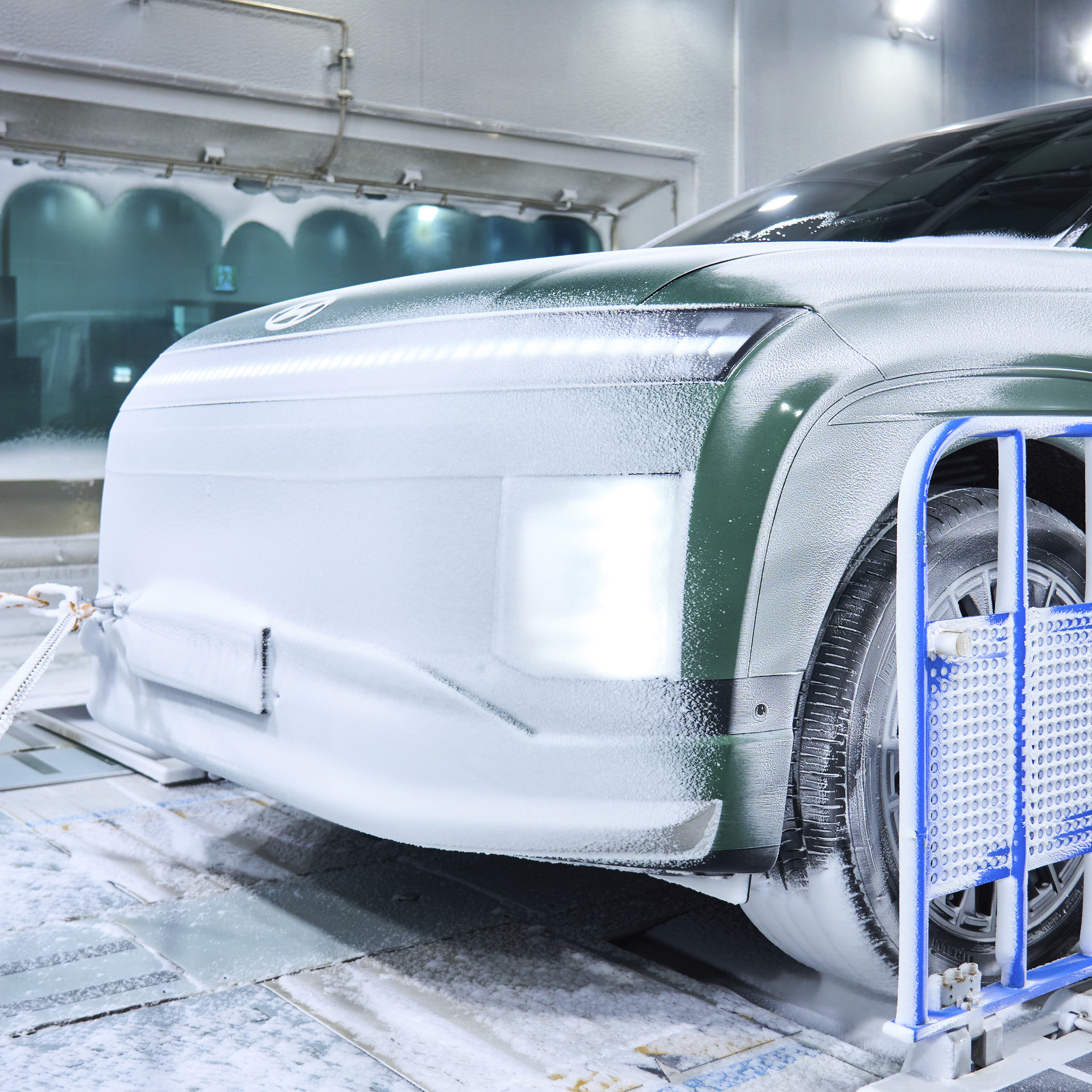
The snow tunnel takes the low-temp program and turns the difficulty knob to max, thanks to an in-chamber snow generator that can dump serious “weather” right inside the facility. It’s built to mimic the kind of conditions you get in Northern Europe and Canada—where drivers can be cruising at highway speeds when a blizzard hits and visibility goes from fine to zero in a heartbeat.
Research engineer Doheon Park of Thermal Energy Test Team 2 describes what it’s like when the tunnel is running at full song: “When we think of snowfall, we often picture big flakes slowly piling up. In real blizzards or whiteouts, snow falls fast and strong winds come with it. We recreated that inside the lab. When the snow tunnel is fully active, visibility drops so much that the chamber practically disappears.”

And because snow brings its own chaos beyond temperature and humidity, the tunnel opens up a whole new set of scenarios. Engineers watch how accumulation builds, where it migrates, and what it does to electrical hardware—and when something goes sideways, they can trace the failure path down to the exact entry point. For EVs, that means targeted work on front-trunk and charge-port sealing, plus charge-door designs that keep powder and slush out of places they don’t belong.
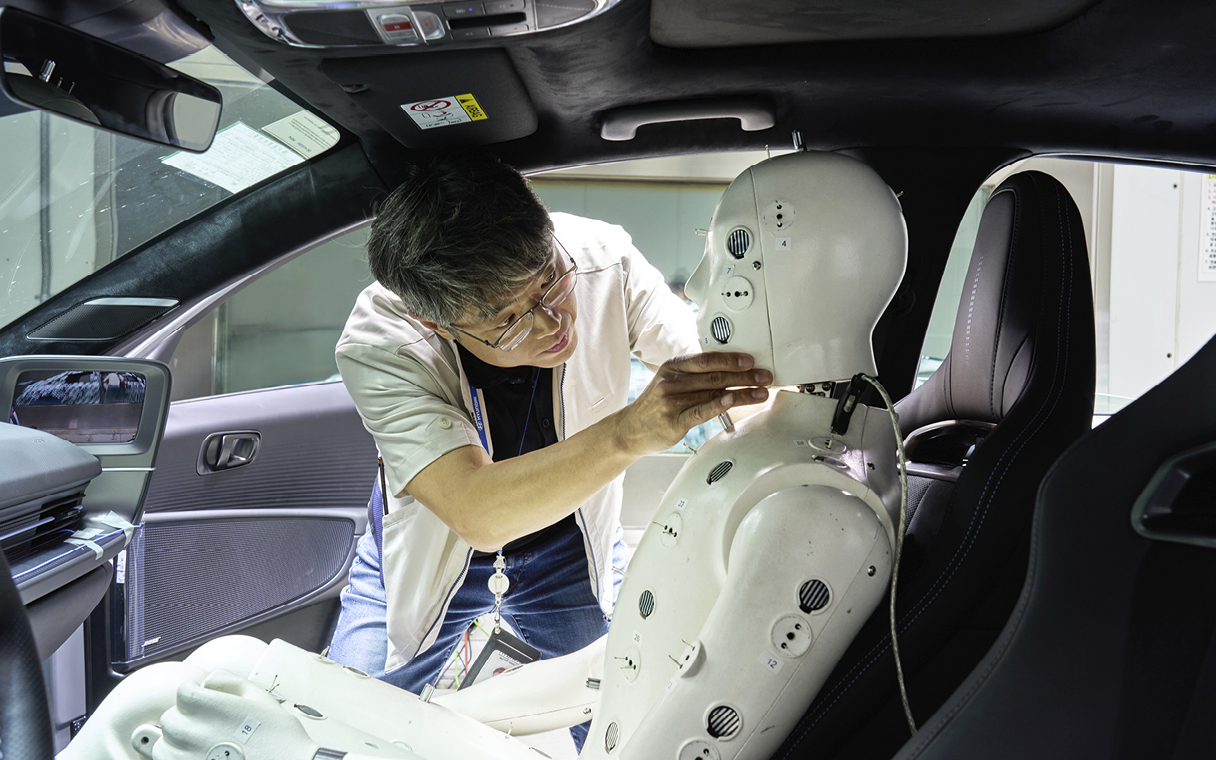
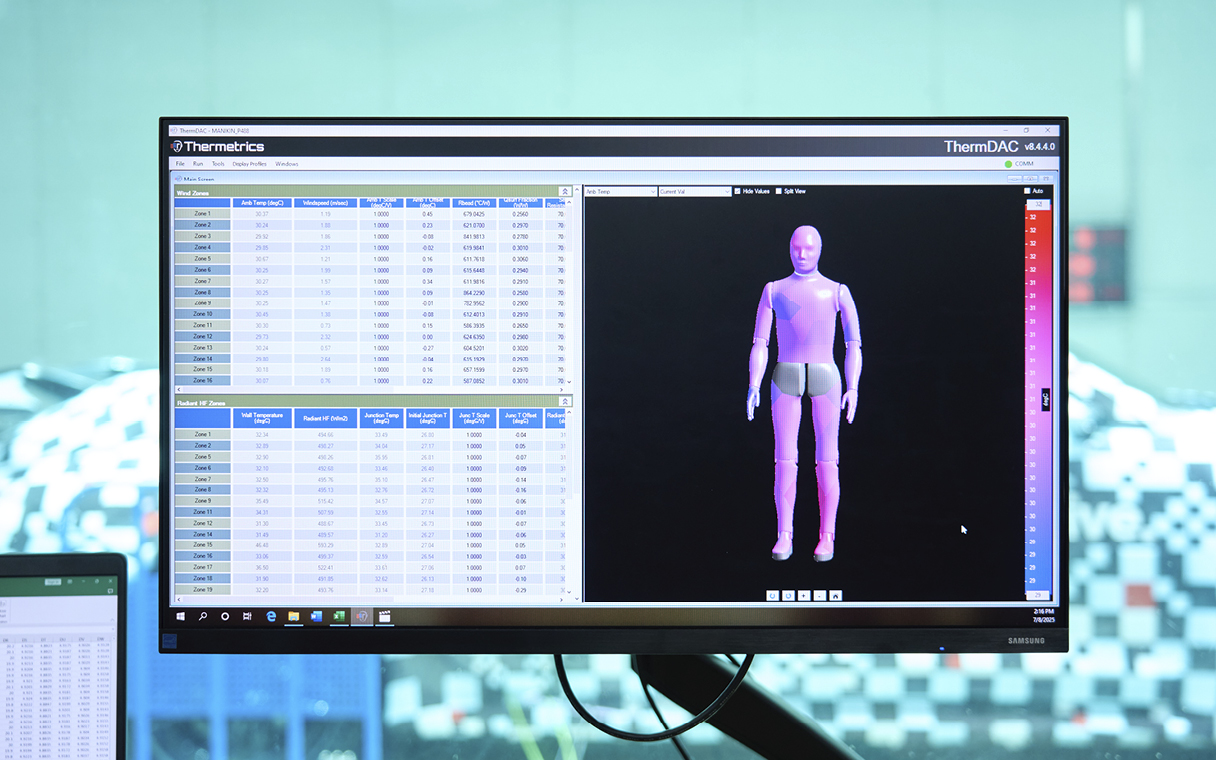
Comfort is subjective—until you instrument it. Alongside the wind tunnels, the Environmental Test Complex deploys specialized tools that turn “feels hot” or “feels drafty” into repeatable data. The thermal manikin is the star here: a human stand-in packed with temperature sensors that quantifies perceived comfort across a range of high-heat conditions. The team also uses system benches that replicate under-hood and cabin layouts, letting engineers evaluate circuit and component performance in configurations that are tough to measure cleanly in a complete vehicle.
Part leader Changgi Ryu of Thermal Energy Test Team 1 puts it plainly: “People perceive comfort differently, so HVAC comfort evaluation needs more objective and quantitative criteria. That’s why we developed HMG’s thermal-comfort model and brought in equipment like the thermal manikin.”
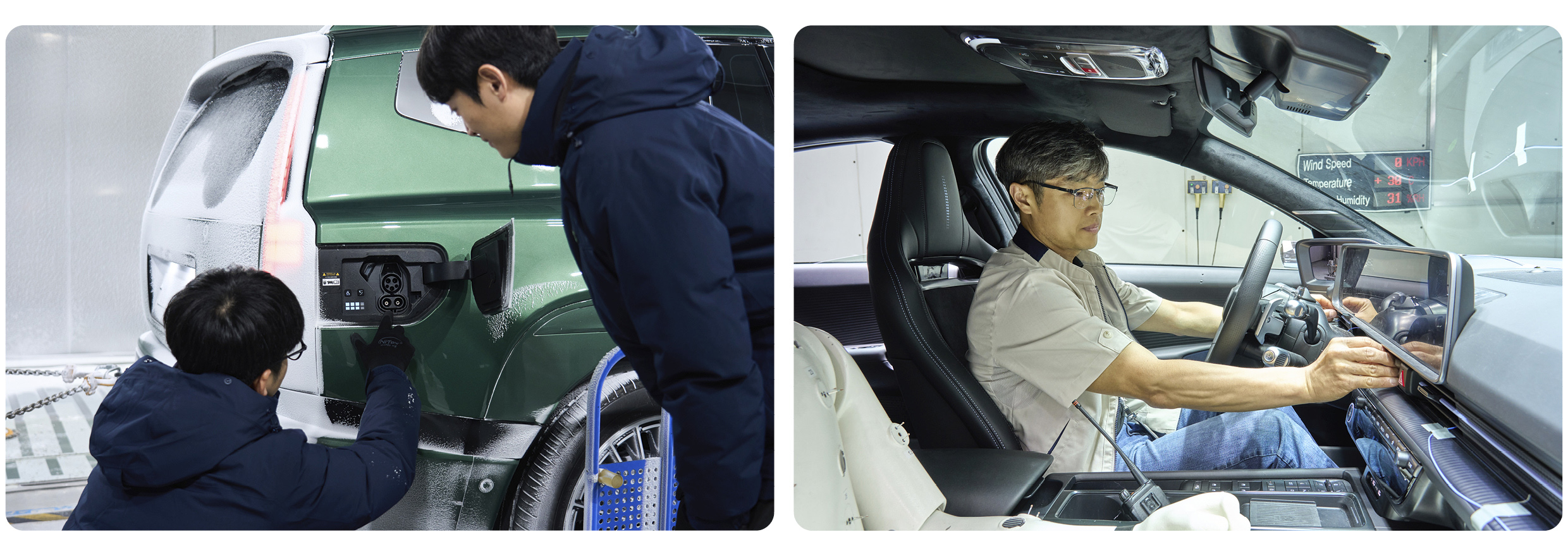
This isn’t data for a report binder—it’s data that turns into hardware. Researchers at the Environmental Test Complex work shoulder-to-shoulder with design and development teams, using wind-tunnel results to confirm whether performance and efficiency targets are landing in the real world—and calling out changes when they’re not. As EVs take a bigger share of the portfolio, multiple departments often have to co-own the same thermal system, so the work has become more integrated than ever.
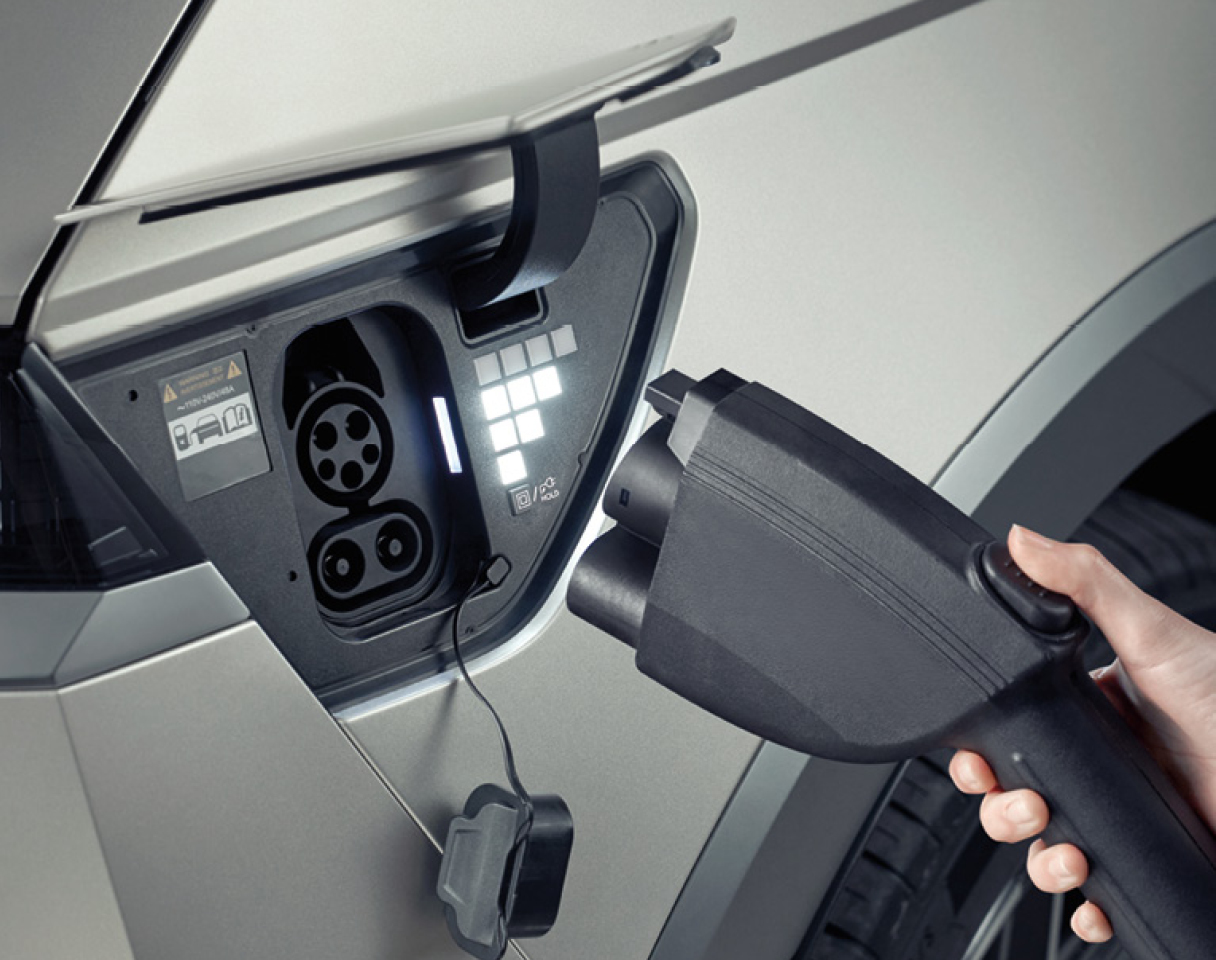
The payoff shows up where customers actually feel it: charging behavior that stays consistent, thermal performance that holds steady across climates, and HVAC that keeps the cabin comfortable without hammering range. Namyang’s Thermal Energy Total Development Group is a big reason HMG can deliver capabilities like 10–80% in about 20 minutes on 350-kW ultra-fast chargers, along with robust low-temperature charging performance.
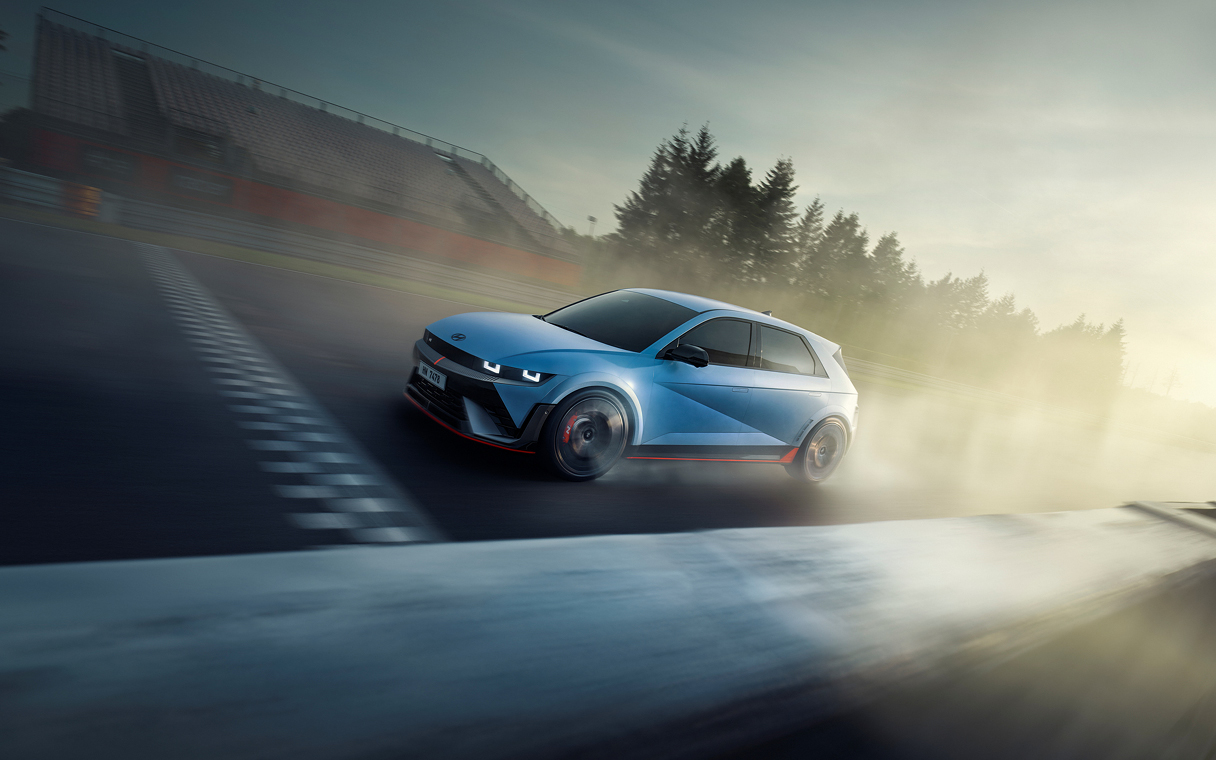
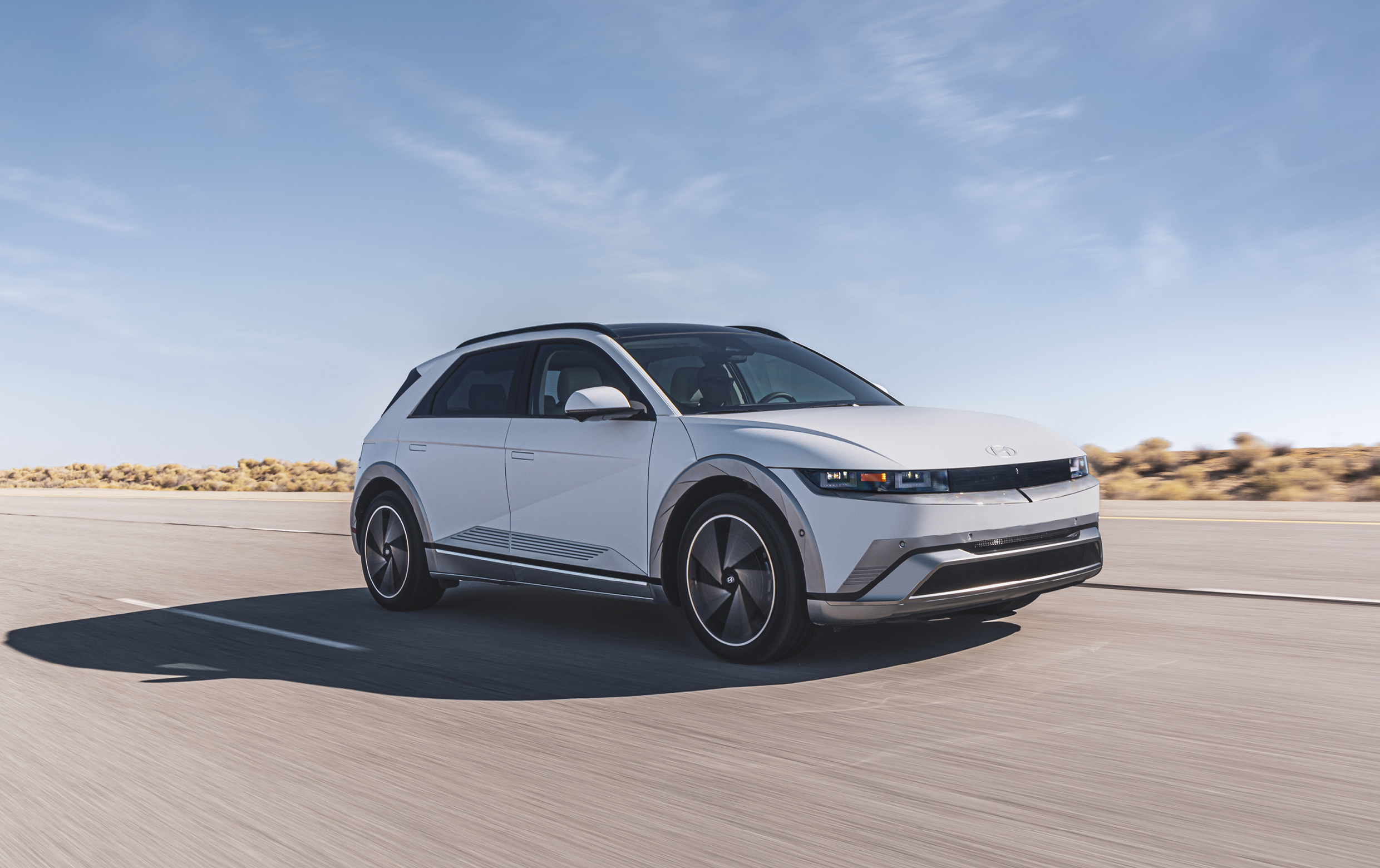
And it goes beyond day-to-day comfort. In the performance EV world, stable thermal control is a competitive advantage. During development, the IONIQ 5 N ran the Nürburgring Nordschleife flat-out and knocked out two consecutive laps with durable consistency—and it set a new record at the Pikes Peak International Hill Climb (PPIHC). Those results aren’t just about power; they’re about holding motor and battery temps in the sweet spot when the demands get extreme.
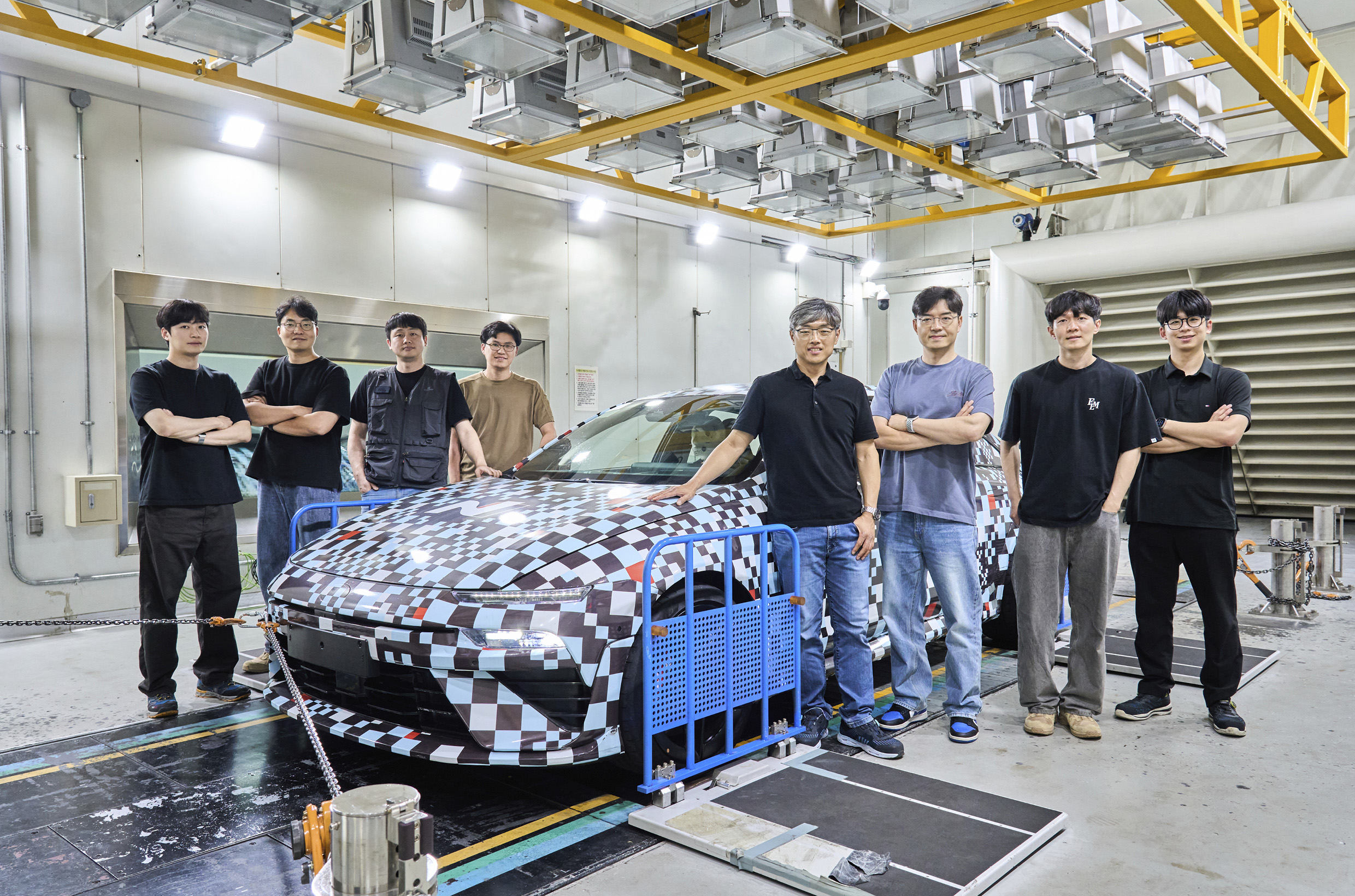
Looking ahead, the group’s mission only grows. Work is already underway on next-step tech—alternative low-GWP refrigerant systems to meet tightening environmental regs, next-generation thermal-energy architectures, and cooling/HVAC solutions for UAM (urban air mobility). The goal is straightforward: keep pushing thermal-management innovation across ICE, EV, and future mobility so vehicles feel fully sorted—no matter how punishing the environment gets.
Photography by Hyuk-soo Cho