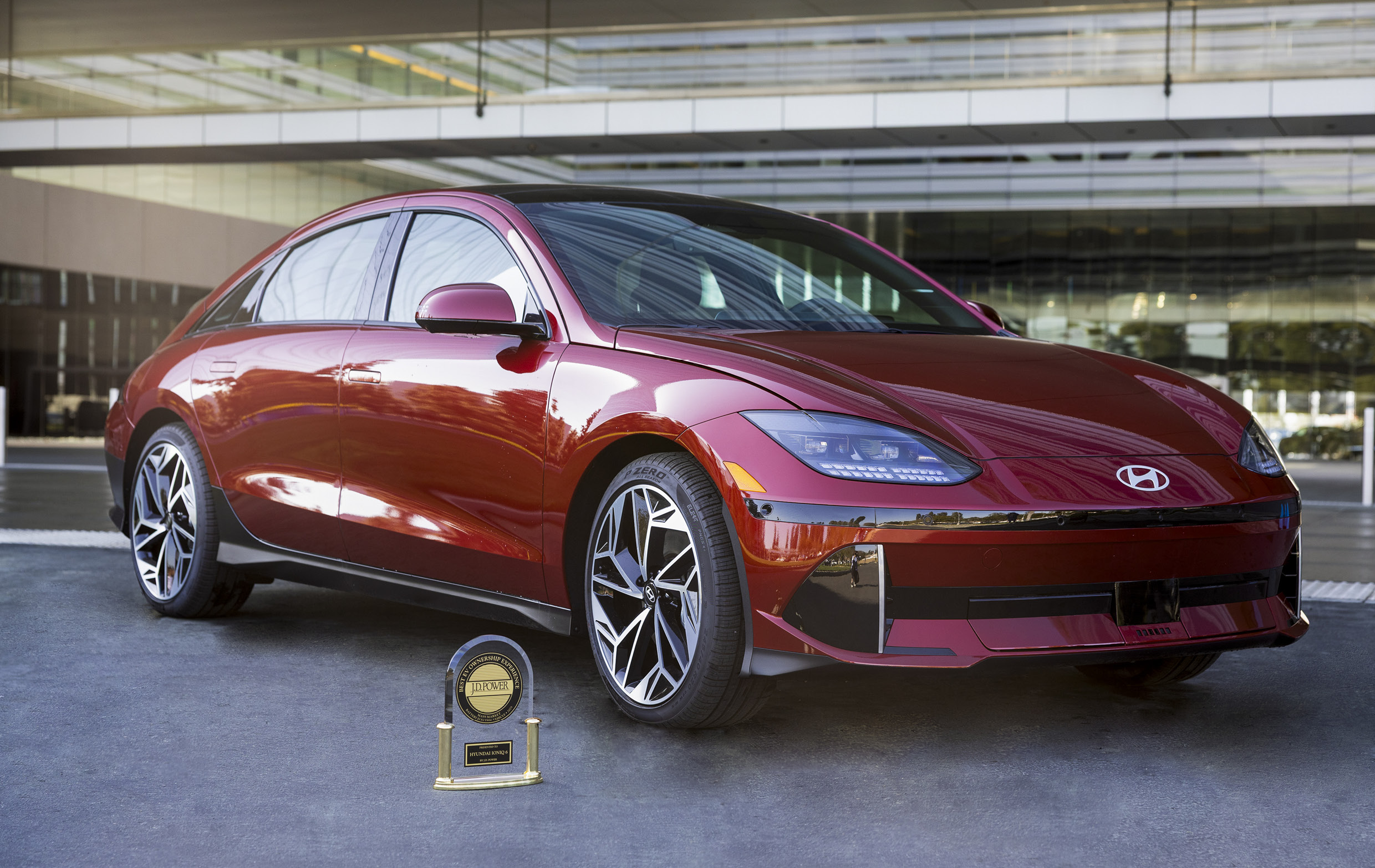
HMG’s EVs have already earned serious global credibility for quality and overall product execution. Kelley Blue Book recently named the Hyundai IONIQ 5 the best electric vehicle and the Kia EV9 the best three-row EV. And in J.D. Power’s 2025 Electric Vehicle Experience (EVX) Ownership Study, the Hyundai IONIQ 6 ranked first among mass-market brands, with the Kia EV6 second and the Hyundai IONIQ 5 fourth—stacking the top tier with HMG badges.
But awards don’t come from straight-line performance alone. Real customer satisfaction is built in the details—every touchpoint, every interaction, every mile. For EV buyers in particular, a quieter, more serene cabin ranks high on the “this feels premium” checklist. Without an engine to mask the outside world, noise that used to disappear into the background now shows up in the foreground—so the NVH target gets tougher, not easier. To see how HMG is attacking that challenge, we visited two key spaces at Namyang R&D Center designed to control vibration and sound with lab-grade precision: the Road-Noise Test Lab and the Immersive Acoustics Studio.
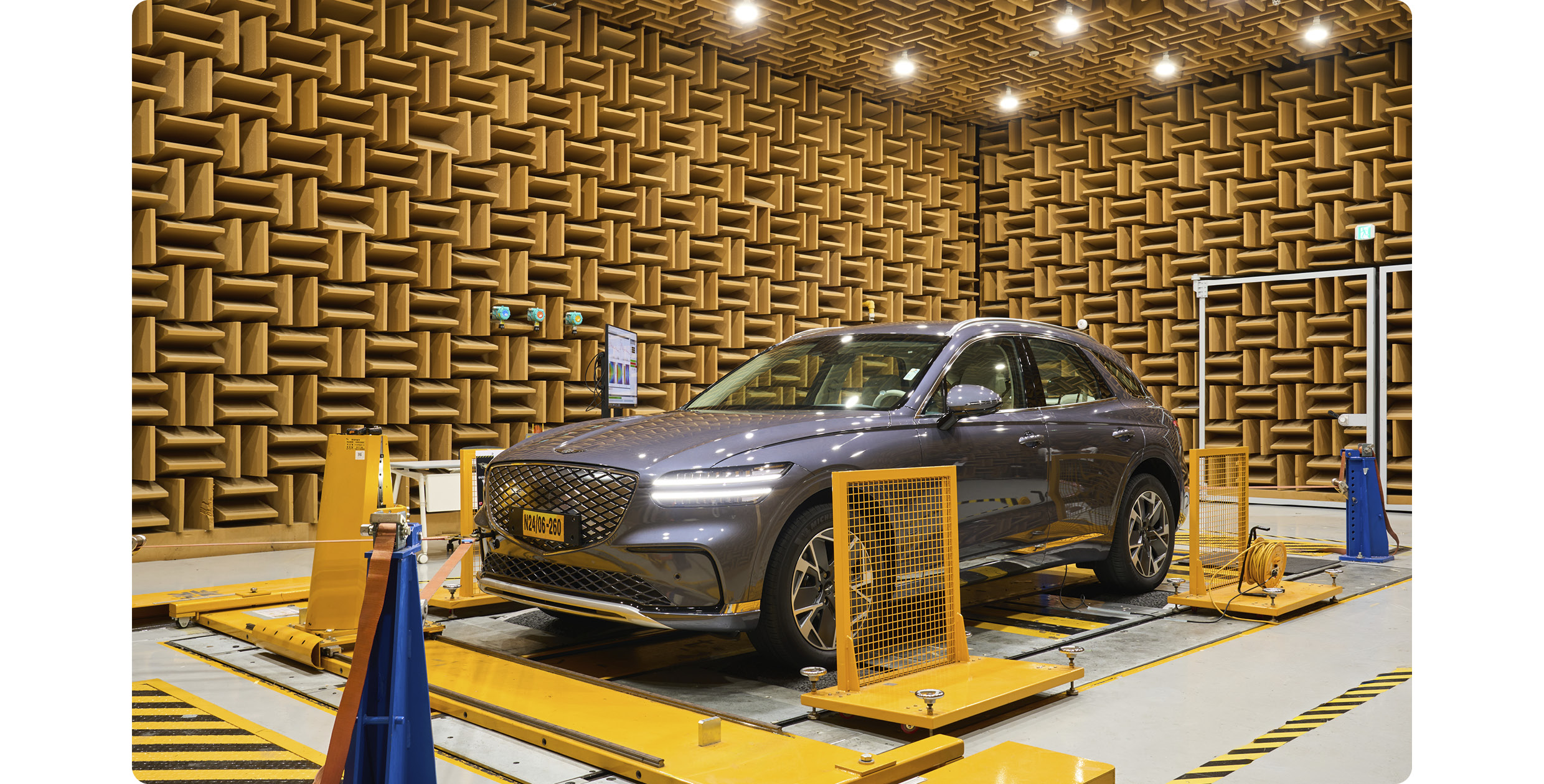
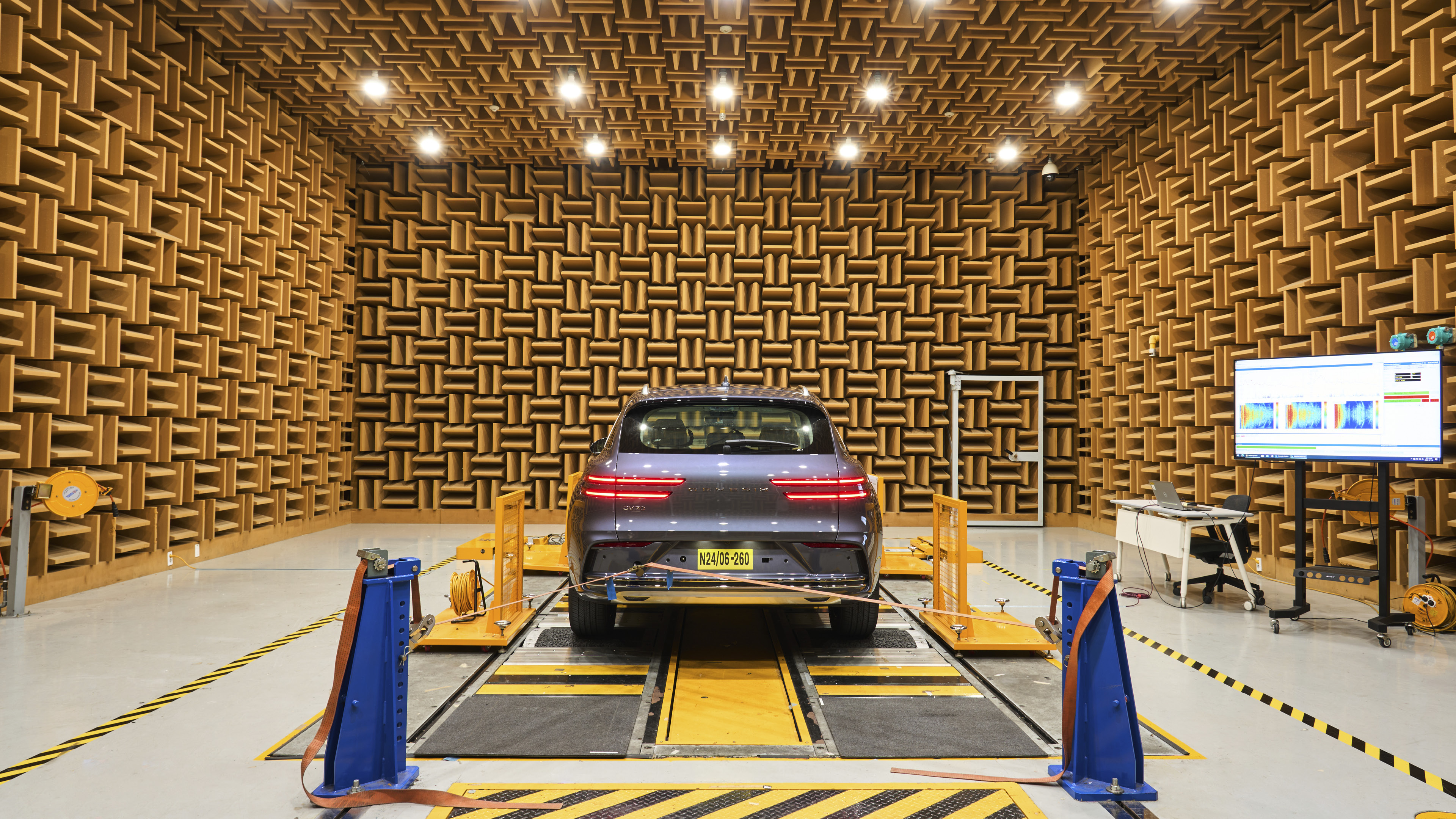
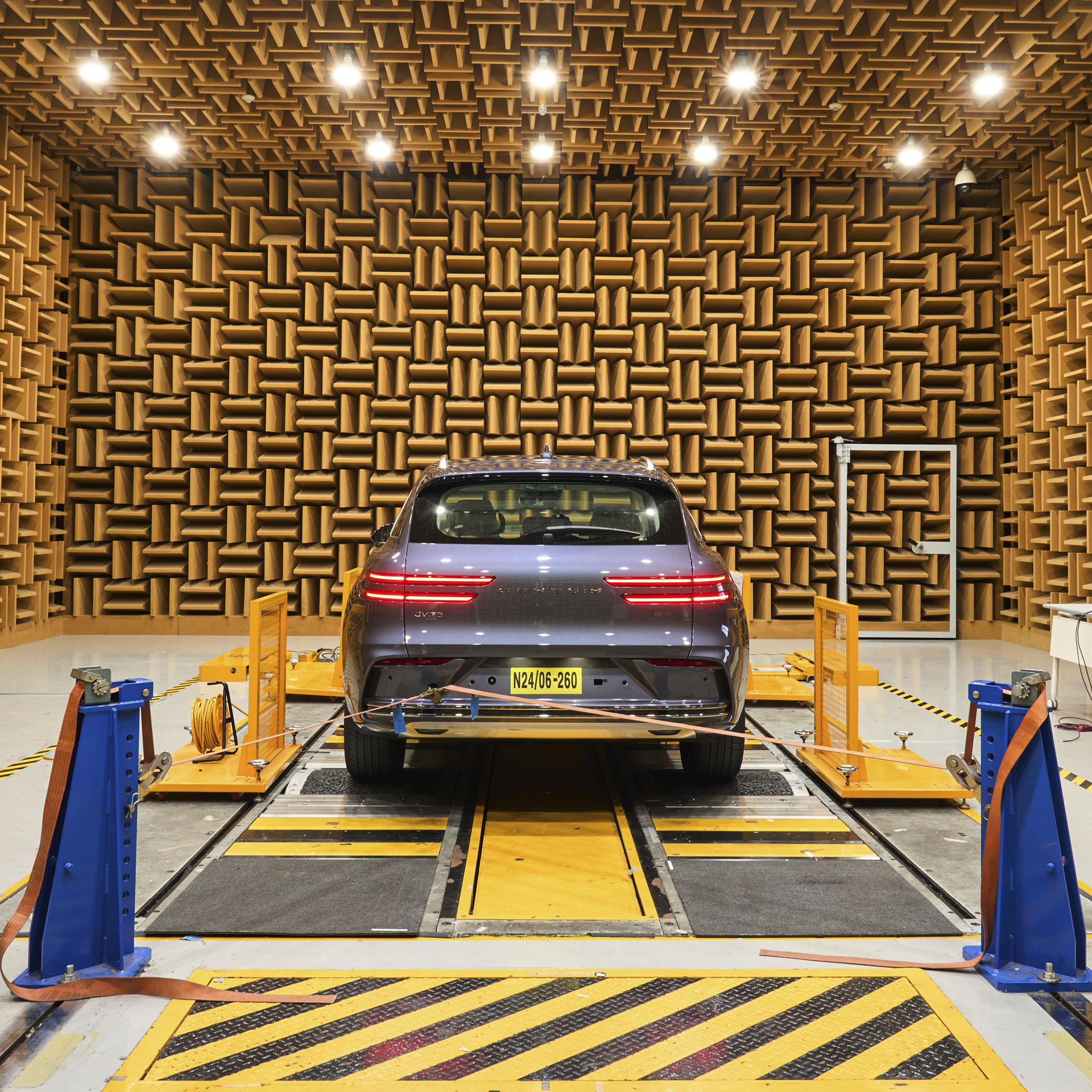
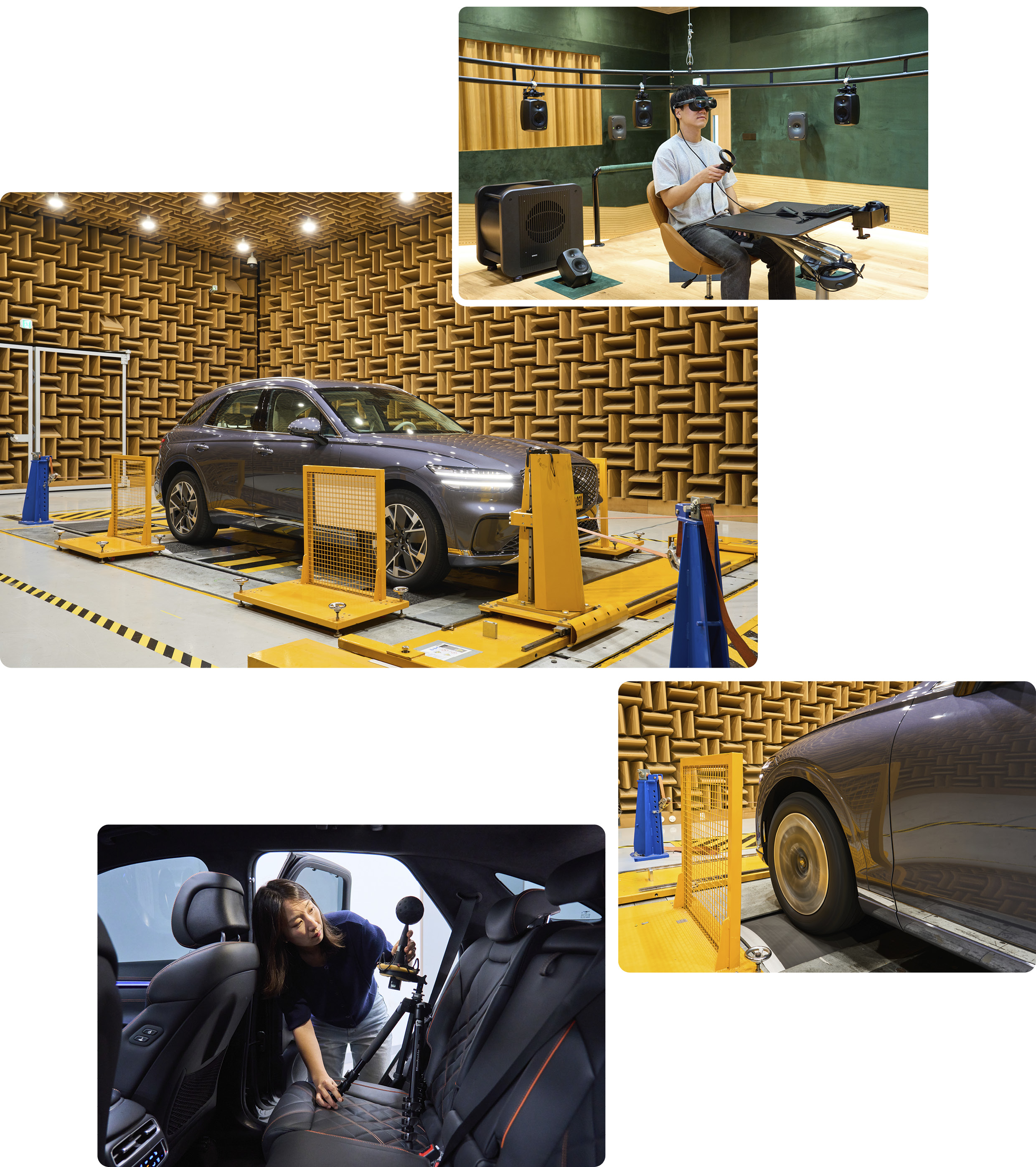
The Road-Noise Test Lab evaluates interior noise by simulating road excitation—those vibrations generated by surface irregularities—to lock down baseline NVH (Noise, Vibration, Harshness) performance during new-vehicle development. The room measures 10 × 14 meters (32.8 × 45.9 ft) and is finished with acoustic materials to reduce reflections. A chassis dynamometer allows the vehicle to “drive” in place, while the rollers—cylinders that contact the tires—use replaceable surface patches engineered to replicate real-world pavement textures. The payoff is accurate, repeatable testing without the roulette wheel of public-road conditions.
Road noise is inevitable once the tires start turning. The main culprit is friction and vibration at the tire–road interface, and because that interface changes with surface conditions, the sound signature changes with it. Even on the same tire, differences in friction and load reshape the excitation forces that travel through the suspension and body—sometimes amplifying what reaches the cabin.
(1) Copying the Road Precisely
To measure and analyze road noise across different surfaces, you need a broad set of scenarios. On public roads, location and weather call too many shots. In the Road-Noise Test Lab, conditions stay steady regardless of forecast—and engineers can run the same scenario again and again, accelerating development while keeping comparisons clean.
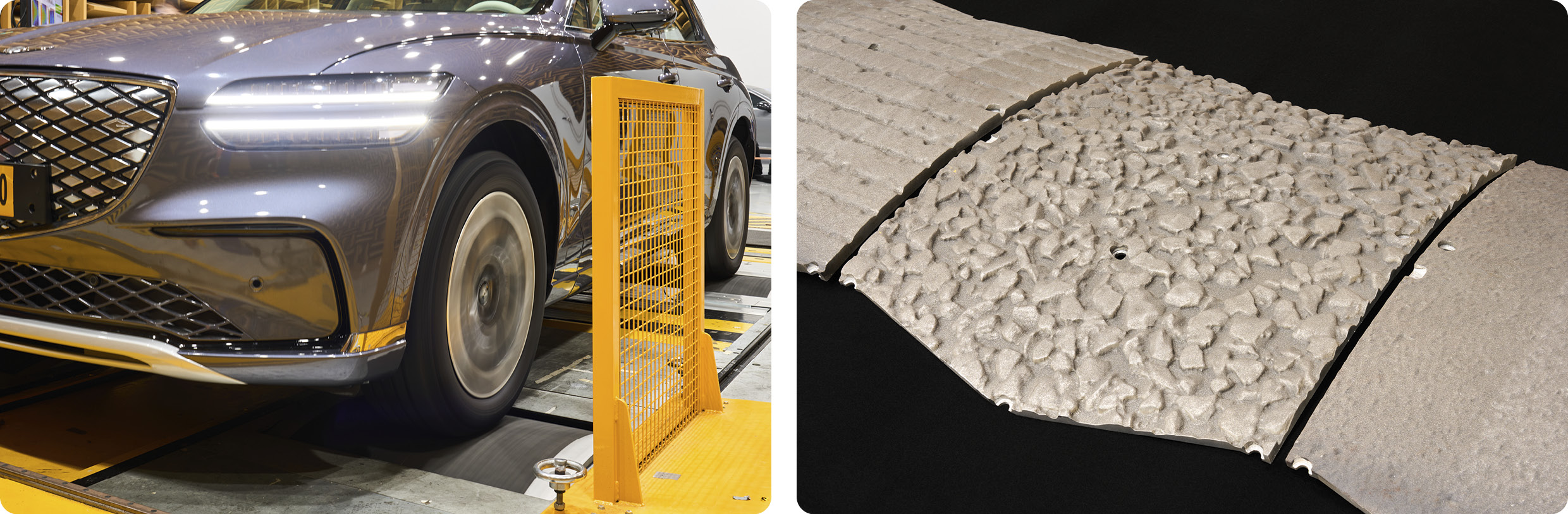
Those patches are modeled after real roads: coarse asphalt, expansion joints, fine-grain pavement, and more. The work to make them “real” goes deeper than surface appearance. Engineers scan representative roads with 3D cameras to capture surface roughness, then build patches that match not only geometry but also rebound characteristics of materials like asphalt and concrete—so the patch behaves like pavement, not just looks like it.
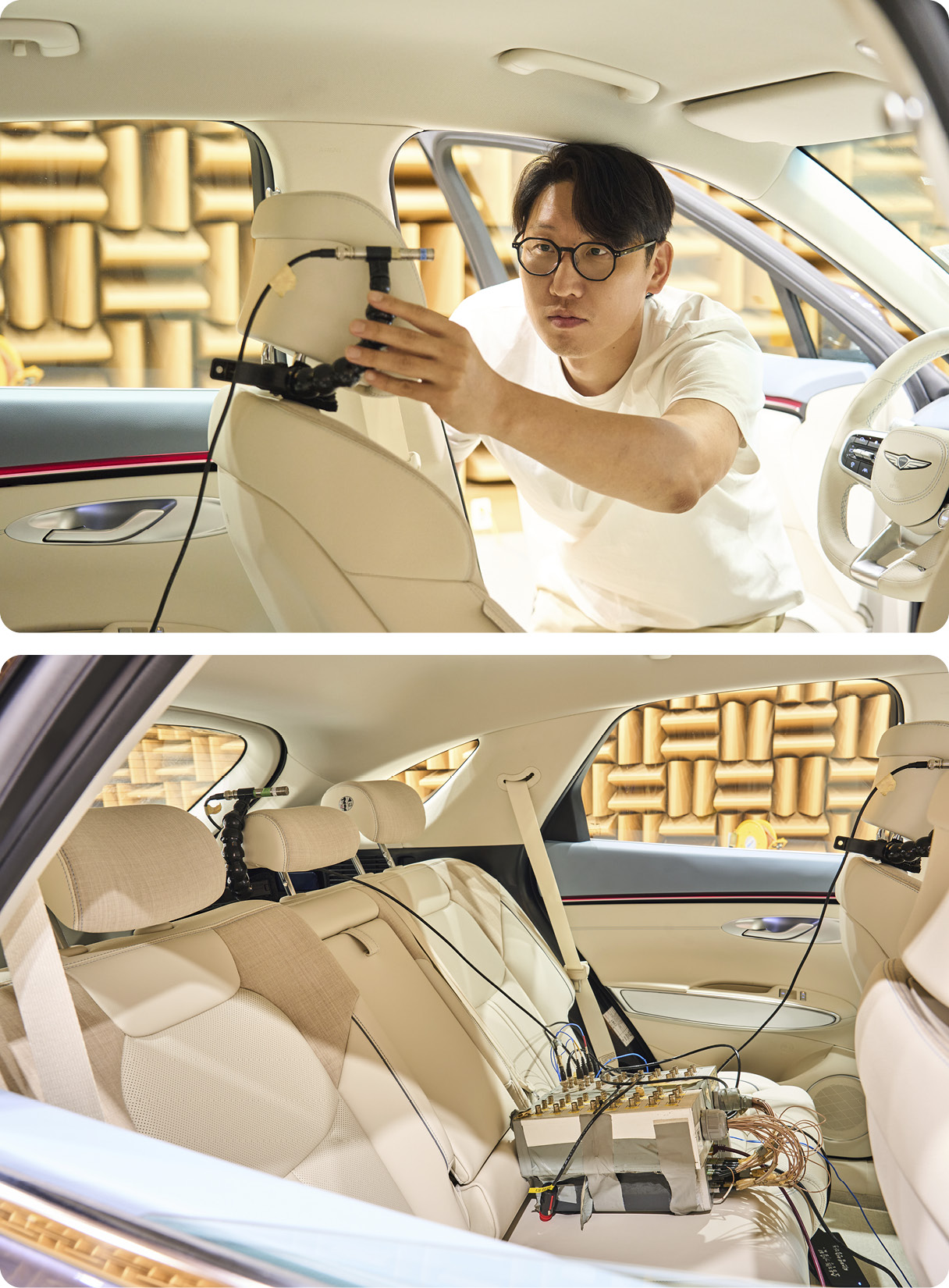
Road noise isn’t a single sound—it’s a mix of boom, resonance, rumble, and high-frequency components, and its tone shifts as tire grip and friction change by surface. Engineers measure across multiple driving modes—steady-state cruising, acceleration, and deceleration. The primary reference is the driver’s ear position; in vehicles where second-row comfort matters, microphones are also placed at both rear-passenger ear locations.
(2) Cutting Road Noise by Managing Vibration
It’s easy to assume road-noise reduction is mostly a tire-company problem. Tires matter—no question. But if the suspension and body can’t absorb incoming vibration cleanly, excitation grows and cabin noise can jump dramatically.
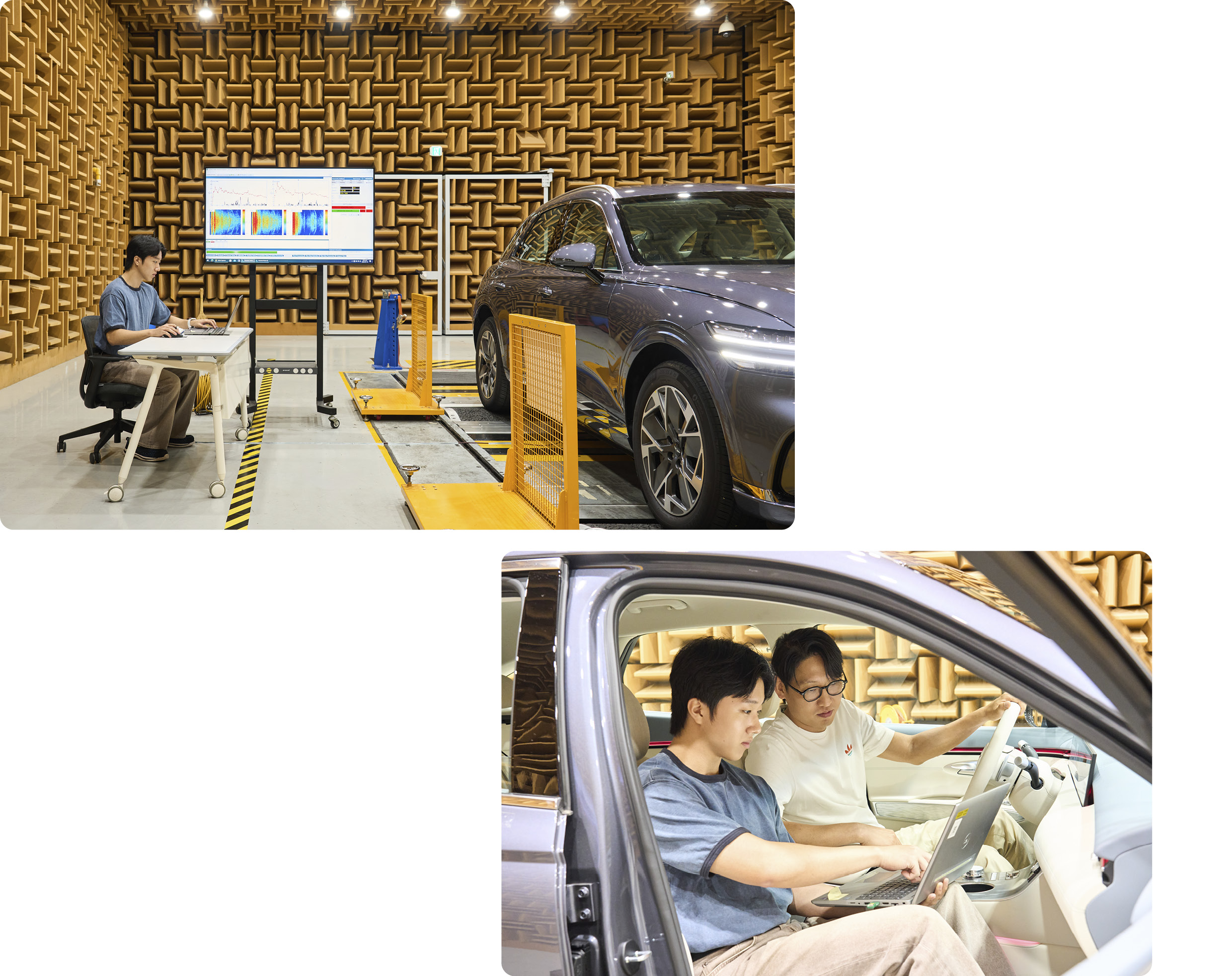
When tire vibration enters the suspension, insufficient damping or bushing performance can let it flow straight into the body structure. Frequencies below 500 Hz are particularly annoying, because interior trim materials struggle to absorb them. And tire-induced vibration isn’t just an NVH issue—it can influence efficiency, handling feel, and overall comfort.
That’s why HMG applies comprehensive kinematic and structural design methods to optimize underbody components and bushings for a calmer ride. The team maps isolation performance and phase relationships at the hub/knuckle—where wheels and tires mount—so vibration doesn’t propagate unchecked into the body. They also analyze measured values of what drivers actually feel, with one goal: raise the emotional quality of the drive, not just lower a decibel reading.
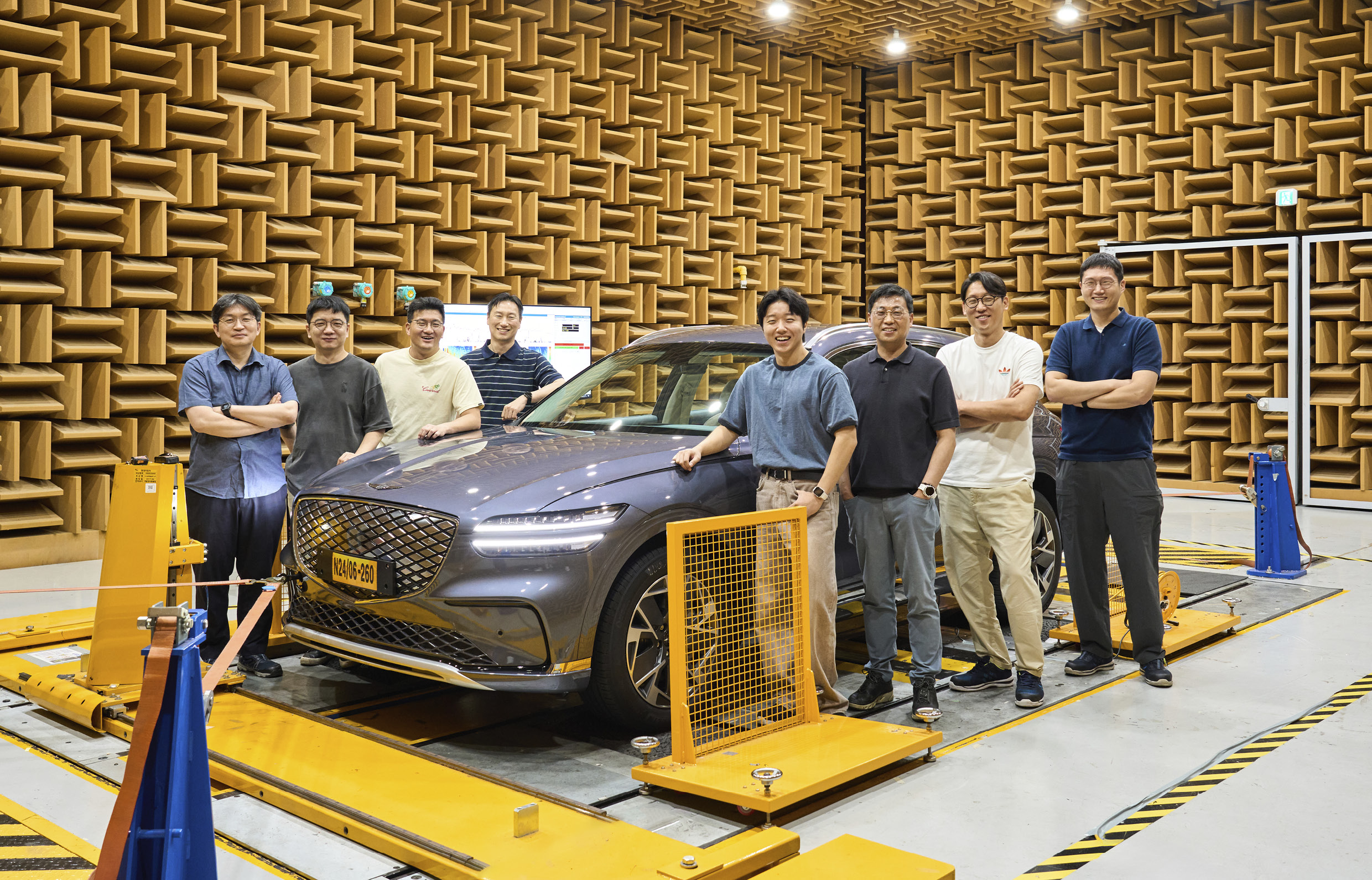
One of an EV’s defining strengths is a quiet, low-stress cruising experience. But with no combustion soundtrack masking the world outside, EV cabins can be more transparent to external noise—meaning NVH tuning has to be more exacting. Road noise is a prime example. HMG’s NVH Technology Team continually analyzes absorbers, insulators, and key components while running road-noise tests—so more silence and more comfort show up in every trip.
The Immersive Acoustics Studio is where Hyundai Motor Group turns VR into a precision tool for shaping what you hear and feel in the cabin. Using a VR evaluation room paired with a spatial-audio playback chain, engineers can analyze a vehicle’s full soundscape—engine character (where applicable), wind rush, and road noise—with fine resolution. The goal is simple: validate acoustic behavior earlier in development, speed up decision-making, and raise perceived quality by tuning sound the way customers actually experience it.
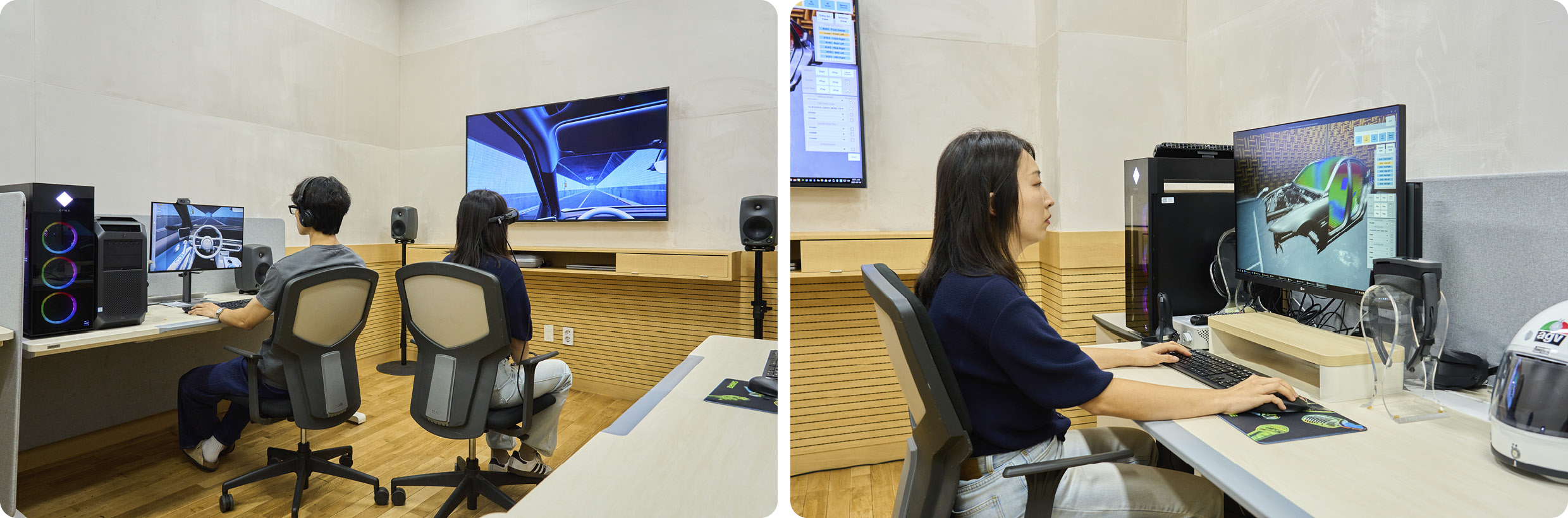
(1) A VR-Built Sound Lab That Keeps Perception Honest
Inside the VR evaluation room, multiple environments are ready on demand: outdoor test roads, mock-up tracks, semi-anechoic chambers, tunnels, intersections, and indoor parking structures. The team builds these worlds in Unreal Engine, weaving VR directly into the vehicle development workflow. And because the system is networked, multiple global teams and labs can join the same evaluation in real time—turning sound tuning into a shared, synchronized process.
VR also tackles a quiet but real problem: sensory bias. Humans don’t judge sound in a vacuum—we blend input from every sense. Isolate one sense, and perception can skew. Play a stationary recording of 100 km/h (62 mph) road noise at “real” loudness and people often judge it as too loud. Pair that exact same audio with VR visuals of a car actually traveling at 100 km/h, and perception snaps closer to how the sound would be judged in the real world.
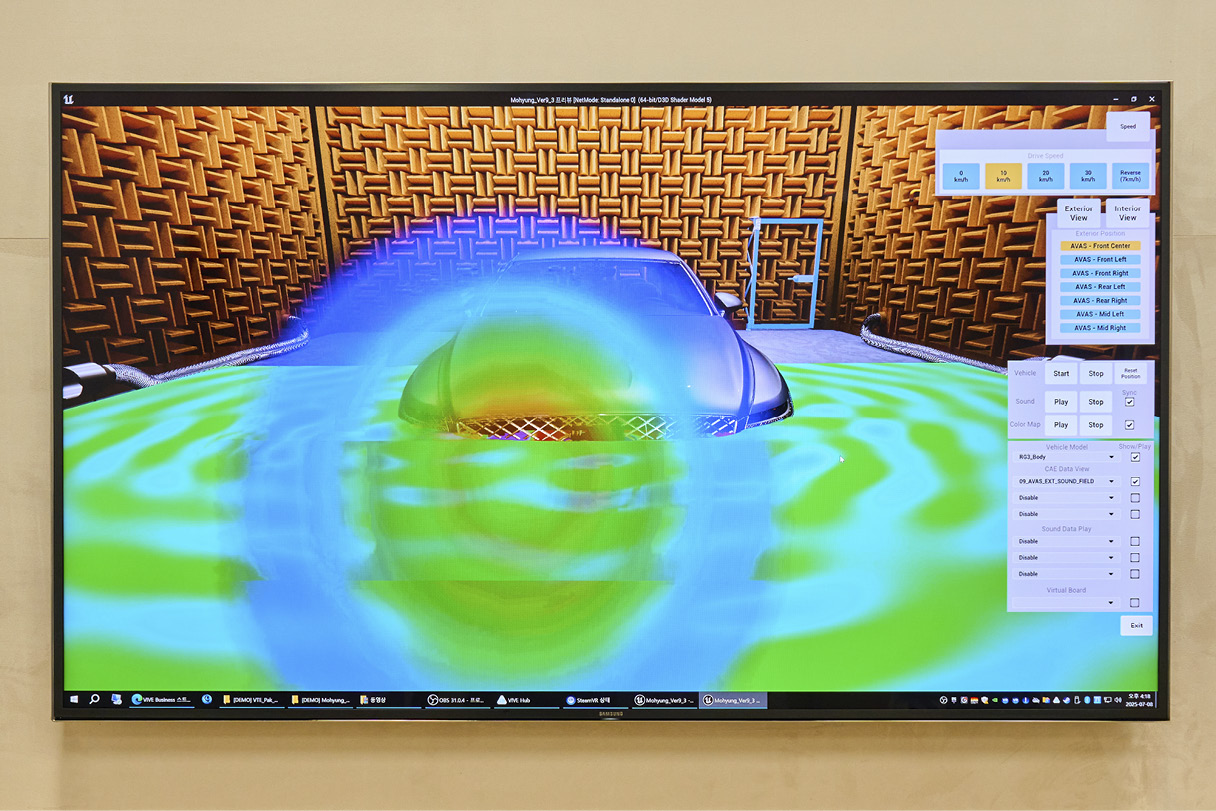
The room also visualizes sound to help engineers analyze it. This isn’t “press play on a recording.” It’s virtual sound that incorporates the vehicle’s actual transmission characteristics, with displays showing how acoustic energy spreads through space. Consider AVAS (Acoustic Vehicle a-lerting System) for pedestrian safety on EVs: perceived loudness can change depending on speaker position. In the virtual environment, engineers evaluate the sound experience alongside synchronized visuals, producing a more accurate read on what customers will actually hear.
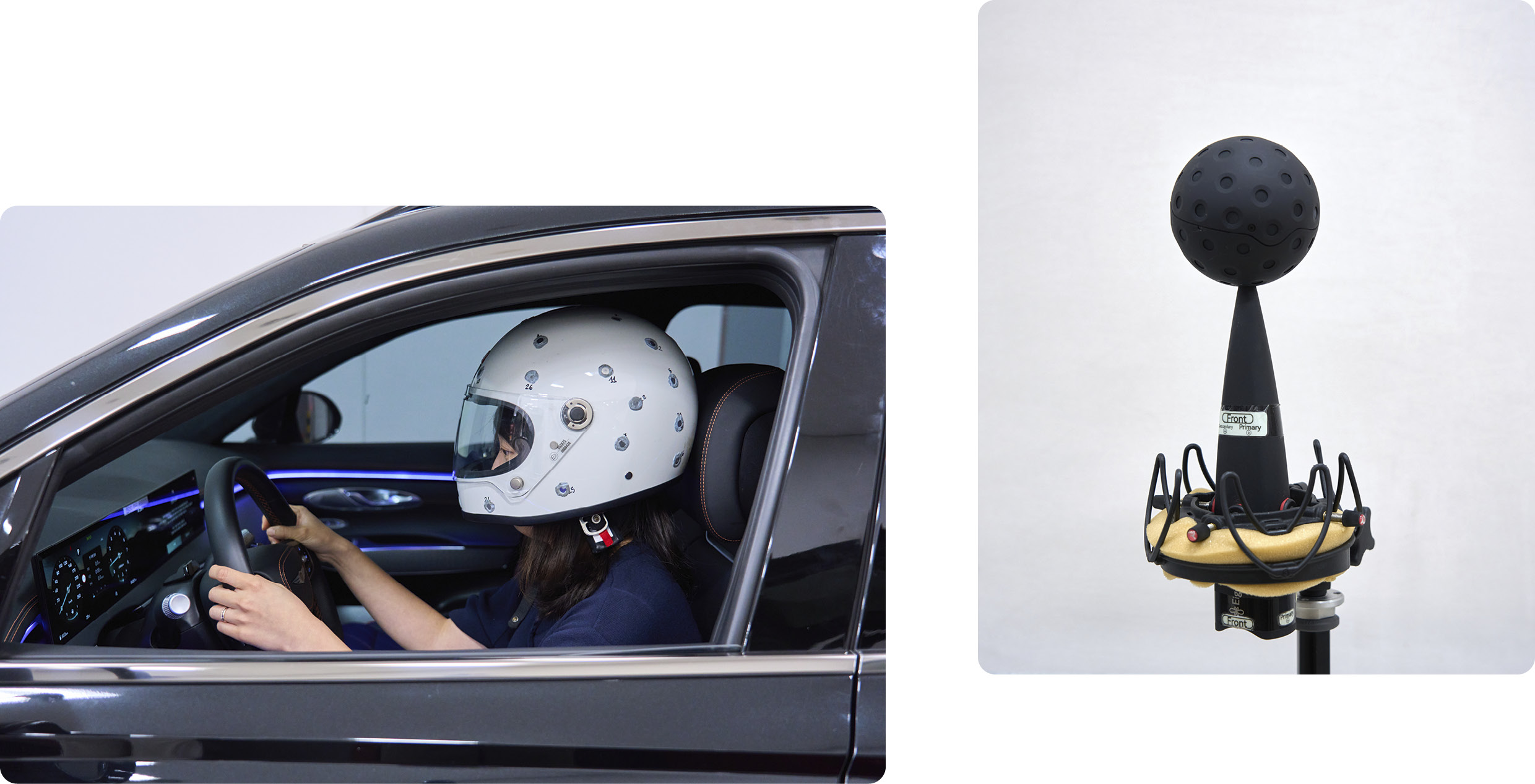
Building this kind of environment demands serious data. The team records real vehicles as ground truth, using specialized methods to capture precise acoustic information. For spatial audio, they deploy a spherical microphone array with 64 densely packed sensors to capture fully immersive sound fields. At the driver position, a custom helmet-mounted microphone rig measures road noise and cabin ingress exactly the way a driver hears it.
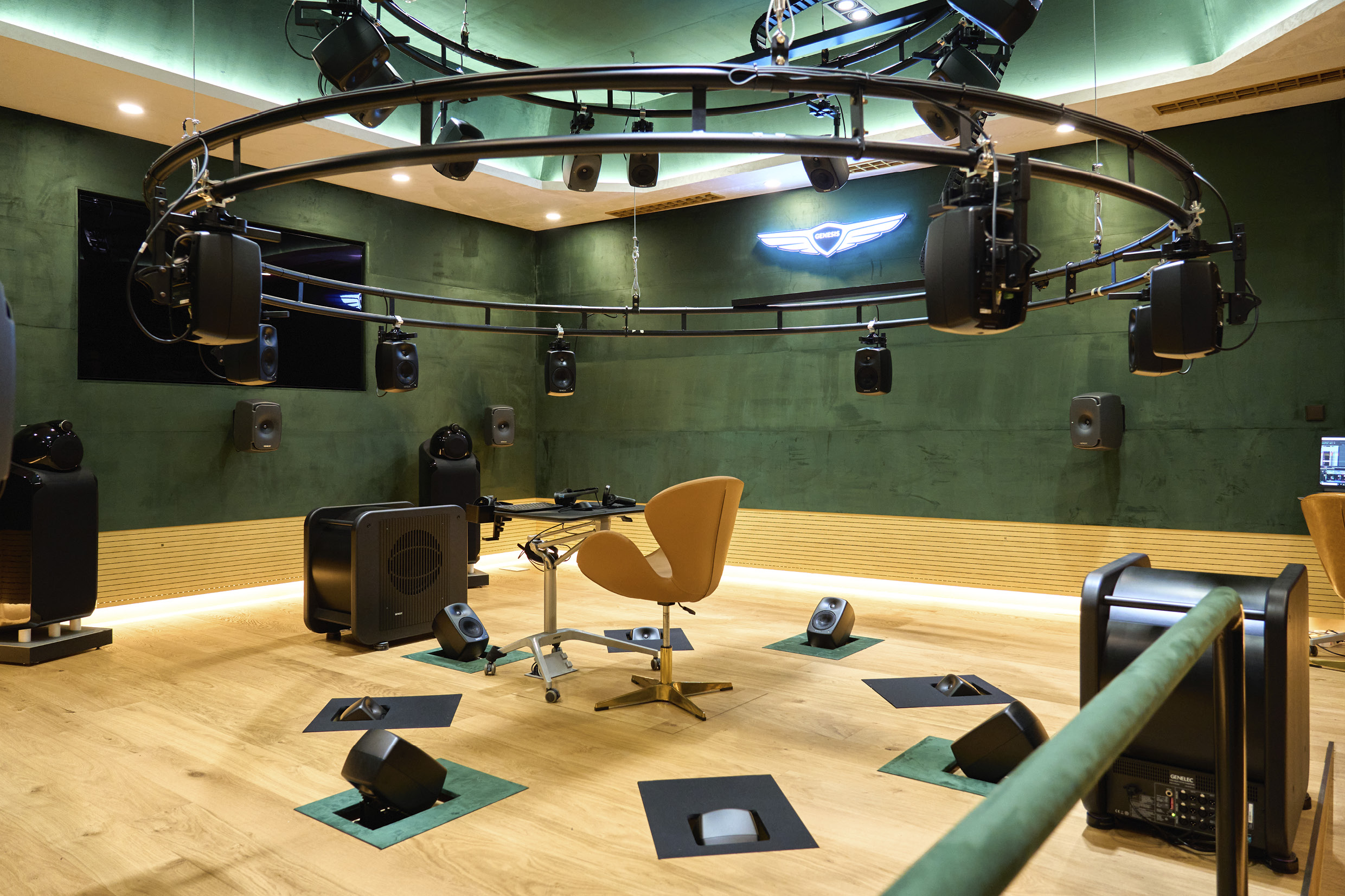
(2) A Studio Built to Design the Sound of Future Mobility
The Immersive Acoustic Listening Room takes NVH and driving-sound measurements and turns them into spatial audio you can experience—faithfully. Its headline feature is the world’s first switchable spatial-audio speaker system that can jump, in real time, between fourth-order Ambisonics (25 channels) and Dolby Atmos (7.1.4) via a 3D speaker array and live control system.
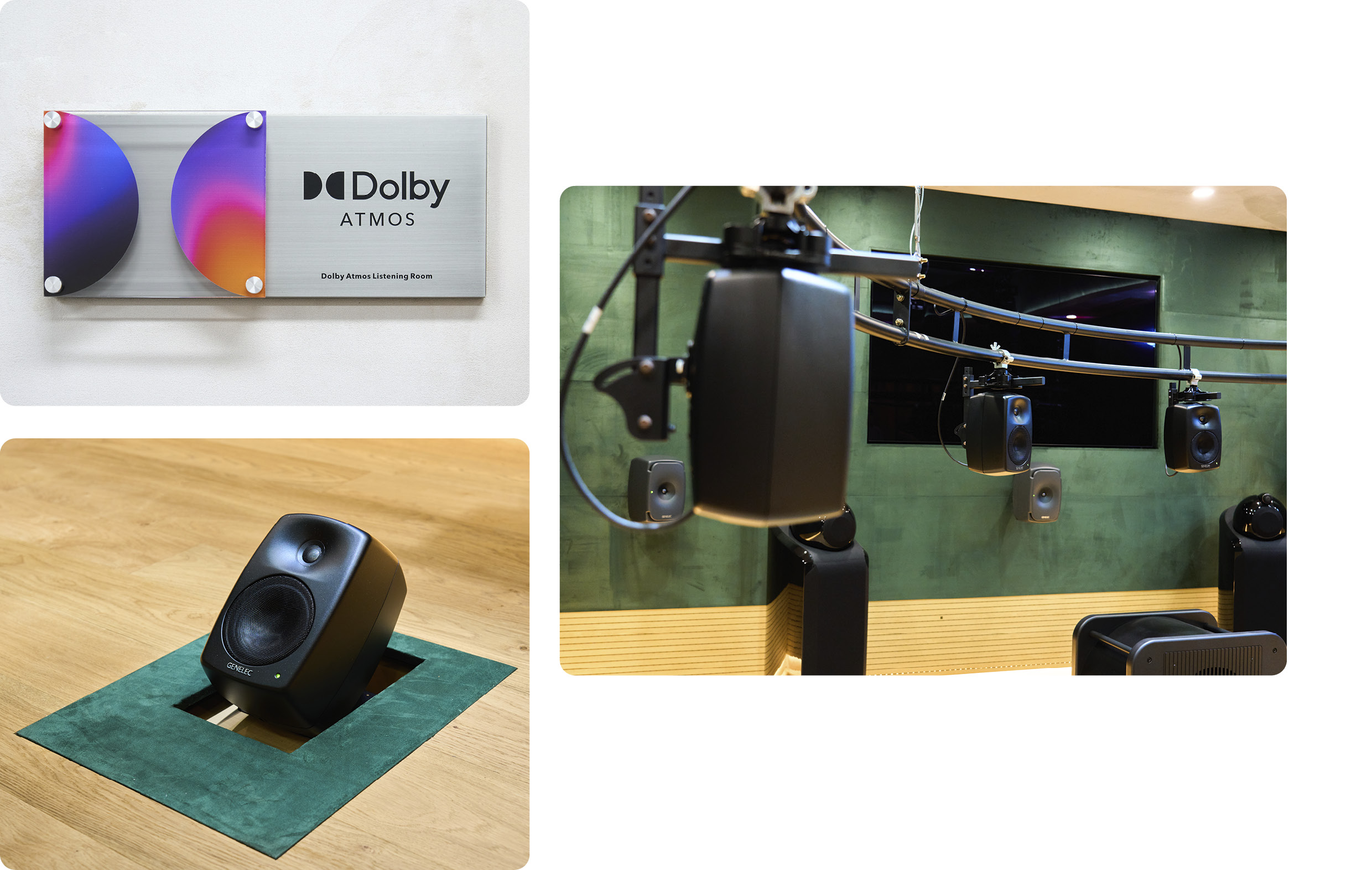
The speaker layout changes depending on the format. Ambisonics captures and reconstructs a space’s sound field from a single point using mathematical decomposition and recombination—ideal for reproducing measured environments for NVH development. Dolby Atmos is built around placing discrete sound objects exactly where the content creator intends—perfect for in-car entertainment tuning. HMG leans on Ambisonics for NVH work and Atmos for entertainment calibration.
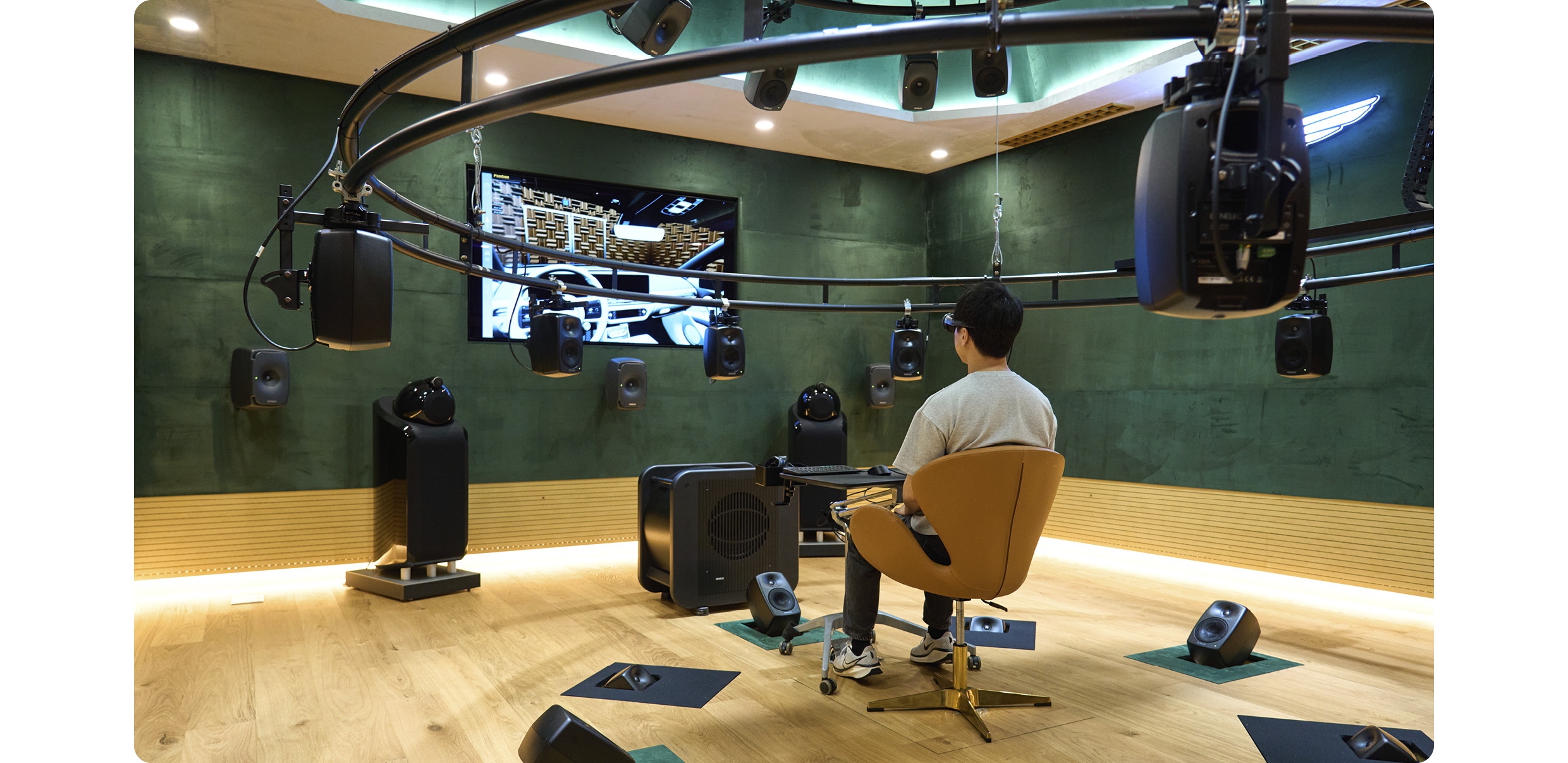
The mission here is realism: spatial audio that feels like you’re actually there. Engineers can recreate the sense of space and place customers experience on the road, then apply that insight to sound-related development and testing. Because the system mirrors what occupants truly hear, decisions stay customer-centric. And the setup accelerates progress through joint evaluations with overseas labs and external partners.
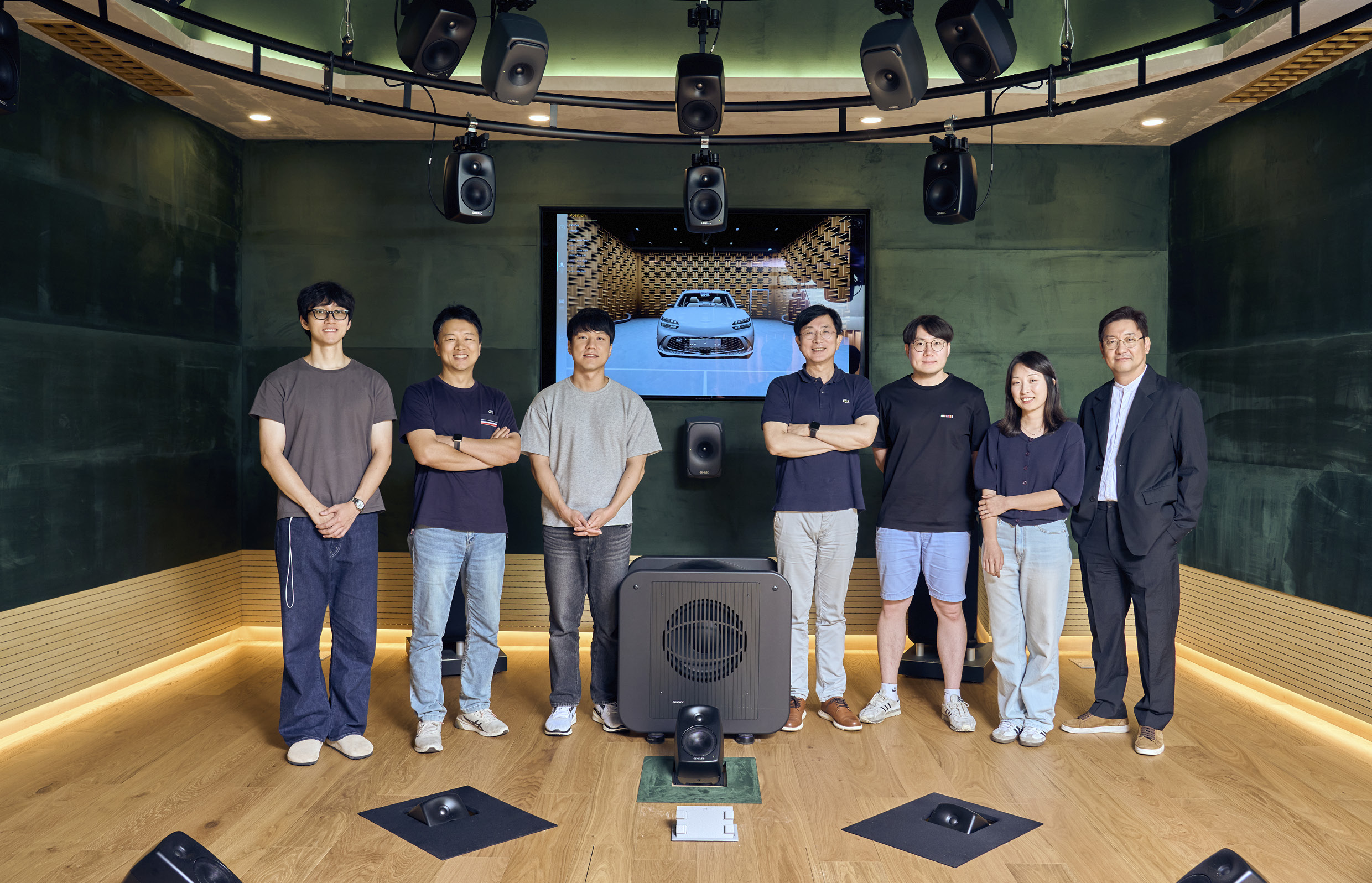
Meanwhile, HMG’s Virtual Sound Group—the team leading vehicle-sound development—is expanding its virtual acoustic environments for the mobility era ahead. In autonomous-driving scenarios, seat orientation and cabin layouts may change on the fly, demanding new sound-control technologies that keep audio consistent no matter where you’re seated or how you’re positioned. Delivering uniform, high-quality sound also requires validating performance across a wide range of conditions. By shifting much of that testing into virtual acoustic environments, the group is gearing up for rapidly changing mobility demands head-on.
HMG’s EVs continue to collect awards worldwide—not just because they perform, but because they deliver a travel experience that feels carefully finished. Every HMG EV carries the fingerprints of researchers chasing the same goal: build a better car. And at Namyang—HMG’s central R&D control tower—that work continues around the clock, beyond the limits of weather, time, and space, pushing EV development to the next level.
*CAE: Computer Aided Engineering
Photography by Hyuk-soo Cho