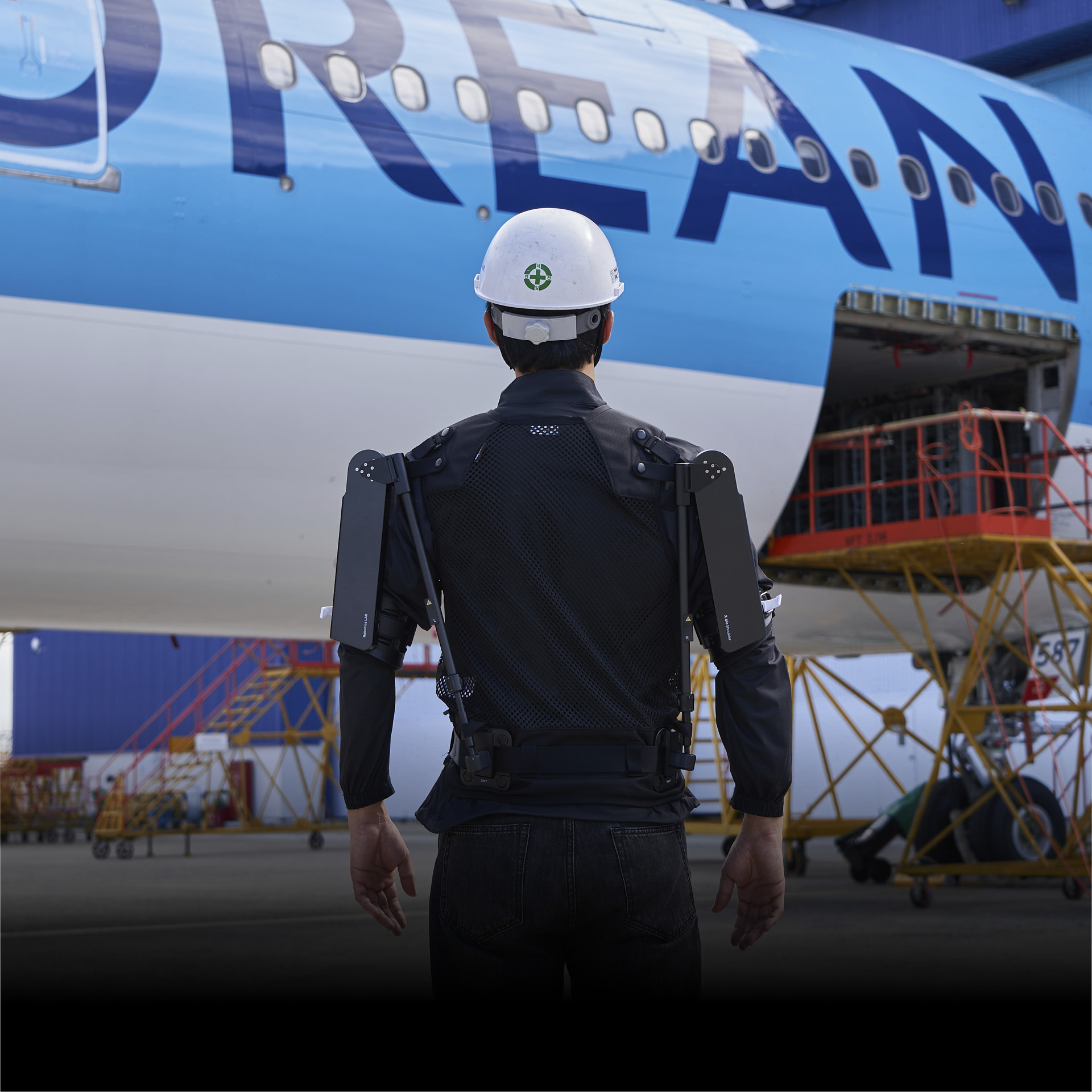
Before a single aircraft can take flight, it takes the hands of countless people. Refining the surface of a massive fuselage, assembling high-precision structures, and upholding uncompromising quality standards—every step depends on advanced technical expertise, hands-on experience, and sustained concentration.
At Korean Air’s Aerostructure Business Department, exceptional precision and safety are essential. Drawing on expertise built across aircraft development, production, maintenance, and performance upgrades, Korean Air manufactures major wing and fuselage structures for global aircraft manufacturers and continues to strengthen its core capabilities in the aerospace industry.
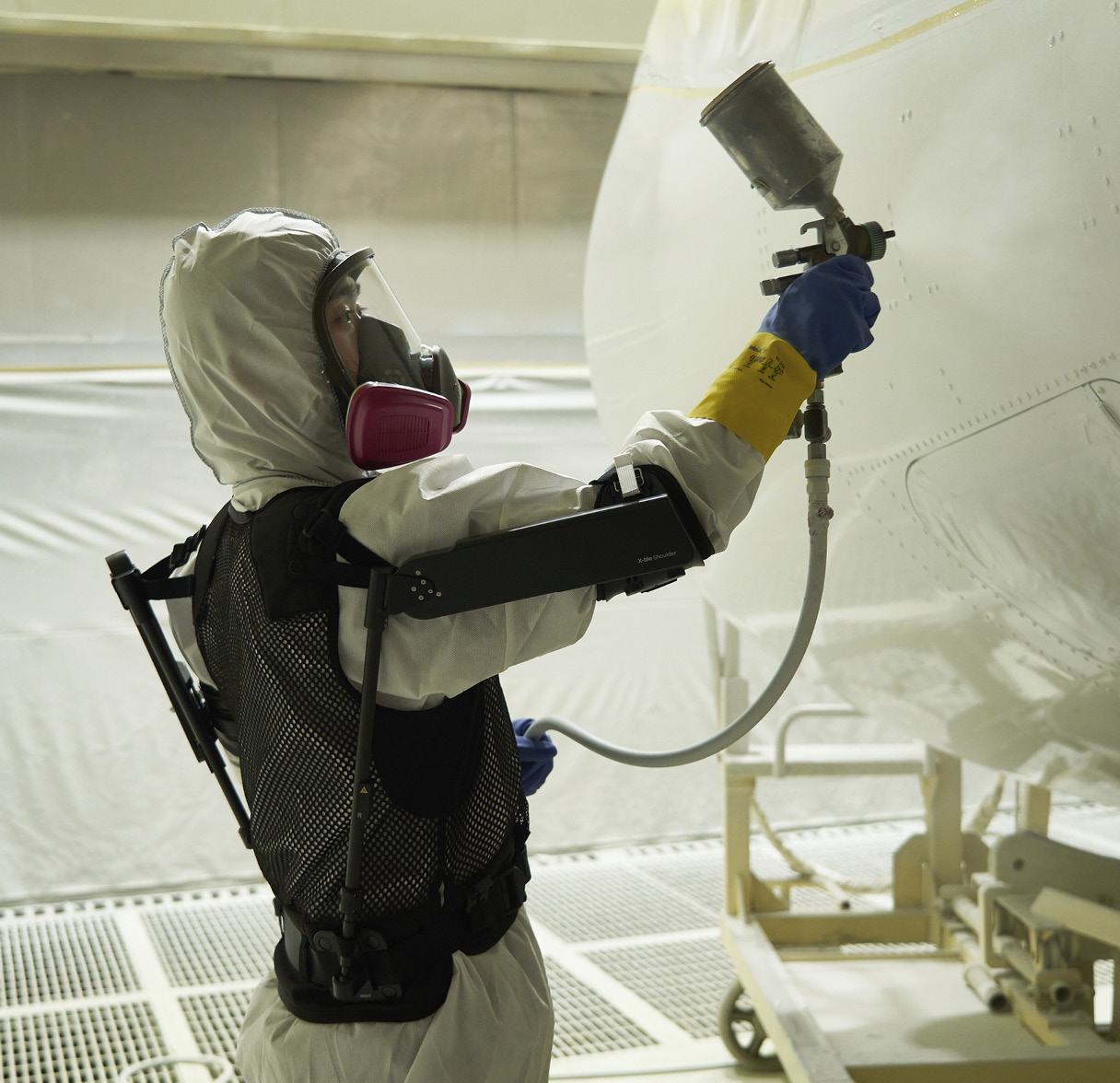
Yet in a workplace where quality and safety cannot be compromised, workers also face physical demands every day. Tasks that require holding the arms above shoulder height, repetitive sanding and drilling, and work performed in restricted postures can place considerable strain on the shoulders and arms.
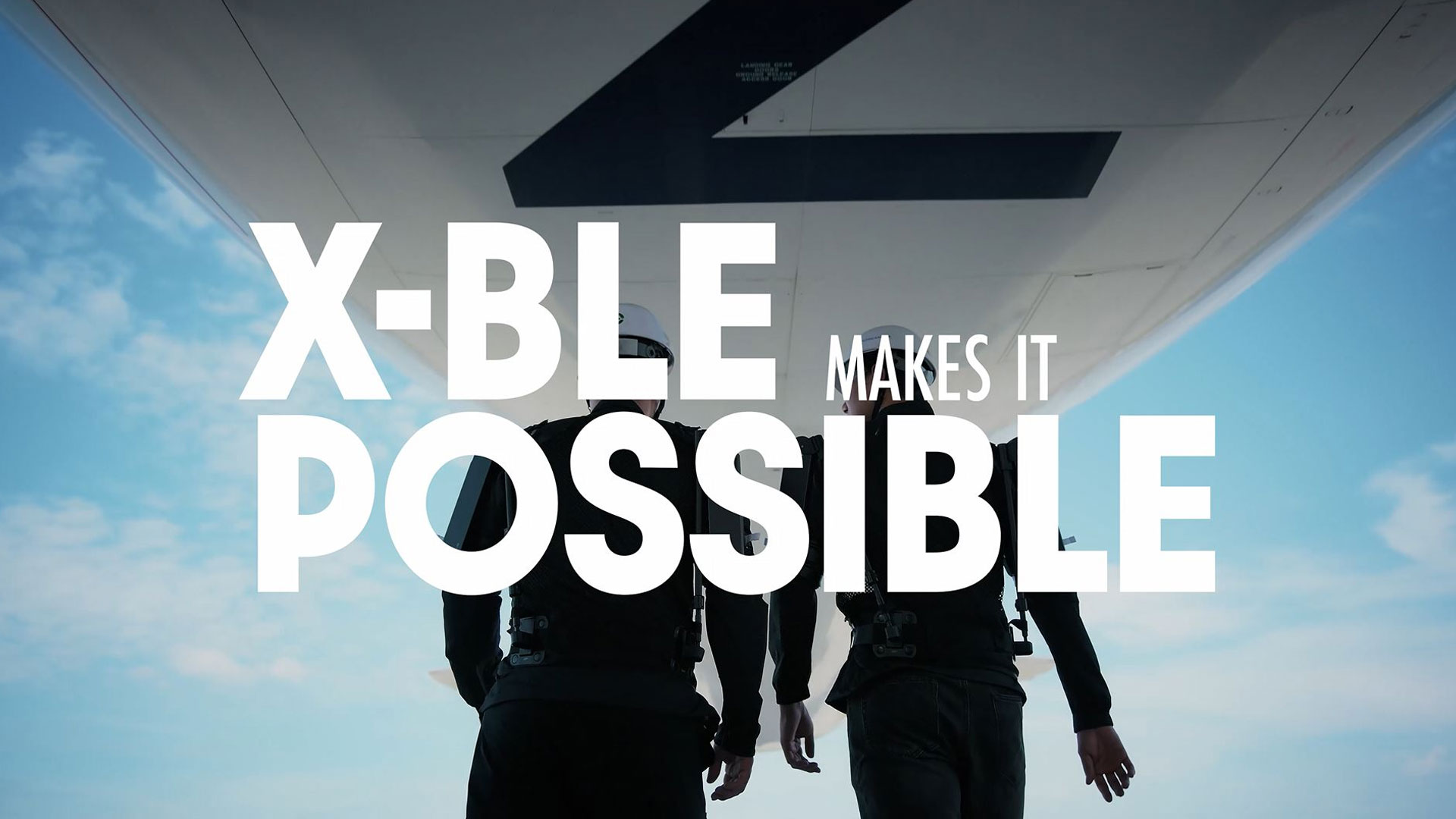
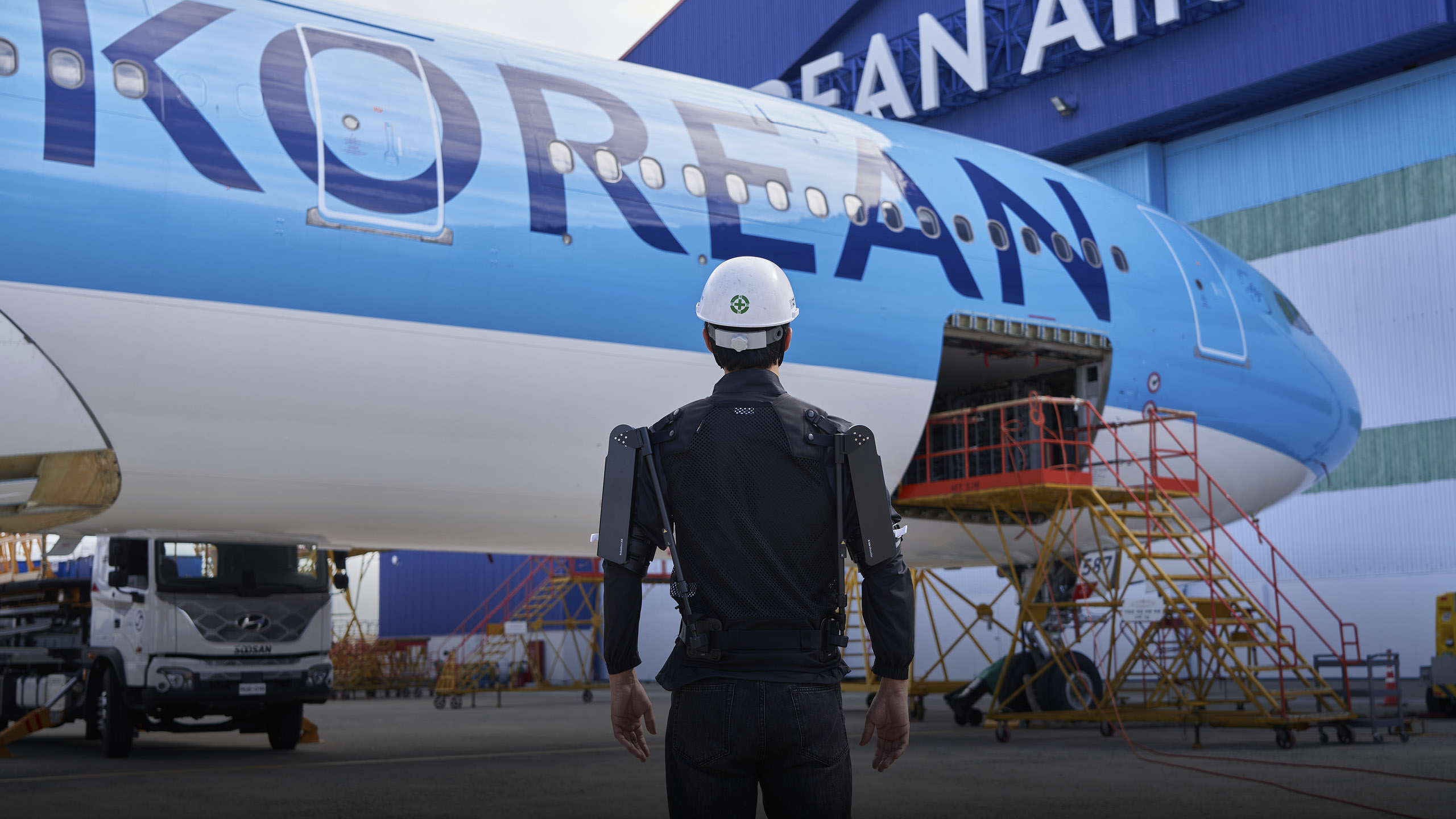
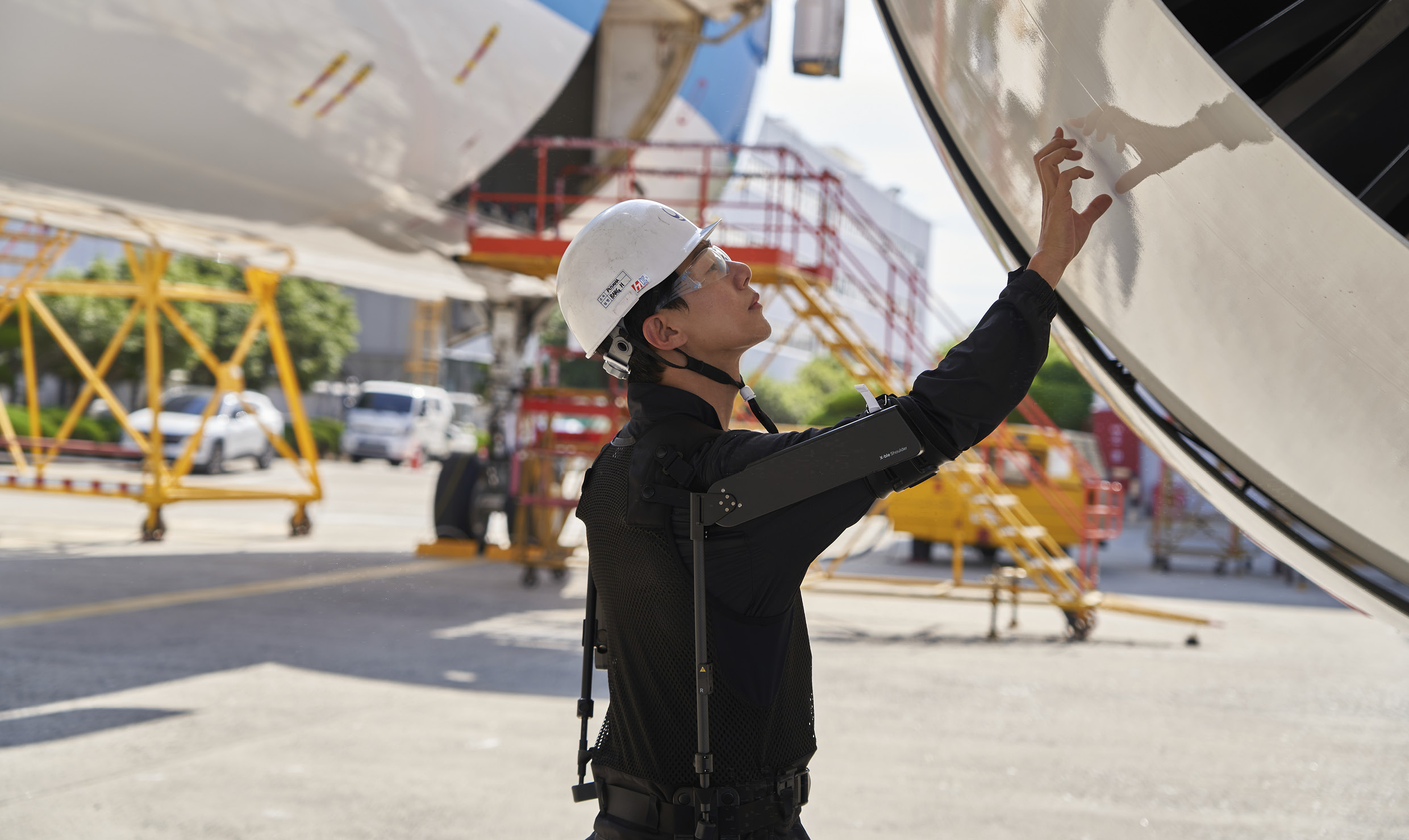
X-ble Shoulder, an industrial wearable robot developed by Hyundai Motor Group Robotics LAB, began with these challenges on site. It does not replace human movement. Instead, it works alongside people to help them work more safely and comfortably. We visited Korean Air aerostructure manufacturing sites to see how X-ble Shoulder is being used in the field.
Safety is the highest priority at Korean Air’s Aerostructure Business Department. In aircraft manufacturing, even a small mistake can affect both quality and safety. The work environment and the condition of each worker therefore form the foundation of consistent quality.
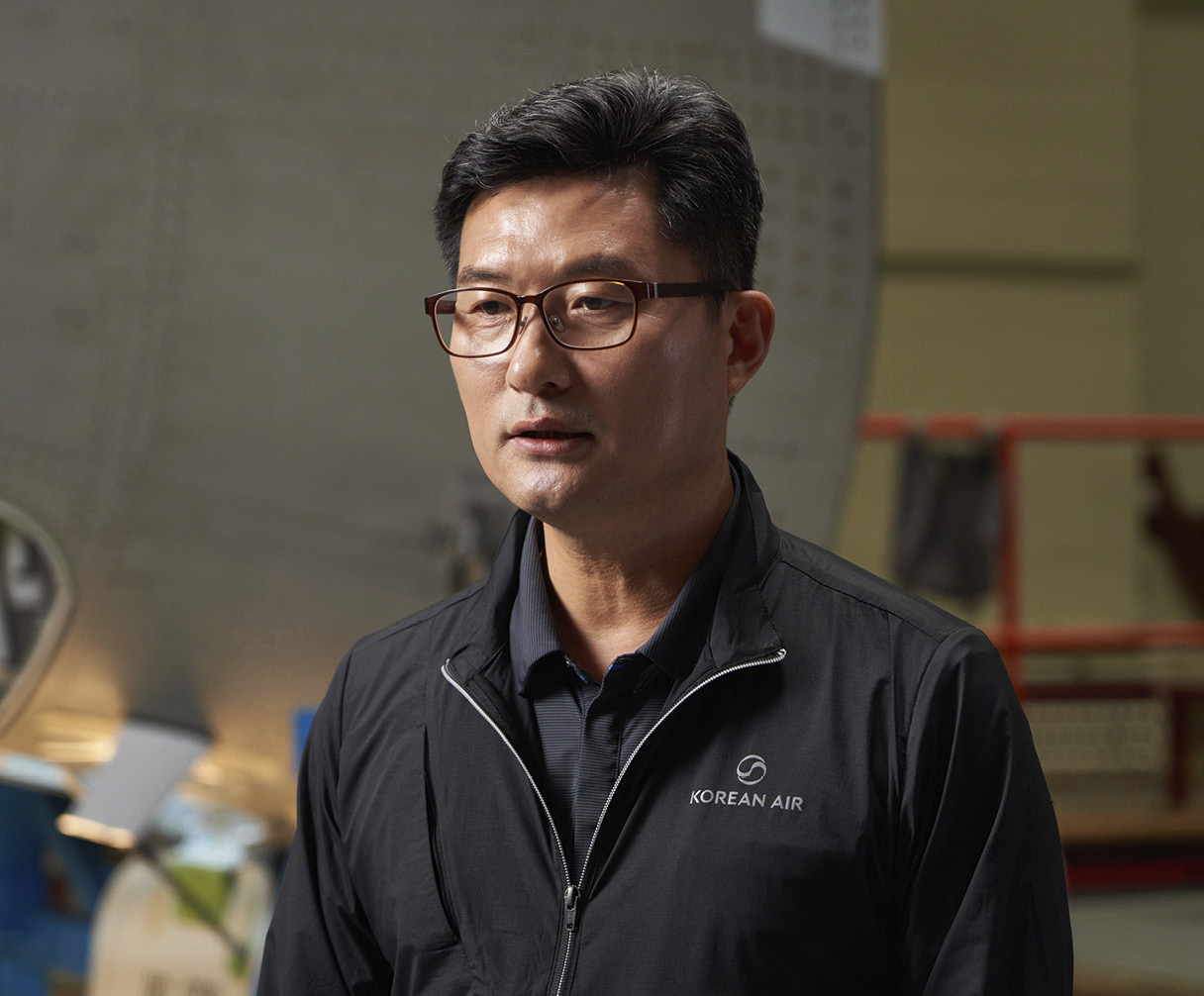
Shin Seung Hoon, Senior Supervisor leading safety, emphasized, “Safety is always our top priority on site.” He added, “Since 1999, Korean Air has been committed to maintaining an accident-free workplace through our zero-accident initiative. More recently, with health issues like musculoskeletal disorders and hearing loss becoming increasingly common, we’ve been placing greater emphasis on managing and preventing these conditions.” Healthy workers, he explained, are essential to maintaining both a safe workplace and consistent quality.
The skill of experienced workers is a vital asset that supports aircraft quality, but repetitive, high-intensity work can place a burden on anyone. In the painting process, sanding is essential. It removes surface contaminants and fine imperfections and prepares the surface so that the new coating can adhere properly. Workers must keep their arms raised, move them in different directions, and repeat the same motions over and over.
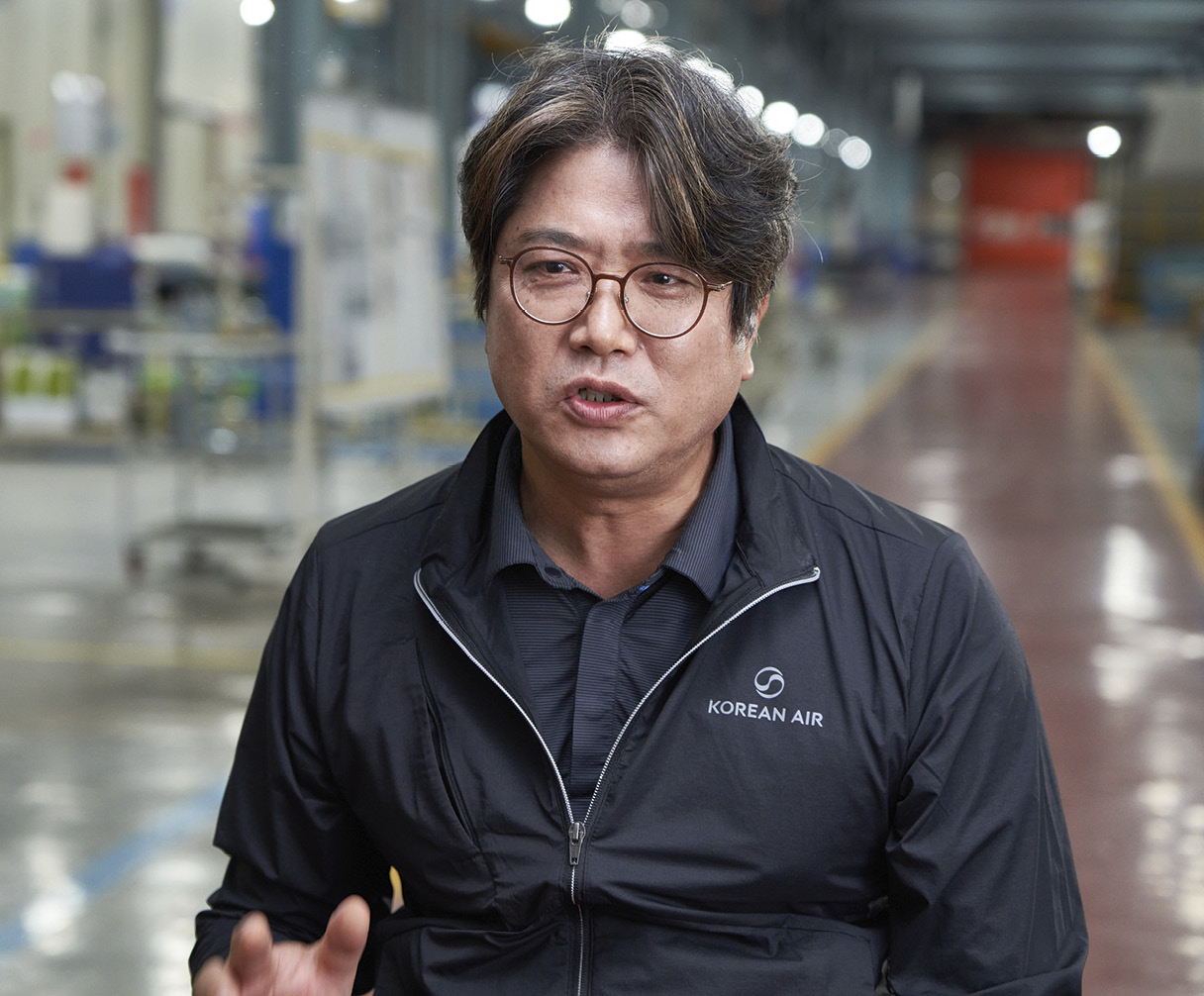
Lee Jin Oh, Senior Supervisor overseeing body painting, described sanding as “physically demanding work.” Additional workers are brought in to complete the job as quickly and efficiently as possible, but the repeated motion still requires significant physical effort. Won Young Soo, a body painting technician, said, “The work requires us to keep our arms up and moving in different directions for extended periods. It’s highly physically demanding.”
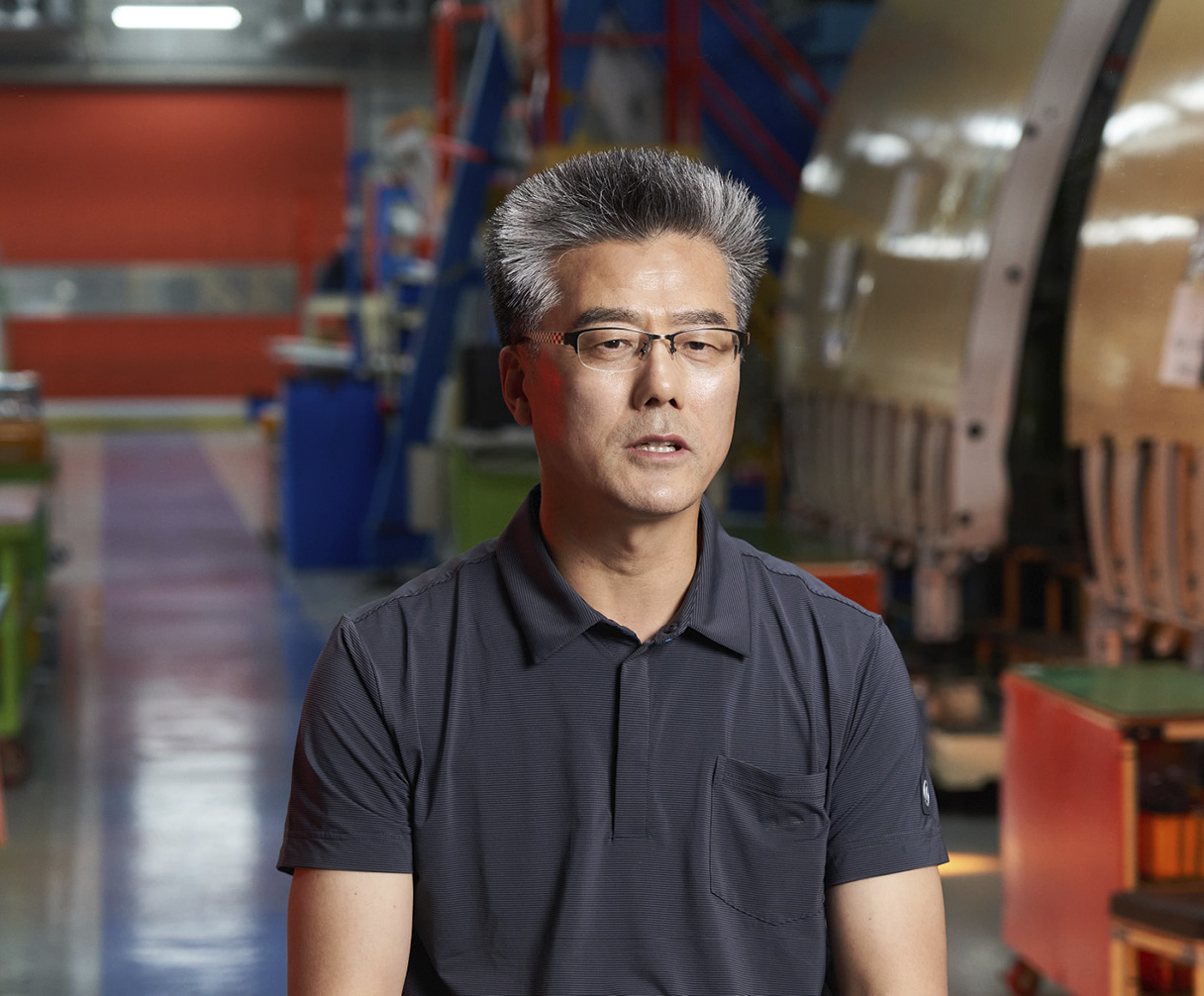
The same is true of drilling. Aircraft structures often use titanium and composite materials, and drilling precise holes in these materials requires intense concentration and the ability to maintain the same posture for long periods. Kim Moon Soo, Senior Supervisor of drilling, explained, “Because the work requires maintaining the same posture for long periods, it places considerable physical strain on our technicians.” Park Seung Ki, who works on aircraft cargo door drilling, added, “It’s especially tiring when we’re working overhead for long stretches.”
Because developing aircraft specialists takes years, creating a work environment where skilled technicians can perform steadily is closely connected to the long-term sustainability of the workplace.
To support workers’ musculoskeletal health and build a safer work environment, Korean Air reviewed the adoption of X-ble Shoulder from Robotics LAB. Shin said, “That’s why we worked with our technical team to discuss the adoption of X-ble Shoulder. We believed it could help reduce musculoskeletal strain and build a safer work environment.”
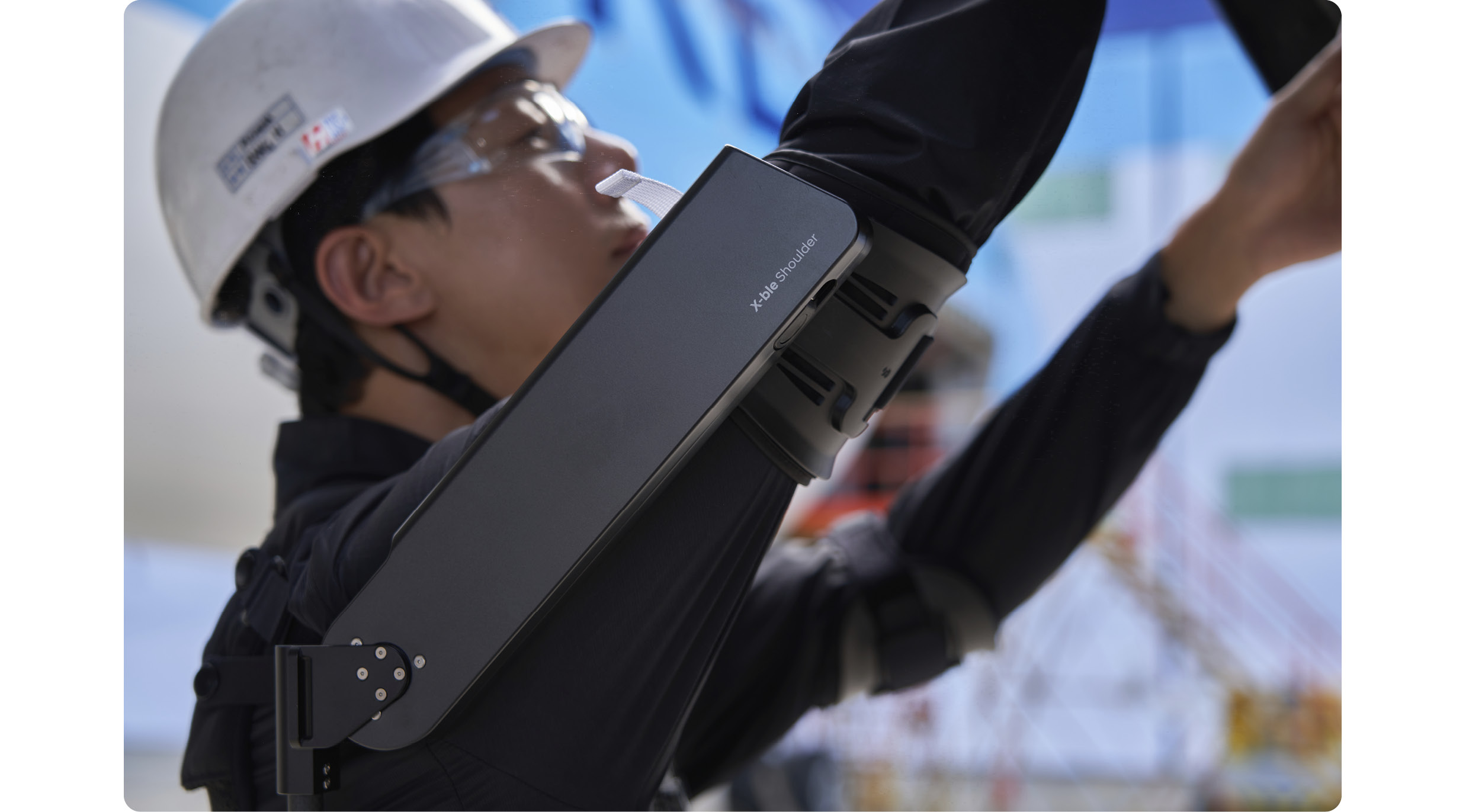
X-ble Shoulder is an industrial wearable robot designed to reduce shoulder joint load during tasks performed with the arms raised above shoulder height. Its non-powered mechanism requires no charging, and its lightweight design makes it easy to manage during extended work. It is also designed to move naturally with the wearer and provide shoulder support when needed.
That is why X-ble Shoulder was introduced at Korean Air. During painting, sanding, and drilling—tasks that require workers to repeatedly keep their arms raised for long periods—it helps reduce shoulder joint load and supports more stable performance.
Whenever new technology is introduced on site, there is an adjustment period. Korean Air workers did not all respond the same way at first. Some found the fit unfamiliar, while others commented on the weight, restricted movement during mobile tasks, and the fit of the vest across different body types.
Looking back on the initial adoption, Lee said, “When we first brought it in, people found it unfamiliar and, honestly, they were a little skeptical.” Won also said the device felt slightly awkward the first time he wore it, while Park’s first impression was simply that it was “interesting.”
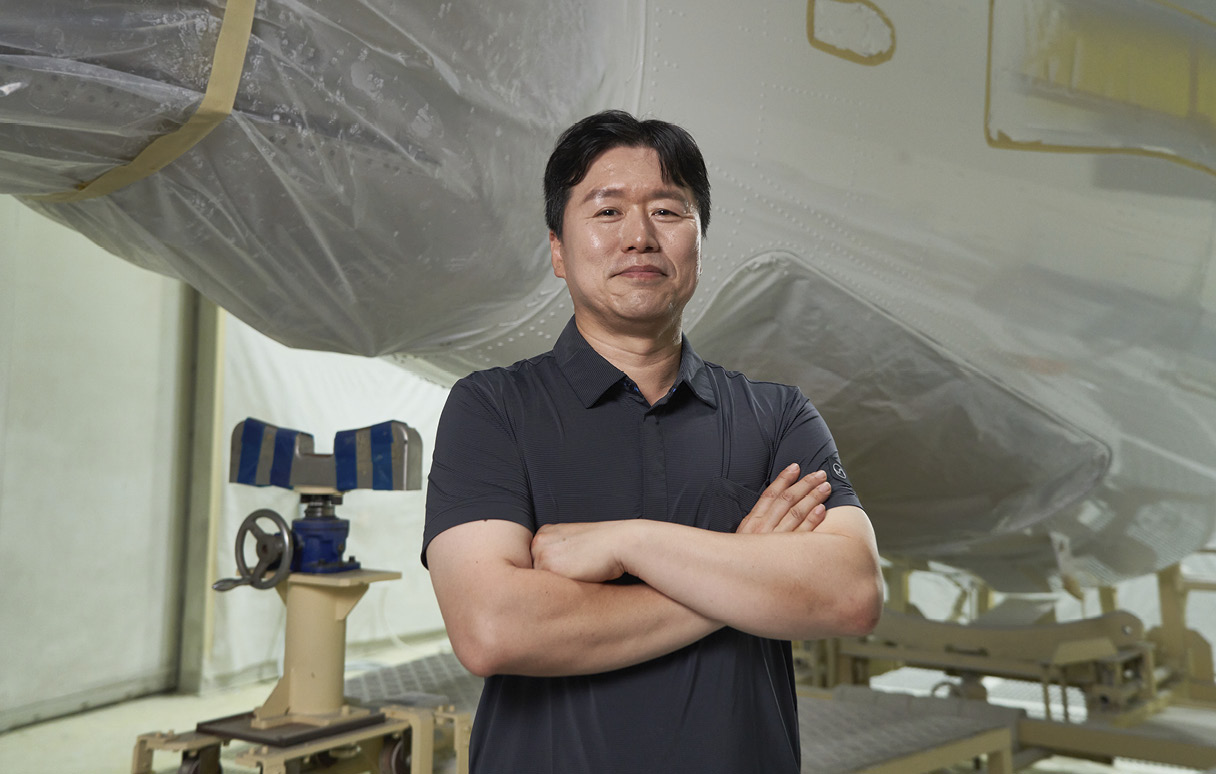
Reactions gradually changed with repeated use. Won said, “After wearing it a few more times, I got used to it pretty fast.” After using it on the job, Park explained, “I found it helpful for tasks that require maintaining the same posture for long periods.” Lee added that X-ble Shoulder did not completely change the work environment, but “when it comes to easing shoulder strain for anyone working overhead, it definitely made a real difference.”
Workers most often felt the support during sanding and drilling tasks that require the arms to remain raised for extended periods. Some workers who found it helpful chose to keep using it voluntarily. Shin said, “The workers who found it helpful were satisfied enough to keep using it. We also observed positive improvements in both workers’ motivation and safety awareness.” For the safety team, the most rewarding moments were when workers said the device had made a real difference on the job.
The value of X-ble Shoulder goes beyond its introduction on site. Feedback from the people who use it is also helping the product evolve.
Korean Air workers shared feedback with Robotics LAB on comfort, fit across different body types, ventilation, movement, and usability in different work environments. Based on this input, Robotics LAB is now testing a new Work Belt Type wearing system that is currently under development.
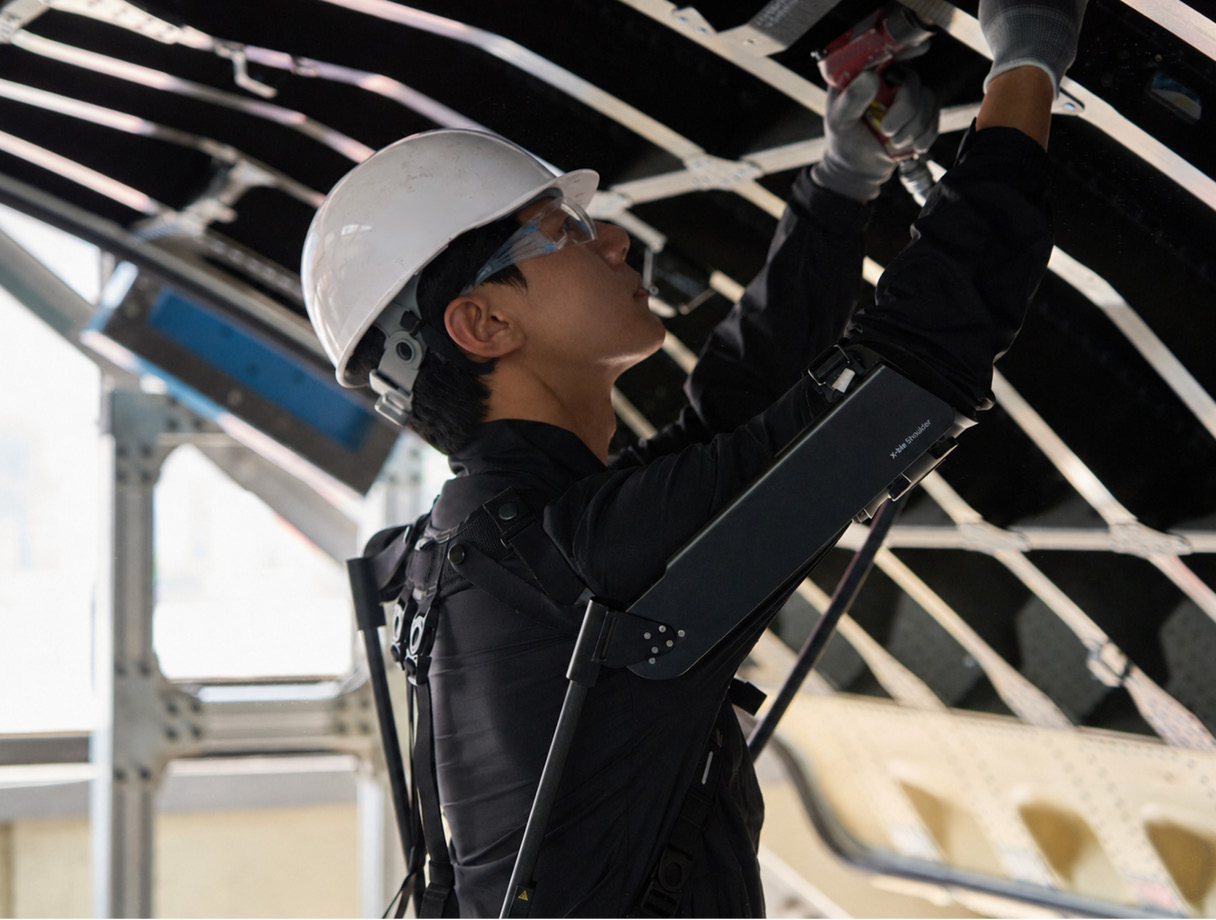
Kim explained, “We gathered feedback from the workers and shared it with Robotics LAB. We’re now testing a new Work Belt Type being developed by Robotics LAB and looking into how to improve it.” During testing, workers also reported less pressure around the shoulders and waist, along with better ventilation and less heat buildup.
Shin also said Korean Air is helping Robotics LAB improve the product based on feedback from the field and expressed anticipation for the upgraded model. Going forward, Korean Air is also considering expanding its use to aircraft assembly work.
X-ble Shoulder is not a finished technology applied to the workplace in a one-way process. It develops together with the people who use it. It supports workers when needed without restricting their movement, and it continues to evolve for a more natural fit across different body types and work environments. People do not have to adapt to the technology, the technology adapts to people and the workplace.
At Korean Air’s Aerostructure Business Department, X-ble Shoulder is making more possible than simply reducing shoulder joint load. It is helping build a work environment where skilled technicians can perform more steadily, a foundation for maintaining quality with less fatigue during high-intensity work, and a new possibility for industrial workplaces centered on safety.
At the end of the shoot, we asked one final question: “What does X-ble Shoulder make it possible?”, and the answers differed slightly, but they all pointed in the same direction.
Shin said safer worksites had been made possible. Lee said comfortable performance for skilled workers had been made possible. Won said sustained support for overhead tasks had been made possible. Kim saw the possibility of enduring performance with less fatigue, while Park felt that stable posture for longer hours was becoming possible.
Aircraft manufacturing will continue to demand exceptional precision and expertise. And people will remain at the center of it. The role of robotics is not to replace people, but to help them apply their expertise more safely.
X-ble Shoulder from Hyundai Motor Group Robotics LAB is proving that possibility in real industrial settings. This first customer case, which began at Korean Air’s Aerostructure Business Department, shows how wearable robots can expand into a wide range of industries. So people can work longer and more safely. The possibilities X-ble Shoulder is creating are beginning right now—on site.