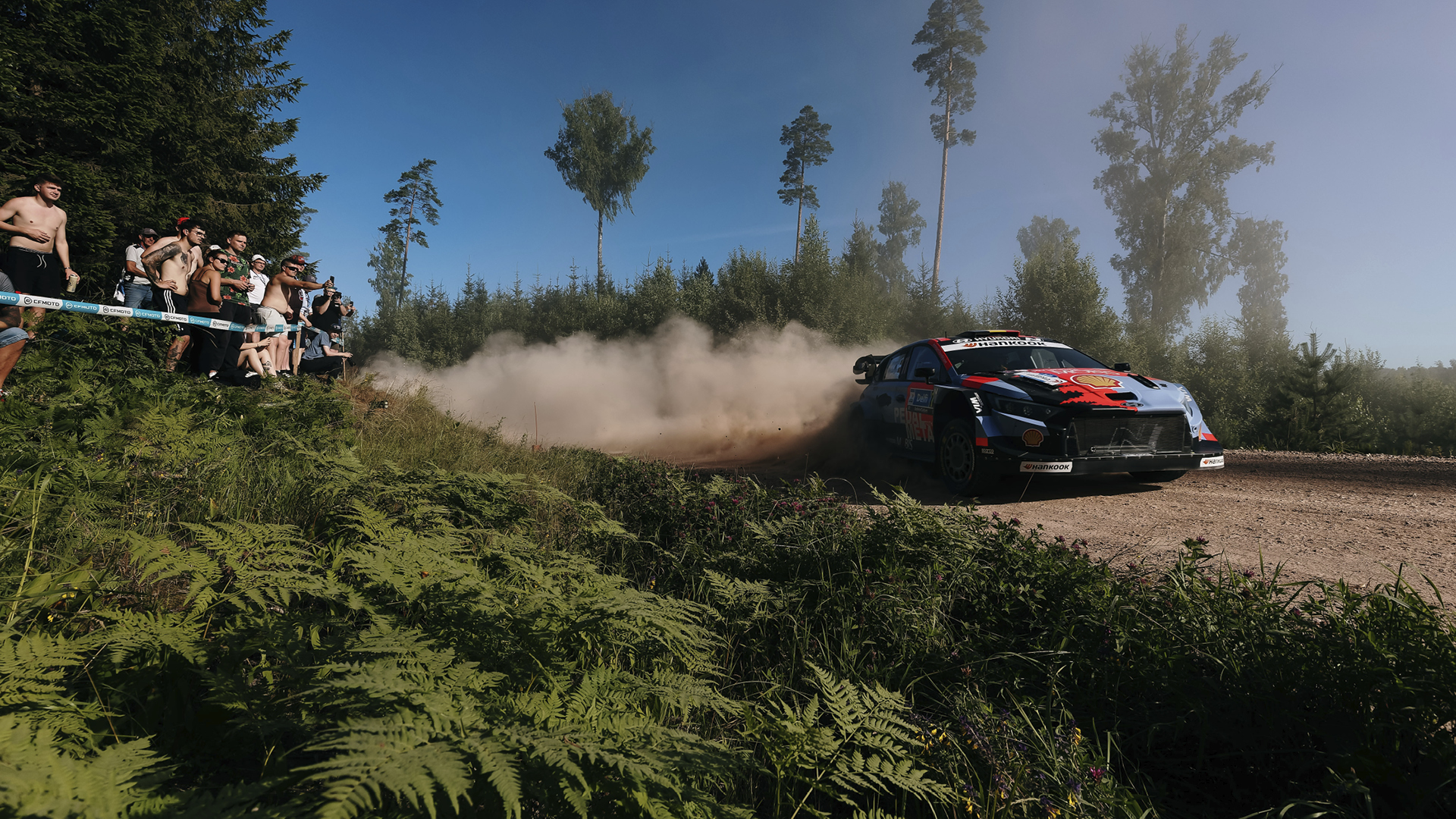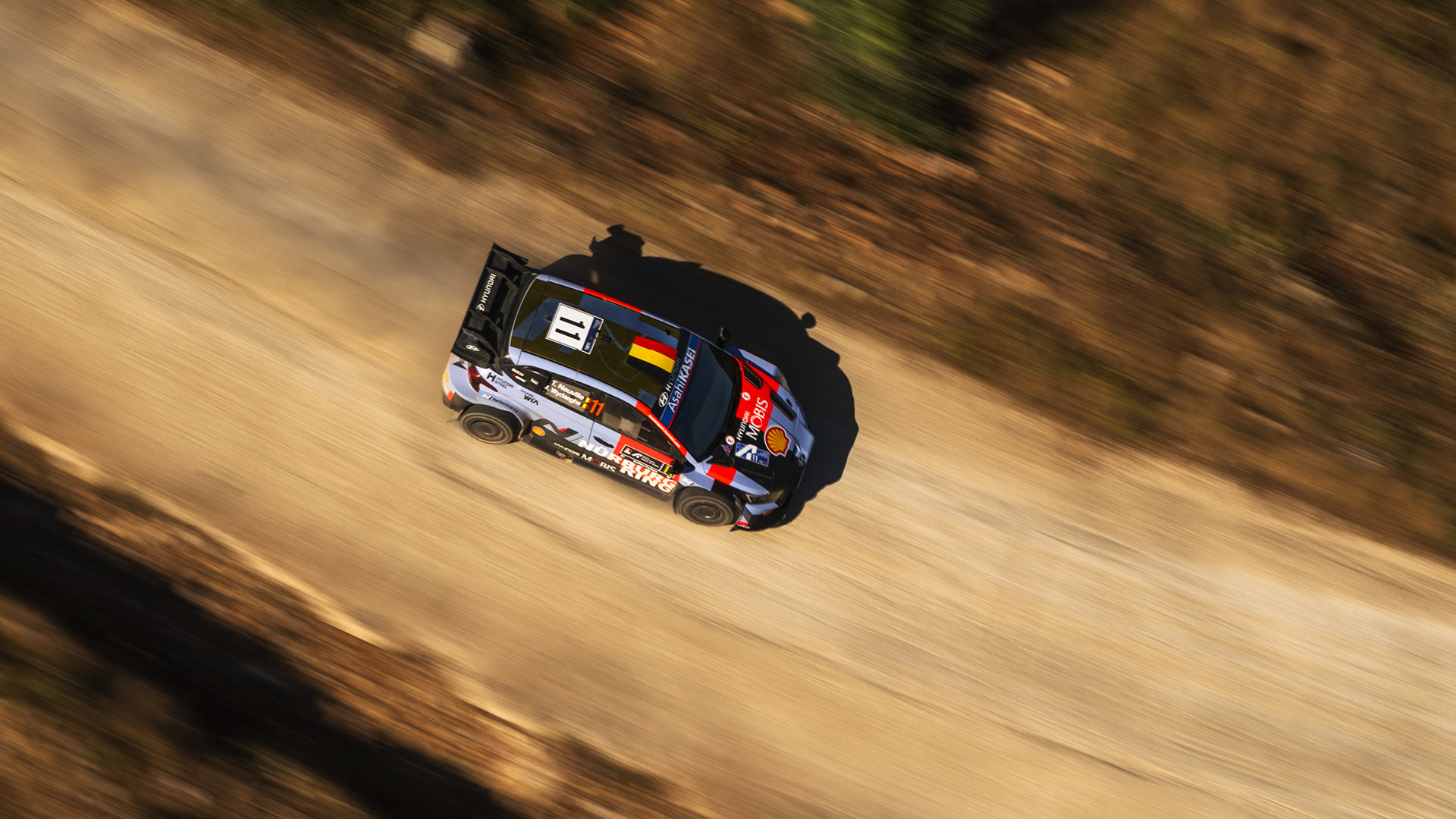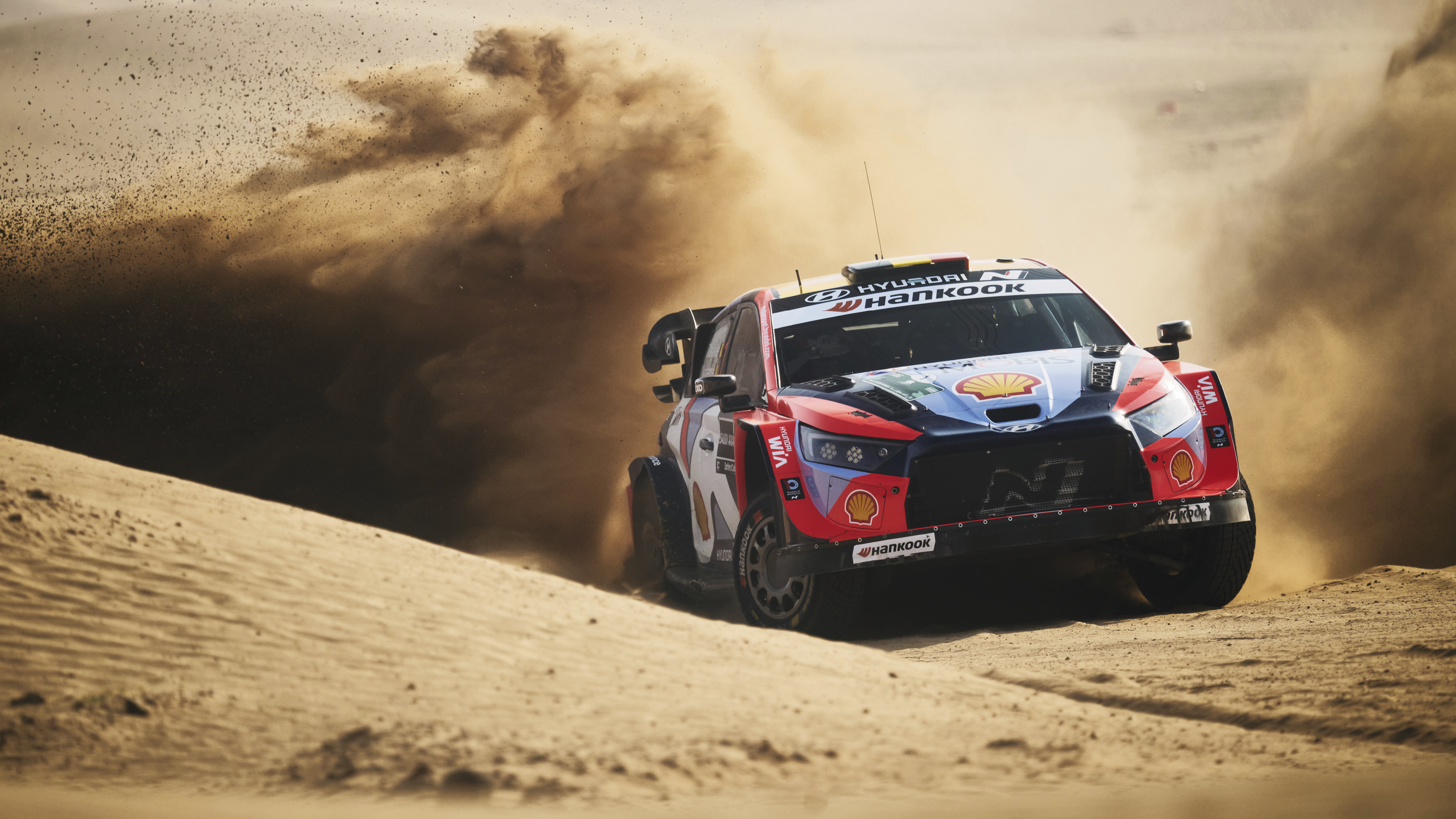
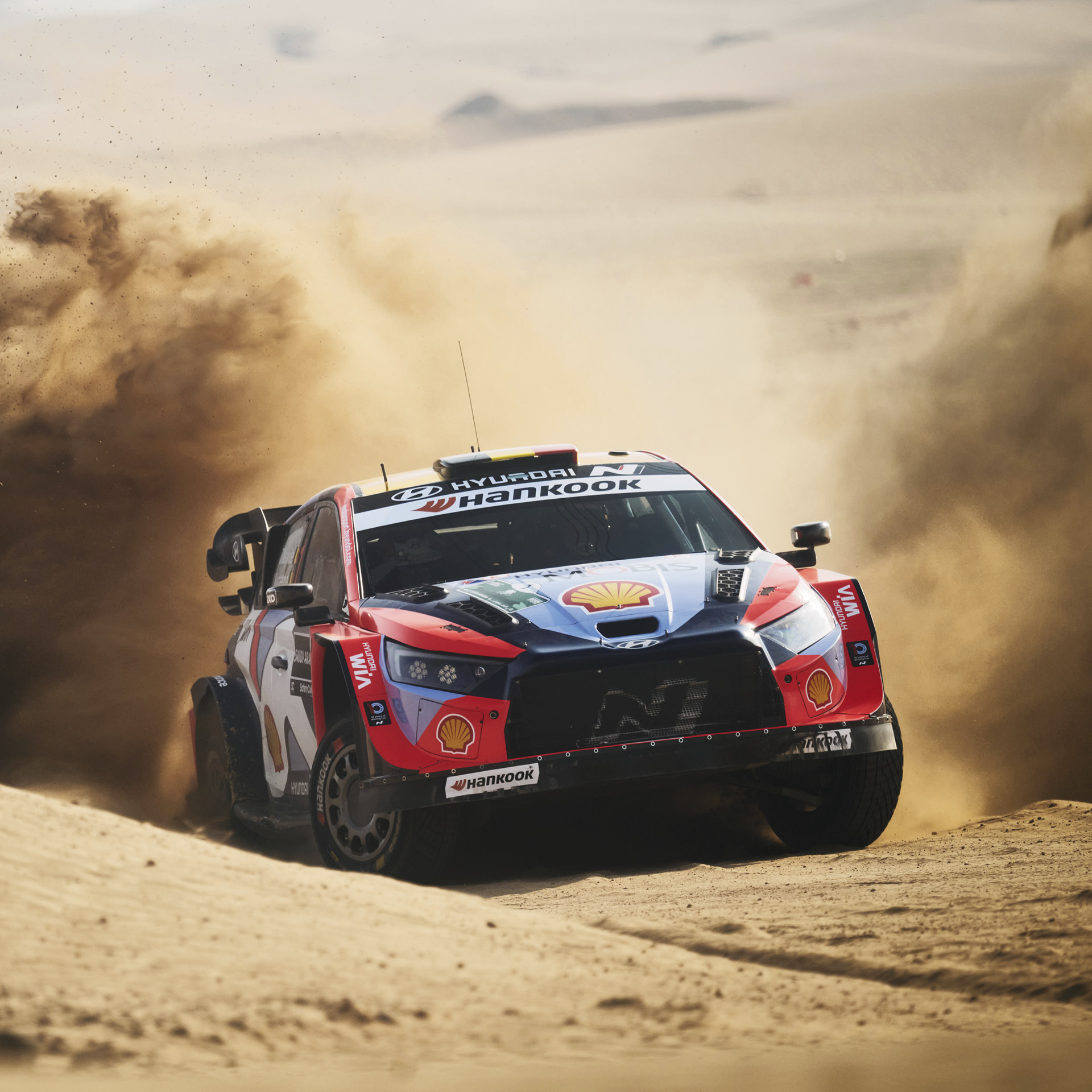
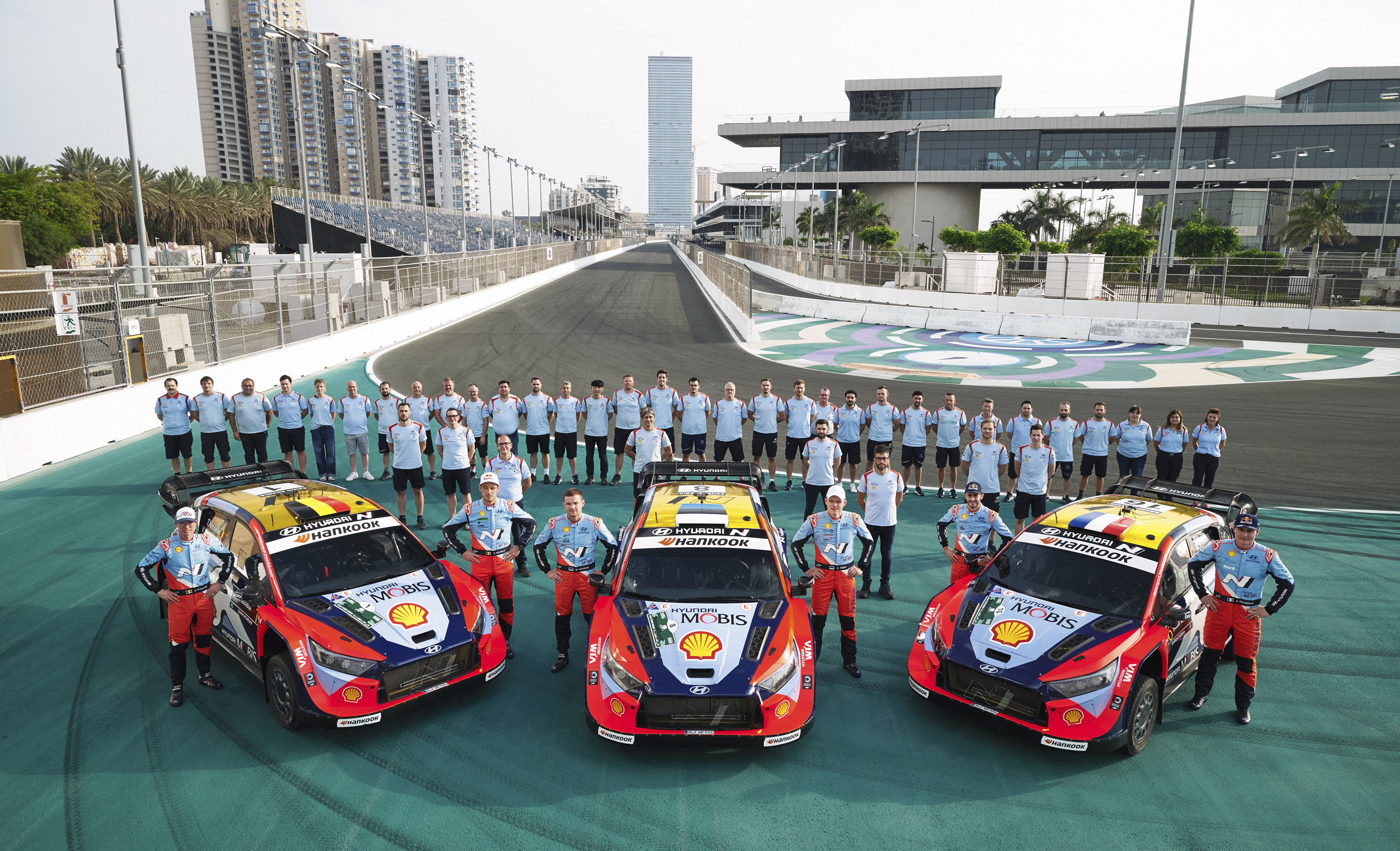
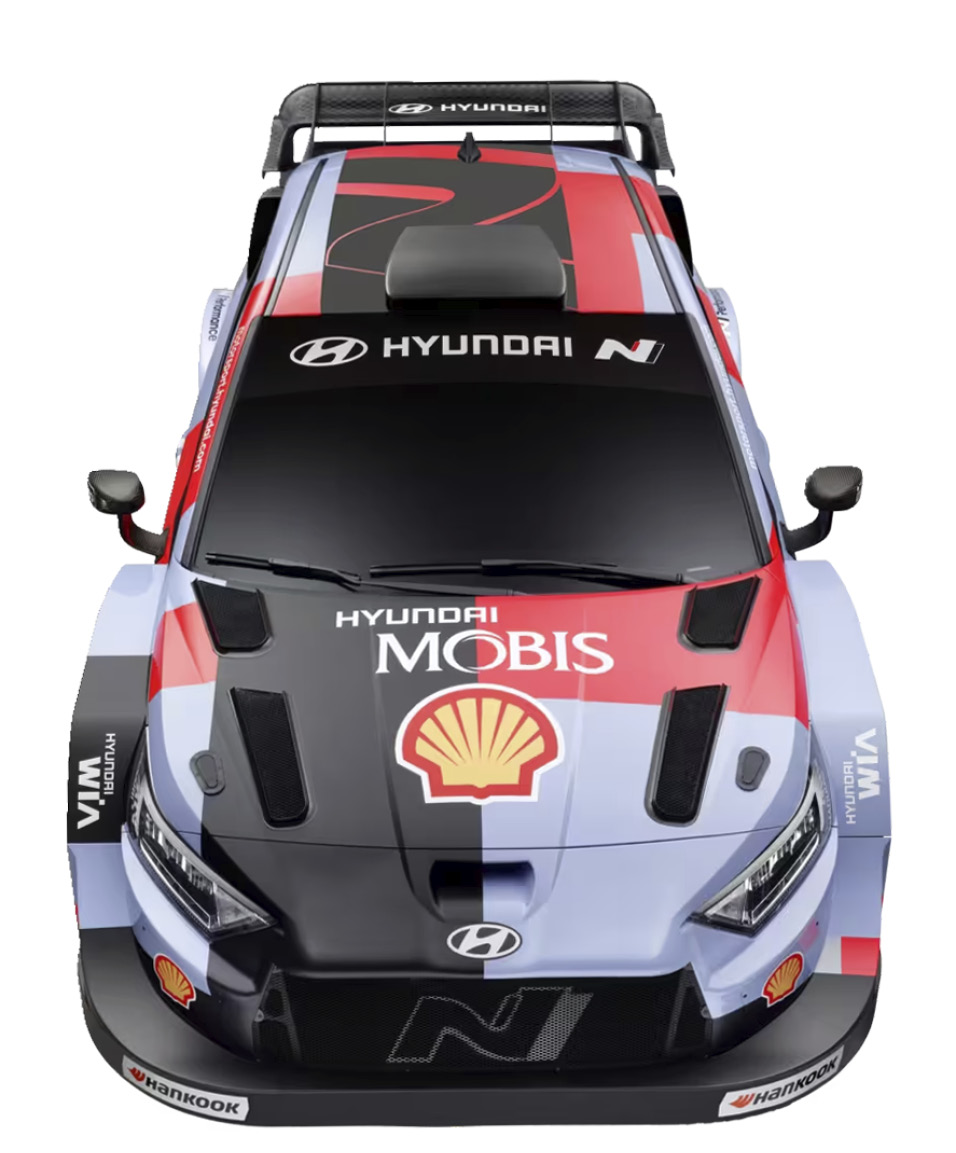
Hyundai Motorsport GmbH had a rough 2025. The new car rolled out early with genuine upside, but it wasn’t fully settled. Then the tire switch to Hankook ad-ded another layer of complexity, turning setup work into a longer hunt for the sweet spot. The good news for 2026 is that the tire data is finally accumulating—meaning it’s time to push the i20 N Rally1 closer to its ceiling.
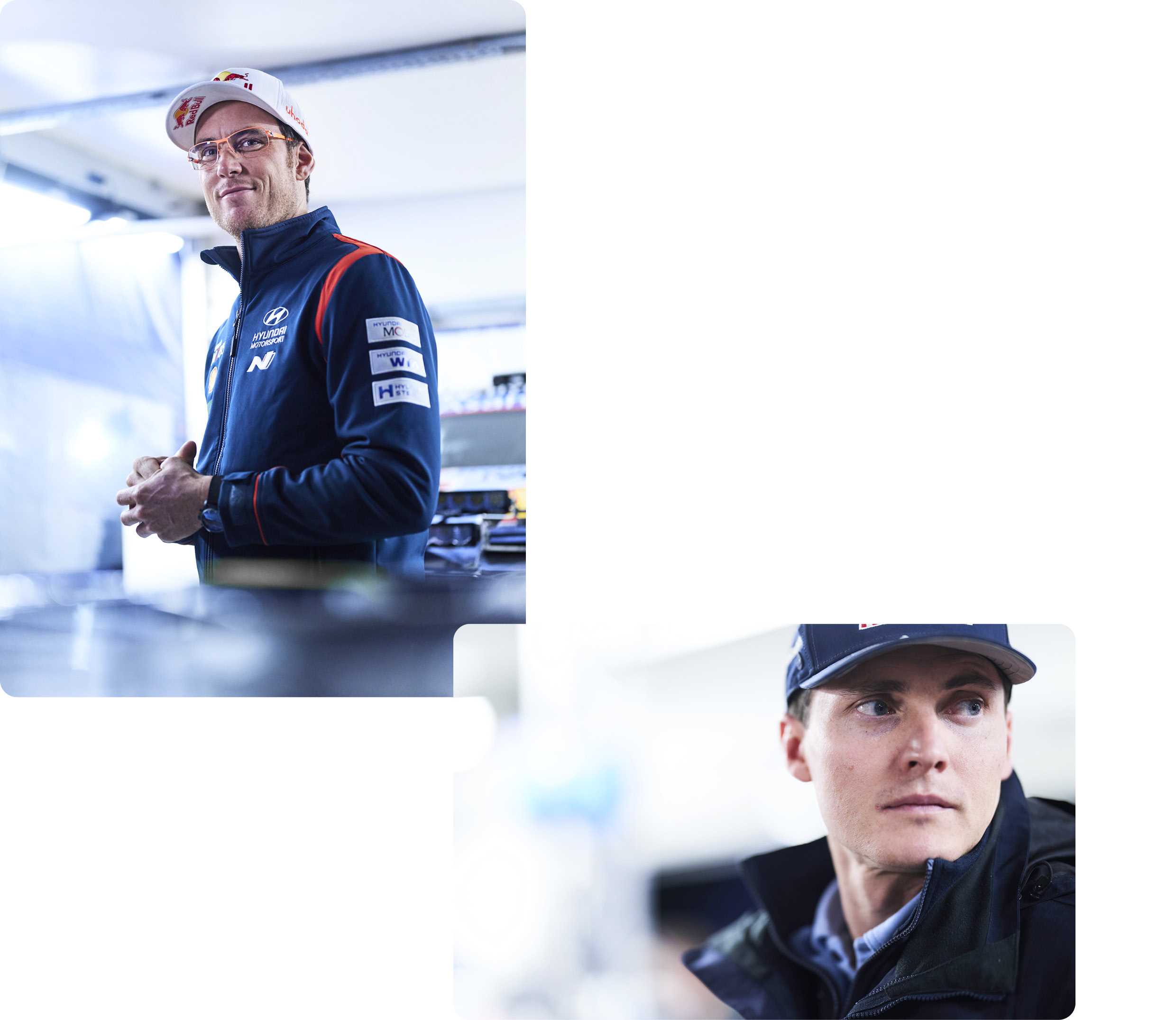
Thierry Neuville—now entering his 13th year with Hyundai—won the drivers’ championship in 2024, but 2025 didn’t read like a title defense. He spent most of the season stranded in the “third-place” zone (four times), and only restored some momentum with a win at the Saudi finale.
Meanwhile, Adrien Fourmaux, whose role grew after Tänak’s departure, returns as a full-timer. He hit turbulence in a few rallies last year (Japan included), but the trendline was still strong: four podiums, plus a second place in the finale. And in Saudi Arabia, one procedural check-in mistake cost him a penalty—without it, the win was very much on the table. Clean up the risk management and tighten the consistency, and he’s a threat anywhere.
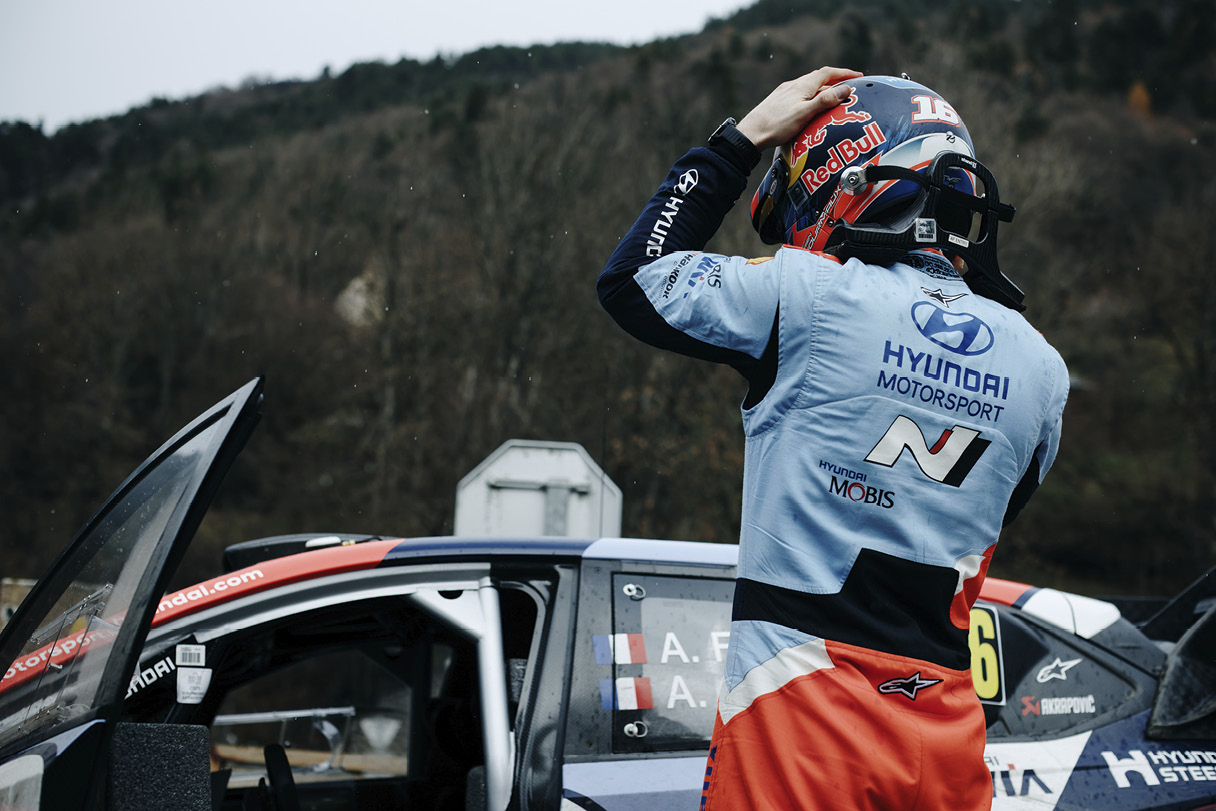
After plenty of names circulated, Hyundai ultimately went back to a familiar playbook: a shared third entry. Sordo, Lappi, and Paddon are all known quantities—drivers the team has worked with, and drivers the fanbase knows. With big changes just one year away, Hyundai chose continuity over experimentation. And if you look at cases like Sébastien Ogier—who shifted from part-time to full-time on the back of results—it’s also a strategically sensible approach: flexibility, experience, and points insurance.
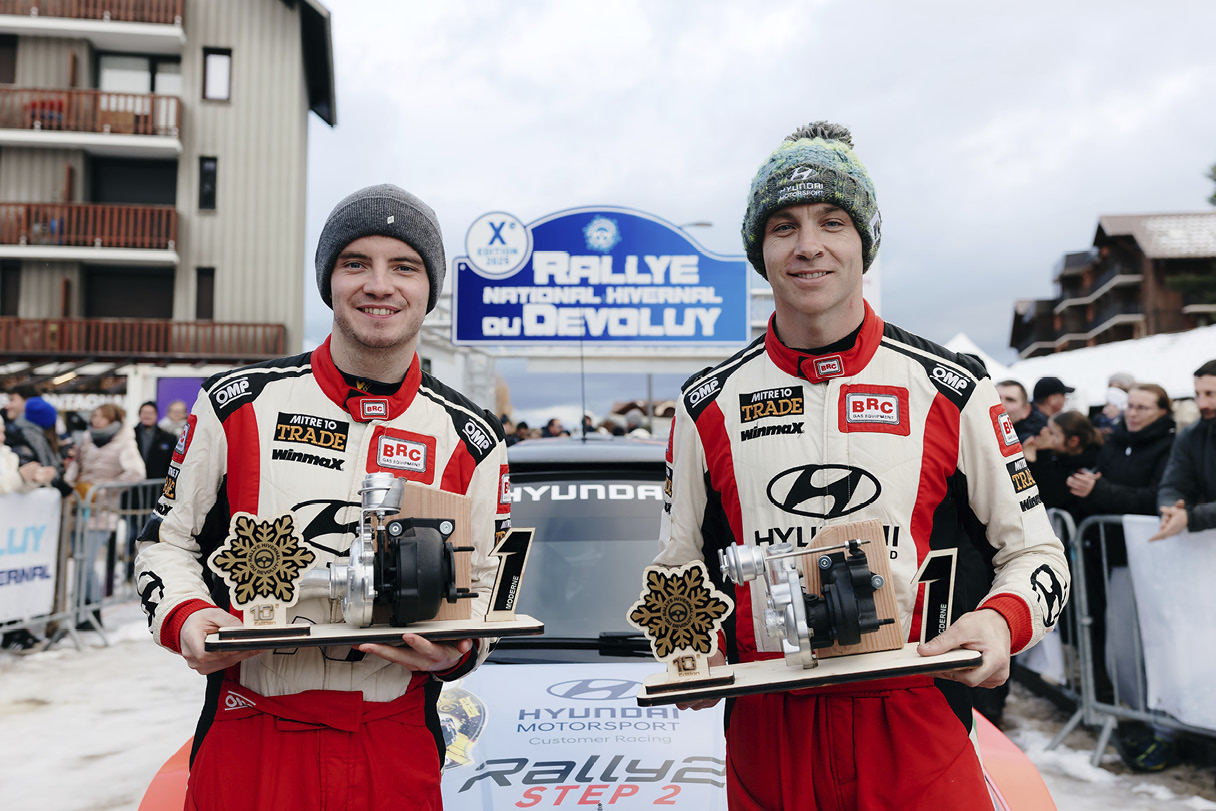
Paddon’s return is the headline inside the headline. The New Zealander drove for Hyundai from 2014 to 2018 in the World Rally Car era, and even after stepping away from the top class he stayed closely tied to Hyundai New Zealand—winning titles and, notably, becoming the first non-European to win the European Rally Championship. This marks an eight-year return to the top tier, plus the challenge of adapting to unfamiliar machinery. But he’s also been involved for years in Hyundai’s Rally2 development work—which makes him especially valuable with 2027 approaching.
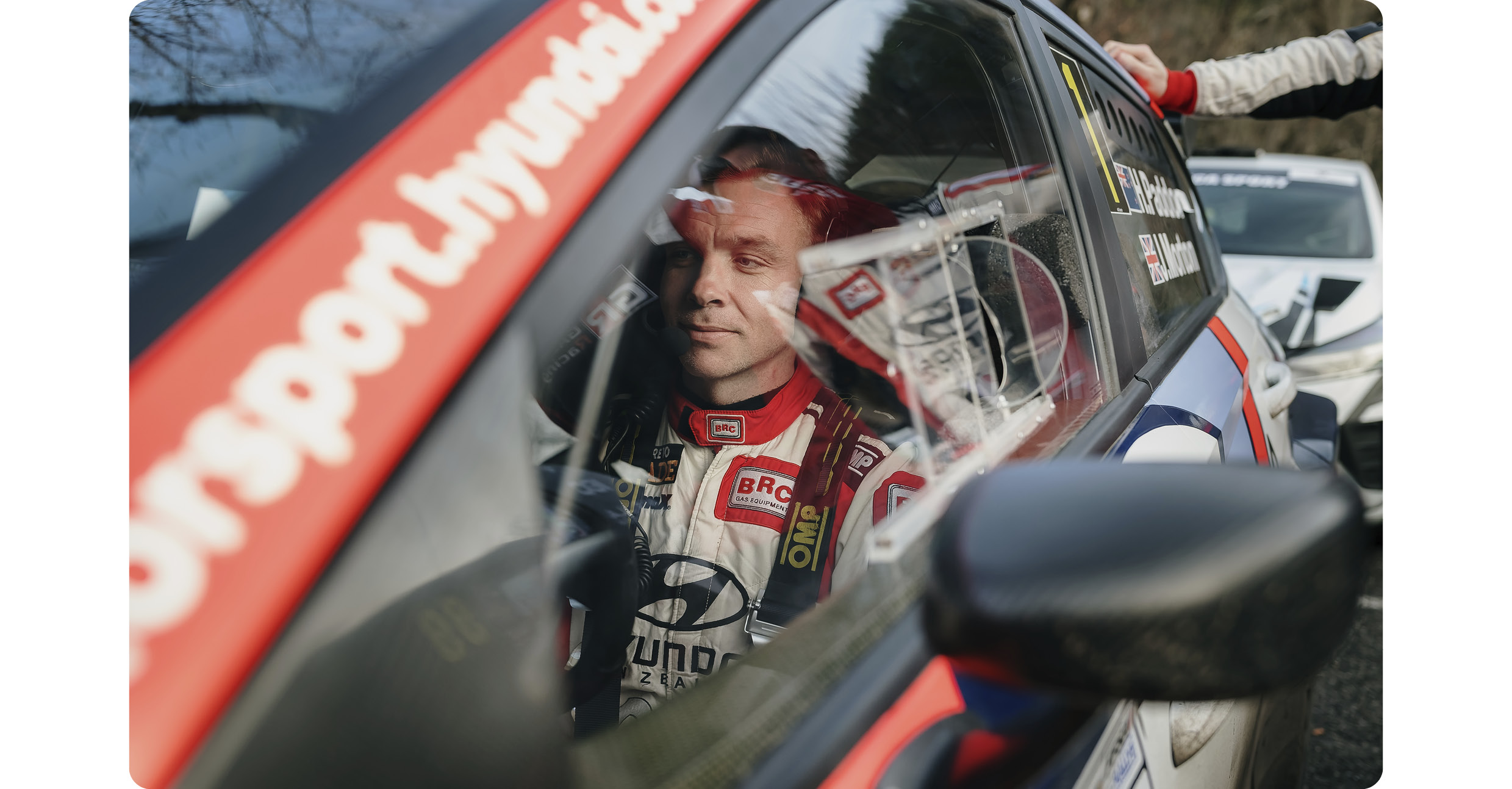
Paddon put it plainly after rejoining: eight years is a long time, Hyundai is a brand he’s been proud to stand with for 12 years, and the mission is clear—support Neuville and Fourmaux in their title fights while maximizing team points every time the car reaches the finish. For this return, he’s brought back longtime co-driver John Kennard, now 66—the oldest competitor in Rally1 history.
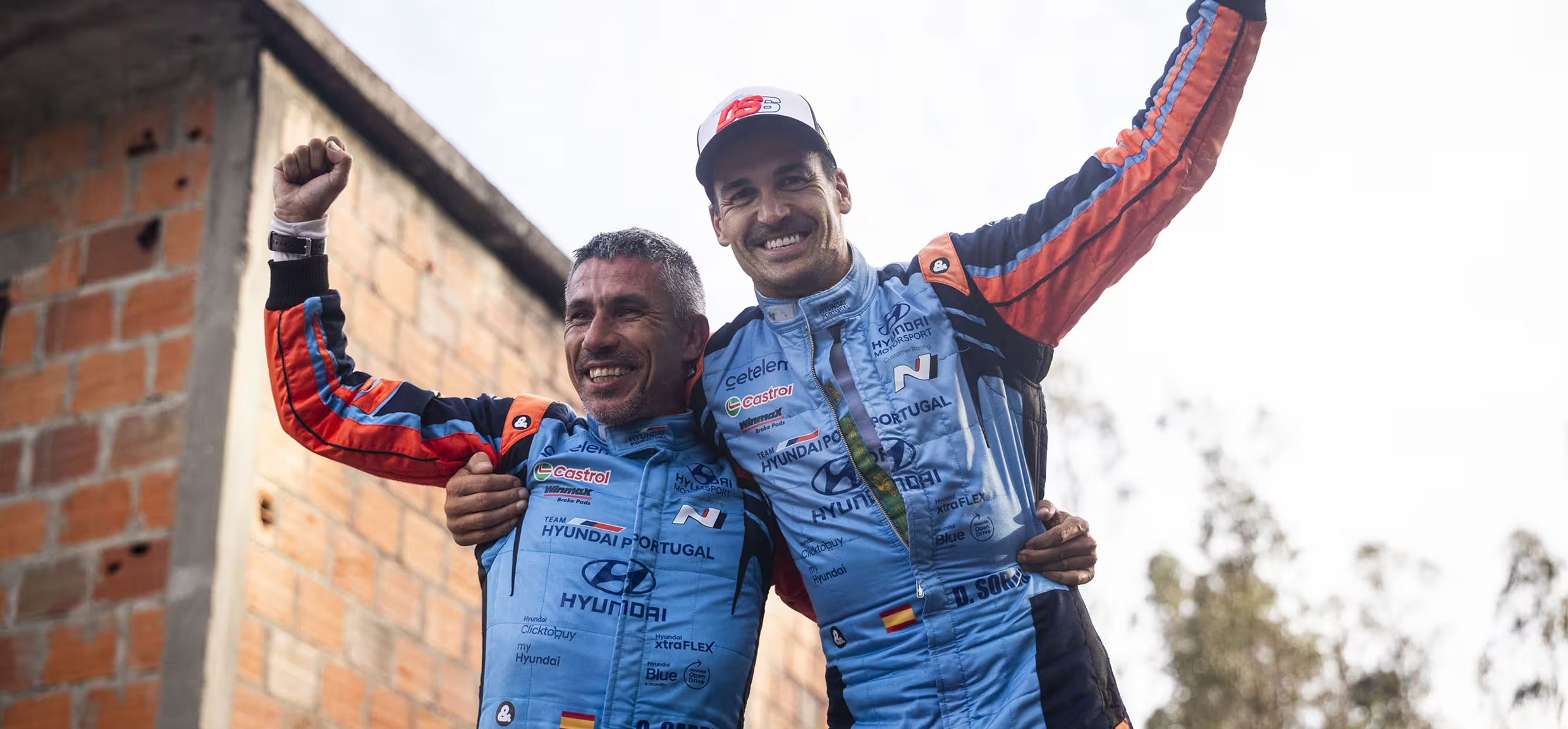
Sordo, born in 1983, spent 2021–2024 as Hyundai’s part-time points machine, landing nine podiums. Last season he ad-ded a title in Portugal’s Rallye Vidreiro Centro de Portugal. Even with limited seat time, his scoring rate stayed high—and he opens his 2026 campaign at Round 5, Rally Islas Canarias (Spain). His message is simple:
“After a year away contesting the Portuguese Rally Championship, I am very pleased to be back in the Hyundai i20 N Rally1 car for 2026.... Candido and I had a strong season in the Hyundai i20 N Rally2, culminating in the Portuguese title, which was a fantastic achievement for us. We can’t wait to take this momentum into next year, and I am confident we will be a competitive package. I’m looking forward to working with the team again, and supporting Thierry and Adrien in the championship fight.”
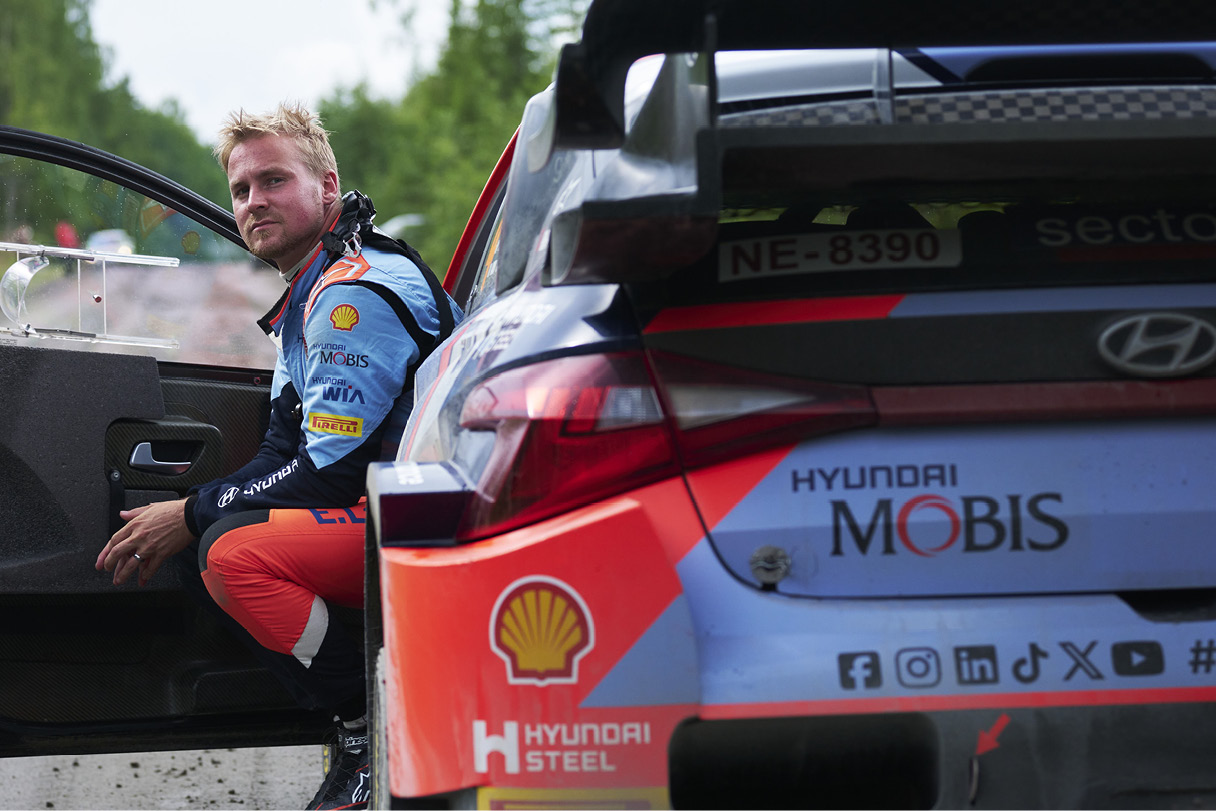
Lappi joined Hyundai in 2023, and in 2024 he delivered five podiums including a Sweden win. He had been weighing retirement, so the call to return hit like a jolt. He says he thought his WRC story was over, then got the call from Abiteboul—“excited like a little kid”—and he’s especially pleased to share the opportunity with co-driver Enni Mälkönen. His return starts at Round 2 in Sweden.
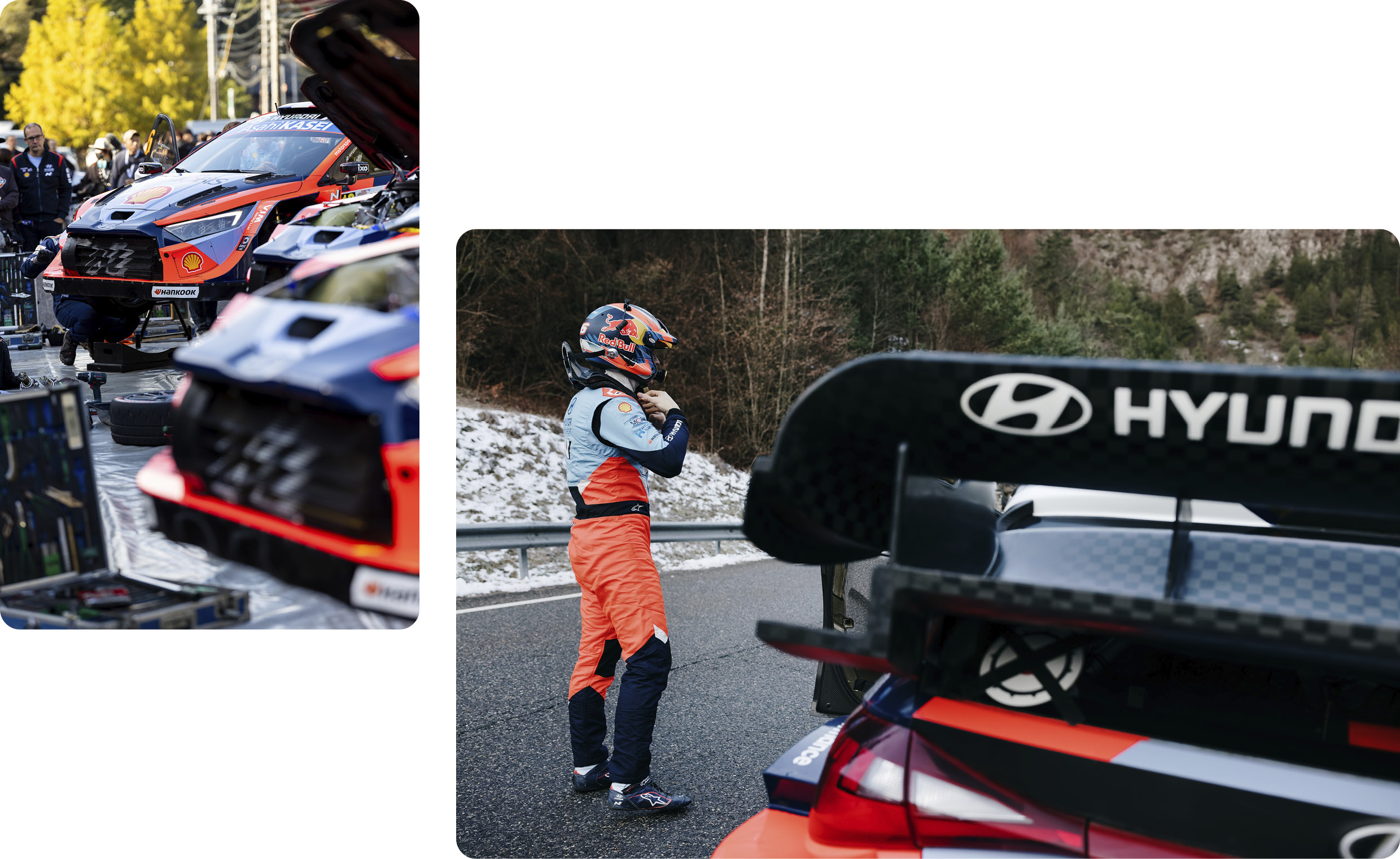
The rotating-seat strategy cuts both ways. Drivers with partial schedules can struggle to stay fully adapted and match-ready. But for the team, it creates a tactical toolbox: choose drivers based on form, strengths, and rally characteristics—while using them to protect the full-season championship campaign.
That strategy matters even more because the veteran trio will also feed the WRC2 effort. With the 2027 rules set to lean heavily on Rally2 architecture, Rally2 performance is unusually important in 2026. Unlike Toyota’s WRC2 approach—tilted toward developing young drivers—Hyundai plans to rely on experience to build data and refine the package. When Sordo and Paddon aren’t in Rally1, they’ll run WRC2 instead.
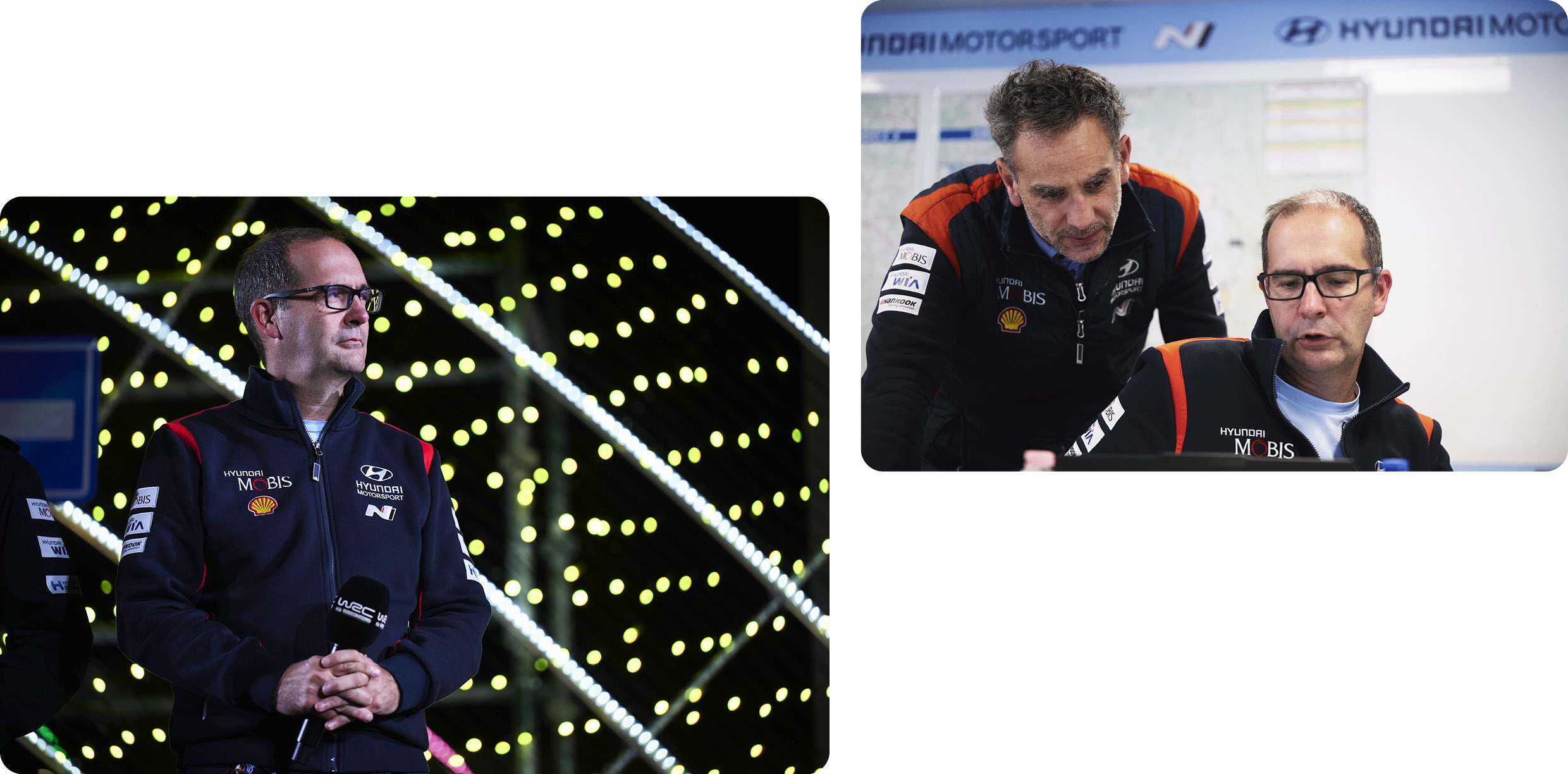
With Hyundai expanding its motorsport footprint—especially as Genesis pushes into the FIA World Endurance Championship—the organization needs clearer specialization and deeper staffing. To support Team Principal Cyril Abiteboul while WEC work ramps up, Hyundai hired Andrew Wheatley to lead the rally operation on event weekends. As Sporting Director, Wheatley brings nearly 20 years at M-Sport and recent experience as FIA Rally Director—one of the people behind today’s WRC rule structure. He joins a core leadership group that includes Technical Director François-Xavier Demaison and Engineering Head Gerard Jan de Jongh.
Hyundai is also said to have shifted testing from Finland to a new base in southern France—driven by two factors: better preparation for rough gravel late in the season, and easier access from the team’s German base. Finland testing comes with public-road constraints; the Fontjoncouse and Château de Lastours areas, by contrast, are dedicated to rally testing.
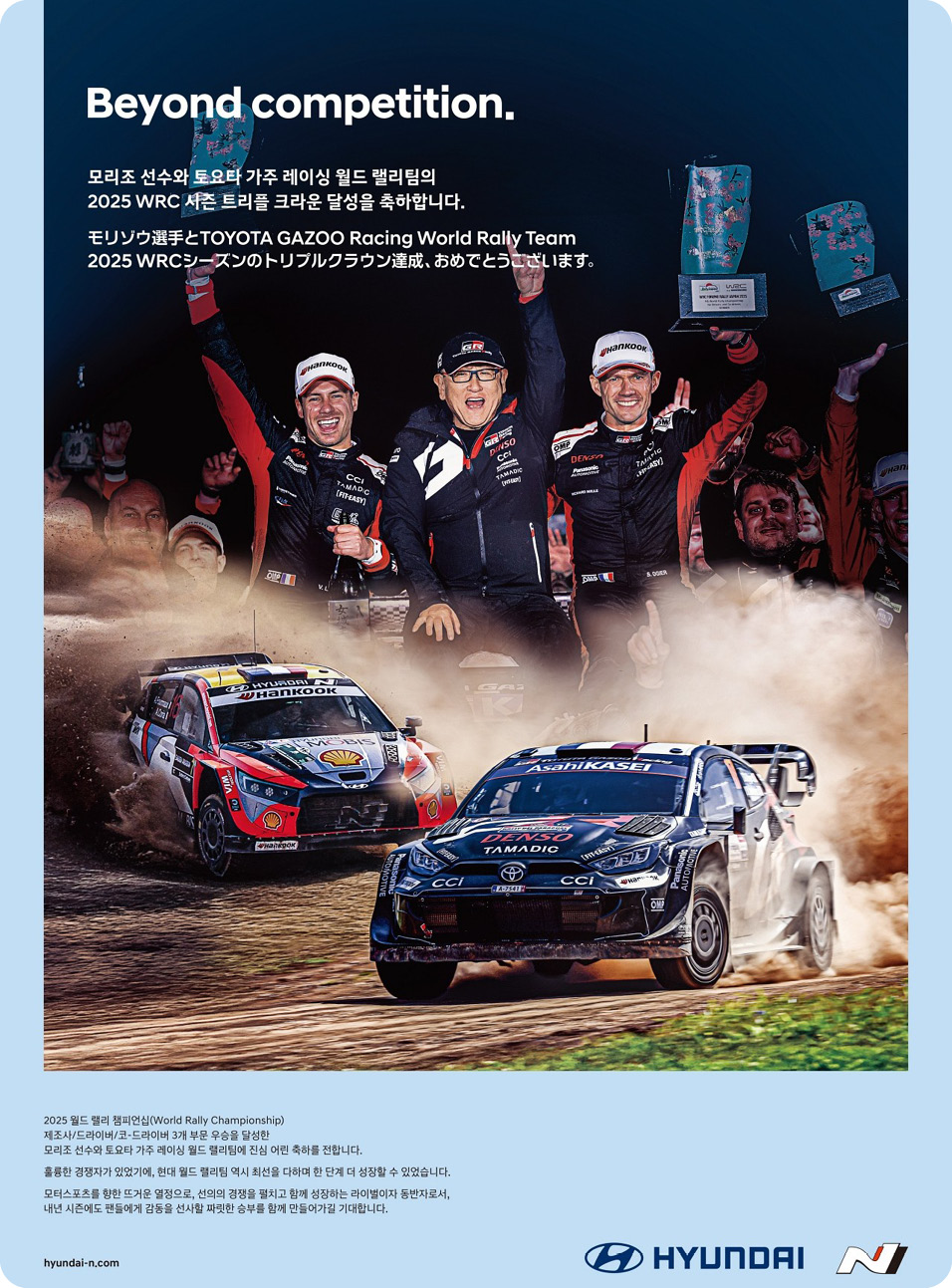
After the season, Hyundai ran a full-page newspaper ad in Korea congratulating Toyota on sweeping the manufacturers’, drivers’, and co-drivers’ titles—an unusually warm gesture in modern motorsport. It mirrored Toyota’s own congratulatory ad in Japan after Neuville’s 2024 title. Hyundai and Toyota—buoyed by the leadership and genuine car passion of Chairman Euisun Chung and Chairman Akio Toyoda—have built a relationship that’s both competitive and cooperative. With Genesis entering WEC, that relationship is poised to stretch beyond rally and deeper into circuit racing.
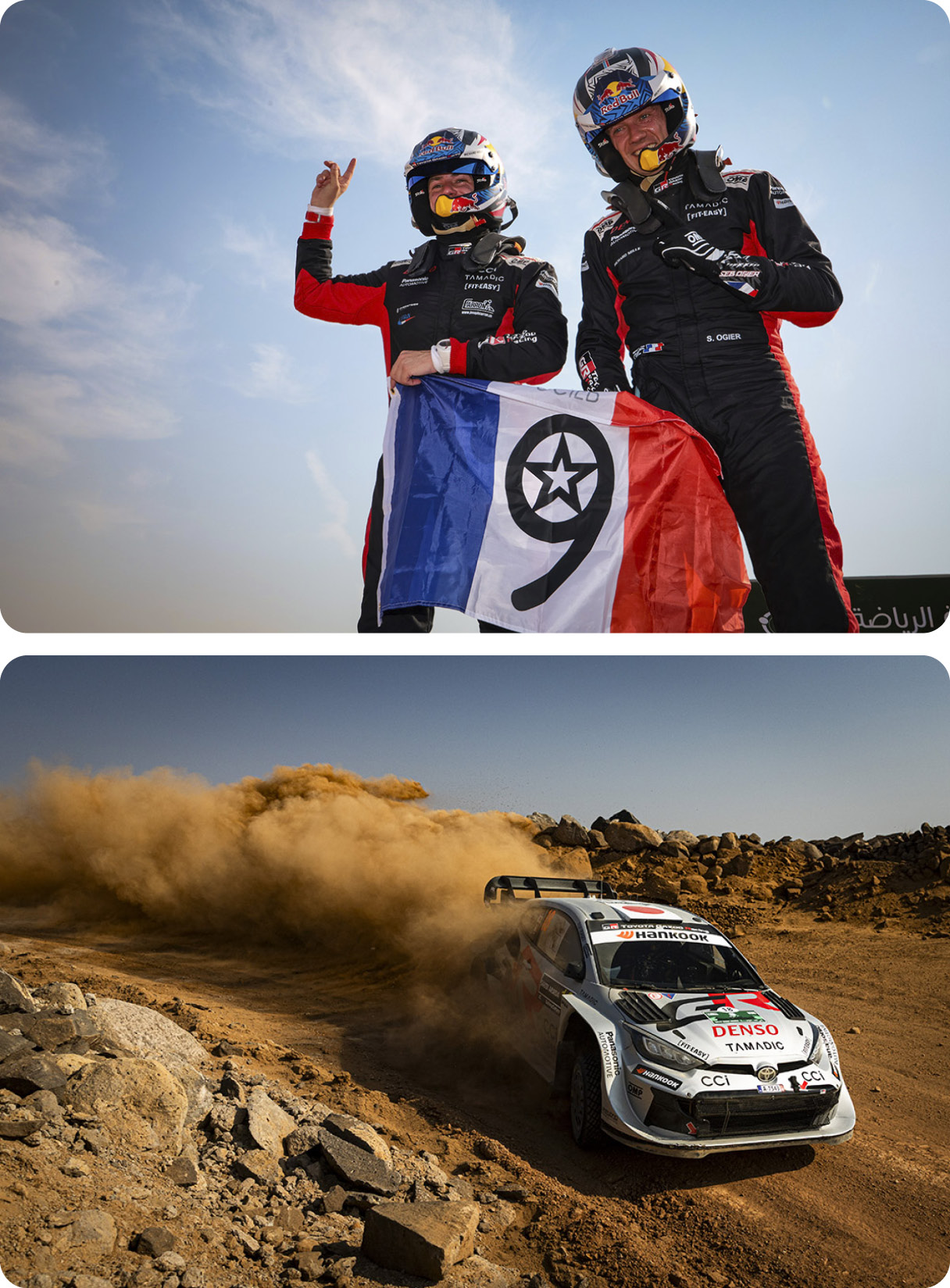
Toyota wrapped 2025 as the sport’s benchmark and locked its driver decisions early. Kalle Rovanperä steps away to pursue circuit racing, but the depth remains: Ogier continues in a part-time role, and Elfyn Evans stays after taking the title fight deep into the season.
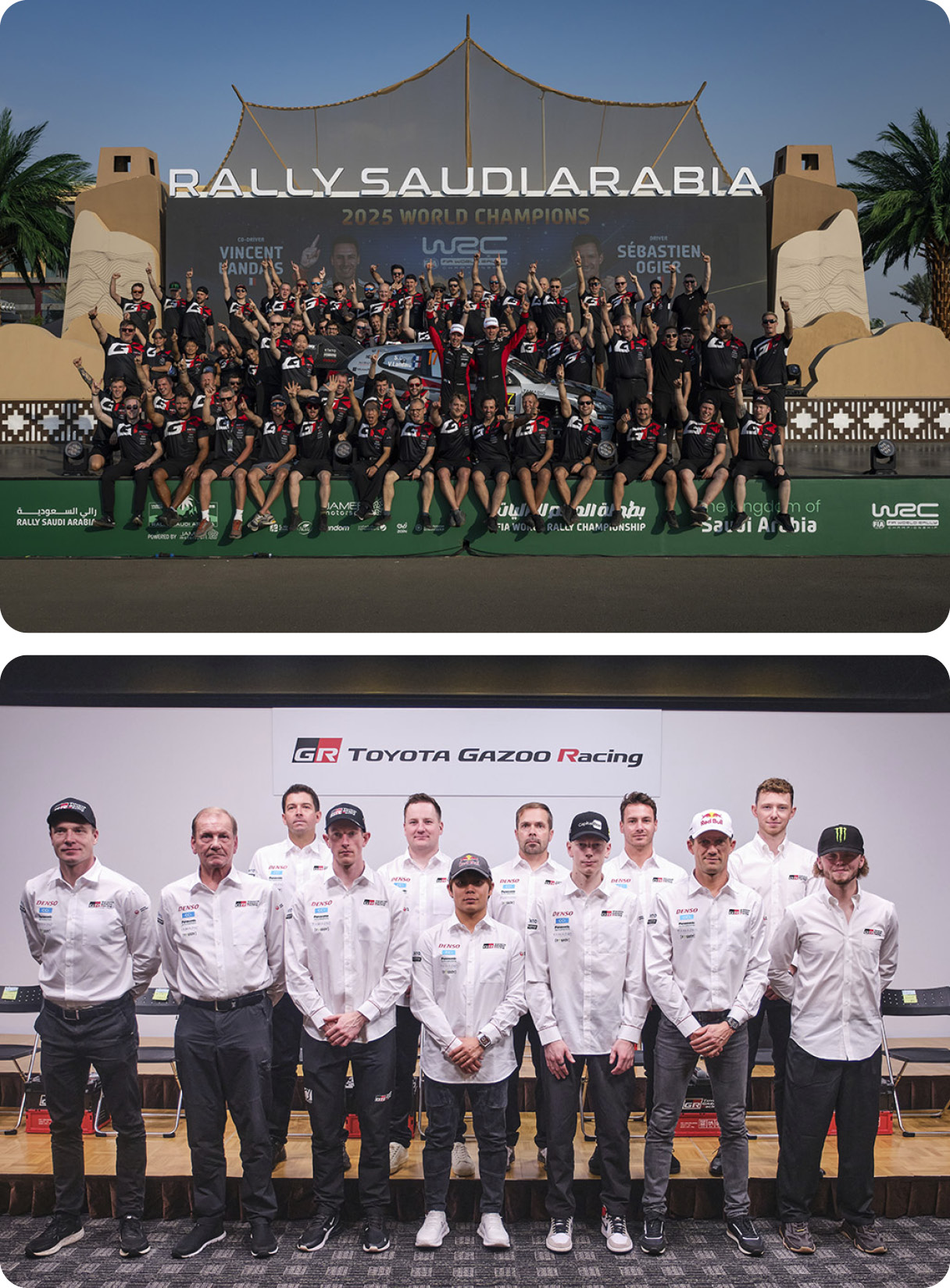
Kalle Rovanperä’s seat gets filled by reigning WRC2 champ Oliver Solberg, who already proved he can make an instant impact—last year in Estonia, he climbed into a GR Yaris Rally1 for the first time and walked away with an overall win. Toyota’s long-term project driver, Takamoto Katsuta, stays put. Sami Pajari continues his apprenticeship in Toyota’s WRC2 program. And inside the team, the expectations are clear: for the season opener, Toyota earmarked Solberg—alongside Ogier and Evans—as a points-focused play.
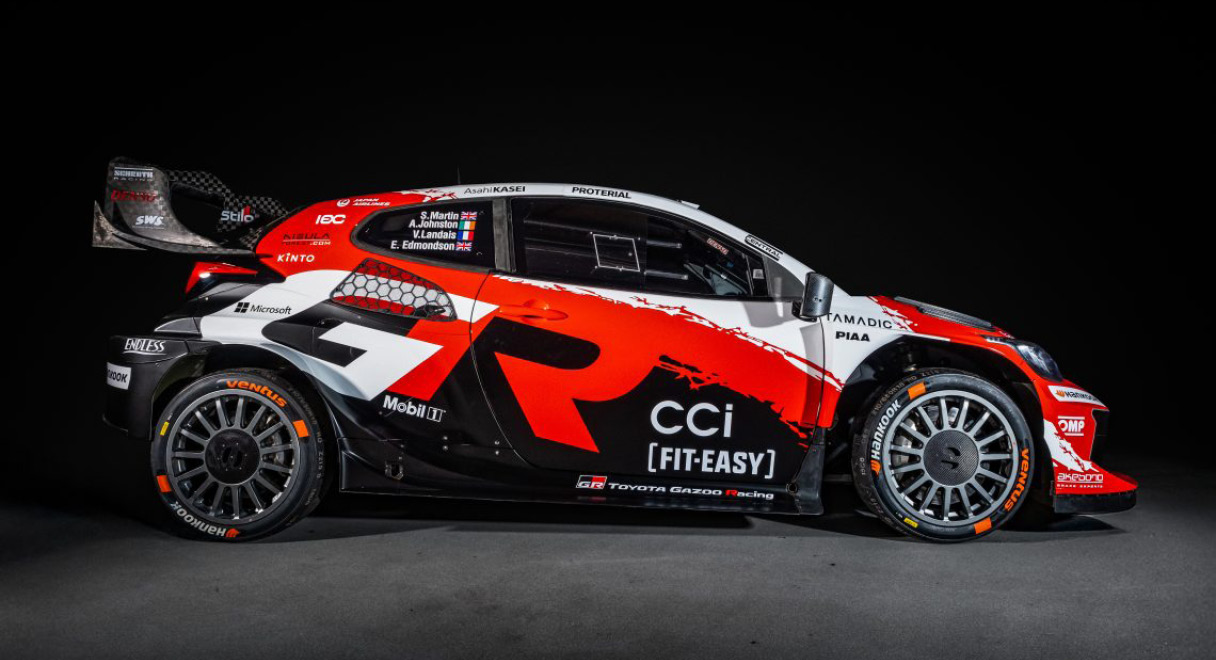
The GR Yaris Rally1 itself isn’t getting reinvented, but it is getting sharpened. Toyota made small revisions to aero and gearbox details. Out back, the rear wing’s curved endplates were squared off and a vertical fin was ad-ded. The livery also takes a harder stance: last year’s mostly black look (with silver appearing at a few hot-weather events) gives way to a more aggressive red/white/black mix.
Team principal Jari-Matti Latvala is also reshaping Toyota’s wider ecosystem. He recently acquired Finland’s established Print Sport and plans to fold it into his existing Latvala Motorsport operation. Print Sport switched to the GR Yaris Rally2 two years ago, and this move effectively turns it into Toyota’s feeder/satellite structure—supporting GR Yaris customer cars, serving as a parts and engineering hub, and taking a bigger role in driver development. Alongside Japan’s Yuki Yamamoto, the roster also includes high-upside prospects such as 18-year-old Estonian Kaspar Vaher.
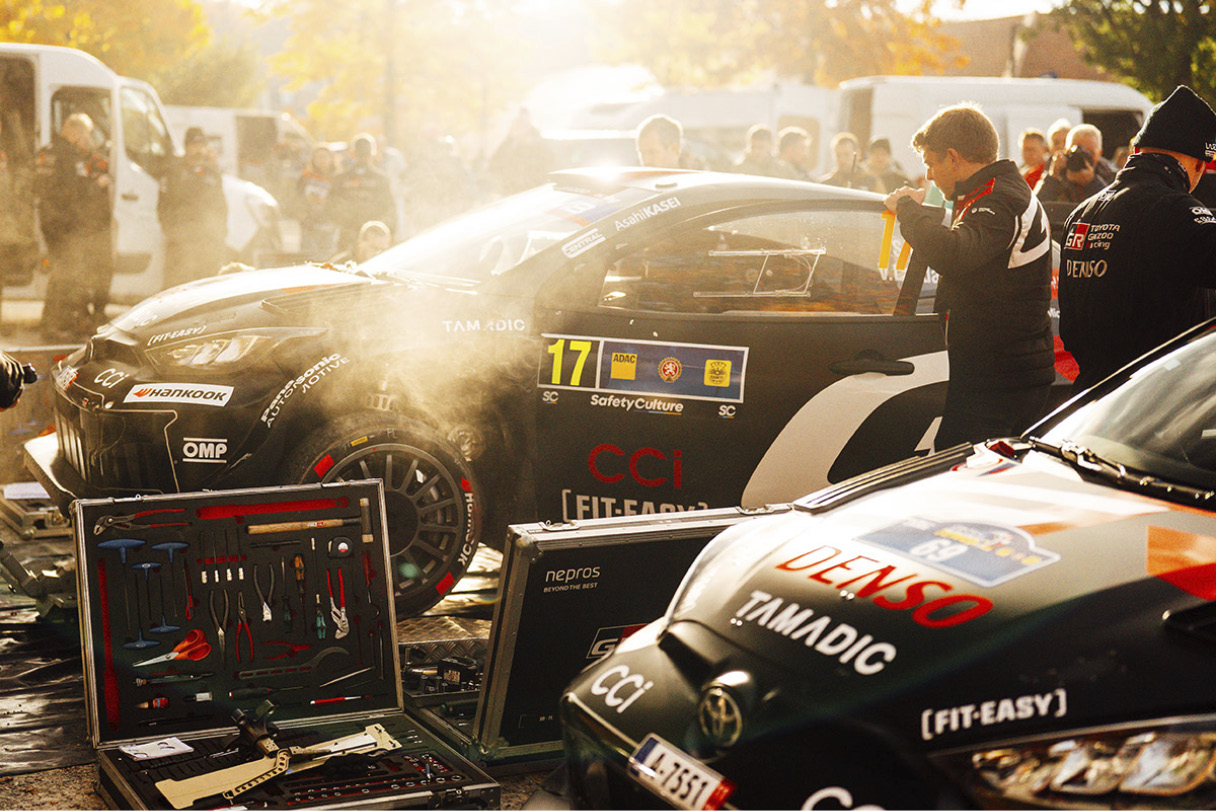
Toyota’s branding is shifting, too. The company is splitting Toyota Gazoo Racing into Toyota Racing and Gazoo Racing. Toyota Racing will handle circuit racing and R&D—including FIA World Endurance Championship and NASCAR—while Gazoo Racing takes over WRC duties and the GR high-performance road-car portfolio. Gazoo Racing (GR) is also returning to its original 2007-era identity, even removing “Toyota” from the logo to push a more standalone brand image. One exception: while WEC transitions to Toyota Racing, WRC keeps the current team name through this year.
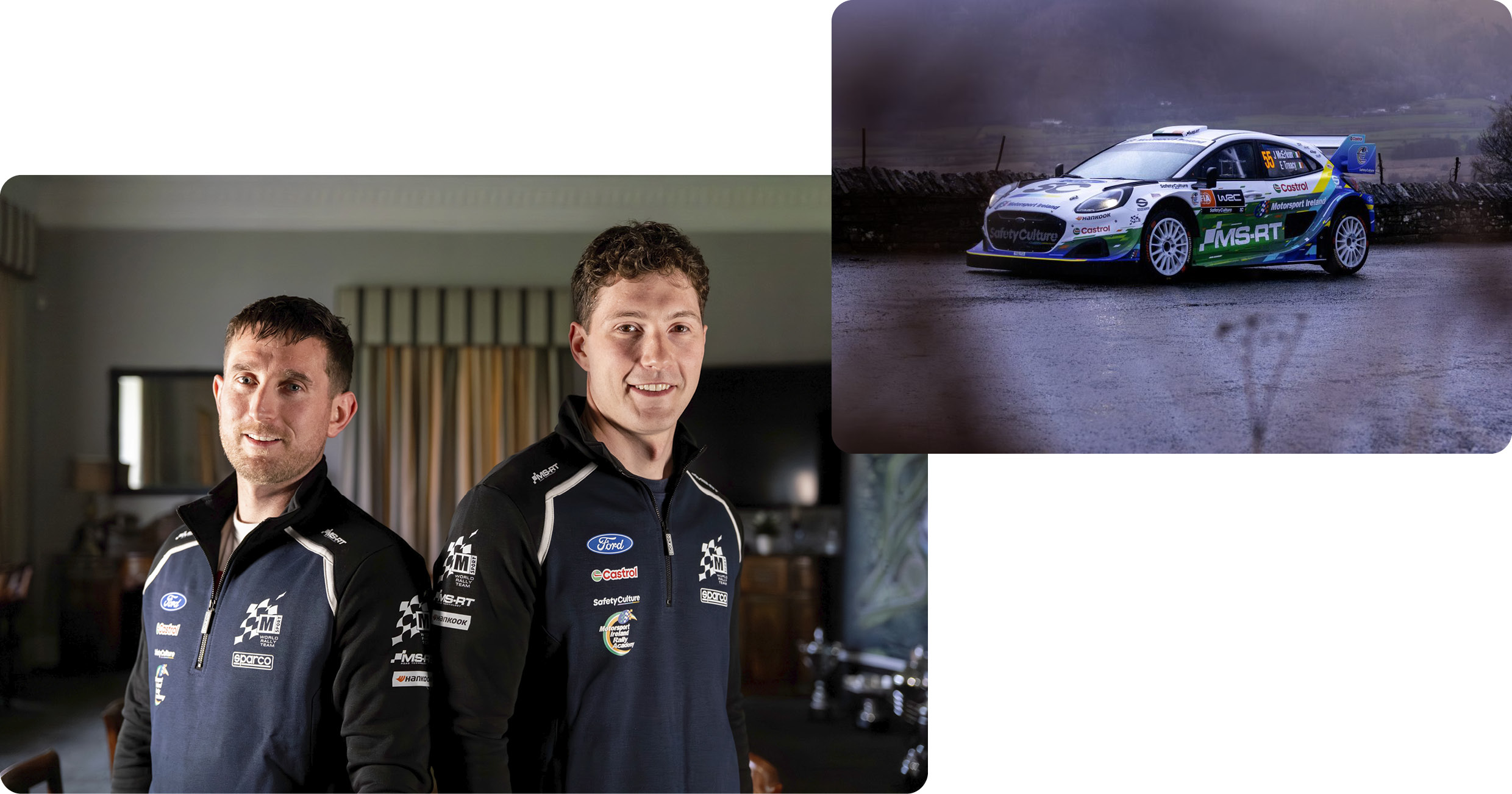
Over at M-Sport Ford, Josh McErlean remains the cornerstone, but the lineup changes around him. The team parted ways with Grégoire Munster—who had been in the program since 2023—and brought in newcomer Jon Armstrong. Munster’s exit follows a stretch of underwhelming results after he was elevated to de facto lead status in the wake of Fourmaux’s move to Hyundai. Armstrong comes in with a résumé that fits modern rallying: an Irish driver who won ERC3 in 2023, stepped up to the European Rally Championship last year, and finished runner-up in the standings. He’s also deeply familiar with M-Sport machinery, having driven the team’s cars from Junior WRC through Rally2. Add in his background as a 2018 eSports WRC champion—meaning he’s genuinely simulator-fluent—and he looks like a smart bet for a team that has to maximize every test mile. He’s also supported by the Motorsport Ireland Academy, a meaningful advantage in a budget-sensitive program. Munster, meanwhile, loses the full-time seat but will still drive a Puma Rally1 at Monte Carlo; what comes after hasn’t been confirmed.
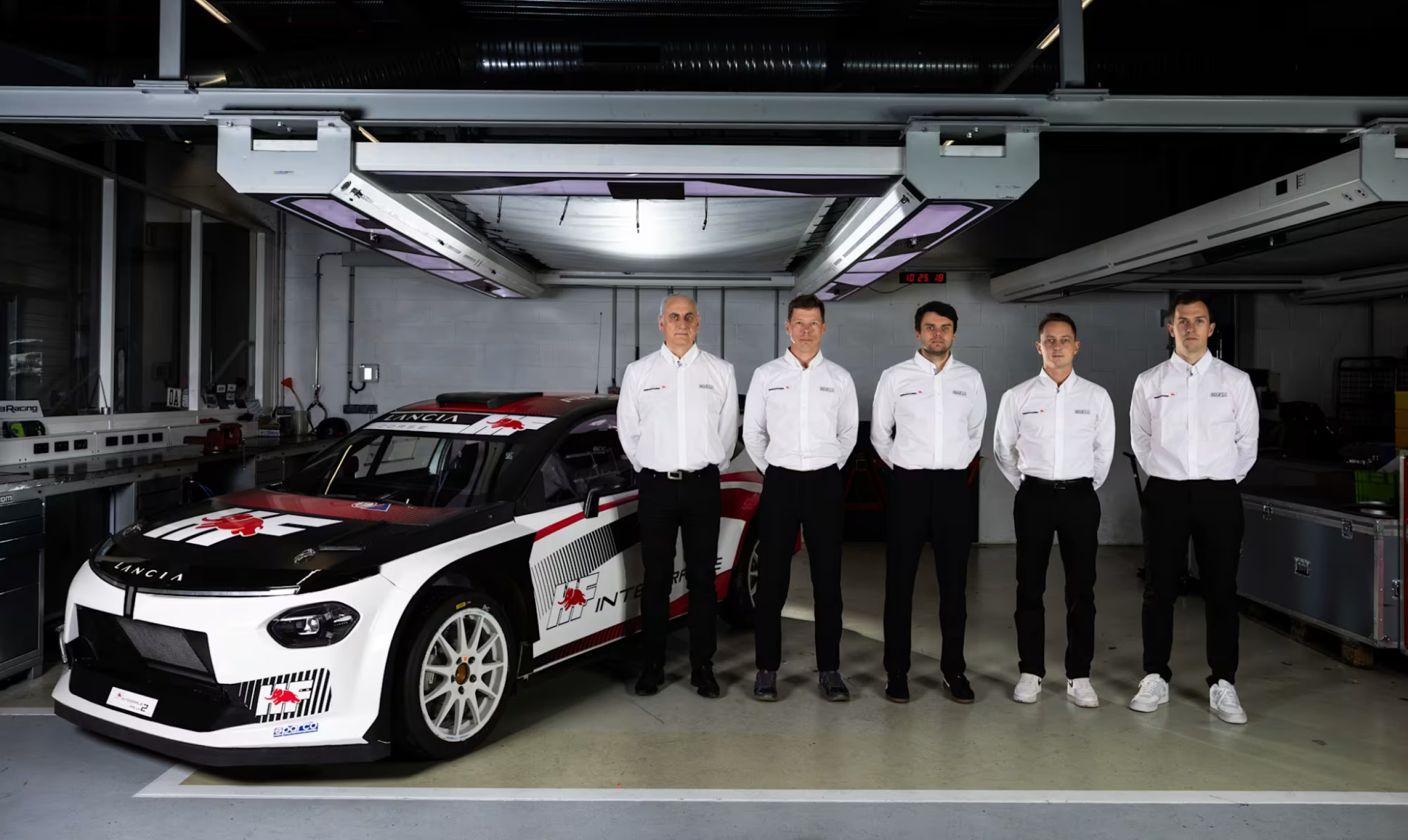
If there’s a headline storyline this season, it’s Lancia. The storied Italian marque under Stellantis still owns one of WRC’s biggest records—10 manufacturers’ titles. For now, Lancia enters only WRC2, but with the 2027 regulation reset, a top-class return becomes realistic. Its rally weapon is built on the fourth-generation Ypsilon, Lancia’s first new production model in 13 years, and it doesn’t shy away from the nostalgia hit: the legendary “HF Integrale” name is back, intentionally aimed at rally fans who remember what that badge used to mean.
The backstory matters. Lancia was founded in 1906, was sold to Fiat in 1969, and racked up major early success in the 1972 IMC (International Championship for Manufacturers), the WRC predecessor, with the Fulvia. After WRC’s creation, the trophies kept coming. The mid-engine Stratos—Ferrari engine behind the cabin—was essentially designed to win rallies and did exactly that, taking three championship titles. Then came the 1980s: the Group B era, defined by extremes, where Lancia helped set the tone with the beautiful mid-engine 037 (1983 champion) and the four-wheel-drive Delta S4.
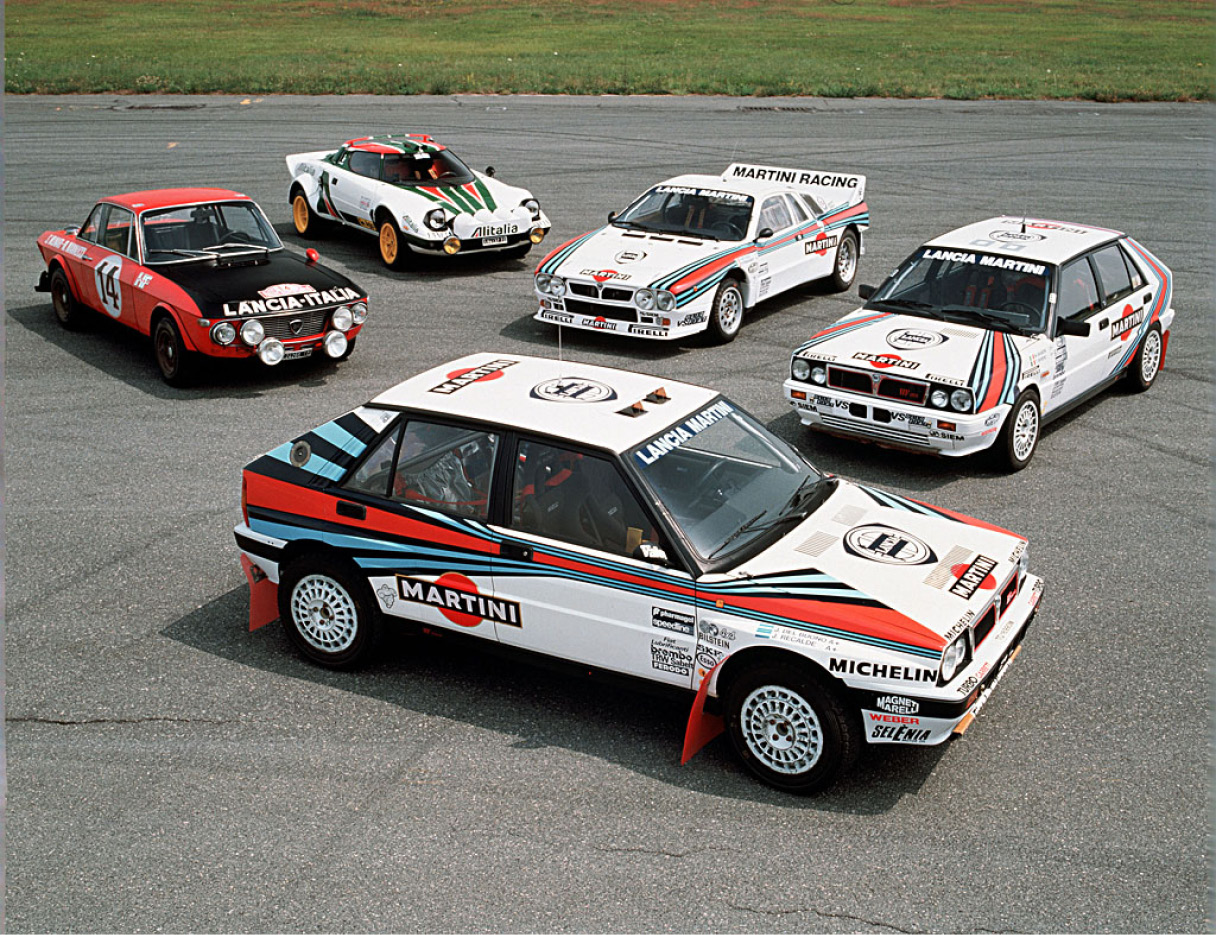
When Group B was shut down in 1987 after a series of tragedies and Group A replaced it, Lancia pounced—introducing the Delta HF Integrale and delivering an unmatched six-title streak from 1987 through 1992. Timing helped: Lancia happened to have a perfectly sized hatchback base, and—crucially—a high-performance AWD version (Delta HF 4WD) ready to go. Rivals chased, but nobody stopped the run. Lancia’s totals still stand at 10 manufacturers’ titles and five drivers’ titles. Toyota’s ninth manufacturers’ championship last year puts it within reach of that landmark number—one more reason Lancia’s return feels charged.
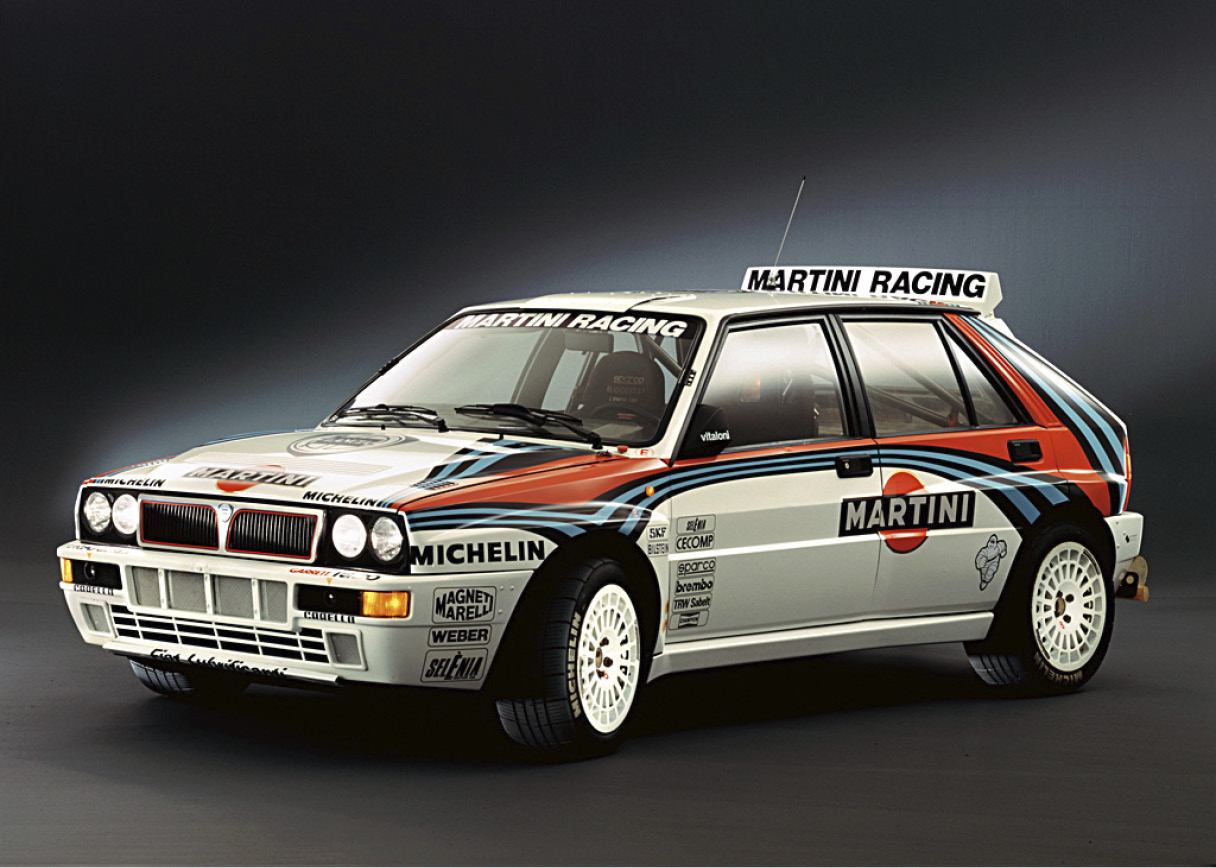
Because this comeback is essentially “the legend returns,” longtime fans will naturally track the Ypsilon Rally2 HF Integrale as the spiritual heir to the Delta. Lancia’s drivers are Yohan Rossel and Nikolay Gryazin. Lancia Corse HF will be led by Didier Clément, with former WRC champion Miki Biasion as technical advisor, while operations are handled by PH Sport.
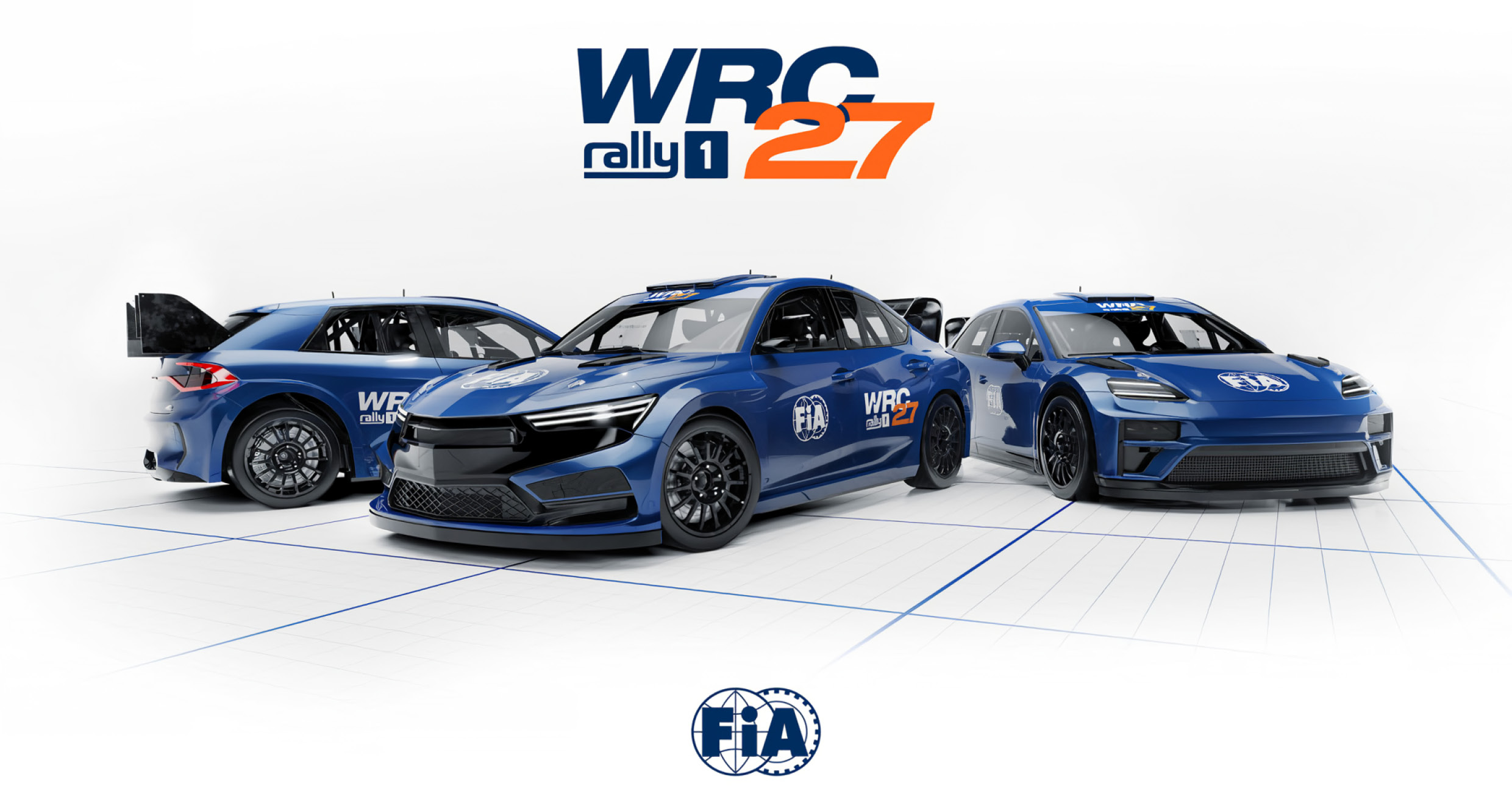
WRC’s next reset is already on the clock. In 2024, the World Motor Sport Council (WMSC) confirmed a major rule overhaul for 2027. The current Rally1 regulations, introduced in 2022, brought huge technical shifts—hybrid systems and spaceframe construction—but also pushed complexity and costs high enough that teams began to thin out. With sustainability and affordability now driving the conversation, WRC is choosing to rewrite a rulebook that would normally stay intact for at least five years—and it’s doing it early. The transition has already started: from 2025, the hybrid unit is removed and Rally1 cars run a 1.6-liter turbo driving all four wheels.
The headline objective for WRC27 is cost control. The thinking is blunt: Rally1 is too expensive and too complicated to pull in new manufacturers. A hybrid-era Rally1 car is said to cost about €1 million (roughly KRW 1.7 billion). WRC27 targets €345,000 per car (roughly KRW 600 million).
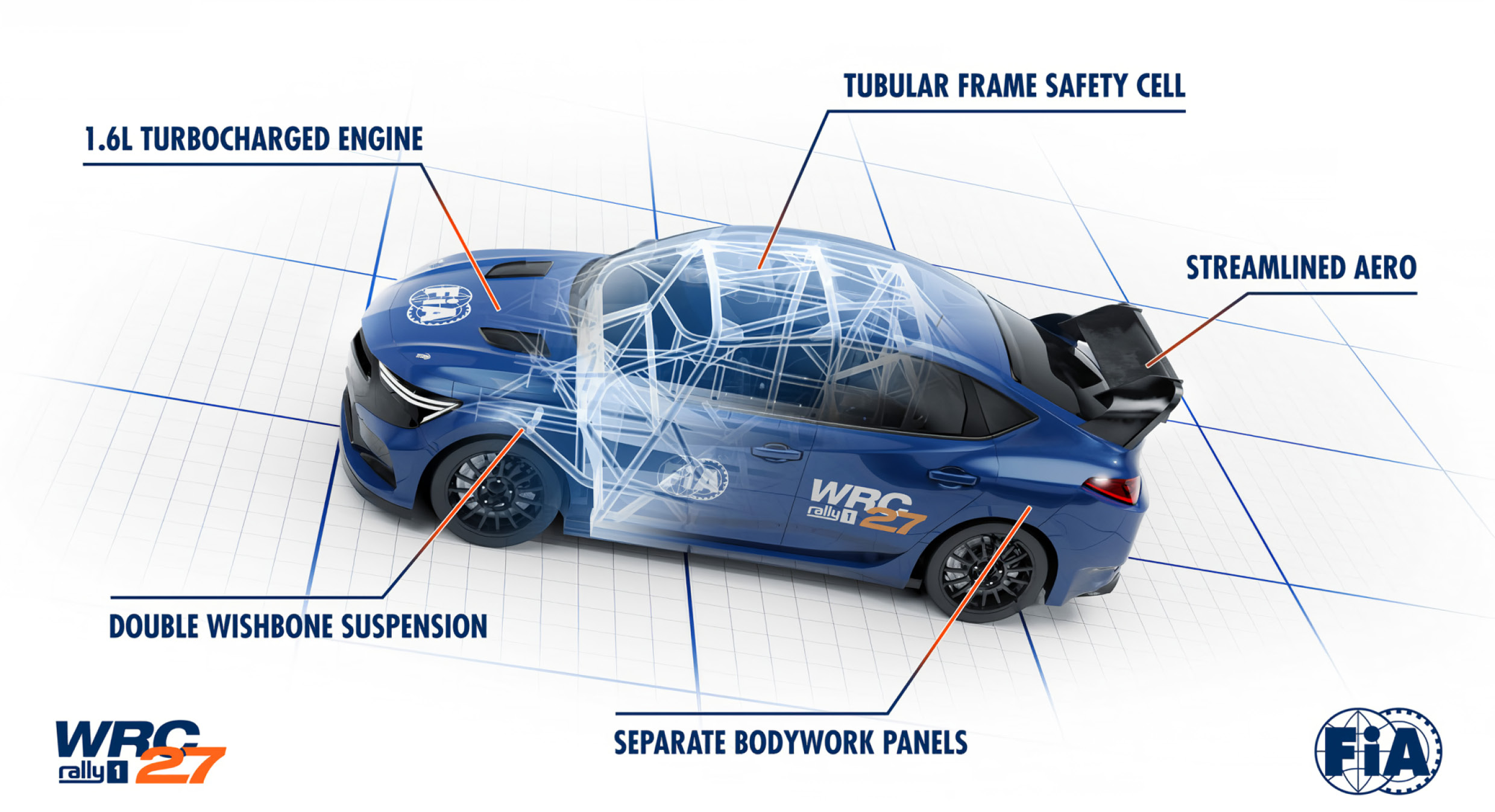
The architecture keeps the Rally1-style approach—spaceframe plus separate body panels—but leans heavily on Rally2 components. The exterior can either resemble a production car or be purpose-shaped, which means even manufacturers without a natural “base model” can still show up. Performance is expected to land near Rally2: a 290-hp 1.6-liter turbo, five-speed gearbox, and brake systems borrowed from today’s Rally2. Future pathways—hybrid or EV—remain possible. The primary differences will be suspension, body structure, and more aggressive aero.
WRC27’s balance relative to Rally2 will be managed through tools like minimum weight. The real shake-up is what that enables: Rally2-based entries could realistically fight for wins, which opens the door not only for active WRC2 suppliers like Skoda and Citroën, but also for new manufacturers, small tuners, and leaner teams that couldn’t justify Rally1 economics. It also expands opportunity for drivers. Today, top-class seats are limited and test mileage is tightly capped. From 2027, Rally2-based cars could give far more drivers a real shot at overall victories.
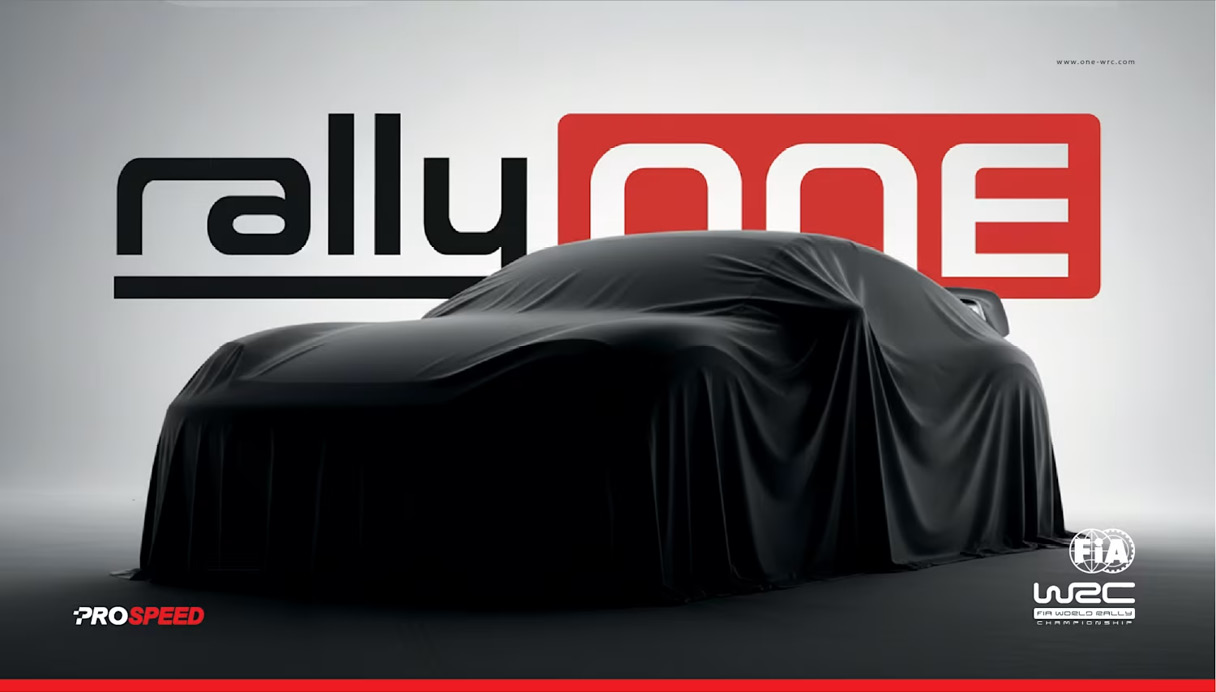
Toyota has already declared for WRC27, and one new constructor project has been revealed: Rally One, led by Yves Matton in partnership with Belgium’s Prospeed. Rally One has reportedly completed basic design work and its tubular spaceframe, with shake-down running planned this spring followed by long-distance testing. Matton is the same figure who led Citroën Racing through its peak years and most recently served as FIA Rally Director.
The bigger picture is clear: since the 2000s, top-class manufacturer participation has steadily shrunk. The World Rally Car era was designed to invite variety, but the cars drifted closer to purpose-built race machines and costs spiked. Rally1 piled on more complexity with hybrids. WRC27 is meant to break that arc—reducing freedom in exchange for cutting the financial barrier and bringing more brands in. It’s the same strategic logic endurance racing used when WEC and IMSA pivoted to Hypercar rules.
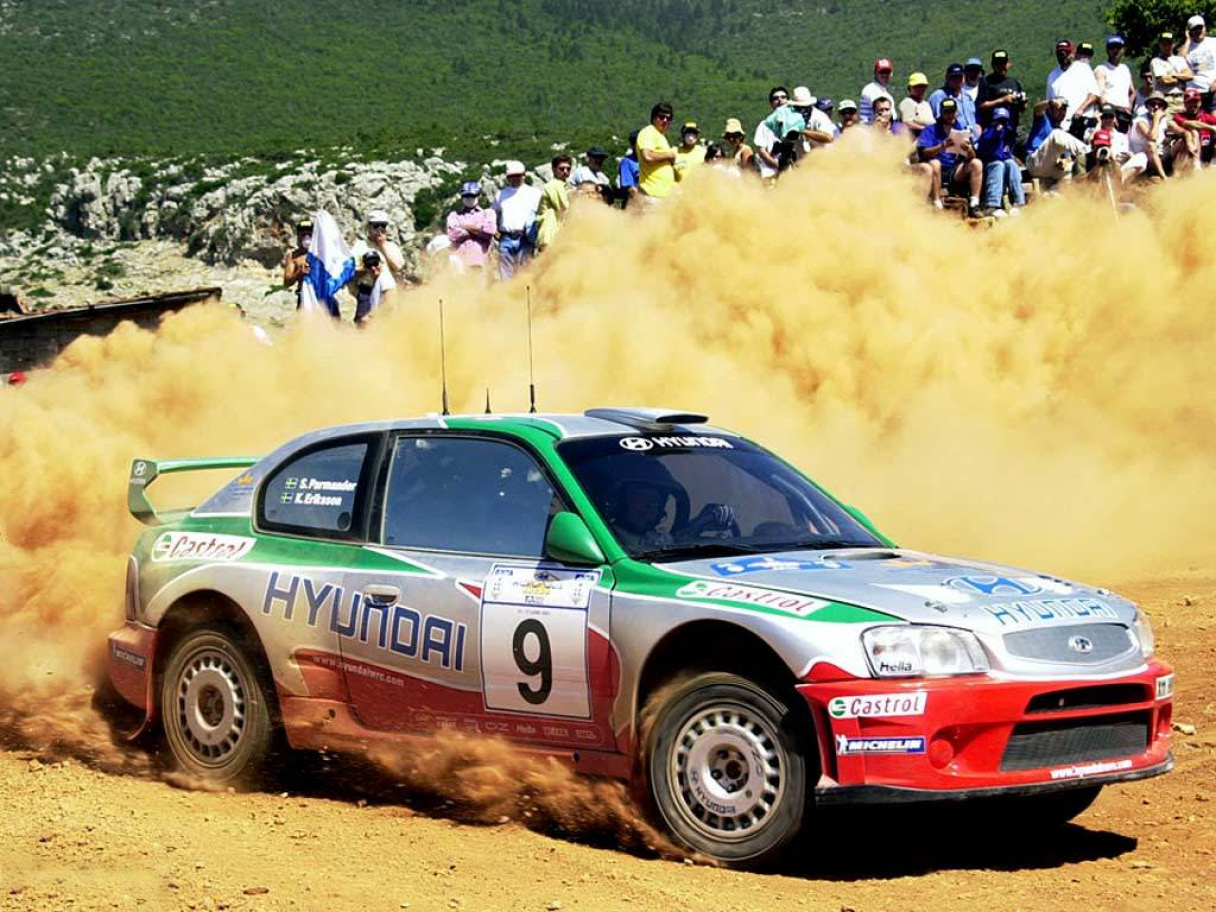
If WRC27 delivers, the win conversation could expand well beyond today’s Rally1 regulars. Hyundai, Toyota, and Ford would still be there—but so could Rally2 suppliers like Skoda and Citroën, returning Lancia, and even newcomer Rally One. Smaller teams and specialist tuners would have a more realistic path into the fight.
And yes, the pushback is real. Motorsport doesn’t exist without innovation, and if the sport drifts toward cars with weaker ties to production models, automakers could lose interest. Some also worry that reduced performance could soften the intensity. But if the payoff is more brands, more cars, and a deeper top class, WRC could claw back some of what it’s lost. In 2000, seven manufacturers—including Hyundai—were on the grid. Recent seasons have been down to three. That trend is the real problem WRC27 is trying to solve.
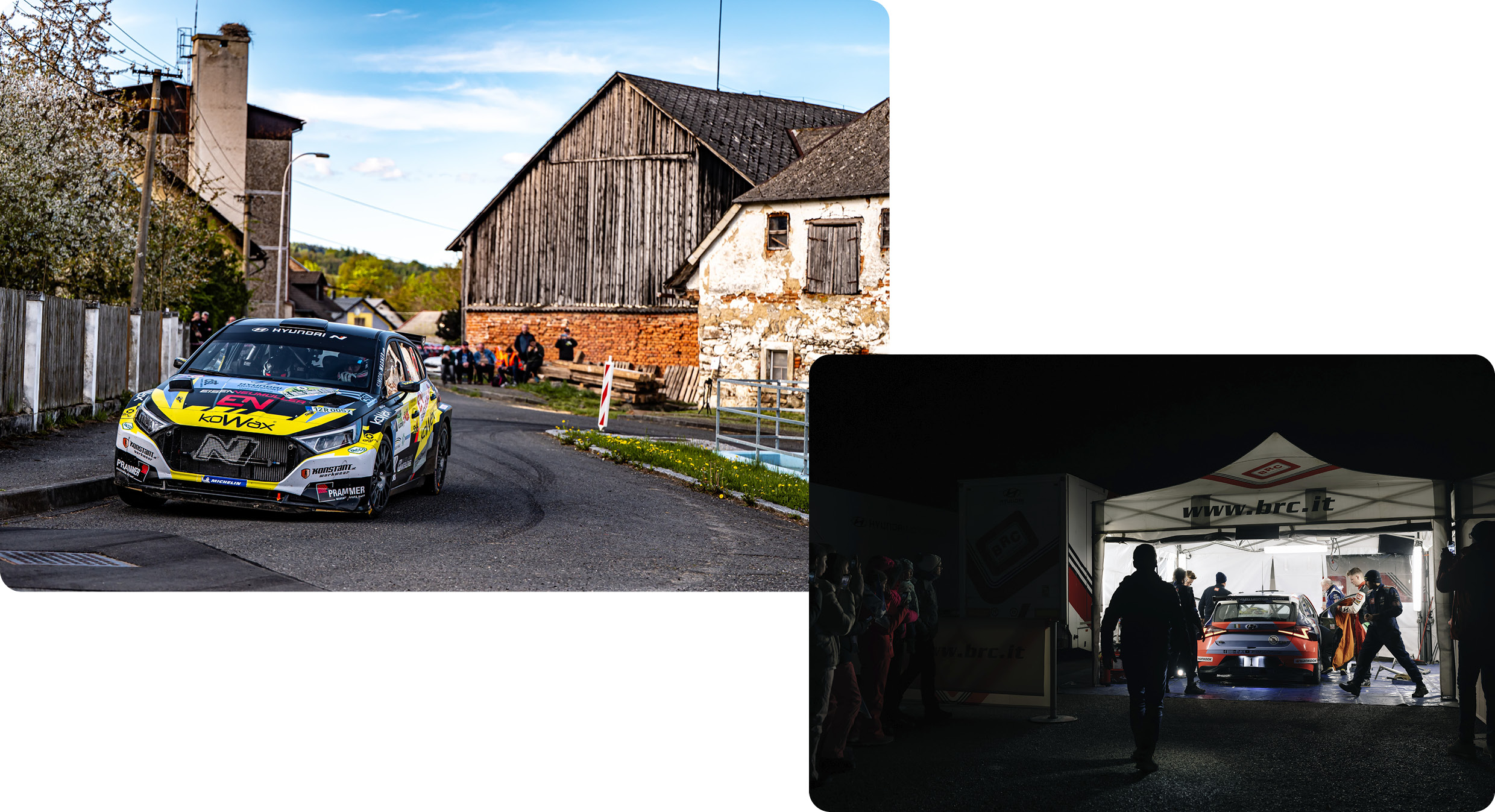
Hyundai has rolled out a major update for its i20 N Rally2, the workhorse it runs in WRC2 and across regional programs. The package builds on the Step 2 upgrade introduced just before the 2025 season, which brought big gains in areas like the engine and suspension. This time, the goal is refinement—tightening the whole setup and optimizing performance. And with WRC27 set to lean heavily on Rally2-based hardware, the completeness of the Rally2 platform is about to matter more than ever.
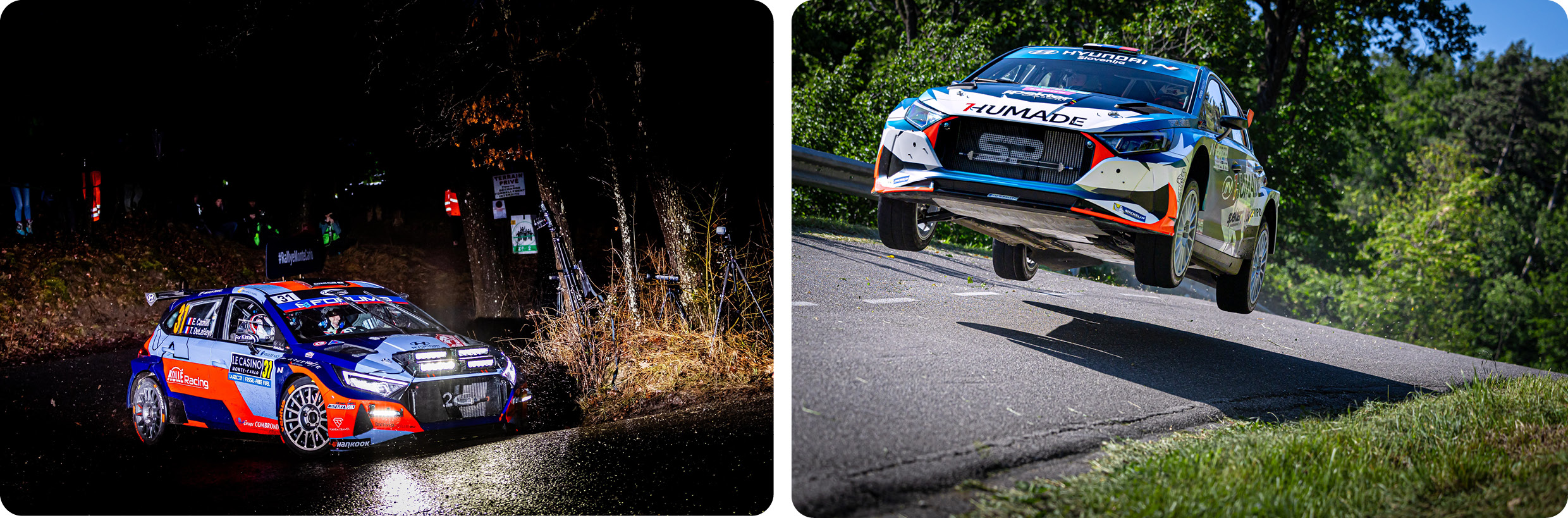
This “Step 2” version isn’t a single-area tweak. It touches nearly everything—engine, suspension, and even small-but-critical items like the wipers and rear windshield. Hyundai revised the valve system to boost low- and mid-range torque, while also updating ECU mapping and the cooling system. Most importantly, each engine now gets custom calibration. Even with tight manufacturing controls, individual engines can vary slightly—and Rally2 cars, with their heavy use of production-based components, tend to show those differences more clearly. After assembly, engineers check each engine one by one and apply a software setup tailored to that specific unit’s condition, extracting the full potential of the 1.6-liter turbo.
The update also includes revised gearbox ratios to widen the car’s usable range across different event profiles, plus a new damper with a reworked internal design—aimed squarely at improving performance on gravel rallies. Using a joker*, Hyundai also fitted a higher-output wiper motor and introduced a new lightweight rear glass to improve cabin ventilation and reduce window fogging. It’s the kind of detail that sounds minor until you’re driving flat-out in brutal weather—and visibility becomes the whole game.
*Joker: A limited-use authorization that allows specific rally-car design changes.
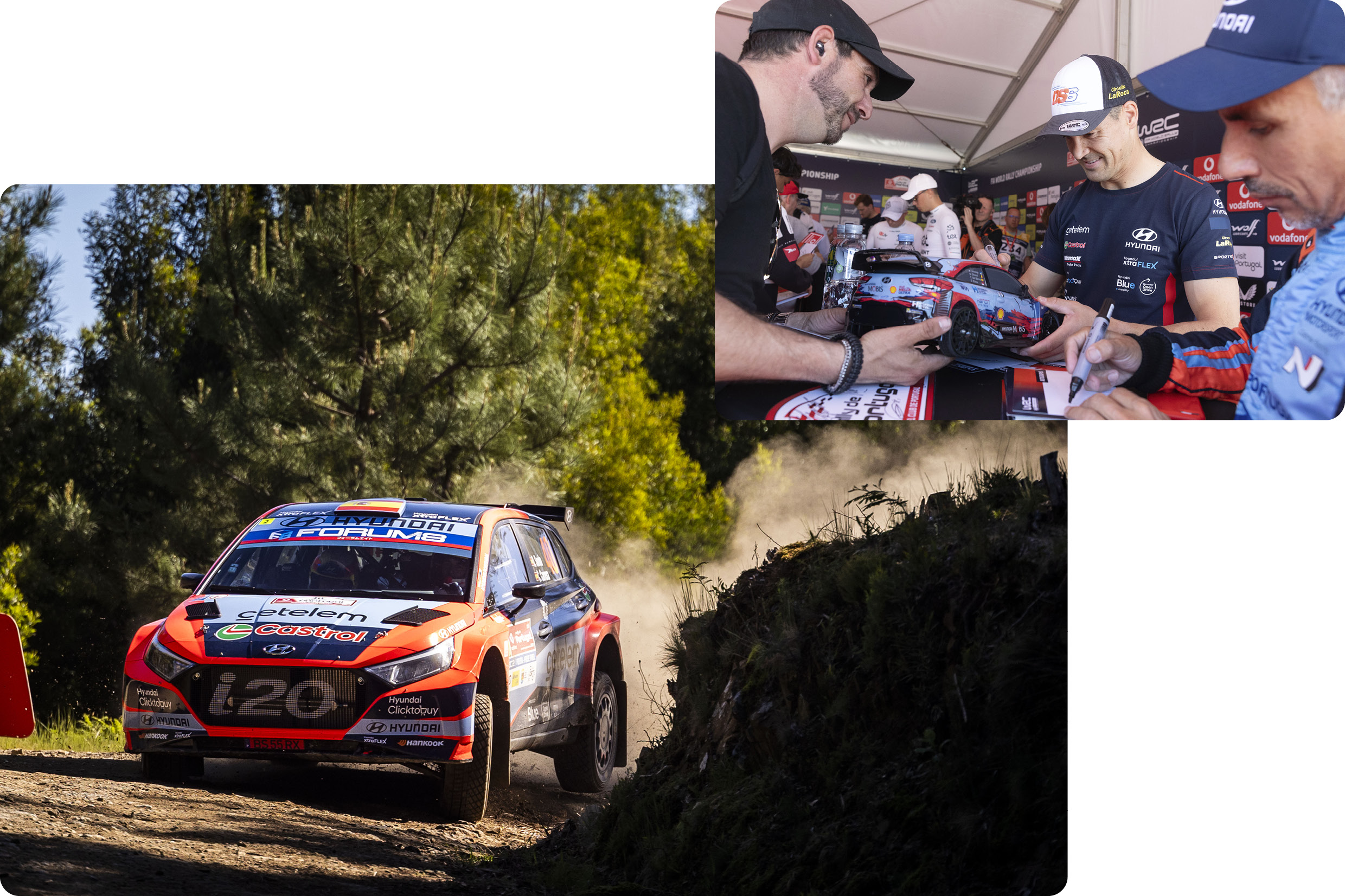
Development testing brought in a broad range of input: Portugal champion Dani Sordo, Austrian champion Simon Wagner, French tarmac specialist Eric Camilli, and Hugo Margaillan, among others. Their feedback helped shape the car into something that can deliver stable, high performance no matter who’s driving.
Hyundai Motorsport Customer Racing’s Benoît Nogier said: “We are very satisfied with the impact of the Step2 upgrade package that we introduced at the beginning of 2025. The increase in performance has allowed our customers to add to the list of championships they have won. However, to maintain our place in the Rally2 market we must continue to develop the car, or risk that we, and our customers, are left behind. Our latest updates are targeted at unlocking the performance that we know is in the car. A tailor-made calibration means that every customer’s engine will always be able to deliver to its full potential, while the other updates will give drivers the confidence to push in all conditions.”
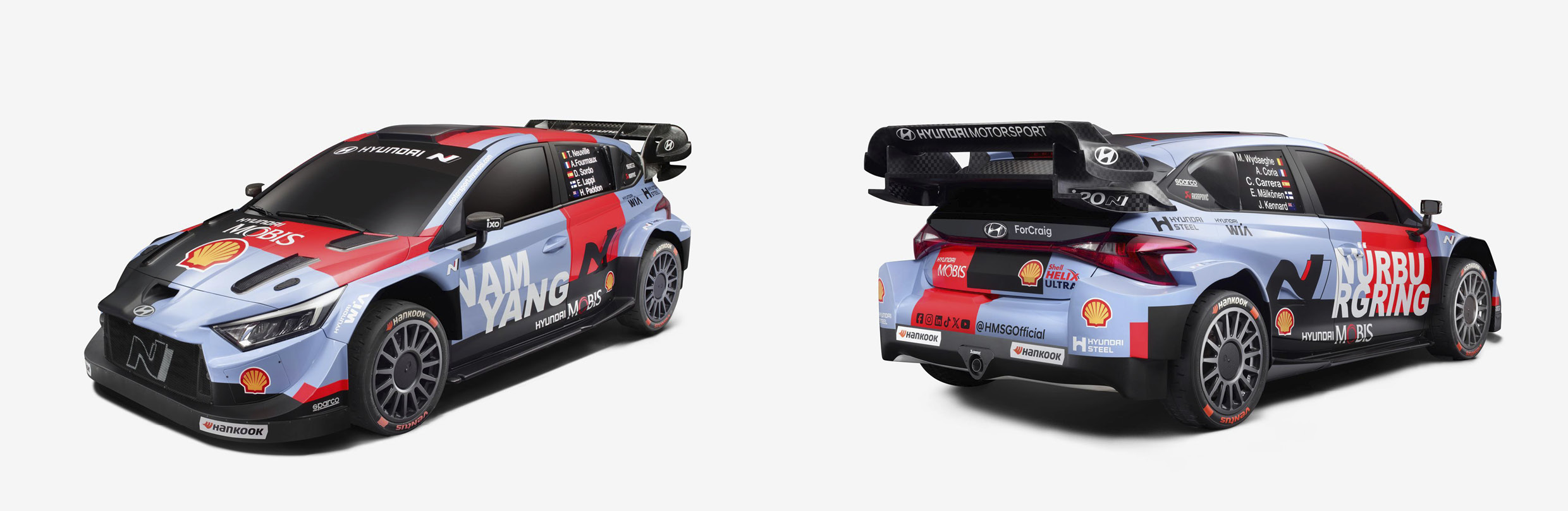
With sweeping regulation changes coming in 2027, there are no technical rule changes this year. The Rally1 cars—now running without the hybrid package—are largely similar to last season’s machines, but manufacturers have been granted two additional development jokers to help unlock maximum performance. Engine allocation remains the same: teams can use up to two engines across the season. If a major issue forces an in-event engine swap, it’s allowed—but it comes with a 60-minute penalty and the loss of championship points eligibility for that rally.
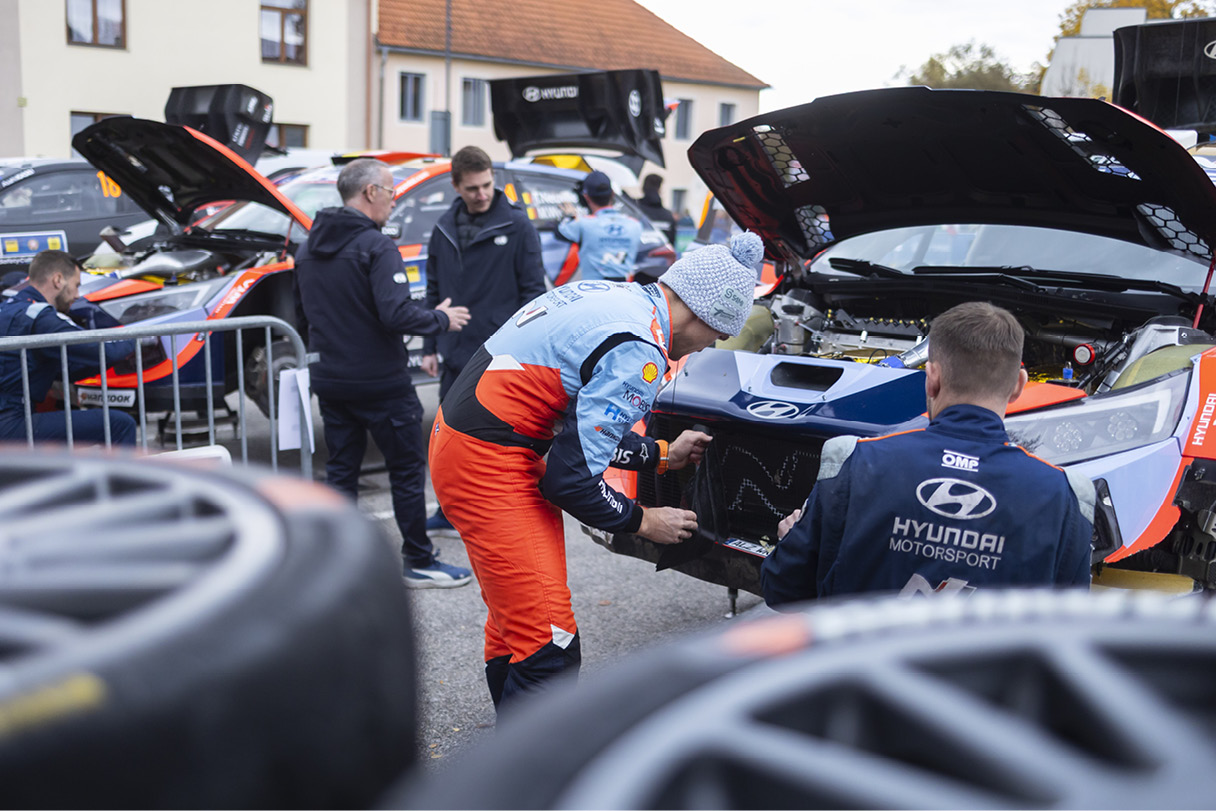
On the sporting side, the biggest shift is rest. Complaints from crews—especially after punishing rallies like Greece—pushed organizers to guarantee more downtime. From this year forward, teams get up to 10 hours of rest per day, with one day set at 12 hours. Excluding the opening day, total rest time across the rally must equal total competition time.
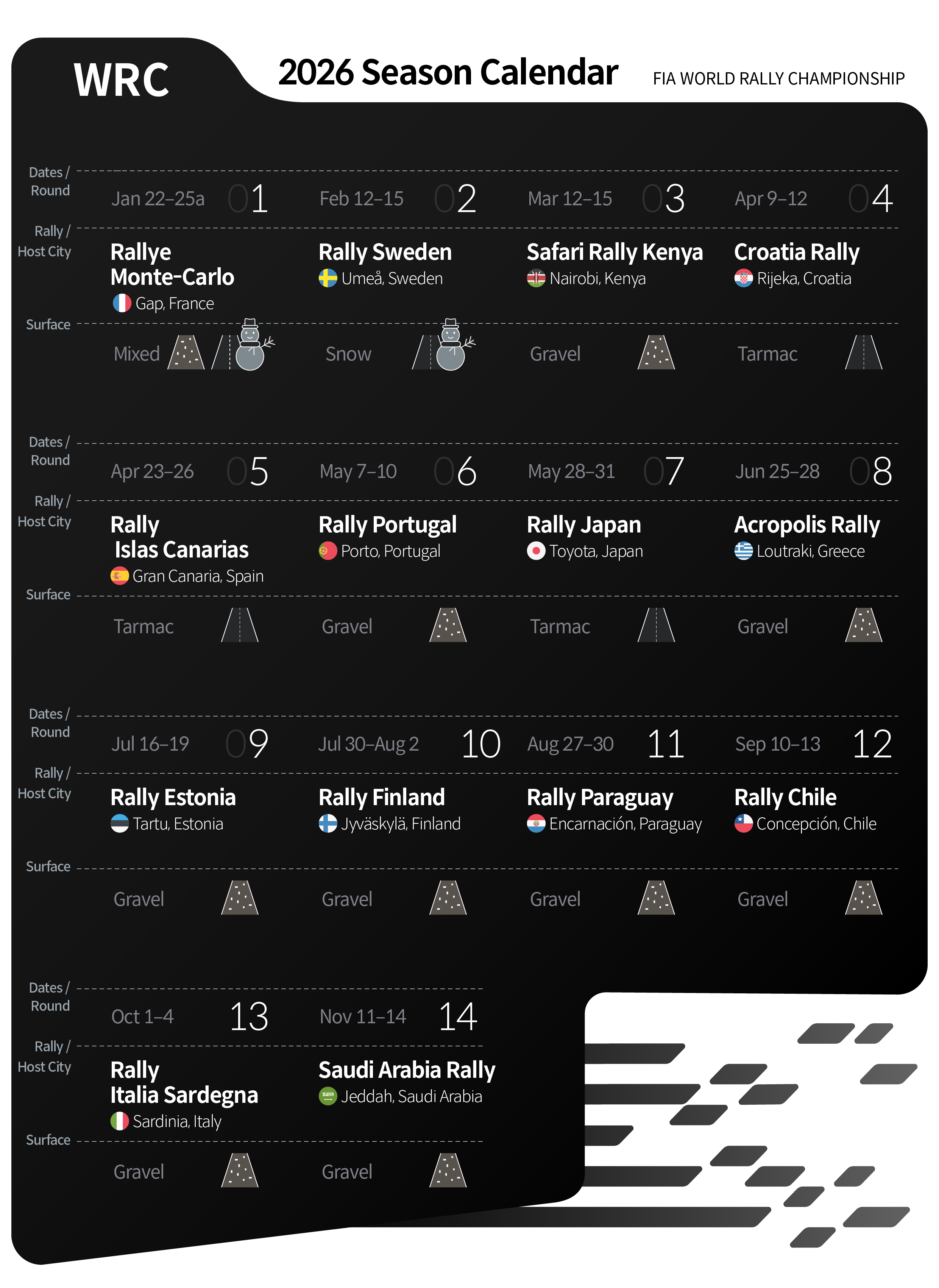
A few calendar adjustments also reshape the season. The Central Europe Rally—jointly hosted across Germany, Austria, and the Czech Republic—drops off, and Rally Croatia fills the gap. After briefly disappearing from the 2025 calendar, Croatia returns with a key change: the event moves from Zagreb to Rijeka, the country’s largest port. Between Adriatic scenery and the rugged mountain terrain of the Gorski Kotar National Park, it’s a complex, highly variable challenge—one that will feel unfamiliar to many drivers.
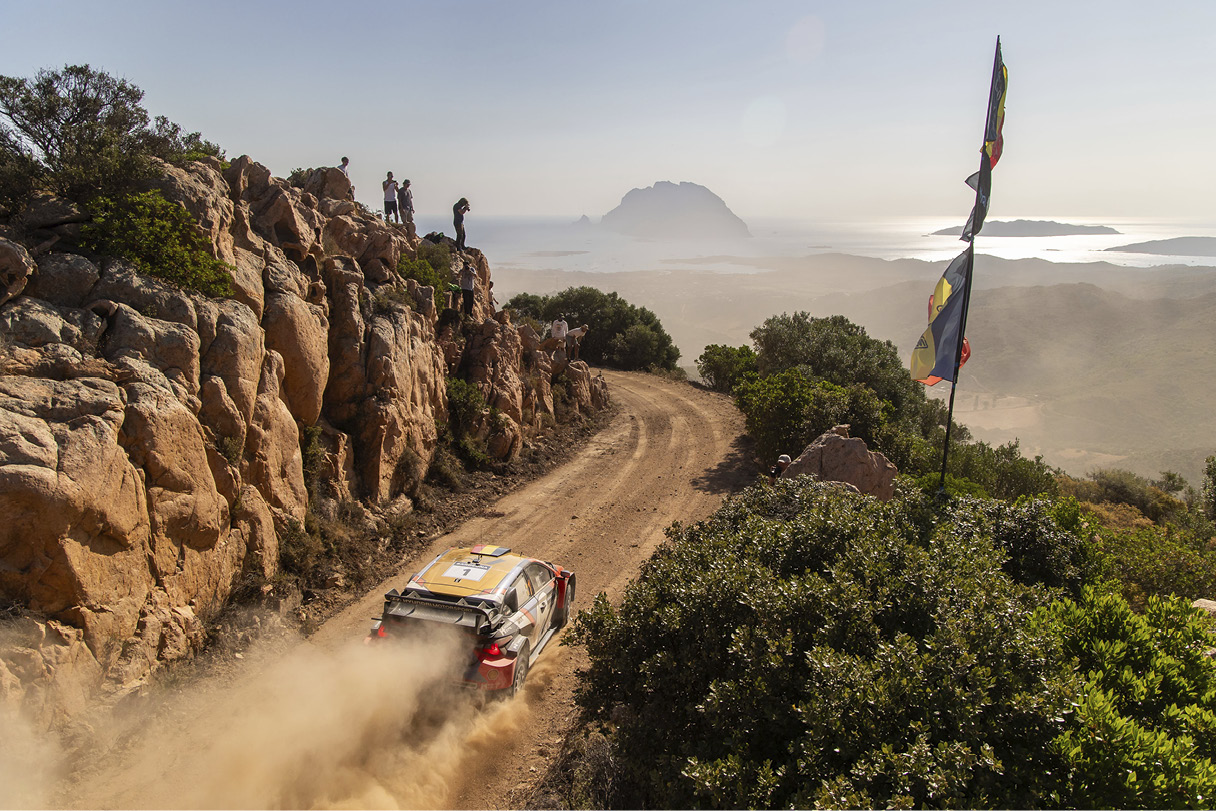
There’s also a late-season shuffle: Rally Japan swaps places with Rally Italy Sardegna, meaning both events land in different seasons than before. For Italy, it’s also a closing chapter—Sardegna is expected to host for the last time, with the rally set to move near Rome from 2027. Held in more comfortable fall conditions, it should reduce heat stress and let crews focus more on performance. Japan, meanwhile, avoids autumn’s cold temperatures and fallen leaves. Cleaner roads and higher grip could turn it into an even sharper speed fight. The catch is timing: it lands just ahead of the summer rainy season, making sud-den, localized downpours a real variable.
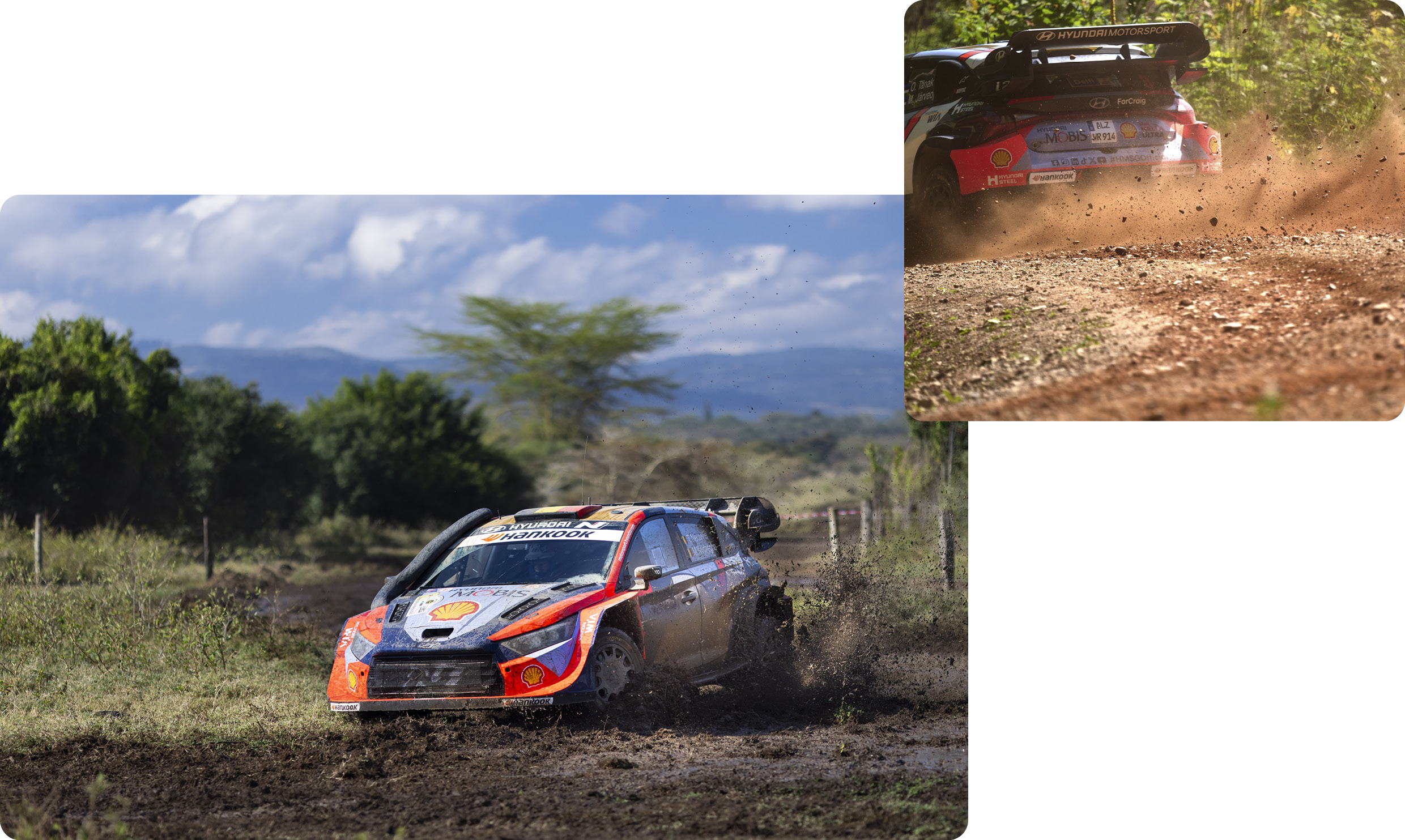
Tarmac rounds that used to be spread out are now stacked early—Rounds 4, 5, and 7—and the motive is pretty clear. Start order follows championship points, so the leaders take the hit on loose surfaces, “sweeping” gravel and dirt off the line and leaving better grip for the cars behind. Loading more asphalt up front is a straightforward way to soften that penalty, since tarmac is far less start-order sensitive than gravel.
By Soo-jin Lee
In 1991, Lee’s passion for cars led him to enthusiastically write letters to the newly launched Korean car magazine