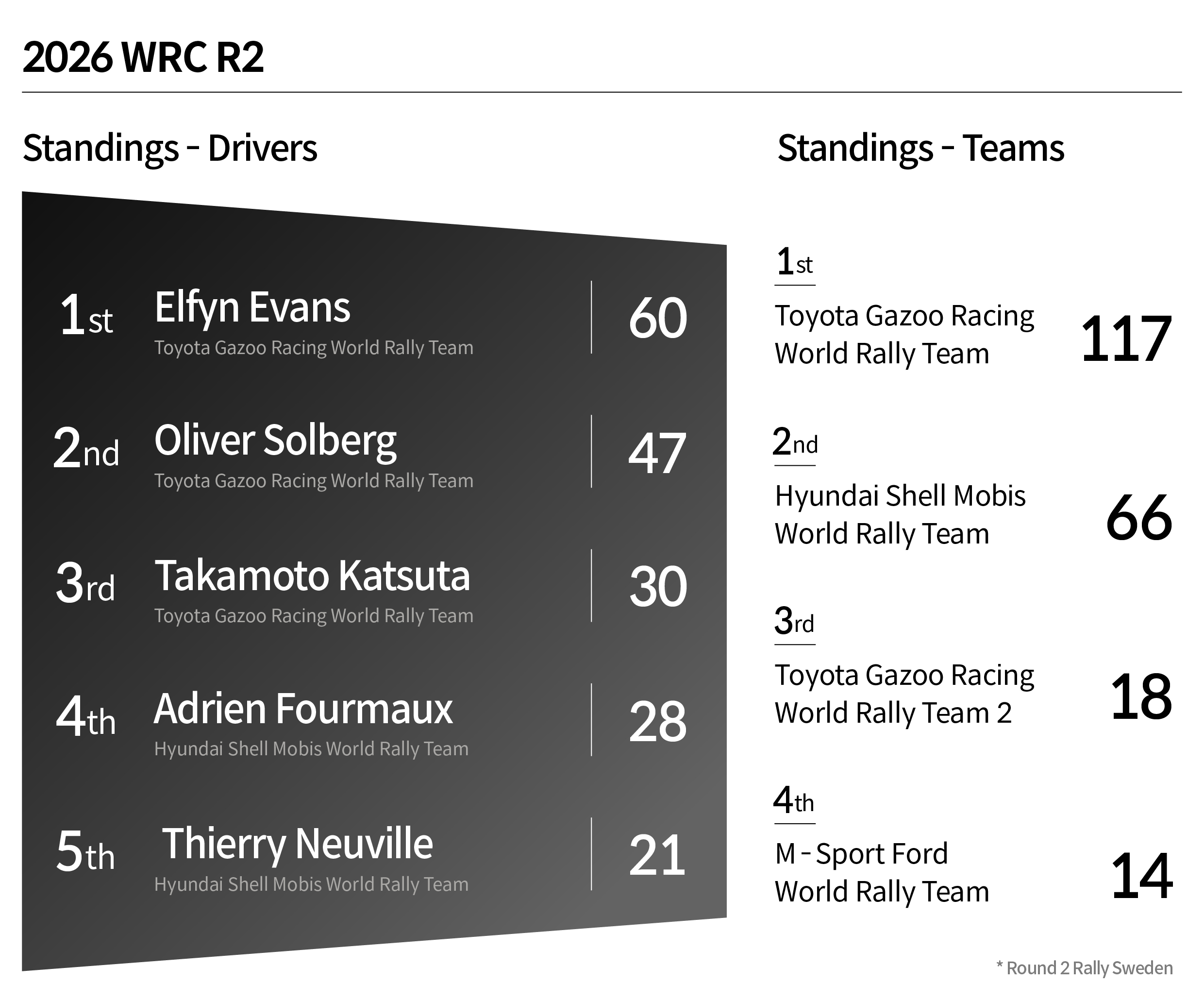
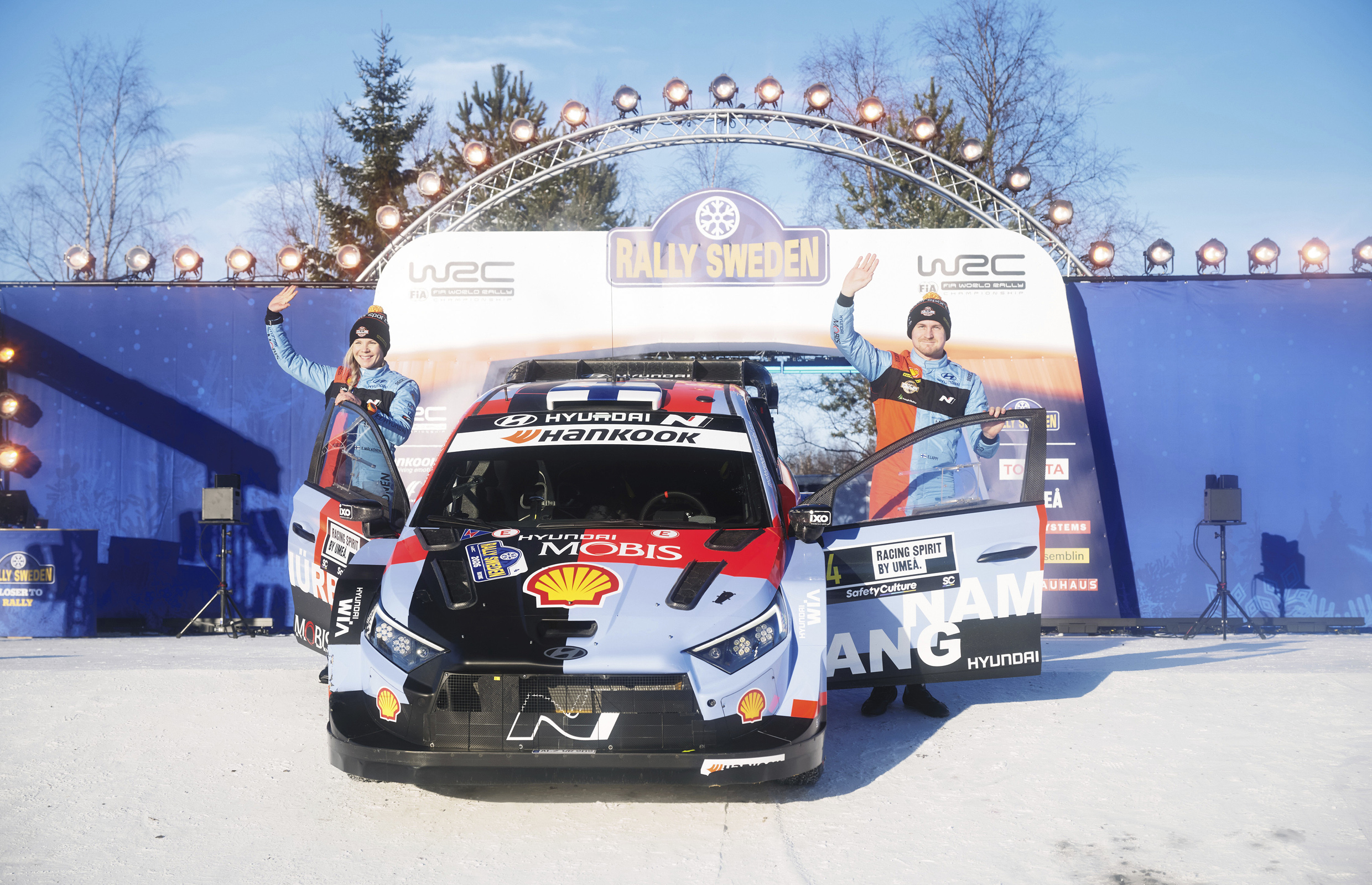
Held every February on the Scandinavian Peninsula, Rally Sweden is the only full-snow event on the WRC calendar. It began in 1950 under the name Midnattssolsrallyt (Midnight Sun Rally) and ran for decades in southern Värmland, but warming winters pushed the event north; since 2022, it’s been based in Umeå.
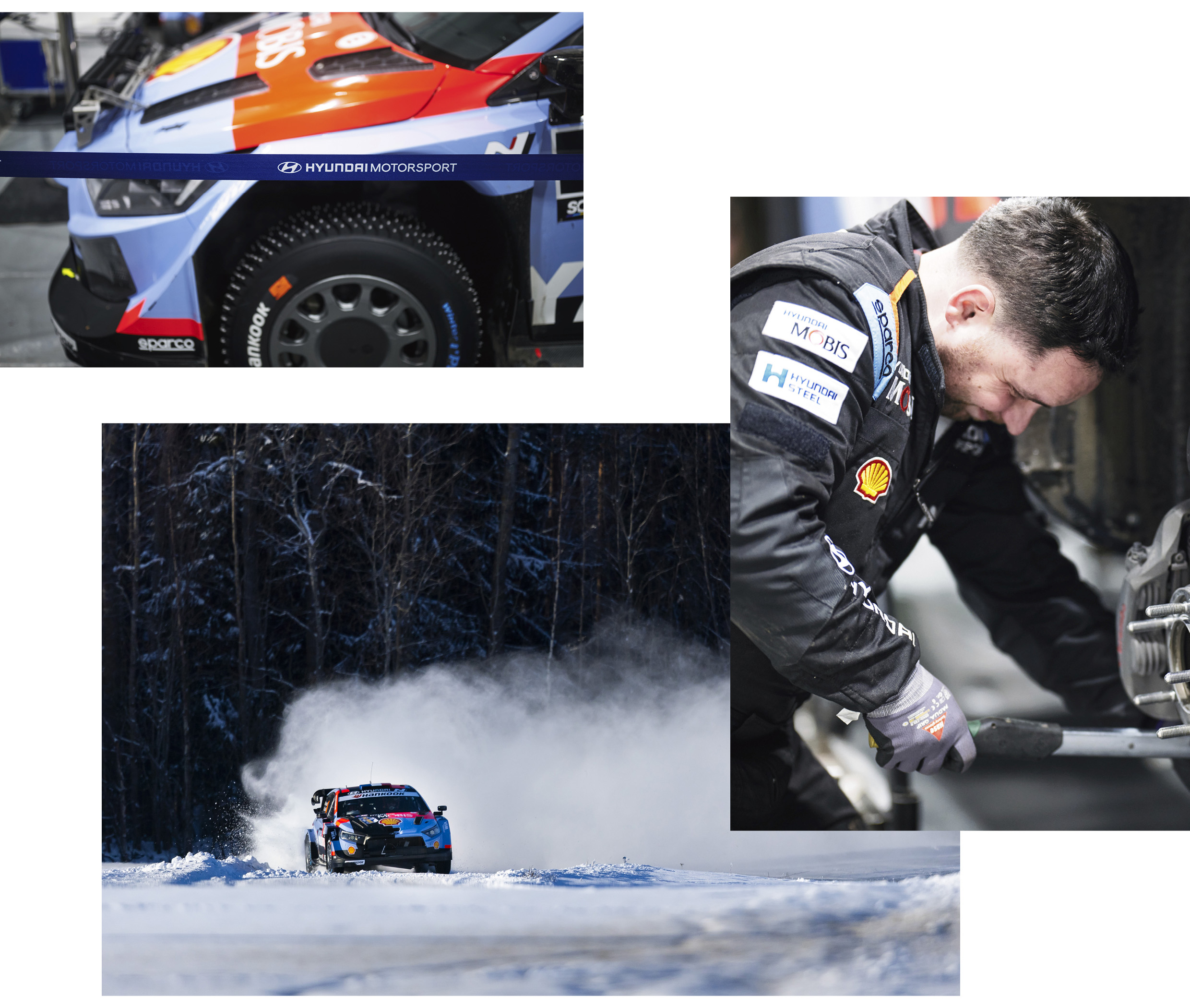
Because the cars are running on packed snow over ice, Rally Sweden is strictly a stud-ded-tire game—metal spikes, and nothing else. The pace is quicker than most people expect, and the driving feel is nothing like “normal” tarmac or gravel. Then there are the snowbanks stacked high along the edges. When they’re frozen solid, drivers can brush them to help rotate the car and carry more corner speed. But if the snow isn’t hard enough—or the entry speed is too ambitious—you can get swallowed by a drift and end your rally on the spot. And the cold is its own opponent: minus 25°C is brutal, especially for mechanics who still have to fix the car on the clock, in the open, with numb hands.
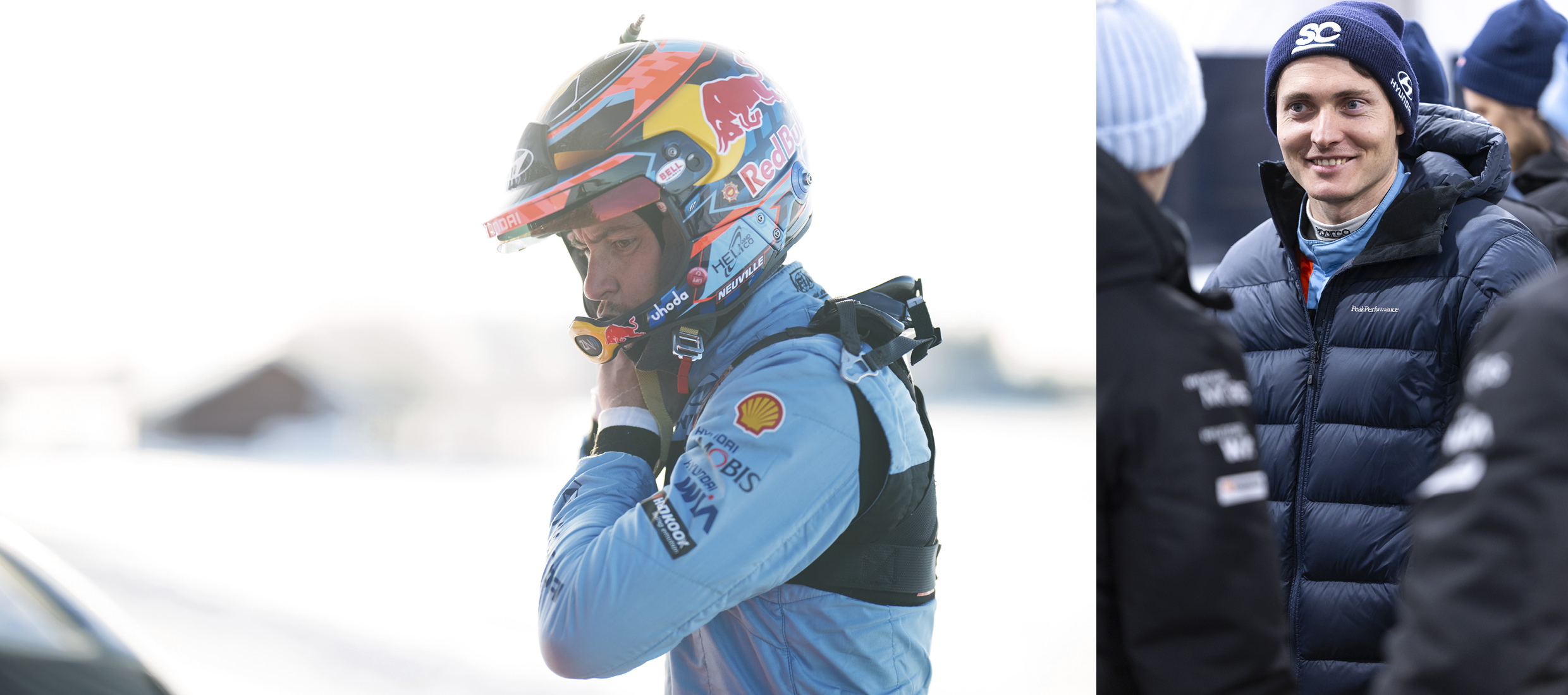
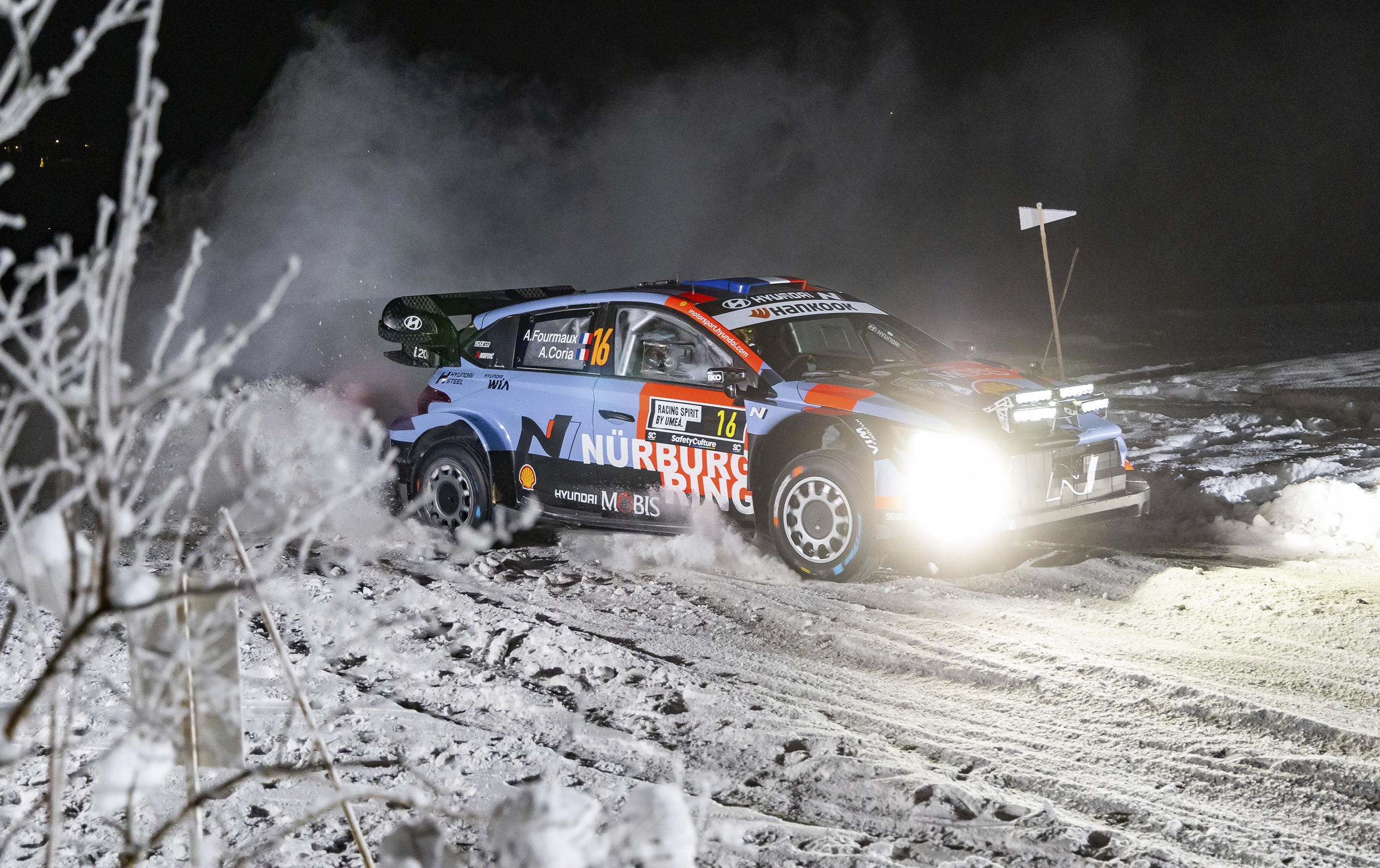
Hyundai Motorsport went to the calendar’s only pure snow rally with a three-driver lineup: Thierry Neuville, Adrien Fourmaux, and Esapekka Lappi. Neuville is about as Rally Sweden fluent as it gets—six podiums here, including the 2018 win, and a third-place finish last season. Fourmaux’s best Sweden result is third as well (2024), and his read on this year’s conditions was blunt: he noted that recent years have brought less fresh snow, a harder and more polished surface, smaller snowbanks, and less grip than last year. He ad-ded that the team needed a balanced setup that builds confidence in every corner, and said the goal was to throw everything at the event to close the gap in the manufacturers’ championship.
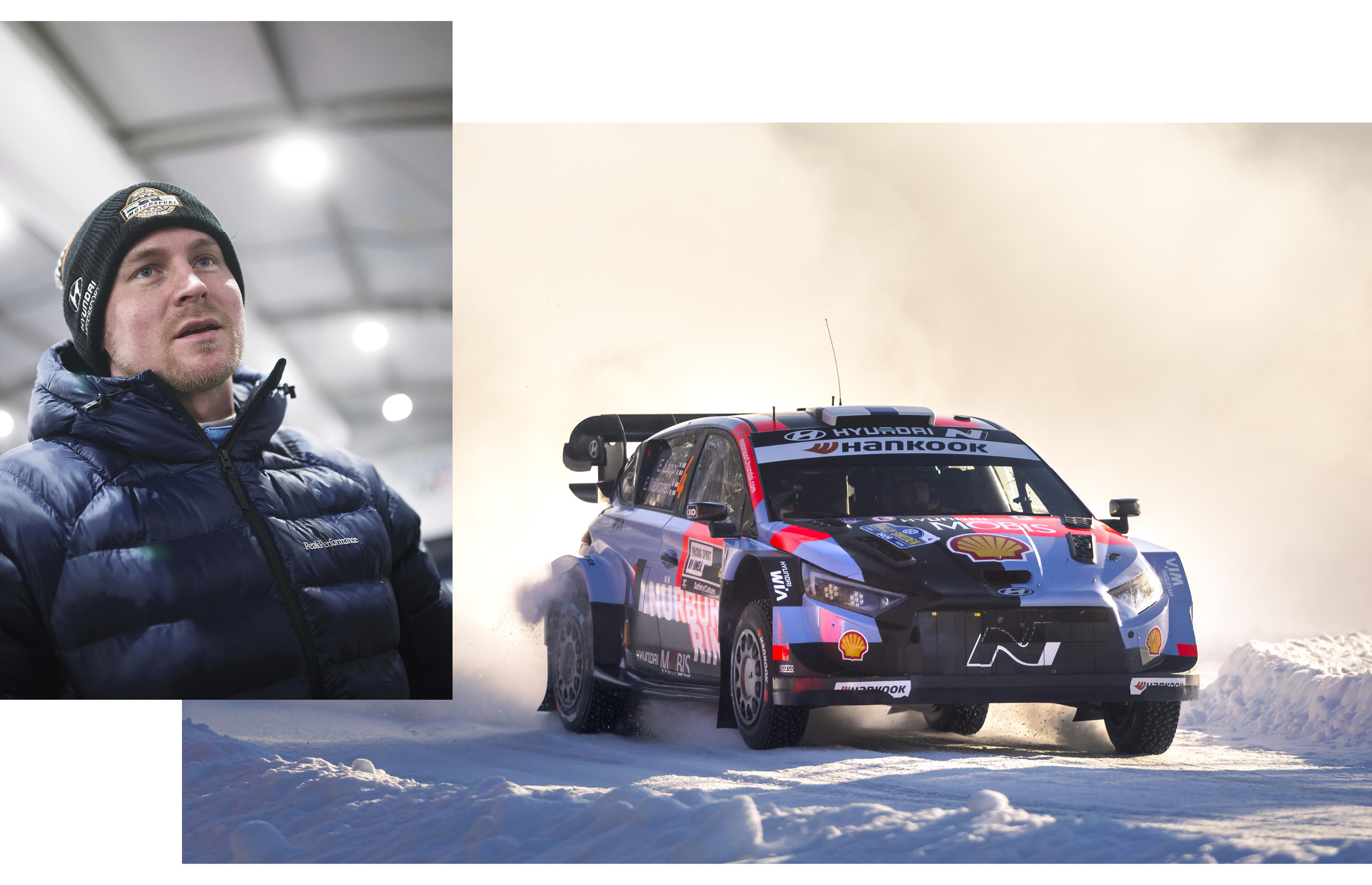
Hyundai handed the third i20 N Rally1 to Esapekka Lappi, last year’s Rally Sweden winner. After stepping away from the team following the 2024 season to focus on Finland’s championship, Lappi got a new opening when Ott Tänak—one of Hyundai’s core drivers through last season—took a break. Lappi’s perspective was classic Nordic realism: he felt Sweden might not be the hardest rally for a Finn, but emphasized that high speeds paired with low grip still make it tricky. He explained that fresh snow can let the ruts from earlier cars help, but once the surface freezes, the following cars can lose speed. He also pointed out he had already run two winter rallies in Finland this year and tested with the i20 N Rally1, underlining that he arrived sharp rather than rusty.
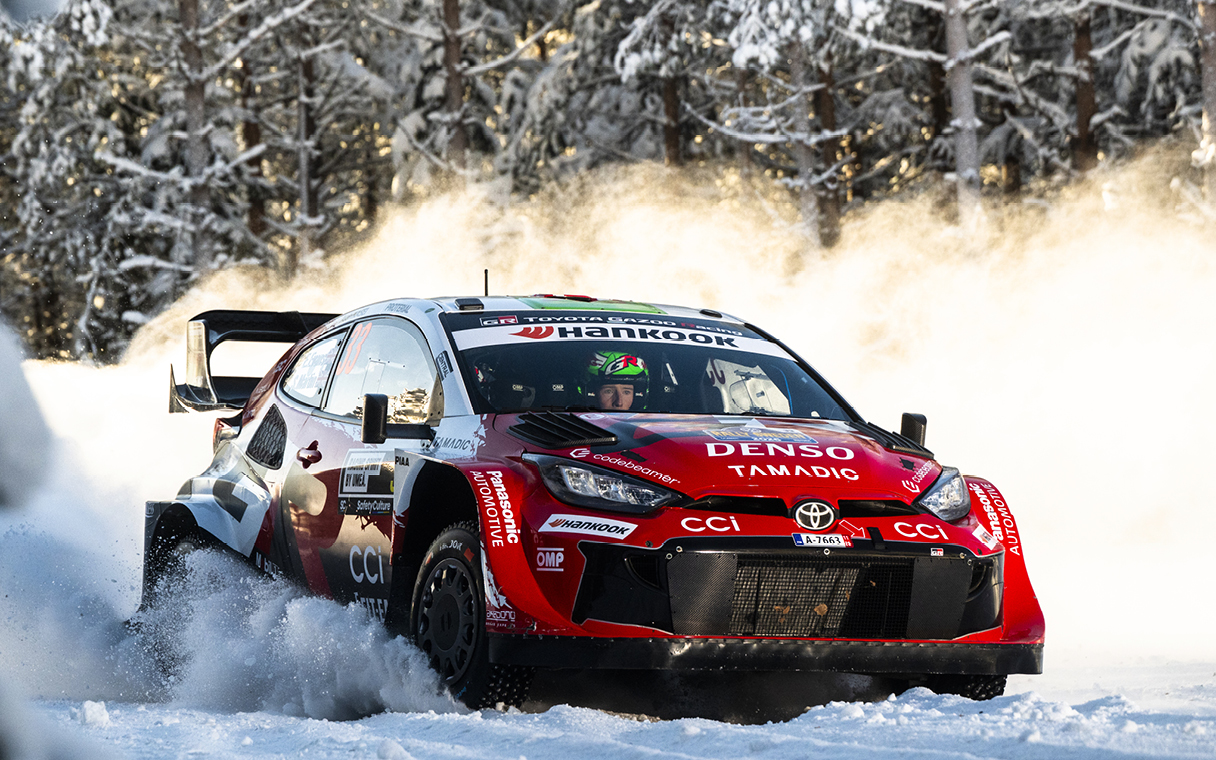
Toyota rolled into Sweden riding high after locking out the podium at the season opener—and it arrived in force. The factory roster featured Elfyn Evans, Oliver Solberg, Takamoto Katsuta, and Sami Pajari, and Toyota ad-ded a fifth GR Yaris Rally1 through its customer program with Lorenzo Bertelli, often described as Italian fashion’s golden boy.
Solberg, promoted to a full-time Rally1 campaign this season, lit up the rally world by steamrolling a brutally demanding Monte-Carlo—beating big-name veterans like Sébastien Ogier and Evans and instantly changing the tone of the title conversation. Evans, meanwhile, is the most successful active driver in Sweden with wins in 2020 and 2025, and he did his homework: he ran a GR Yaris Rally1 at Finland’s Lapland Rally in late January to stay sharp on stud-ded tires. Pajari—another Finn—was essentially on winter home turf. For Toyota’s manufacturers’ points, Evans, Solberg, and Katsuta carried the scoring responsibility.
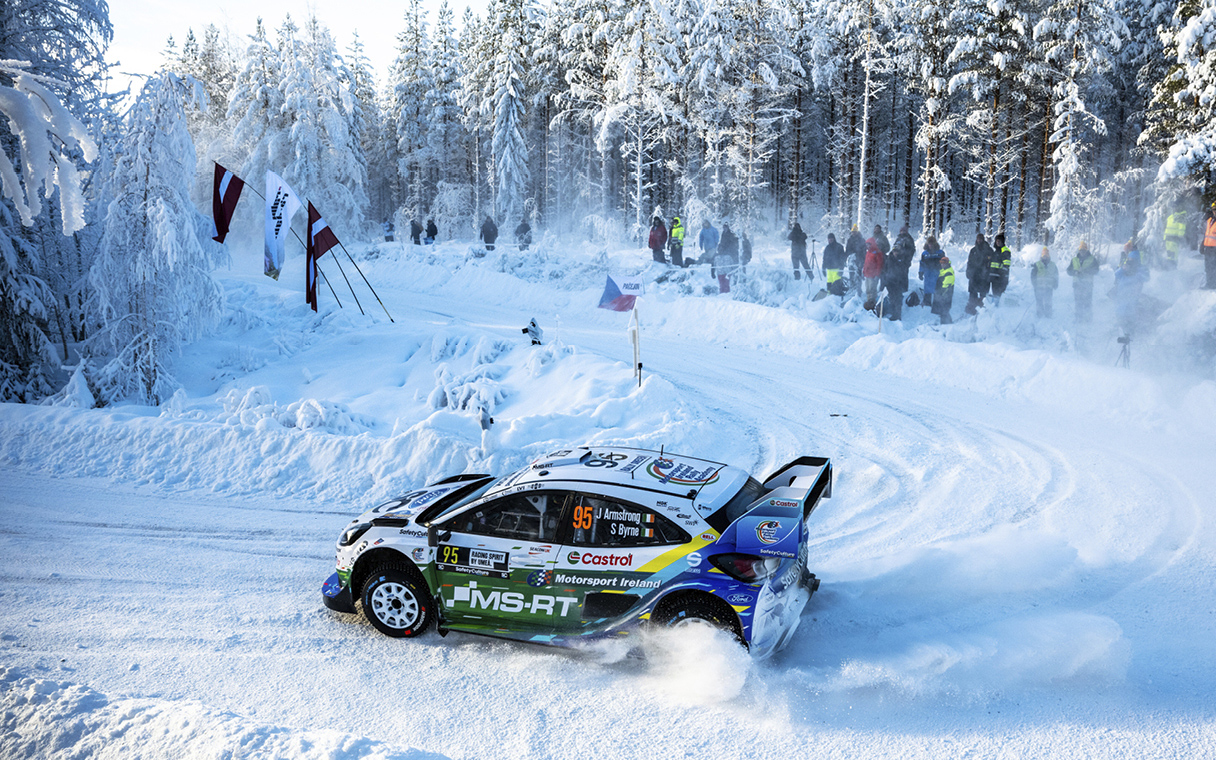
M-Sport Ford left Monte-Carlo empty-handed, snapping a 24-year streak of scoring points at the opener. All three cars retired, but there was still a pulse: newly signed Jon Armstrong flashed real pace early in messy conditions, the kind of first impression that suggests the ceiling is higher than the result sheet. In Sweden, Josh McErlean and Armstrong were joined by part-time ace Mārtiņš Sesks for his first start of the season.
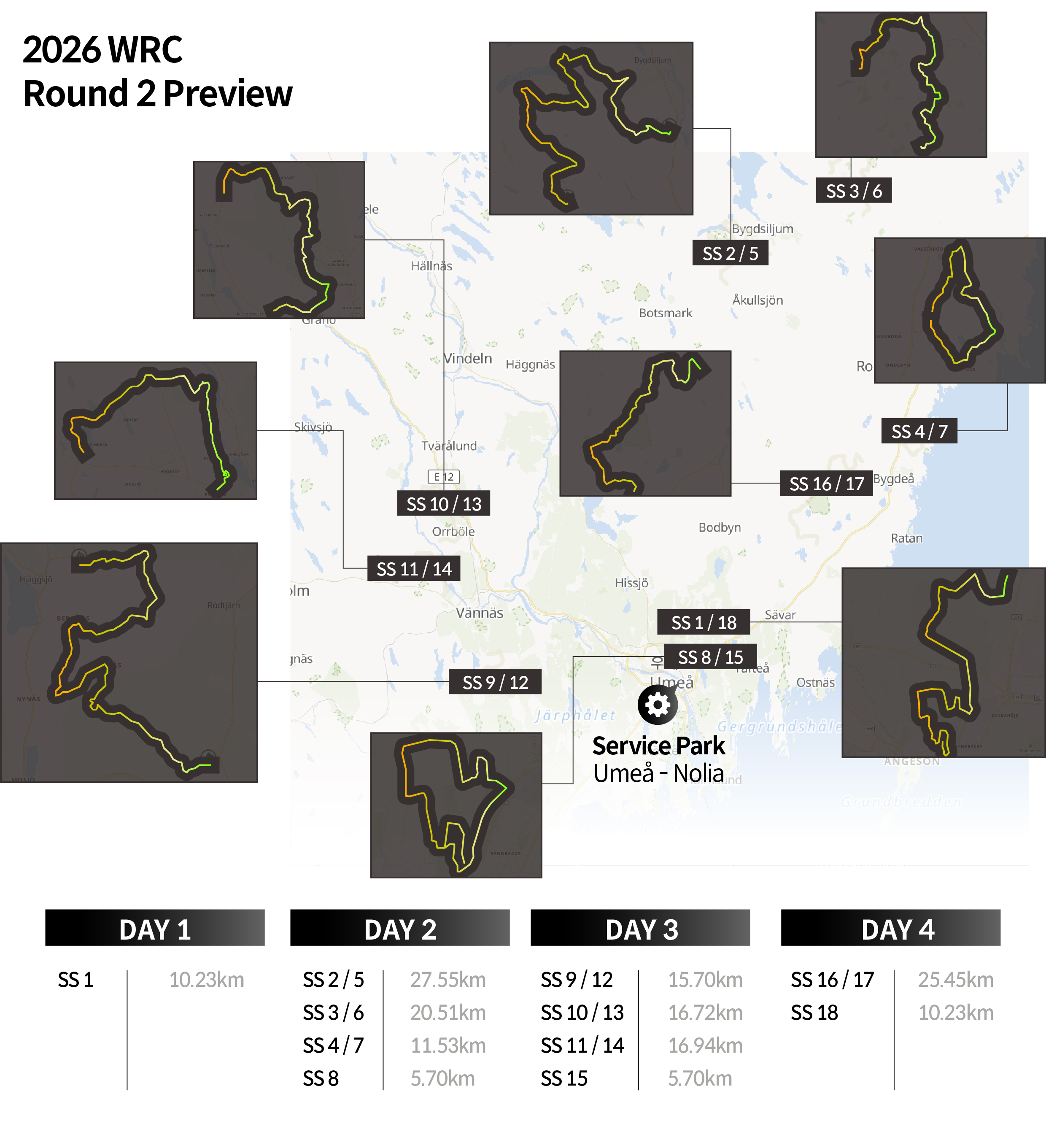
This year’s Rally Sweden itinerary is about 35 percent new versus last season, thanks to a mix of layout tweaks and several stages run in reverse. And the reverse runs aren’t just a trivia note—flip the direction and the whole stage drives differently, especially over the big high-speed jumps where the takeoff and landing zones swap roles.
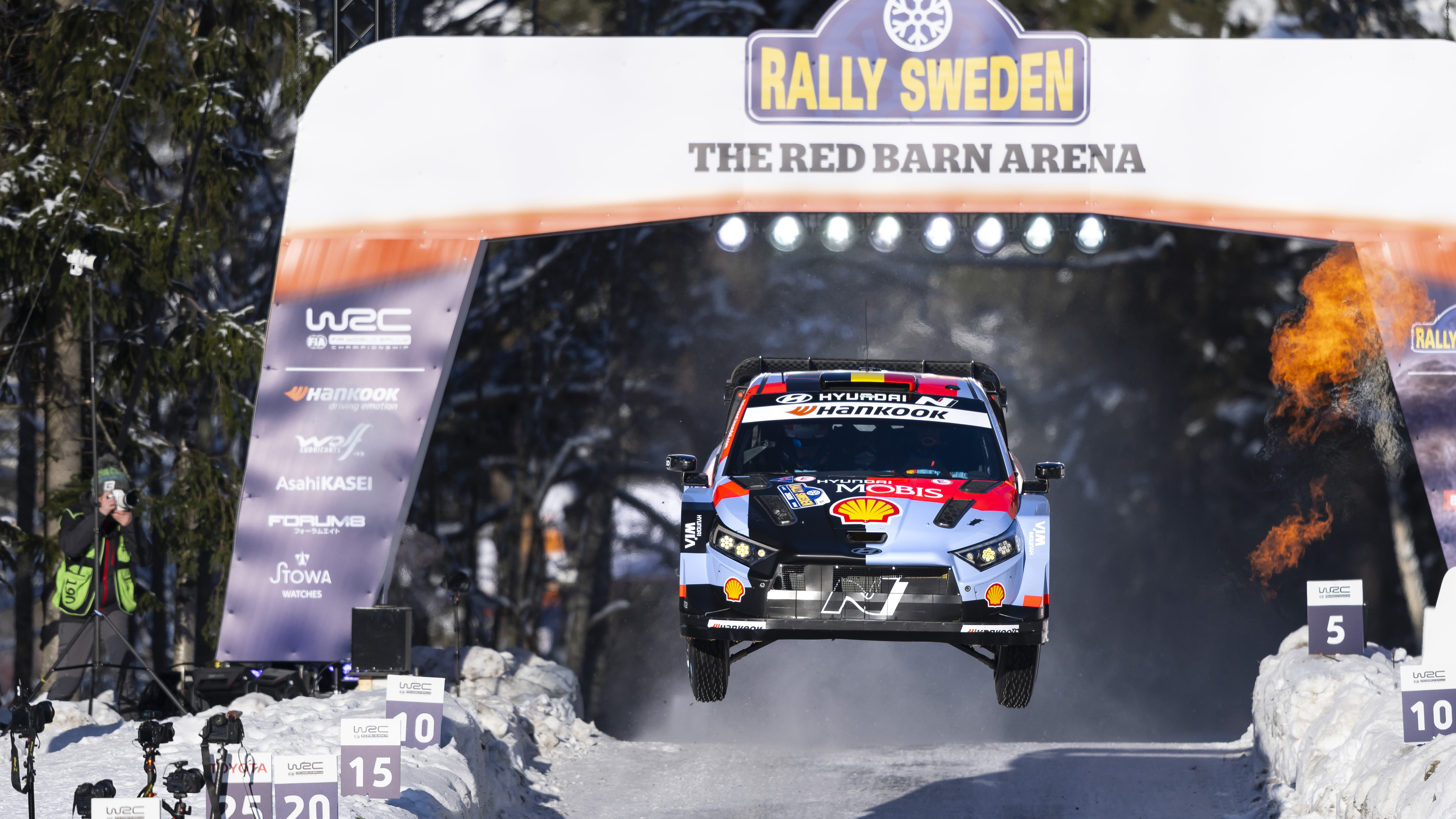
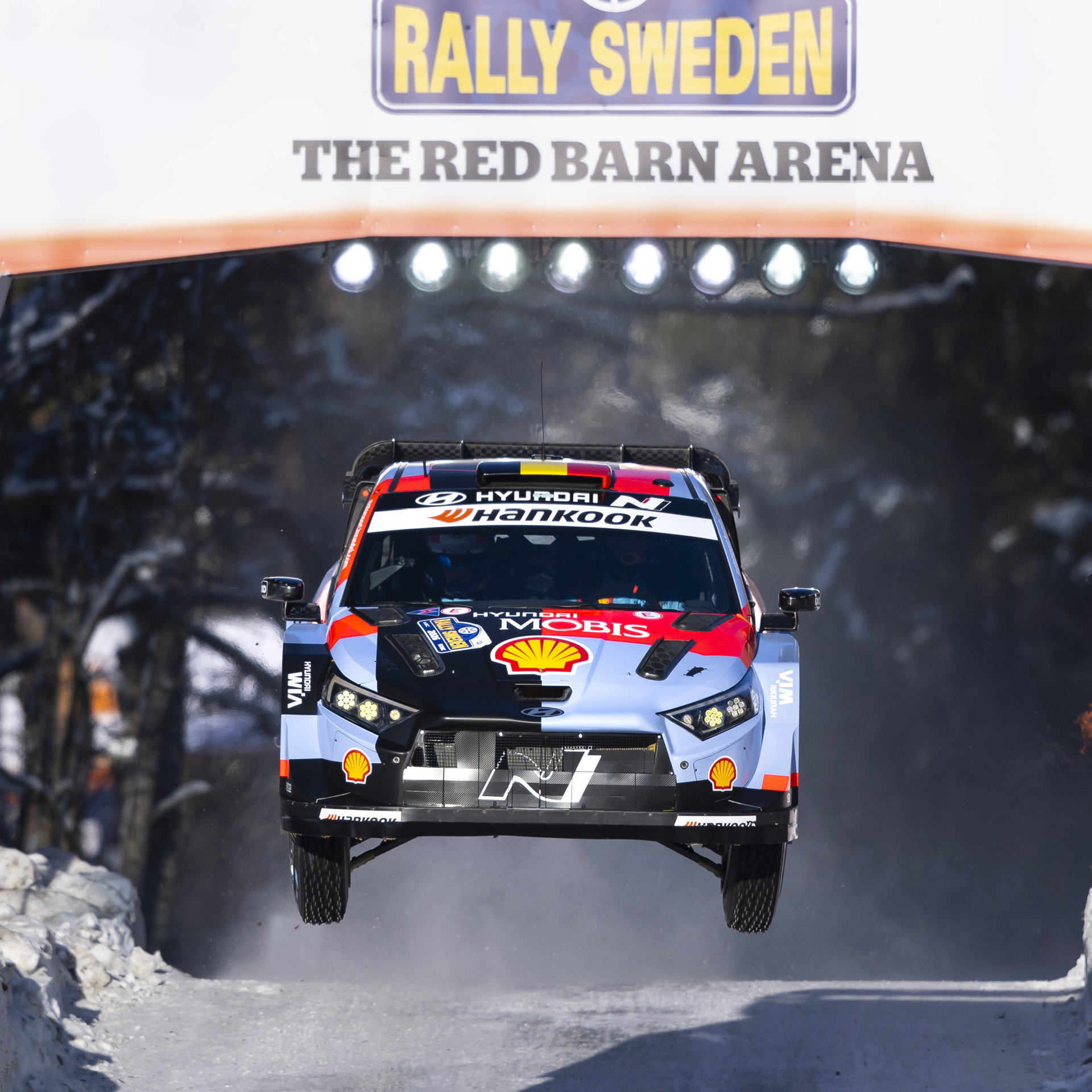
Thursday, February 12, the rally went live with SS1 Umeå, staged just north of town. It’s Rally Sweden’s bookend test—opening the event and later returning as the finale—and because it’s right on Umeå’s doorstep, it’s one of the easiest places for fans to get eyes on Rally1 cars. The Red Barn Arena portion brings the spectacle: a headline jump, fast sweepers, and a few layout tweaks versus last year.
The jump section that launches over a snowy crest is Rally Sweden’s signature moment. Video: WRC (http://www.wrc.com)
7 p.m., pitch black, studs sparking on ice: points leader Oliver Solberg led the pack onto the stage, with Elfyn Evans, Adrien Fourmaux, and Thierry Neuville lined up behind. Solberg dropped the hammer immediately—fastest on the opener—and the early order shook out with Evans, Takamoto Katsuta, Sami Pajari, Neuville, Fourmaux, and Esapekka Lappi following in that sequence. After the stage, Neuville said he had simply driven by feel and braked early throughout because it was hard to know whether the car would stop reliably, adding that the conditions demanded calm driving.
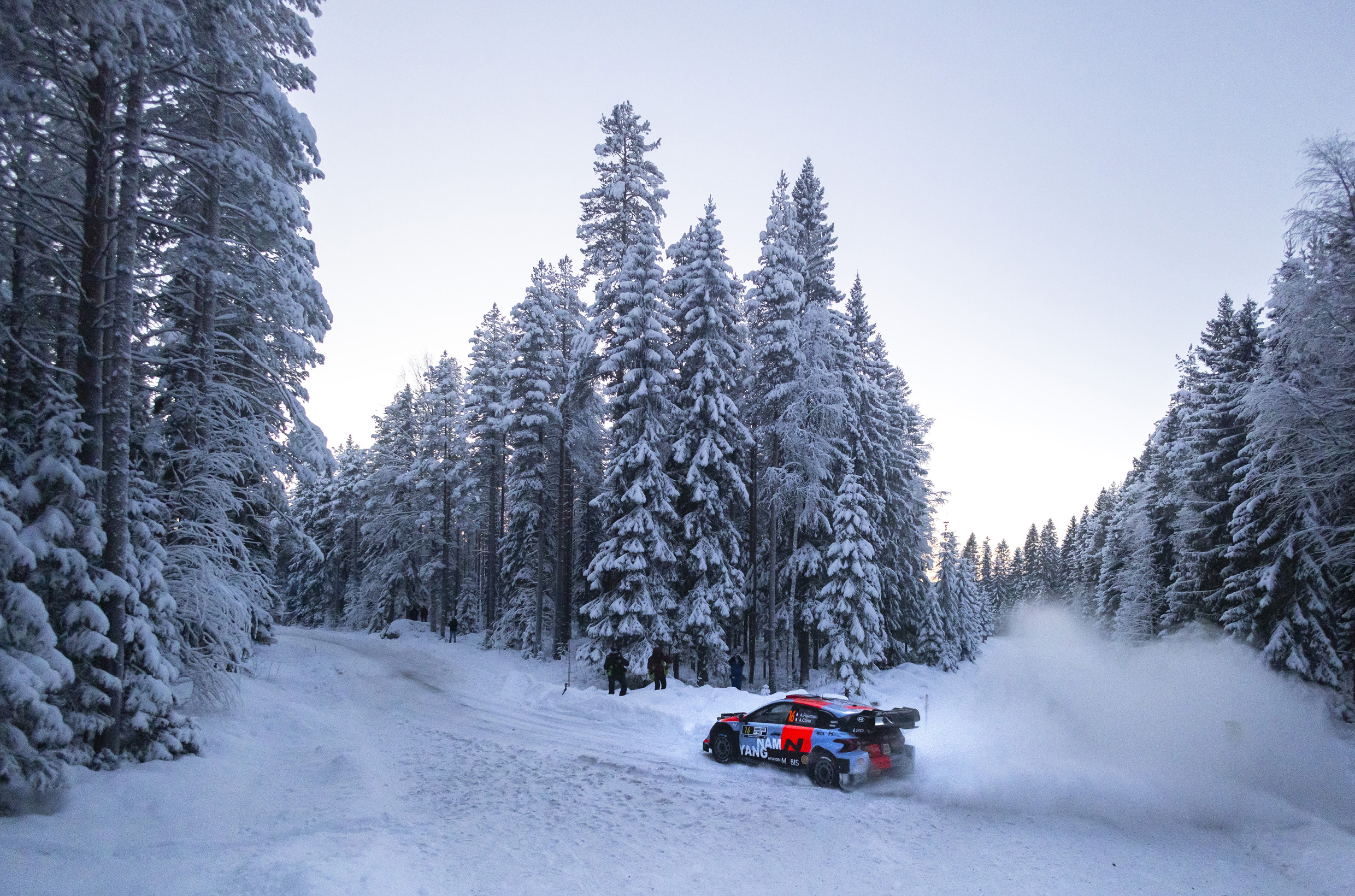
Friday, February 13 pushed the action north of Umeå, running a three-stage loop—Bygdsiljum, Andersvattnet, and Bäck—twice (morning and afternoon), then wrapping the day with a shorter Umeå test. SS2 through SS8 stacked up as the rally’s biggest mileage haul: seven stages totaling 124.88 km.
At 27.55 km, Bygdsiljum was the weekend’s longest stage. A newly designed opening 7 km trimmed it slightly compared to last year, but it still delivered a classic Sweden rhythm change: wide, fast road to start, then—around 3.4 km—past a farm and into a tighter, more technical corridor. From 9.8 km, the stage strings together rolling crests, and after 17.15 km, two intersections funnel the cars into an even narrower, rougher final sector.
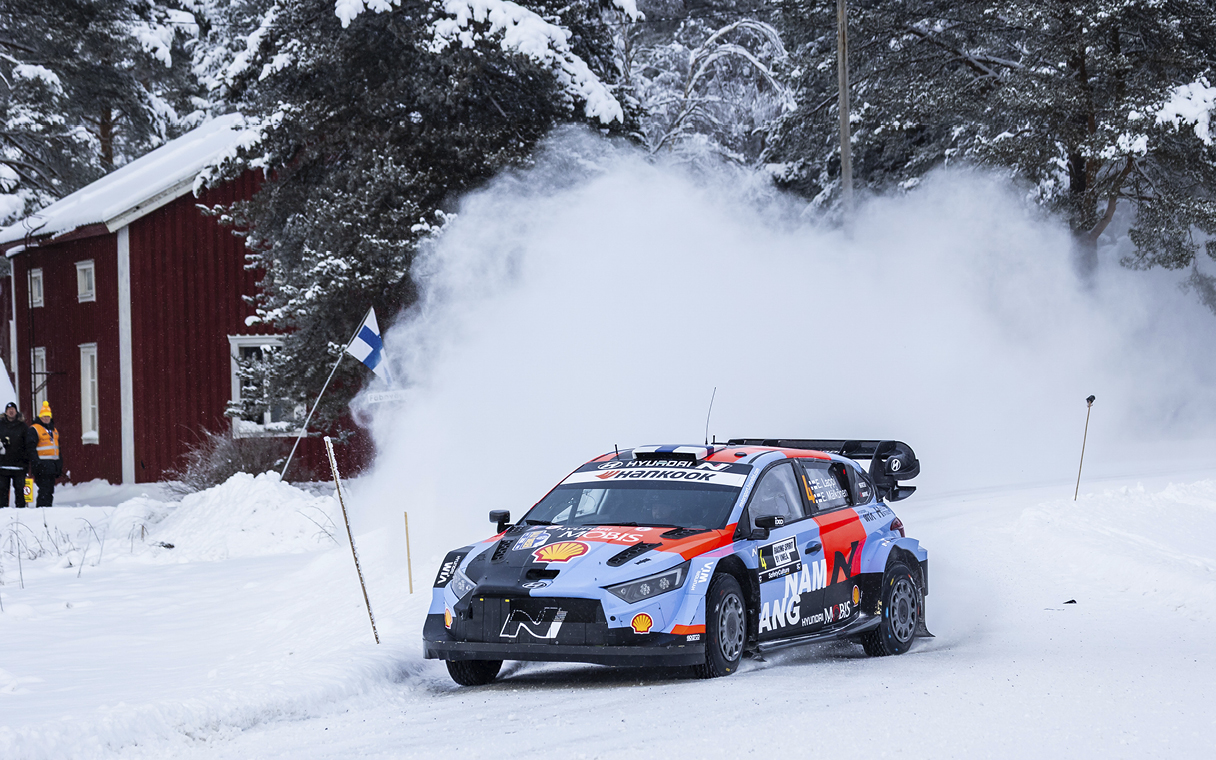
In the opener at roughly -20°C, Evans climbed into the overall lead. Solberg, meanwhile, had the kind of stage that unravels your whole day—tagged a snowbank and even stalled the car. For Hyundai, Neuville was the quickest of the trio, but still 8.2 seconds down on Evans and sitting fifth overall. Neuville didn’t sugarcoat the struggle: he said he had done his best but was struggling because the balance was not quite right, though he believed it could be refined through the weekend. He ad-ded that the team often starts this way and then fine-tunes the car until it can push for time, and said he was still happy to have a feel for the car and a clear direction to pursue. Lappi—still dialing in the new car/tire combo—played it smart, prioritizing a clean run while building confidence. Sesks took the big hit: an incident that damaged both front wheels cost him two minutes.
Neuville hit a snowbank and lost more than a minute. Video: WRC (http://www.wrc.com)
SS3 Andersvattnet (20.51 km) is a Sweden staple—fast, flowing, and a longtime fan favorite—and it ran unchanged from last year. The action, however, got messy in a hurry. Neuville clipped a snowbank, then got a second punch in the gut with a fogging windshield, losing more than a minute. Solberg also found the snow the hard way, sliding into a ditch and damaging a tire. Evans set the pace again to keep the overall lead, while Katsuta moved up to second. With Solberg dropping back, Lappi climbed to fourth overall and Fourmaux to fifth.
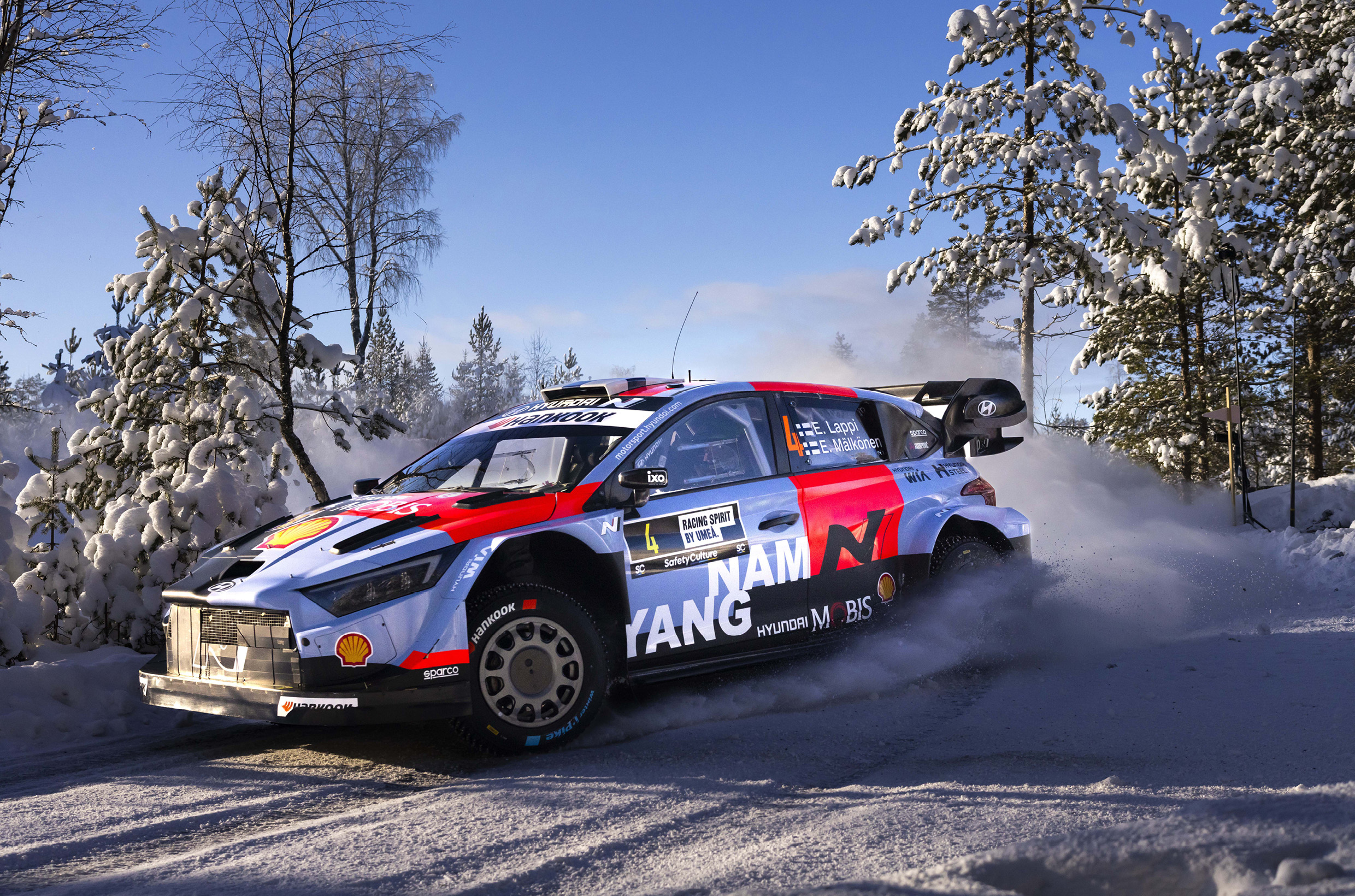
SS4 Bäck is 11.53 km along the Baltic coast—short by Sweden standards, but it demands real precision. The first ~4 km are narrow, technical, and rutted. After a straight, the stage flips personality around 5.3 km as it cuts across open fields and hits a chicane that instantly changes the rhythm.
By the stage that closed the morning loop, Solberg had steadied the ship. Toyota locked out the top three stage times—Solberg, Evans, Katsuta—followed by Fourmaux, Pajari, Neuville, and Lappi. Overall, Evans still controlled the top spot, and Solberg jumped past Fourmaux into fifth.
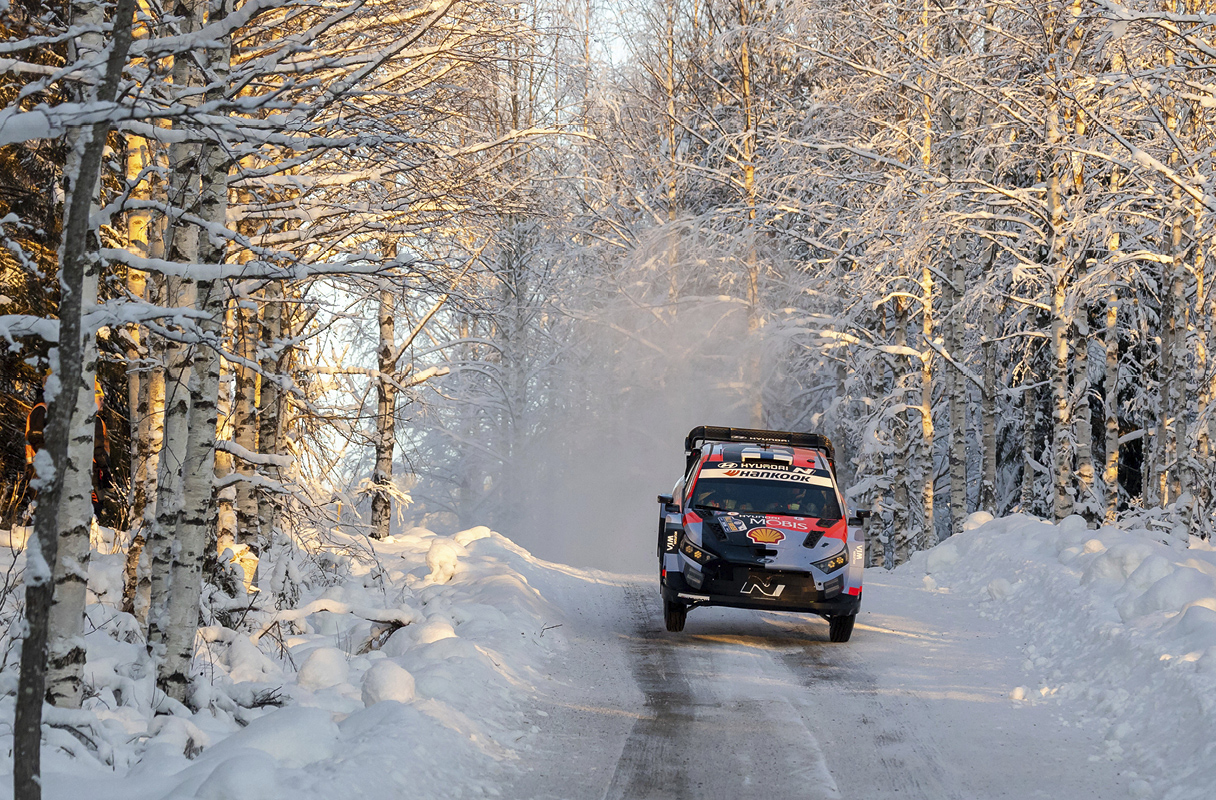
The afternoon turned into a moving target. Katsuta went back-to-back fastest on SS5 and SS6, then Neuville hit back with the quickest time on SS7. With the morning traffic digging through the snowpack, gravel and dirt started coming up—exactly the kind of inconsistent surface that punishes the later runners. Neuville pointed to the road evolving under their wheels: he said the road preparation had made a difference and that the team would keep trying different things with the car to respond. He ad-ded that while the basic framework stayed the same, there had been many detailed changes, and they were still adjusting to both the evolving road and his driving style, while also noting it was hard to claim they were faster than before.
Lappi and Fourmaux kept pressure on Toyota through unpredictable conditions. Video: WRC (http://www.wrc.com)
SS8 Umeå Sprint—just over 5 km—was essentially Thursday’s opener in short form. The start moved to the south, but the rest of the layout stayed intact. Solberg punched in the fastest time, followed by Neuville, Katsuta, and Fourmaux. Katsuta—who had edged Evans by 0.1 second on SS7 to take the overall lead—ended Friday on top, 2.8 seconds clear of Evans. Pajari ran third, with Hyundai’s Lappi and Fourmaux in fourth and fifth. Solberg was breathing down Fourmaux’s neck—just 0.7 seconds back.
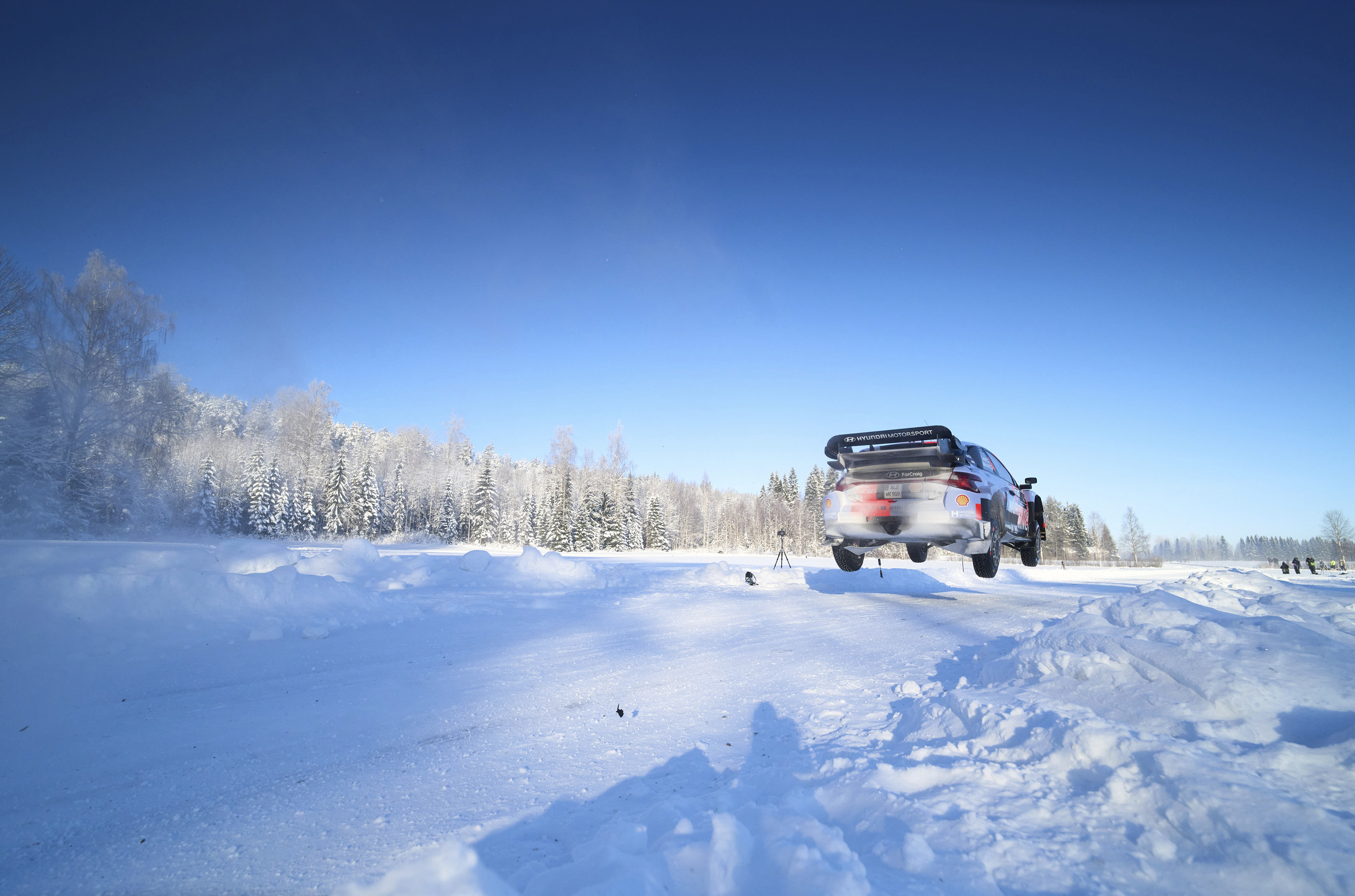
Saturday, February 14 shifted the rally west of Umeå—and the pace ramped right back up. The itinerary was a classic Sweden grind: SS9 Vännäs, then Sarsjöliden and Kolksele—three mid-length tests in the 15–16 km range—run twice (morning and afternoon), before the day wrapped with the Umeå Sprint (SS15). Seven stages, 104.42 km of flat-out running on studs.
Vännäs was slightly stretched at the finish compared to last year, and it’s a stage that keeps changing its personality. It opens with a tight, slower section, then cracks open into a wide, high-speed blast where the cars look like they’re barely touching the ice. Around the 4 km mark it snaps back into a cluster of tight corners and hairpins—the kind of fiddly “Mickey m-ouse” section rally crews love to hate, and fans love to watch. Evans nailed it for the fastest time, and Solberg followed with the second-quickest run, leapfrogging both Lappi and Fourmaux in one move. At that point, Toyota had a stranglehold on the overall top four.
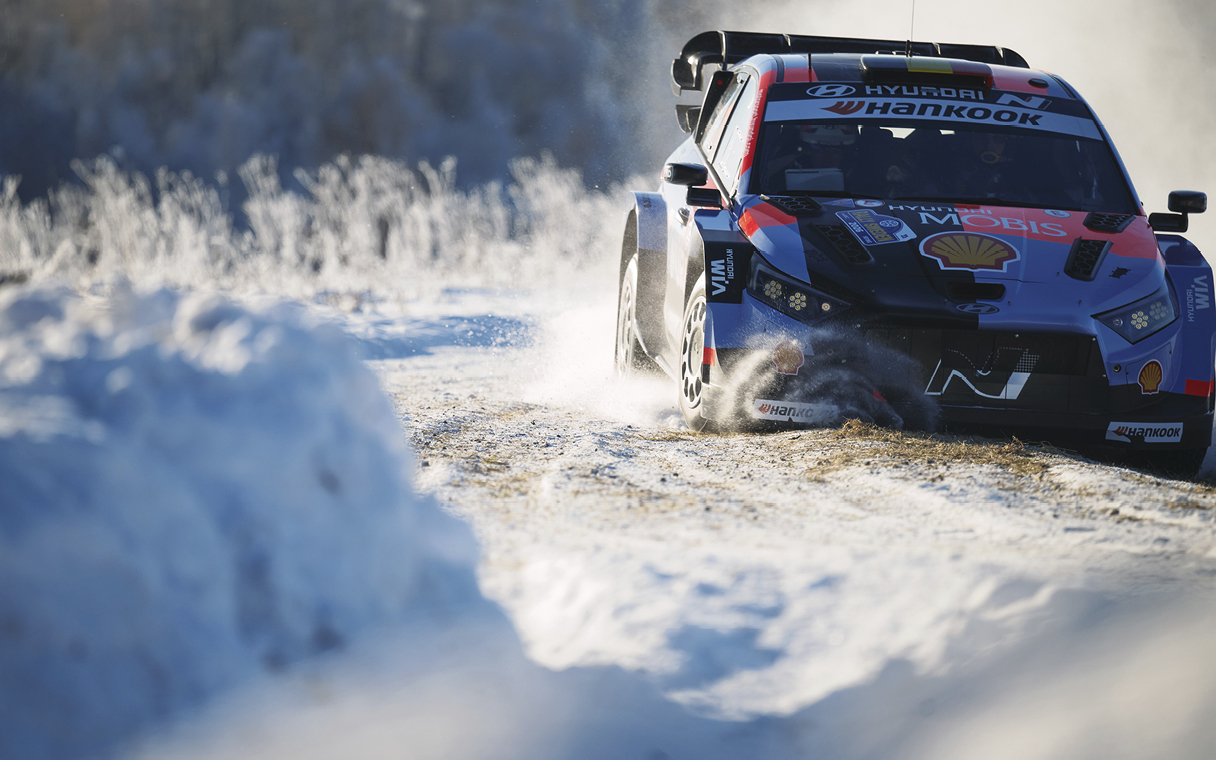
SS10 Sarsjöliden (16.72 km) came with a relocated start and a small mid-stage revision—still the same stage that bit hard last year, when Fourmaux got beached in a snowbank and Katsuta ran wide. This time it turned into a stopwatch fight: Sesks grabbed fastest stage time, and the top 10 were separated by roughly seven seconds—basically nothing in rally terms.
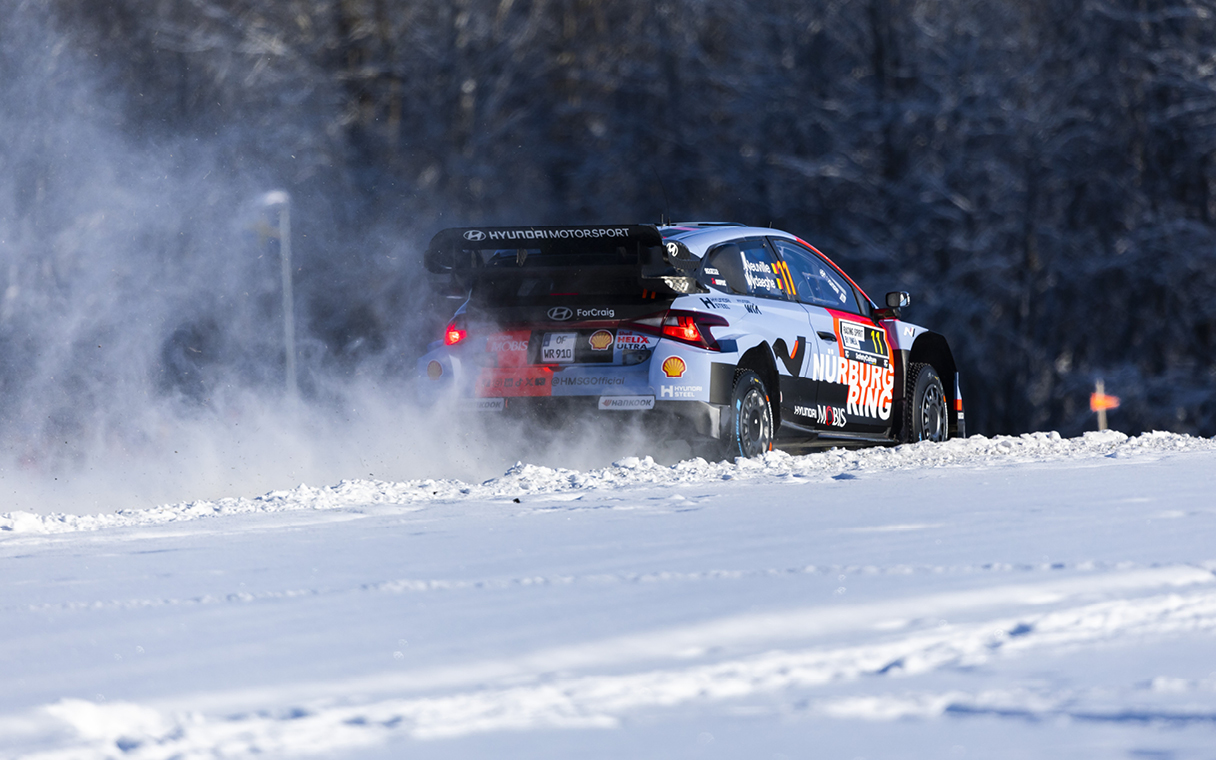
SS11 Kolksele (16.94 km) flipped direction versus last year, and the organizers spiced up the opening with a motocross-style technical section that forced drivers to place the car precisely before the road finally widened and the speeds climbed. Solberg set the pace and re-fired his podium charge. Katsuta, who looked sharp on Friday, couldn’t find the same bite and started to struggle for grip. For Hyundai, Lappi was the quickest on the stage. But Toyota kept coming in the afternoon: Pajari was the standout, winning SS12 and SS14, while Evans answered with the fastest time on SS13 to keep control of the rally’s front end.
Fourmaux was able to lift his pace in the afternoon thanks to damper setup changes. Video: WRC (http://www.wrc.com)
From Saturday morning on, the leaderboard basically settled into place. Evans remained out front, with Katsuta 13.3 seconds back and Pajari another 12 seconds behind that. Thanks to his afternoon push, Pajari stretched his cushion over Solberg to 33 seconds. Hyundai’s trio—Lappi, Fourmaux, and Neuville—ran fifth through seventh. By leaning harder on damper changes, Fourmaux found a bit more pace in the afternoon and put himself within reach of Sunday bonus points. He credited the team for helping him increase the pace, said it made him look forward to Sunday even more, and noted a small mistake at an intersection but called the afternoon positive overall. There was a small mistake at an intersection, but overall it was a positive afternoon.” Neuville was quickest on SS15, but a helmet-strap issue resulted in a one-minute penalty and a €1,500 fine.
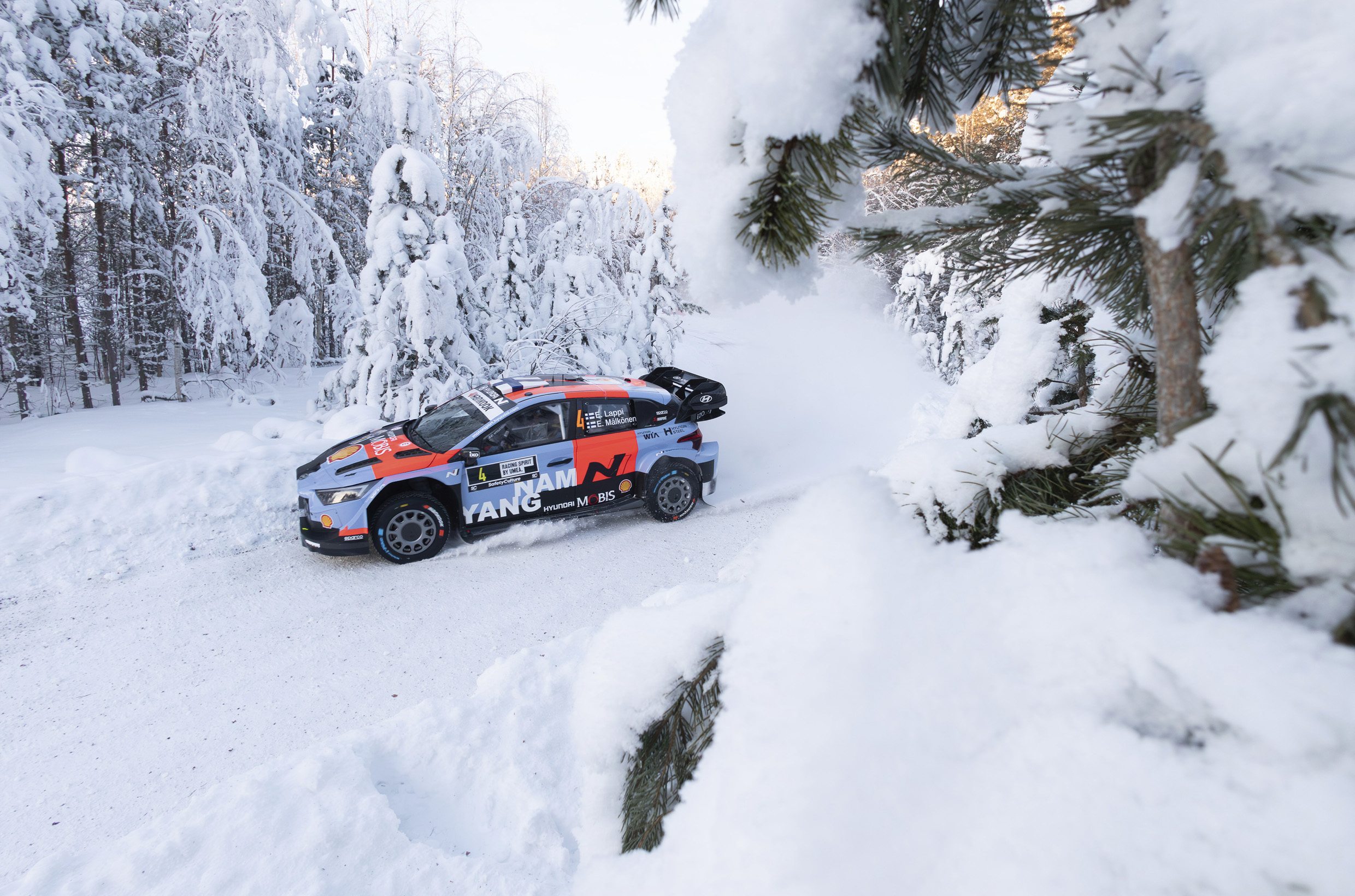
Sunday, February 15 was the Rally Sweden closer: two runs through the long Västervik test, then one last blast through Umeå to put a bow on the weekend. Three stages, 61.13 km—short on paper, but with the points structure (Super Sunday + Power Stage), it’s where the rally can still pay you back. SS16 Västervik was run in reverse compared to last year and trimmed by roughly 4 km to 25.45 km. The stage is classic Sweden contrast: it starts tight and technical, then at 8.78 km the road opens up and turns into a near-200 km/h ice-road dogfight, before it tightens back down into a medium- and low-speed finish where precision matters as much as bravery.
Even in tricky conditions, Lappi showed his trademark skill and was Hyundai’s fastest. Video: WRC (http://www.wrc.com)
Evans punched in the opener, but Katsuta stayed glued to him. Solberg was more than nine seconds quicker than Pajari, yet still needed another 23.7 seconds to steal the final podium spot—too big a gap to “just send it” without consequences. On the Hyundai side, Lappi was again the quickest of the trio but could only manage sixth overall, while Fourmaux and Neuville struggled to find another gear. Lappi summed up the constant threat that defines Sweden; he said it was very easy to get sucked into the snowbanks, noted that he had touched a few without major consequence, and emphasized that the risk is always there; he ad-ded that pushing harder might have made them faster, but he tried to avoid the danger.
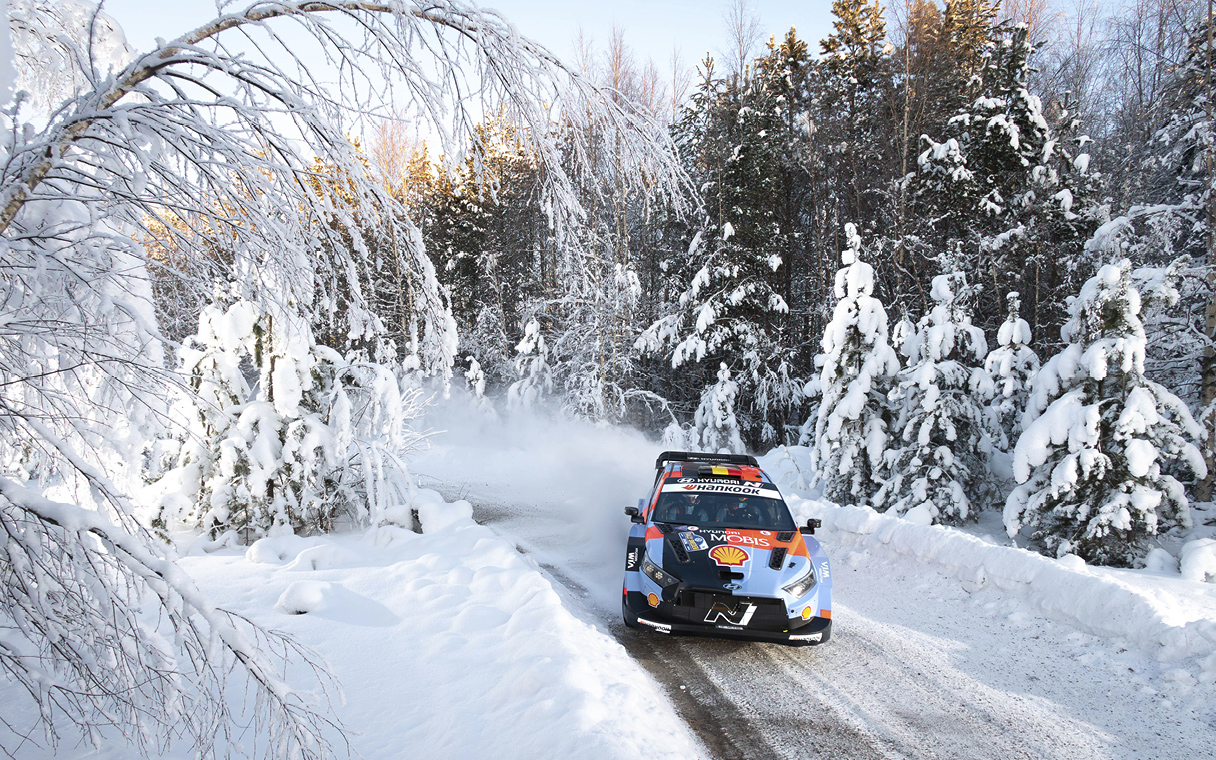
SS17—the second pass through Västervik—went Katsuta’s way for fastest time. And strategy started to show: Lappi saved his stud-ded tires for the Power Stage, and with Lappi managing the rubber, Fourmaux capitalized—erasing the nine-second deficit and moving up into fifth overall. In WRC2, Korhonen still held the lead, but Suninen trimmed the gap to 11.2 seconds.
Neuville grabbed five points on the Power Stage in an attempt to limit the damage. Video: WRC (http://www.wrc.com)
SS18 was the finale and the Power Stage, reusing Thursday’s 10.23 km Umeå test. Neuville was first onto the stage for the last run, and Evans closed the deal with his first win of the season. Katsuta chased hard but couldn’t claw back the 14-second shortfall. Pajari locked down the final podium spot. And with Solberg missing the rostrum, Evans walked out of Sweden as the new championship points leader.
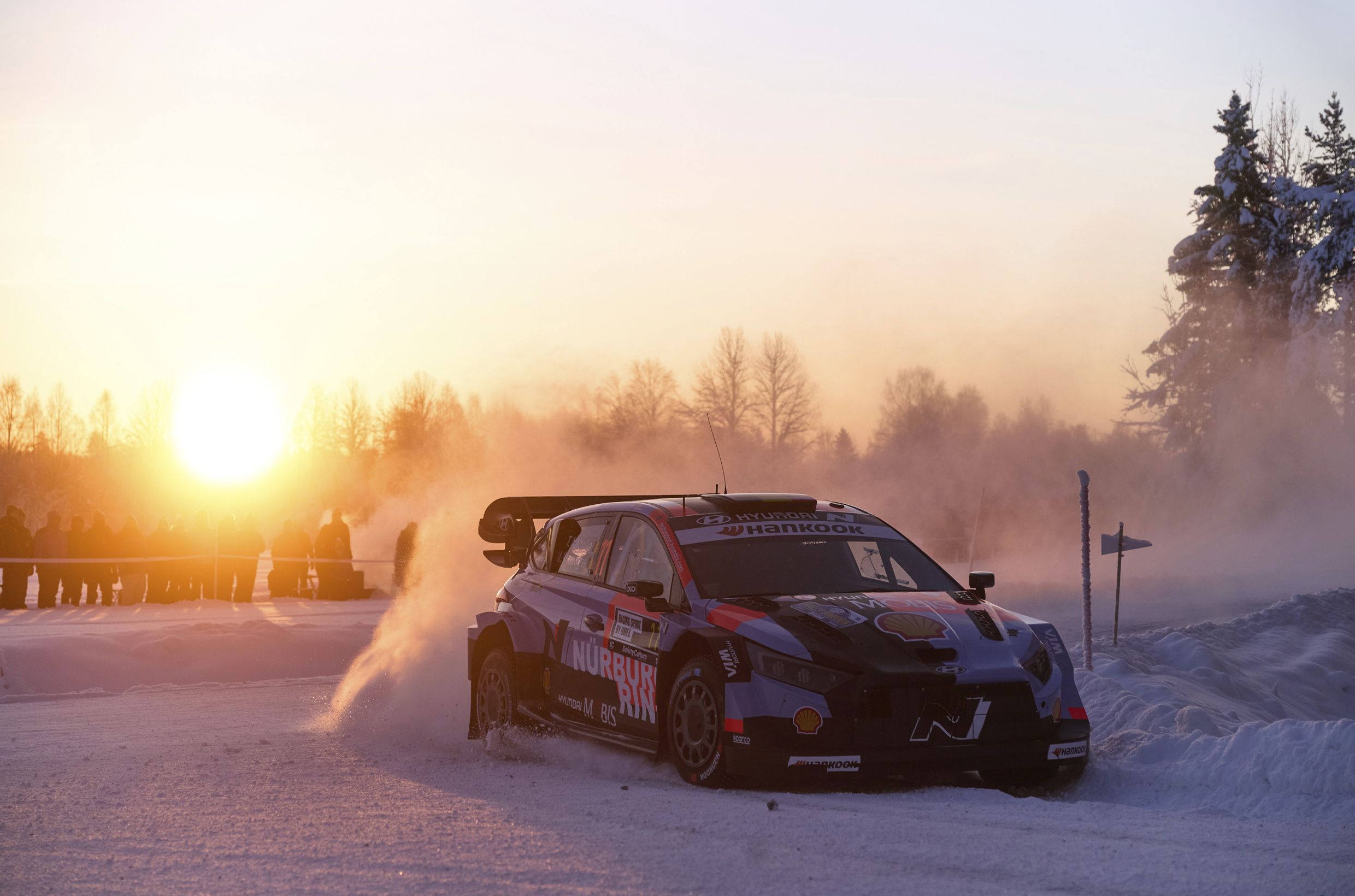
Hyundai’s final tally: Fourmaux fifth, Lappi sixth, Neuville seventh. Fourmaux banked one point on Super Sunday, and Neuville salvaged five with his Power Stage punch. M-Sport’s Armstrong and McErlean finished eighth and ninth, and Korhonen—tenth overall—took the WRC2 win.
Next up is Round 3, March 12–15, with Neuville, Fourmaux, and Lappi back in the Hyundai lineup. The Safari Rally in Kenya is its own kind of punishment test—blazing sun, sud-den weather swings, and terrain that can break cars and confidence in the same corner. This year, the traditional Nairobi stage is gone, and the rally begins out of Naivasha.
By Soo-jin Lee
In 1991, Lee’s passion for cars led him to enthusiastically write letters to the newly launched Korean car magazine <Car Vision>. This unexpected connection led him to start his career as an automotive journalist. He has served as editor and editorial board member for <Car Vision> and <Car Life>, and now works as an automotive critic. While eagerly covering the latest trends like electric vehicles, connected cars, and autonomous driving technology, he is also a car enthusiast who secretly hopes that the smell of gasoline engines will never disappear.