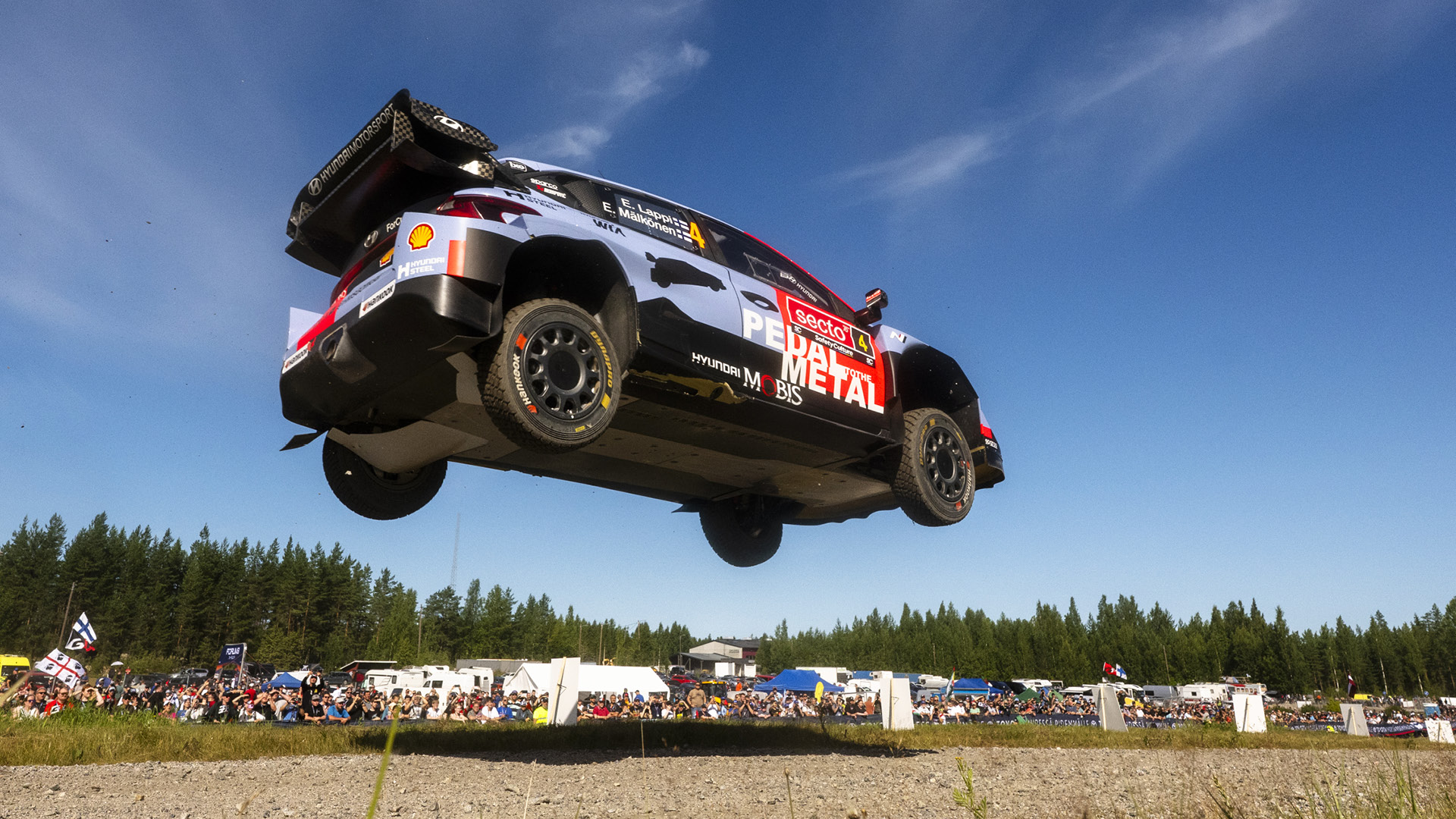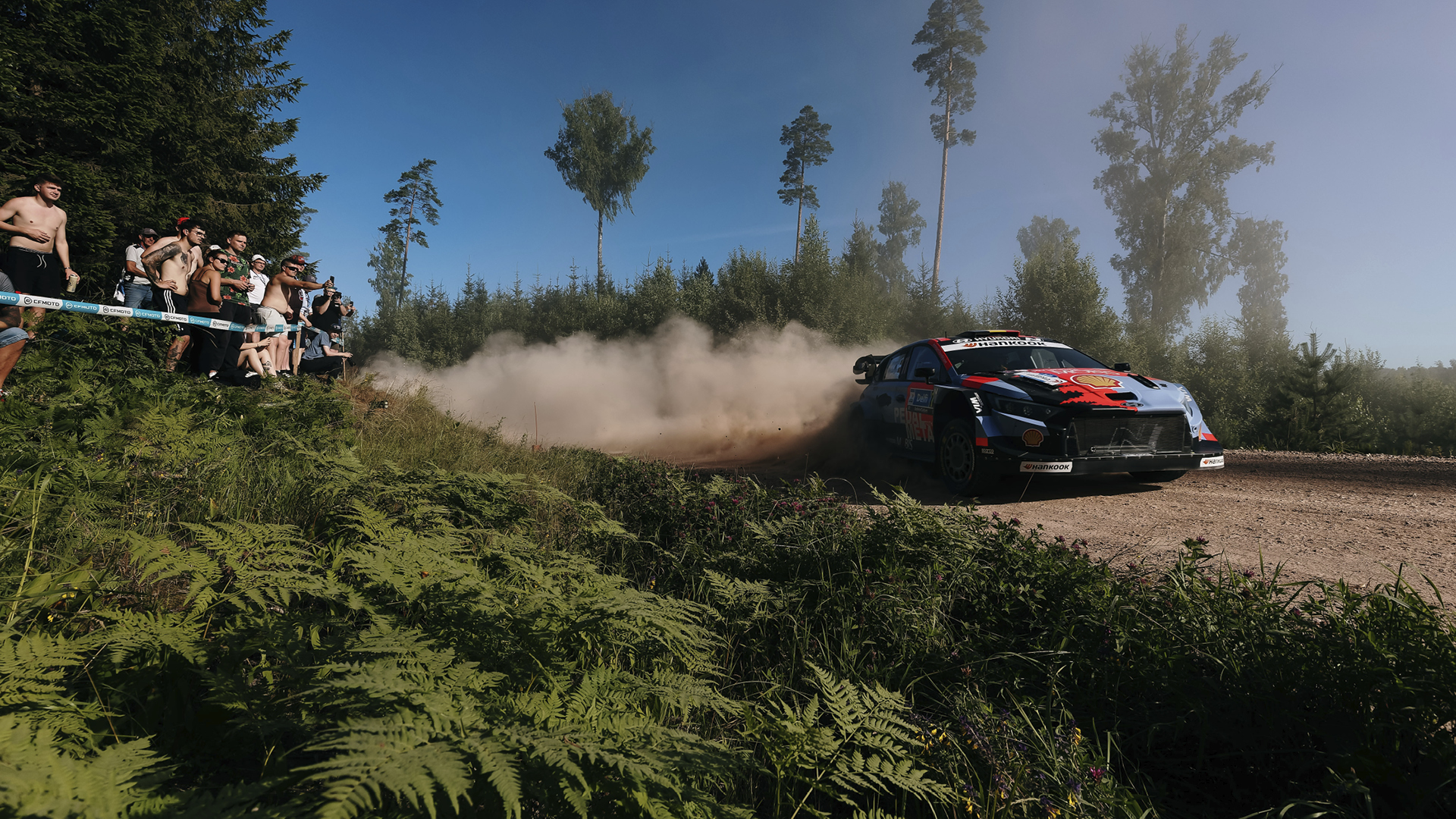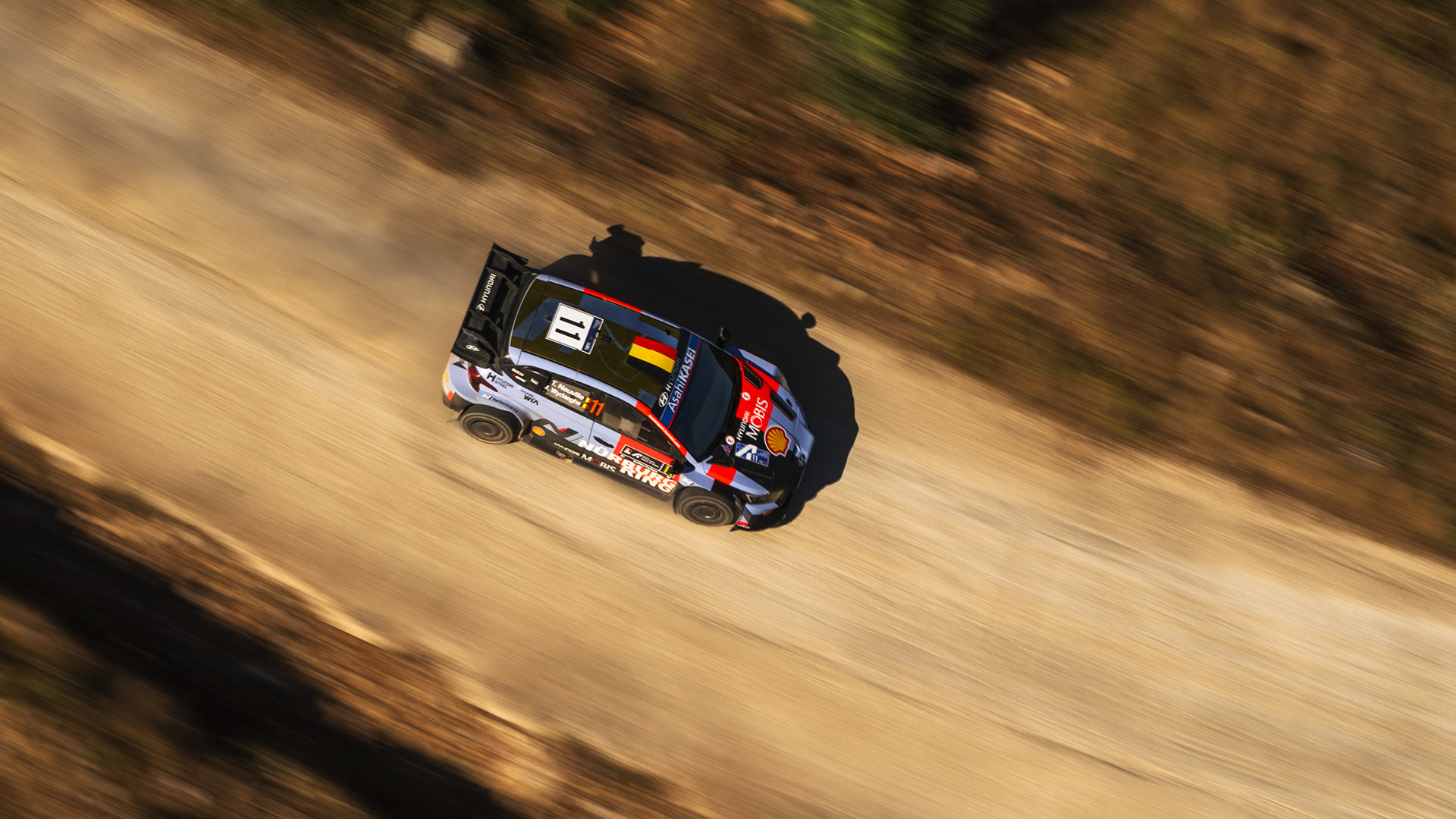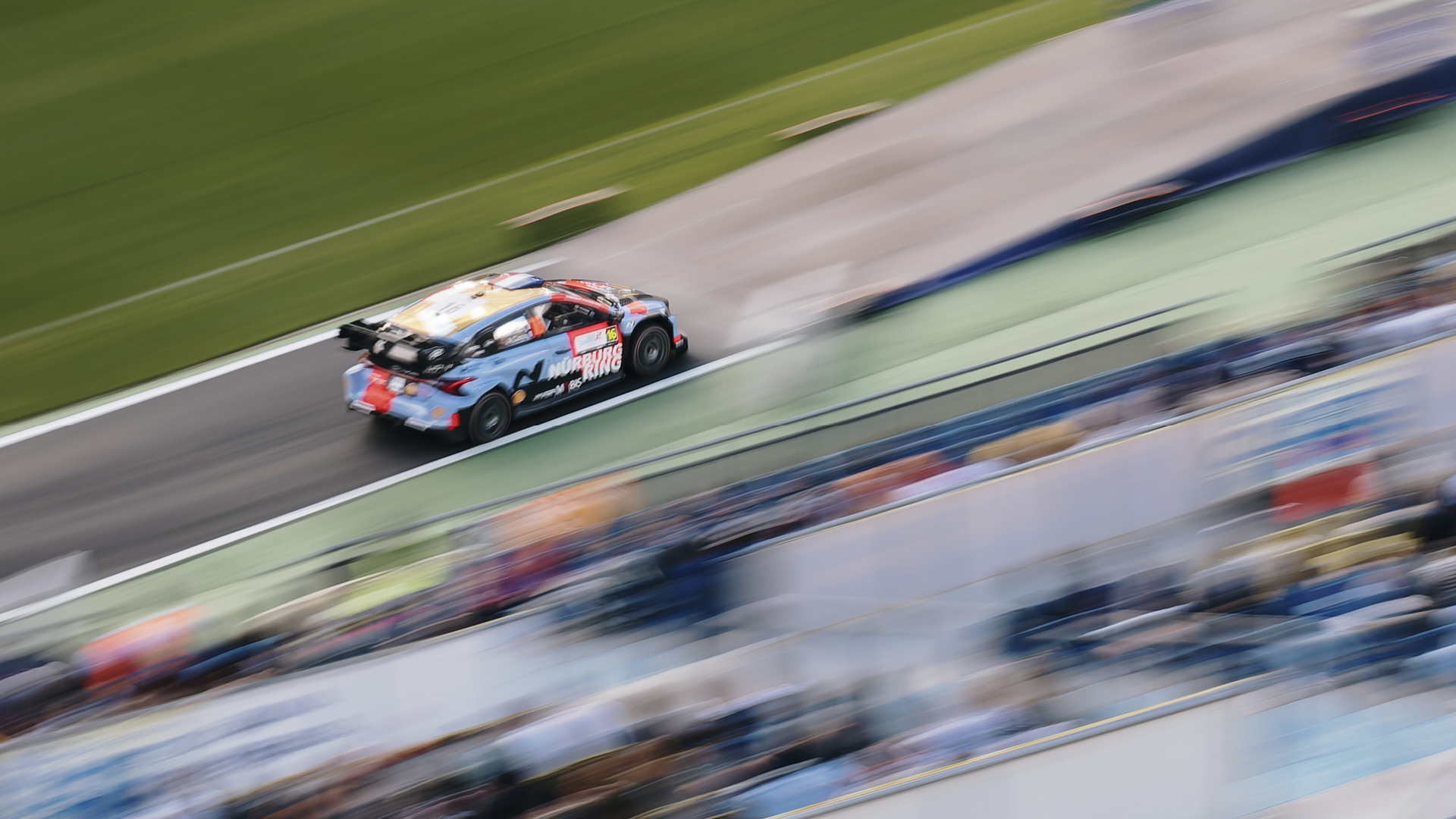
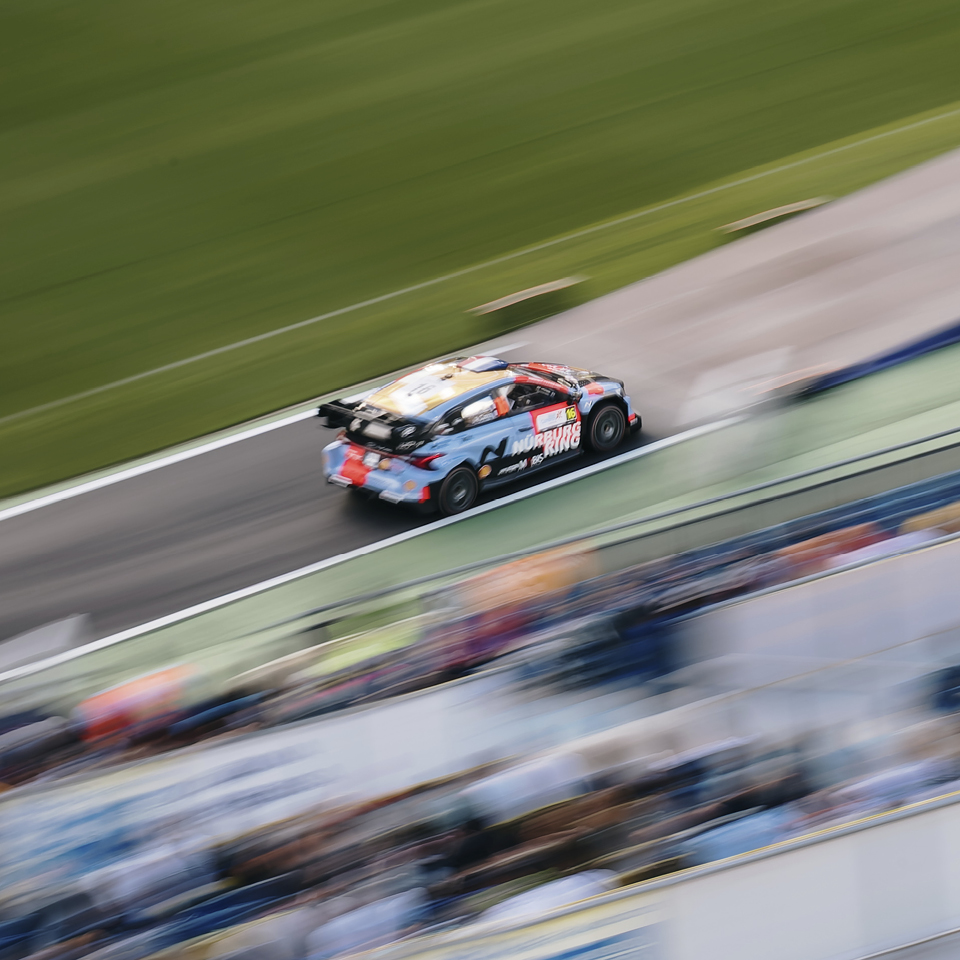
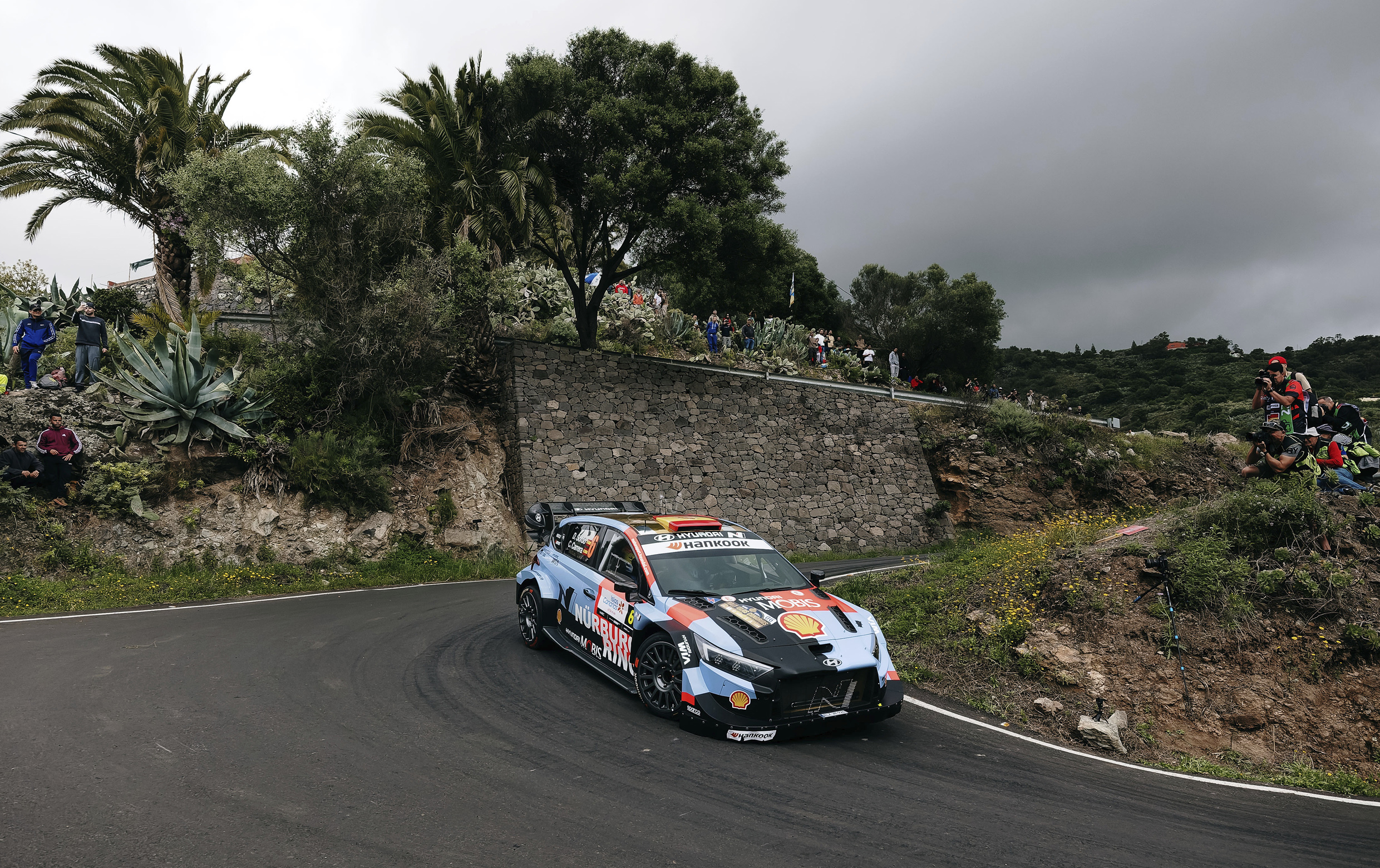
WRC Round 5, Rally Islas Canarias, is a beautiful—and brutally precise—tarmac event that joined the WRC calendar last season. The Canary Islands (Islas Canarias), a Spanish territory off the northwest coast of Africa, are a tourist magnet for a reason: towering volcanic craters, lava plains, desert-like stretches, dense forests—terrain and climate can change dramatically with elevation. The rally uses that variety, laying stages from the coastal lowlands near Las Palmas to mountain roads climbing above 1,000 meters.
Rally Islas Canarias began in 1977 under its original name, Rally El Corte Inglés. When it became part of the European Rally Championship (ERC) in the 1990s, it adopted the Rally Islas Canarias name—and since last year, it has entered a new era as a full WRC round.
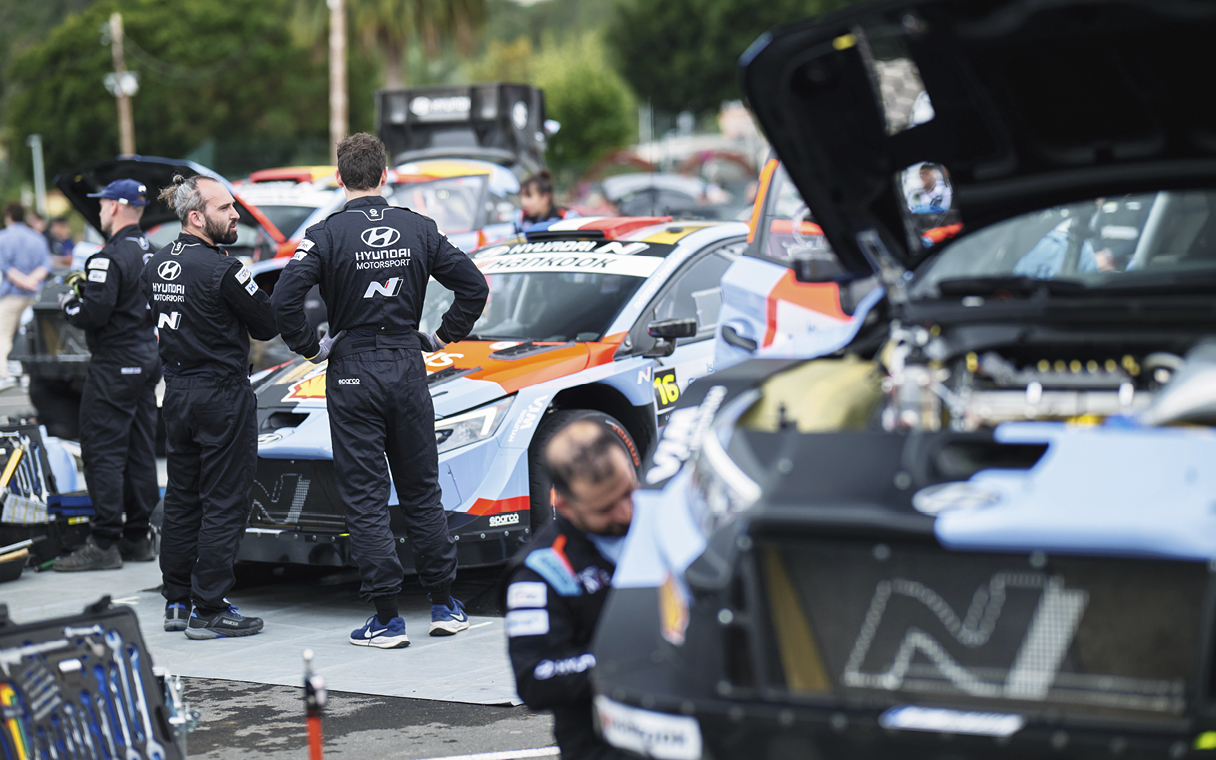
Hyundai arrived in the Canaries with something to prove after letting a Croatia win slip away at the last possible moment. The team kept its core lineup—Thierry Neuville and Adrien Fourmaux—and ad-ded a major storyline: Dani Sordo returning to Rally1 duty to handle the third car.
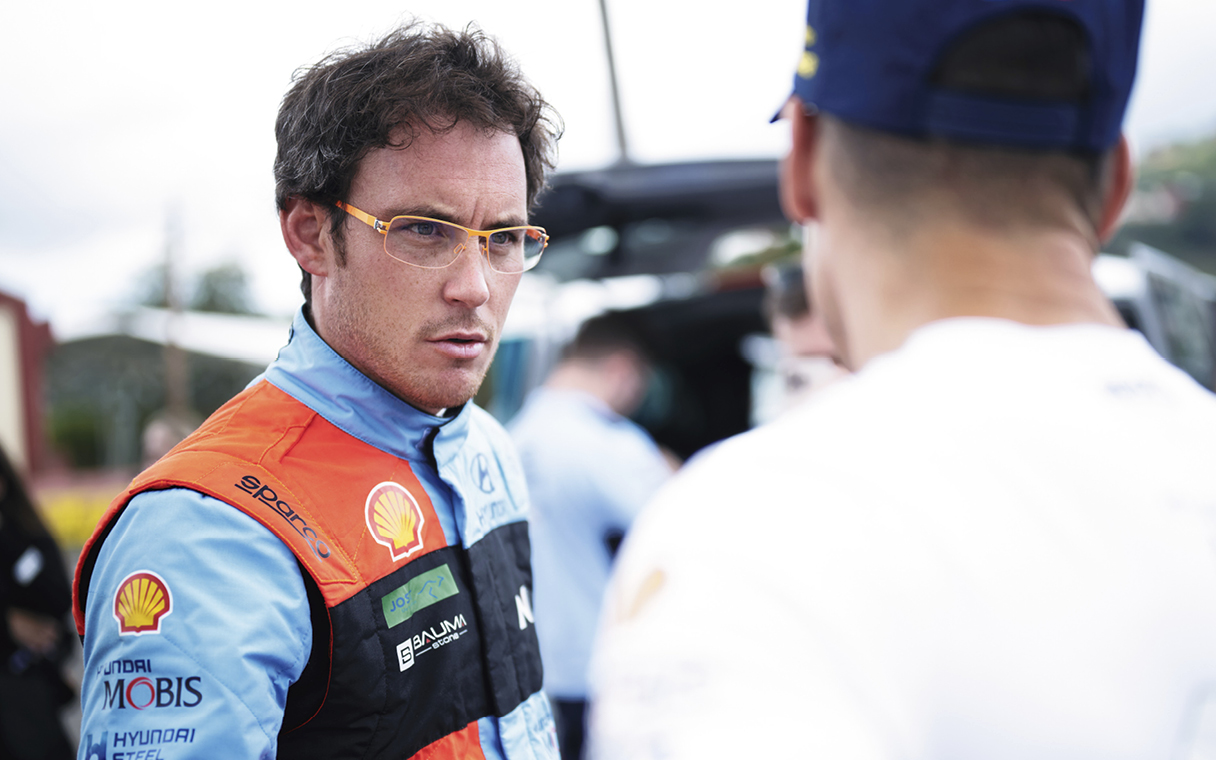
Neuville’s Croatia hangover was still very real. He’d carried the rally from Friday afternoon all the way to the final stage—then watched the win evaporate in one split-second mistake. Heading into the Canaries, he made his intent clear: "Rally Islas Canarias is probably the most straightforward tarmac event of the season in terms of road conditions – it’s the cleanest event, with the highest grip conditions of any tarmac rally we do. The roads have a very circuit-like character set in the middle of a beautiful landscape, but they are very demanding and technical when it comes to pace notes. That is one of the main challenges here: making good pace notes that you can trust, because the corners are so long. We have worked hard on the car, trying to make it more precise while also improving the balance. We don't know yet what we will be able to achieve in terms of results, but if everyone gives their absolute best and we bring the car home, we can be satisfied. Of course we want to deliver a strong result for the team after last weekend, and we will push hard to make everyone proud again."
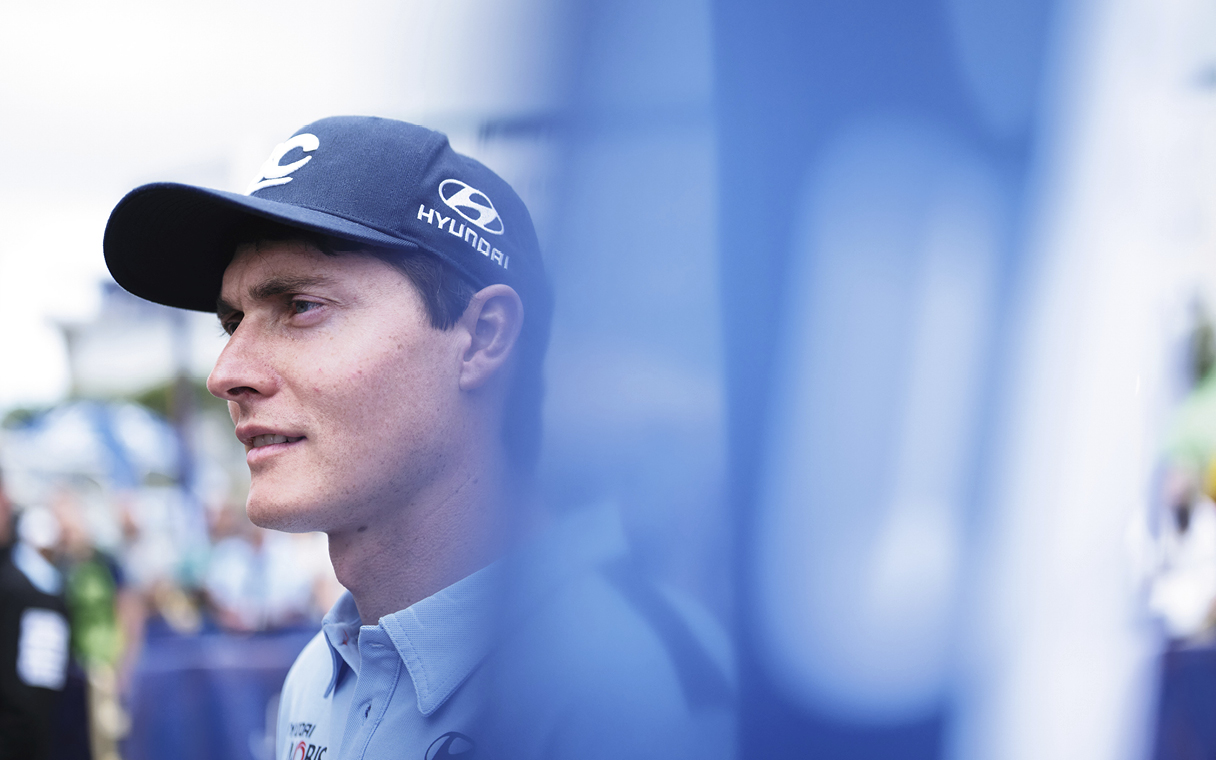
Fourmaux brought Hyundai its first podium of the season in Kenya, then took a hard hit in Croatia with a retirement. But the Canaries have consistently been one of his stronger venues. He won here when it ran as the 2022 ERC season finale, and last year—despite Hyundai not quite matching Toyota’s outright pace—he still delivered the best result inside the team. Fourmaux framed this one like a driver who knows the margin is basically zero:
“Rally Islas Canarias will be very different from the tarmac rallies we have had so far this year. We don't expect any dirt on the road – it will be very clean, very high grip – and that means it will demand a big push in terms of both car and driver performance. Every second will be difficult to optimise, and the pacenotes will be a major challenge too; we really need to be perfect to get the maximum out of the car. The weather is another factor that can make this rally quite tricky. Being close to the sea can offer nice weather conditions, but up in the mountains the rain can roll in and bring heavy fog with it. That can make it feel like a completely different rally depending on whether you are at sea level or in the mountains. Our focus will be on optimising everything to deliver the best possible result."
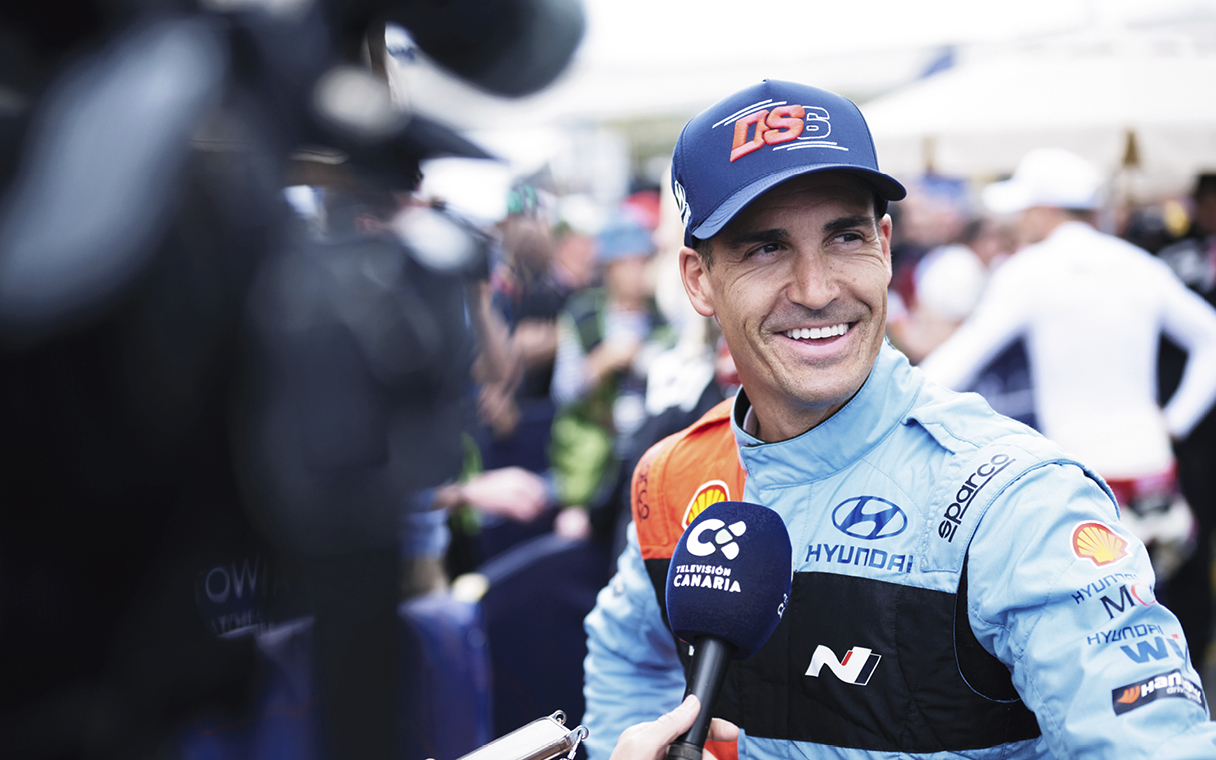
For Spanish fans, Dani Sordo’s return was a headline in itself. A longtime Hyundai fixture, he lost his seat when Fourmaux stepped into the full-season role—making this his first Rally1 start since Greece 2024, nearly two years away from the top class. To rebuild rhythm and get acclimated to the updated car, Sordo aimed to run the local Rally Villa de Santa Brígida, but a storm cancellation forced a pivot. Instead, he warmed up earlier this month at Rallye La Llana on mainland Spain.
Sordo has always been a tarmac threat, and he didn’t play it coy: “I am really excited to be back in the Hyundai i20 N Rally1 car and especially looking forward to being in Canarias. My target is to have a good setup and fight for the victory or a podium — when I start a rally I always aim for the win, and being in Spain on tarmac makes that feel very achievable. I think we found a good setup and balance with the car at Rallye La Llana, and it was great to work in the Rally1 car with Cándido again.”
Sordo remembered Rally Islas Canarias as a complex event where it’s hard to lock in a consistent driving feel. Video: WRC (http://www.wrc.com)
Sordo also pointed to the Canaries’ sneaky difficulty: “I do remember is that finding a good feeling was difficult, because the island is quite complicated; you can have rain on one stage and completely dry conditions on the next.”
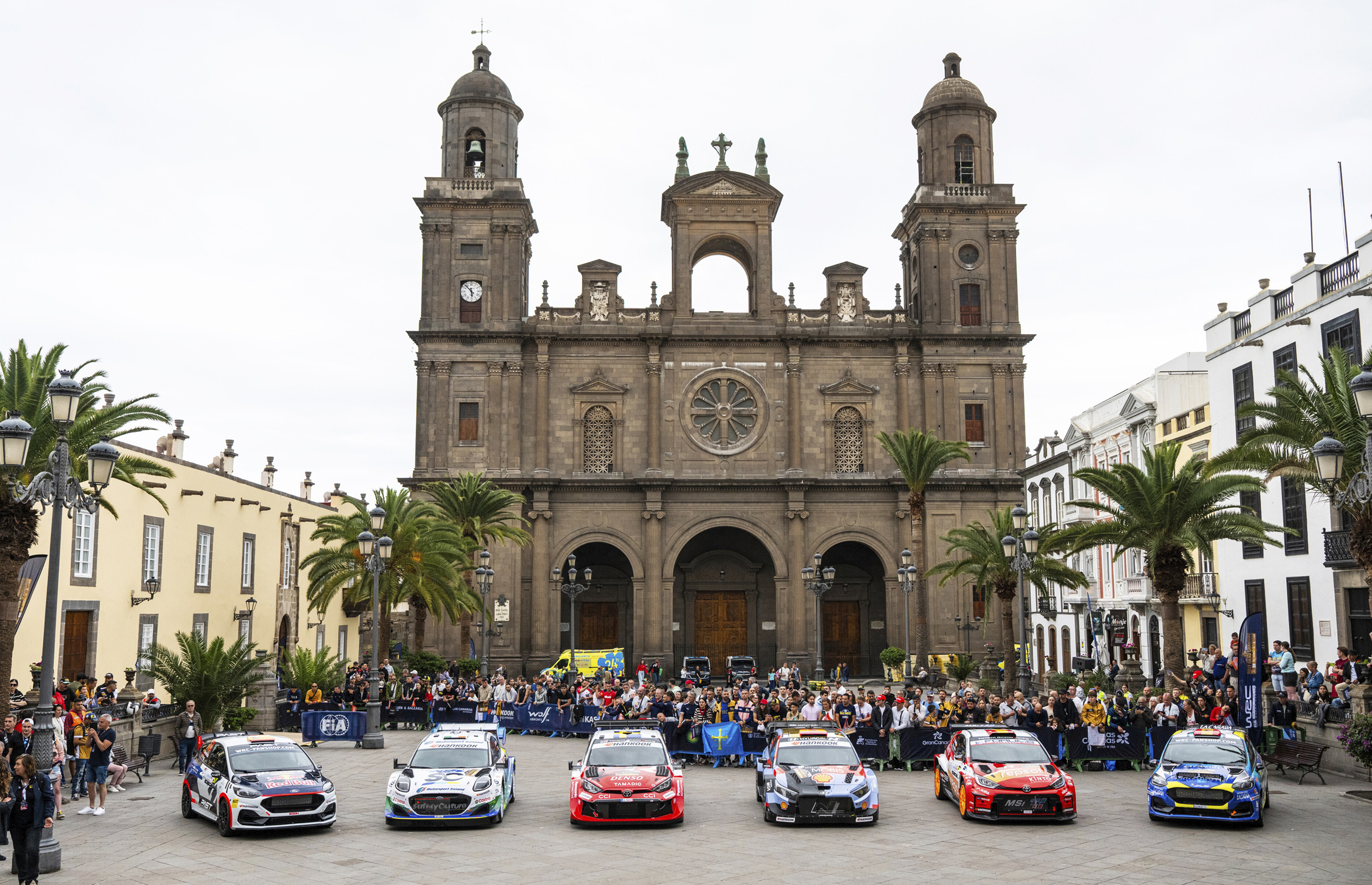
Toyota expanded back to a five-car effort after Croatia. Part-time ace Sébastien Ogier returned alongside Elfyn Evans, Oliver Solberg, Takamoto Katsuta, and second-team entry Sami Pajari. Katsuta’s Croatia win made history as the first for a Japanese driver, but Toyota’s weekend wasn’t as tidy as the trophy photo—several of its nominated manufacturers’ points scorers ended up retiring. Even so, the paddock remembered one key detail: Toyota was blisteringly quick here last year, and everyone knew the baseline they’d be chasing.
M-Sport Ford entered Josh McErlean and Jon Armstrong. McErlean arrived with unfinished business after retiring on the final day last year. Armstrong was making his first Rally1 start, but not his first time on these roads—he ran the event in the ERC era with Rally2 machinery, finished eighth in 2024, and looked sharper than McErlean in Croatia.
Not all tarmac rallies drive the same, and Rally Islas Canarias sits at the “this feels like a circuit” end of the spectrum. The asphalt is clean, the grip is high, and the corners come at you non-stop—tight, technical, and stacked so closely together that one lazy line or one late brake can wreck a whole split. The job is maintaining speed while managing tires that wear quickly under constant lateral load.
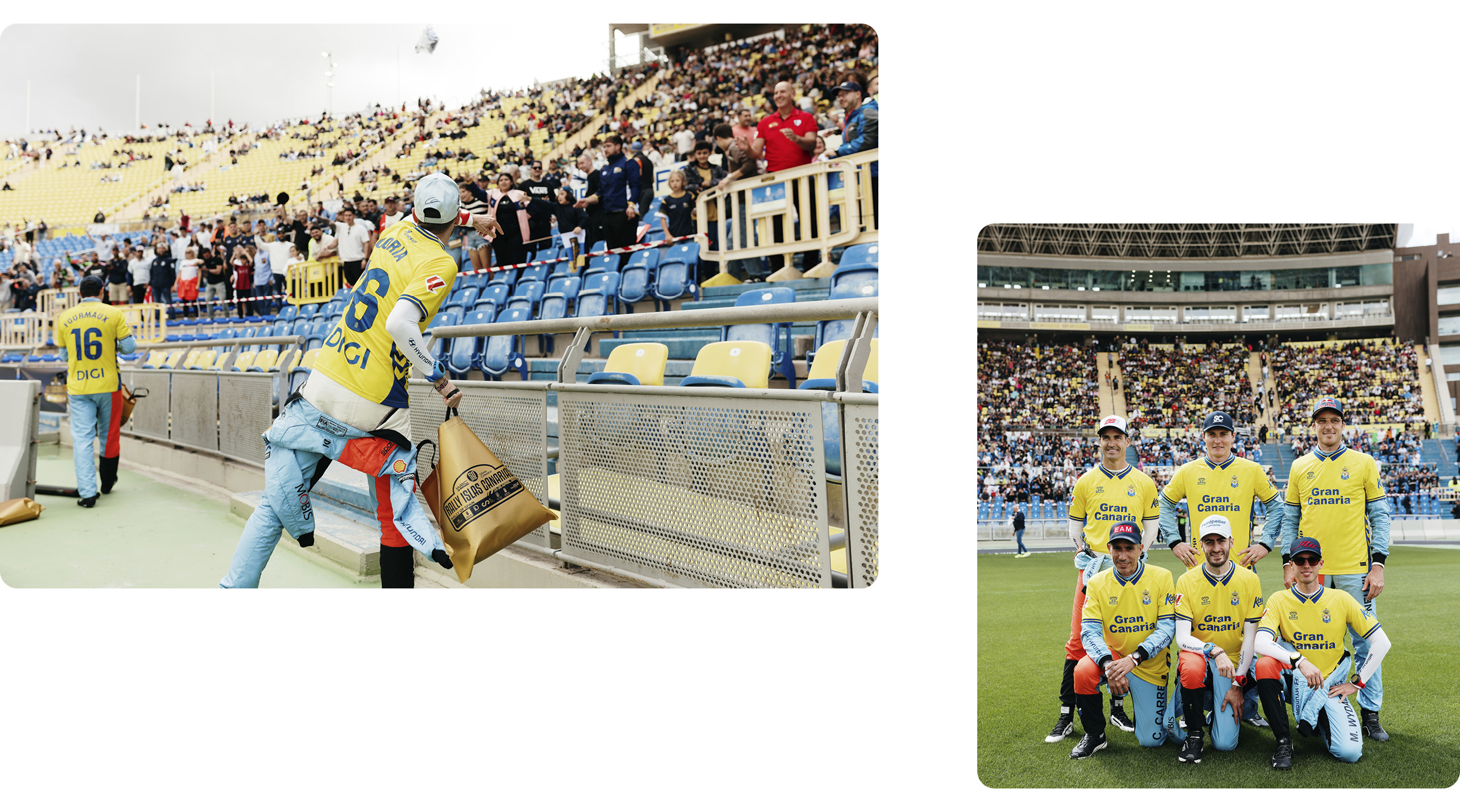
With the event hitting its 50th anniversary, organizers leaned into a “Golden Edition” celebration and ad-ded more fan-facing moments—most notably a Super Special Stage inside Gran Canaria Stadium to boost capacity and give the weekend a proper festival centerpiece.
But the anniversary plan ran into a very real curveball. In early March, a powerful storm battered the islands—big surf pounding the coast and intense rainfall flooding low-lying areas. The rally had to adapt: damaged stages were shortened or flipped to run in reverse, and a planned Saturday city stage was scrapped outright due to coastal flooding. To balance the schedule, organizers ad-ded an extra run inside Gran Canaria Stadium.
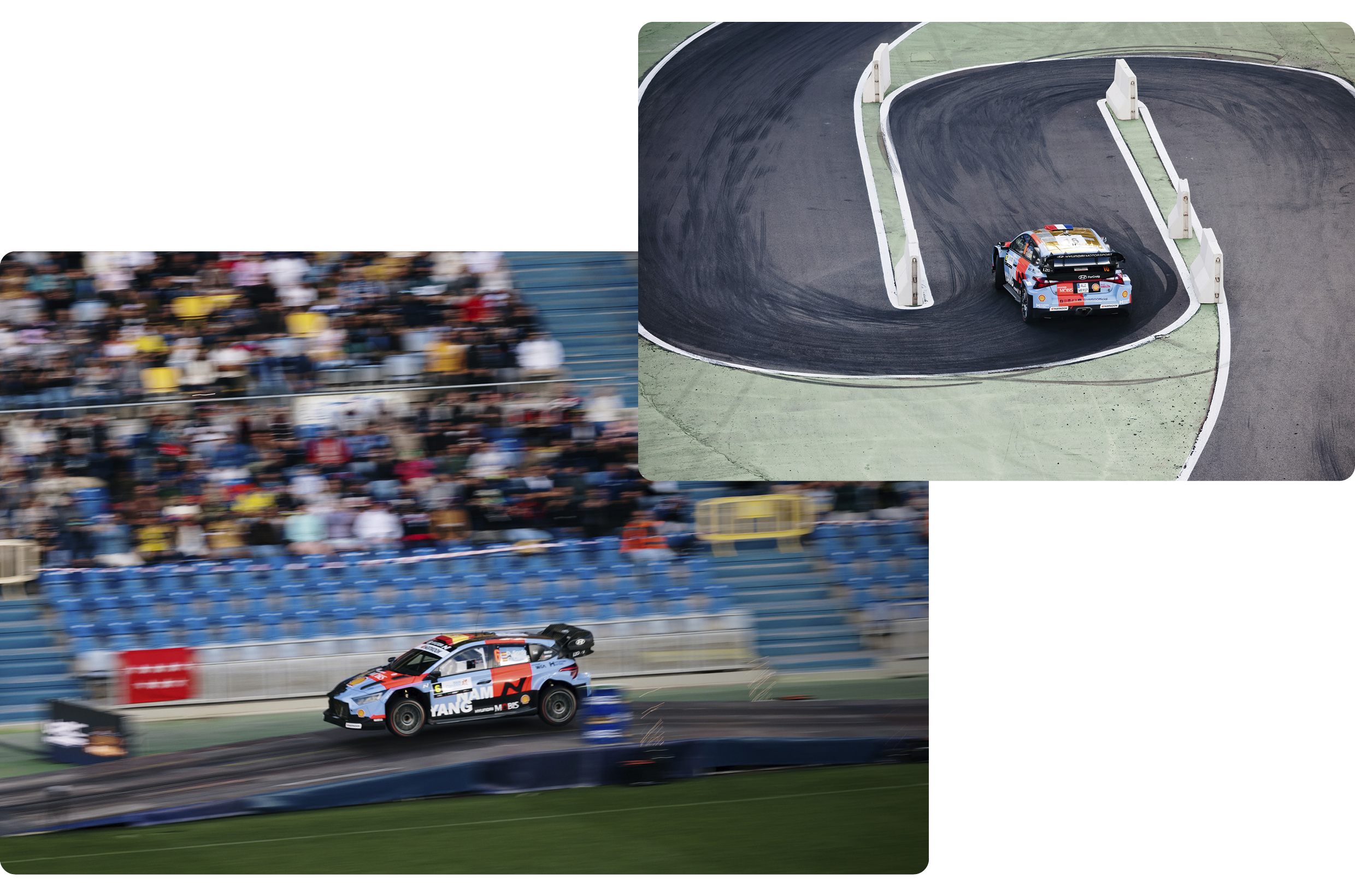
The rally’s first stage kicked off on a purpose-built course inside Gran Canaria Stadium. Video: WRC (http://www.wrc.com)
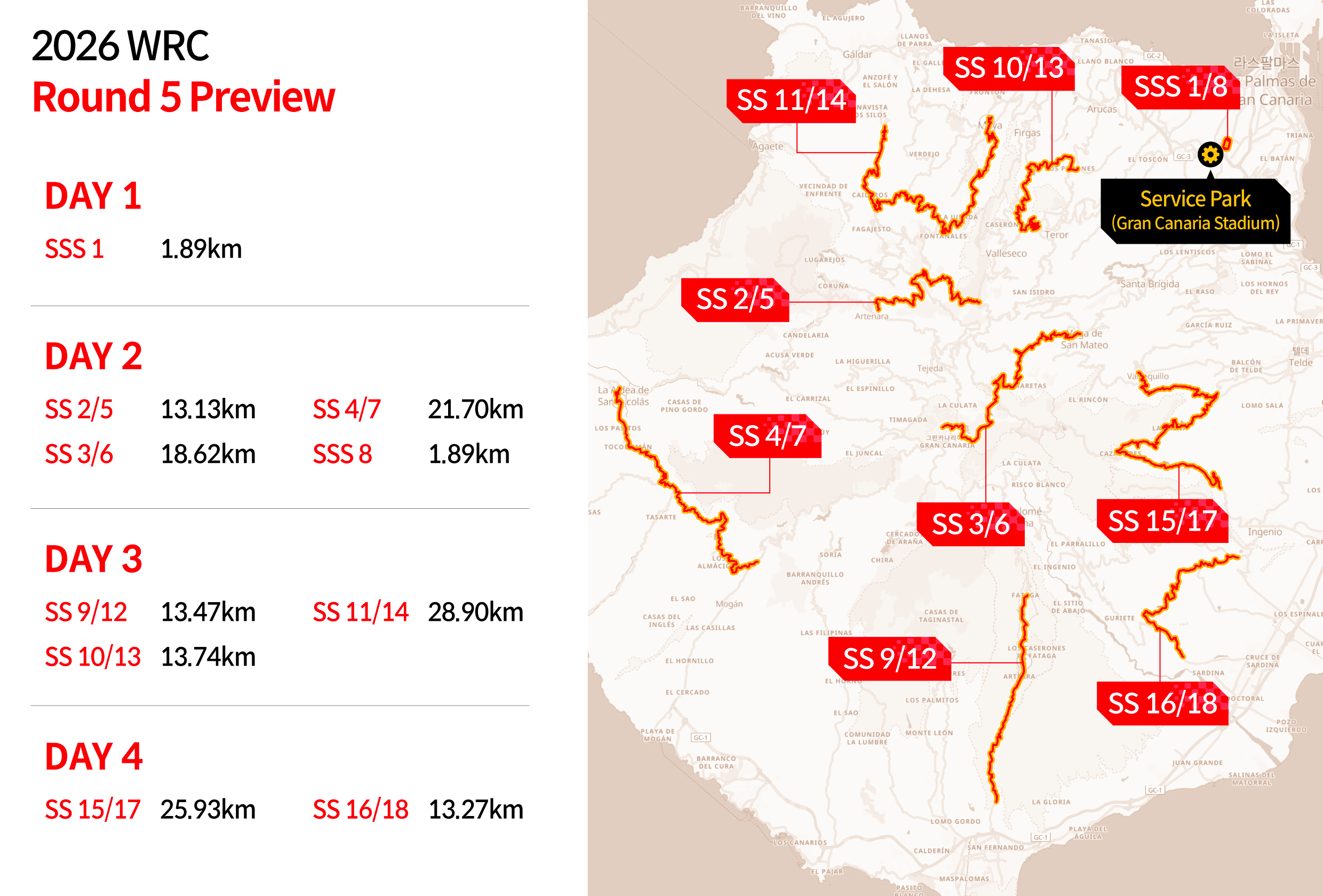
On Thursday, April 23, the opener—SSS1—lit up inside Gran Canaria Stadium in Las Palmas. The 1.89-km track laid out on the stadium floor ran as a head-to-head Super Special: two cars launched from opposite sides and ran three laps.
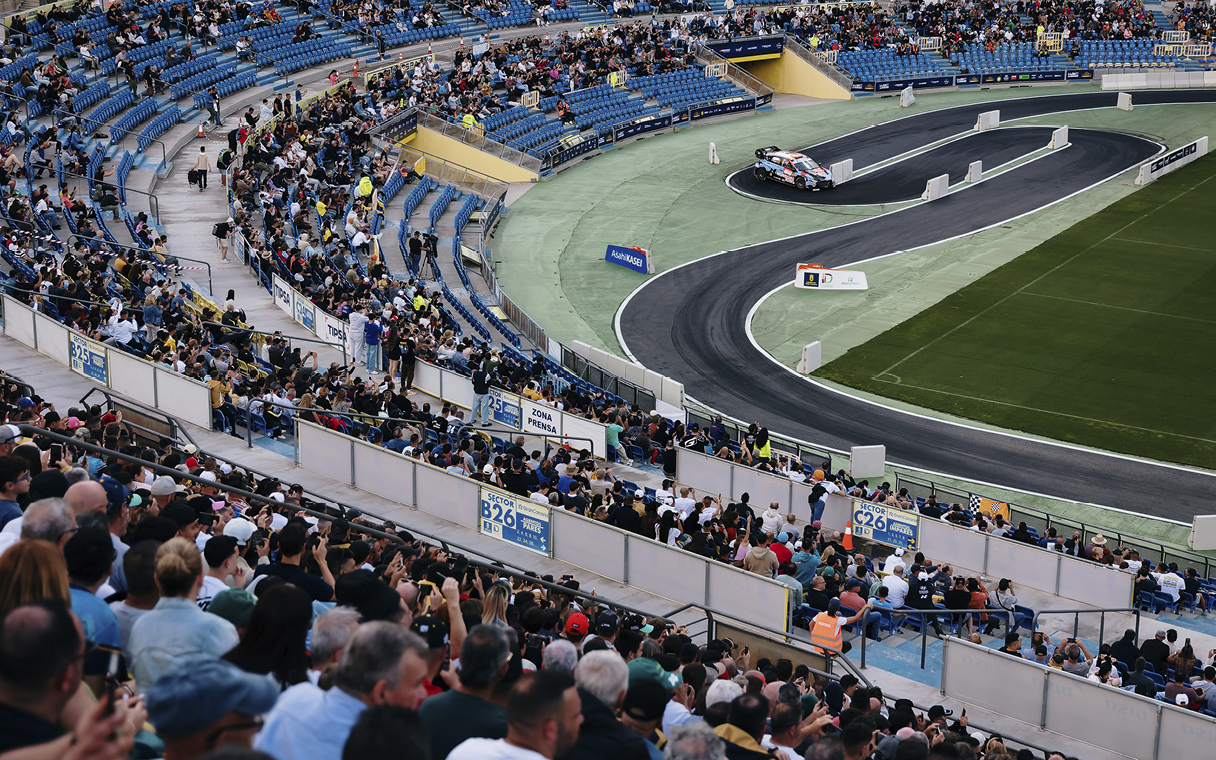
It looked simple at a glance, but it didn’t drive that way. Tight hairpins, concrete barriers, and little “gotcha” sections kept the pressure on non-stop—exactly the kind of place that punishes a tiny lapse with a big time loss. Katsuta went quickest, followed by Pajari, Daprà, Sordo, McErlean, Fourmaux, Ogier, and Neuville. The surprise near the top was WRC2’s Roberto Daprà in a Škoda, who popped up third-fastest and instantly grabbed attention.
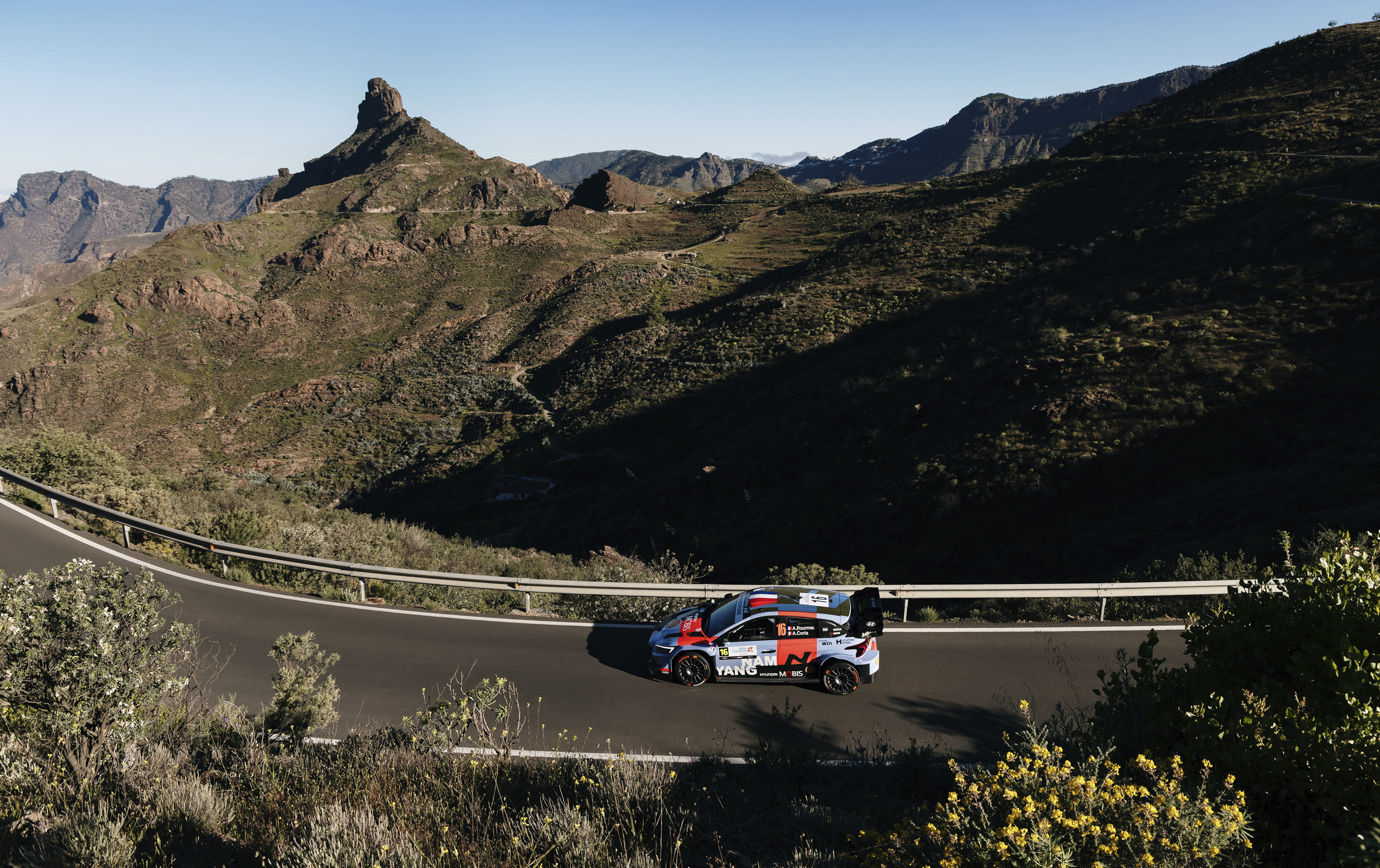
Friday, April 24 shifted into the rally’s real rhythm: two runs each of Valleseco–Artenara (13.13 km), Tejeda–San Mateo, and Mogán–La Aldea, then back to the stadium after dark for another Super Special. But the day took an unexpected hit early—SS3 (the morning run) was cancelled for safety after too many illegally parked cars blocked access. Most crews rolled out carrying five hard tires (including the spare), betting on durability and consistency.
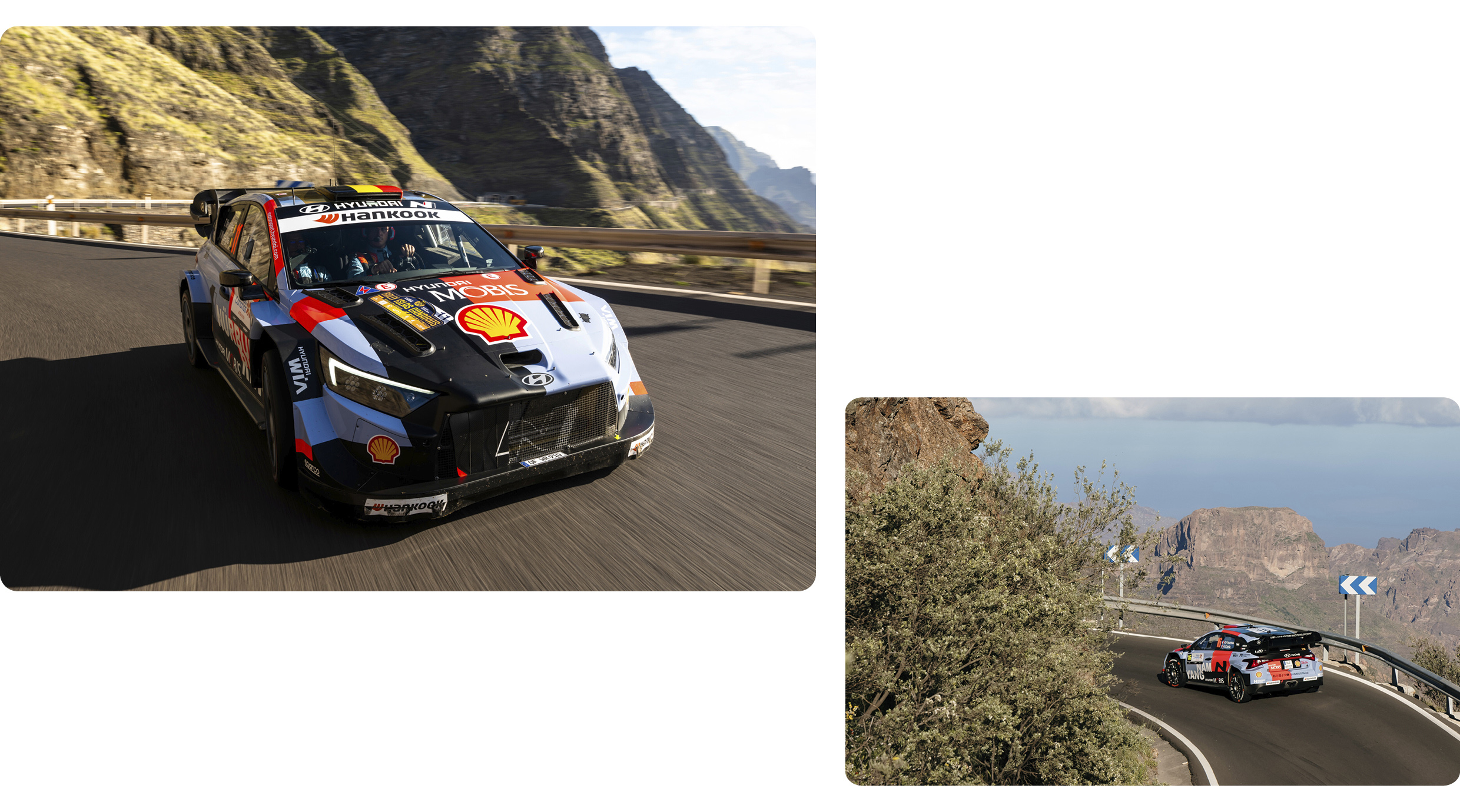
SS2 Valleseco–Artenara is classic “Canaries tarmac”: high-grip asphalt, tightly wound, and relentlessly technical. Past the 9 km hairpin, the road pinches narrow and the downhill lets the speeds climb—while a string of blind corners makes accurate, confident pace notes absolutely mandatory.
Ogier nailed it and jumped into the overall lead, with Solberg, Evans, and Pajari behind. For Hyundai, Sordo was the quickest of the trio—an eye-opening pace considering he’s still recalibrating to the latest car. He was 7.6 seconds off the lead, but the tone sounded positive: “It was really nice stage and I enjoy it a lot. I think we can improve the car and I can improve a little bit. Some corners were a little bit dirty but it was ok. The team is working really hard and maybe we are not fighting at the minute, but I'm happy the team is working hard."
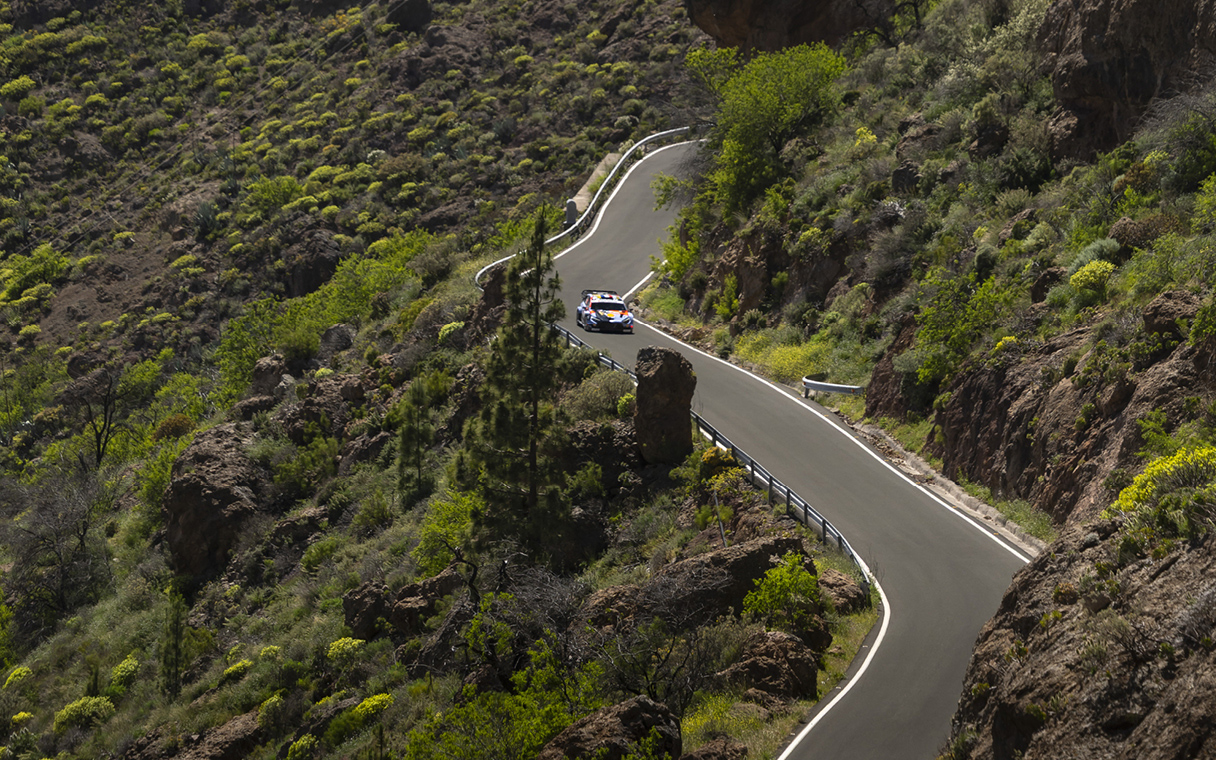
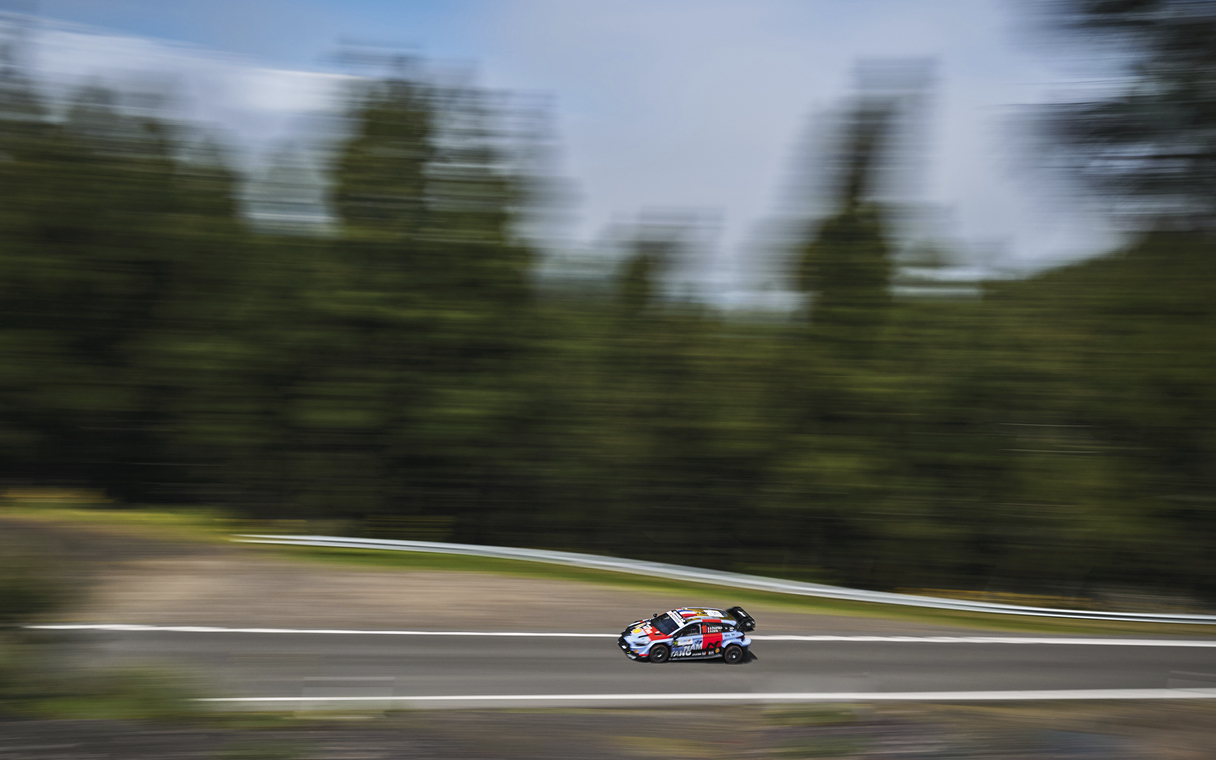
SS4 Mogán–La Aldea is the kind of stage drivers remember—21.7 km, long and technical, run in the reverse direction compared to last year. After about 4 km it starts climbing hard, then transitions into a downhill packed with medium- and high-speed corners. With cliffs tight to the road, a single mistake can end your rally. It’s not just technical—it’s psychological, and it demands focus you can hold onto for more than 20 km.
Ogier went fastest again. Pajari climbed to second overall, with Evans next. Sordo was once again Hyundai’s quickest, but this time he was 12 seconds off the stage leader. Armstrong, meanwhile, struggled early to get the car under control—then compounded it by taking the wrong road and losing a chunk of time.
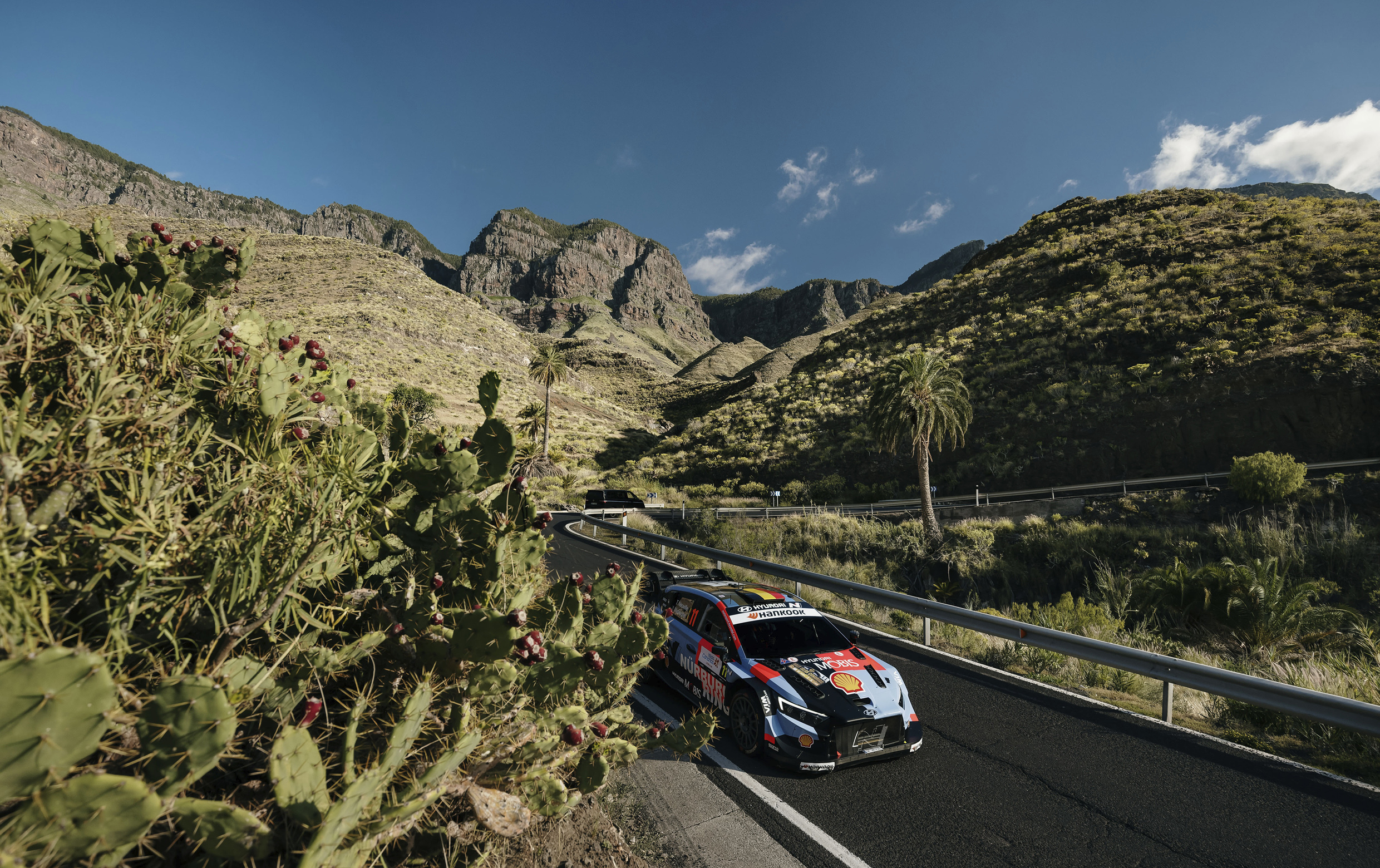
Back on the repeated opener for SS5, Solberg went fastest and jumped past Pajari into second overall. Neuville’s post-stage comments, though, captured Hyundai’s bigger issue: “The struggle is similar to before. I tried to give it a go but I ended up finishing with massive understeer. For sure you lose time but 10 seconds is a lot."
The Tejeda–San Mateo stage (SS6), cancelled in the morning, returned in the afternoon once officials cleared more than 100 illegally parked cars. It cuts across the island’s interior and forces repeated hard braking and sharp acceleration on downhill sections. Keeping brake temps under control becomes a driver problem as much as a hardware problem—pedal work has to be disciplined.
Neuville kept experimenting, searching for ways to raise his pace. Video: WRC (http://www.wrc.com)
Ogier was fastest again and continued to stretch the gap. The margin between Ogier and Solberg stood at 6.6 seconds—and the broader pattern stayed intact. Toyota filled positions one through five, with Hyundai’s trio chasing behind. Neuville laid out the struggle in detail: “I cannot commit. The new pace notes, tricky corners, I don't know what the car will do. I was struggling in there. I was trying different driving styles but it is all the same.”
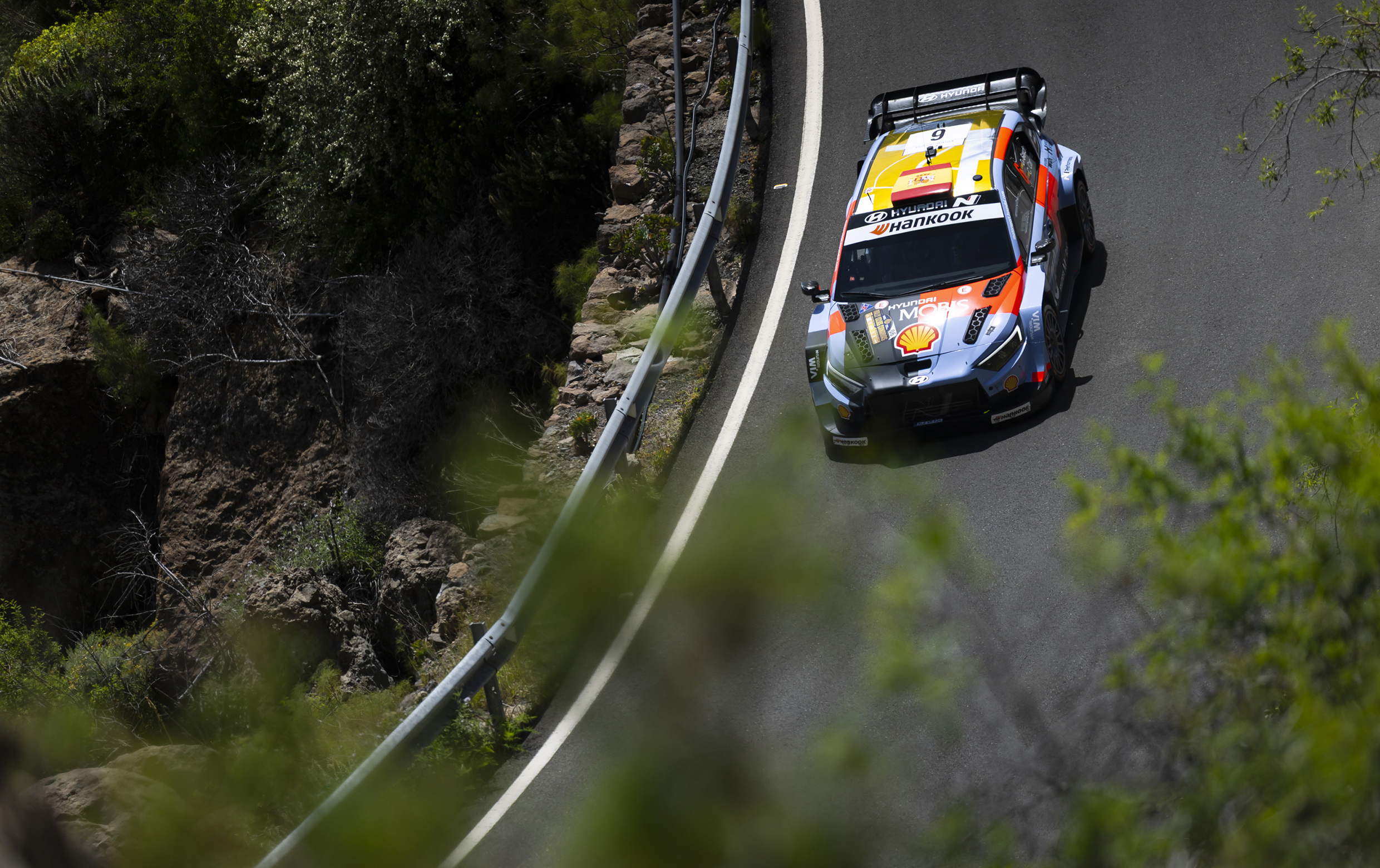
During the stage, Sordo had a close call as the car stepped out—then saved it. Video: WRC (http://www.wrc.com)
Ogier went fastest again on SS7, pushing his gap to Solberg out to 8.6 seconds. Hyundai’s quickest on the stage was Fourmaux, who pointed to a Canaries-specific tire challenge: “It is more the temperature of the tire in the stages that is hardest to manage than the wear. It forces us to be really smooth all the time.” Sordo, meanwhile, had a heart-in-mouth moment near a village section. “I touched the rear with the barrier. This stage is something amazing I can be here all the time. The stage is fantastic,” he explained afterward.
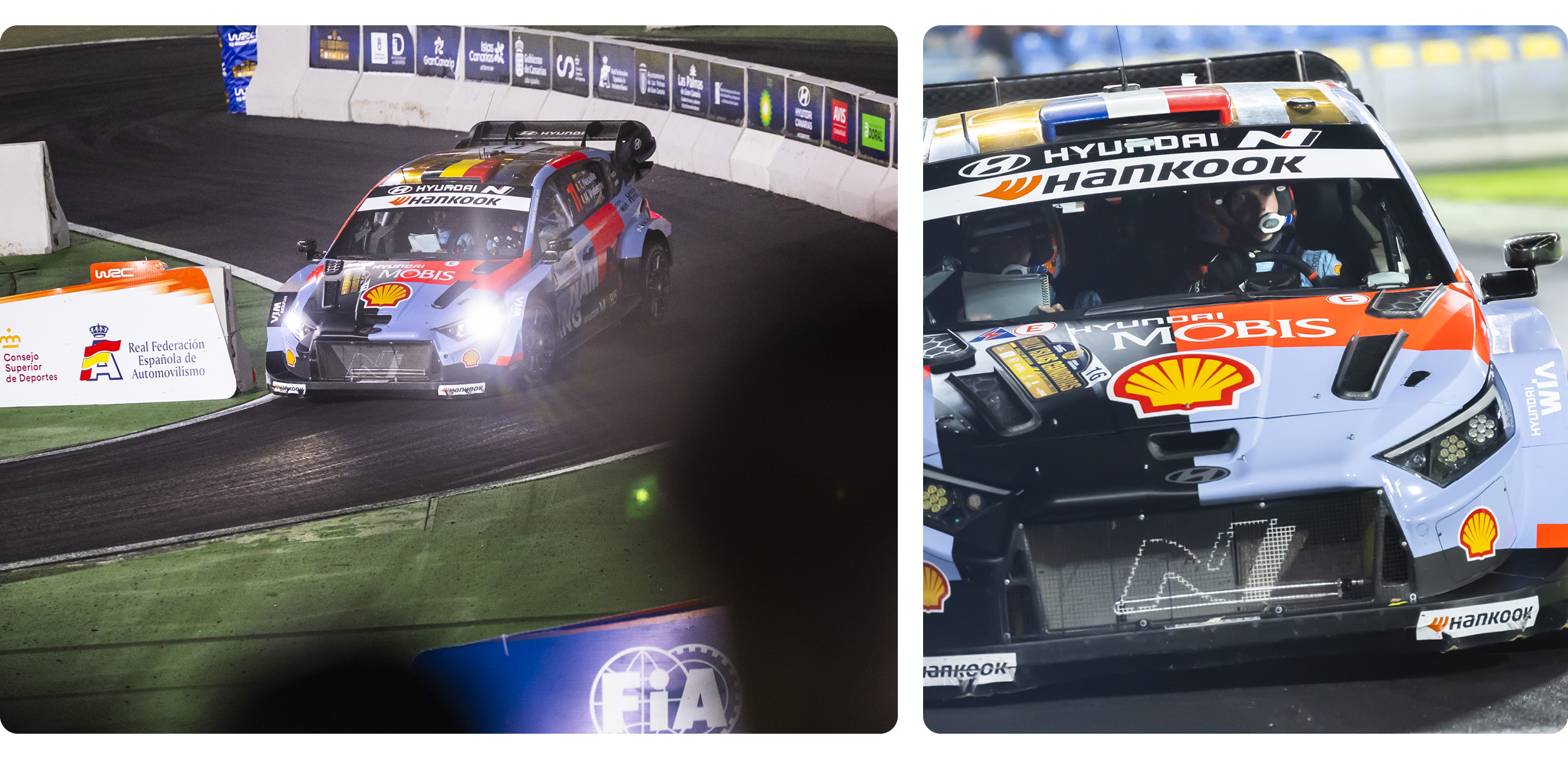
Friday wrapped where it started—under the lights inside Gran Canaria Stadium for SSS8. Same venue, same concrete walls inches from your mirrors, and the same “don’t blink” rhythm that makes a Super Special feel like a street fight in a football arena. Katsuta and Pajari ended the night dead even on the stopwatch, with Fourmaux slotting in third-fastest. The bigger picture didn’t change, though: Ogier carried the overall lead, and Toyota still had the top five positions locked down—Ogier, Solberg, Pajari, Evans, then Katsuta. Hyundai’s trio ran next in line with Sordo sixth, Fourmaux seventh, and Neuville eighth. McErlean held ninth, while WRC2 ace Yohan Rossel capped the top 10.
And if Toyota looked comfortable, Hyundai looked busy. By the end of the day, all three Hyundai drivers were basically saying the same thing in different ways: they still hadn’t found the car’s sweet spot. Fourmaux put it with the kind of blunt honesty drivers save for nights like this: “The car was better balanced, but still not as I would like. That’s just how it is We learned things in testing that didn’t work there but work here – or the other way around. It’s completely crazy, but that’s life.” Neuville, meanwhile, sounded like a guy who finally felt the front end talking back after a long day of silence: ““All three cars have tried different set-ups. I was struggling and couldn’t match my team-mates’ pace, so I made bigger changes for the last stage and it seemed to go in the right direction. It’s still far from perfect, but I was already able to carry more speed through the corners.”
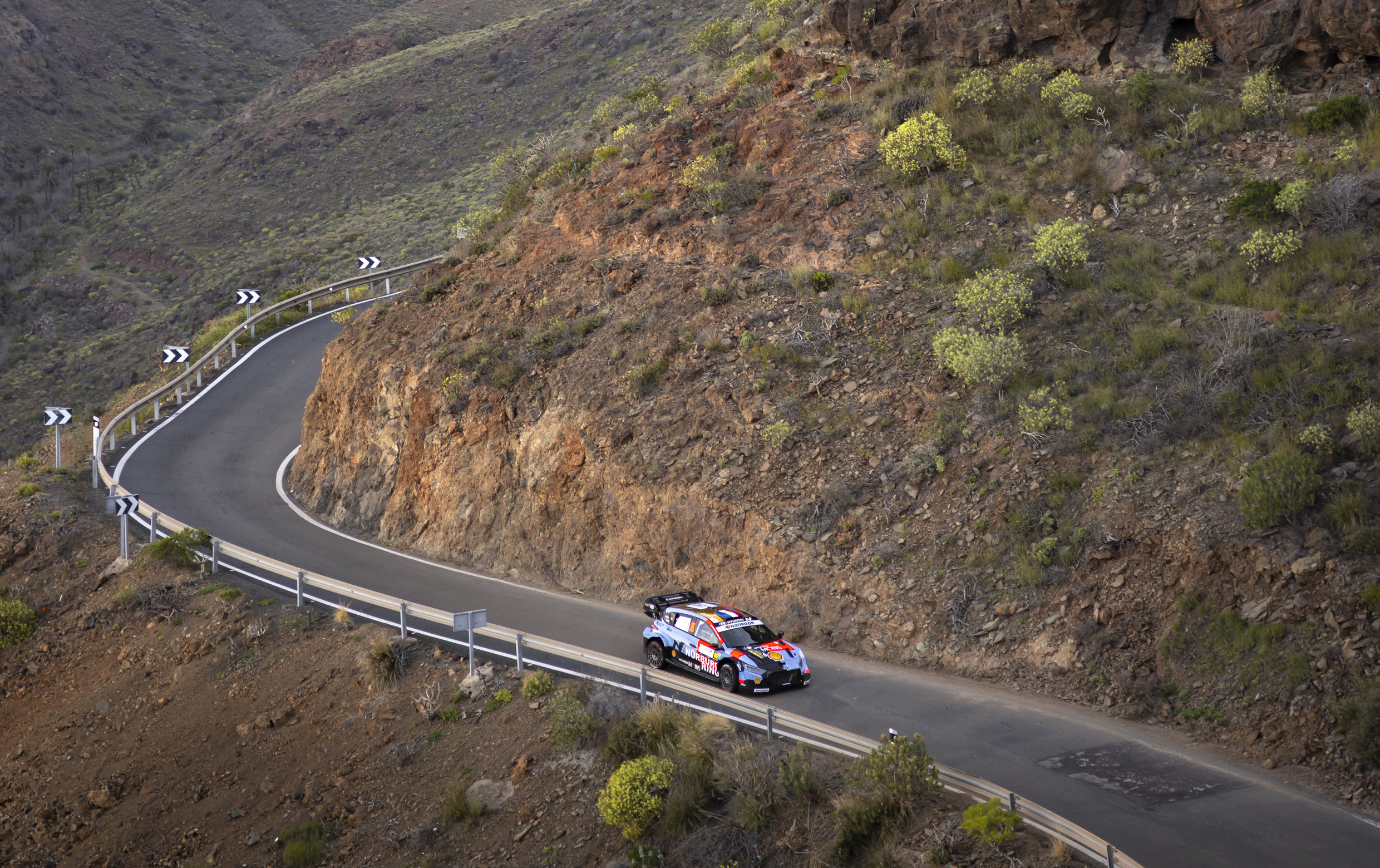
Saturday, April 25 was built around the island’s south side, starting with 13.47 km Maspalomas, rolling into Arucas–Firgas–Teror, and then stretching out on the rally’s longest test—28.9 km Moya–Gáldar. The crews ran the three-stage loop twice for SS9–SS14, totaling 112.22 km. With rain in the forecast, everyone packed the same basic insurance policy: four hard tires and two softs, trying to cover both a damp morning and a potentially drying afternoon.
SS9 Maspalomas is a fast southern stage where suspension balance matters as much as bravery. The road starts wide, then tightens around the 5 km mark as it climbs into the hills and shifts into a more medium-speed rhythm. The back half drops downhill through multiple hairpins—exactly where an unsettled car or a wrong tire call will start charging interest.
Evans opened Saturday with a statement, jumping past Pajari into third overall. Up front, the margins were still razor-thin: Ogier, Solberg, and Evans were packed within roughly 15 seconds, and Pajari sat just 3.5 seconds behind Evans. For Hyundai, Fourmaux was quickest again—and that was enough to move him up to sixth overall ahead of Sordo.
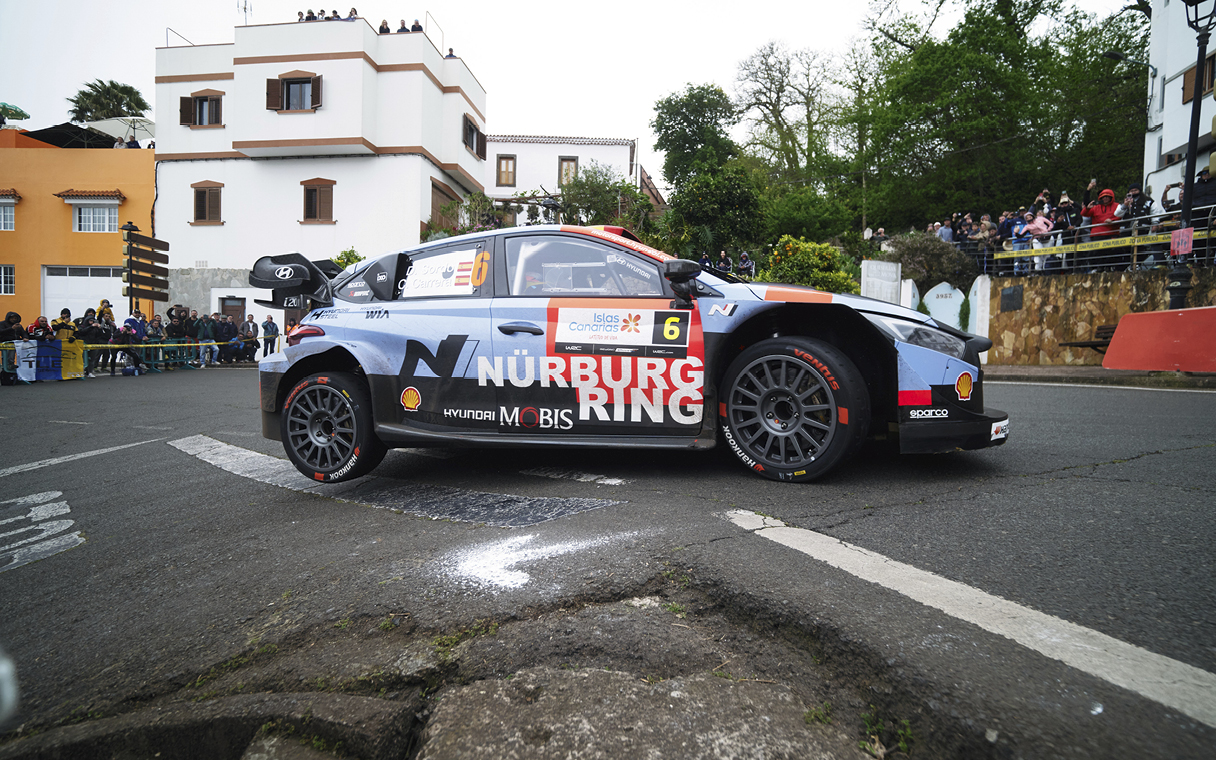
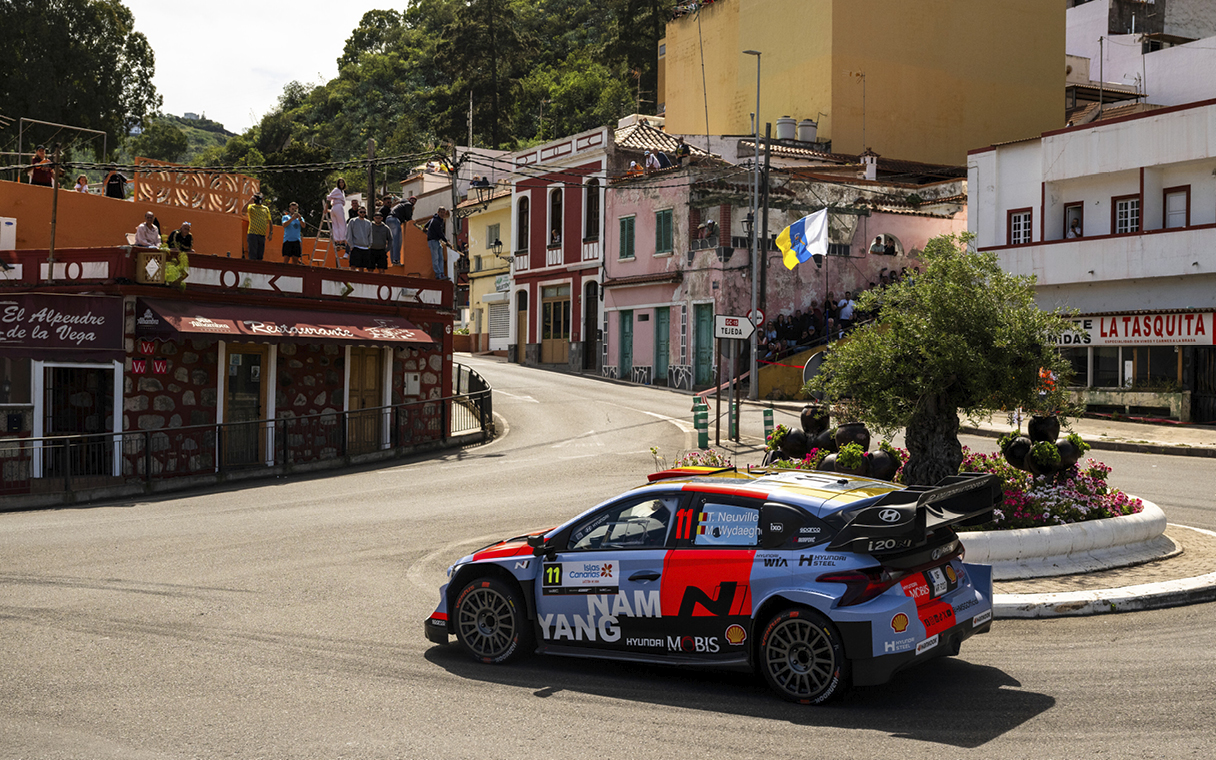
A light drizzle set the tone for SS10 Arucas–Firgas–Teror. It starts with a roundabout donut, then immediately climbs—and after 4.8 km the road pinches down into a twisting, technical ribbon before dumping you into Teror. The real challenge isn’t just the corners; it’s the surface. Grip changes corner to corner, sometimes mid-corner, so the only way to look smart is to stay adaptable.
Evans was quickest again, with Solberg and Ogier right there. Fourmaux led Hyundai once more, and he didn’t sugarcoat how weird the stage had become versus recce. “To be fair the conditions have changed compared to when the route note crew passed through the stage. It was not easy for us. The grip changes are everywhere. That is a tricky one. If it rains it becomes very different rally.”
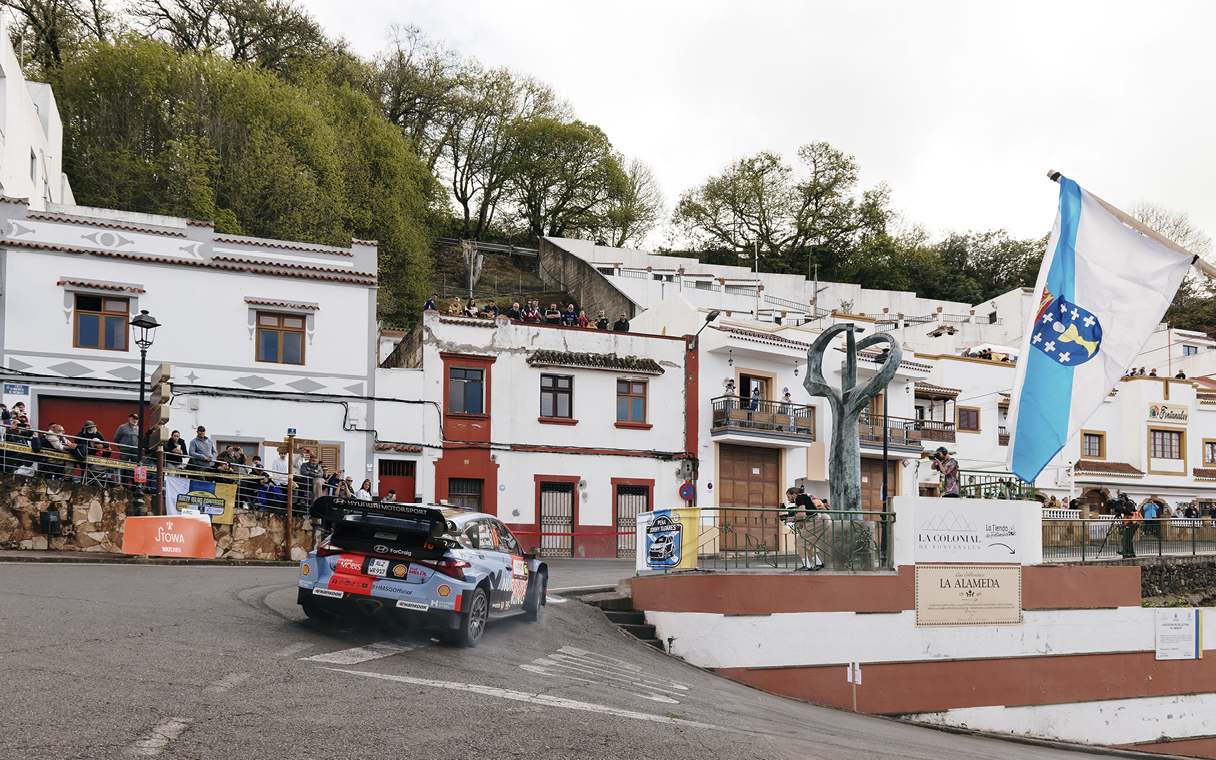
Then came SS11 Moya–Gáldar—the marathon. At 28.9 km, it’s the longest stage of the event, stitched together from routes last used in 2020 and 2023. It begins on narrow village roads in Moya, spins through a donut turn, and heads uphill. Around 11 km, it cuts through another town and the pavement turns rough. At roughly 23 km, it crests a hill and squeezes back into a tighter section before finally opening up into a faster run to the finish. It’s the kind of stage where rhythm, stamina, and tire management all matter—and a damp surface only makes every decision feel like a compromise.
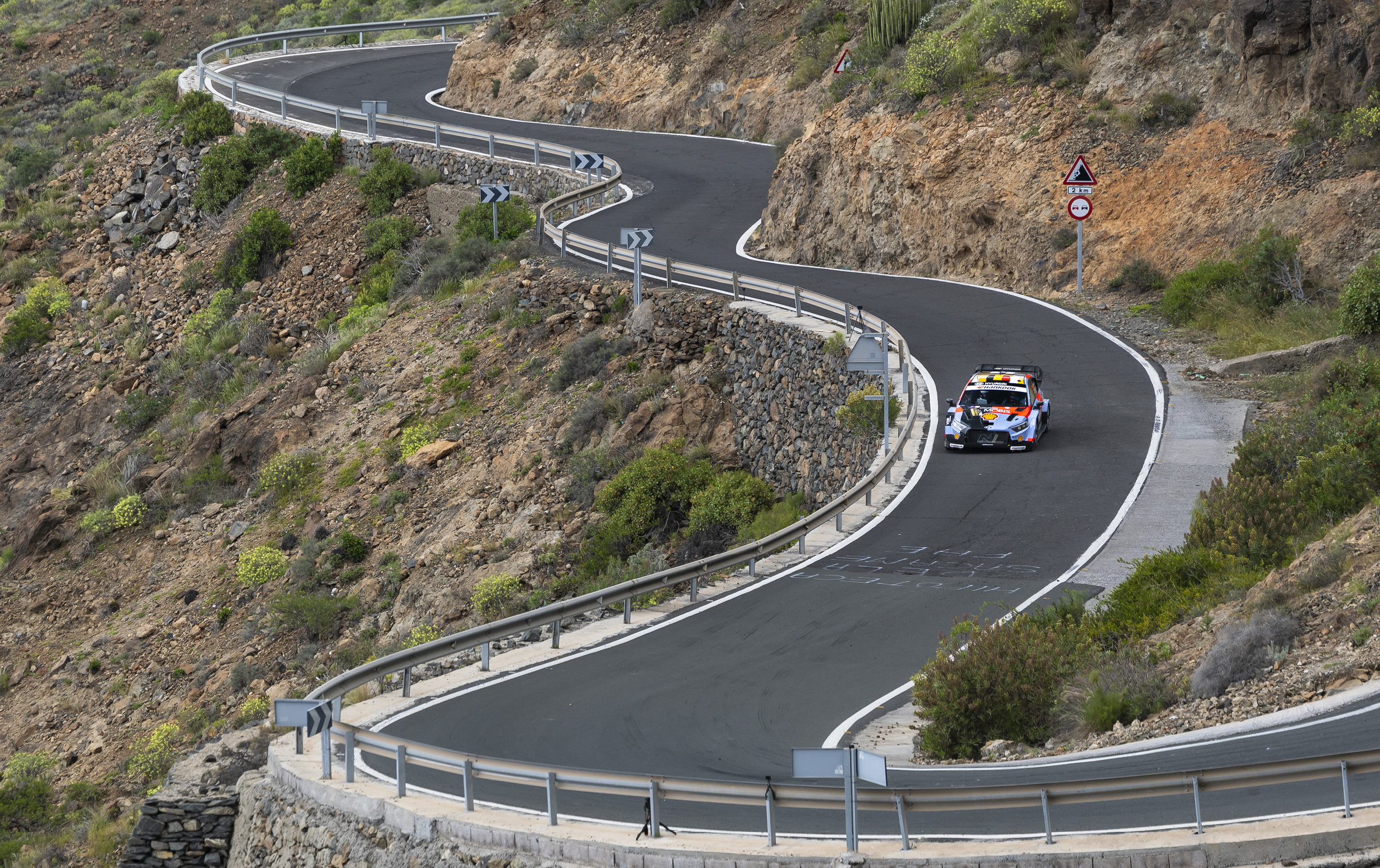
"We are changing from rain to dry, so it is always a compromise,” Fourmaux said. Photo: WRC (http://www.wrc.com)
Solberg went fastest, but it barely moved the needle: he only clawed back 0.1 second on Ogier, so the overall lead effectively stayed put. Fourmaux logged the sixth-best time, right behind Toyota’s five-car wall. “I kept a clean pace along the stage. I think it can be positive. It is hard to know on this rally. We are changing from rain to dry, so it is always a compromise.”
In the afternoon loop, Evans struck back on SS12, then Solberg answered with back-to-back fastest times on SS13 and SS14, turning the pressure up on Ogier and cutting the gap to 3.8 seconds—close enough to feel it, not quite close enough to cash it. Ogier still held the overall lead. The rough moment belonged to Armstrong, who crashed on SS14 and tore up the car’s nose. The reshuffle bumped WRC2’s Yohan Rossel into 10th overall, with Alejandro Cachón and Léo Rossel next in line.
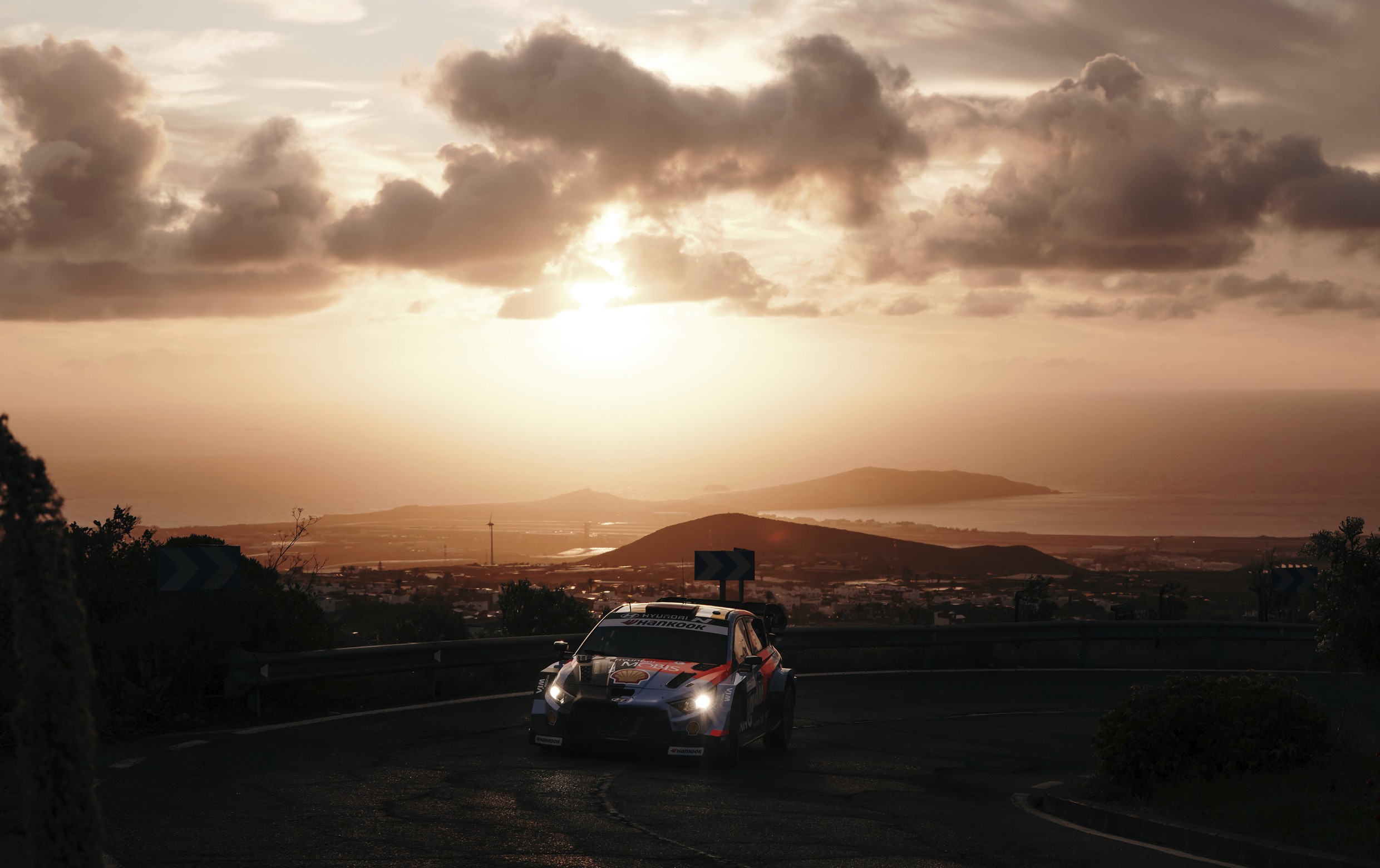
Sunday, April 26 opened with SS15 Ingenio–Telde–Valsequillo (25.93 km), then doubled up Santa Lucía–Agüimes—which also served as the Power Stage (SS18), where everybody tries to snatch bonus points on the way out the door. Two stages, repeated once, 78.4 km total to settle it.
Rain came back for SS15. The second-longest stage of the weekend ran in reverse compared to last year, starting near last year’s finish and changing the closing kilometers entirely. It’s postcard-pretty early on—an uphill climb that feels almost too clean—then it crests and turns into a fast, technical downhill where you can burn the tires off the car if you get greedy. The assignment is pure Canaries: keep the pace up while keeping the rubber alive.
Solberg set the benchmark, but Ogier stayed welded to him—just 0.6 second back—so Ogier kept the overall lead. Their margin tightened to 3.2 seconds, and Evans, third-fastest, was only 1.3 seconds off Solberg. After that, the gap to the rest was noticeably bigger. For Hyundai, it was a rough read: Neuville was the quickest of the trio but still ended up behind WRC2’s Rossel on time, while Fourmaux dropped nearly a minute to Solberg. Neuville did at least slip past Sordo to move into seventh overall.
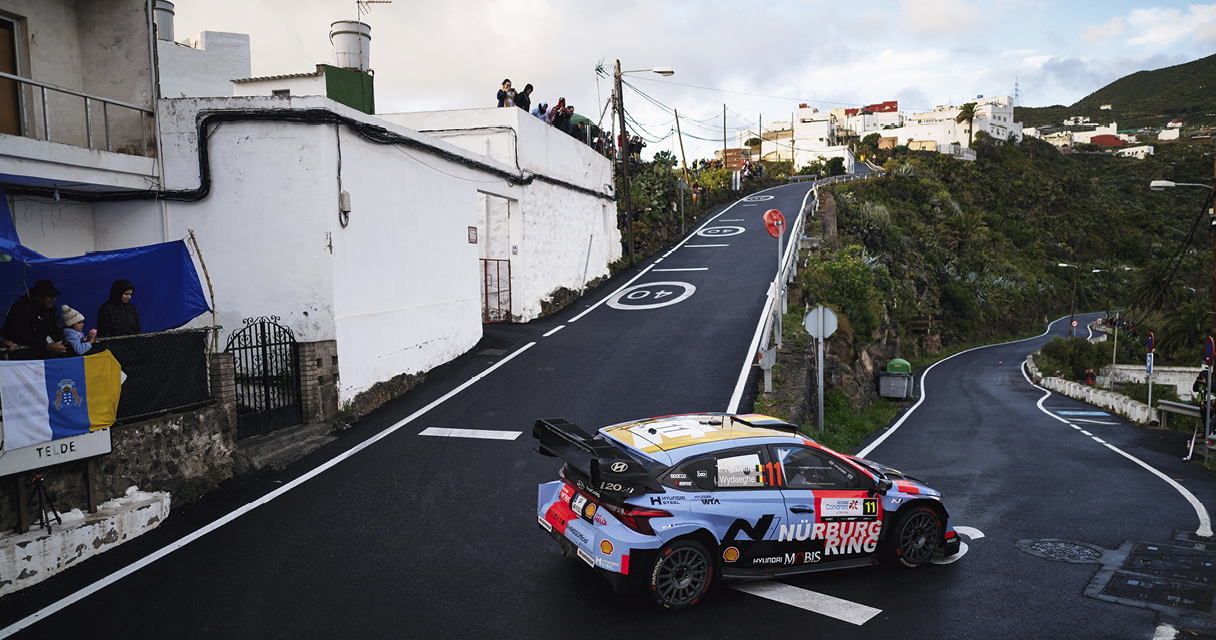
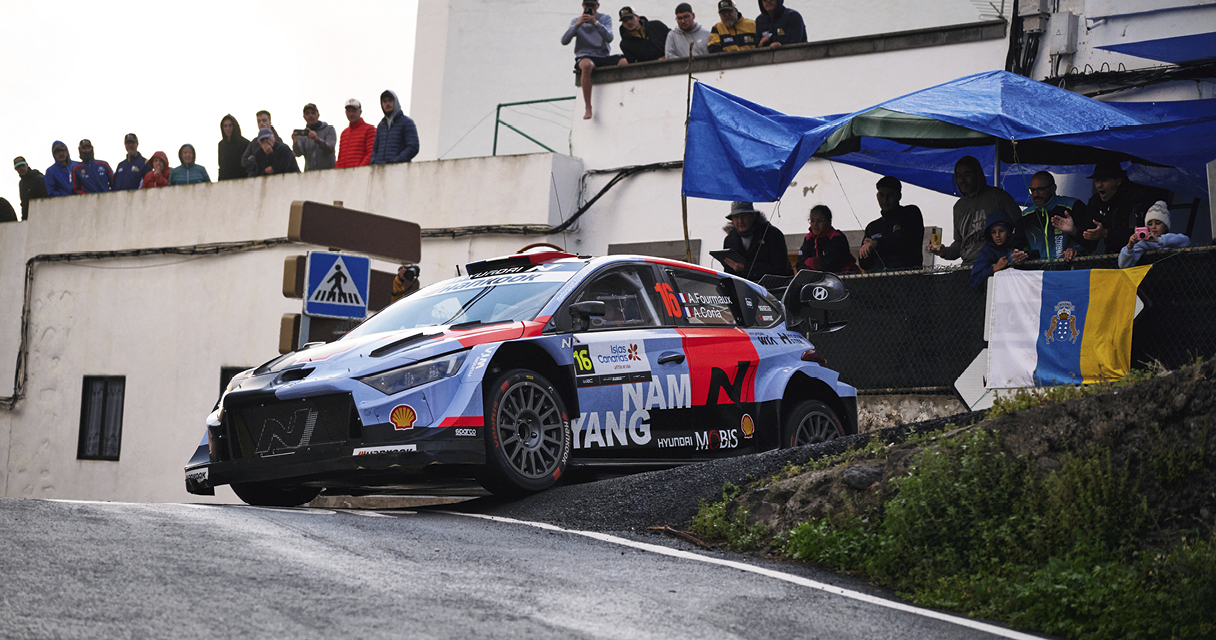
SS16 Santa Lucía–Agüimes is pure drama—steep grades, repeated hairpins, and a partial reverse of the 2021 route. The road that was wet in the morning had mostly dried, and Solberg used it to go fastest again, trimming Ogier’s lead to 2.2 seconds. Sud-denly the final day had real heat. Fourmaux found more pace and stretched his gap to Neuville to 16.7 seconds. Neuville, running softs on the rear, said the balance never fully came to him: “It was ok. It was tricky balance with the soft tires on the rear. At the begining I was understeering like hell. But towards the end it was mixed sometimes understeer and sometimes oversteer. It was an ok stage."
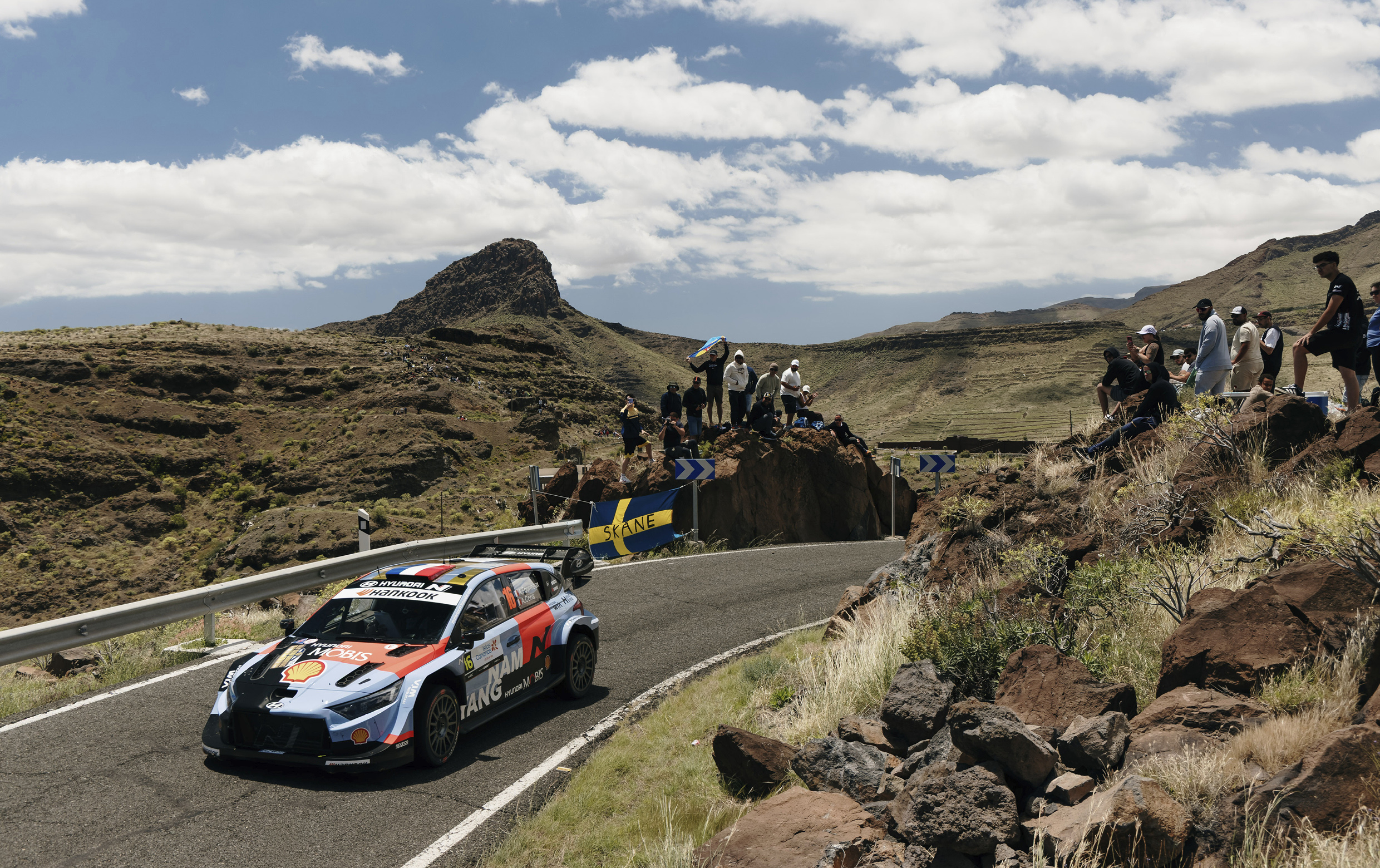
After four days of fighting, Fourmaux finished the rally in fifth. Video: WRC (http://www.wrc.com)
On SS17, the repeat run of Sunday’s opener, the title fight finally snapped. Solberg hit the barrier and retired, and Ogier’s win odds sud-denly looked a lot better. Evans moved up to second, Pajari had the podium in sight, and Fourmaux climbed into fifth overall.
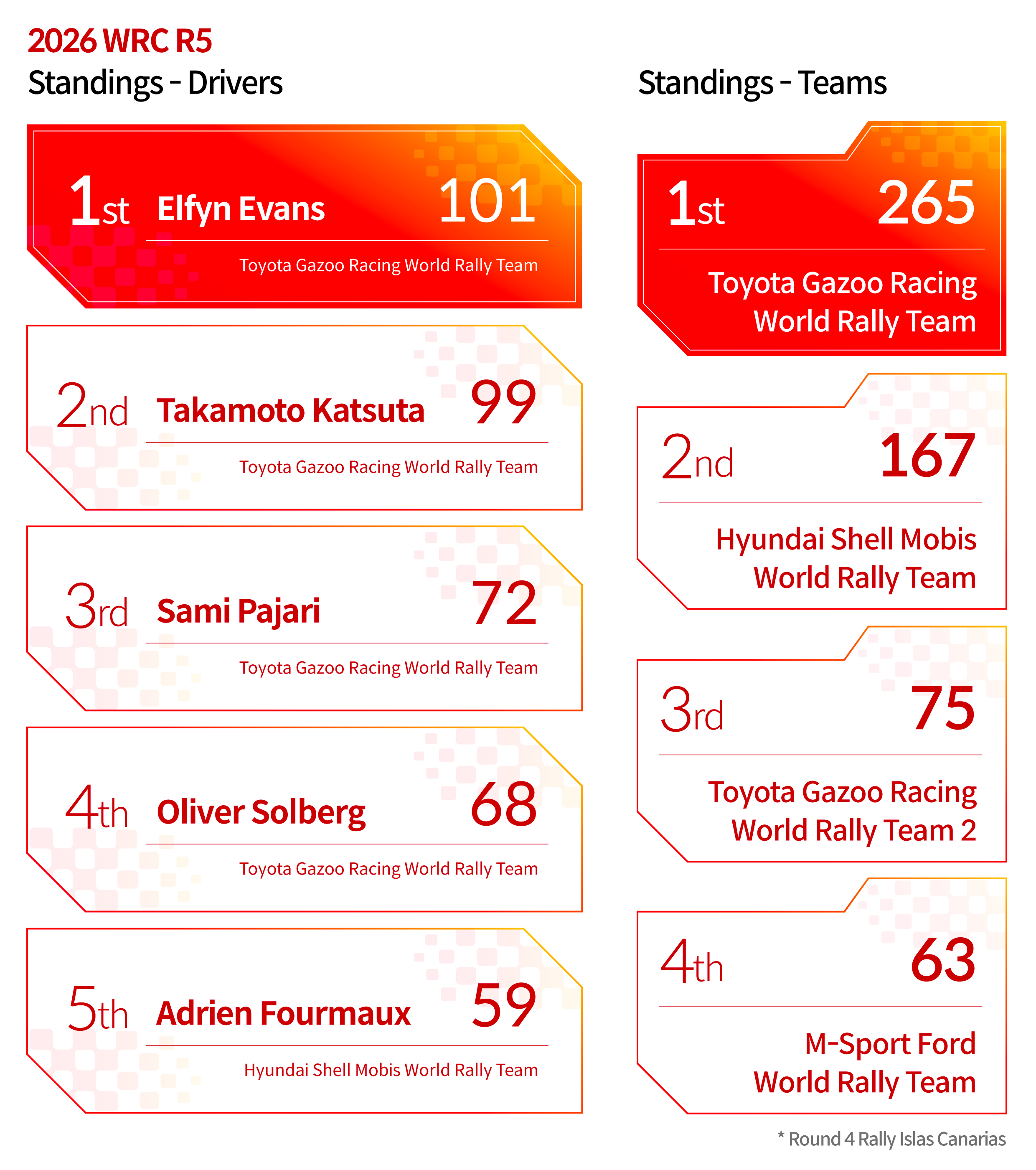
That left SS18—the final Santa Lucía–Agüimes run and the Power Stage. Ogier closed it out cleanly for his first win of the season. Evans finished second, 19.9 seconds back, and Pajari grabbed the final podium spot. Toyota went 1–4, with Katsuta in fourth. Hyundai’s final order: Fourmaux fifth, Neuville sixth, Sordo seventh. In the standings, Evans jumped Katsuta for the points lead, while Pajari moved up to third. In WRC2, Lancia’s Yohan Rossel made it two straight wins after Croatia.
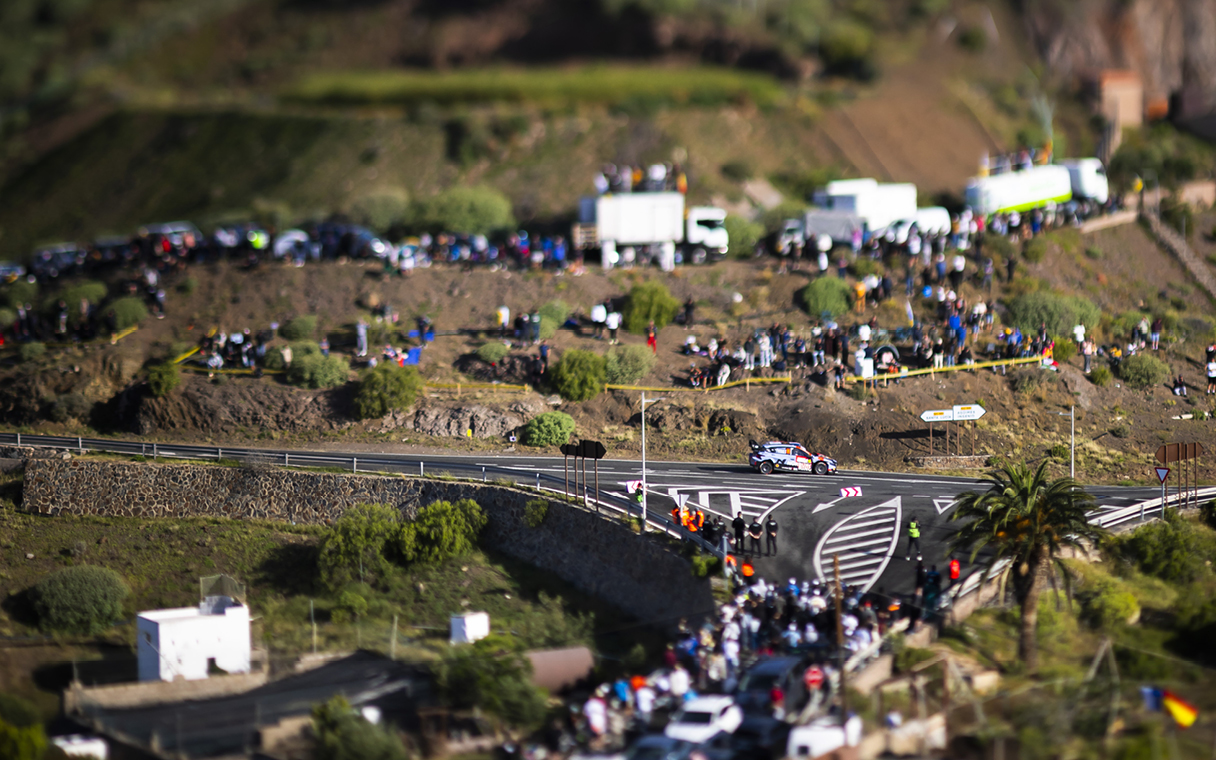
After two straight tarmac rounds, the championship flips to gravel for Round 6 in north-central Portugal—fast, rough, and usually hot, which makes tire management and concentration a full-time job. Hyundai showed real upside there last year (Tänak P2, Neuville P4). Come May, Portugal is where they’ll try to turn “close” into “momentum.”
Written by: Soo-jin Lee
In 1991, Lee’s passion for cars led him to enthusiastically write letters to the newly launched Korean car magazine Car Vision. This unexpected connection led him to start his career as an automotive journalist. He has served as editor and editorial board member for Car Vision and Car Life, and now works as an automotive critic. While eagerly covering the latest trends like electric vehicles, connected cars, and autonomous driving technology, he is also a car enthusiast who secretly hopes that the smell of gasoline engines will never disappear.