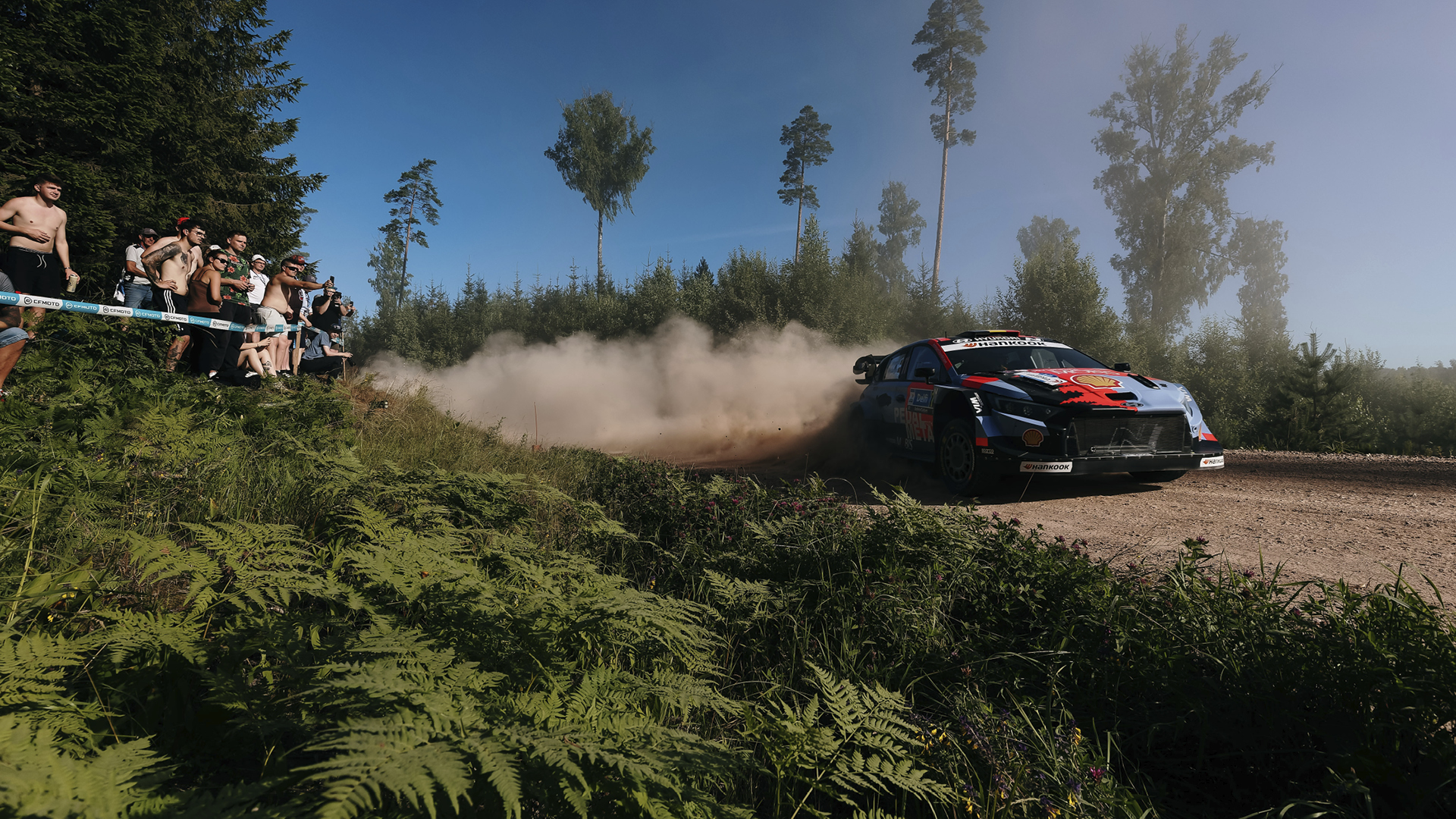
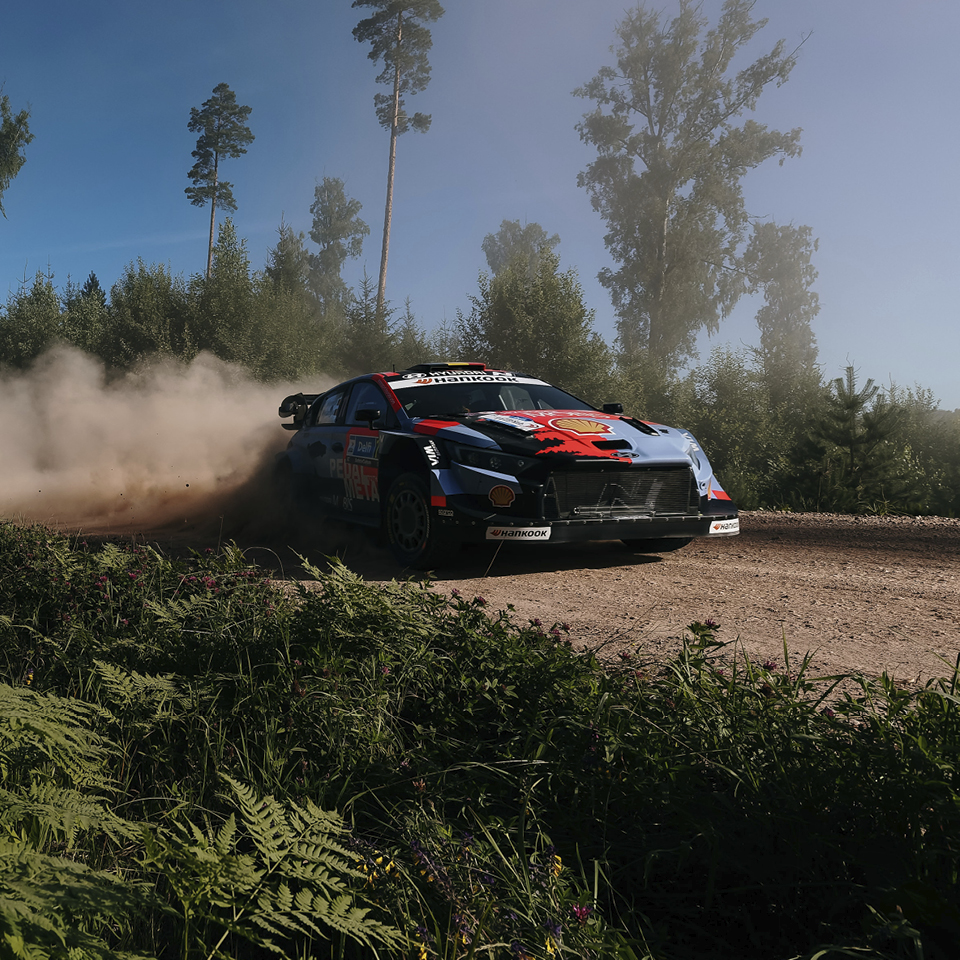
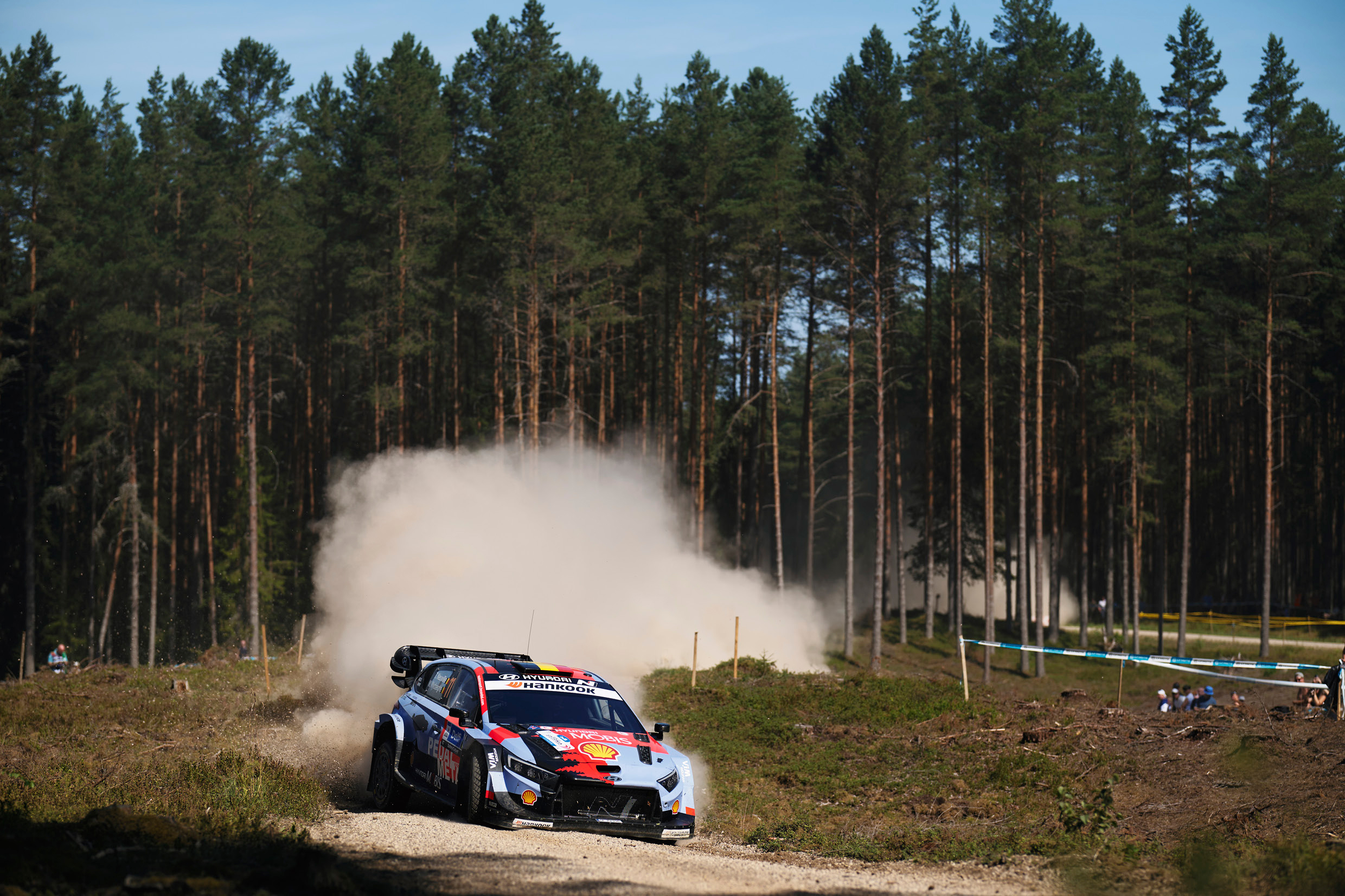
After the rock-strewn survival test of Greece, the WRC field arrived in Estonia for a completely different kind of punishment: flat-out forest roads. Rally Estonia, Round 9 of the season, is one of the WRC’s signature high-speed gravel events, right alongside Rally Finland. The roads are fast, the jumps are big, and the fans bring the kind of energy that makes this rally feel larger than its relatively short WRC history.
Rally Estonia is a young event by WRC standards. Estonia regained independence in 1991 after decades under Soviet control, then joined the European Union in 2004 and became firmly connected to the Western world. The rally began as a domestic event in 2010 and stepped onto the international stage in 2014 when it joined the European Rally Championship, or ERC. It made an immediate impression, earning ERC Rally of the Year honors in its first season. Estonia may be small, but it is a serious rally country, having produced standout drivers such as Markko Märtin and Ott Tänak.
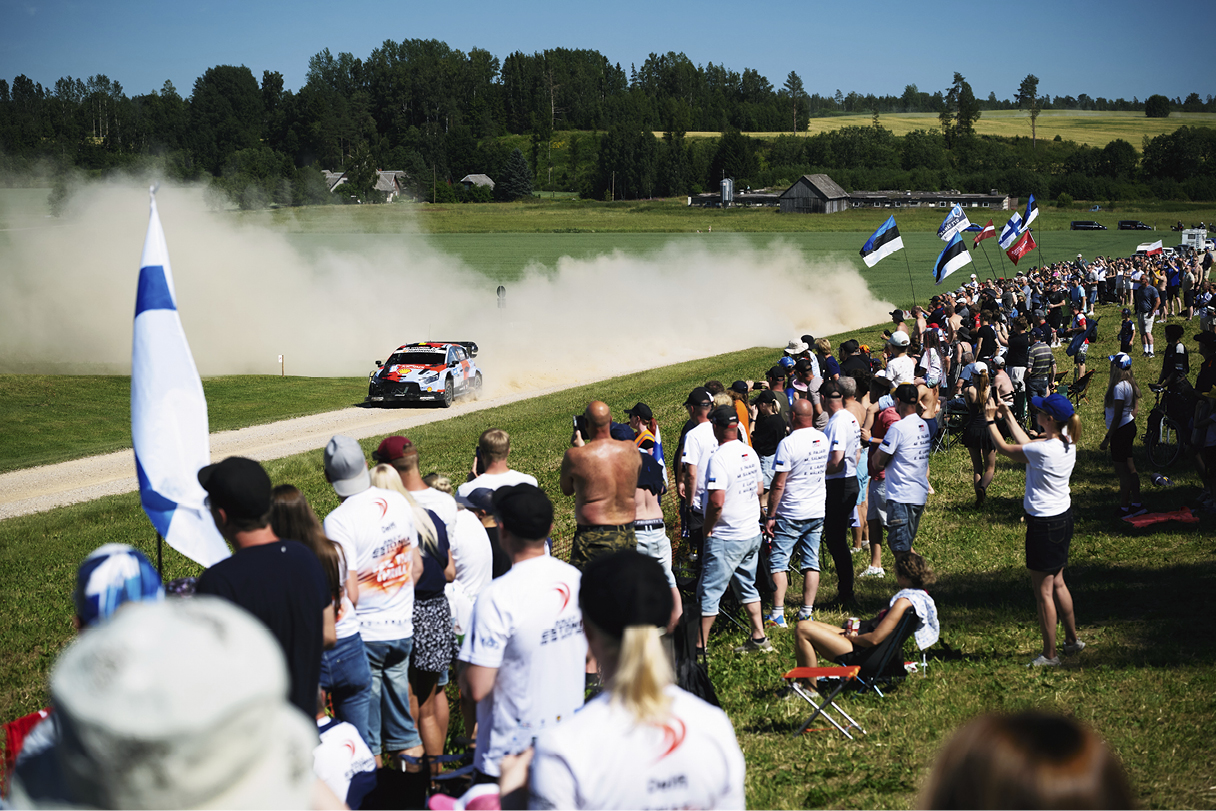
For years, Estonia also served as a warm-up act for Rally Finland. It sits just before Finland on the calendar, and the shared high-speed gravel character made it a natural test bed. Estonia had been preparing for a WRC slot in 2022, but the global COVID pandemic changed the timeline. With established rounds being canceled, the championship needed new events quickly, and Estonia fit the moment.
Ott Tänak’s presence helped, too. Then driving for Hyundai, Tänak won Rally Estonia in 2020, which also happened to be the 700th event in WRC history. The rally’s successful debut kept it on the calendar the following year. Estonia temporarily gave up its place to Rally Latvia in 2024, but returned last year.
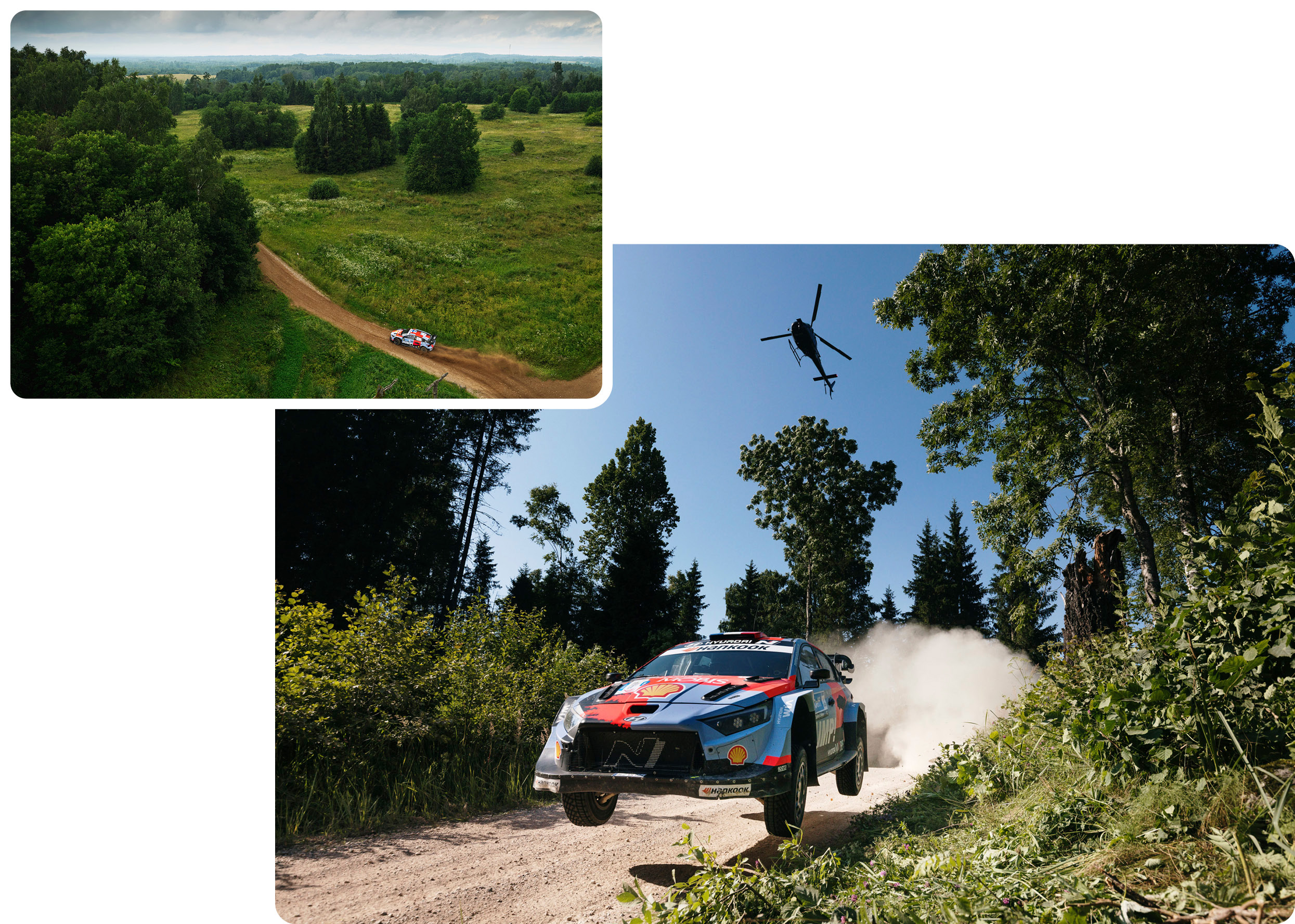
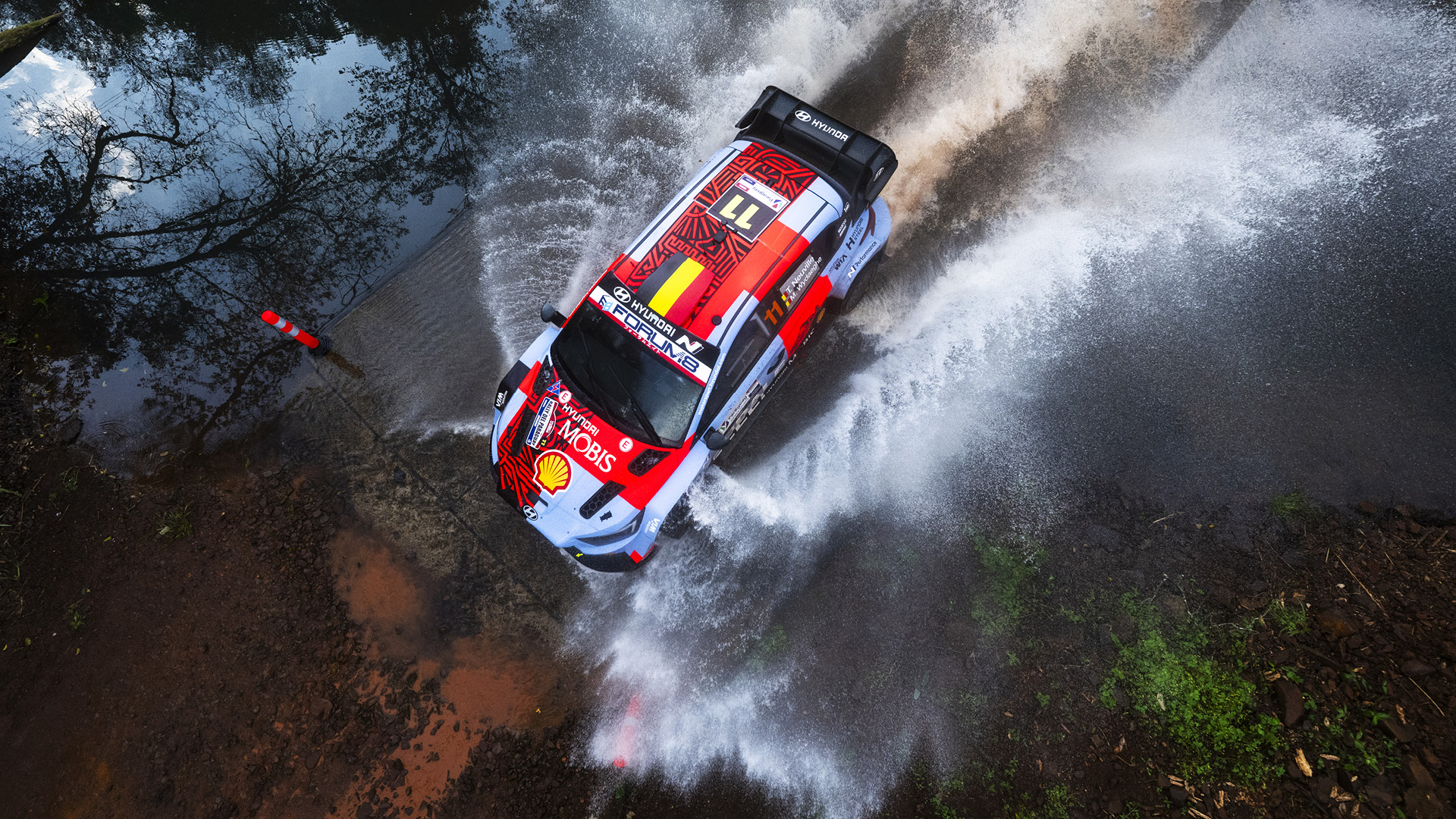
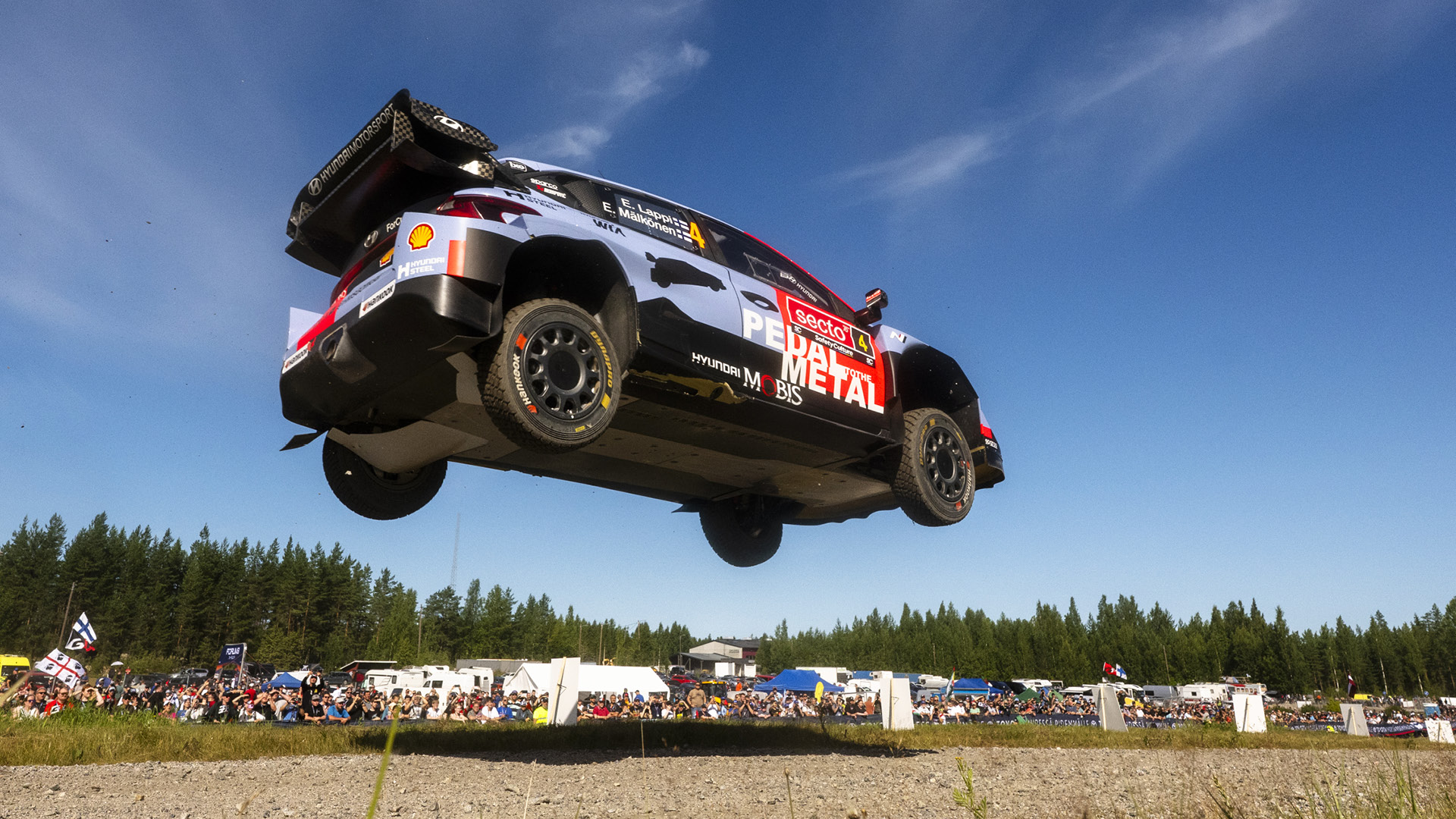
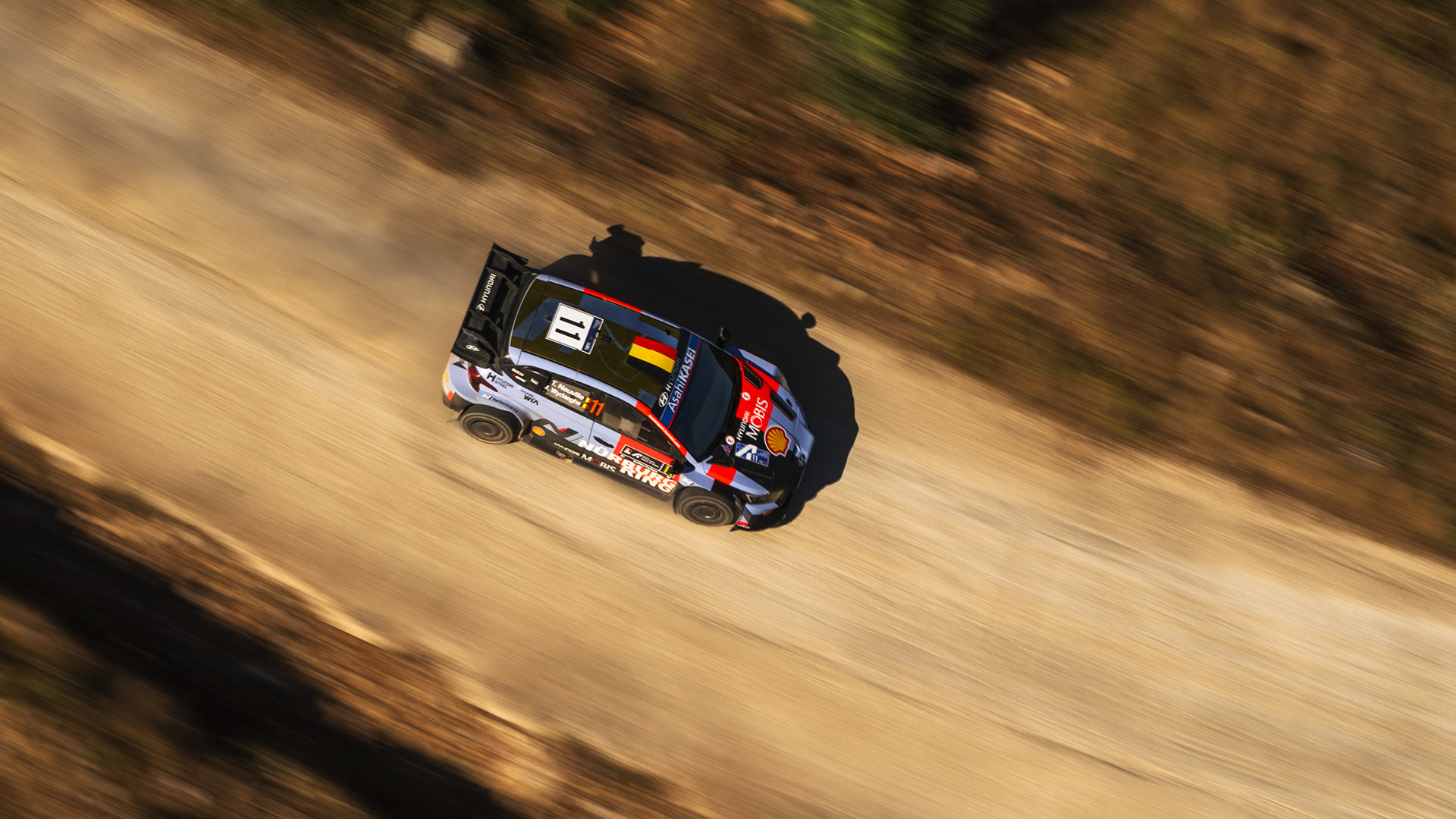
The stages may look simple from the outside. They are not. Estonia has fewer corners and a smoother surface than many gravel rallies, which means the speeds are huge. But the grip and road surface are constantly changing. Along with Finland, Estonia ranks among the fastest events in the WRC, and at those speeds even small crests turn into launch ramps. Many jumps come over blind crests, where the driver cannot see what waits on the other side. That makes precise pace notes, total commitment, and absolute trust in the car essential. One wrong call can get expensive fast. The car also has to take repeated heavy landings from the big jumps. As each car passes, the road gets chewed up, and the second pass becomes much rougher. Compared with Finland, Estonia’s surface is generally softer, while the layout has a slightly more technical edge.
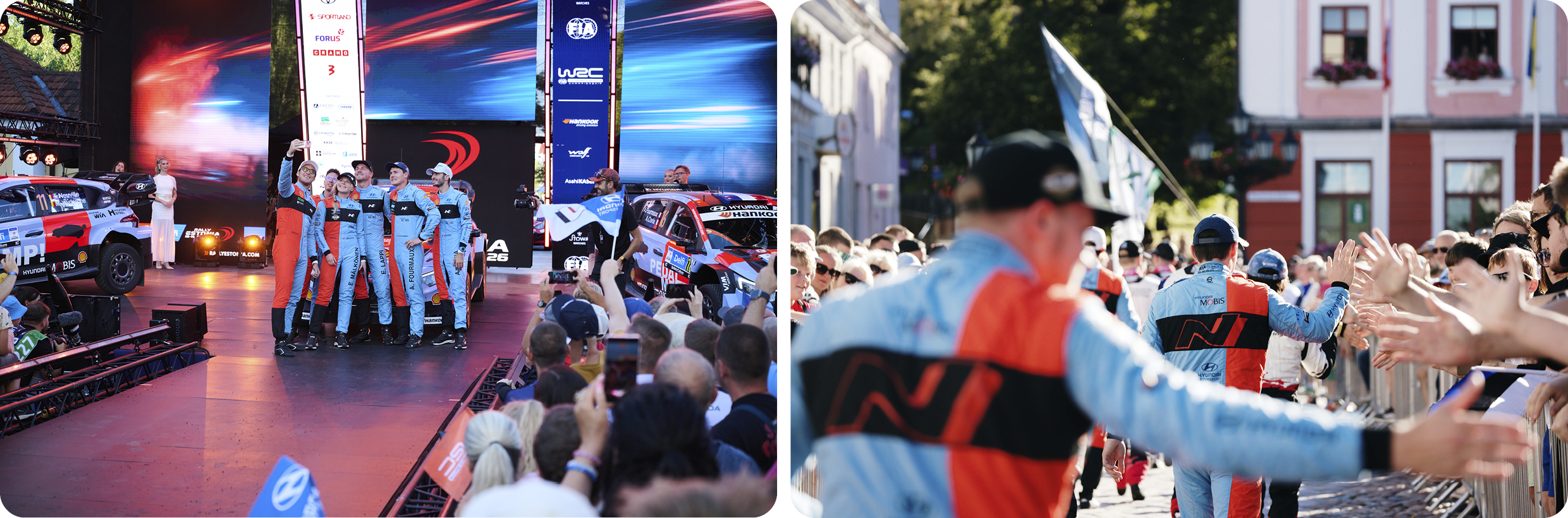
Hyundai World Rally Team entered Thierry Neuville, Adrien Fourmaux, and Esapekka Lappi. Neuville had narrowly missed victory in Round 4 in Croatia after an incident on the final stage, then gave Hyundai a shot of momentum with his first win of the season in Portugal. In Round 8 in Greece, he was leading before a late puncture dropped him to second.
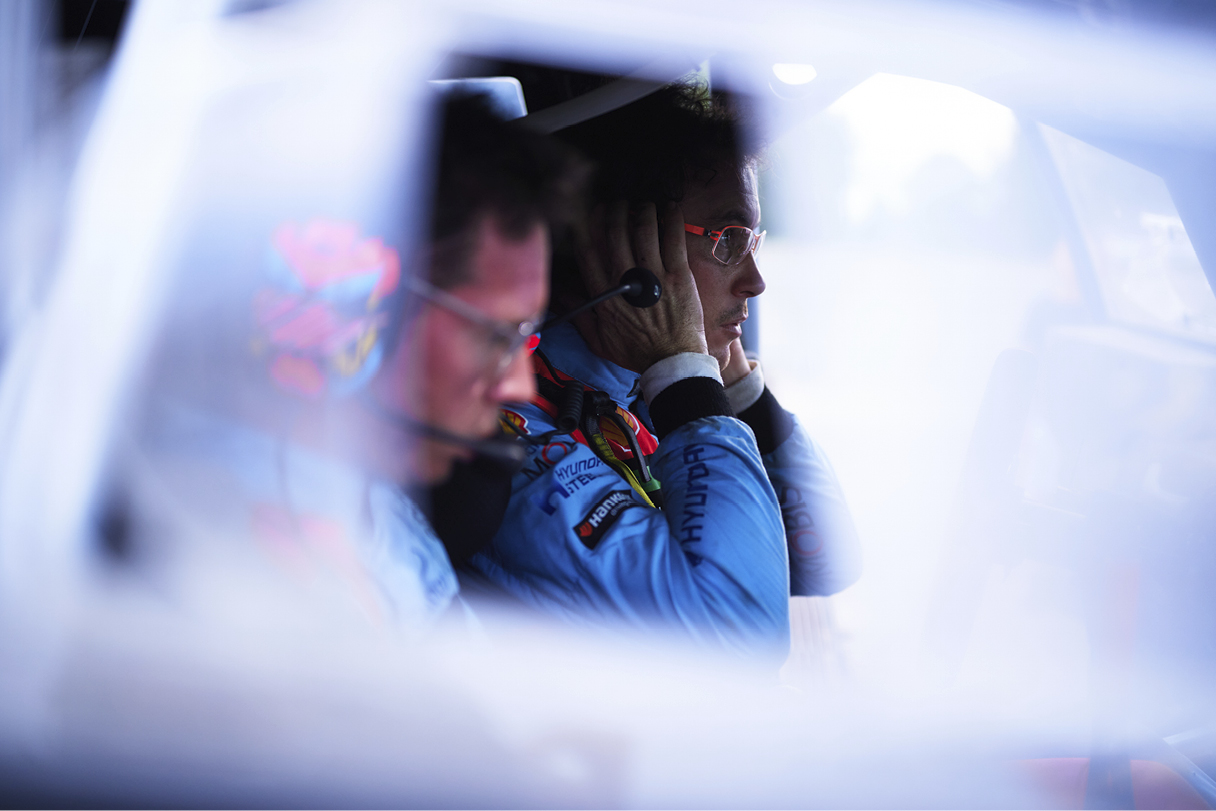
Neuville sounded confident heading into Estonia.
“We’re heading into Estonia with confidence after two gravel rallies where we have consistently shown strong pace and fought for victory. Taking a win and a second place is encouraging, and our pre-event test also felt very positive. We’ve been competitive in Estonia in recent years, and if the conditions stay dry, they should suit us well. The key to this rally is finding the right balance between traction, precision and protection over the huge jumps, while having complete trust in the car. Our goal is clear: to fight for victory and score a lot of points to fight back in the championship.”
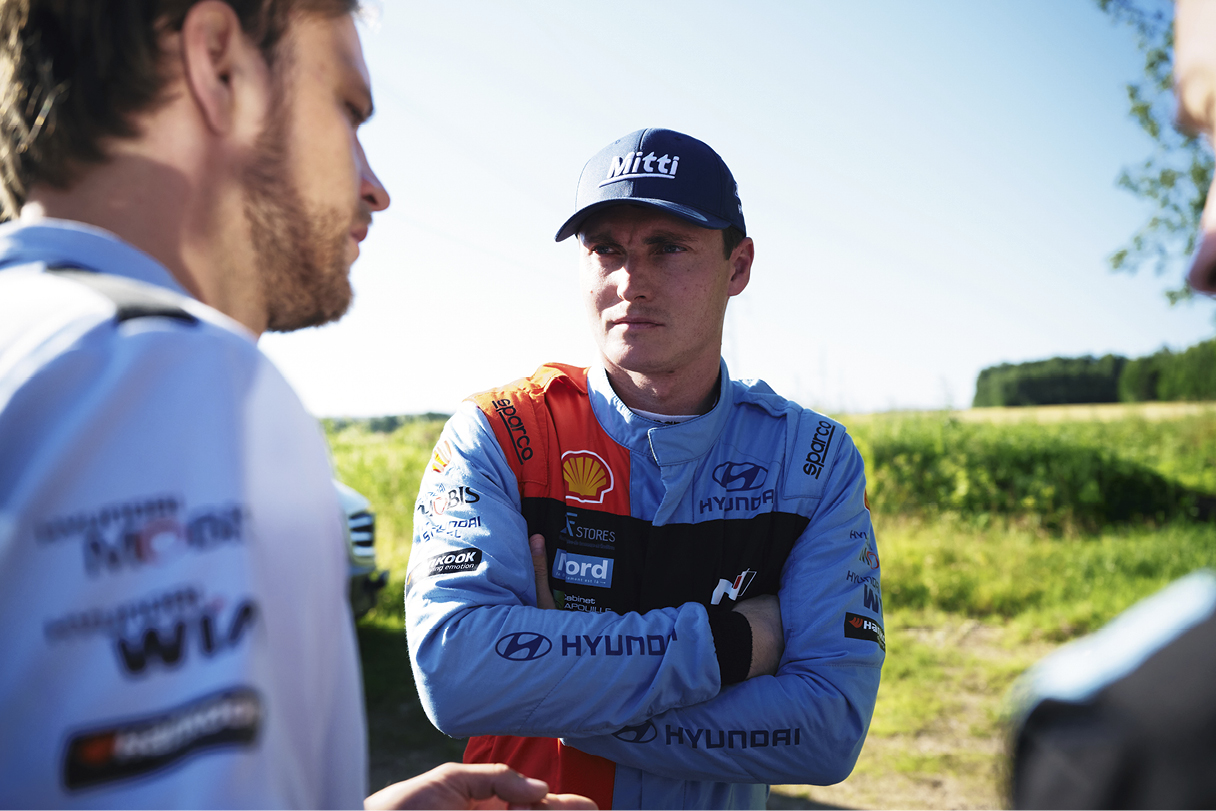
Fourmaux has yet to win this season, but he has been stacking points steadily. With a second-place finish in Kenya and a string of solid results, he arrived in Estonia level with Neuville on 95 points. In Greece, Fourmaux had been leading before a puncture knocked him out of contention, so he came to Estonia with real confidence. “Estonia is a completely different challenge to Acropolis, instead of rough, slow and technical roads, you're straight into some of the fastest stages on the calendar, so confidence is everything. I really enjoy this type of rally and we've completed a good test to prepare for it. We didn't get the result we wanted in Greece, but that's behind us now we are focused on the challenges ahead. Estonia gives us a fresh opportunity and if we can put together a clean and consistent weekend, I'm confident we have the potential to be competitive.”
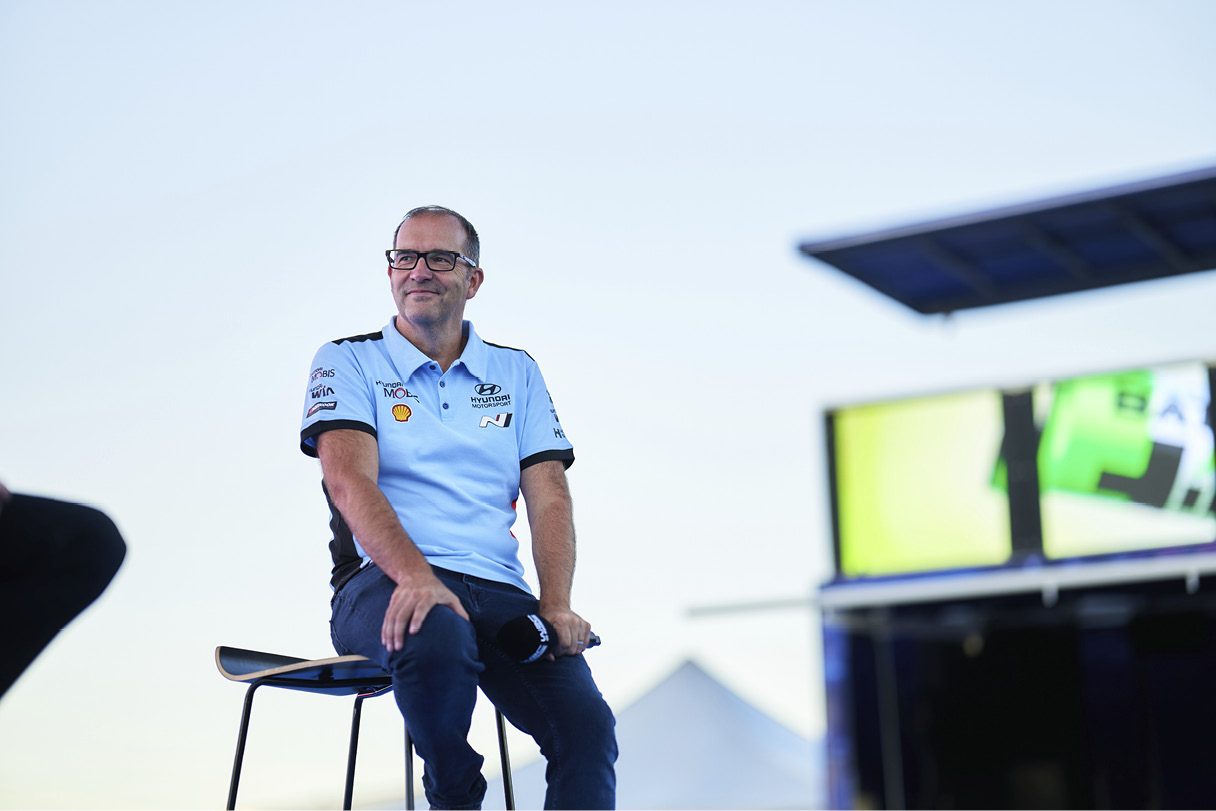
After struggling for outright speed in the early stretch of tarmac rallies, Hyundai has been proving that its gravel pace is coming alive in the second half of the season. Hyundai sporting director Andrew Wheatley said:
"With such a positive start to the second half of the season in terms of performance, we can be confident that the fundamentals of the Hyundai i20 N Rally1 are in place to support a strong push through the second half of the season. The speed of the crews was great, but equally impressive was the reliability. Despite being one of the hottest and toughest rounds of the season, Hyundai Motorsport enjoyed perfect reliability, and this gives us the confidence to push for the best possible performance heading into some of the fastest rallies of the year."
This year, Hyundai moved its main test base from Finland to southern France, using the program to develop gravel-rally components while also working on asphalt performance. After three days of testing in Estonia, the team planned to continue development work in Finland. Hyundai also leaned on several years of hard-earned experience to refine the updates built into its 2026-spec car.
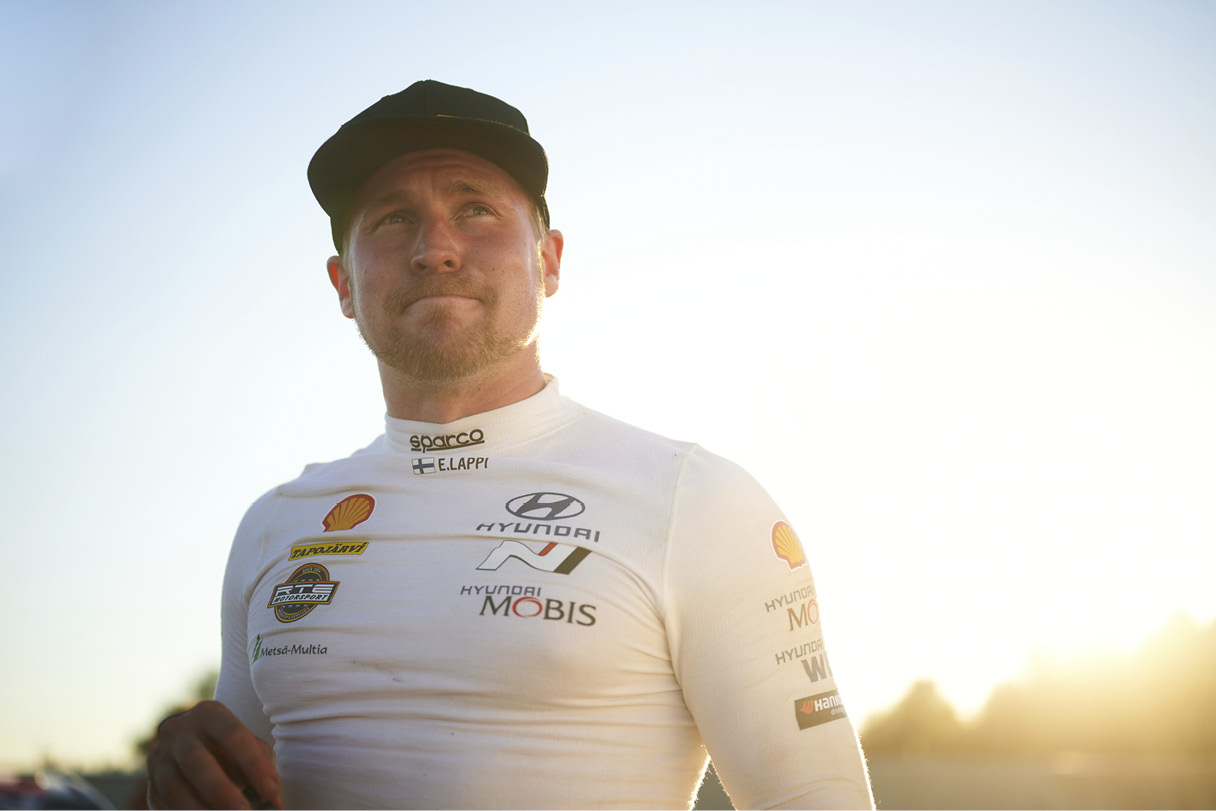
Lappi, who had been away from Rally1 for a while after 2024, returned to the WRC’s top class at Round 2 in Sweden. He then finished fourth on the Safari Rally, bringing home important points for the team. Estonia marks his third start of the season. As a Finn who knows high-speed gravel inside out, Lappi is entered for both Rally Estonia and Rally Finland.
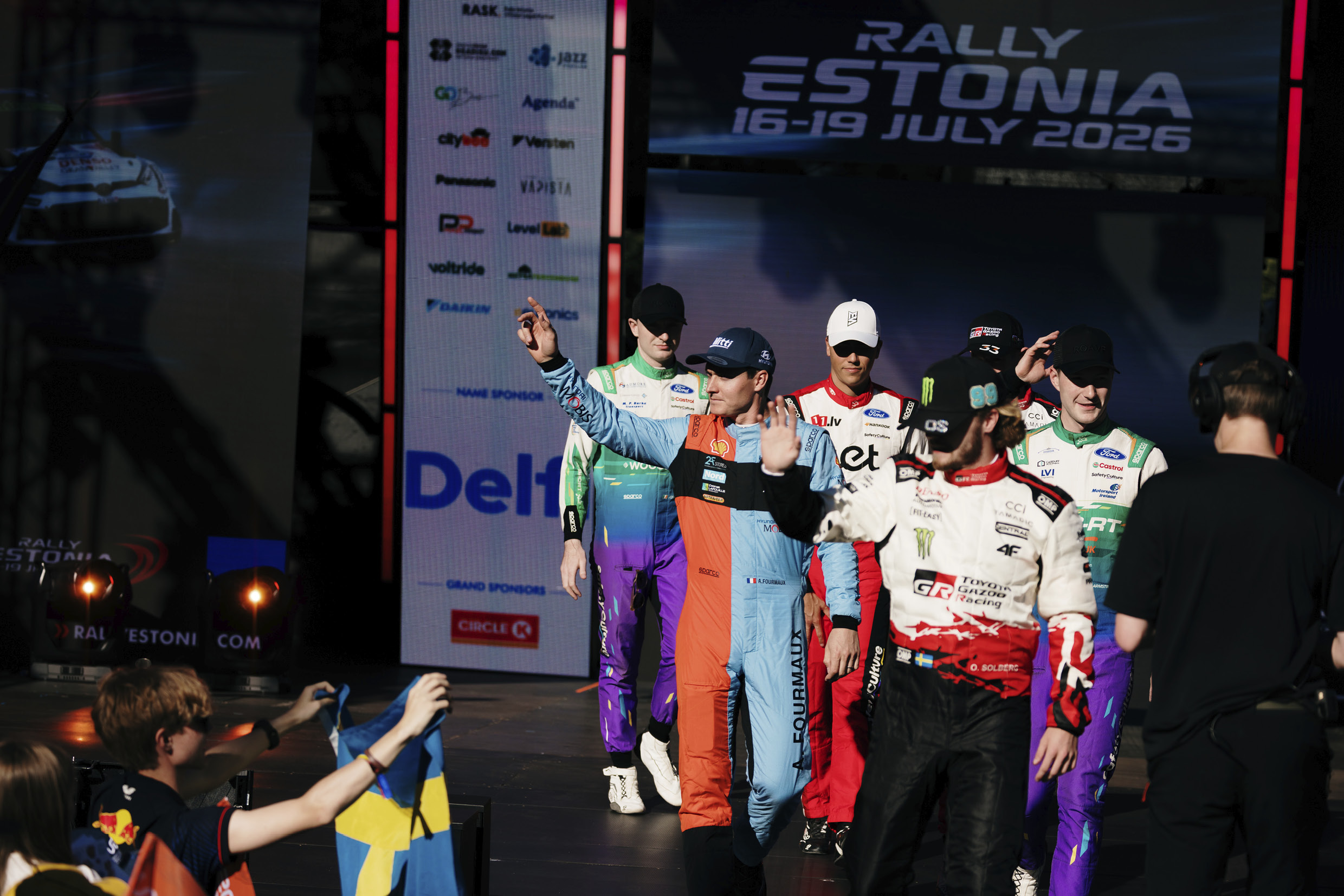
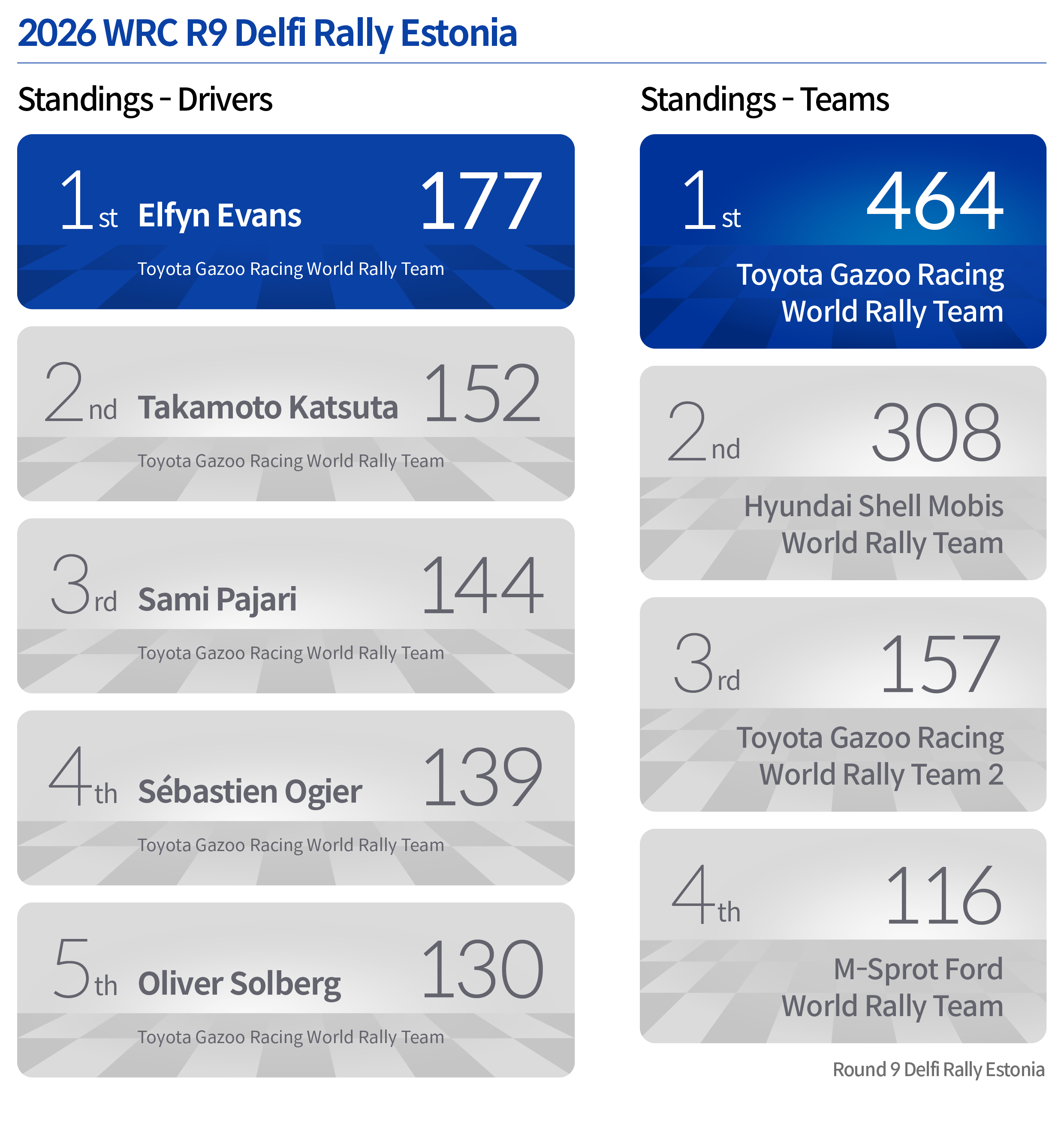
Toyota arrived with the momentum of a steamroller: seven wins from the first eight rounds and five GR Yaris Rally1 cars ready to attack Estonia’s fastest roads. Its lineup included Elfyn Evans, Sébastien Ogier, Oliver Solberg, Takamoto Katsuta, and Toyota’s second-team entry Sami Pajari. Compared with the late-season rallies in Paraguay, Chile, Italy, and Saudi Arabia, the high-speed gravel doubleheader puts less road-sweeping pain on the championship leaders. For Evans and Katsuta, both chasing a first title, this was a critical chance to bank serious points. Kalle Rovanperä, one of the most successful drivers of the modern WRC era, is currently away from the championship as he pursues a move into single-seaters, with recent reports also suggesting he has been resting due to health issues. Last year, Oliver Solberg claimed an emotional first career WRC2 win here.
M-Sport Ford entered three drivers, using the same lineup it brought to the Acropolis: Josh McErlean, Jon Armstrong, and Mārtiņš Sesks. McErlean finished ninth here last year. Armstrong has experience in Estonia from his JWRC and ERC days, but this is his first Rally1 start on these roads. Sesks, meanwhile, comes from neighboring Latvia, where the rally terrain is also built around high-speed gravel. For him, Estonia is about as close to home-territory conditions as it gets.
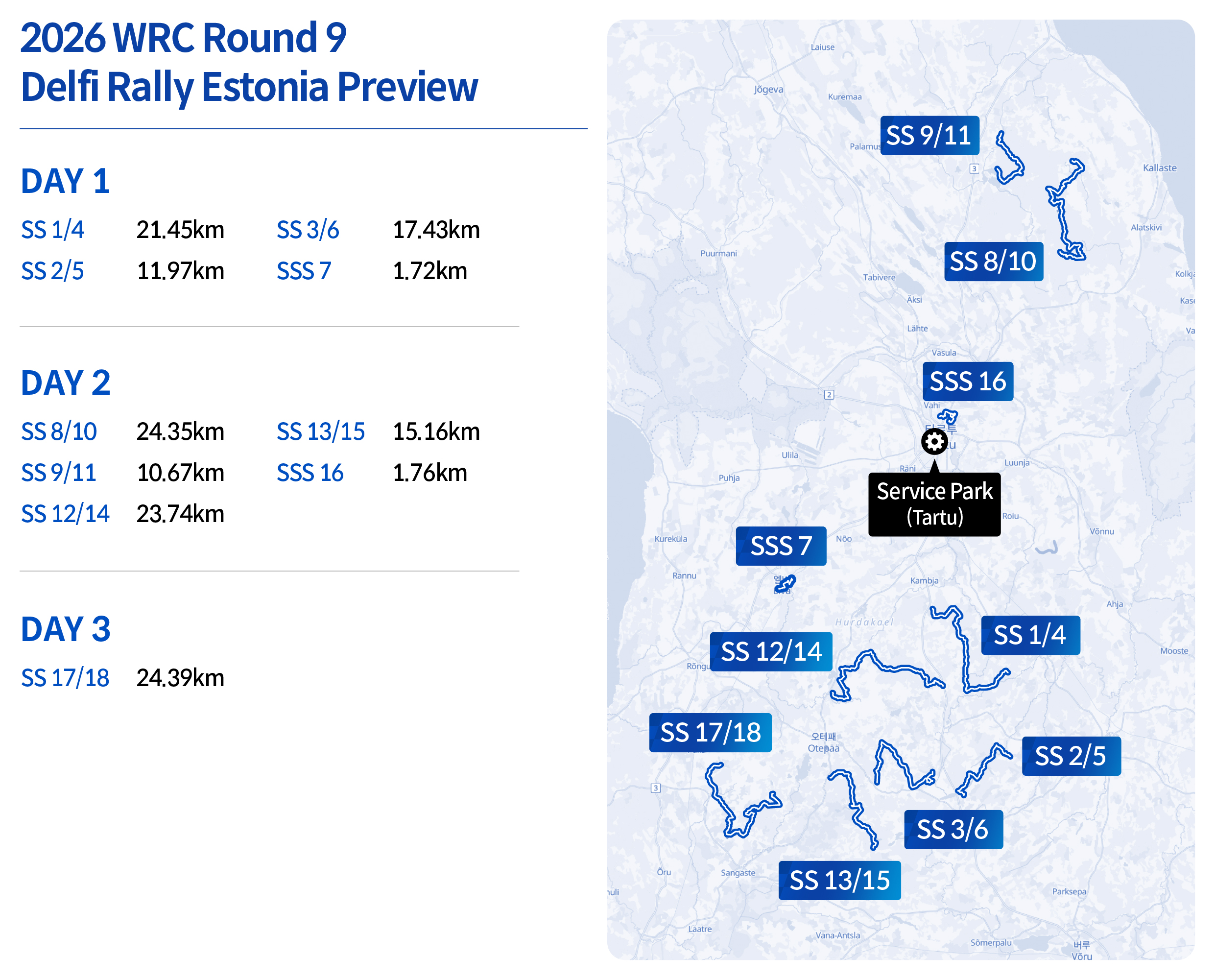
To streamline the event, the WRC started this year’s rally on Friday. The rally lost a day, but not the mileage. The route was also largely unchanged from last year. The biggest revision came on SS13 Otepää, which was lightly reworked around the 2022 layout. Most of the other stages stayed close to the previous version, while the schedule was shuffled. Peipsiääre, Mustvee, and Kambja, which ran on Saturday last year, moved to Friday. Sunday dropped Hellenurme and instead repeated only the Kääriku stage.
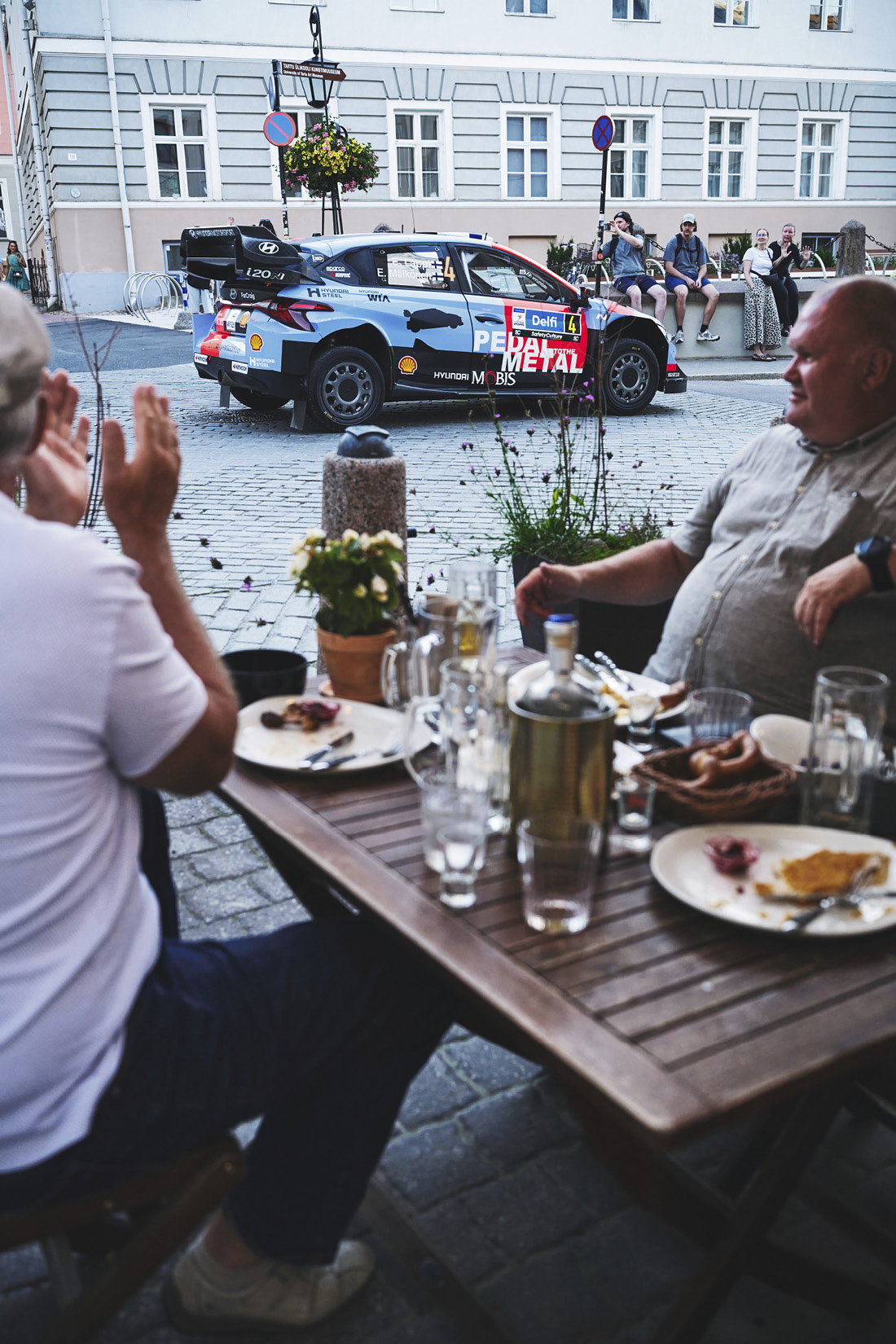
Friday, July 17, opened with the 21.45-km Raanitsa stage, followed by Karaski and Kanepi. The same three stages were repeated in the afternoon, before the day wrapped up with the 1.72-km Elva Linn Super Special Stage in the town of Elva. Across SS1 through SS7, the opening day covered 103.42 km.
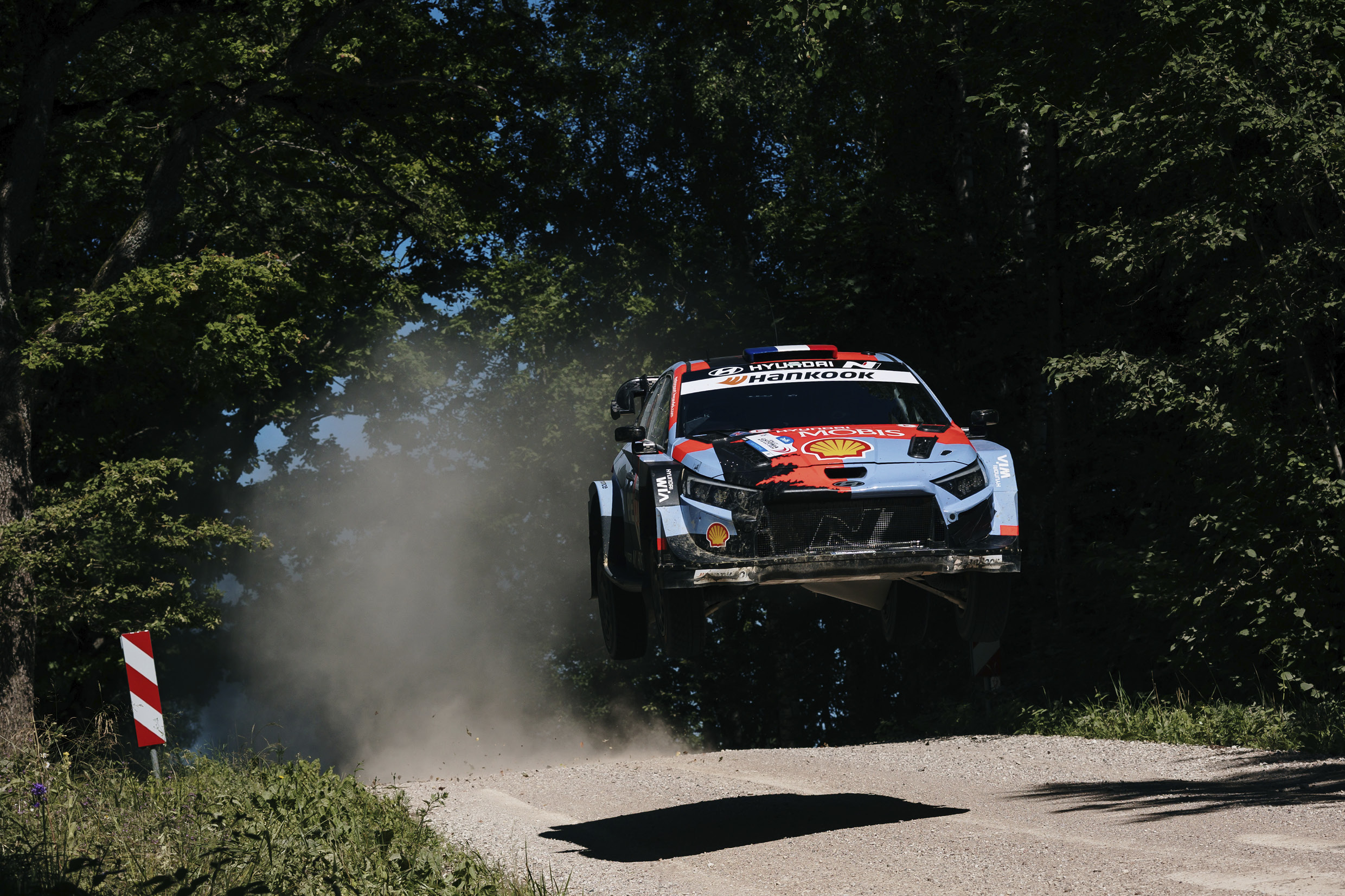
The opening Raanitsa stage began with a fast, flowing section packed with hills and jumps. After a short stretch of pavement, the cars could carry even more speed. A big jump arrived at the 9.6-km mark, and from 15.3 km onward the road narrowed and turned more technical. The surface was dry. Pajari set the fastest time and moved into the overall lead, with Fourmaux right behind. Solberg, Ogier, Neuville, and Sesks followed.
Fourmaux, the quickest Hyundai driver, said: “The car felt good. It is definitely different than this morning on the shakedown. The road is much more slippery and more commitment is needed in the jumps and flat out places.” Sesks had damaged the nose of his car during the test run, but M-Sport repaired it quickly, and he was the fastest of the Ford drivers. Armstrong lost time after a hard landing caused a puncture.
Neuville and Fourmaux chased Pajari hard from the start, setting up an intense early fight at the front. Video: WRC (http://www.wrc.com)
The slippery, heavily undulating road created dramatic moments almost immediately. Video: WRC (http://www.wrc.com)
SS2 Karaski threw drivers straight into action, with a medium-speed corner and a big jump just 400 meters after the start. After a hairpin at the 2.3-km mark, the road opened up, then fed into a fast section mixed with asphalt before finishing with a narrow, technical run. Pajari took another stage win, while Solberg moved up to second overall. Fourmaux and Neuville ran third and fourth. Fourmaux looked as if he might be heading into the grass after the car slid on landing from a jump, but he got away with it.
“The car went away on a jump take off and I was lucky there was nothing in the ditch. It was good stage anyway. I need to just forget and go ahead," he said coolly.
Lappi, meanwhile, was a distant ninth. “I thought we would be on the pace. We should have a clean line and I can't really use it. I don't know why. I'm really driving on the edge. On the big road I'm really committed but I don't understand.”
Pajari was fastest again on SS3 Kanepi, the 17.43-km stage that closed the morning loop. Fourmaux chased closely in second. Neuville, 4.2 seconds off the top time, struggled with balance issues. For the afternoon, Hyundai and M-Sport Ford chose five soft tires, while Toyota went with two softs and three hards.
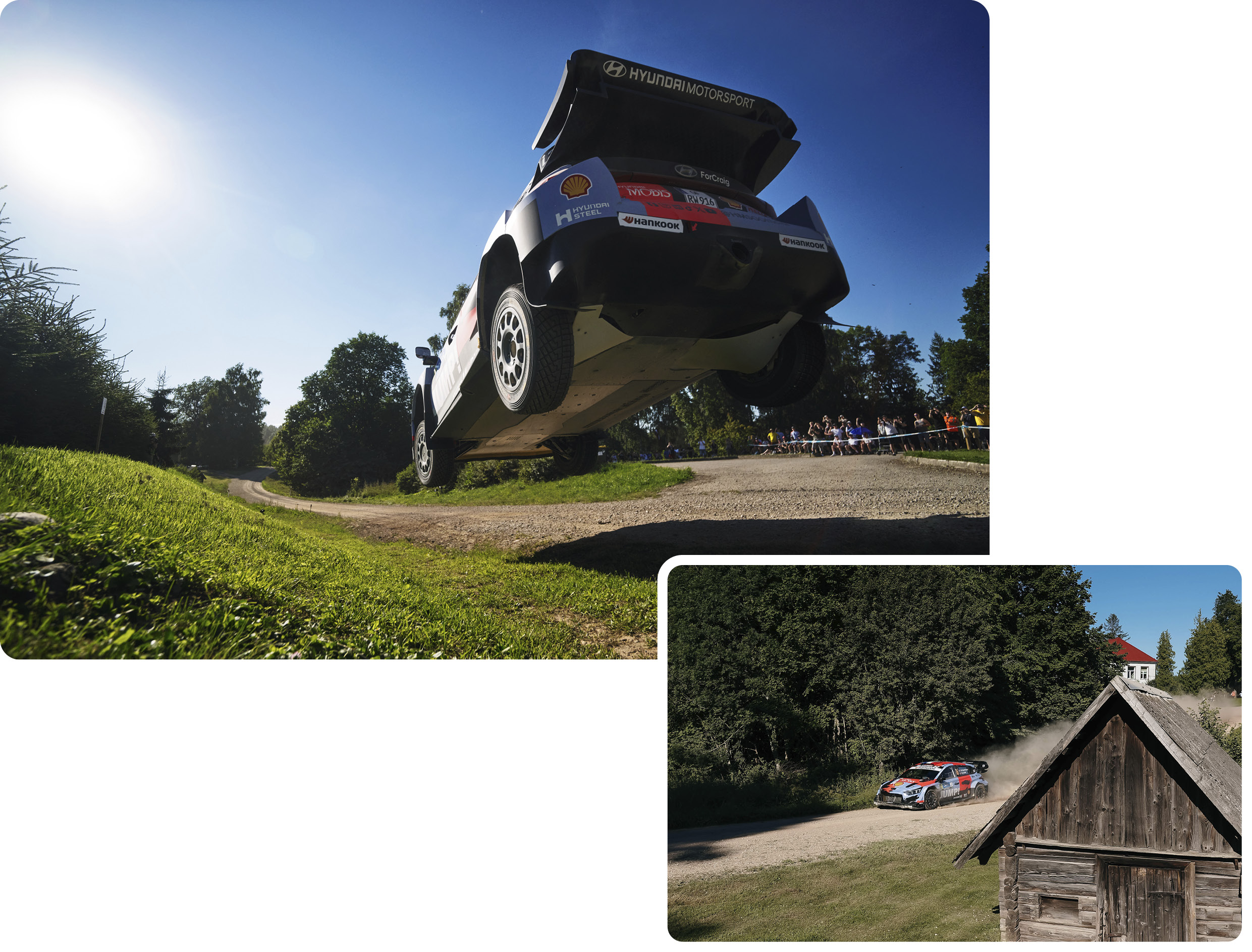
Pajari’s pace did not let up. Katsuta lost major time with a front puncture on SS6 Kanepi. Lappi, on the other hand, began to show better pace on SS6. Lappi said, “Good, something positive for today. I did some changes which I didn't even tell my engineer. I changed something and it at least it is working for the second pass. It was a better direction to go. At least I know the direction to go."
Pajari swept every Friday afternoon stage and kept control of the overall lead. Solberg sat second, 14.7 seconds back. Fourmaux was third, only 1.8 seconds behind Solberg. Another 7.5 seconds back was Neuville in fourth, with Ogier and Sesks chasing behind. Fourmaux, Hyundai’s fastest driver of the day, summed up his Friday this way: “I was very pleased with my stage at the beginning, but at the roundabout I couldn't rotate the car. We can be pleased with the day.
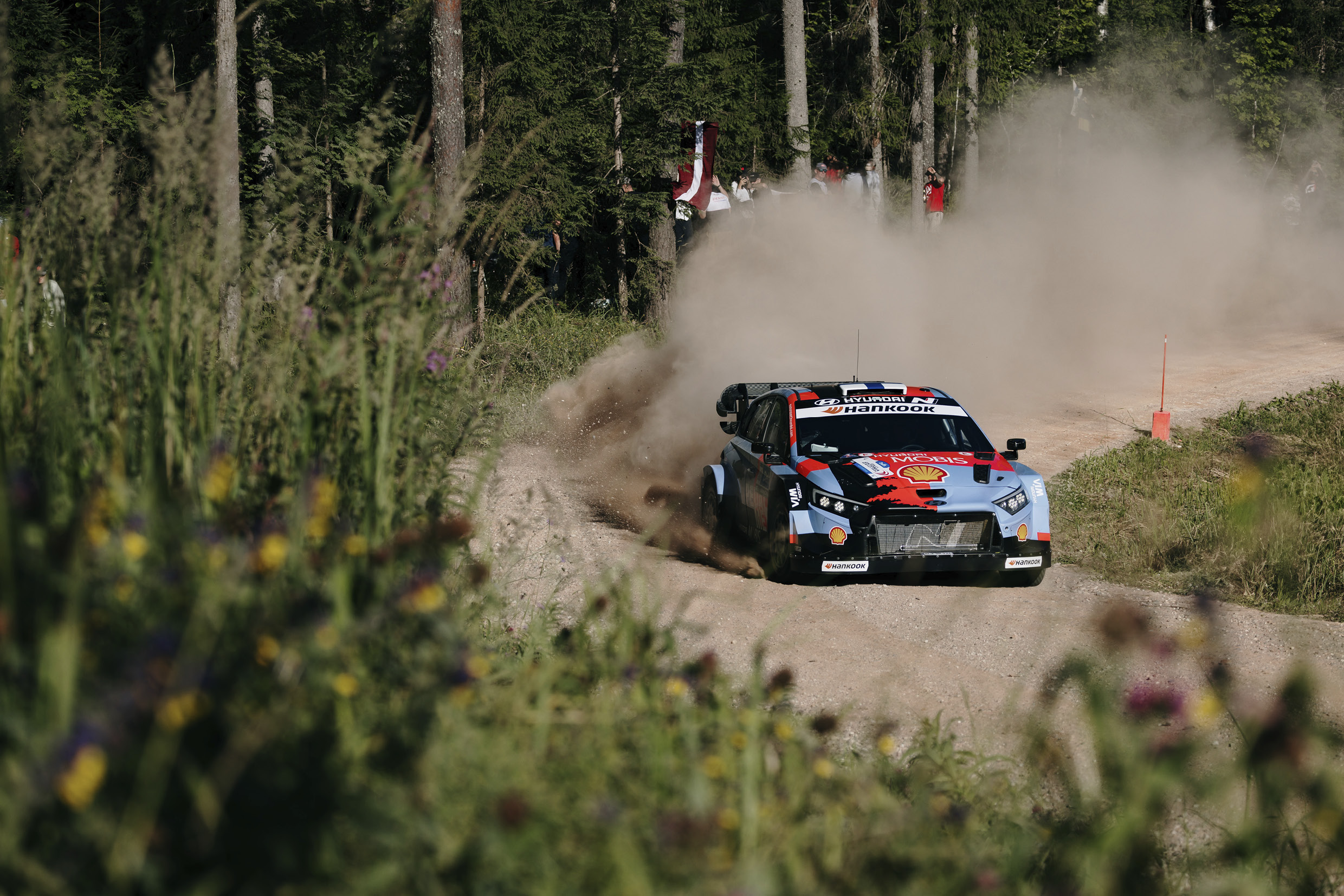
Saturday came loaded. Crews ran Peipsiääre and Mustvee twice in the morning, then repeated Kambja and Otepää in the afternoon before closing the day with a Super Special Stage in downtown Tartu. SS8 through SS16 added up to 149.6 km. Only Pajari selected one hard spare tire; every other driver started the day on five soft tires.
Saturday opened with the 24.35-km SS8 Peipsiääre, one of the longest stages of Rally Estonia alongside Sunday’s 24.39-km Kääriku. It began with a technical section, passed through a quarry, then launched over a big jump at the 2-km mark before flowing onto high-speed pavement. Technical sections and fast stretches alternated through the stage, which finished in the forest.
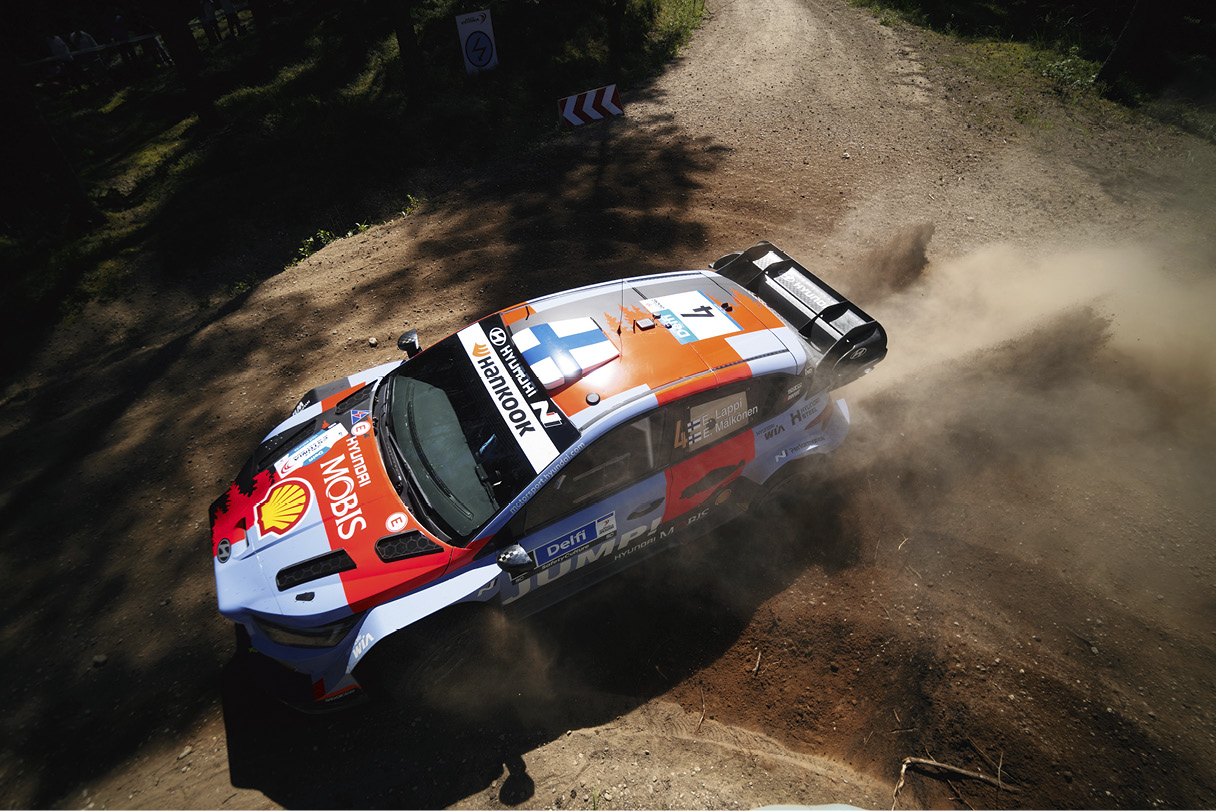
Pajari owned Saturday’s opener as well. Solberg, Fourmaux, and Neuville followed. McErlean’s car stopped at the 13.4-km mark, costing him a long delay. Lappi had climbed to seventh overall the previous day, but Evans passed him and dropped him back to eighth.
Neuville said the car was easier to drive than it had been on Friday. “We need to look at the front. It didn't feel like it was good enough. Somehow I feel better than yesterday and the car seemed to work better we will see. We still need to work a bit. It was more enjoyable for sure.”
SS9 Mustvee began on a wide road before the difficulty spiked in a narrow forest section. Deep ditches beside the road meant even a small mistake could turn ugly. The order at the front looked much like SS8: Pajari led from Solberg, Fourmaux, and Neuville. Fourmaux was still the quickest Hyundai driver. “Yes it is better," he said. "We did some very small changes on the car and it is better. I think it is remake of last year looking at the time.”
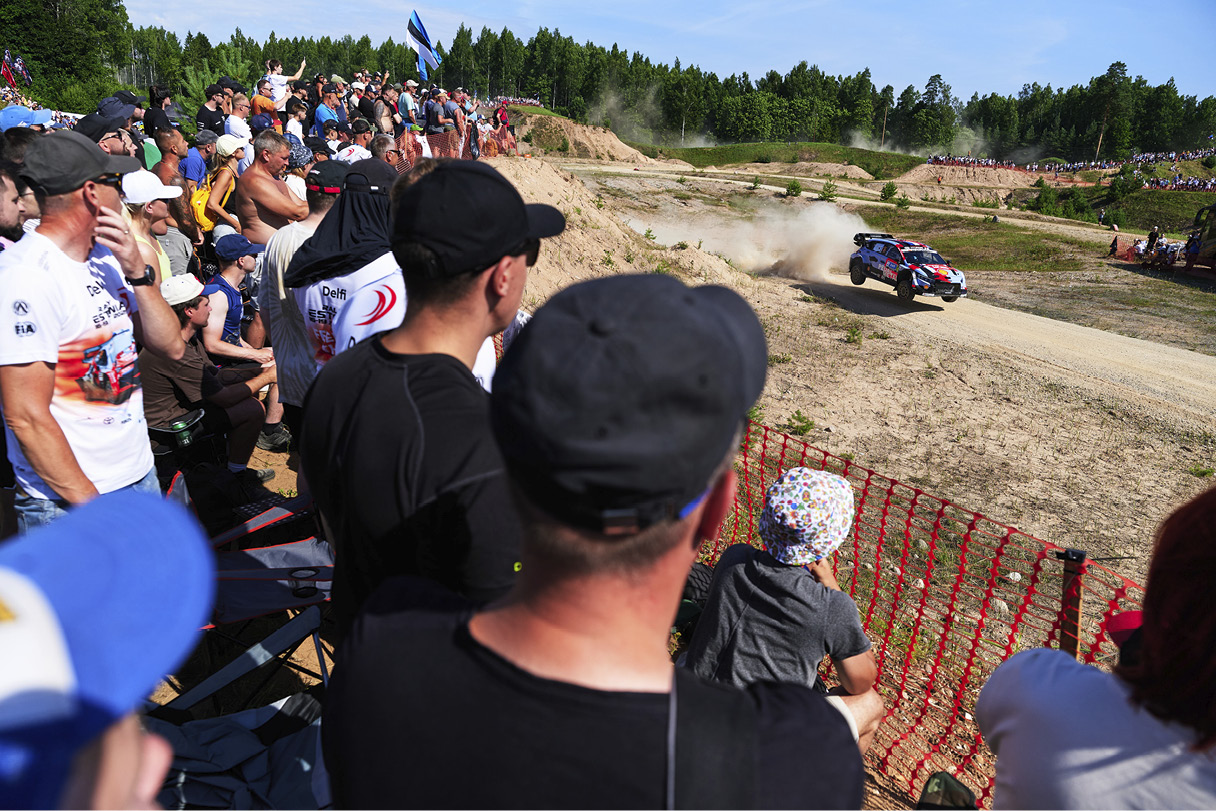
Neuville showed impressive pace on Saturday morning, putting pressure even on his teammate Fourmaux. Video: WRC (http://www.wrc.com)
On SS10, the repeat of Peipsiääre, Solberg finally put a stop to Pajari’s stage-winning run by setting the fastest time. The gap between the two stood at 14.3 seconds. Inside Hyundai, Neuville went faster than Fourmaux. But Neuville also hit a roadside bollard, damaging the bumper and costing the car aerodynamic efficiency. Lappi, meanwhile, closed to within 4.8 seconds of seventh-place Sesks. McErlean retired with an exhaust issue.
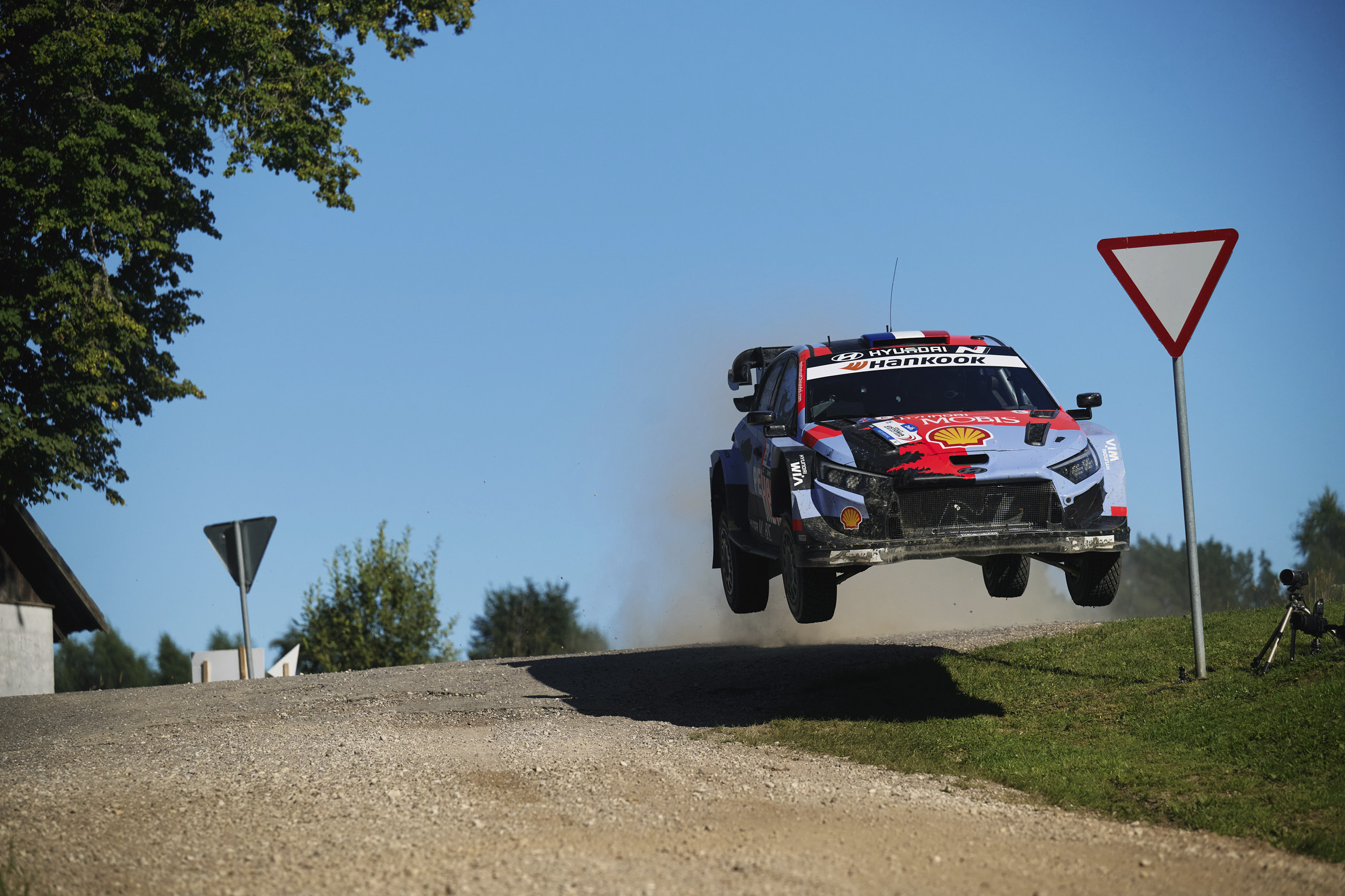
Solberg took a second consecutive stage win on SS11 Mustvee and trimmed Pajari’s lead slightly. Neuville was third quickest, while Fourmaux lost pace late in the stage as tire pressure dropped. Fourmaux held third overall, but Neuville closed the gap to 5.6 seconds. Ogier was chasing the Hyundai pair about 20 seconds back, while Evans continued to recover pace, posting top-five times on every stage of the morning.
SS12 Kambja opened with a wide, flowing section, but after a junction at 2.6 km, the stage fired crews into hills and big jumps in rapid succession. Landing stability and the car’s ability to absorb impact mattered heavily here. It was the kind of stage where trouble could arrive without warning.
Fourmaux had several nervous moments, but quick reactions kept his pace alive. Video: WRC (http://www.wrc.com)
Lappi also nearly went off in a high-speed corner but managed to survive the moment. Video: WRC (http://www.wrc.com)
Pajari was fastest again and stretched his lead over Solberg to 18.1 seconds. Fourmaux was third. “That was very beautiful stage," he said. "I was really enjoying it. It was very slippery to be fair. There was no grip at all. I'm happy with the pace, it's okay.”
Lappi, who survived a big scare during the stage, explained the moment: “I had understeer completely when the corner tightened. We went wide. That was the thing I was afraid of all the time. It doesn't build up my confidence. I didn't watch how close I was to a tree.”
SS13 Otepää was based on the 2022 version but shortened to 15.16 km after changes to the finish section. It started fast and featured big jumps throughout. After the arena section at 6.6 km, a flat-out asphalt stretch began around the 10-km mark before the route switched back to gravel at 11.3 km. From there, it finished with a slower, more technical section.
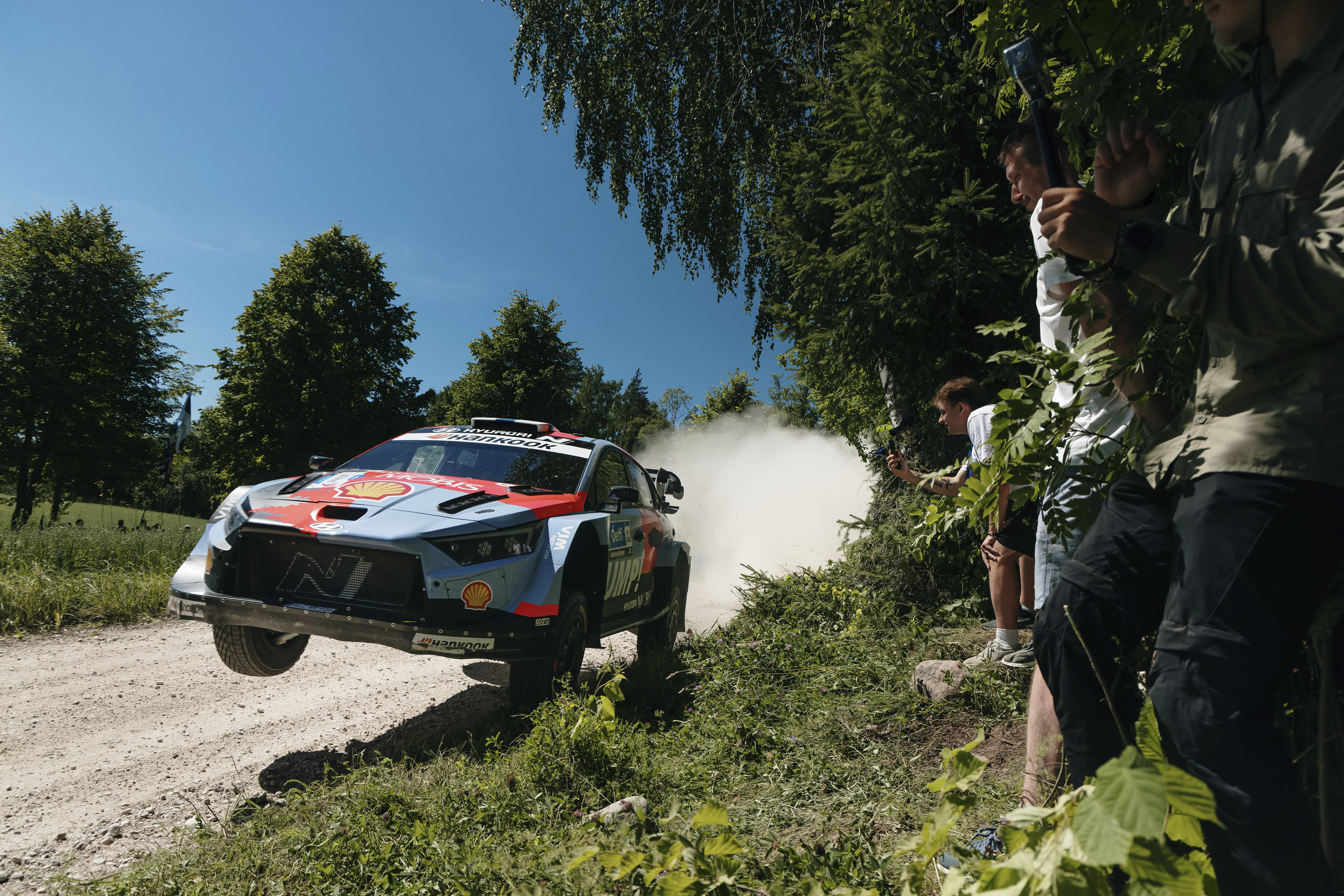
Pajari was fastest again and stretched the gap over Solberg to 21.4 seconds. Behind Solberg, Fourmaux and Neuville were locked into the fight for third, separated by just over 7 seconds. This time, Neuville was 0.3 second faster than Fourmaux.
On SS14 Kambja, Neuville and Fourmaux chased hard behind stage winner Pajari, each separated by 1.1 seconds. Neuville said: “It was good. I had a very good clean run. I felt the tires were overheating a bit so they must be blistering quite a bit. At some point I tried to manage and then I said go for it. Let's see if it is a good strategy."
SS15 was the repeat of Otepää, and with a big crowd watching, Neuville claimed his first stage win of the rally. “Martijn was trying to hold the window as it came loose after the jumps. We had a lot of dust in the car. I feel better in the car and we are progessively improving.”
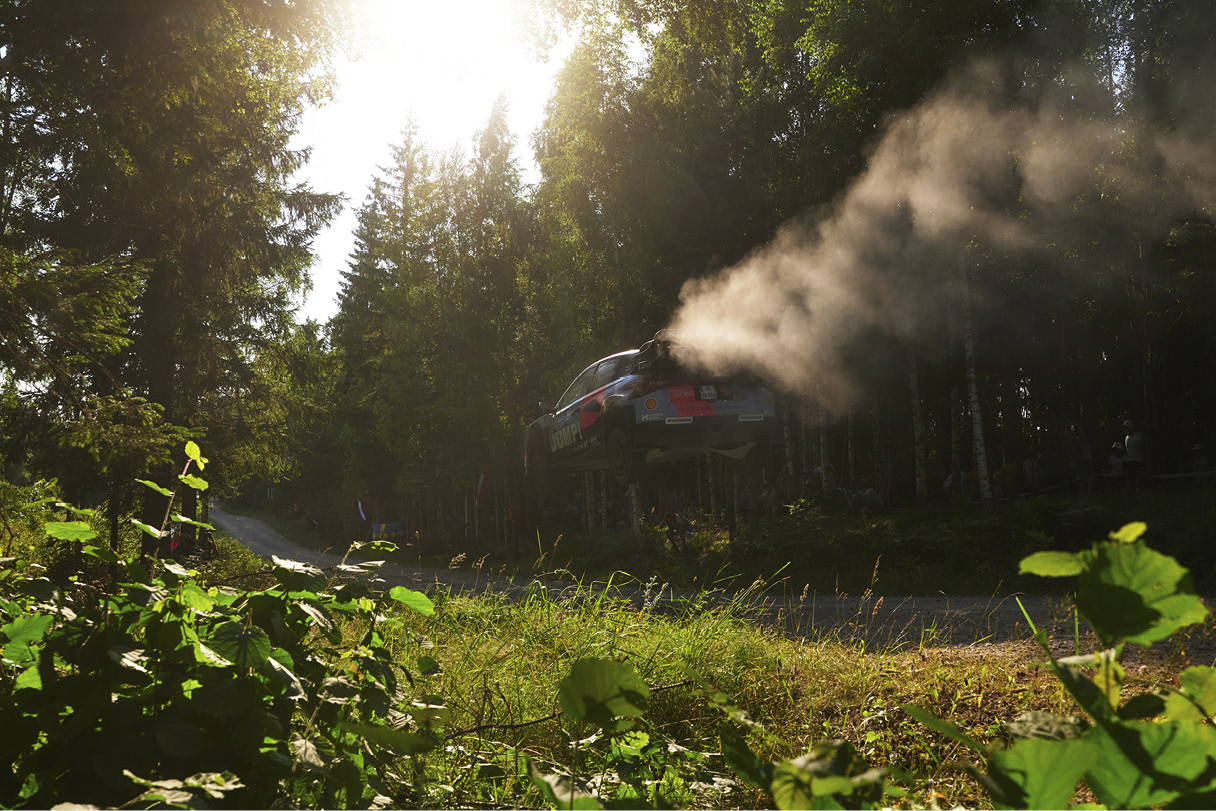
Saturday ended with the short SS16 blast through Tartu. Pajari still had the rally under control, and although Solberg won the stage, he took back only 0.8 second. Fourmaux came under heavier pressure from Neuville, who closed to within 1.9 seconds, but the Frenchman kept Hyundai’s final podium spot in his hands. “I'm quite happy with the day. We had some tire issues this morning, puncture, etc., so that was quite nice to manage it. And this afternoon, we had quite a lot of tire wear to repair, but overall, I'm quite pleased with the day. It's a shame the time in the previous stage, but I tried my best.”
Ogier, Evans, and Sesks lined up behind the Hyundai pair, with Lappi sitting eighth overall. In WRC2, Robert Virves held the lead, but the real knife fight was right behind him, where Roope Korhonen and Teemu Suninen were split by just 0.8 second.
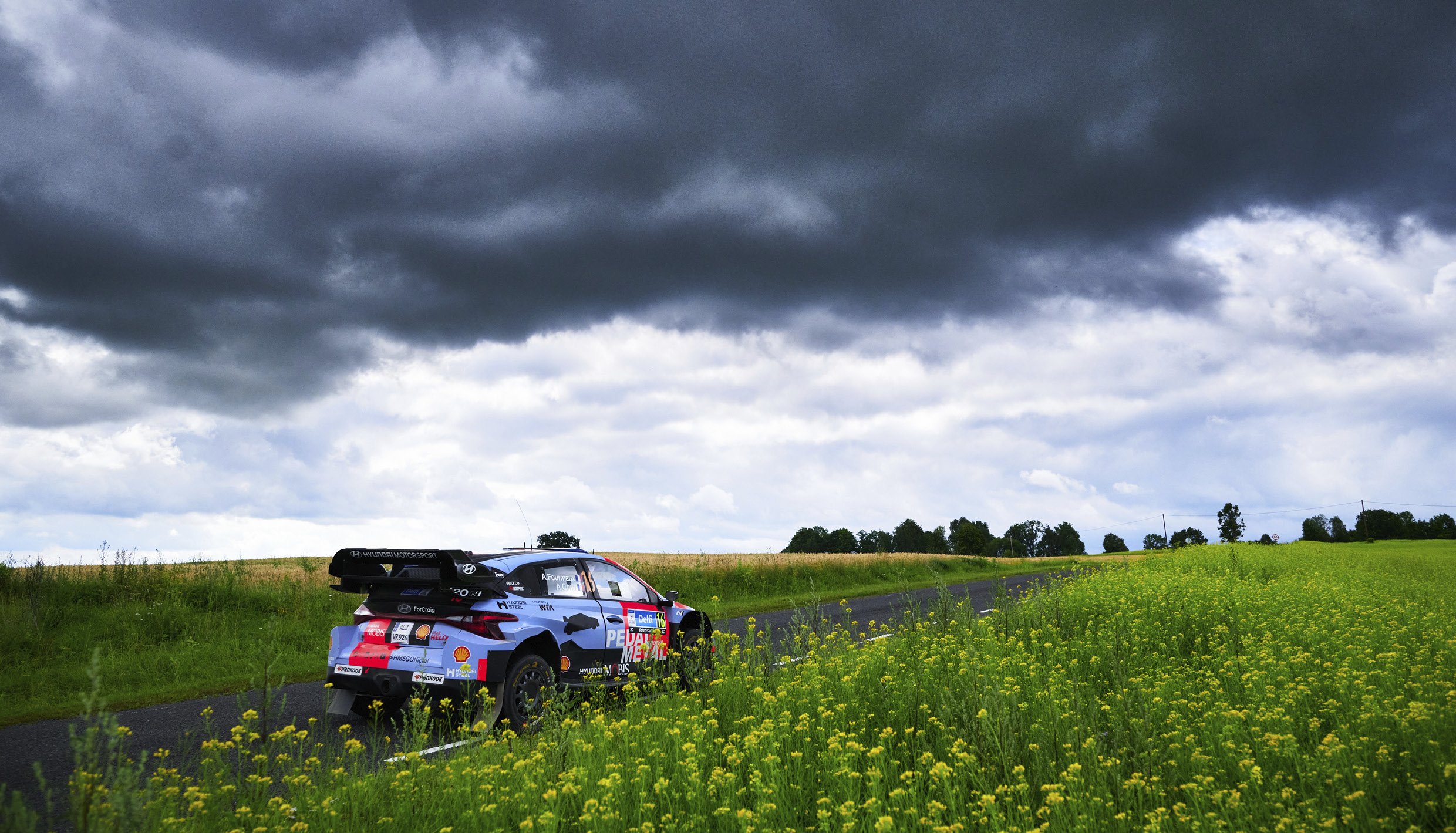
Sunday looked simple on paper: run the 24.39-km Kääriku stage twice. It was the longest stage of the rally and one of Rally Estonia’s signature tests, so the fans turned out in force. But simple did not mean easy. Kääriku demanded a careful balance between carrying serious speed and keeping the tires alive.
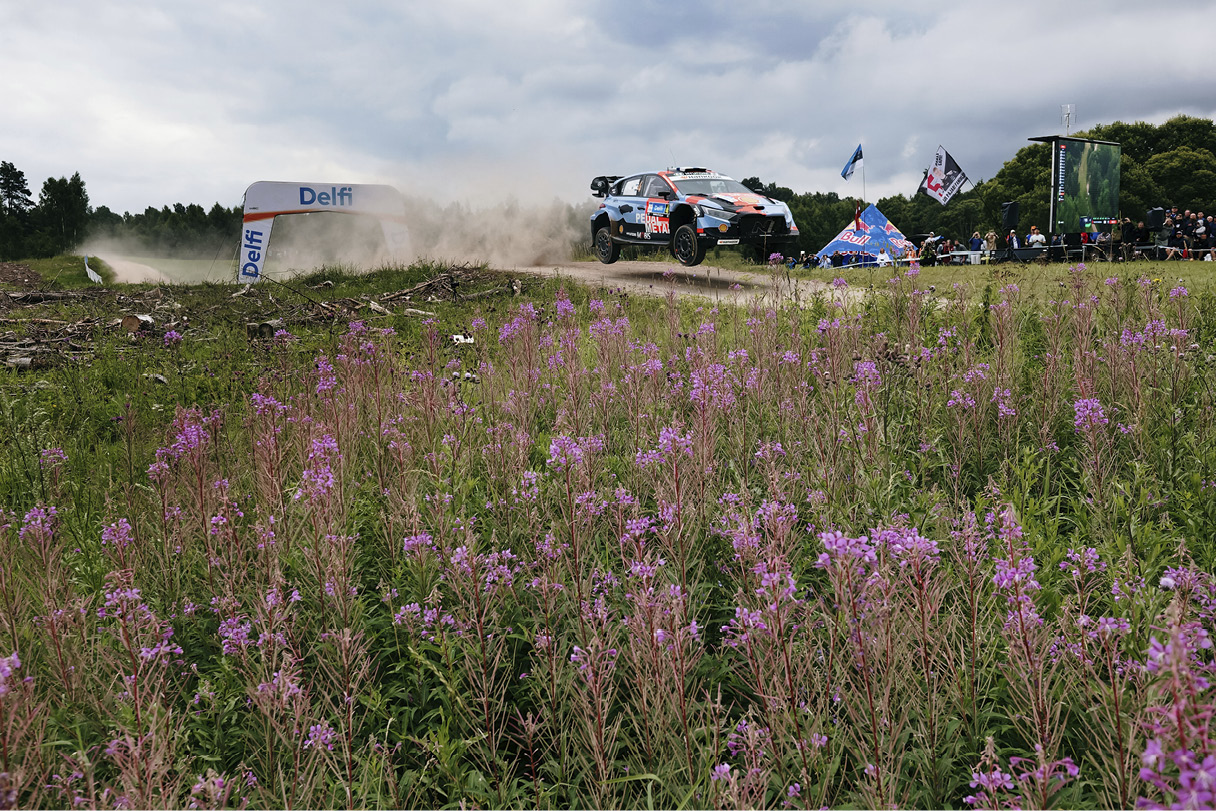
Fourmaux and Neuville pushed hard on the final day, keeping Hyundai’s chase alive. Video: WRC (http://www.wrc.com)
At 11:05 a.m., SS17 got underway. Solberg set the fastest time, with Pajari right behind. The gap between overall leader Pajari and second-place Solberg stood at 24.6 seconds—too big to erase without a mistake or mechanical trouble. Fourmaux was third quickest. Neuville fought to the end, but his pace faded, and he lost ground in the battle with Fourmaux for third overall. The gap between the two Hyundai drivers grew to 9.8 seconds.
Then came SS18, the repeat of Kääriku. It was the final stage of the rally and the Power Stage, with bonus points on the line. Solberg went fastest again, followed by Neuville and Evans. But none of it was enough to stop Pajari from taking the first win of his WRC career. Solberg finished second, while Hyundai’s Fourmaux claimed third. With Pajari, Solberg, and Fourmaux all representing rallying’s next wave, the podium felt like another sign that the WRC’s generational shift is already underway.
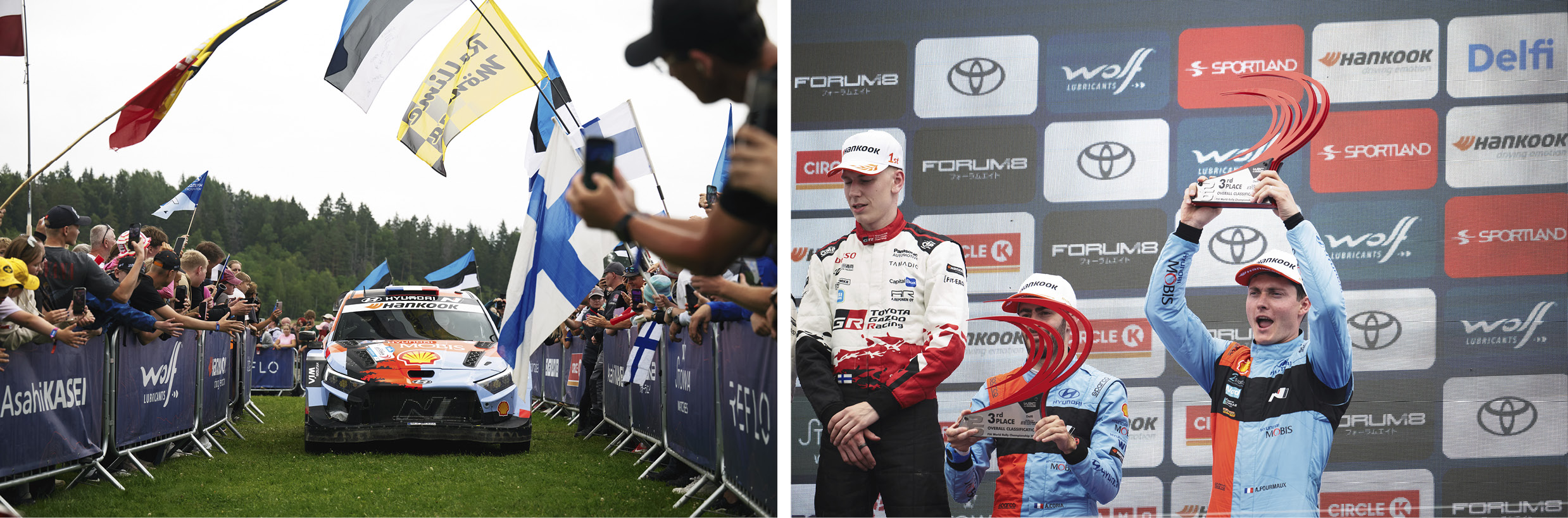
After the rally, Fourmaux said: “It is great to be back on the podium sicne Kenya. It has been a very good weekend drivng this car. I'm enjouying the Rally1 car and the speed we are carrying is amazing. Thanks to the team for the preparation and everyone supporting me. Let's see what we can do in Finland.”
Neuville finished fourth, but he collected four Power Stage points and left Estonia with the same total score as Fourmaux. Both Hyundai drivers now sit on 111 points. Lappi also reached the finish, taking eighth overall.
In WRC2, home driver Robert Virves won for the second year in a row. It was also his third win of the season after Kenya and Greece, putting him in a strong position in the championship fight.
Round 10 follows from July 30 to August 2 in Finland, Toyota’s backyard. One of the most loved events on the calendar, Rally Finland is famous for huge speed, massive commitment, and one of the best nicknames in rallying: the “Gravel Grand Prix.”
Written by: Soo-jin Lee
In 1991, Lee’s passion for cars led him to enthusiastically write letters to the newly launched Korean car magazine Car Vision. This unexpected connection led him to start his career as an automotive journalist. He has served as editor and editorial board member for Car Vision and Car Life, and now works as an automotive critic. While eagerly covering the latest trends like electric vehicles, connected cars, and autonomous driving technology, he is also a car enthusiast who secretly hopes that the smell of gasoline engines will never disappear.