Secto Rally Finland is one of the most historic events in the WRC, and the kind of rally every driver wants to win. When it first ran in 1951, it was closer to an endurance event that served as a regional qualifier for the Monte Carlo Rally.
By the mid-1950s, it had evolved into a more modern rally format, with multiple competitive stages, and began using the name “1000 Lakes Rally.” The name came from Finland’s geography, a country filled with lakes, and it remains familiar to rally fans even today. Rally Finland joined the calendar when the WRC was founded in 1973, and its popularity and prestige have kept it there ever since. The event officially became Rally Finland in 1997.
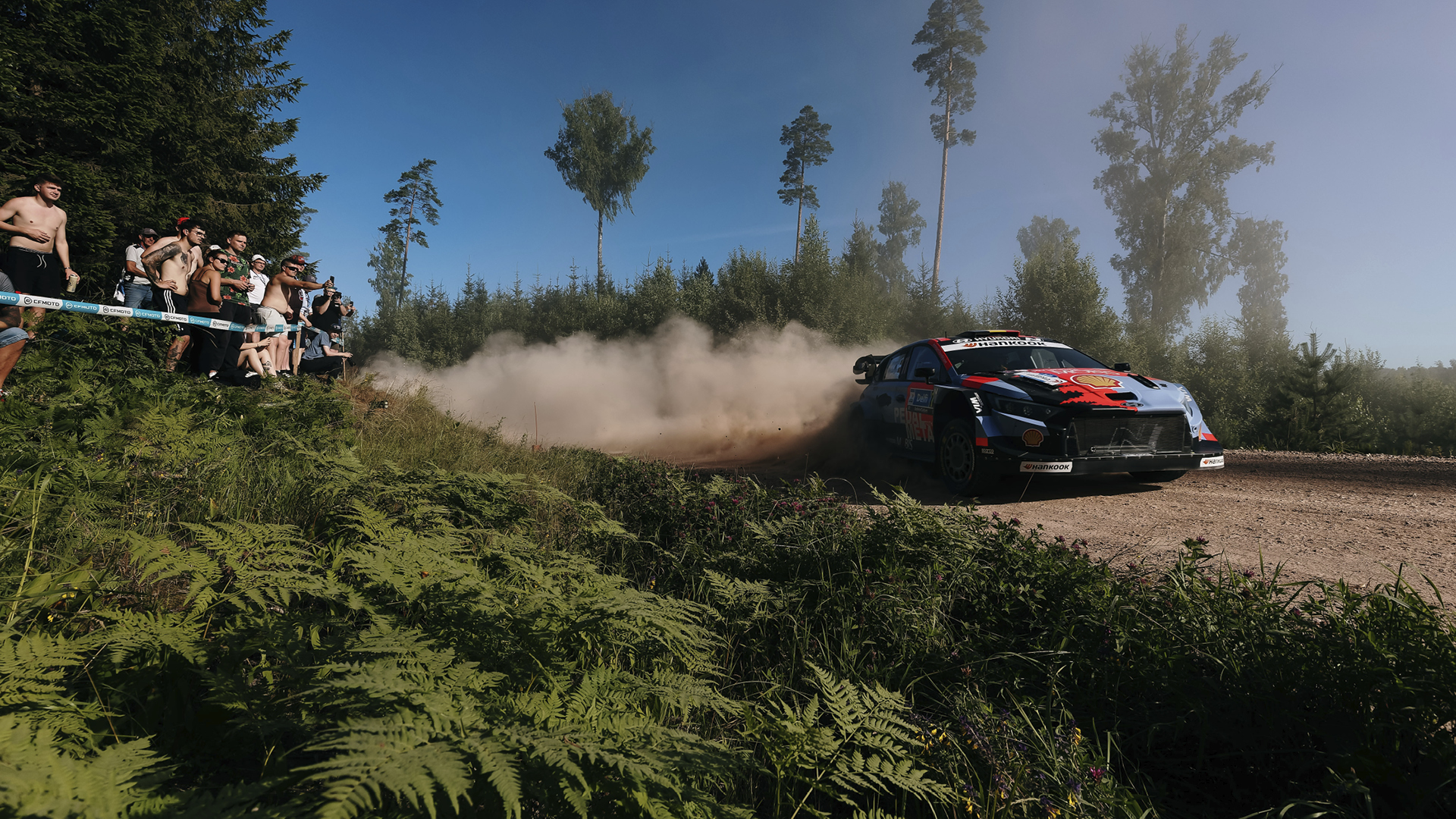
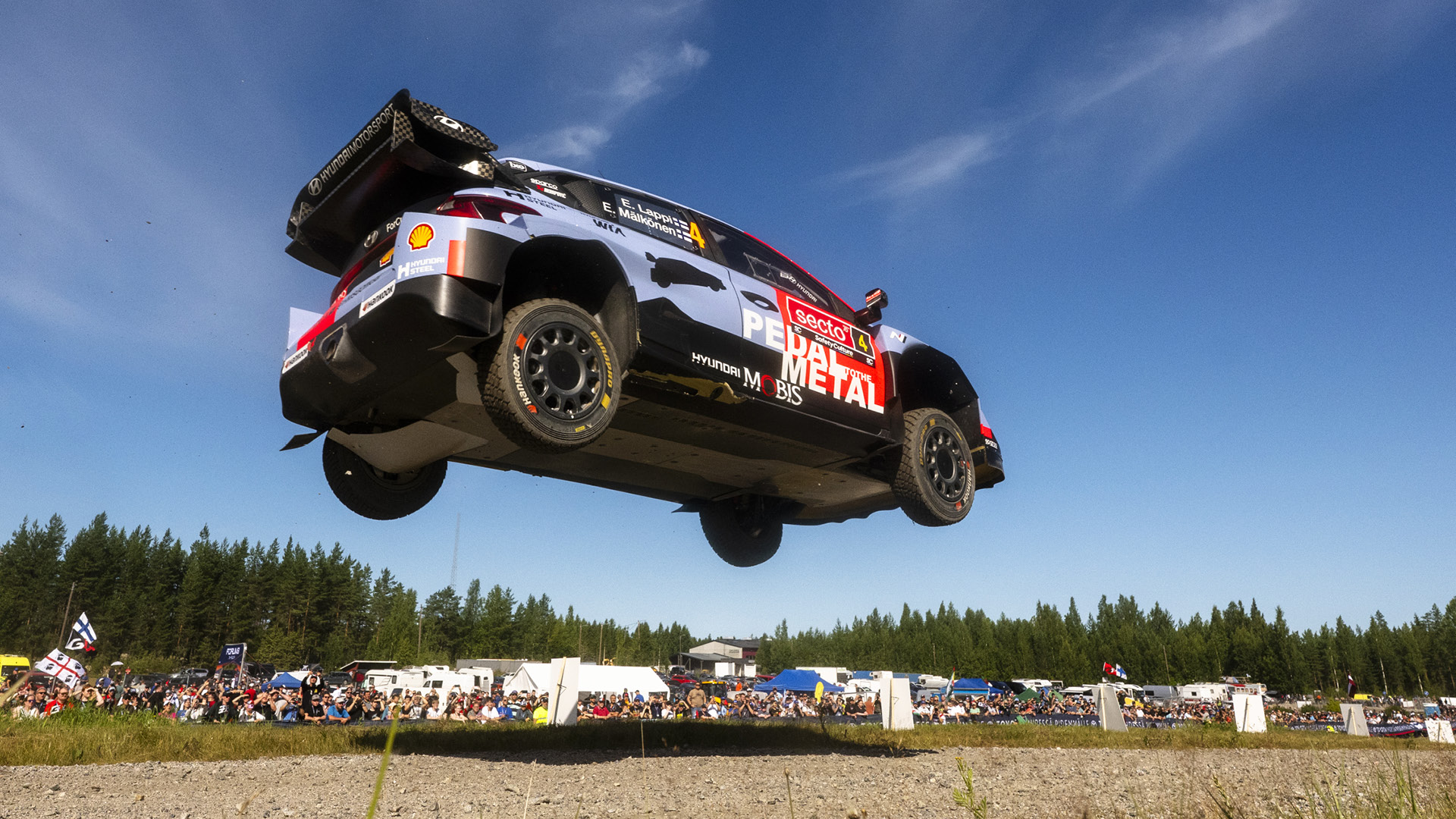
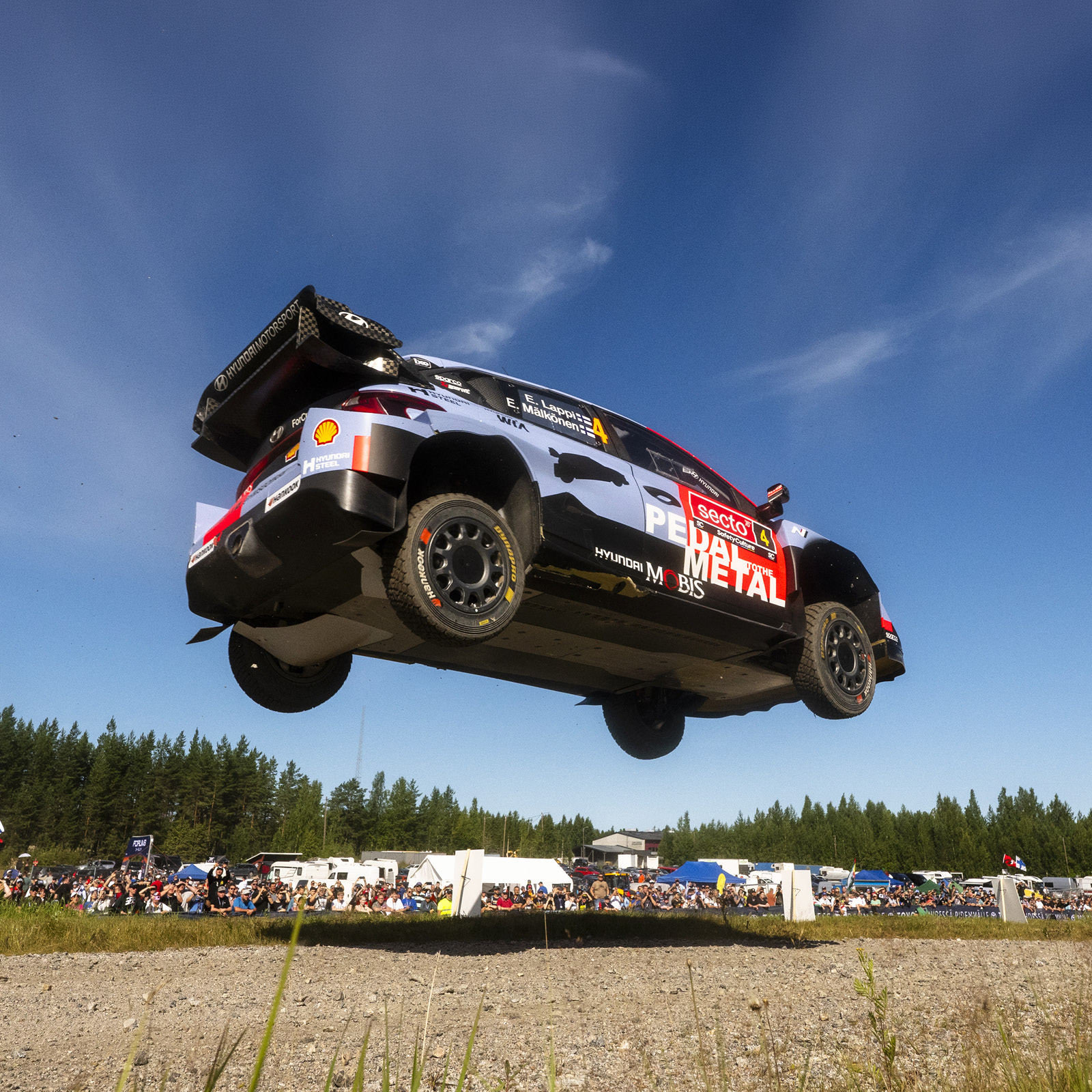
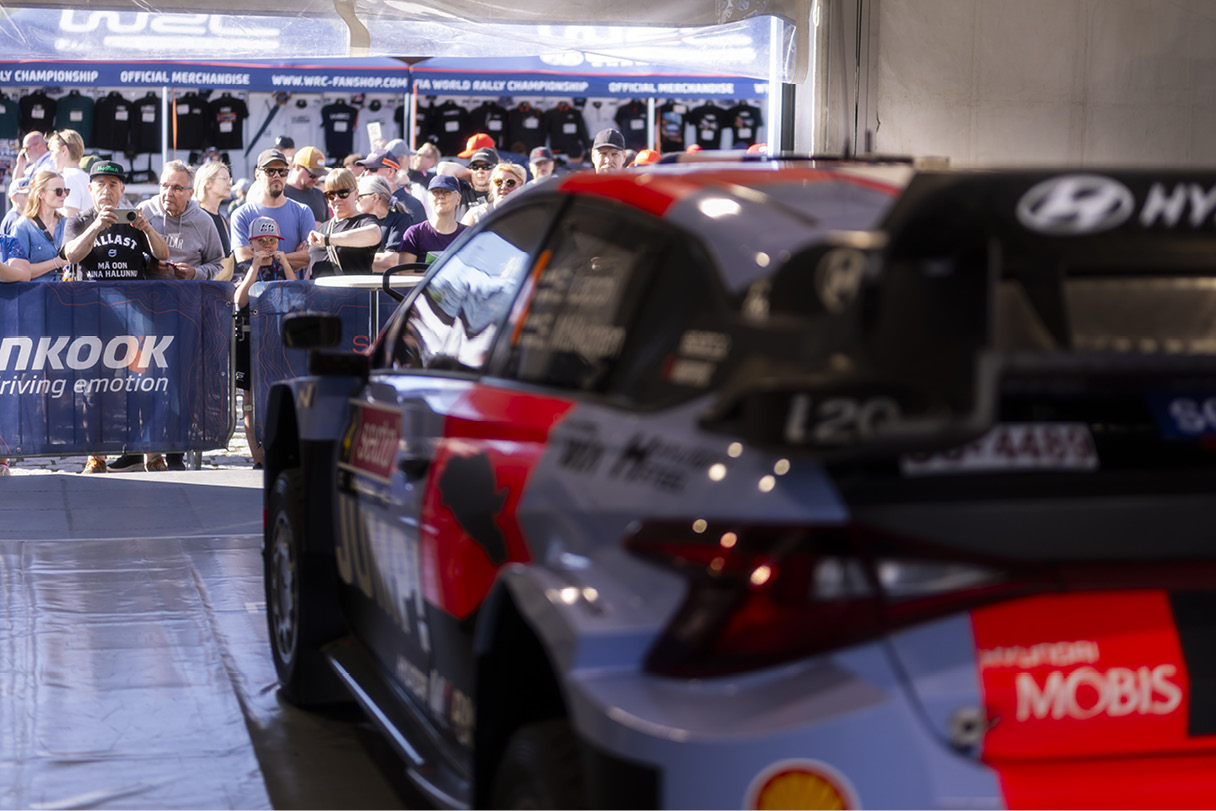
Rally Finland is high-speed gravel in its purest form: full commitment, blind crests, huge jumps, and zero room to second-guess the pace notes. Cars charge down Finland’s gravel roads at roughly 75 mph, or about 120 km/h, which is why the event has long carried one of rallying’s best nicknames: the “Grand Prix on Gravel.” The firm, slightly damp surface delivers massive grip, but the route is packed with blind crests* that can launch a Rally1 car dozens of meters through the air. Toyota has owned this rally in recent years, and the only driver to break that streak was Hyundai’s Ott Tänak in 2022.
*blind crest: A hilltop that blocks the driver’s view of what comes next.
Winning in Finland takes more than bravery. It takes razor-sharp pace notes, total faith in the co-driver, precise car control, rhythm, and the nerve to stay committed when the road disappears over the next crest. Teams also need years of real-world data to know how hard they can attack Finland’s jumps and corners without destroying the car on landing. Experience usually matters here, but this year’s route shook up the formula: roughly 66 percent of the stages had been changed, giving less experienced drivers a slightly better shot.
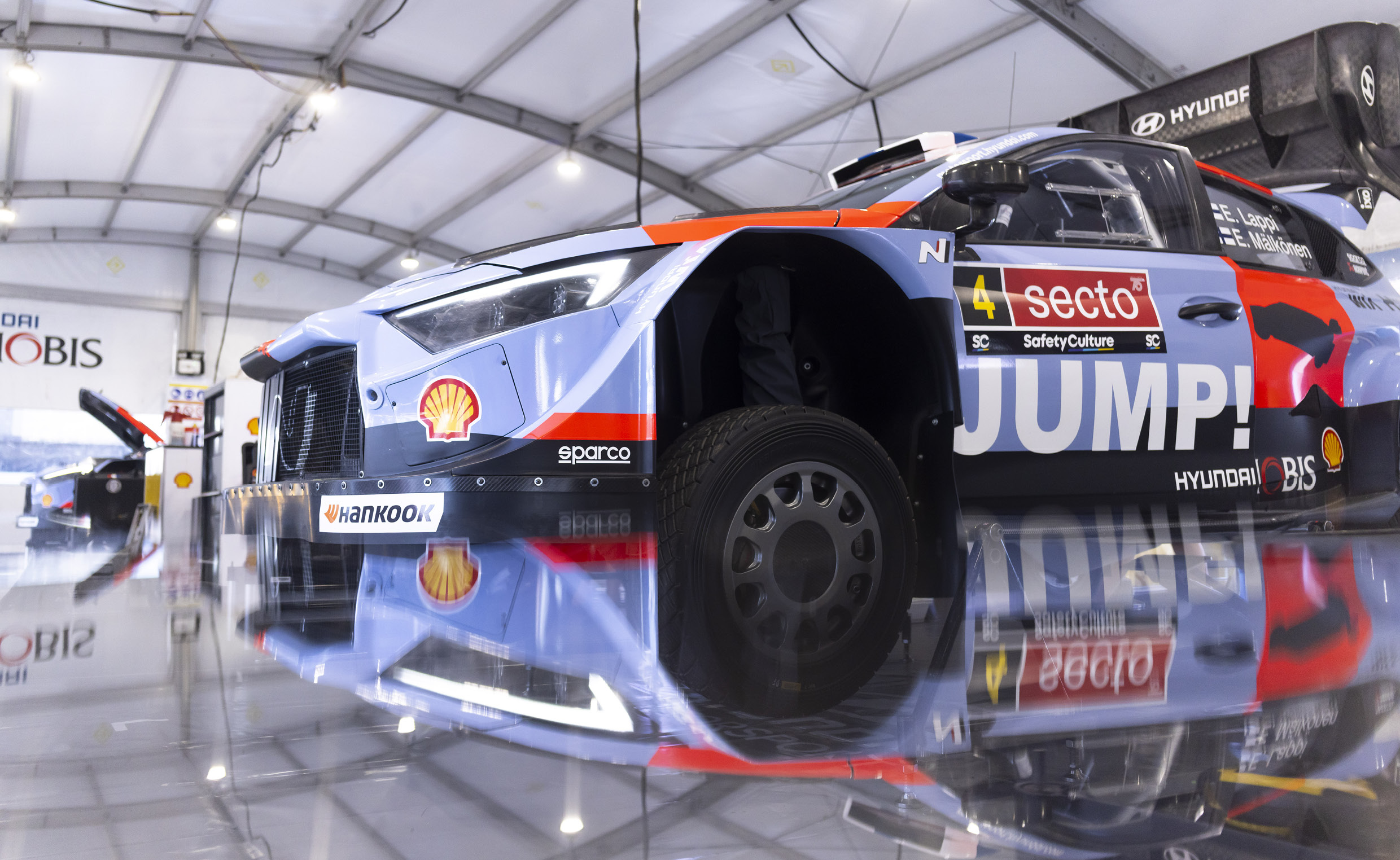
Hyundai Motorsport carried over its Estonia lineup with Thierry Neuville, Adrien Fourmaux, and Esapekka Lappi. Hyundai sporting director Andrew Wheatley sounded encouraged, saying the development work from the past few months was starting to show in the results.
Road order also looked useful for Hyundai. Fourmaux and Neuville, starting between sixth and eighth based on the overall standings, were set to get a cleaner line than the cars running ahead. But Finland always has a trap waiting. If rain hit, that advantage could disappear fast. On wet gravel, the first cars can tear up the road, expose bigger rocks, and turn tire damage into a serious threat.
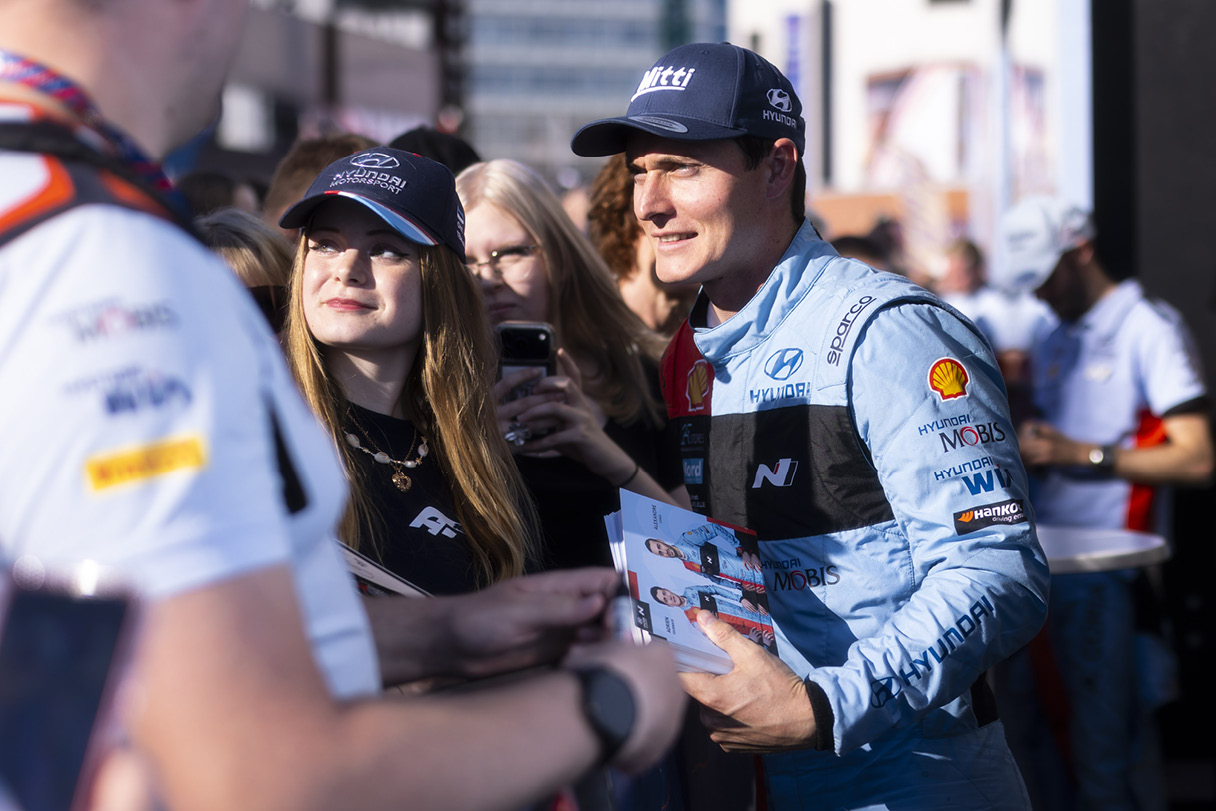
Fourmaux arrived with momentum after finishing third in Estonia. He had also taken third at Rally Finland last year, and he sounded ready to keep that run alive. “We have a good road position, completed a positive test in Finland, and we'll be pushing hard,” he said. “I'm confident we can fight for another podium.”
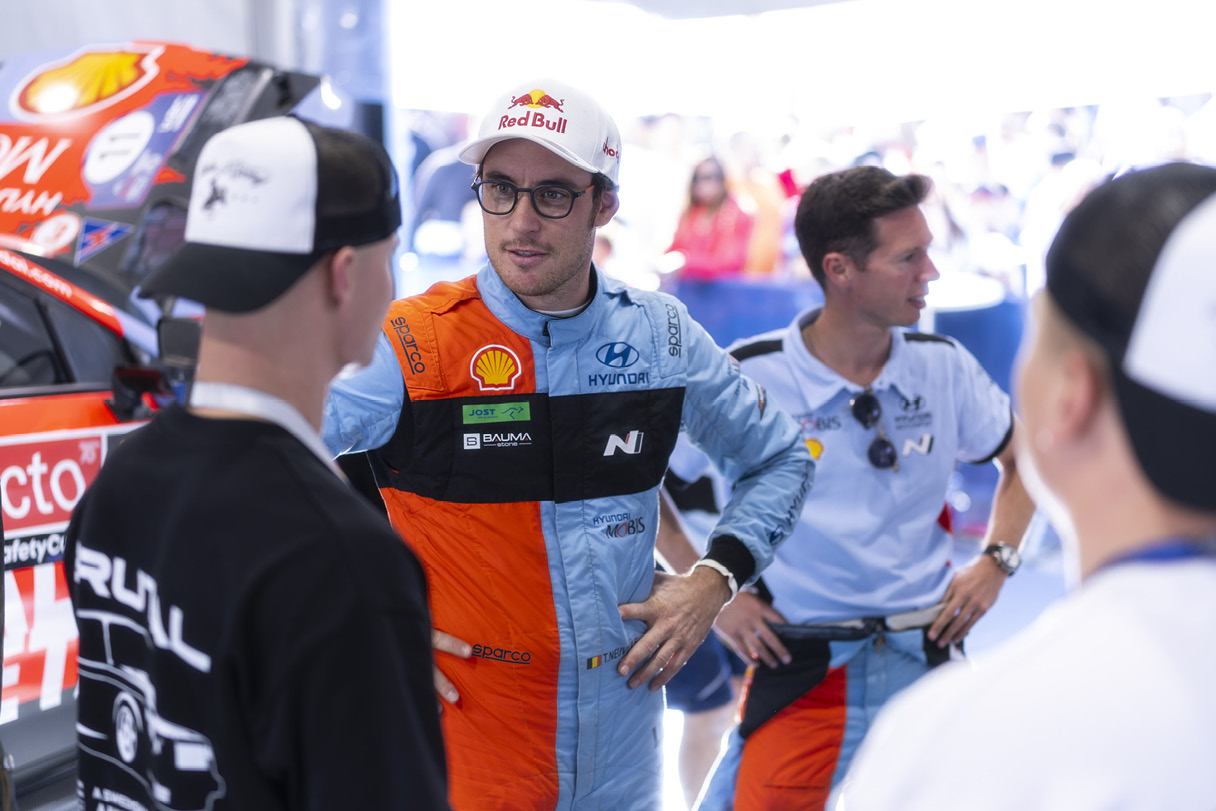
Neuville finished fourth in Estonia. "There are a lot of similarities between Estonia and Finland, but for me the biggest difference is the surface. Estonia is softer and more gravelly, whereas Finland has much higher grip, so sometimes it feels a bit like driving on tarmac. There are also more crests and blind corners," he said. "We learned a lot in Estonia and still have a little room for improvement, so we'll be working to make the car even stronger ahead of Finland."
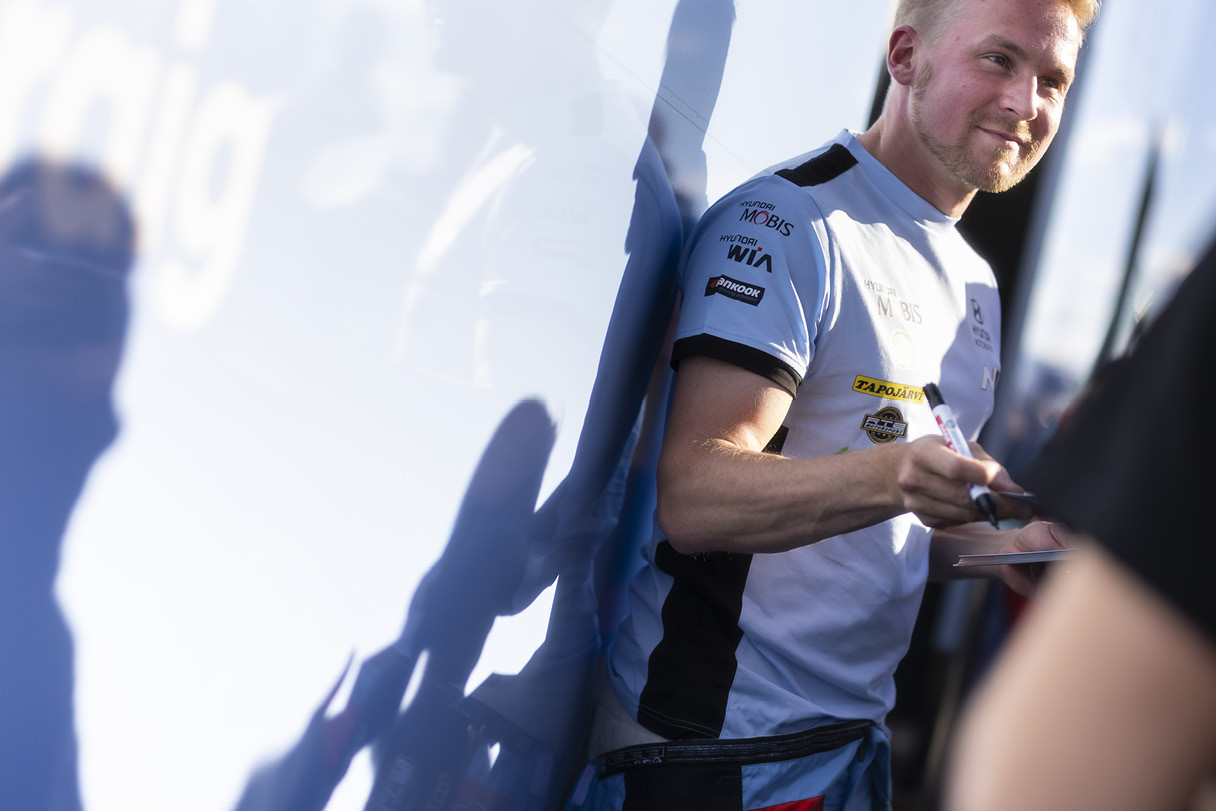
Lappi had a tougher run in Estonia, raising concerns that Hyundai still had work to do on its high-speed gravel setup. But for the Finnish driver, Rally Finland was personal. "It will be nice to be back at my home rally, even if I probably don't have an advantage after missing the event last year. At rallies like Finland, experience counts for a lot because the regular competitors know from memory how much speed they can carry into every corner and crest. There are some new stages this year, so everyone starts with a slightly cleaner slate, which should help us to have better chances. After Estonia, the goal is simply to improve, have a stronger weekend and be closer to the front," he said.
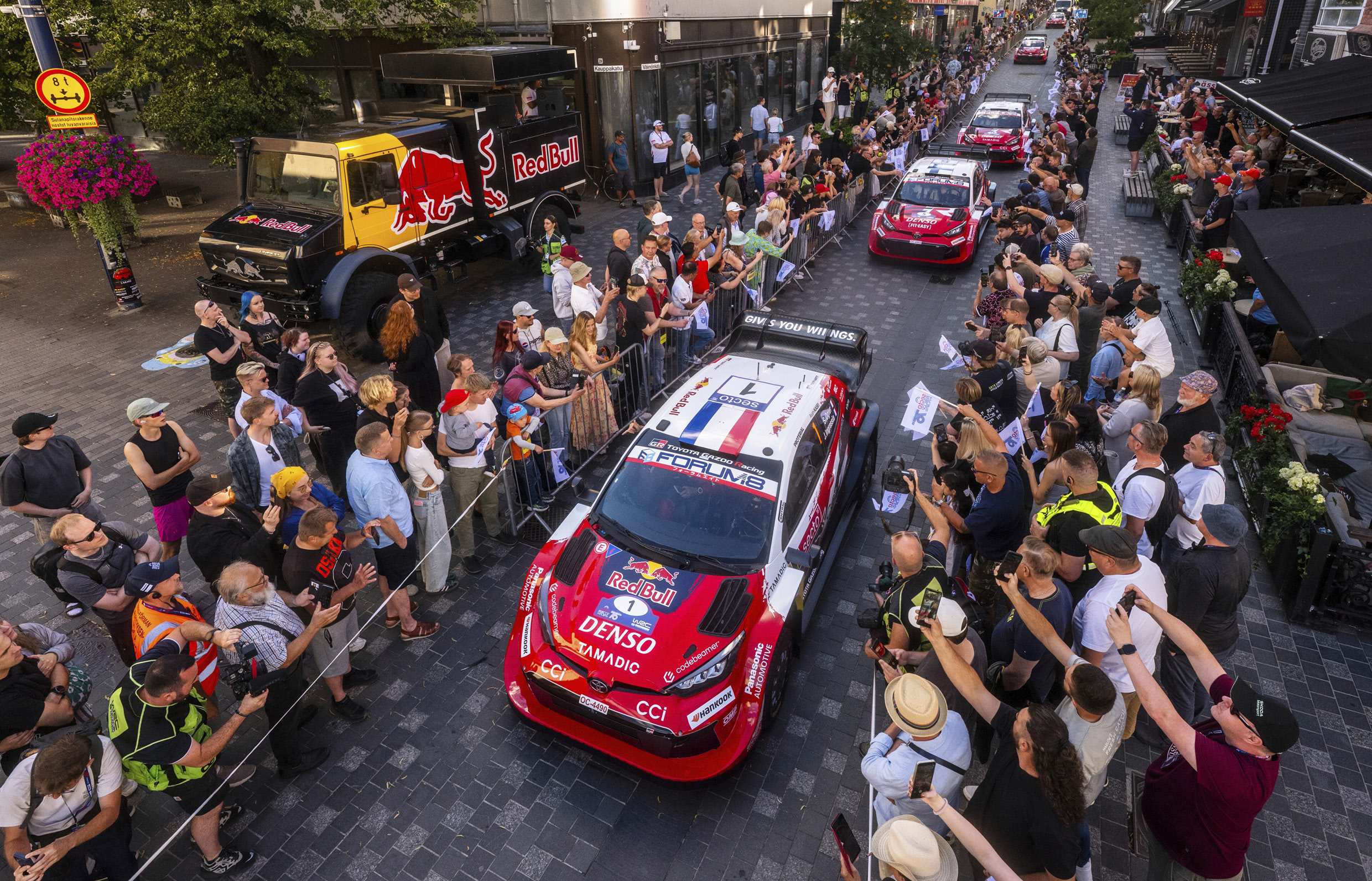
Toyota came into Finland with the home-field advantage and a loaded five-car attack: Elfyn Evans, Sébastien Ogier, Oliver Solberg, Takamoto Katsuta, and Sami Pajari. The team is based in Jyväskylä, right in the heart of Finnish rally country, and all five Toyota drivers had already won this season. The message was simple: no team orders, no holding back, just let them race. Evans won Rally Finland in 2021 and 2023, while Ogier won in 2013 and 2024. Katsuta also knows the area well, having lived in Jyväskylä for 10 years, and he already has two Finland podiums to his name.
Ogier also had a familiar voice back in the car. With co-driver Vincent Landais stepping away briefly for personal reasons, Ogier reunited with Julien Ingrassia, his former co-driver and longtime championship partner. Ingrassia helped Ogier win eight world titles through 2021, and this rally marked his first WRC return in roughly 2,000 days. Another Toyota star was back in the spotlight, too. Kalle Rovanperä, who won the WRC title with Toyota in 2022 and 2023 before stepping away from rallying, appeared at Rally Finland and ran demo drives on Thursday and Friday.
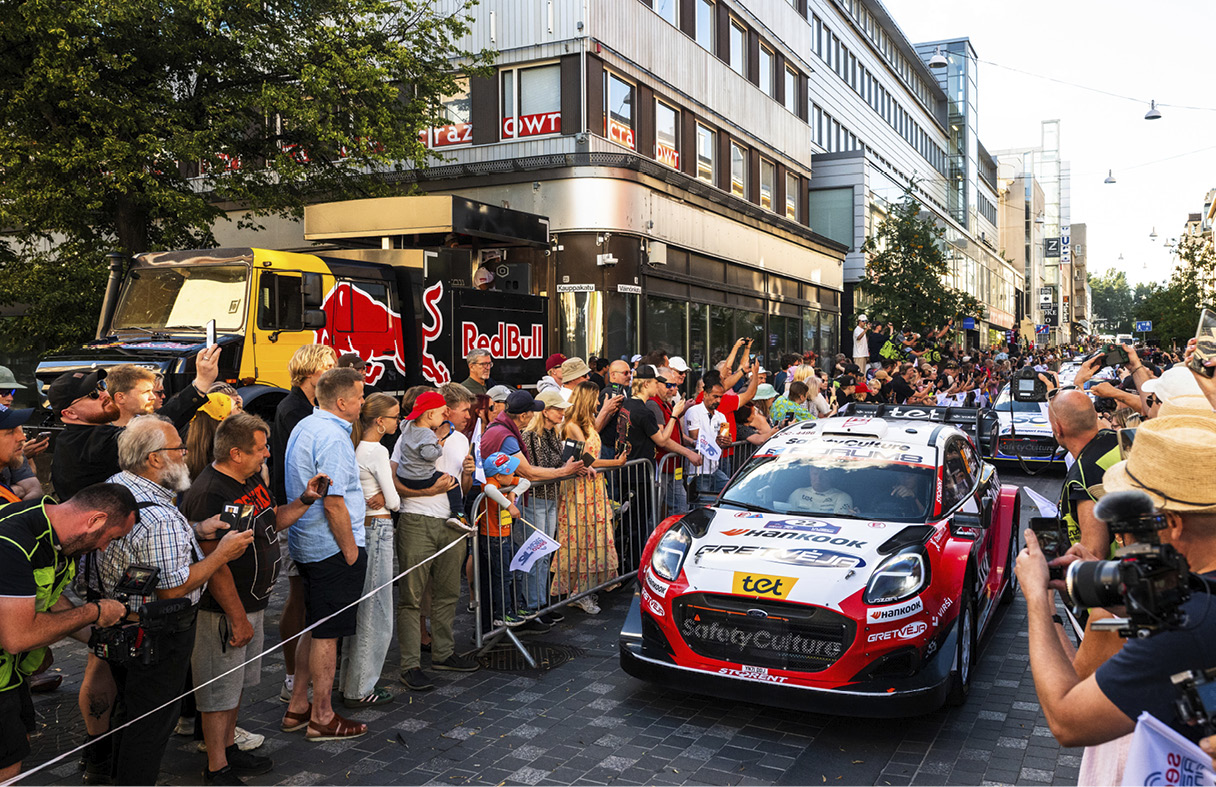
M-Sport Ford also carried over its Estonia lineup, entering Josh McErlean, Jon Armstrong, and Mārtiņš Sesks. McErlean finished seventh in Finland last year, while Sesks finished eighth. Armstrong had driven Rally Finland before as a rookie, but this was his first shot at the event in Rally1 machinery.
Fourmaux set the fastest time on Thursday’s SSS1 and moved into the lead. Video: WRC (http://www.wrc.com)
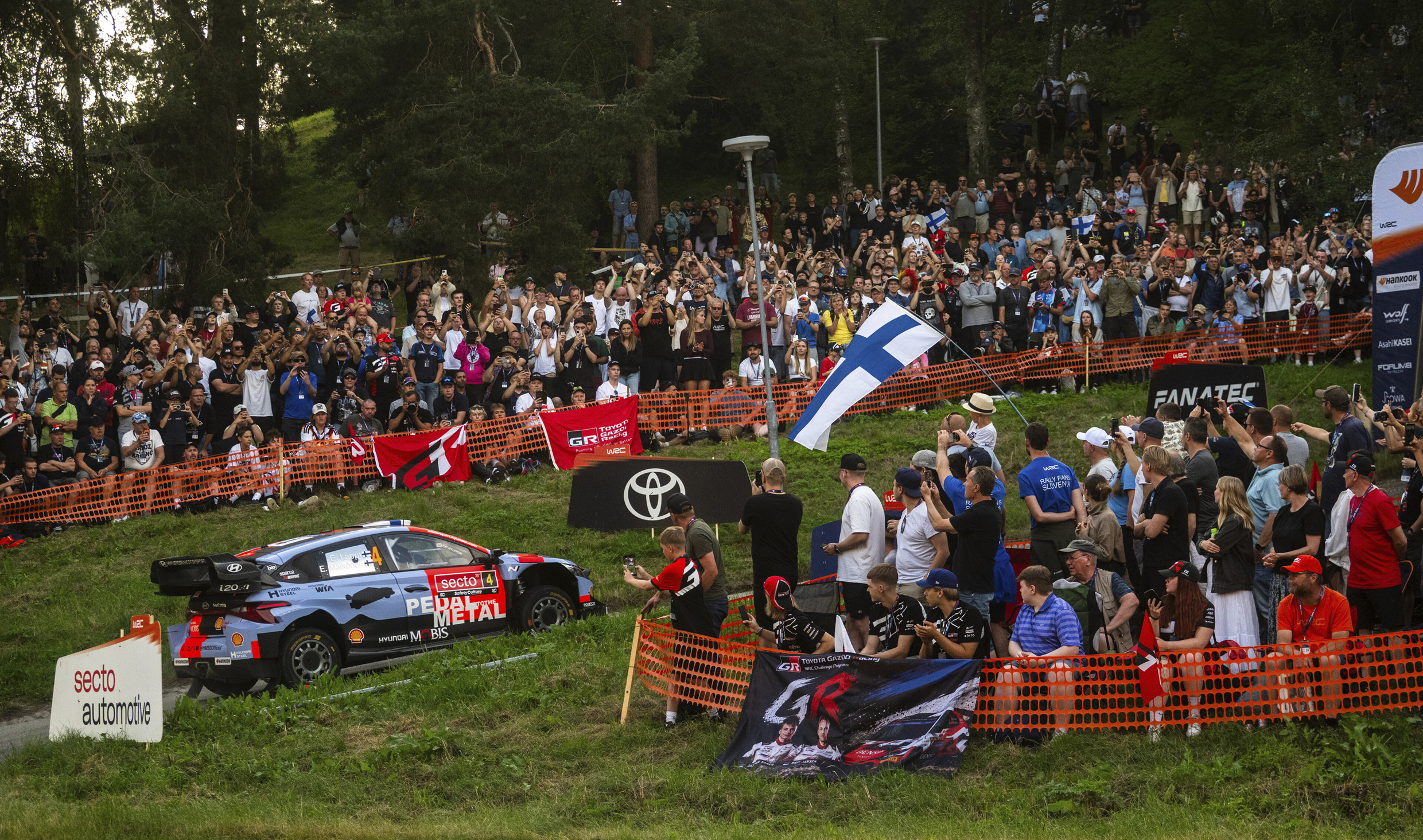
At 7:05 p.m. on Thursday, July 30, Rally Finland fired off with SSS1 Harju, the short mixed-surface blast through a park in downtown Jyväskylä. Part asphalt, part gravel, and packed with fans, Harju is more than a warm-up act. It is one of the rally’s signature openers, and this time Hyundai grabbed it by the throat. Fourmaux went fastest, Neuville slotted in 1.1 seconds behind, and Hyundai ended Thursday one-two. Evans, Ogier, Katsuta, and Pajari followed, while Lappi sat eighth, 3.0 seconds off the lead.
Neuville finished second, 1.1 seconds behind Fourmaux. Video: WRC (http://www.wrc.com)
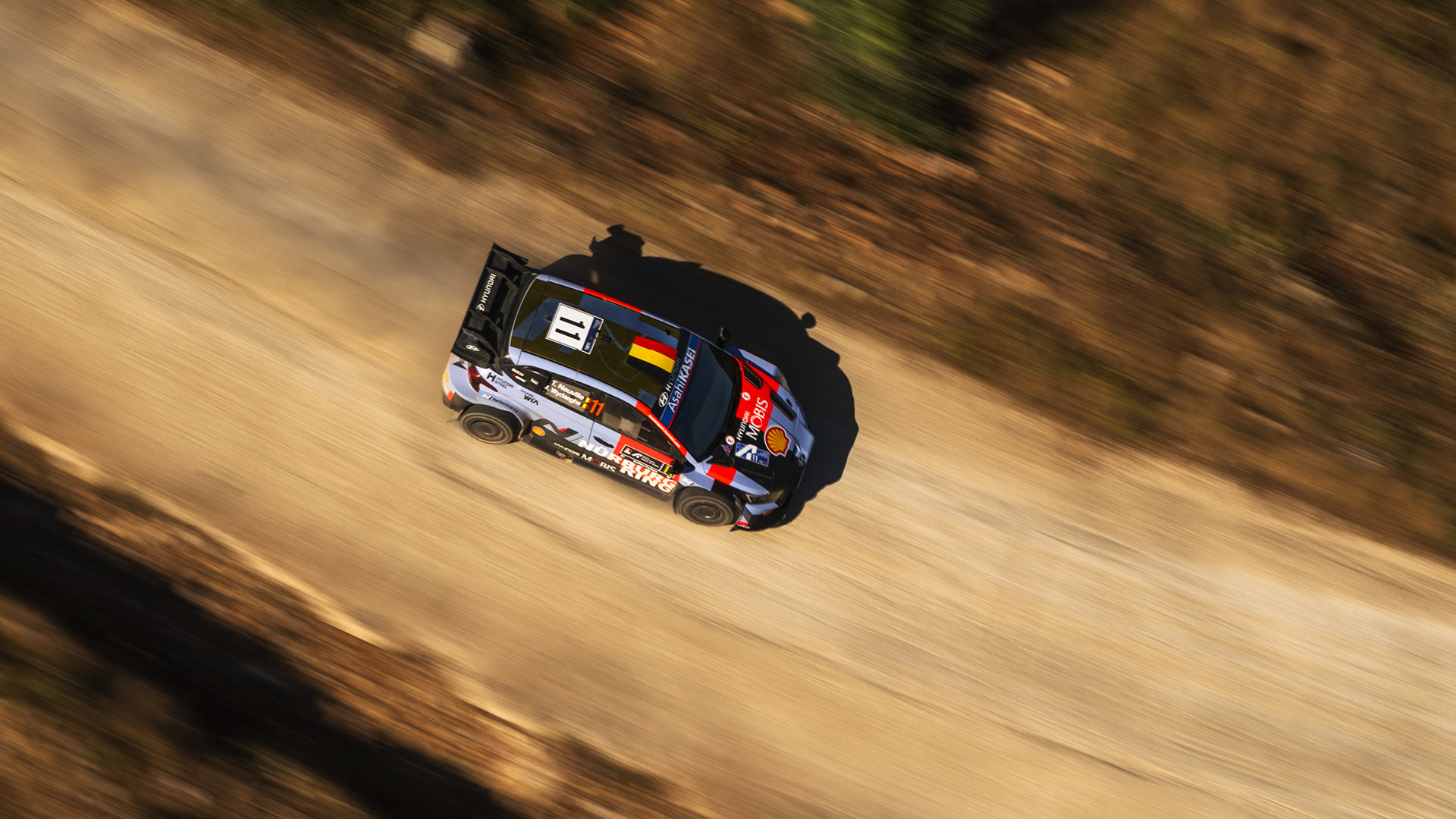
Neuville ended the opening day second overall and sounded ready for a proper Finland fight. ”l'm always hungry," he said. "It is not an easy one to win. Let's try. We are going to find out. The feeling is good in the car. There are a lot of new stages and it is probably the fastest Rally Finland I have ever seen."
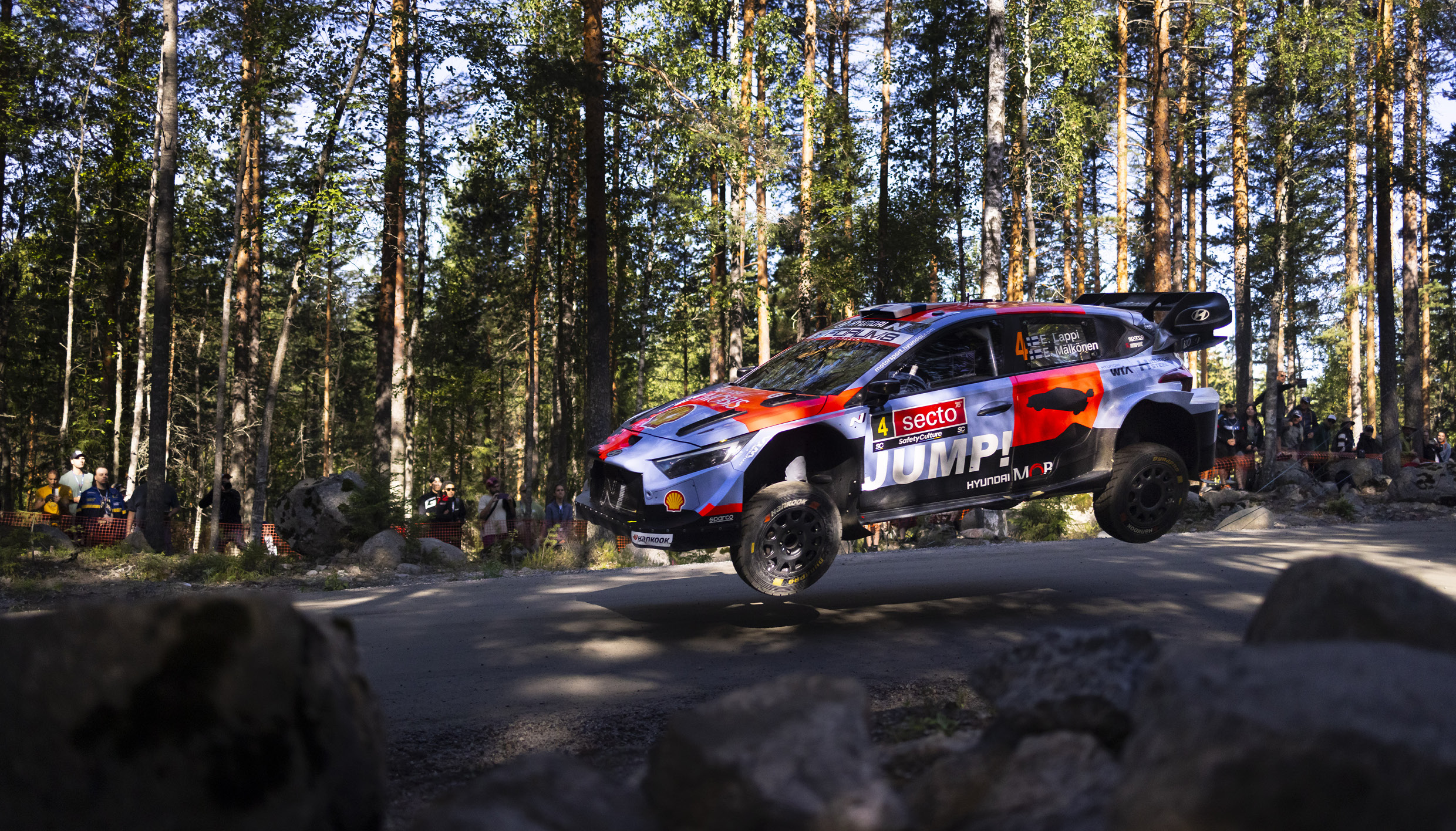
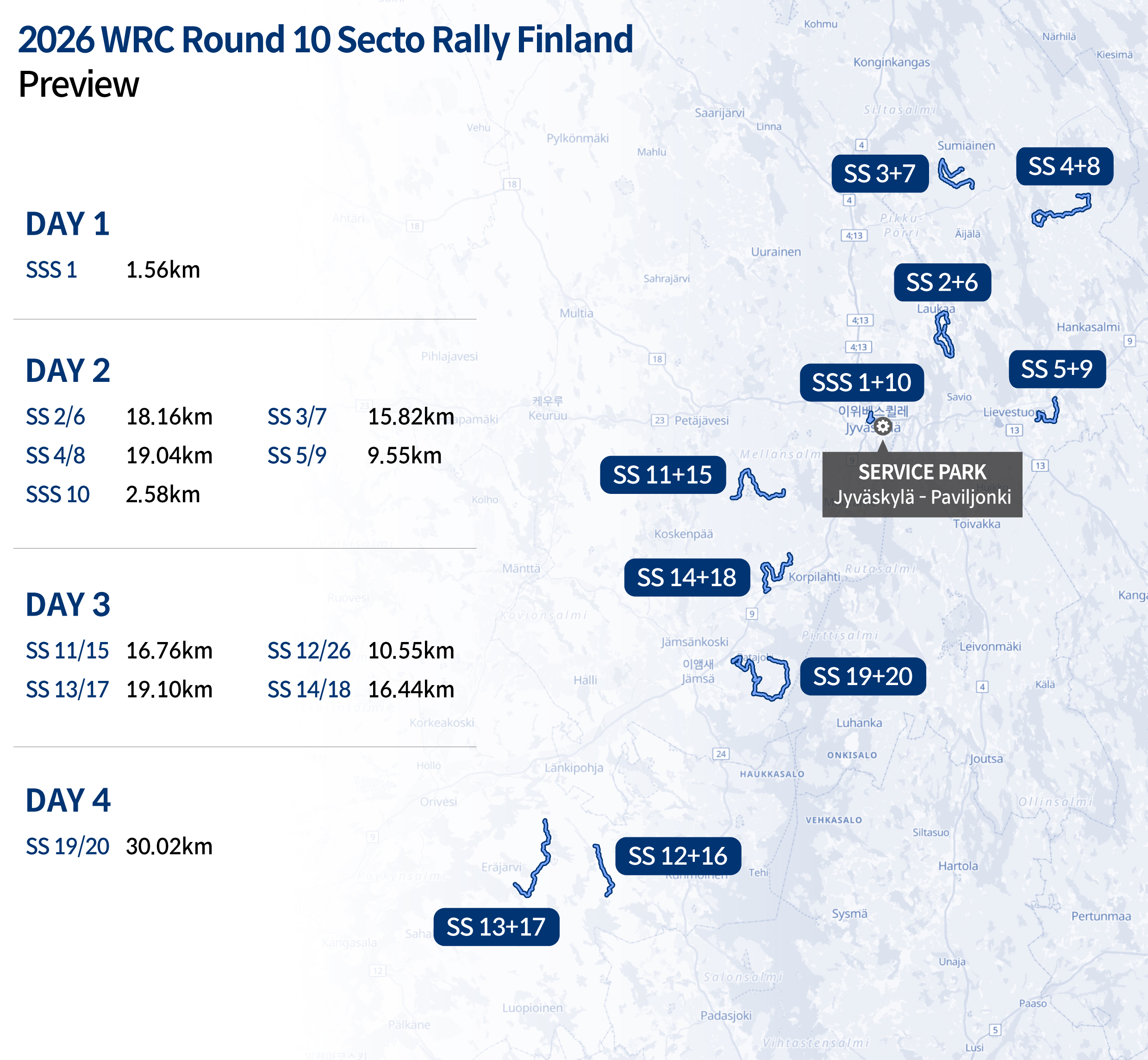
Friday, July 31, was the longest day of the rally: 127.72 km across nine stages, from SS2 to SSS10. The morning opened with the 18.16-km Laukaa stage, then moved through Saarikas, Sydänmaa, and the 9.55-km Hoho stage. The same four roads came back in the afternoon before the day closed with another run through Harju. Rain was forecast for the afternoon, and at Rally Finland, that is never background noise. It can change the whole rally.
SS2 Laukaa was all crests and commitment, the kind of stage that demands rhythm, confidence, and the nerve to stay buried in the throttle when the road starts disappearing over the next rise. Ogier struck first and moved into the overall lead. Fourmaux and Lappi tied for the next-best time, and for Lappi, it was a needed sign of progress after Estonia. He said, “I thought it was not so good. At least I feel I have a lot to improve which is positive. I was surprised by the times in Estonia but now I'm postively surprised.”
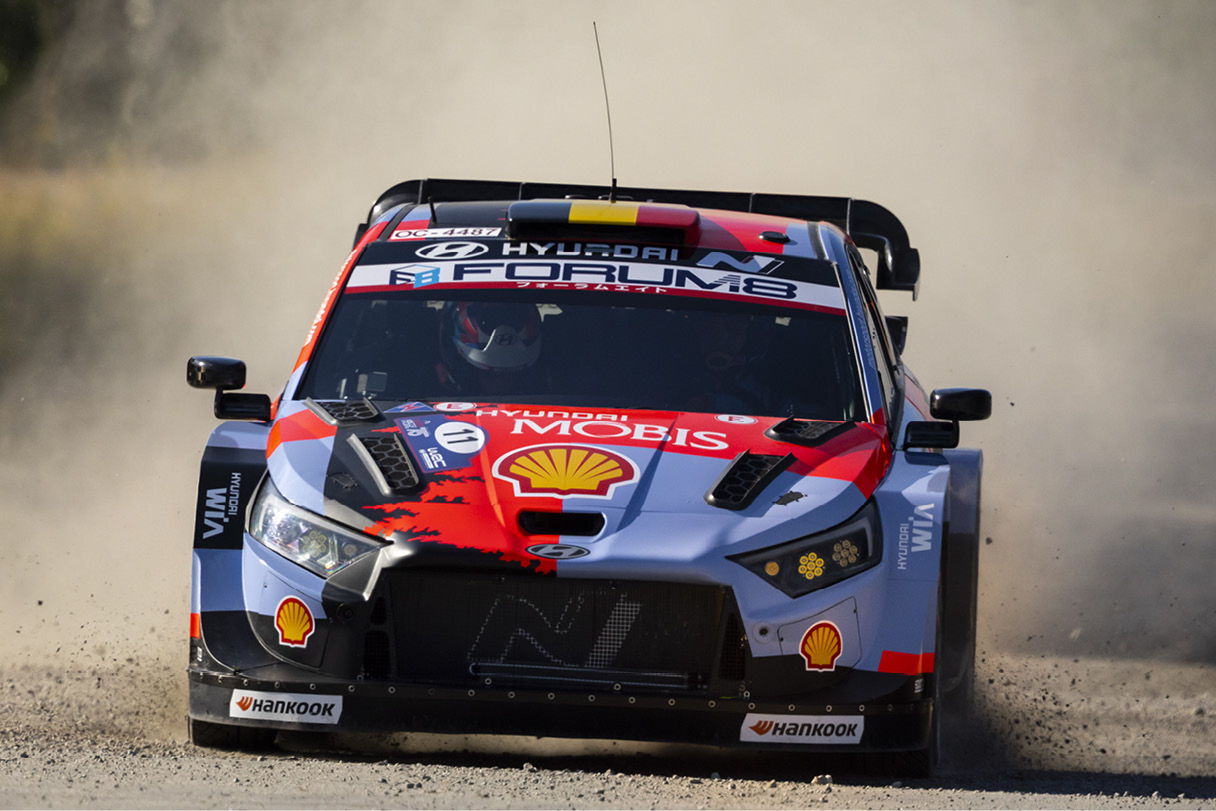
The 15.82-km SS3 Saarikas kept the speed high but demanded more technical precision. Pajari went fastest, followed by Neuville, Ogier, and Fourmaux, as Hyundai and Toyota stayed locked into the early fight. Jon Armstrong’s run ended in a ditch.
Neuville, however, still did not have the Hyundai underneath him the way he wanted. ”Not much better honestly," he said. "When the surface is hard I really struggle to be confident with the car. I find the grip but it just takes time. We need to keep fighting and try to improve where we can."
Lappi retired after crashing shortly after the start of SS4. Video: WRC (http://www.wrc.com)
SS4 Sydänmaa was one of Friday’s big tests, a committed 19.04-km high-speed stage that only got trickier toward the finish. Ogier went fastest again, with Pajari, Evans, and Neuville behind. Pajari moved past Fourmaux into second overall. Then Hyundai’s day took its first major hit. Just 0.8 km after the start, Lappi lost the rear, dropped into a ditch, and rolled. The damage was too heavy to continue. His rally was over.
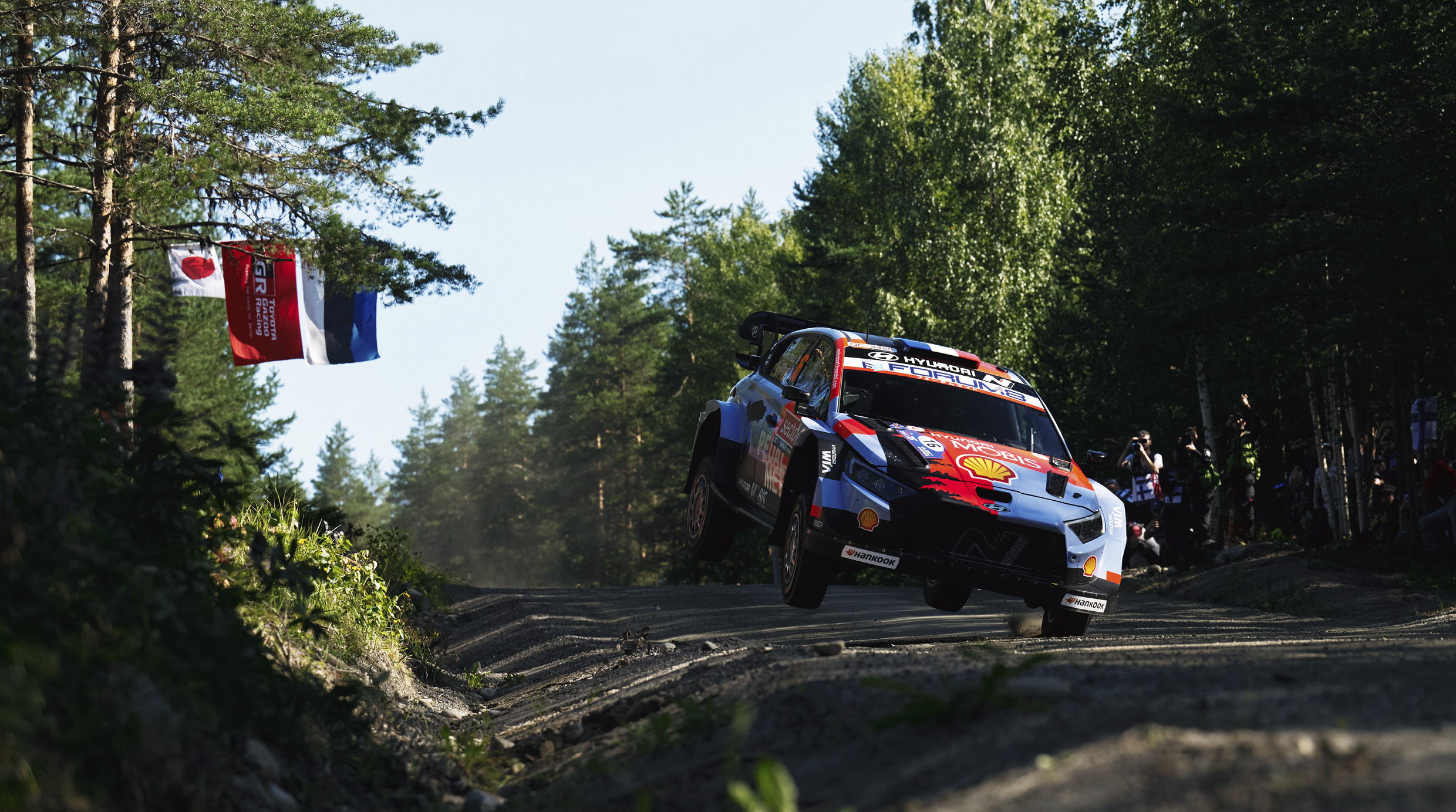
SS5 Hoho was new, but it came with old-school DNA, borrowing pieces from classic roads including parts of the Halttula stage used in 2023 and 1995. It opened medium-width and very fast, then tightened hard once it entered the forest, where precise steering became mandatory. After a hairpin at the 8-km mark, the road became extremely narrow before ending with a fast final push.
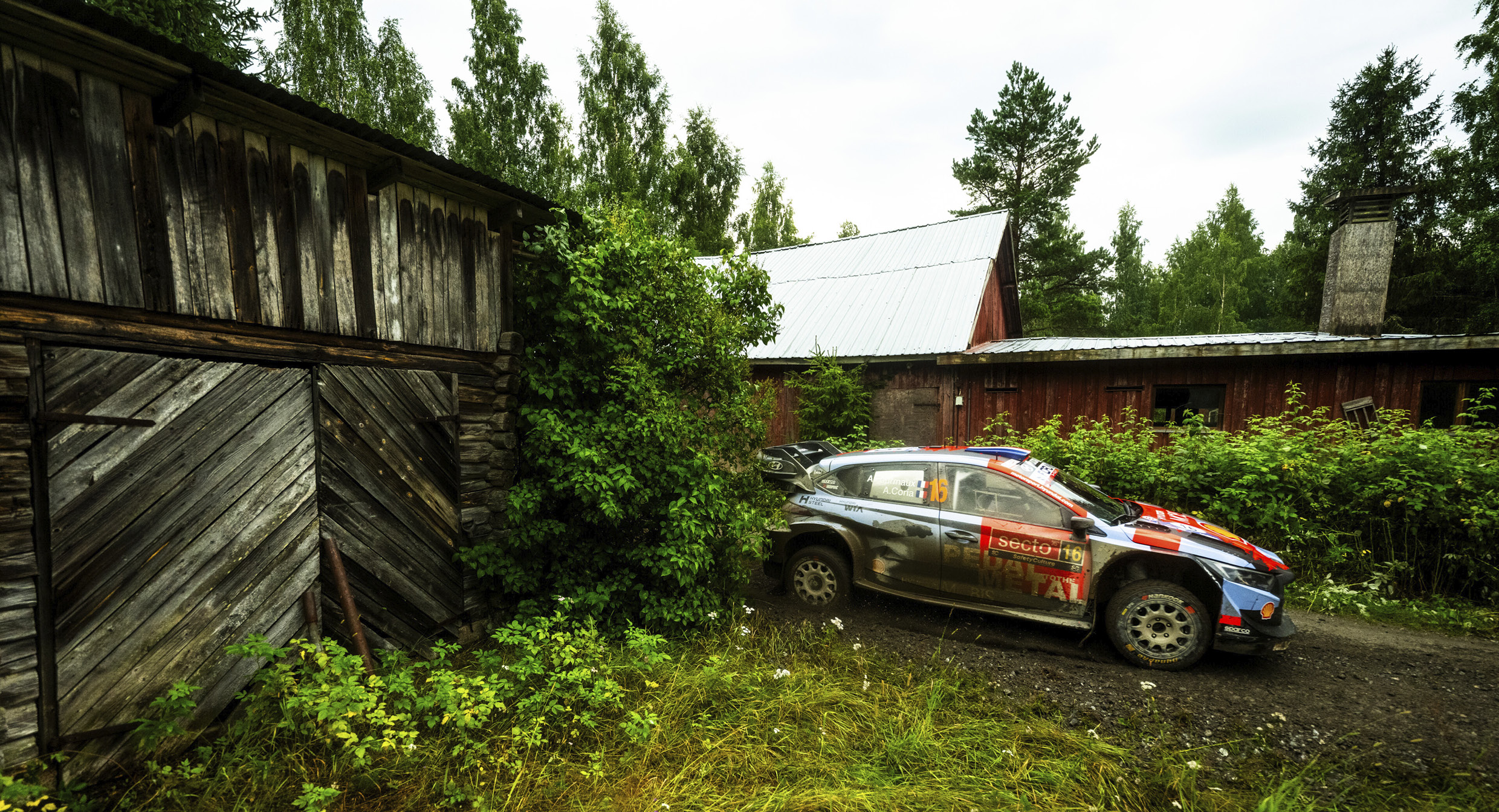
Ogier kept the pressure on and took another stage win, with Fourmaux second quickest. Evans had a moment in the brush and got away with it. Neuville did not. At 7.3 km, he lost balance, slid into a bank, and damaged the left-front suspension.
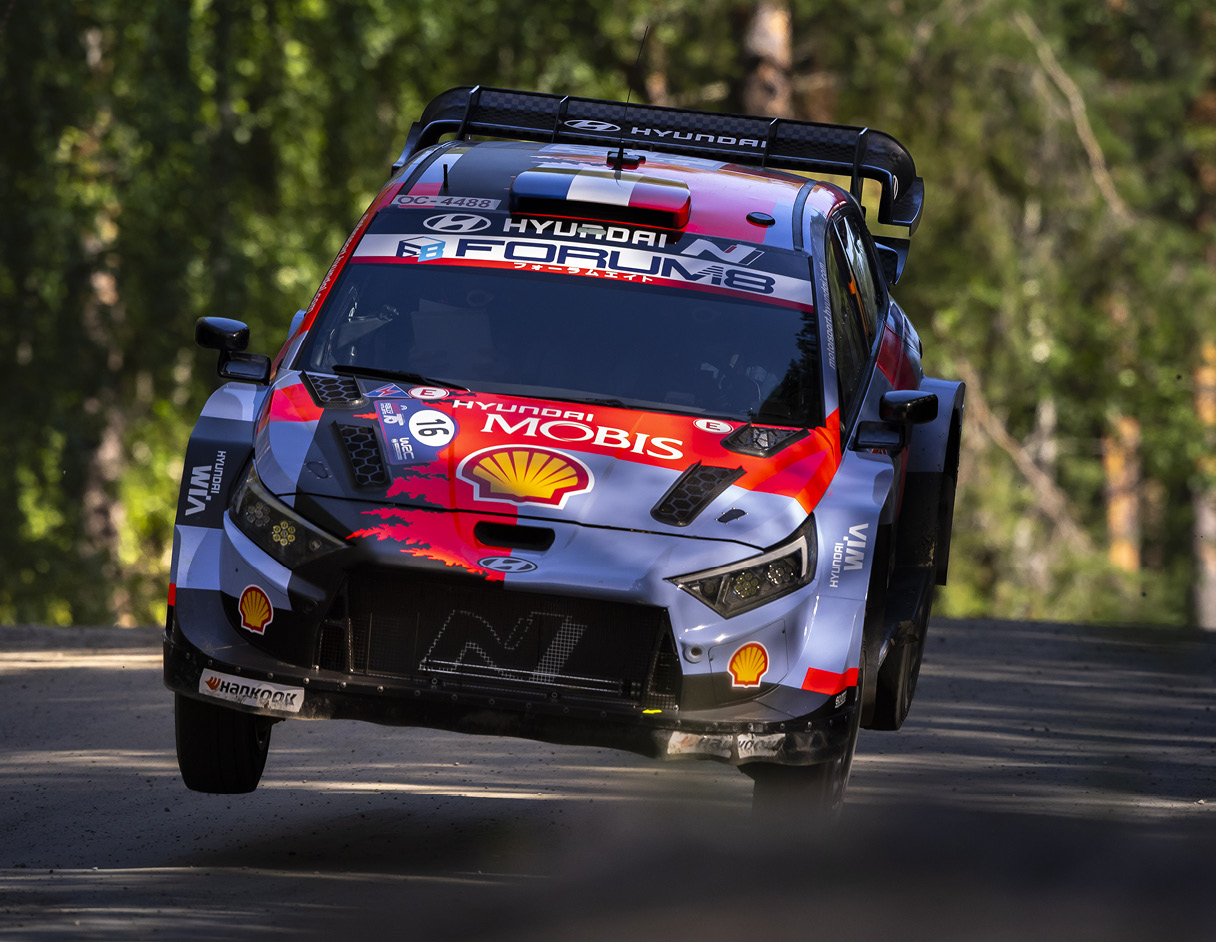
Fourmaux, now Hyundai’s lead runner, moved back past Pajari into second overall. "Yeah, it's been a great morning, but I would like more. I've been feeling that sometimes I'm in the line, sometimes the line is very challenging and really, I'm a bit shocked by my driving, but I'm still very much enjoying it, but it's definitely not easy this morning. Let's see if we can improve a bit for the afternoon, but I'm okay. I'm happy."
Then came the kind of roadside thrash that makes rallying different from every other form of motorsport. After the stage, Fourmaux helped repair Neuville’s damaged car on the road section. Because cars must have four freely rotating wheels and tires to drive on public-road sections, the fix was not optional—it was the only way Neuville could get back to service. He made it, but arrived two minutes late and took a 20-second penalty.
After midday service, SS6 repeated Laukaa. Pajari, Solberg, and Ogier filled the top three, with Fourmaux and Neuville behind. Pajari jumped back past Fourmaux into second overall, keeping their fight alive.
Neuville climbed from 15th to 13th and was simply relieved to still be in the rally. “Happy to be here, the mechanics have done a good job," he said. "We went to a wet setup and we will see what's happening this afternoon. There should be some rain and we will just see how the car works and if we can get it back into the points."
Rain arrived Friday afternoon, putting Hyundai in a difficult position. Video: WRC (http://www.wrc.com)
Then SS7 Saarikas turned ugly. Rain arrived, visibility collapsed, and the road went wet just as the later-starting cars arrived—including Hyundai’s two main contenders. Neuville was 1 minute slower than Evans. Fourmaux took an even harder hit, losing a brutal 1 minute 29 seconds and dropping to seventh overall. “It is only in rallying that we drive in those conditions at 200kph. The visibility is basically zero. We are happy to be here,” Neuville said.
Fourmaux limited the bleeding afterward and climbed back to sixth overall. SS9 Hoho was no longer rainy, but the road was still wet, and Fourmaux responded by setting the fastest time. The problem was that SS7 had already done too much damage. The overall order stayed unchanged, with Ogier still leading. Friday ended with SS10 Harju, where Katsuta went fastest and Neuville was second. Ogier closed the day on top overall. Fourmaux sat sixth behind Solberg and Sesks, while Neuville had clawed his way back to ninth.
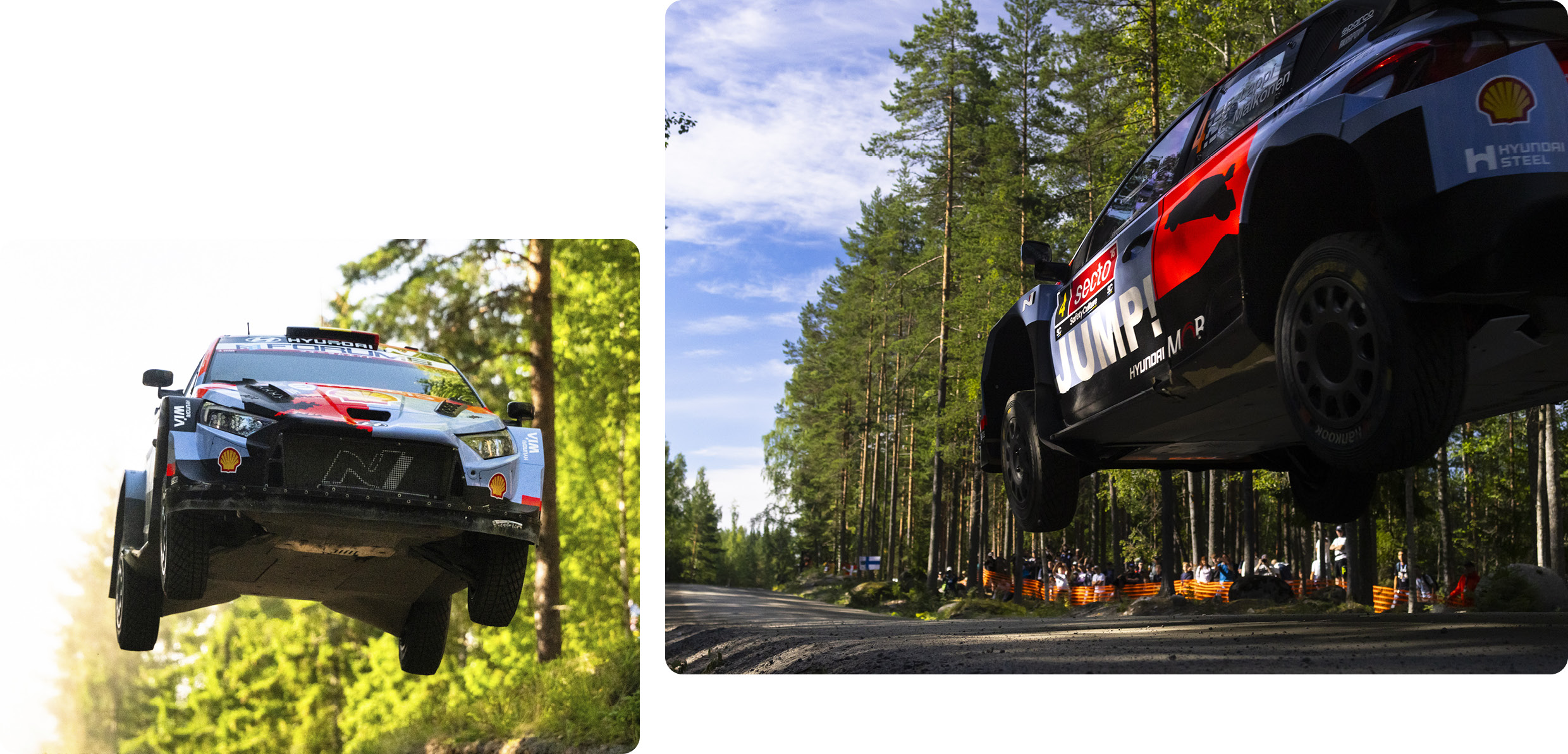
Saturday was the day Rally Finland really showed its teeth. The route opened with Parkkola and rolled into a full menu of fast corners, big elevation changes, and jumps that looked made for highlight reels. Crews ran four stages—Parkkola, Päijälä, Västilä, and Leustu—twice across the morning and afternoon. By the end of the day, they had covered 125.7 km, or about 78 miles, of some of the fastest gravel roads in the sport.
SS11 Parkkola was extended by 1.34 km this year, and it wasted no time getting serious. The stage opened on a wide, cambered road before diving into a narrower, rolling forest section. A major jump waited at the 11.8-km mark, and the stage mixed flat-out speed with technical sections that demanded accuracy as much as courage. At Finland speeds, landing even a little off line can turn into a trip through the trees. Evans led a Toyota sweep of the top four, while Fourmaux, fifth fastest, started trying to dig himself out of Friday’s time loss. SS12 Päijälä then brought the full roller-coaster effect, with sloping corners and constant elevation changes. Pajari was fastest there.
SS13 Västilä, one of the rally’s southernmost stages along with Päijälä, opened with a flat-out section run through the famous former Novikov Jump area in reverse. Later, the road tightened and finished with a tricky downhill hairpin. Pajari grabbed his second straight stage win and cut Evans’ advantage to 20.9 seconds. Neuville lost time after drifting slightly off line at a junction.
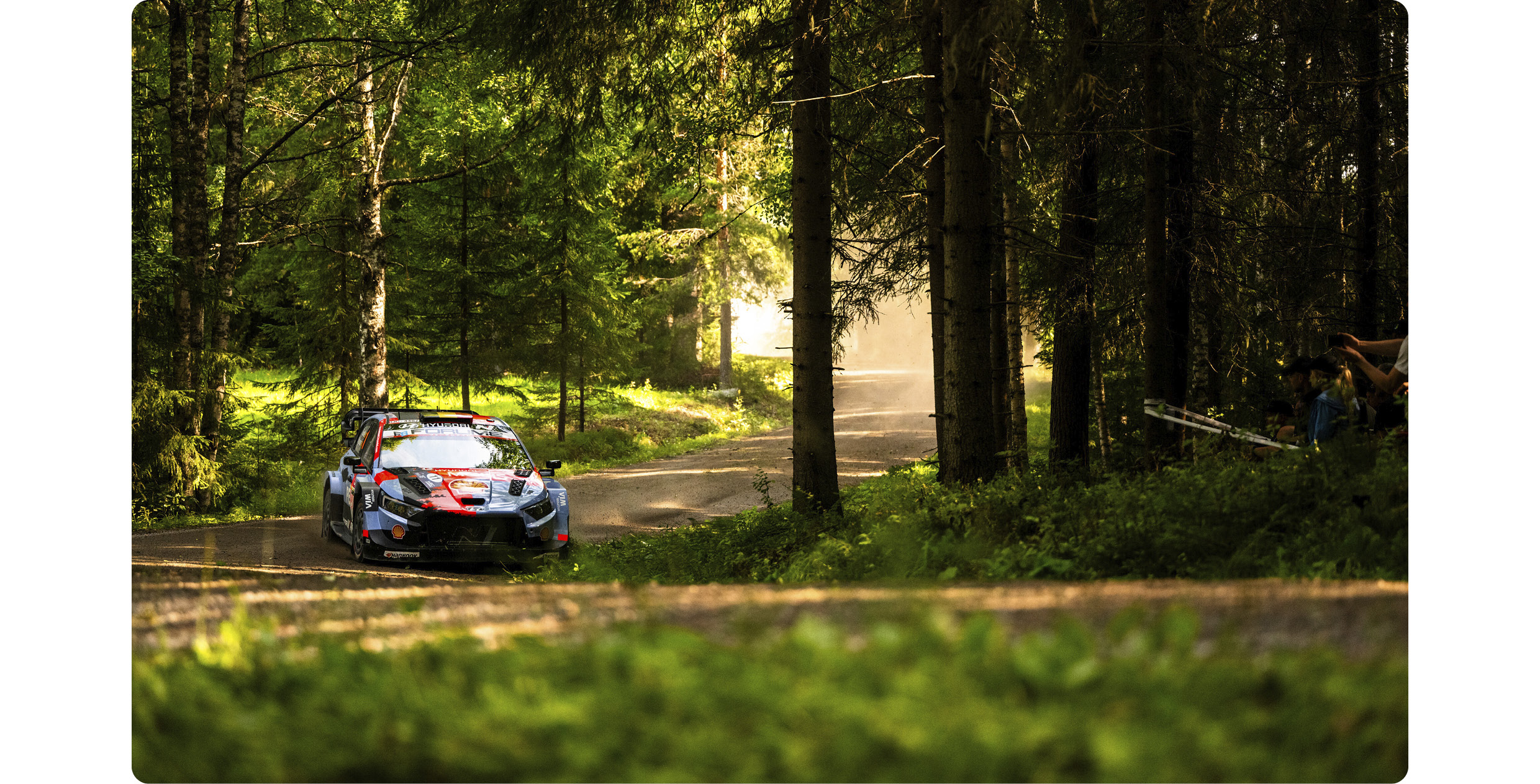
SS14 Leustu used the same 16.44-km layout as last year, and it had everything Finland is known for. The stage began with a full-speed charge on a wide road, then gradually narrowed into a more technical section. After a wider middle portion, a big jump arrived at 12.5 km before the road served up a difficult downhill hairpin near the end. Then the leaderboard shook hard. Evans, running second overall, rolled into a ditch, blowing open the fight at the front. Ogier went fastest and took over the rally lead. Fourmaux moved up to fourth overall, but the punishment was starting to show—he complained of back pain after a heavy landing from a jump.
Fourmaux hit a stone during SS15, but the moment did not turn into a major problem. Video: WRC (http://www.wrc.com)
On SS15, the repeat of Parkkola, Pajari was fastest again. Fourmaux was now under heavy pressure from Evans in the fight for fourth, and while trying to keep him behind, he clipped a stone on the inside of a corner. Luckily for Hyundai, it did not turn into a rally-ending problem. Neuville, meanwhile, used the stage to try a more aggressive setup for Sunday. SS16, the repeat of Päijälä, belonged to Ogier. Behind him, the fight around Hyundai tightened again: the gap between fourth-place Fourmaux and fifth-place Evans shrank to just 4.3 seconds. Neuville also had drama before the stage, dealing with an intercooler fan issue and replacing the part before continuing.
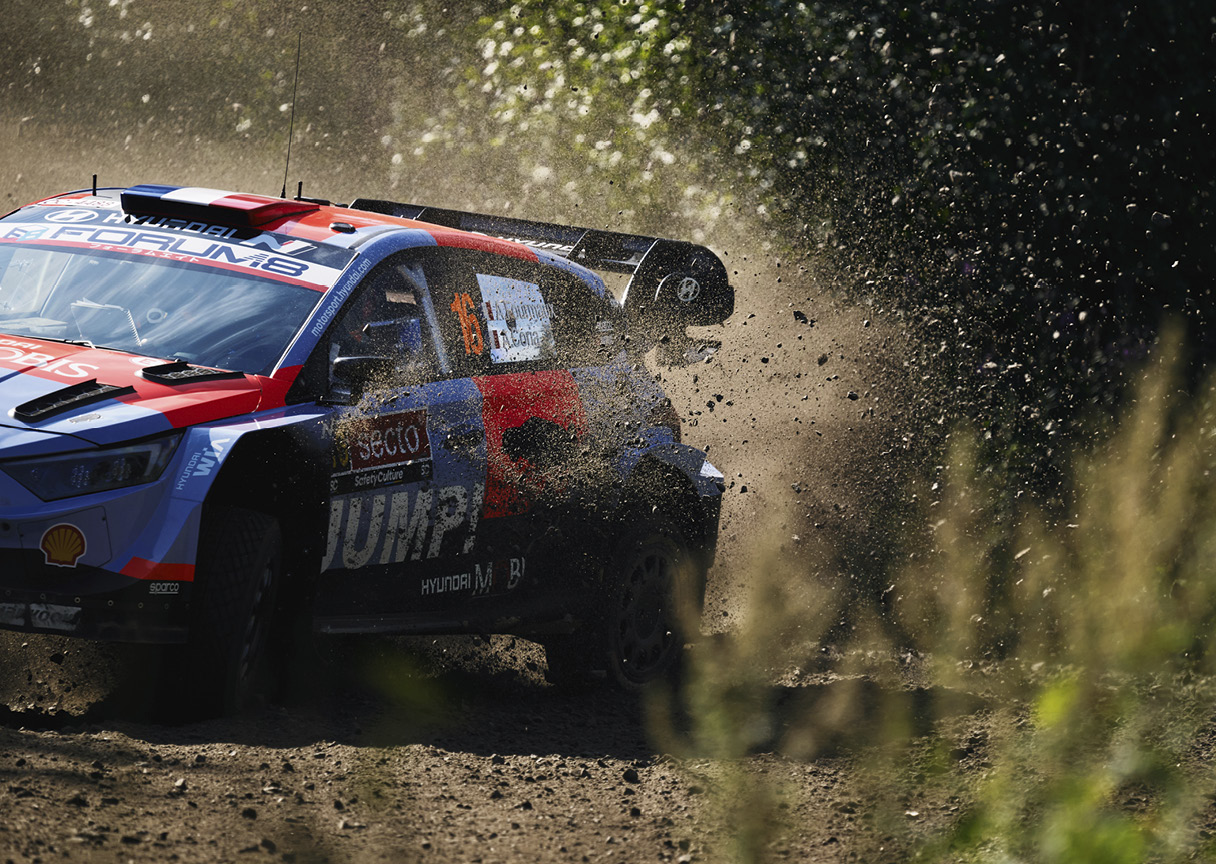
Then SS17 detonated the order. Neuville made it to the finish with left-front tire damage. Armstrong hit a hay bale. And then overall leader Ogier went off at high speed and rolled several times. Both Armstrong and Ogier climbed out of their cars under their own power, but both were taken to the hospital for further checks. Pajari suddenly inherited the overall lead, while Evans matched Fourmaux’s stage time and kept the pressure on Hyundai.
Evans struck back on SS18, the final stage of Saturday, setting the fastest time and moving past Fourmaux into third overall. Pajari ended the day in control of the rally, holding a sizable gap over second-place Solberg and putting himself in position for a second straight win after Estonia. Fourmaux sat fourth, just 3.8 seconds behind Evans. Neuville had fought his way up to sixth overall, right behind Katsuta.
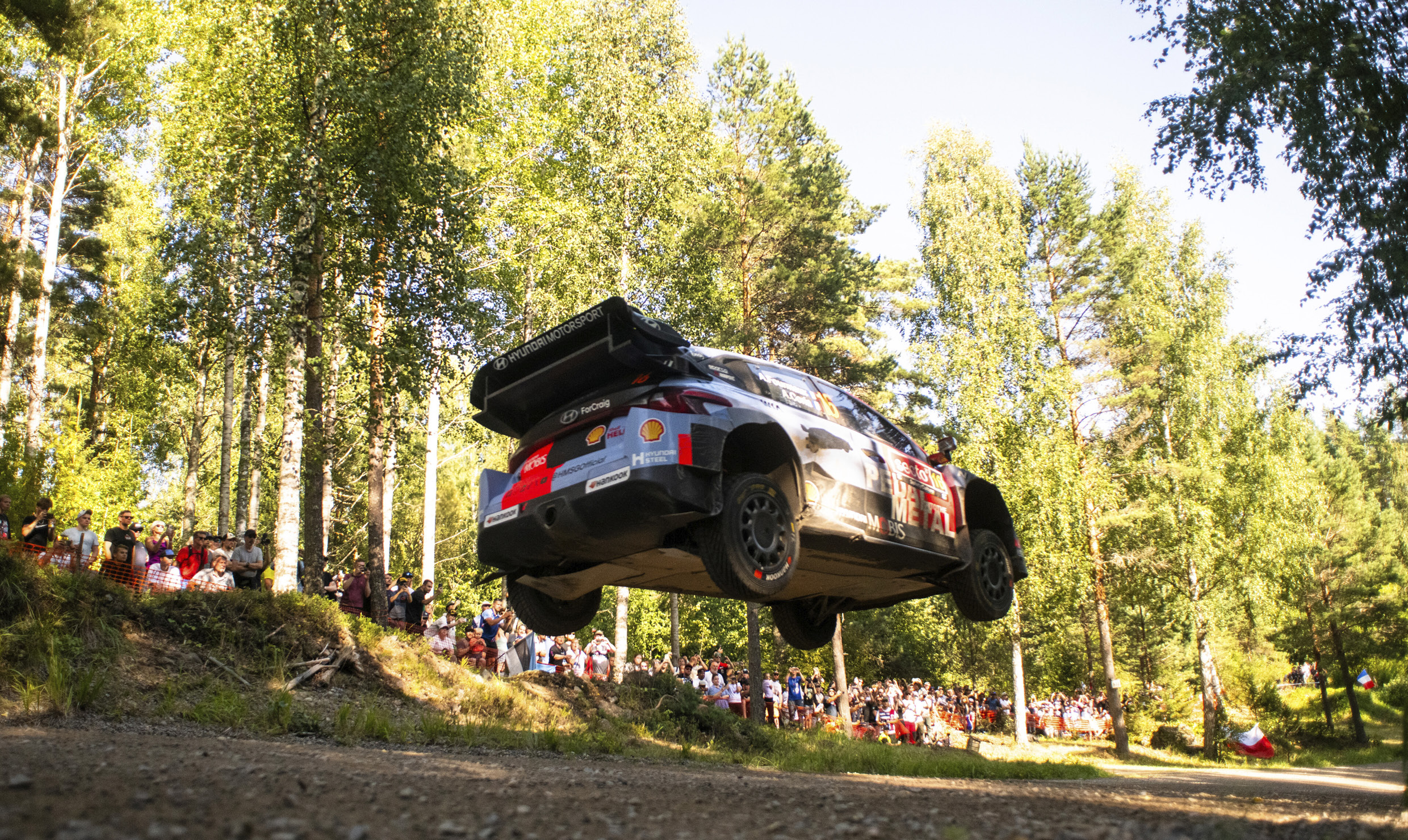
Sunday boiled down to two runs through Himos–Jämsä, a monster 30.02-km stage that gave Rally Finland one last chance to bite. The road opened wide and fast, then snapped into a narrower forest section loaded with crests and technical corners. In the final sector, the cars climbed to the top of the hill before charging down a steep descent toward the finish at the Himos parking area.
Solberg struck first on SS19, with Evans, Katsuta, and Pajari lining up behind him. But in the overall fight, Pajari still had a 36.4-second cushion over Solberg—more than enough breathing room unless something went badly wrong. Fourmaux, meanwhile, had a very different kind of problem inside the Hyundai. "Huge bumble bee in the car and it was going in my face, so it was really disturbing," he said.
<Katsuta’s late mistake handed Neuville fifth. Video: WRC (http://www.wrc.com).>
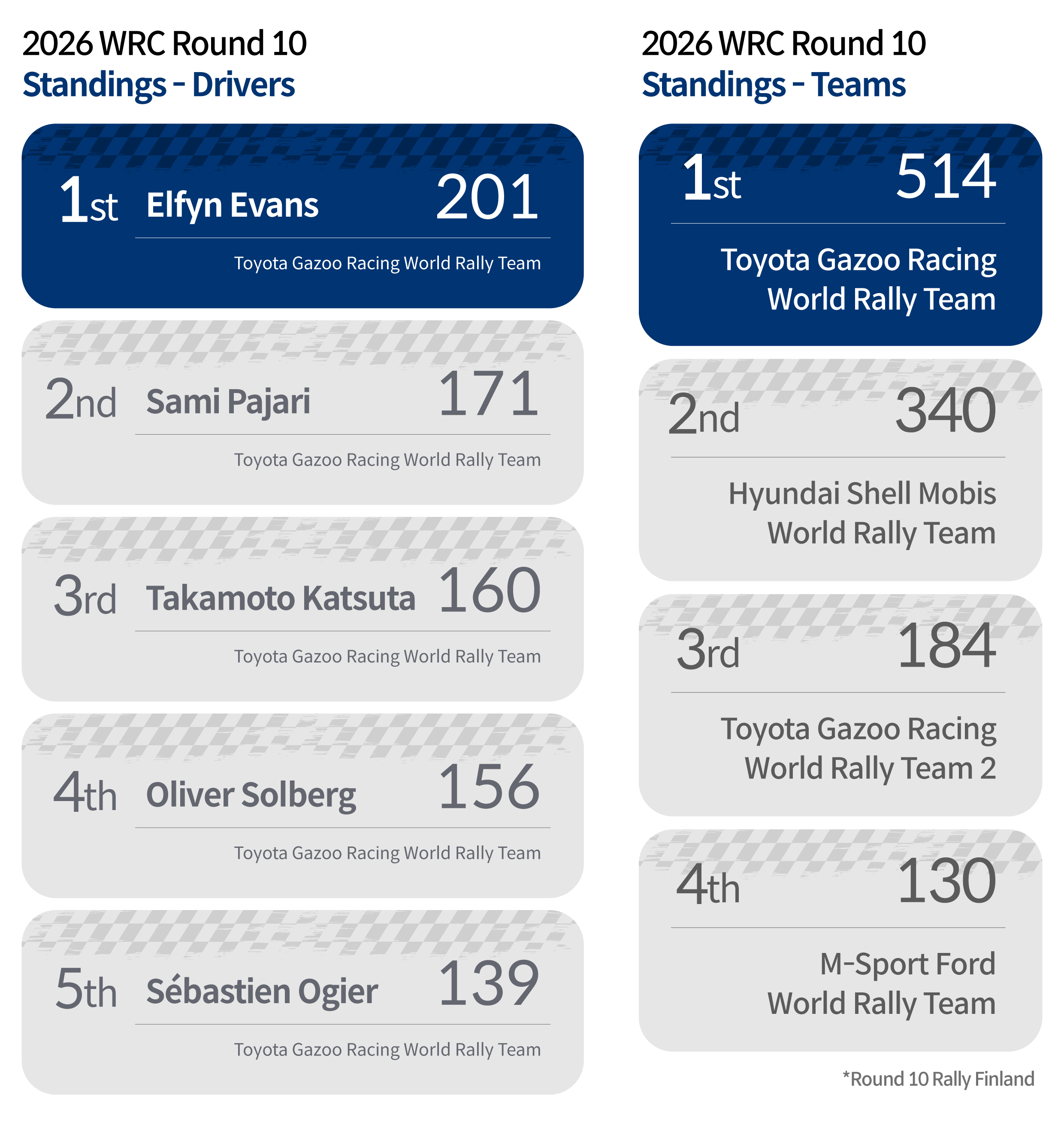
Then came SS20, the rally finale and the Power Stage. Pajari delivered when it counted, going fastest to seal his second straight victory after Estonia and climb to second in the championship behind Evans. Solberg and Evans filled out the podium, while Fourmaux brought the lead Hyundai home in fourth. Just behind, Katsuta opened the door. Trying to avoid a stone, he ran slightly off line, lost time, and gave Neuville the break he needed. The Belgian jumped to fifth at the finish.
After three straight European rounds, the WRC now heads across the world to South America for Round 11 in Paraguay and Round 12 in Chile. Rally Paraguay, scheduled for August 27–30, brings a different kind of challenge: smooth dirt roads, technical sections, and conditions that can change quickly enough to break a driver’s rhythm. Hyundai has reason to believe it can fight there. Neuville finished third in Paraguay last year, and the team will arrive looking to turn that form into another South American podium.
Written by: Soo-jin Lee
In 1991, Lee’s passion for cars led him to enthusiastically write letters to the newly launched Korean car magazine Car Vision. This unexpected connection led him to start his career as an automotive journalist. He has served as editor and editorial board member for Car Vision and Car Life, and now works as an automotive critic. While eagerly covering the latest trends like electric vehicles, connected cars, and autonomous driving technology, he is also a car enthusiast who secretly hopes that the smell of gasoline engines will never disappear.