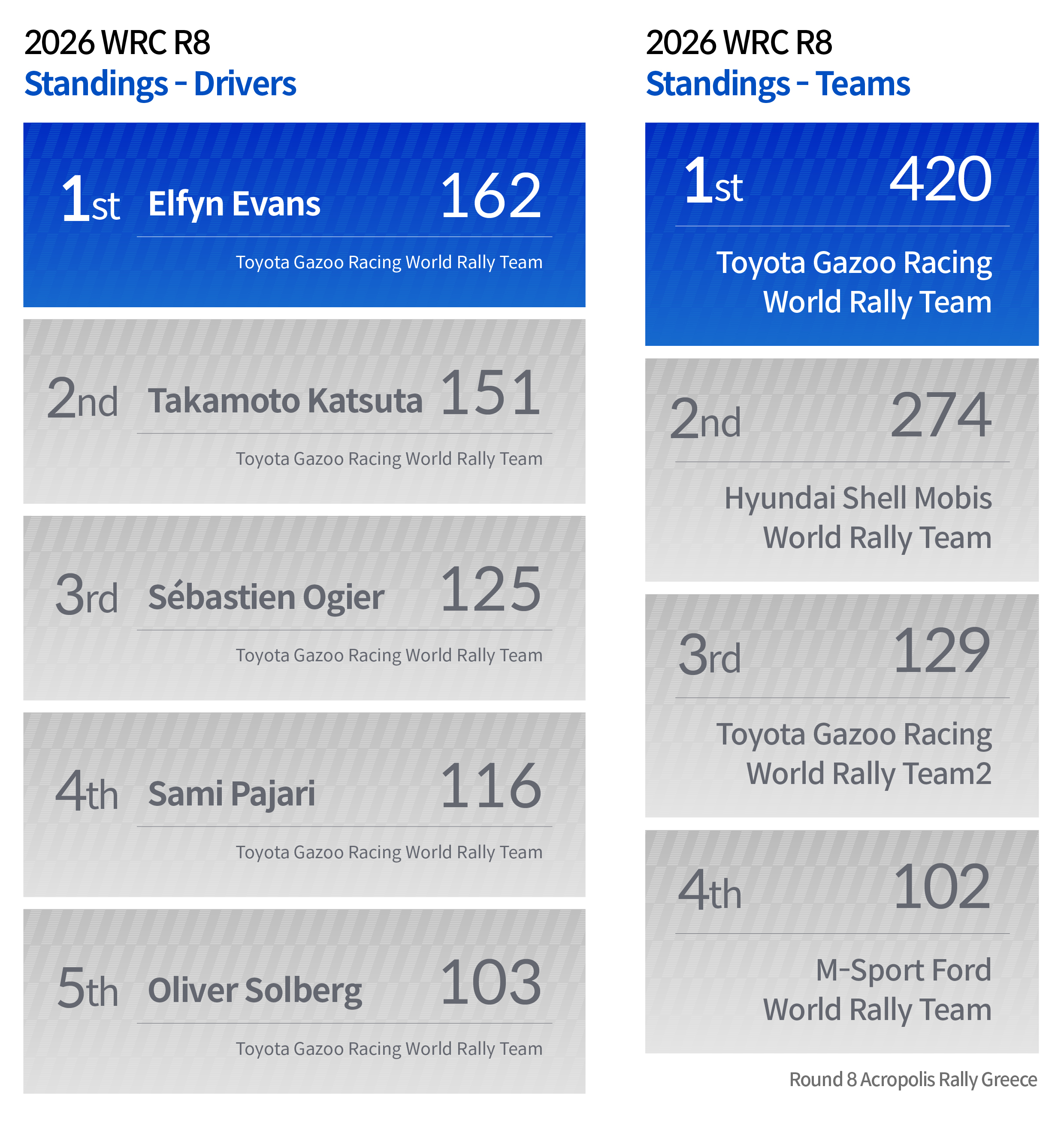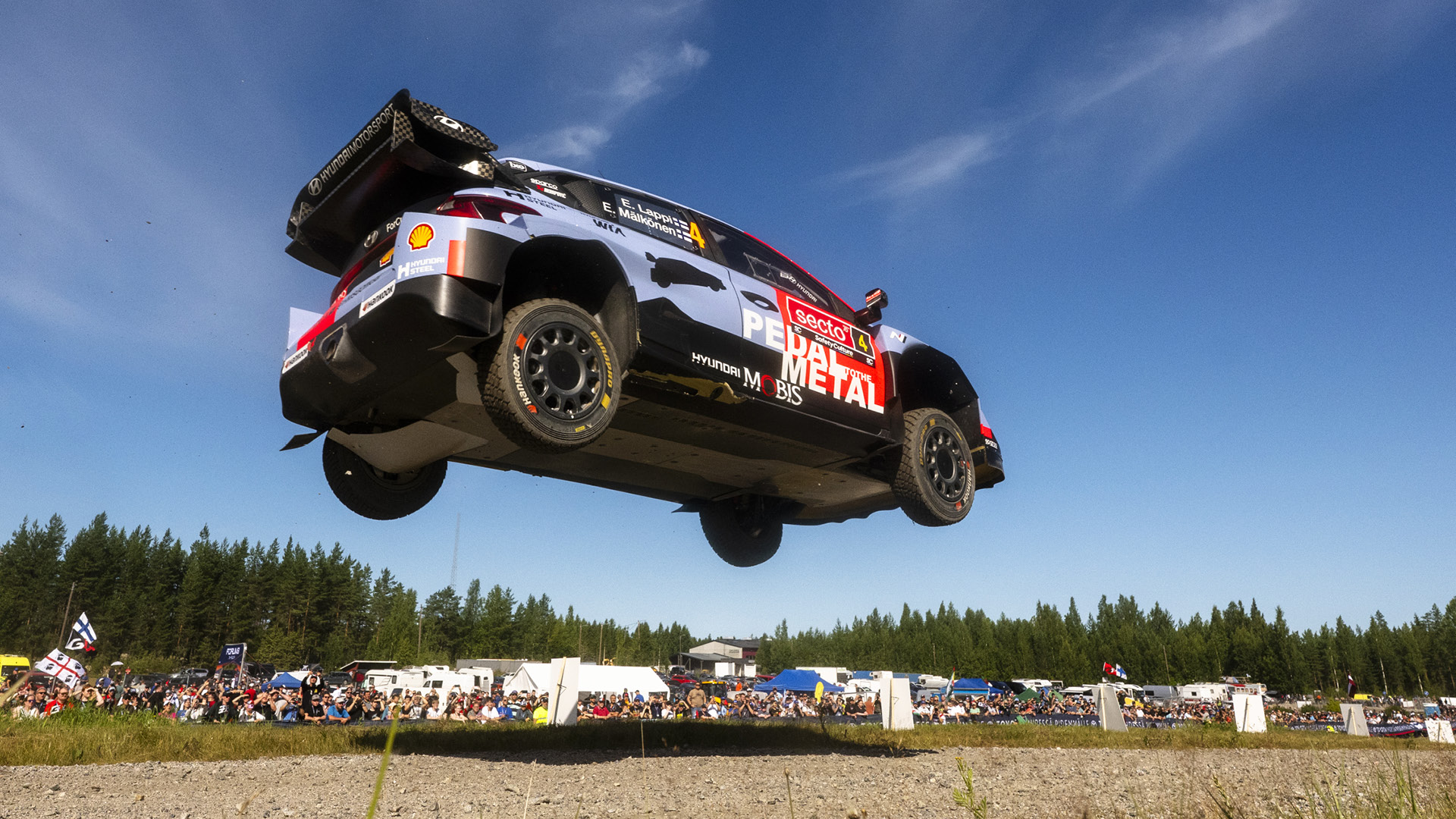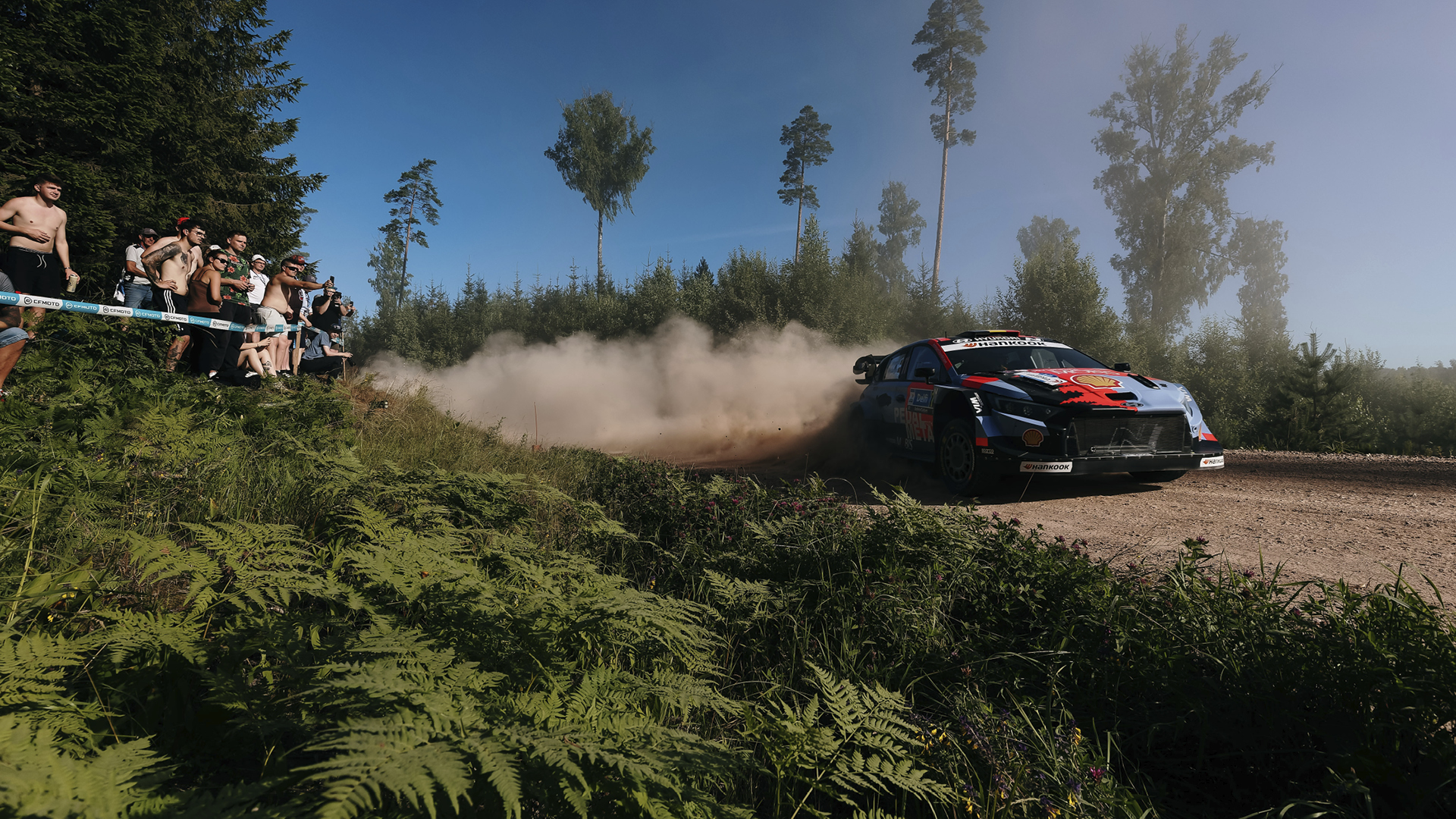
After Rally Japan, the WRC field returned to Europe for Round 8, the Acropolis Rally Greece. The event marks the start of the season’s second half, but its roots go much deeper. The Acropolis Rally first set off in 1951 beneath the Parthenon. Like many rallies of that era, it was less a compact sprint and more a long-distance endurance fight covering thousands of kilometers. Held in the birthplace of myth, it became known as “the Rally of the Gods.”
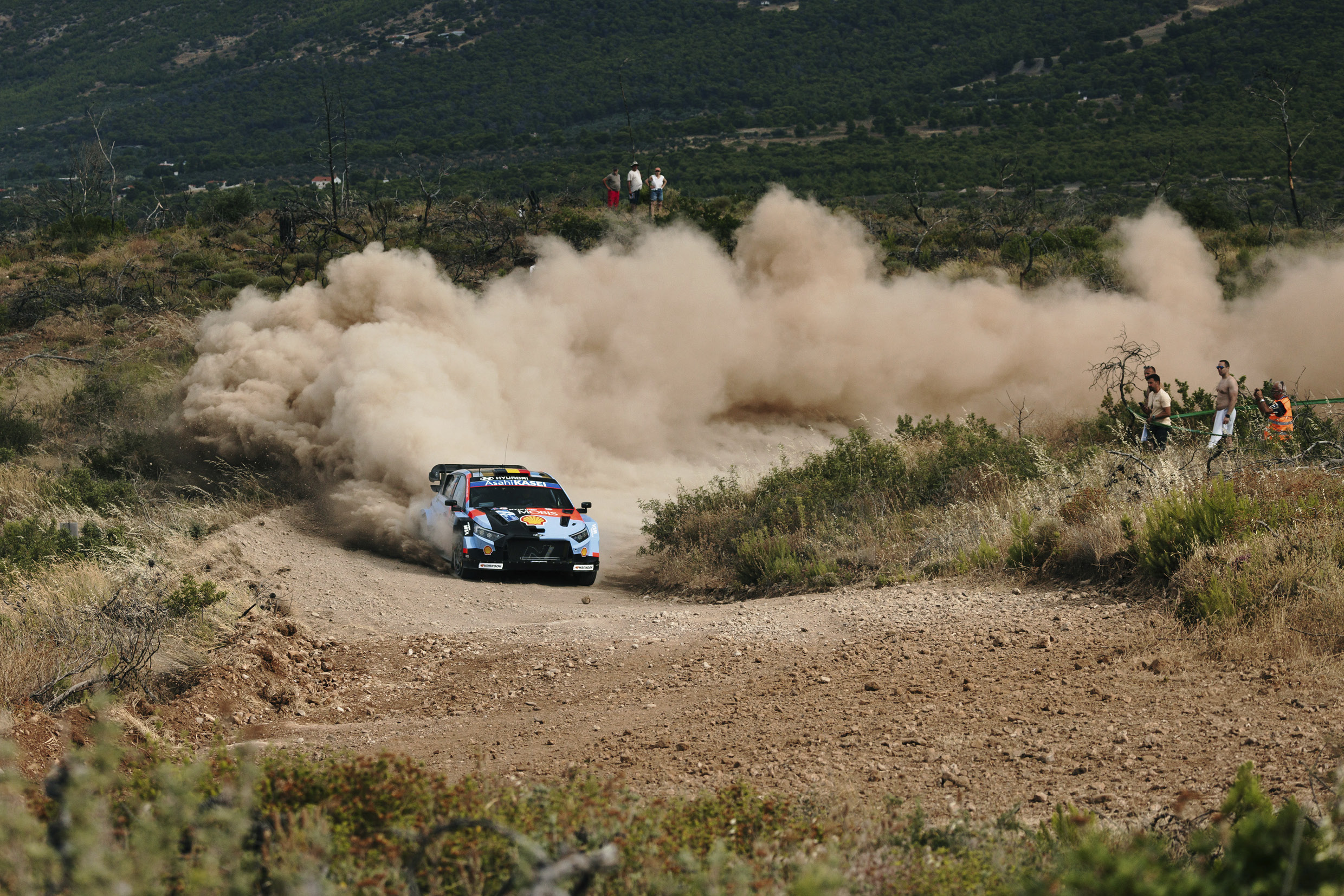
But the Acropolis Rally has another, nastier nickname: “the rally-car graveyard.” Under road surfaces baked by heat that can push beyond 40°C, hard rocks wait just beneath the dust. By afternoon, after the early-running cars have swept away the loose dirt, sharp stones are exposed and ready to attack tires, wheels, and the underside of the car. Cabin temperatures can climb as high as 50°C, pushing both drivers and machines toward the limit. Rally Greece is not just about going fast. It is a survival game.
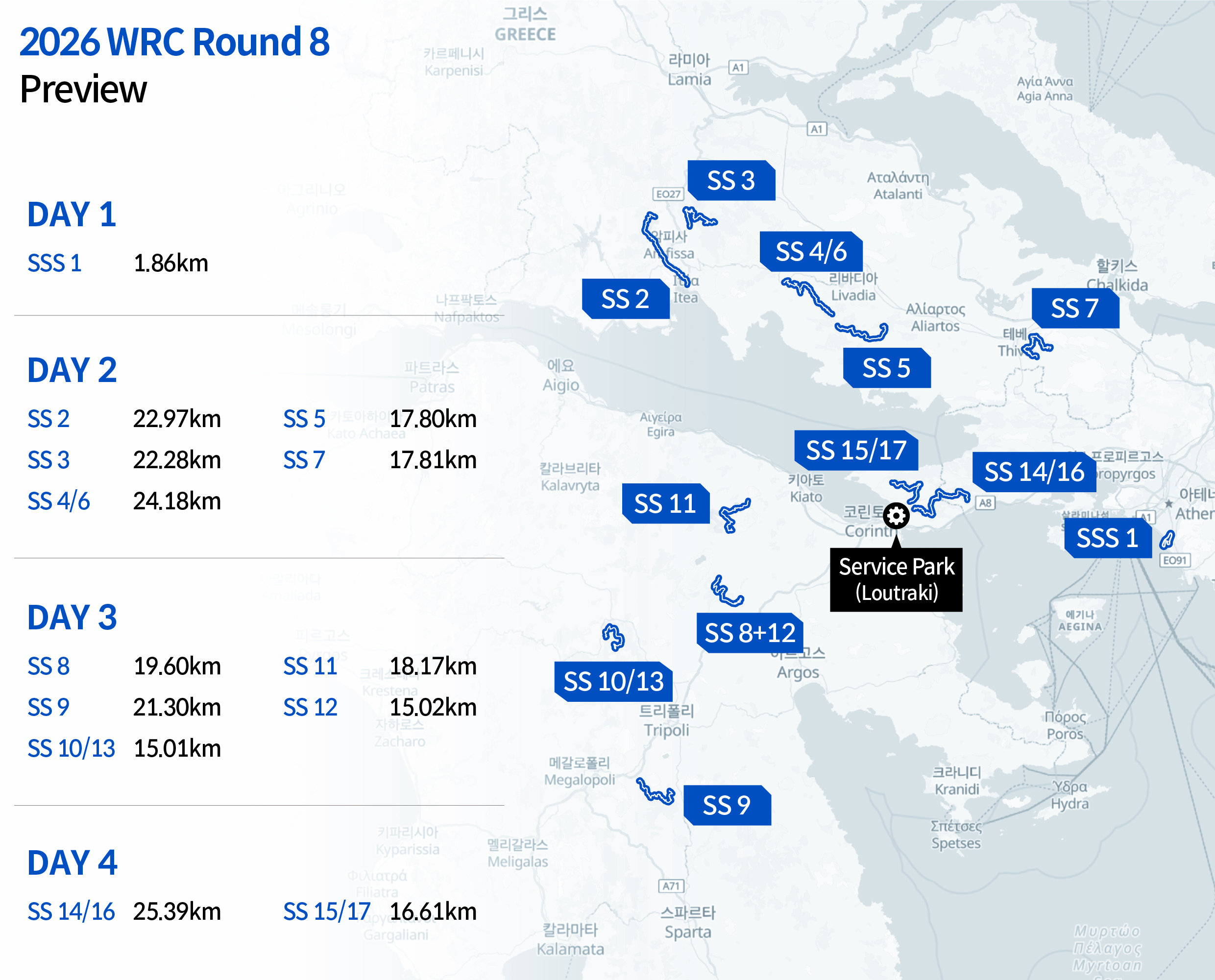
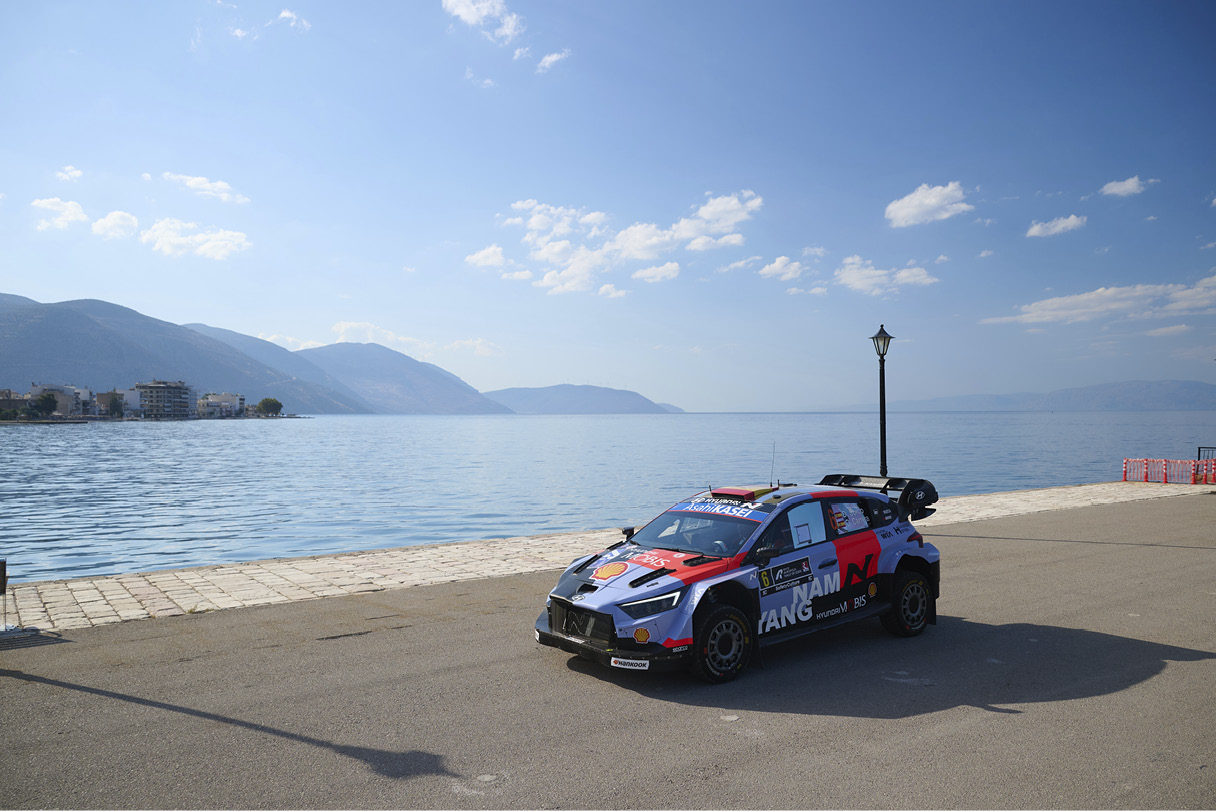
This year’s Acropolis Rally moved its service park from Lamia to Loutraki, a coastal city on the Gulf of Corinth. Loutraki hosted the WRC from 2009 to 2013, so in a sense, the Acropolis Rally was coming home. There was also a practical reason: the Lamia Expo site was no longer available. But Loutraki also has a major spectator advantage, sitting about an hour by car from Athens. With the service park relocated and roughly 75 percent of the stages newly configured, drivers faced a rally that felt much less familiar.
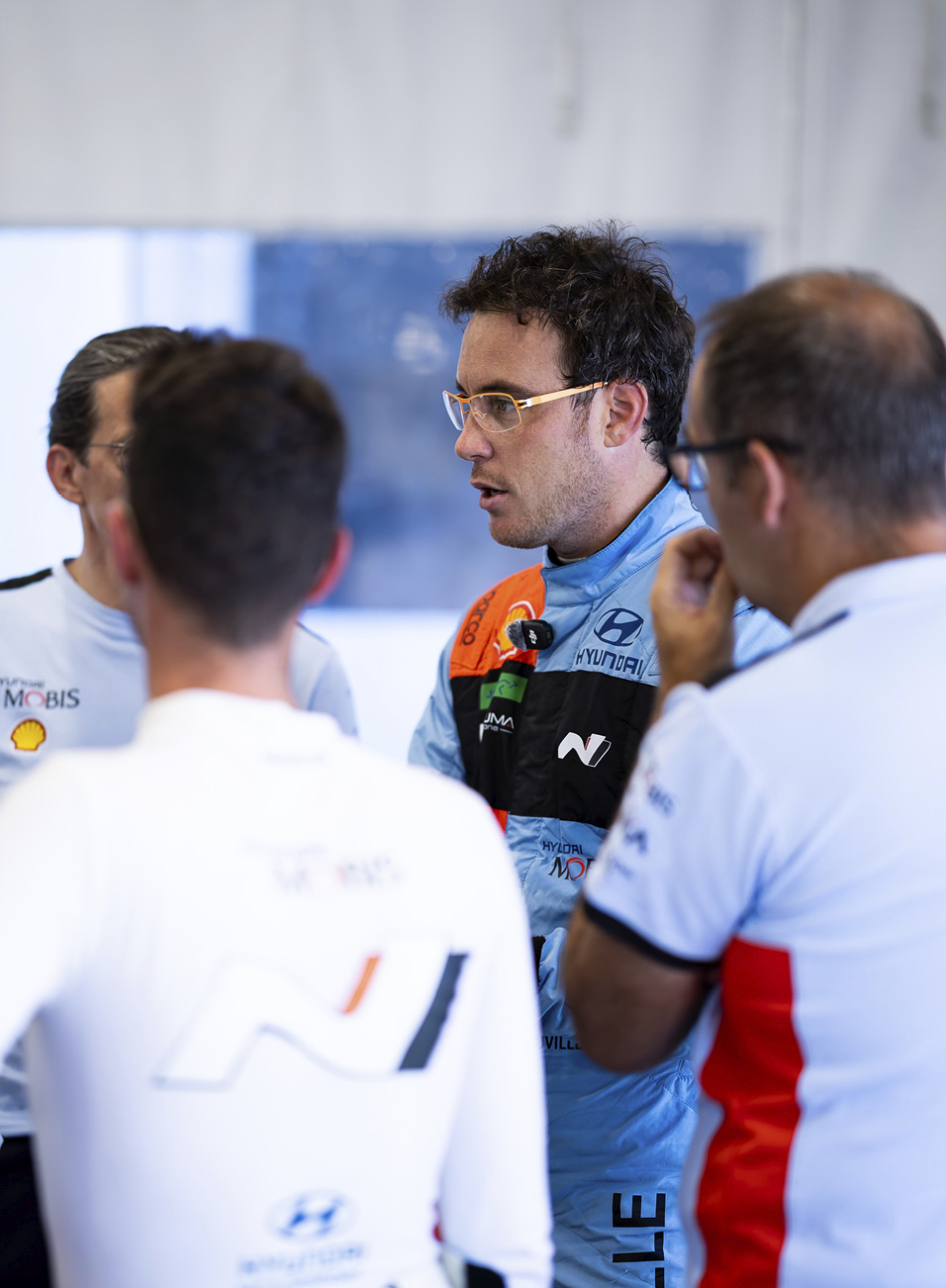
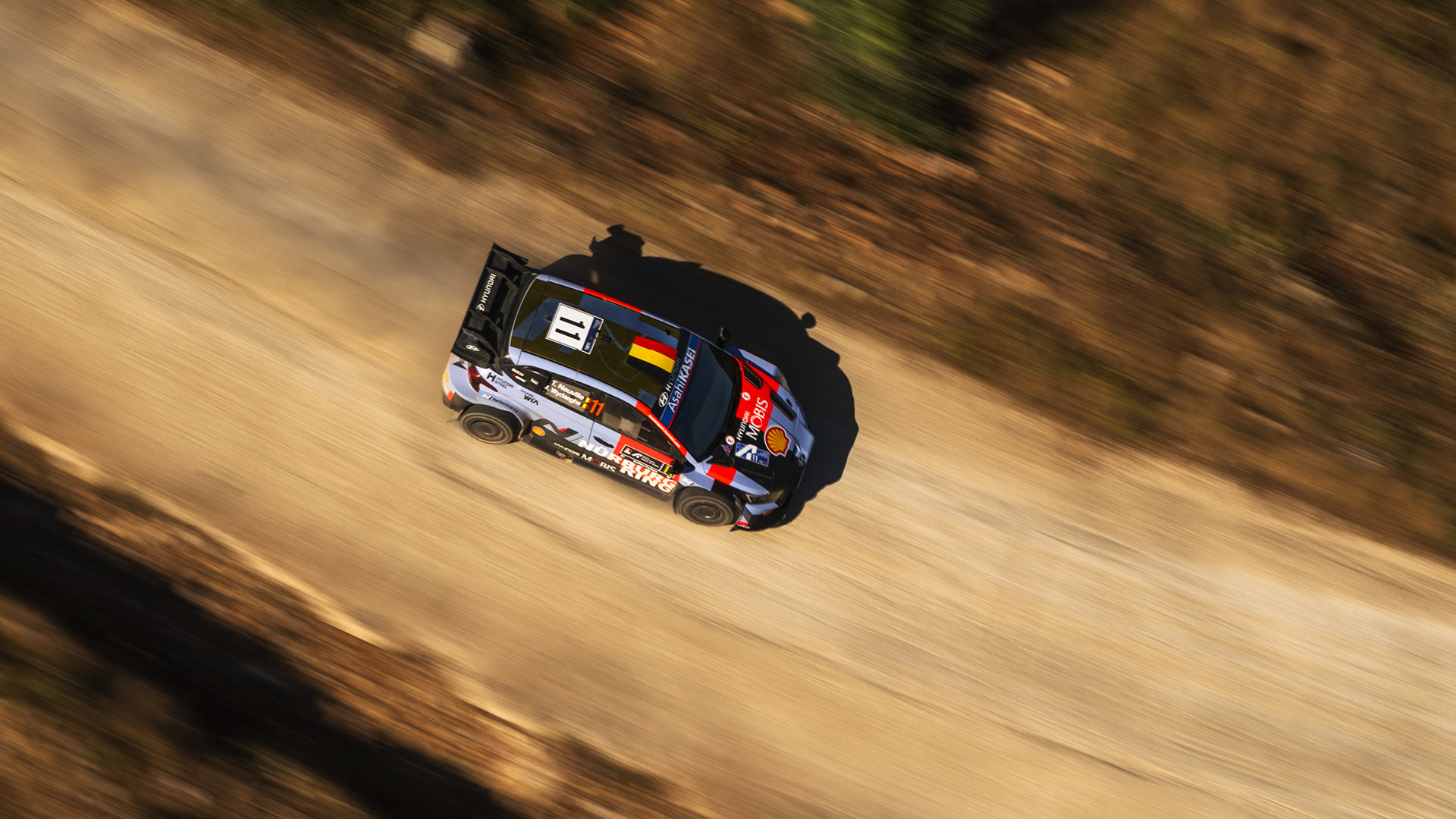
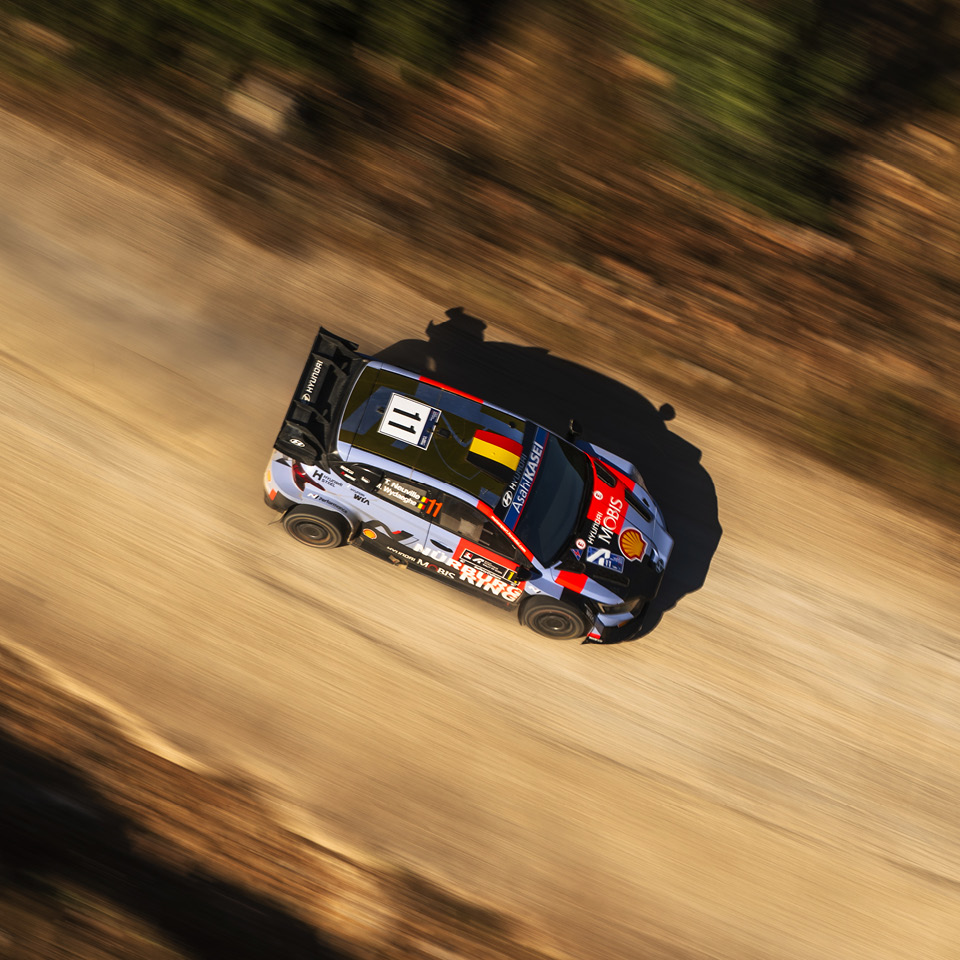
Greece has been Hyundai territory lately, and this year the team came loaded with Thierry Neuville, Adrien Fourmaux, and Dani Sordo. Over the past four years, Hyundai has won in Greece three times. In 2022 and 2024, the team was so dominant it locked out the podium. Neuville had already proved his gravel pace with his first win of the season in Portugal. Add in his Acropolis victories in 2022 and 2024, and he arrived as one of the clearest favorites for the win.
Neuville gave a positive assessment of the car after Thursday’s shakedown. Video: WRC (http://www.wrc.com)
After shakedown, Neuville sounded confident. “Luckily we are one of the favourites, as for a long time we have not been,” he said. “The car is so much different on gravel than it is on Tarmac and we need to benefit from it. It is a long rally. We need to somehow try to fight back in the championship.”
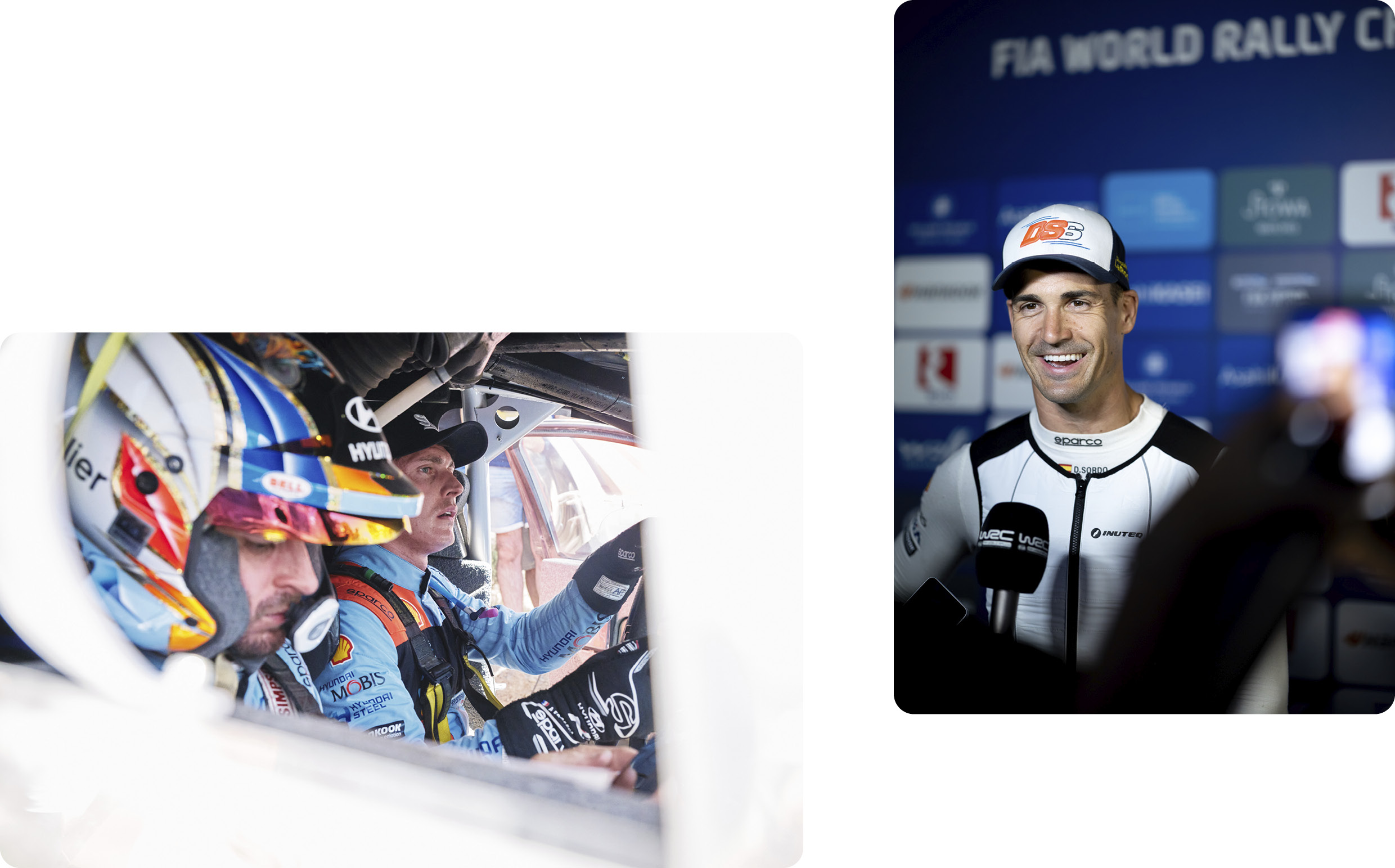
Fourmaux has held sixth in the championship standings with steady points finishes, including a podium in Kenya. Sordo, making his third start of the season, is best known for his pace on tarmac, but he is no stranger to rough gravel. He has two wins at Rally Italia Sardegna and finished second in Greece in 2024.
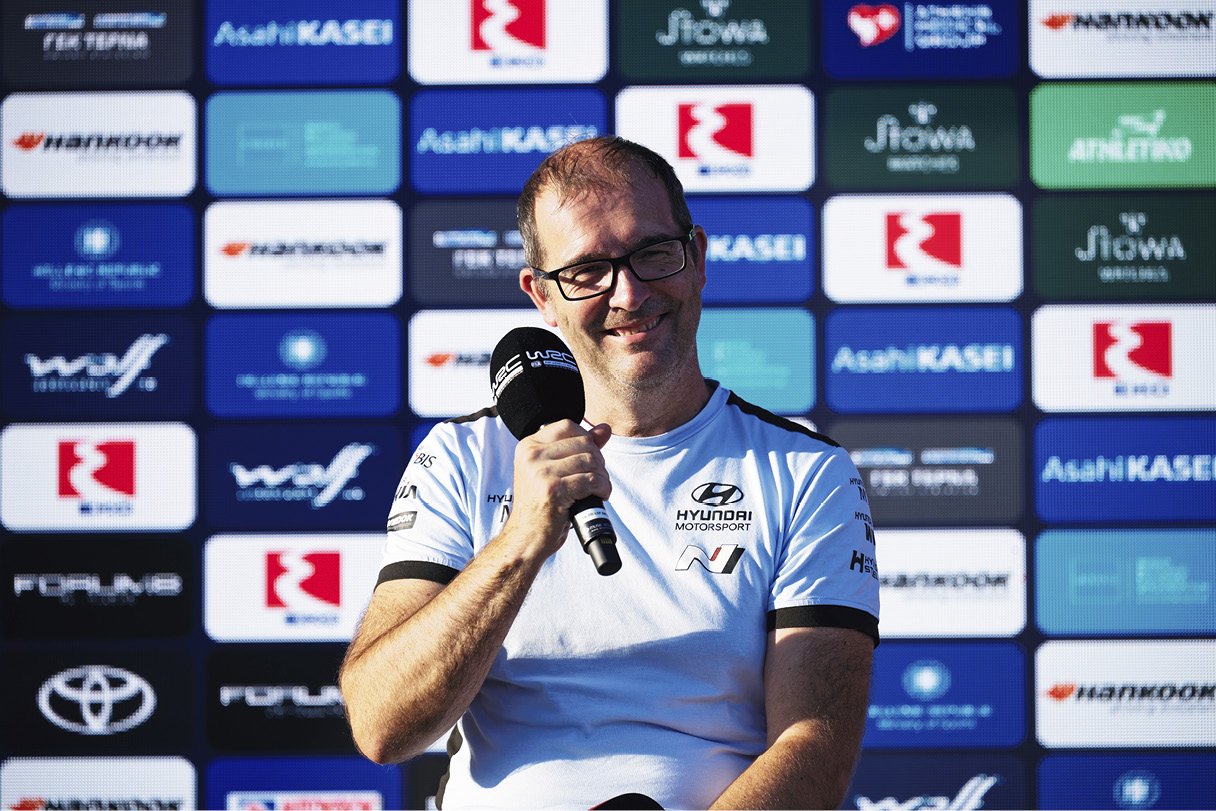
Hyundai sporting director Andrew Wheatley said in an interview:
“Acropolis Rally is a very tough event; hot, dusty and potentially very tough for the cars and the tires, but this profile seems to suit the Hyundai i20 N Rally1 very well. All three drivers have had a chance to test in Greece for this event, and we will be building on the work completed at our permanent test base at Chateau Lastours to dial in the fine balance between speed and safety that you need in Greece to be fast."
“We start the second half of the year with eyes firmly on the podium," he ad-ded.
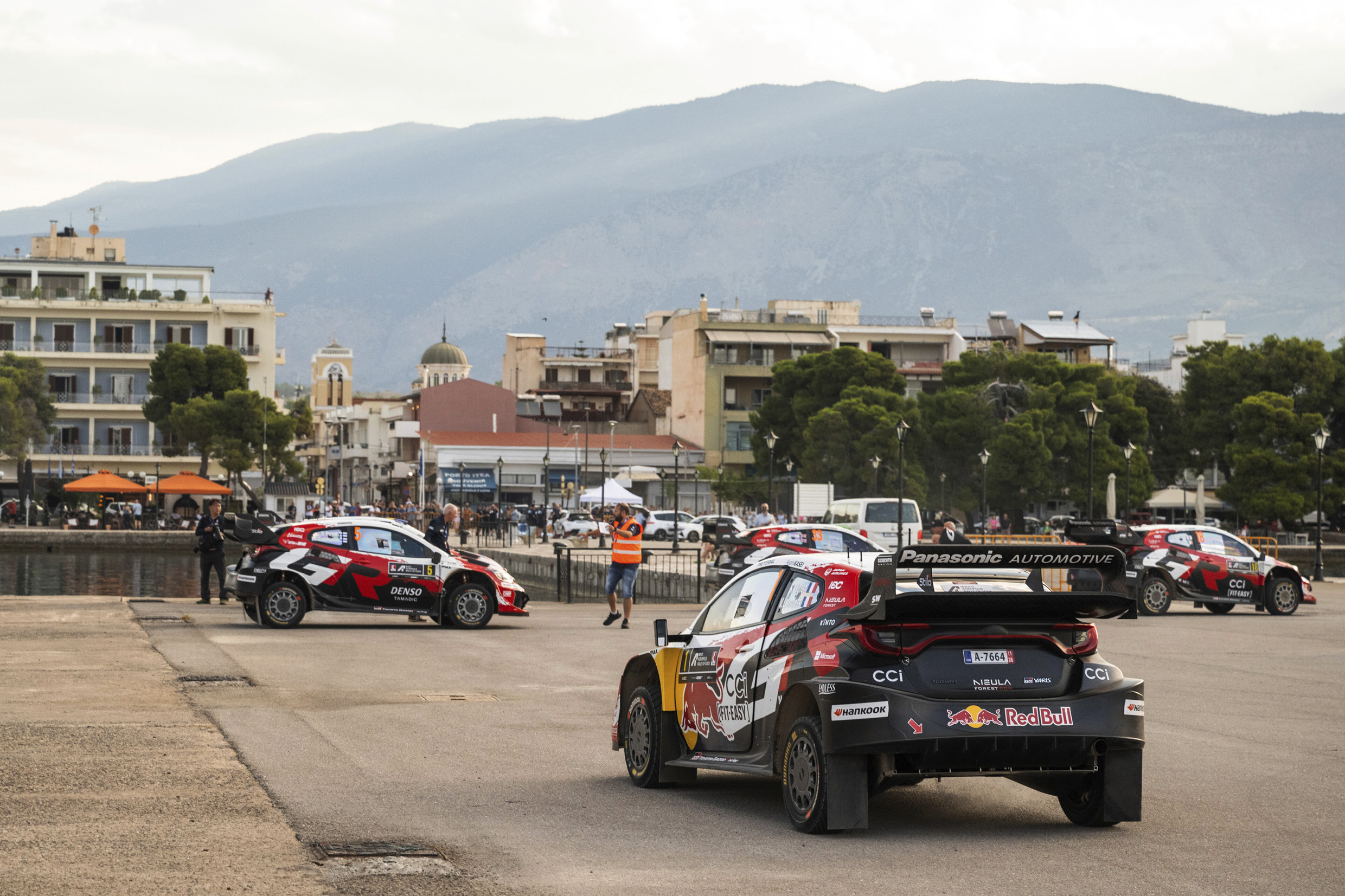
Toyota arrived looking almost untouchable, with six wins from the first seven rounds and a lockout of the top five in the championship standings. For Greece, the team entered Elfyn Evans, Sébastien Ogier, Oliver Solberg, Takamoto Katsuta, and Sami Pajari.
Evans, the drivers’ championship leader, took his second win of the season at Round 7 in Japan and stretched his gap over second-place Katsuta to 20 points. Part-time driver Ogier entered his fourth consecutive rally after Spain, Portugal, and Japan. Sitting fifth in the championship, he also had a relatively favorable road position.
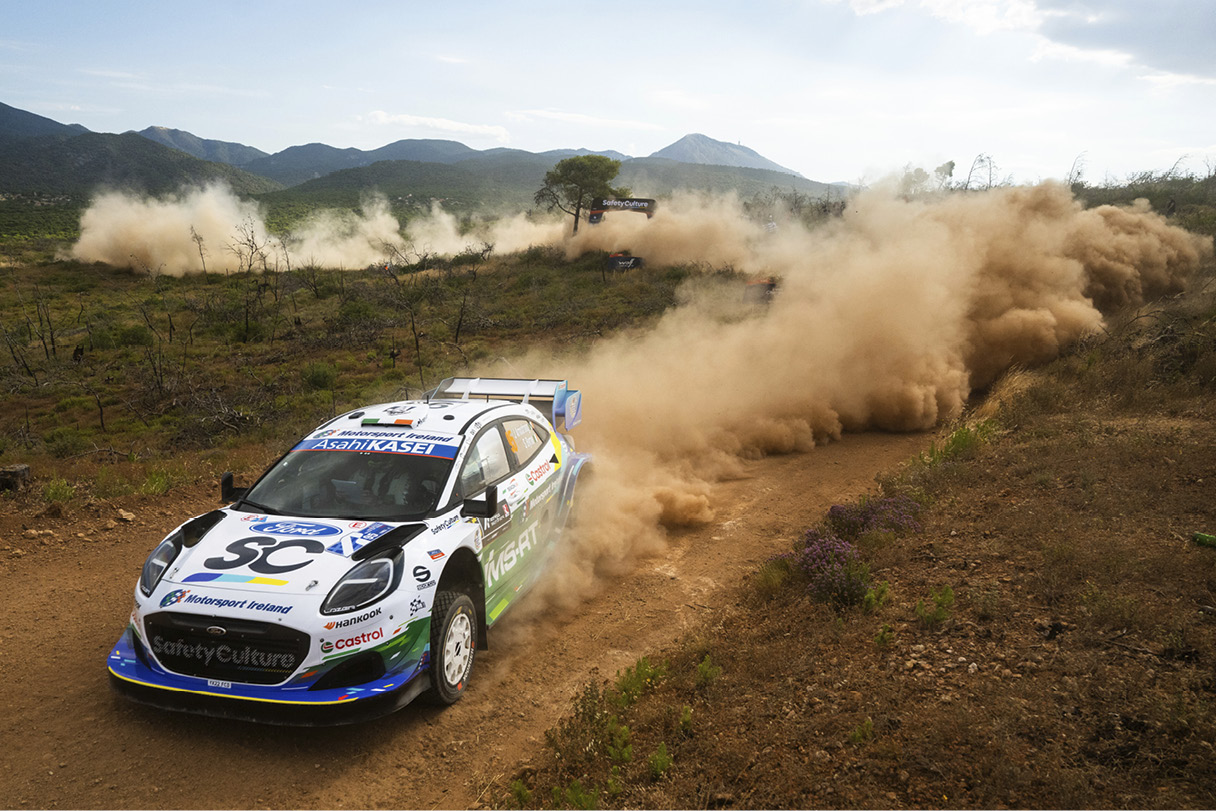
M-Sport Ford brought four Puma Rally1 cars to Greece. Alongside regulars Josh McErlean and Jon Armstrong, the lineup included Mārtiņš Sesks in his third start of the season and veteran home driver Jourdan Serderidis.
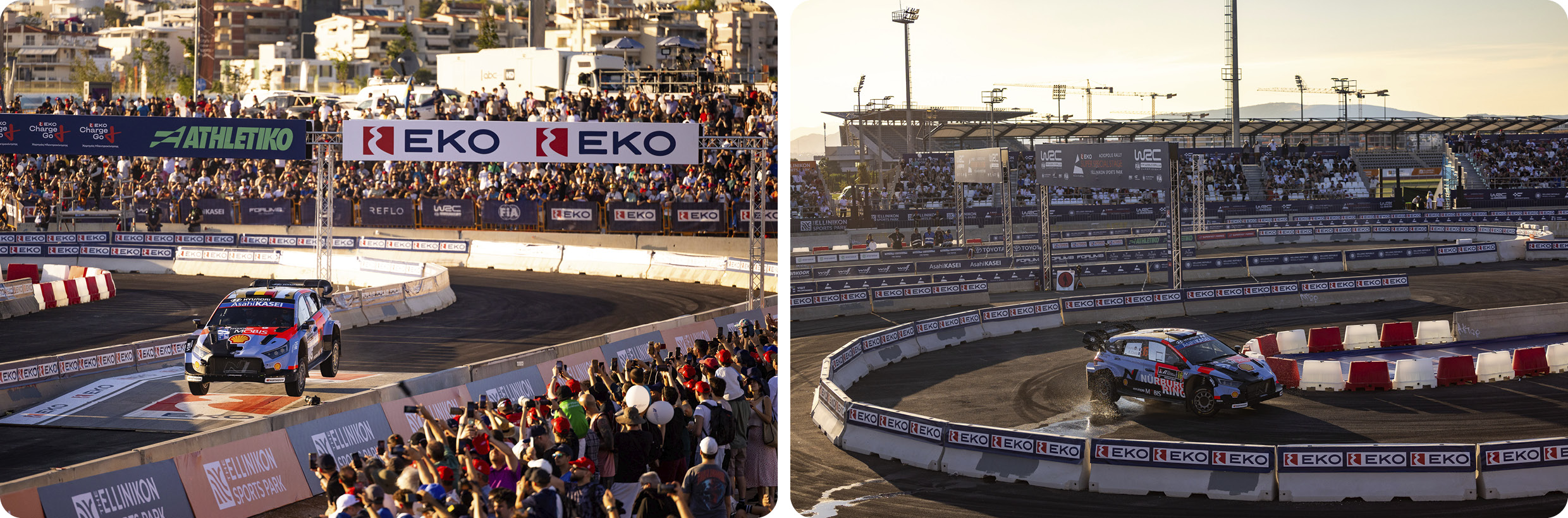
The Acropolis Rally opened at Athens’ Ellinikon Sports Park. Video: WRC (http://www.wrc.com)
On Thursday morning, June 25, crews fired up the rally with shakedown on a 3.34-km test route near Loutraki. From there, the field headed to Athens for a short Super Special Stage at Ellinikon Sports Park in the city’s south. The 1.86-km paved course used a dual layout, with two cars launching side by side to bring the show to life. Ogier struck first, followed by Katsuta, Neuville, Pajari, and Solberg.
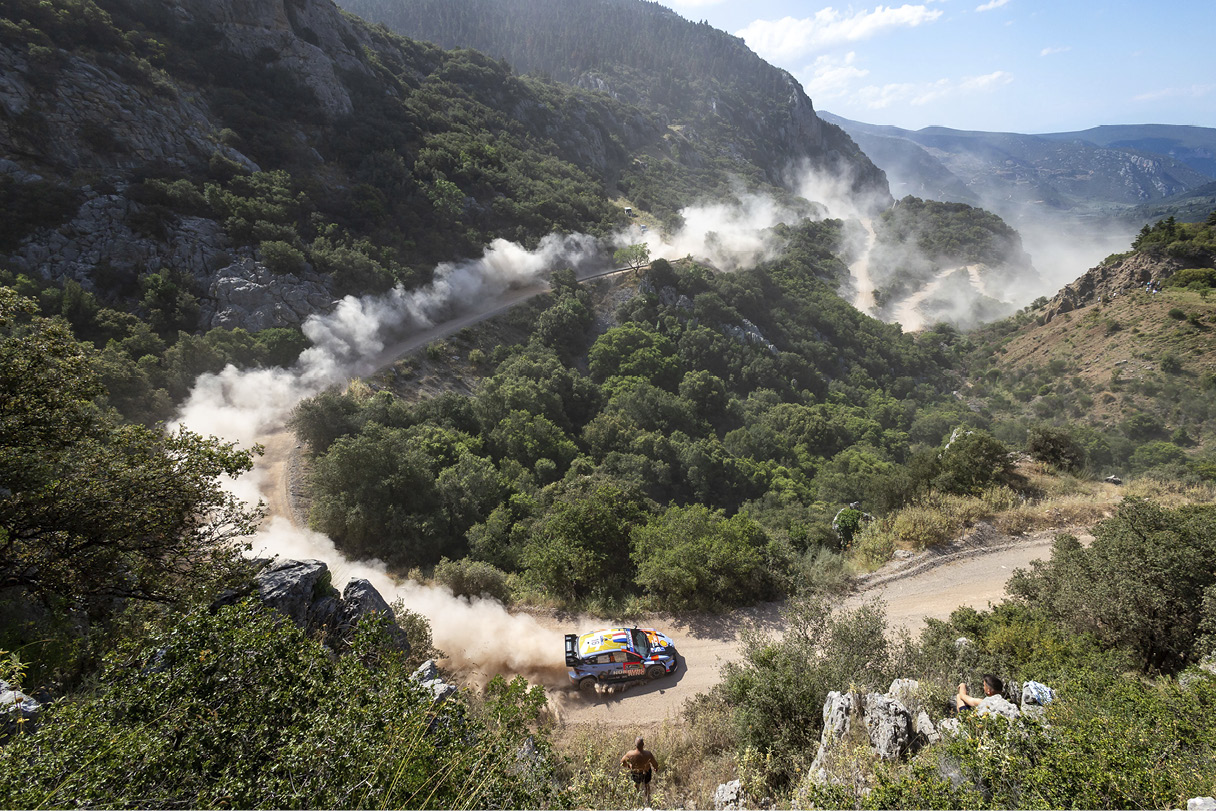
Friday, June 26, sent the field across 129.22 km, from SS2 Bauxites to SS7 Thiva. Most rallies repeat three or four stages across morning and afternoon loops. Greece did not give crews that comfort. Aside from the 24.18-km Stiri stage, every other stage was run only once. With almost no repetition, drivers had to read the surface fast, manage the car, and keep the tires alive on hot, rough gravel. Everyone started on hard tires.
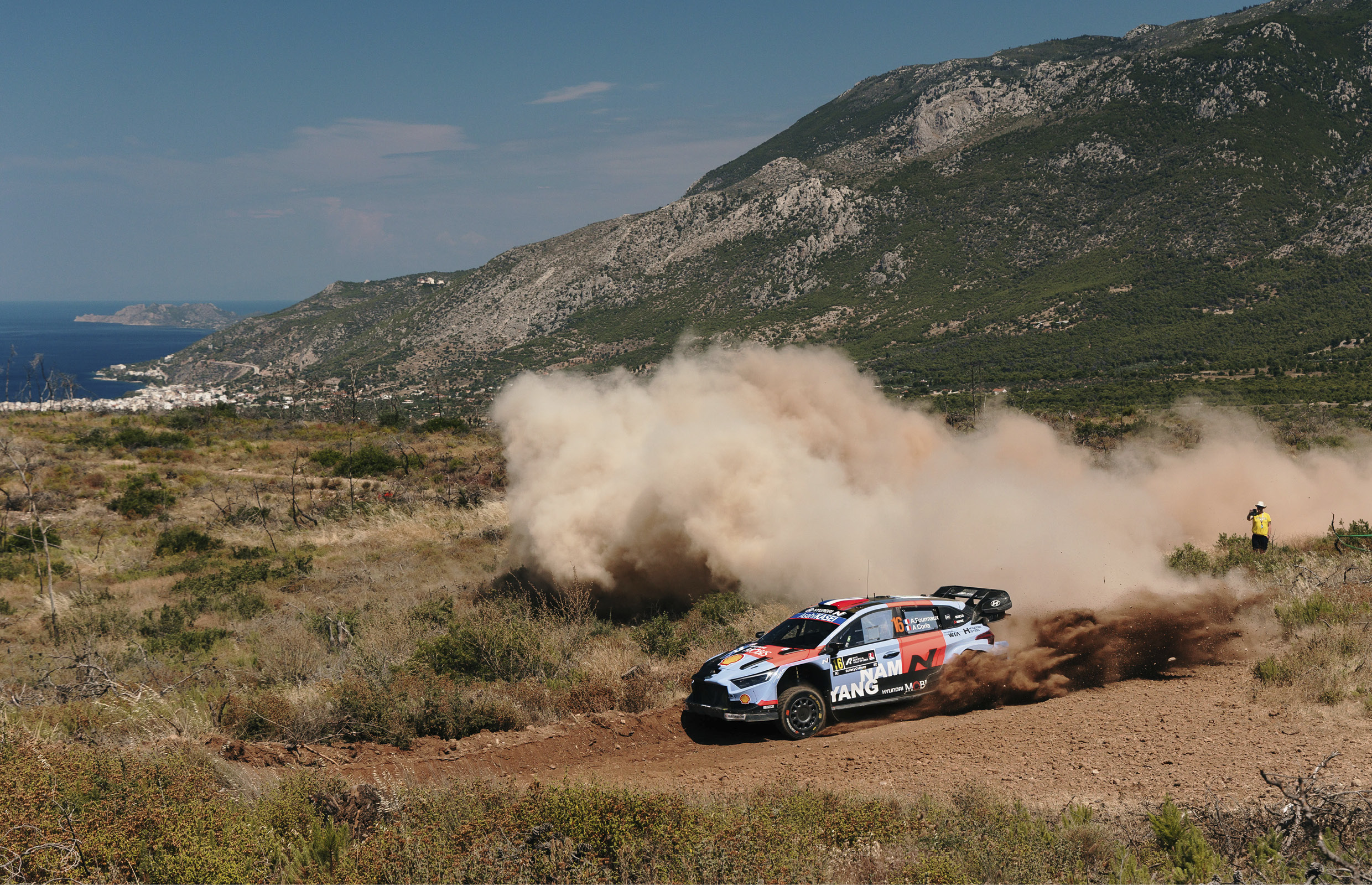
Back for the first time since 2022, Bauxites is one of the rally’s signature tests. Named after bauxite ore—the raw material used to make aluminum—the 22.97-km stage cuts through an actual mining area. The result is classic Acropolis: red dirt, sharp rocks, and enough tire-killing edges to punish even a clean run.
Hyundai came out swinging on Friday’s opener. Fourmaux was fastest, with Neuville just 1.0 second behind. In the overall order, Neuville led from Fourmaux, Ogier, and Sordo. Neuville said: "It was a good feeling. I was fighting for traction so I don't know what it was like for those first on the road. I was surprised by the low grip. It is a long day. Today we need to have a trouble free day." Solberg and Sesks both suffered punctures from the very first stage.
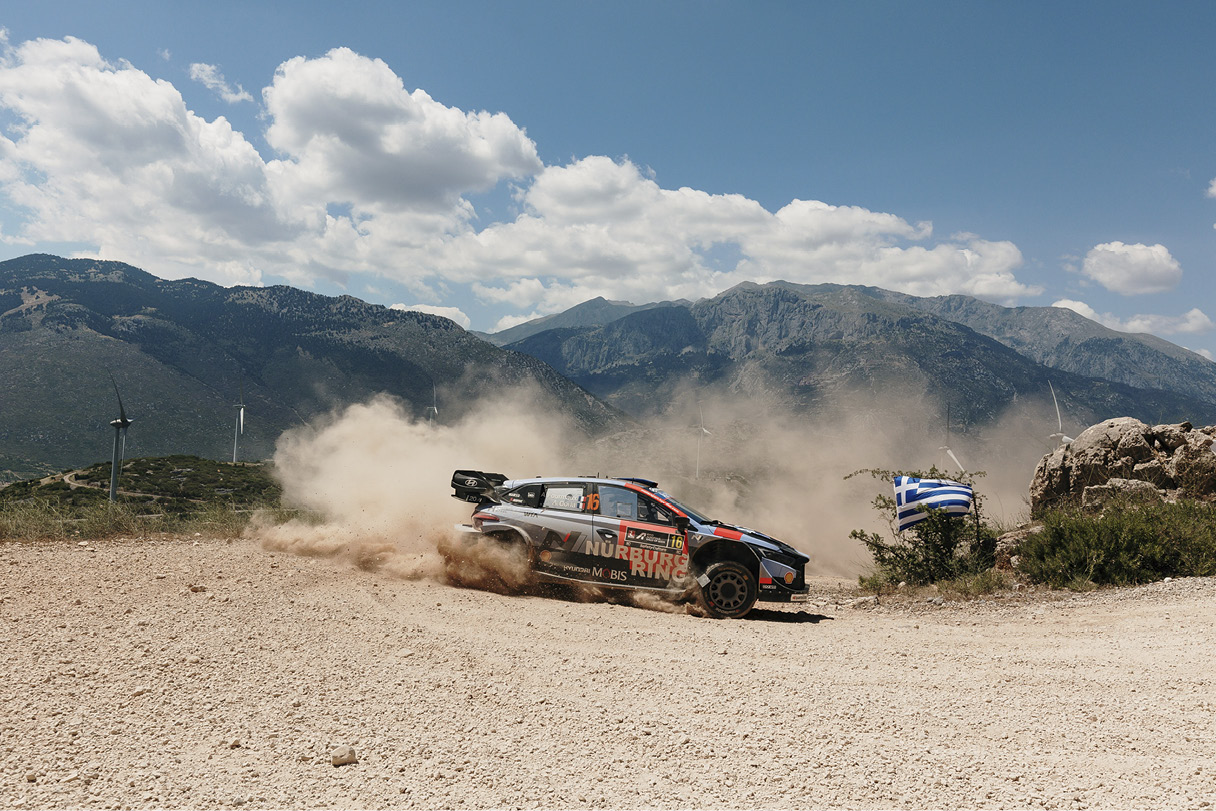
SS3, the 22.28-km climb up Mount Parnassos, changes rhythm constantly as it climbs to 1,438 meters above sea level. It starts narrow and loaded with hairpins, then opens into a slightly wider, smoother road near Agoriani toward the end.
Fourmaux was fastest again, jumping past Neuville into the overall lead. Behind the Hyundai pair came the M-Sport Ford trio of Armstrong, McErlean, and Sesks. Sordo lost nearly two minutes after stopping to change a tire at the 10.9-km mark. “We had a puncture,” he said afterward. “Honestly I was trying to be clean at the beginning but I think some stone cut the side of the wheel. It is like this. We will continue.”
Neuville moved into the lead, 11 seconds ahead of second-place Ogier. Video: WRC (http://www.wrc.com)
SS4 Stiri, the only stage using the same layout as last year, starts through a wind-farm complex with smooth, fast sections and hairpins. Then Greece does what Greece does: the road turns rougher, rockier, and slower. The stage finishes with narrow, twisting downhill hairpins and a steep descent.
Fourmaux lost 30 seconds to tire damage and dropped to fourth overall. Video: WRC (http://www.wrc.com)
This time, Ogier set the pace, with Neuville close behind. In the overall standings, Neuville moved into the lead, 11 seconds ahead of Ogier. Armstrong sat third overall, while Fourmaux lost nearly 30 seconds to a puncture and dropped to fourth.
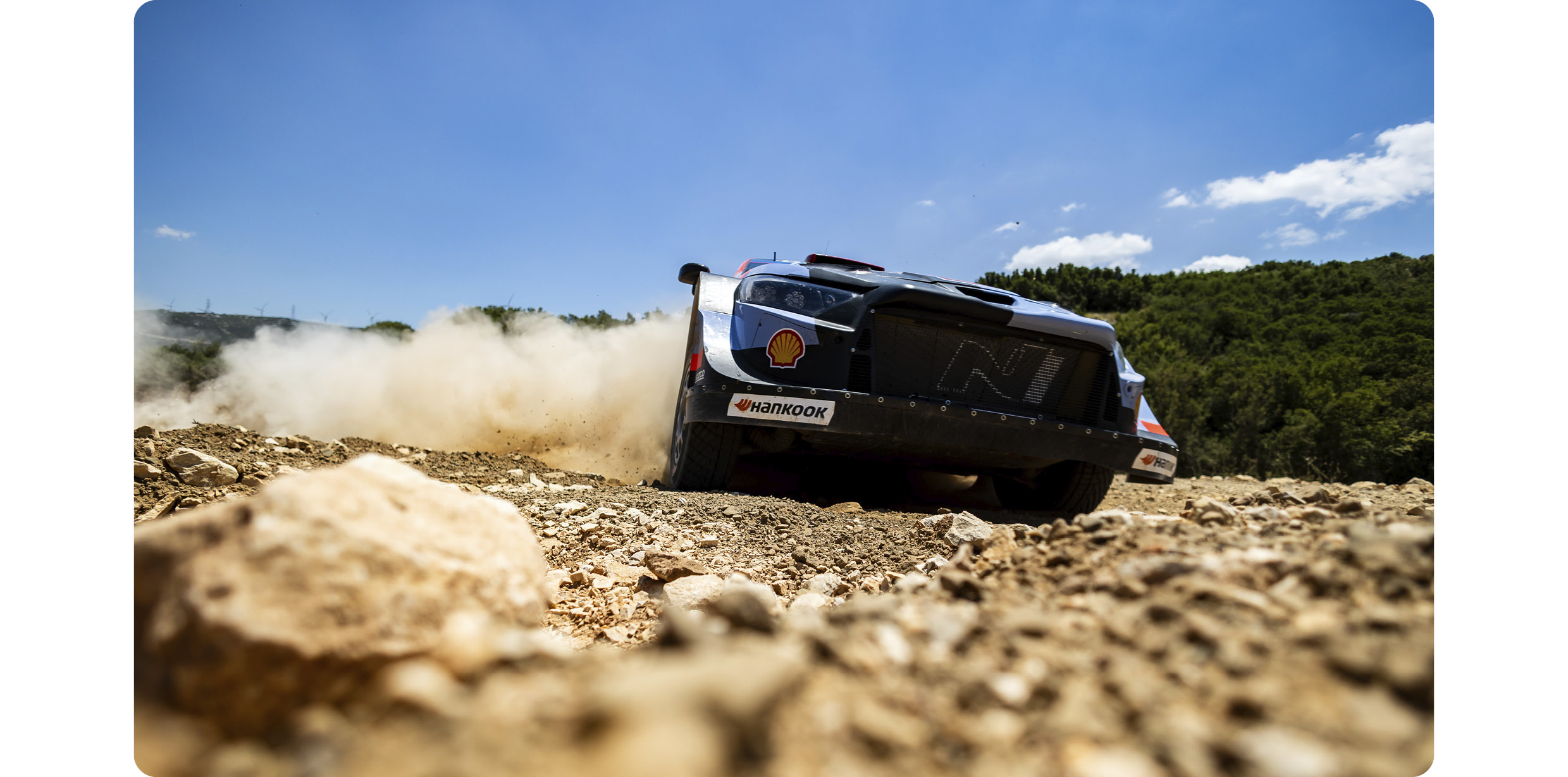
SS5 Mount Elikon starts on gentler terrain before kicking into a sharp climb through the middle section. Rough gravel and quarry roads make it another brutal Acropolis test. Armstrong took his first stage win, followed by Ogier and Neuville. Pajari stopped to change a damaged tire at the 4.3-km mark, and much of the field backed off, choosing survival over hero pace.
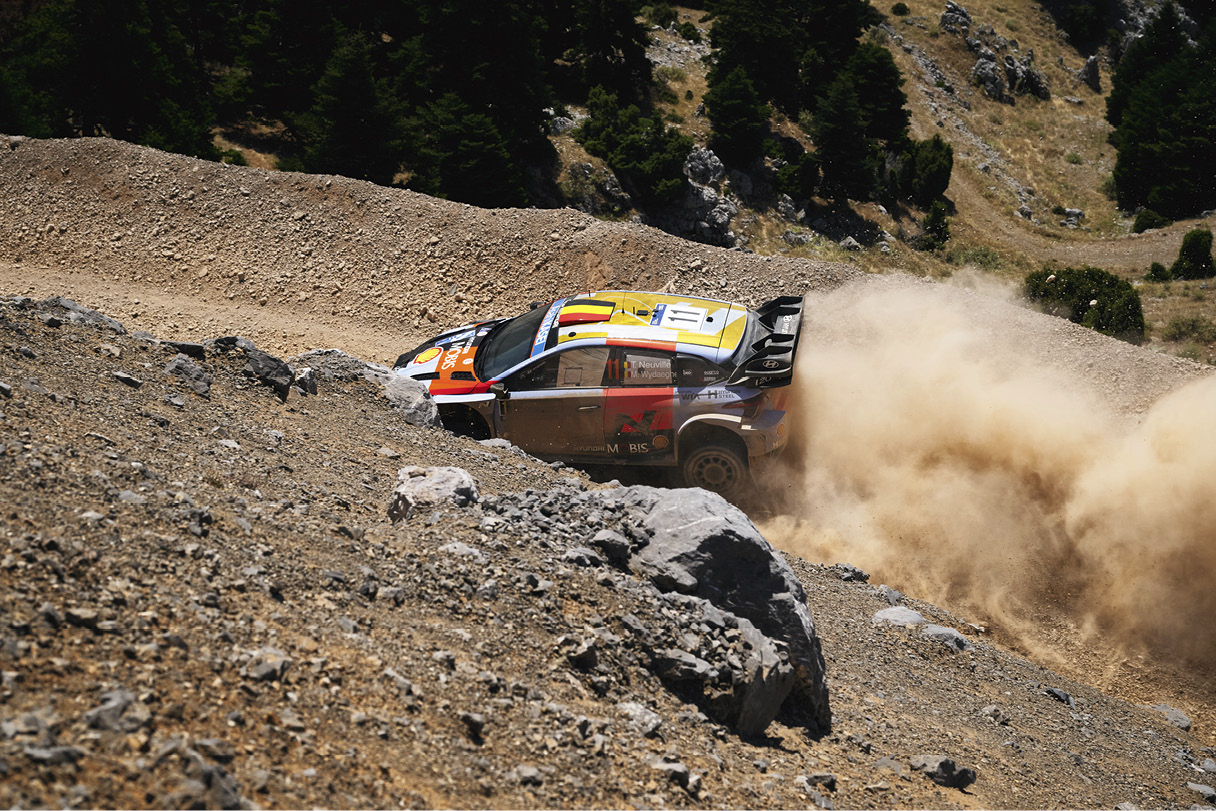
On SS6, the repeat of Stiri, Neuville hit back with the fastest time. Armstrong, winner of the previous stage, suffered engine power loss and then had to stop to change a damaged tire, dropping heavily down the order. Neuville’s lead over Ogier stood at 10.1 seconds, while Fourmaux passed McErlean to move up to third overall. Sordo also climbed four spots, from 12th to eighth. After the stage, Sordo said: “It was very rough. I just take care of the tires as we have one stage to do. We could go much faster but you don't know what the tires will be like at the end."
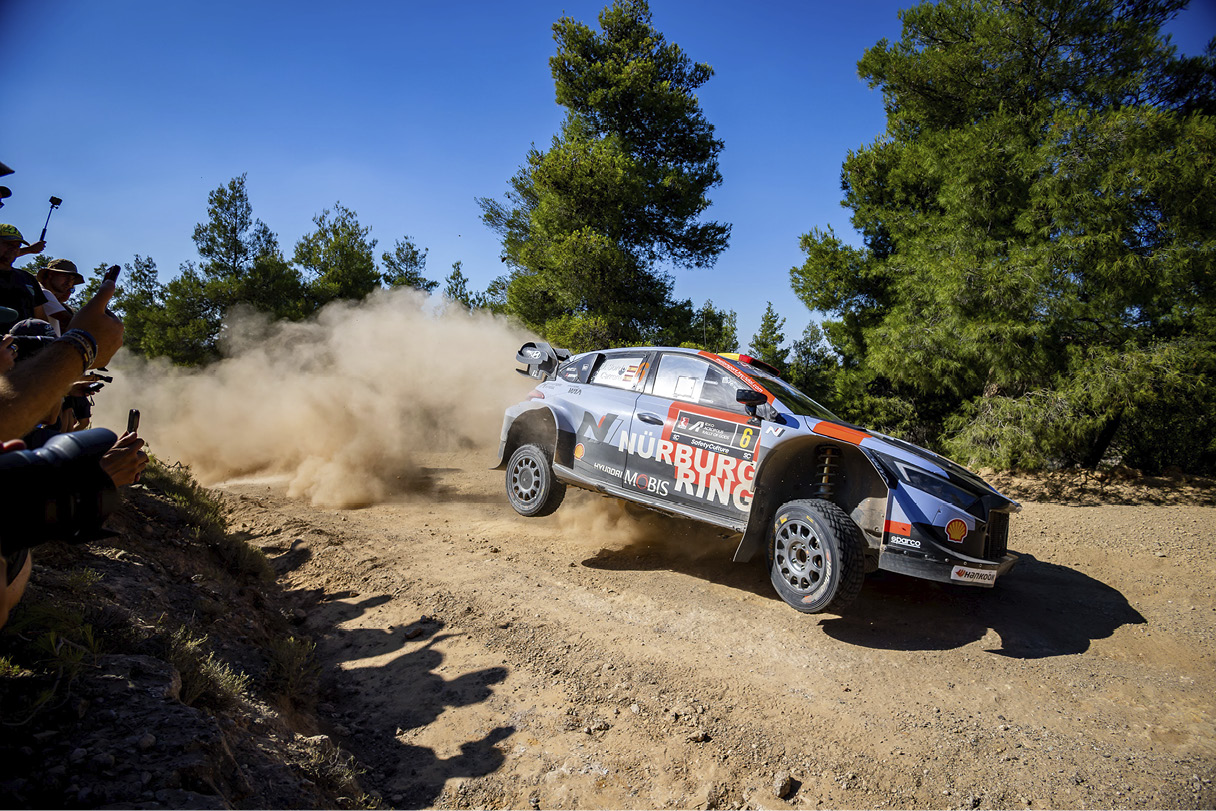
Friday’s final stage, SS7 Thiva, looped around a hill through a changing mix of roads and terrain, switching between rough sections and smoother high-speed stretches. Fourmaux went fastest, with Ogier and Neuville next. Neuville kept the overall lead, Ogier stayed in pursuit, and Fourmaux held third, 32.7 seconds behind Ogier. M-Sport Ford’s McErlean and Sesks ran fourth and fifth, followed by Katsuta, Evans, and Sordo. Solberg dropped out of the fight with a transmission failure on SS7, while Armstrong eventually retired after the turbo issue that had hit him on SS6.
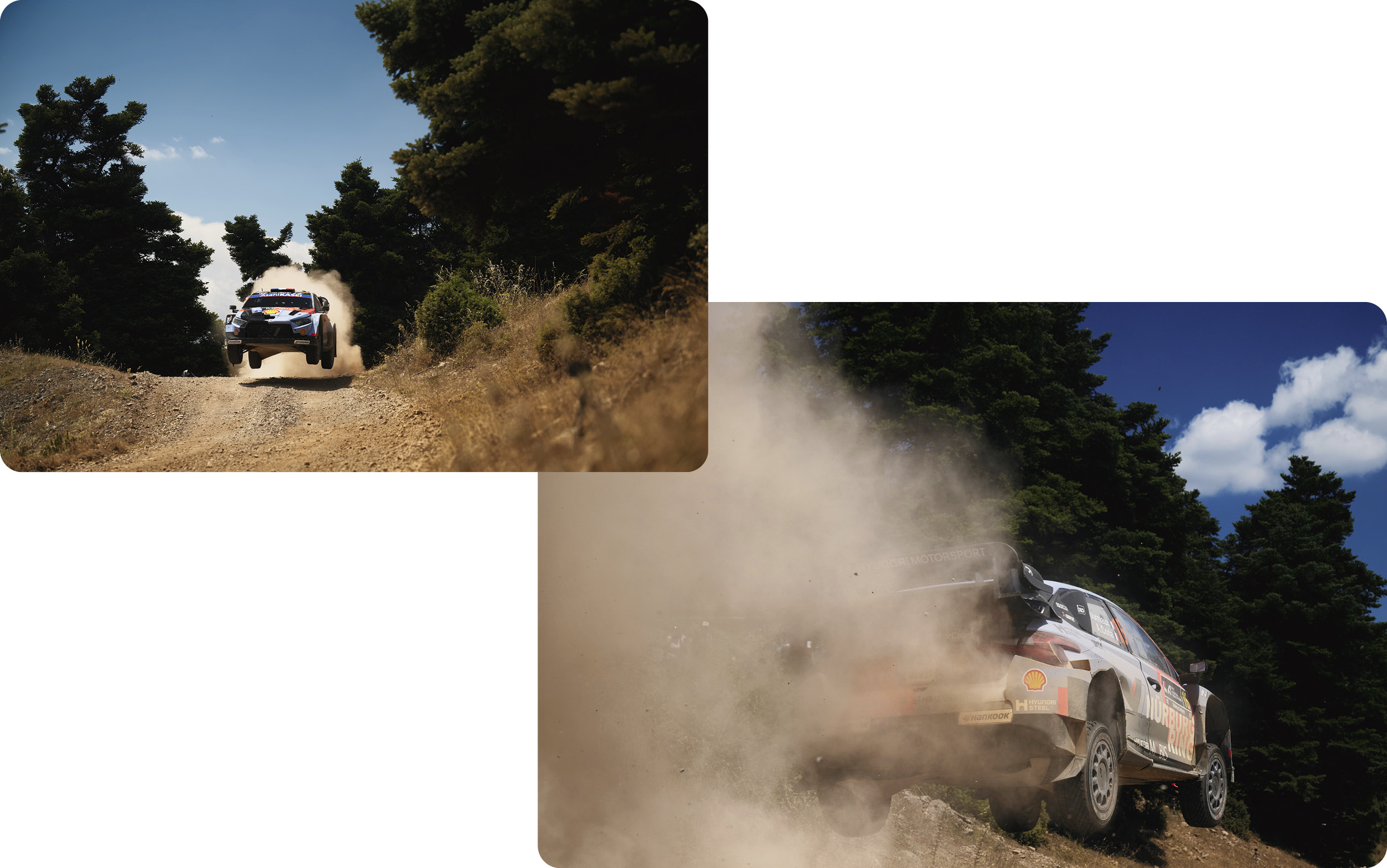
On Saturday, June 27, the rally moved deep into the Peloponnese. The day mixed classic Acropolis roads with new additions for a total of 108.23 km. Ghymno and Mount Menalo were each run twice, morning and afternoon, while the newly ad-ded Kolines and Kefalari stages were each run only once.
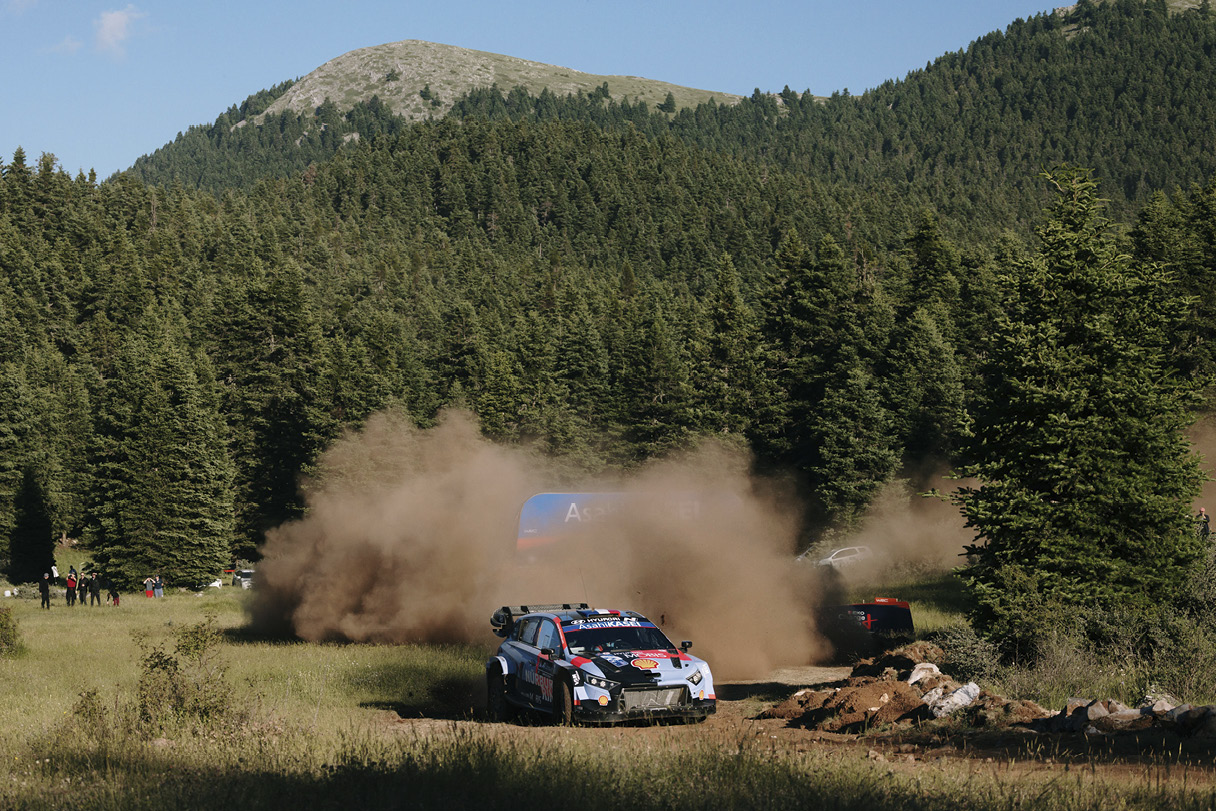
The day opened with the 19.6-km SS8 Ghymno, back on the WRC schedule for the first time since 2013. Run in the opposite direction and slightly stretched from the old layout, it started with a high-speed climb before dropping crews into a downhill section packed with consecutive hairpins. Ogier went fastest and cut Neuville’s lead to 8.2 seconds, with Fourmaux and McErlean next.
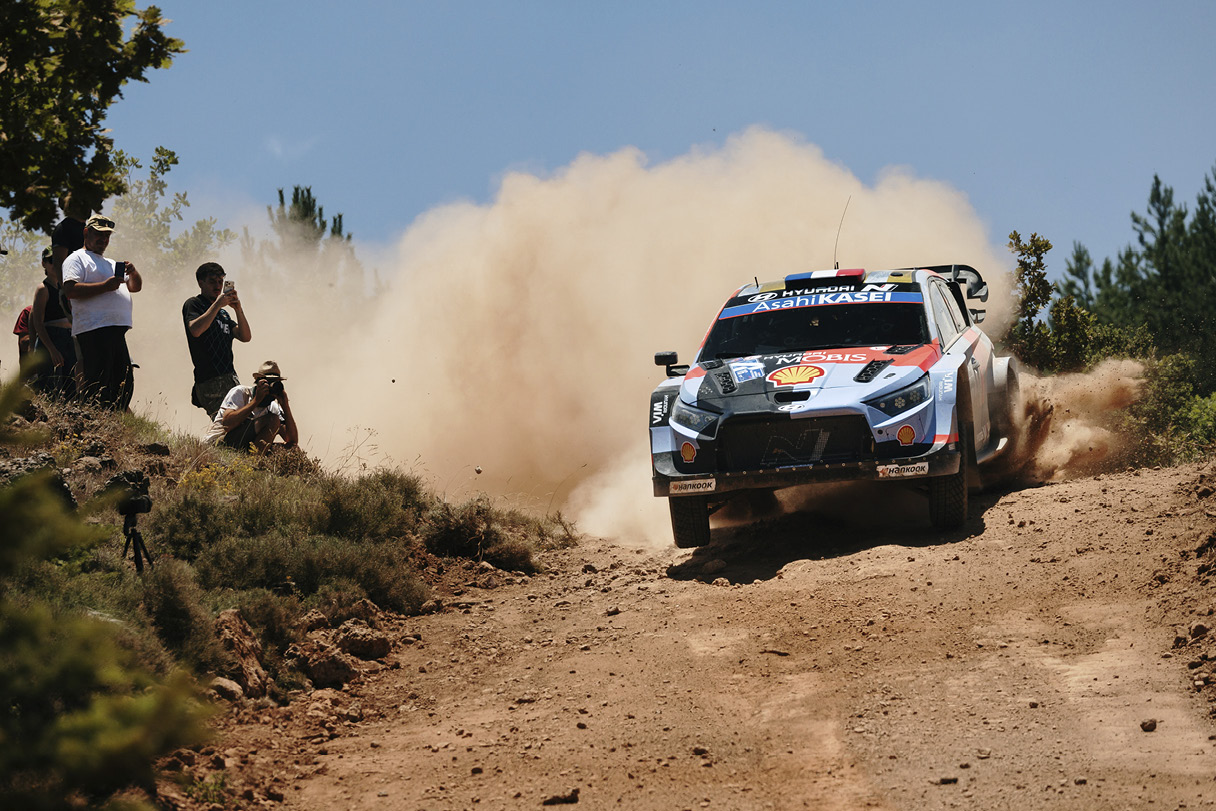
SS9 Kolines was new for this year. It marked the first time since 1985 that the WRC had run in Arcadia, the region known in mythology as the birthplace of Hermes, god of travelers. The stage mixed technical low-speed sand-and-gravel sections with faster stretches, forcing drivers to keep changing rhythm. Fourmaux grabbed his fourth stage win of the rally, with Ogier and Neuville behind. Ogier trimmed Neuville’s lead again, pulling the gap down to 4.9 seconds and turning the fight at the front into a real pressure game.
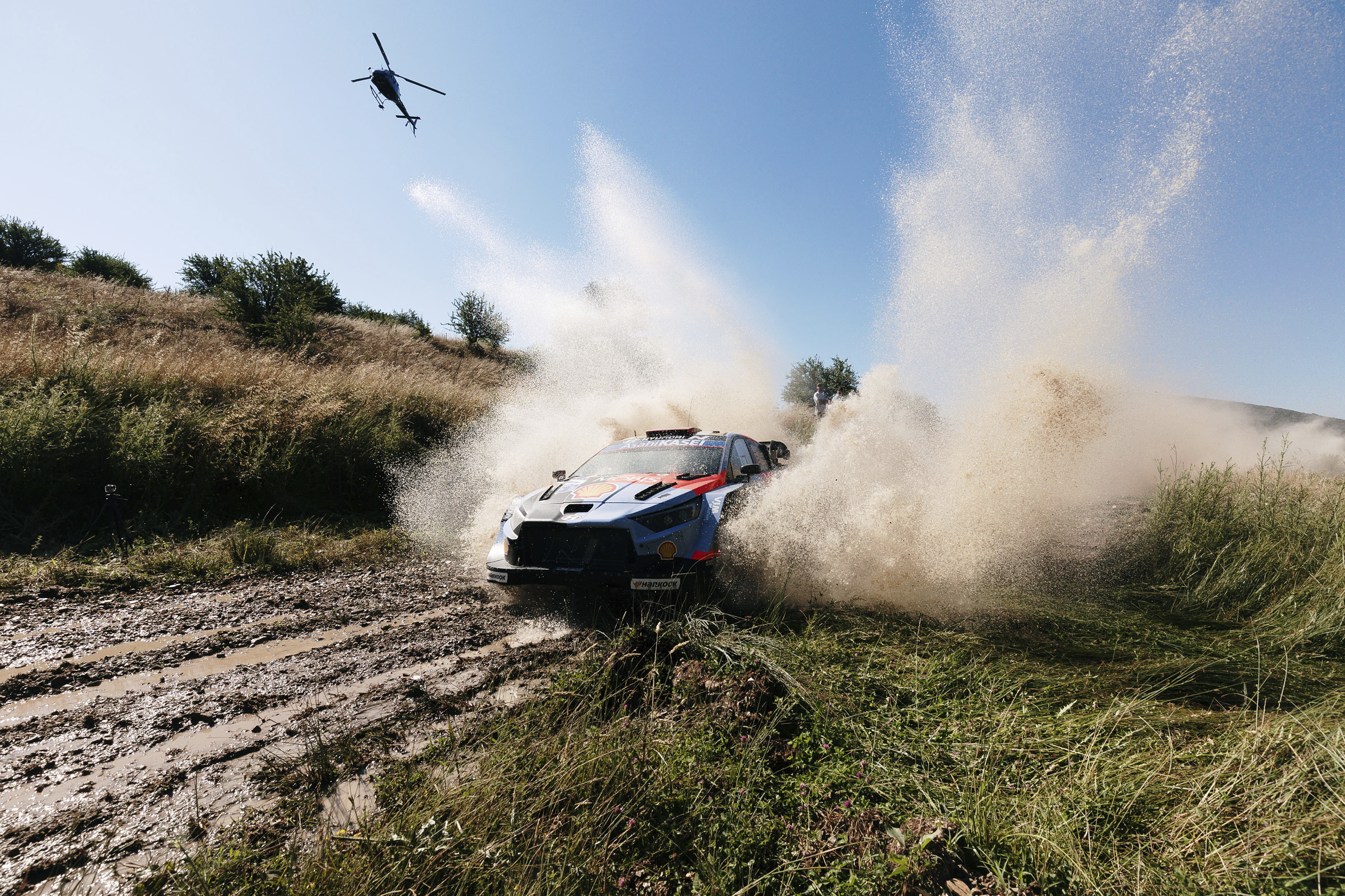
SS10 Mount Menalo was another new stage. It opened on wide forest roads, then moved through a long straight into medium- and high-speed sections where commitment mattered, but lazy precision could still get punished. Near the end, artificially shaped winding corners gave spectators something to watch. There were fewer rocks and exposed slabs than on some other Greek stages, but patches of mud kept the road tricky.
Fourmaux had a close call when he nearly went off course during the stage. Video: WRC (http://www.wrc.com)
Neuville went fastest and stretched his gap over Ogier to 6.3 seconds. Fourmaux had a scare when he nearly went off, but he kept it out of the scenery and still set the third-fastest time. “We had a moment. It was a huge mistake in my pacenotes, so it was a big save. We are quite lucky. I saved it,” Fourmaux said. “After that I decided to slow down a bit. It was a very enjoyable stage anywhere.”
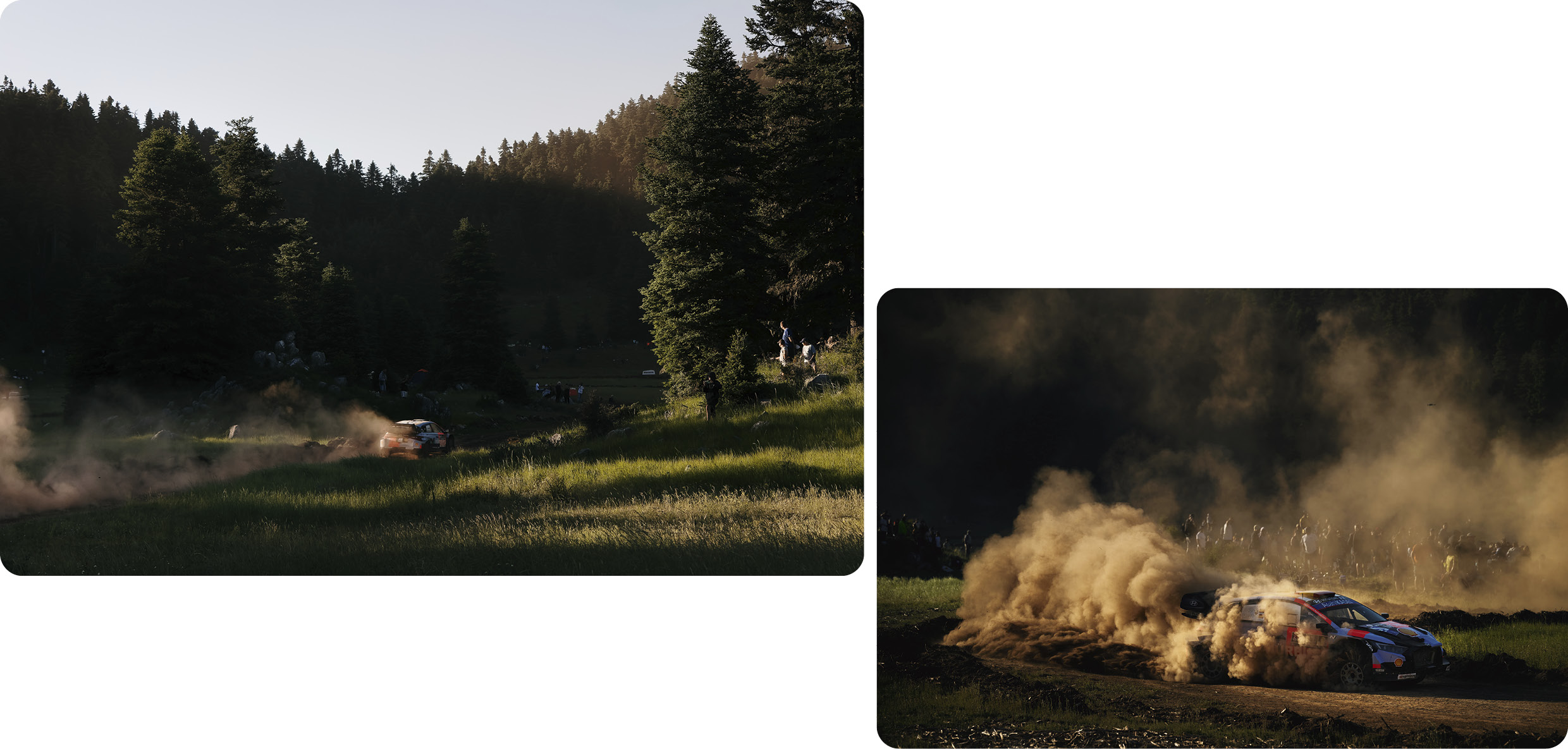
SS11 Kefalari, returning for the first time since 2013, closed out a varied Saturday morning. Right after the start, drivers were thrown into a narrow uphill section with no margin for error. Later, the stage opened onto a high-plateau section with broad sightlines and serious speed. Ogier hit back and cut Neuville’s lead to just 3.7 seconds. Fourmaux was not in the lead fight, but he had more than a minute in hand over fourth-place Katsuta, giving him some breathing room—at least on paper.
Fourmaux suffered a puncture 3.1 km into SS12 and lost position. Video: WRC (http://www.wrc.com)
On SS12, the repeat of Ghymno, Neuville pushed the gap over Ogier back out to 10.8 seconds and kept the overall lead. But Fourmaux, who had looked set for a podium, got hit by Greece’s favorite weapon: another puncture. The tire went 3.1 km into the stage, costing him roughly two minutes and dropping him to sixth overall. Even after the opening section had been shortened following driver complaints about the surface being too rough after SS8, Fourmaux still could not dodge the damage.
Neuville’s car suffered heavy front-end damage after contact near the end of the stage. Video: WRC (http://www.wrc.com)
Neuville safely brought the damaged car back to the service park. Video: WRC (http://www.wrc.com)
Saturday closed with SS13, the repeat of Mount Menalo. Ogier took the stage win and cut Neuville’s lead back down to 4.1 seconds, but Neuville still ended the day on top.
It was not clean. Near the end of the stage, Neuville made contact and damaged the front of the car, triggering a power-steering fluid leak. He still managed to drag the wounded Hyundai back to service. Fourmaux used Evans’ puncture to recover to fourth overall. The gap to third-place Katsuta was 1 minute 43.6 seconds—big on paper, but in Greece, one puncture can flip that math fast. Neuville led from Ogier, Katsuta, McErlean, Fourmaux, Pajari, Evans, and Sordo.
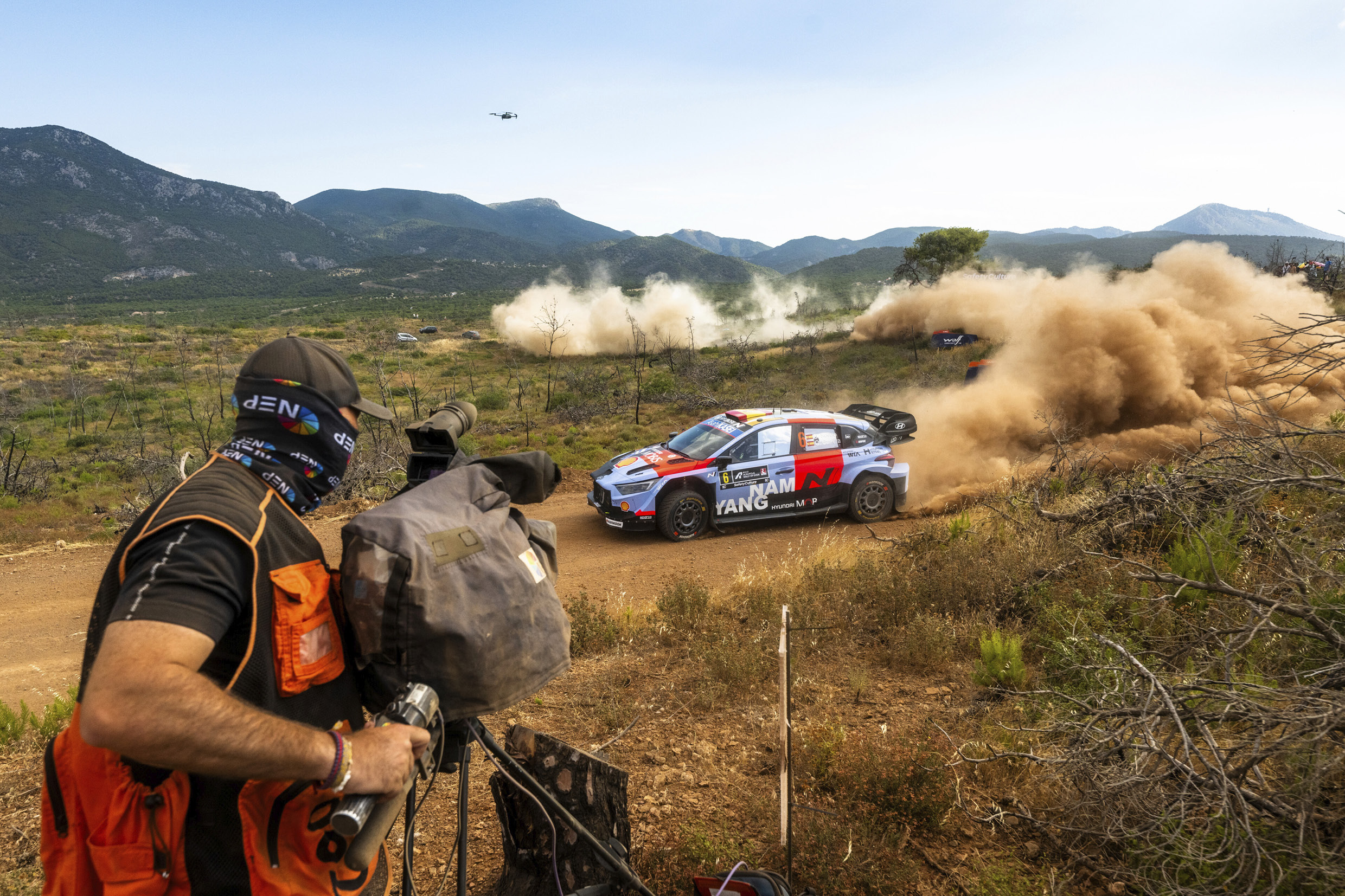
On Sunday, June 28, the rally repeated two neighboring stages—Aghii Theodori and Loutraki—in the morning and afternoon. The winner would be decided across four stages, SS14 through SS17, totaling 84 km. Only four stages remained, but Aghii Theodori stretched 25.39 km, making it the longest stage of the rally and one of the toughest tests of the weekend.
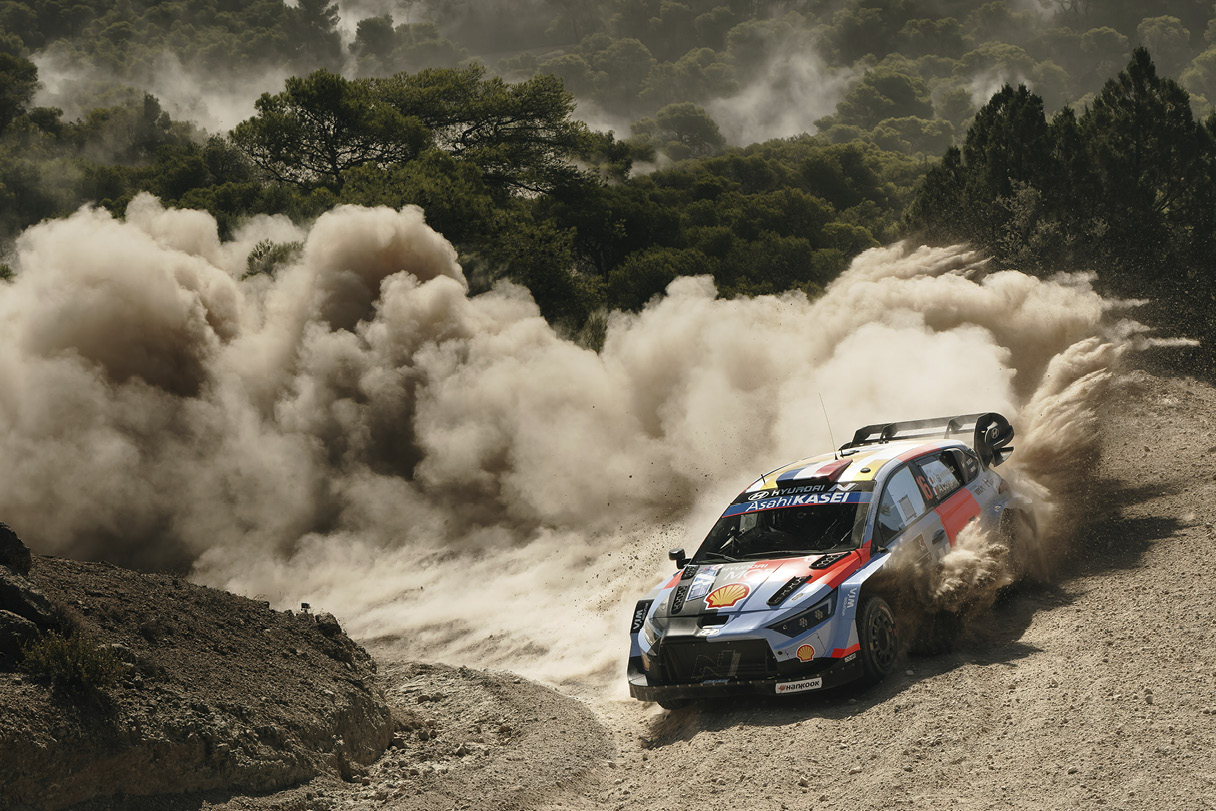
Final-day tire strategy shifted. Some drivers carried one fewer spare to save weight. Ogier chose four hards and one soft, while Neuville and Fourmaux went with five hards. Fourmaux grabbed Sunday’s opener. Ogier was 0.3 second slower than Fourmaux, but 5.4 seconds quicker than Neuville. That was enough to move Ogier into the overall lead, just 1.3 seconds ahead of Neuville.
After losing the lead on SS14, Neuville tied Ogier’s time on SS15 and pushed to take the position back. Video: WRC (http://www.wrc.com)
Fourmaux suffered another puncture on Sunday, pulling him farther away from the podium fight. Video: WRC (http://www.wrc.com)
SS15 Loutraki was lengthened to 16.61 km from last year thanks to a newly configured final section. It starts with a technical opening, feeds into rough gravel, then gets faster later on. It also includes part of last year’s Aghii Theodori route. Neuville and Ogier matched each other exactly at the top of the timesheets, leaving the gap between them unchanged at 1.3 seconds. Fourmaux, who had been leading the Super Sunday standings, suffered another puncture and watched his podium hopes disappear. It was his third puncture of the weekend. After midday service, crews prepared for the final two stages. Neuville and Fourmaux chose six hard tires, while Sordo selected five hards. Toyota mostly went the other way, choosing four hards and two softs.
Neuville also suffered tire damage, but his comfortable gap over Katsuta allowed him to hold second. Video: WRC (http://www.wrc.com)
Then came SS16, the repeat of Loutraki. Neuville’s right-rear tire let go, throwing Hyundai’s victory bid into emergency mode. He drove 8 km on the damaged tire, and the gap to Ogier ballooned to 54.8 seconds. “What can we say. Would have been nice to fight Seb till the end,” Neuville said. Fortunately, he still had nearly two minutes in hand over third-place Katsuta. Fourmaux, meanwhile, was passed by Pajari by just 1 second and slipped to sixth overall.
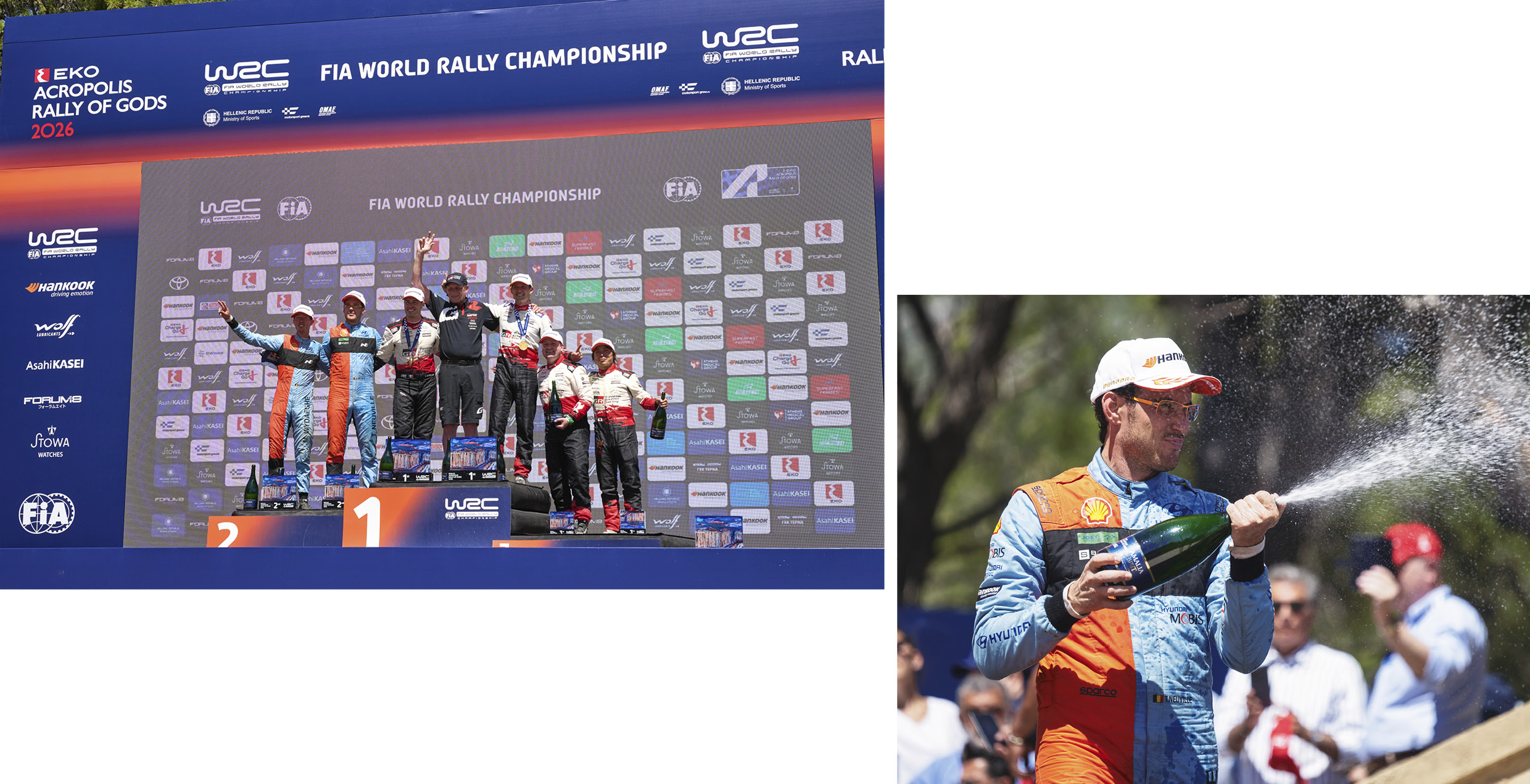
Ogier also took the final SS17, sealing victory at the Acropolis Rally. Neuville finished second, 58.3 seconds back. After the rally, Neuville said: “I am between disappointment and somehow a little bit of joy right now, because the car is performing well and we feel comfortable in it. Mixed feelings. Fair play to Ogier, he did an incredible race as well. We don't know what would have happened without the puncture. But that's rallying, in Portugal we profited from his puncture and now he does from ours."
After escaping Greece’s brutal mountain roads, the WRC field heads to Round 9 in southern Estonia’s Tartu region from July 16 to 19. Rally Estonia is one of the fastest gravel events in the WRC, with rapid stages cutting across hills and forest roads. Another challenge awaits the drivers—one where precise car control and flat-out courage will decide the result.
Written by: Soo-jin Lee
In 1991, Lee’s passion for cars led him to enthusiastically write letters to the newly launched Korean car magazine Car Vision. This unexpected connection led him to start his career as an automotive journalist. He has served as editor and editorial board member for Car Vision and Car Life, and now works as an automotive critic. While eagerly covering the latest trends like electric vehicles, connected cars, and autonomous driving technology, he is also a car enthusiast who secretly hopes that the smell of gasoline engines will never disappear.